Born 25 Apr 1935.
American-Canadian cosmologist who was awarded a half-share of the 2019 Nobel Prize in Physics, for “contributions to our understanding of the evolution of our universe and Earth’s place in ” over a period of two decades, developed a
American-Canadian cosmologist who was awarded a half-share of the 2019 Nobel Prize in Physics, for “contributions to our understanding of the evolution of our universe and Earth’s place in ” over a period of two decades, developed a
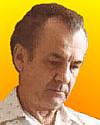
Born 25 Apr 1918; died 7 Oct 1995 at age 77.
French-born U.S. astronomer whose pioneering studies of distant galaxies contributed to knowledge of the age and large-scale structure of the universe. He produced three Reference Catalogues of bright galaxies (1964, 1976, 1991). Each was a homogenization of data from widely different sources, so that the catalogues would not be merely finding lists or data collection lists, but astrophysically useful databases. Using data in the Reference Catalogues, he was able to develop new distance indicators and refine others. His unique philosophy on distance matters was "spreading the risks," that is, applying as many different and independent techniques as possible to check for scale and zero-point errors.
French-born U.S. astronomer whose pioneering studies of distant galaxies contributed to knowledge of the age and large-scale structure of the universe. He produced three Reference Catalogues of bright galaxies (1964, 1976, 1991). Each was a homogenization of data from widely different sources, so that the catalogues would not be merely finding lists or data collection lists, but astrophysically useful databases. Using data in the Reference Catalogues, he was able to develop new distance indicators and refine others. His unique philosophy on distance matters was "spreading the risks," that is, applying as many different and independent techniques as possible to check for scale and zero-point errors.
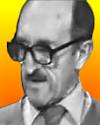
Born 25 Apr 1906; died 27 Jan 1983 at age 76.
English social anthropologist who is known for his investigations of West African societies. He originally training in psychology, but in 1932 turned to anthropology—which is reflected in his later works on ancestor worship. He was primarily interested in family and kinship, and made field studies (1934–37) with the Tallensi and Ashanti in Ghana. His monographs on these studies laid the foundations for the theory of descent, a cornerstone of the “structural-functionalism” dominating the social anthropology of the 1950s and 60s. His major contributions in lineage theory, studies of religion and ancestor worship set the standard for all subsequent studies of African social organization. He was professor of social anthropology at Cambridge University (1950-73).«
English social anthropologist who is known for his investigations of West African societies. He originally training in psychology, but in 1932 turned to anthropology—which is reflected in his later works on ancestor worship. He was primarily interested in family and kinship, and made field studies (1934–37) with the Tallensi and Ashanti in Ghana. His monographs on these studies laid the foundations for the theory of descent, a cornerstone of the “structural-functionalism” dominating the social anthropology of the 1950s and 60s. His major contributions in lineage theory, studies of religion and ancestor worship set the standard for all subsequent studies of African social organization. He was professor of social anthropology at Cambridge University (1950-73).«
The Web of Kinship among the Tallensi, by Meyer Fortes. - book suggestion.
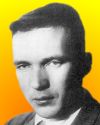
Born 25 Apr 1903; died 20 Oct 1987 at age 84.
Russian mathematician whose basic postulates for probability theory that have continued to be an integral part of analysis. This work had diverse applications such as his study of the motion of planets (1954), or the turbulent air flow from a jet engine (1941). In topology, he investigated cohomology groups. He made a major contribution to answering the probability part of Hilbert's Sixth Problem, and completely resolved (1957) Hilbert's Thirteenth Problem. Kolmogorov was active in a project to provide special education for gifted children, not only by writing textbooks and in teaching them, but in expanding their interests to be not necessarily in mathematics, but with literature, music, and healthy activity such as on hikes and expeditions.«
Russian mathematician whose basic postulates for probability theory that have continued to be an integral part of analysis. This work had diverse applications such as his study of the motion of planets (1954), or the turbulent air flow from a jet engine (1941). In topology, he investigated cohomology groups. He made a major contribution to answering the probability part of Hilbert's Sixth Problem, and completely resolved (1957) Hilbert's Thirteenth Problem. Kolmogorov was active in a project to provide special education for gifted children, not only by writing textbooks and in teaching them, but in expanding their interests to be not necessarily in mathematics, but with literature, music, and healthy activity such as on hikes and expeditions.«
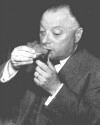
Born 25 Apr 1900; died 15 Dec 1958 at age 58. quotes
Austrian-American physicist who was awarded the Nobel Prize for Physics in 1945 for his discovery in 1925 of the Pauli exclusion principle, which states that in an atom no two electrons can occupy the same quantum state simultaneously. This principle clearly relates the quantum theory to the observed properties of atoms.
Austrian-American physicist who was awarded the Nobel Prize for Physics in 1945 for his discovery in 1925 of the Pauli exclusion principle, which states that in an atom no two electrons can occupy the same quantum state simultaneously. This principle clearly relates the quantum theory to the observed properties of atoms.
No Time to be Brief: A Scientific Biography of Wolfgang Pauli, by Charles P. Enz. - book suggestion.
Born 25 Apr 1897; died 14 May 1983 at age 86.
American physical chemist and metallurgist who researched the role of oxygen in iron and steelmaking. Applying the theories of physical chemistry, he examined the reactions between slag and liquid iron and advanced the techniques of pig iron and steel production. From his work in the early 1930s at the University of Michigan, he began to establish an international reputation for his research on steel. He became a professor of process metallury at M.I.T. in 1937, and was the department head from 1946 until retirement in 1962. During WW II he took a leave of absence from 1943, to work for the Manhattan Project as chief of its metallurgy section, where he found a method to convert powdered unranium into soliod castings, thus providing researchers with a reliable alternate supply of castings when solid uranium was scarce.«
American physical chemist and metallurgist who researched the role of oxygen in iron and steelmaking. Applying the theories of physical chemistry, he examined the reactions between slag and liquid iron and advanced the techniques of pig iron and steel production. From his work in the early 1930s at the University of Michigan, he began to establish an international reputation for his research on steel. He became a professor of process metallury at M.I.T. in 1937, and was the department head from 1946 until retirement in 1962. During WW II he took a leave of absence from 1943, to work for the Manhattan Project as chief of its metallurgy section, where he found a method to convert powdered unranium into soliod castings, thus providing researchers with a reliable alternate supply of castings when solid uranium was scarce.«
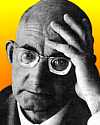
Born 25 Apr 1896; died 16 Nov 1982 at age 86. quotes
Pavel Sergeevich Aleksandrov (or Alexandroff) was a Soviet mathematician who made important contributions to the field of topology (the study of related physical or abstract elements that remain unchanged under certain distortions) and one of the founders of the theory of compact and bicompact spaces. Aleksandrov introduced many of the basic concepts of topology, such as the notion that an arbitrarily general topological space can be approximated to an arbitrary degree of accuracy by simple geometric figures such as polyhedrons. Giving support to international cooperation, he supervised the publication of an English-Russian dictionary of mathematical terminology (1962).[Note: birth date 25 April 1896 Old Style is 7 May 1896 New Style.]
Pavel Sergeevich Aleksandrov (or Alexandroff) was a Soviet mathematician who made important contributions to the field of topology (the study of related physical or abstract elements that remain unchanged under certain distortions) and one of the founders of the theory of compact and bicompact spaces. Aleksandrov introduced many of the basic concepts of topology, such as the notion that an arbitrarily general topological space can be approximated to an arbitrary degree of accuracy by simple geometric figures such as polyhedrons. Giving support to international cooperation, he supervised the publication of an English-Russian dictionary of mathematical terminology (1962).[Note: birth date 25 April 1896 Old Style is 7 May 1896 New Style.]
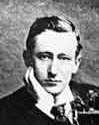
Born 25 Apr 1874; died 20 Jul 1937 at age 63. quotes
Marchese Guglielmo Marconi was an Italian electrical engineer and inventor who invented the wireless telegraph (1935) known today as radio. Nobel laureate (1909). In 1894, Marconi began experimenting on the “Hertzian Waves,” the radio waves Heinrich Hertz had first produced in his laboratory a few years earlier. Lacking support from the Italian Ministry of Posts and Telegraphs, Marconi turned to the British Post Office. Encouraging demonstrations in London and on Salisbury Plain followed. Marconi obtained the world's first patent for a system of wireless telegraphy, in 1897, and opened the world's first radio factory at Chelmsford, England in 1898. In 1900 he took out his famous patent No. 7777 for “tuned or syntonic telegraphy.”
Marchese Guglielmo Marconi was an Italian electrical engineer and inventor who invented the wireless telegraph (1935) known today as radio. Nobel laureate (1909). In 1894, Marconi began experimenting on the “Hertzian Waves,” the radio waves Heinrich Hertz had first produced in his laboratory a few years earlier. Lacking support from the Italian Ministry of Posts and Telegraphs, Marconi turned to the British Post Office. Encouraging demonstrations in London and on Salisbury Plain followed. Marconi obtained the world's first patent for a system of wireless telegraphy, in 1897, and opened the world's first radio factory at Chelmsford, England in 1898. In 1900 he took out his famous patent No. 7777 for “tuned or syntonic telegraphy.”
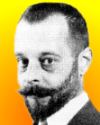
Born 25 Apr 1873; died 22 Feb 1949 at age 75. quotes
Canadian-French bacteriologist who is generally known as the discoverer of the bacteriophage, a virus that infects bacteria. (The earlier identification of the bacteriophage by the British microbiologist Frederick W. Twort in about 1915 became obscured by Twort’s disinclination to take credit for or to pursue his initial findings.) On 15 Sep 1917, the term bacteriophage (“eater of bacteria”) was coined in a note from Dr. Félix d'Hérelle to the French Academy of Sciences.
Canadian-French bacteriologist who is generally known as the discoverer of the bacteriophage, a virus that infects bacteria. (The earlier identification of the bacteriophage by the British microbiologist Frederick W. Twort in about 1915 became obscured by Twort’s disinclination to take credit for or to pursue his initial findings.) On 15 Sep 1917, the term bacteriophage (“eater of bacteria”) was coined in a note from Dr. Félix d'Hérelle to the French Academy of Sciences.
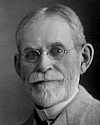
Born 25 Apr 1854; died 20 Apr 1940 at age 85.
American inventor of various sound-recording instruments, including the photophone (1880, with Alexander Graham Bell), an instrument for transmitting sound to a distance through the agency of light, using sensitive selenium cells. He also developed the Graphophone (1881, patented 1886; with Chichester A. Bell, a cousin of Alexander Graham Bell). This greatly improved on the tinfoil surface and rigid stylus then used by Thomas Edison. Tainter devising a wax-coated cardboard cylinder and a flexible recording stylus which incised the grooves (rather than embossing) to achieve better reproduction, making the phonograph and the dictagraph commercially possible.
American inventor of various sound-recording instruments, including the photophone (1880, with Alexander Graham Bell), an instrument for transmitting sound to a distance through the agency of light, using sensitive selenium cells. He also developed the Graphophone (1881, patented 1886; with Chichester A. Bell, a cousin of Alexander Graham Bell). This greatly improved on the tinfoil surface and rigid stylus then used by Thomas Edison. Tainter devising a wax-coated cardboard cylinder and a flexible recording stylus which incised the grooves (rather than embossing) to achieve better reproduction, making the phonograph and the dictagraph commercially possible.
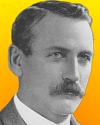
Born 25 Apr 1853; died 2 Jun 1943 at age 90.
American civil engineer and railroad executive who, as chief engineer of the Panama Canal from late 1905 to Apr 1907, laid the basis for that project's successful completion. He was recognized as the world's foremost railway civil engineer when he arrived on the Isthmus in 1905. The fundamental problem that he faced was one of restoring confidence and morale. A yellow fever epidemic, followed by the unexpected resignation of the first Chief Engineer, John F. Wallace, had made the Canal Zone a scene of chaos and hysteria. He found no order, no plan on the job. He planned the main features of the waterway and lobbied openly in May and June 1906 for a high-level, lock-type canal. On 29 Jun 1906, the President's signature put into that plan into law.
American civil engineer and railroad executive who, as chief engineer of the Panama Canal from late 1905 to Apr 1907, laid the basis for that project's successful completion. He was recognized as the world's foremost railway civil engineer when he arrived on the Isthmus in 1905. The fundamental problem that he faced was one of restoring confidence and morale. A yellow fever epidemic, followed by the unexpected resignation of the first Chief Engineer, John F. Wallace, had made the Canal Zone a scene of chaos and hysteria. He found no order, no plan on the job. He planned the main features of the waterway and lobbied openly in May and June 1906 for a high-level, lock-type canal. On 29 Jun 1906, the President's signature put into that plan into law.
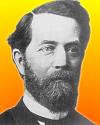

Klein bottle
Christian Felix Klein was a German mathematician whose synthesis of geometry as the study of the properties of a space that are invariant under a given group of transformations, known as the Erlanger Programm, profoundly influenced mathematical development. He created the Klein bottle, a one-sided closed surface. A Klein bottle cannot be constructed in Euclidean space. It is best pictured as a cylinder looped back through itself to join with its other end. However this is not a continuous surface in 3-space as the surface cannot go through itself without a discontinuity. It is possible to construct a Klein bottle in non-Euclidean space.
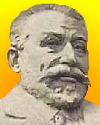
Born 25 Apr 1842; died 20 Mar 1921 at age 78.
French engineer who was an important leader in experimenting with various ways of reinforcing concrete with iron and steel. At the Paris Exposition of 1867, Hennebique saw Joseph Monier's tubs and tanks built of concrete reinforced with wire mesh, and began experimenting with ways to apply this new material to building construction, setting up his own firm (1867). First using reinforced-concrete floor slabs (1879), he progressed to a complete building system, patented 1892, using his invention of a method using hooked connections on reinforcing bars. Hennébique introduced his techniques into Britain when he was commissioned to build a new flour mill in Swansea (completed 1898). This was the first multistorey reinforced concrete building in Britain.
French engineer who was an important leader in experimenting with various ways of reinforcing concrete with iron and steel. At the Paris Exposition of 1867, Hennebique saw Joseph Monier's tubs and tanks built of concrete reinforced with wire mesh, and began experimenting with ways to apply this new material to building construction, setting up his own firm (1867). First using reinforced-concrete floor slabs (1879), he progressed to a complete building system, patented 1892, using his invention of a method using hooked connections on reinforcing bars. Hennébique introduced his techniques into Britain when he was commissioned to build a new flour mill in Swansea (completed 1898). This was the first multistorey reinforced concrete building in Britain.
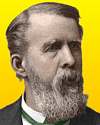
Born 25 Apr 1836; died 23 Apr 1922 at age 85.
Laroy Sunderland Starrett was an American inventor and manufacturer who held over 100 patents, many for fine measurement tools, including the micrometer screw guage (patented 29 Jul 1890) that is familiar to present-day machinists and physics lab workers. His first patent (23 May 1865) was for a meat chopper, which he had manufactured for him, but marketed it himself. This product was successful, and his next patents for shoe studs and hooks provided enough income to establish his own factory. He began making a combination square. This was a try-square with a head that could be moved and clamped at any position along the blade, which he patented 26 Feb 1879. He added products including rules, surface guages, and other small tools. His business became the world's largest in his specialty. When he died, it had over five acres of production space, and 1,000 workers.«
Laroy Sunderland Starrett was an American inventor and manufacturer who held over 100 patents, many for fine measurement tools, including the micrometer screw guage (patented 29 Jul 1890) that is familiar to present-day machinists and physics lab workers. His first patent (23 May 1865) was for a meat chopper, which he had manufactured for him, but marketed it himself. This product was successful, and his next patents for shoe studs and hooks provided enough income to establish his own factory. He began making a combination square. This was a try-square with a head that could be moved and clamped at any position along the blade, which he patented 26 Feb 1879. He added products including rules, surface guages, and other small tools. His business became the world's largest in his specialty. When he died, it had over five acres of production space, and 1,000 workers.«
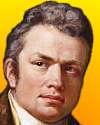
Born 25 Apr 1769; died 12 Dec 1849 at age 80. quotes
French-English engineer and inventor who solved the historic problem of underwater tunneling. A prolific inventor, Brunel designed machines for sawing and bending timber, boot making, stocking knitting, and printing. As a civil engineer, his designs included the Île de Bourbon suspension bridge and the first floating landing piers at Liverpool. In 1818, however, Brunel patented the tunneling shield, a device that made possible tunneling safely through waterbearing strata. On 2 Mar 1825 operations began for building a tunnel under the Thames River between Rotherhithe and Wapping. The Thames Tunnel was eventually opened on 25 Mar 1843. It has a twin horseshoe cross-section with height of 23-ft (7m), width of 37-ft (11m), and total length 1,506-ft (406m). more
French-English engineer and inventor who solved the historic problem of underwater tunneling. A prolific inventor, Brunel designed machines for sawing and bending timber, boot making, stocking knitting, and printing. As a civil engineer, his designs included the Île de Bourbon suspension bridge and the first floating landing piers at Liverpool. In 1818, however, Brunel patented the tunneling shield, a device that made possible tunneling safely through waterbearing strata. On 2 Mar 1825 operations began for building a tunnel under the Thames River between Rotherhithe and Wapping. The Thames Tunnel was eventually opened on 25 Mar 1843. It has a twin horseshoe cross-section with height of 23-ft (7m), width of 37-ft (11m), and total length 1,506-ft (406m). more
Marc Isambard Brunel, by Paul Clements. - book suggestion.

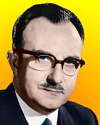
Died 25 Apr 1999 at age 94 (born 13 Dec 1904). quotes
Sir William Hunter McCrea was an Irish theoretical astrophysicist whose early work was in quantum physics, relativity and pure mathmatics, but he gradually turned to applying theoretical physics in astronomy. He ranged from considering the stellar atmospheres, planet formation, cosmology and indeed, the formation of stars and the universe. He was an early advocate that stars have a high hydrogen content. He studied gas dynamics, as in the formation of hydrogen in molecular form in dusty interstellar clouds, and developed a theory of the transition from increasing density to conditions sufficient for gravitational collapse and possible star formation. Although he at first was open-minded to the steady state theory of the universe proposed by Hermann Bondi, Thomas Gold and Fred Hoyle, McCrea's work and others accumulated evidence for the Big Bang theory.«
Sir William Hunter McCrea was an Irish theoretical astrophysicist whose early work was in quantum physics, relativity and pure mathmatics, but he gradually turned to applying theoretical physics in astronomy. He ranged from considering the stellar atmospheres, planet formation, cosmology and indeed, the formation of stars and the universe. He was an early advocate that stars have a high hydrogen content. He studied gas dynamics, as in the formation of hydrogen in molecular form in dusty interstellar clouds, and developed a theory of the transition from increasing density to conditions sufficient for gravitational collapse and possible star formation. Although he at first was open-minded to the steady state theory of the universe proposed by Hermann Bondi, Thomas Gold and Fred Hoyle, McCrea's work and others accumulated evidence for the Big Bang theory.«
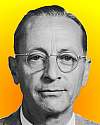
Died 25 Apr 1985 at age 87 (born 10 May 1897).
Fraancis Parker Shepard was an American marine geologist who studied submarine canyons, coastal processes and features, submerged deltas, sea-level changes and continental shelves, all of which he preferred rather than deep-ocean geology. His work off the California coast near La Jolla pioneered Pacific marine geology. Although his early career began with the study of structural geology, with field trips in the Rocky Mountains leading to a Ph.D. in 1922. The next year, his father, head of Shepard Steamship Line and an avid sailor, offered the use of his yacht. Thereby, Shepard's lifetime interests shifted to marine geology. When the surface sediment samples he collected from the continental coast off the New England coast did not match what theory predicted, in 1932, he published his observations and offered new interpretations, even challenging existing ideas.«
Fraancis Parker Shepard was an American marine geologist who studied submarine canyons, coastal processes and features, submerged deltas, sea-level changes and continental shelves, all of which he preferred rather than deep-ocean geology. His work off the California coast near La Jolla pioneered Pacific marine geology. Although his early career began with the study of structural geology, with field trips in the Rocky Mountains leading to a Ph.D. in 1922. The next year, his father, head of Shepard Steamship Line and an avid sailor, offered the use of his yacht. Thereby, Shepard's lifetime interests shifted to marine geology. When the surface sediment samples he collected from the continental coast off the New England coast did not match what theory predicted, in 1932, he published his observations and offered new interpretations, even challenging existing ideas.«
Submarine Geology, by Francis Parker Shepard. - book suggestion.
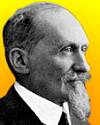
Died 25 Apr 1958 at age 79 (born 19 Sep 1878).
Charles-Victor Mauguin was a French mineralogist and crystallographer who was one of the first to make a systematic study of the silicate minerals. Using X-ray diffraction techniques, he determined the structure of a large number of micas. He also published the atomic structure of cinnabar, calomel and graphite and devised a system of symbols for designation of symmetry properties of crystals, adopted (1935) as international standard.«
Charles-Victor Mauguin was a French mineralogist and crystallographer who was one of the first to make a systematic study of the silicate minerals. Using X-ray diffraction techniques, he determined the structure of a large number of micas. He also published the atomic structure of cinnabar, calomel and graphite and devised a system of symbols for designation of symmetry properties of crystals, adopted (1935) as international standard.«
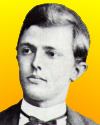
Died 25 Apr 1940 at age 86 (born 26 Dec 1853).
German archaeologist who was the first to study the construction of ancient Greek theatres. He worked with Ernst Curtius as a member of the excavation team at the Olympia site in Greece (1877-81), where Dörpfeld developed the method of dating ancient archaeological sites based on the strata in which objects were found and the type of building materials. He excavated the Mycenaean palace at Tiryns, Greece (1884-85). He was an associate of the German archaeologist Heinrich Schliemann assisting in the search for the Harbour of Troy, at Hisarlik, Turkey (1882-83). Dörpfeld continued that work (1893-94) after Schliemann's death.«
German archaeologist who was the first to study the construction of ancient Greek theatres. He worked with Ernst Curtius as a member of the excavation team at the Olympia site in Greece (1877-81), where Dörpfeld developed the method of dating ancient archaeological sites based on the strata in which objects were found and the type of building materials. He excavated the Mycenaean palace at Tiryns, Greece (1884-85). He was an associate of the German archaeologist Heinrich Schliemann assisting in the search for the Harbour of Troy, at Hisarlik, Turkey (1882-83). Dörpfeld continued that work (1893-94) after Schliemann's death.«
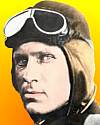
Died 25 Apr 1928 at age 37 (born 25 Oct 1890).
American aviator who piloted the explorer Richard E. Byrd on the first successful flight over the North Pole on 9 May 1926, in a three-engine Fokker monoplane, Josephine Ford. They flew 1,360 miles from King's Bay, Spitzbergen, to the Pole and back in 15-1/2 hours. During his aviation duty in the Navy Bennett had met Byrd (1925) as his commander on the Donald B. MacMillan expedition to northwestern Greenland. Byrd realized that Bennett was more than a good pilot, he was fearless, and one of the finest practical men in the Navy for handling an airplane's temperamental mechanisms. Together, they planned the North Pole flight. For his share in the achievement Bennett received the Congressional Medal of Honor.
American aviator who piloted the explorer Richard E. Byrd on the first successful flight over the North Pole on 9 May 1926, in a three-engine Fokker monoplane, Josephine Ford. They flew 1,360 miles from King's Bay, Spitzbergen, to the Pole and back in 15-1/2 hours. During his aviation duty in the Navy Bennett had met Byrd (1925) as his commander on the Donald B. MacMillan expedition to northwestern Greenland. Byrd realized that Bennett was more than a good pilot, he was fearless, and one of the finest practical men in the Navy for handling an airplane's temperamental mechanisms. Together, they planned the North Pole flight. For his share in the achievement Bennett received the Congressional Medal of Honor.
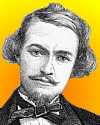
1864
Died 25 Apr 1892 at age 52 (born 28 Feb 1840).
French explorer who contributed to African ethnology with his study of the Tuareg people of the Sahara. He travelled through the region south of the Atlas Mountains, between Morocco and Tunisia. There he spent months living with the Tuareg, a pastoral people, observing their customs, speech, and their interest in poetry.«
French explorer who contributed to African ethnology with his study of the Tuareg people of the Sahara. He travelled through the region south of the Atlas Mountains, between Morocco and Tunisia. There he spent months living with the Tuareg, a pastoral people, observing their customs, speech, and their interest in poetry.«
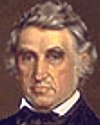
Died 25 Apr 1853 at age 67 (born 21 Nov 1785). quotes
American army surgeon who was the first person to observe and study human digestion as it occurs in the stomach. As a young army surgeon stationed on Mackinac Island in Michigan, Beaumont was asked to treat a shotgun wound. The wound was "more than the size of the palm of a man's hand," Beaumont wrote. The patient, Alexis St. Martin, survived but was left with a permanent opening into his stomach from the outside. Over the next few years, Dr. Beaumont used this crude fistula to sample gastric secretions. He identified hydrochloric acid as the principal agent in gastric juice and recognized its digestive and bacteriostatic functions. Moreover, many of his conclusions about the regulation of secretion and motility remain valid to this day.
American army surgeon who was the first person to observe and study human digestion as it occurs in the stomach. As a young army surgeon stationed on Mackinac Island in Michigan, Beaumont was asked to treat a shotgun wound. The wound was "more than the size of the palm of a man's hand," Beaumont wrote. The patient, Alexis St. Martin, survived but was left with a permanent opening into his stomach from the outside. Over the next few years, Dr. Beaumont used this crude fistula to sample gastric secretions. He identified hydrochloric acid as the principal agent in gastric juice and recognized its digestive and bacteriostatic functions. Moreover, many of his conclusions about the regulation of secretion and motility remain valid to this day.
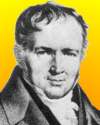
Died 25 Apr 1840 at age 58 (born 21 Jun 1781). quotes
French mathematician who is known known for his work on definite integrals, advances in Fourier series, electromagnetic theory, and probability. The Poisson distribution (1837) describes the probability that a random event will occur in a time or space interval under the conditions that the probability of the event occurring is very small, but the number of trials is very large so that the event actually occurs a few times. His works included applications to electricity and magnetism, and astronomy. He is also known for the Poisson's integral, Poisson's equation in potential theory, Poisson brackets in differential equations, Poisson's ratio in elasticity, and Poisson's constant in electricity.
French mathematician who is known known for his work on definite integrals, advances in Fourier series, electromagnetic theory, and probability. The Poisson distribution (1837) describes the probability that a random event will occur in a time or space interval under the conditions that the probability of the event occurring is very small, but the number of trials is very large so that the event actually occurs a few times. His works included applications to electricity and magnetism, and astronomy. He is also known for the Poisson's integral, Poisson's equation in potential theory, Poisson brackets in differential equations, Poisson's ratio in elasticity, and Poisson's constant in electricity.
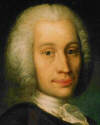
Died 25 Apr 1744 at age 42 (born 27 Nov 1701).
Swedish astronomer who is famous for the temperature scale he developed. Celsius was born in Uppsala where he succeeded his father as professor of astronomy in 1730. It was there also that he built Sweden's first observatory in 1741. He and his assistant Olof Hiortner discovered that aurora borealis influence compass needles. Celsius' fixed scale (often called centigrade scale) for measuring temperature defines zero degrees as the temperature at which water freezes, and 100 degrees as the temperature at which water boils. This scale, an inverted form of Celsius' original design, was adopted as the standard and is still used in almost all scientific work.
Swedish astronomer who is famous for the temperature scale he developed. Celsius was born in Uppsala where he succeeded his father as professor of astronomy in 1730. It was there also that he built Sweden's first observatory in 1741. He and his assistant Olof Hiortner discovered that aurora borealis influence compass needles. Celsius' fixed scale (often called centigrade scale) for measuring temperature defines zero degrees as the temperature at which water freezes, and 100 degrees as the temperature at which water boils. This scale, an inverted form of Celsius' original design, was adopted as the standard and is still used in almost all scientific work.
Inventing Temperature: Measurement and Scientific Progress, by Hasok Chang. - book suggestion.
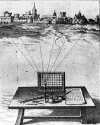
Died 25 Apr 1472 at age 68 (born 18 Feb 1404). quotes
Italian artist and geometrist who “wrote the book,” the first general treatise Della Pictura (1434) on the the laws of perspective, establishing the science of projective geometry. Alberti also worked on maps (again involving his skill at geometrical mappings) and he collaborated with Toscanelli who supplied Columbus with the maps for his first voyage. He also wrote the first book on cryptography which contains the first example of a frequency table.
Italian artist and geometrist who “wrote the book,” the first general treatise Della Pictura (1434) on the the laws of perspective, establishing the science of projective geometry. Alberti also worked on maps (again involving his skill at geometrical mappings) and he collaborated with Toscanelli who supplied Columbus with the maps for his first voyage. He also wrote the first book on cryptography which contains the first example of a frequency table.

(NASA)
In 1990, the $2.5 billion Hubble Space Telescope was deployed in space from the Space Shuttle Discovery into an orbit 381 miles above Earth. It was the first major orbiting observatory, named in honour of American astronomer, Edwin Powell Hubble. It was seven years behind schedule and nearly $2 billion over budget. In orbit, the 94.5-in primary mirror was found to be flawed, giving blurred images and reduced ability to see distant stars. However, correcting optics were successfully installed in 25 Dec 1993. The telescope 43-ft x 14-ft telescope now provides images with a clarity otherwise impossible due to the effect of the earth's atmosphere. Instrument packages capture across the electromagnetic spectrum.
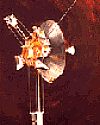
(NASA)
In 1983, Pioneer 10 crossed the orbit of Pluto, the outermost planet, to continue its voyage into the universe beyond our solar system
In 1965, a U.S. patent for the design of a plastic bag with handle was issued to Swedish inventor Sten Gustav Thulin, assigned to the Celloplast company (No. 3,180,557, filed 10 Jul 1962). The design is the widely-used, disposable, plastic “T-shirt” grocery bag. The bag is made from a continuous-feed of seamless tubular weldable plastic material (such as polyethylene), pleated in a flat state. To make the bag, transverse seams are welded, a segment is punched out to form the top handles portion, and separated at the transverse seams. Celloplast thrived until Mobil overturned the patent (1977). H. Gordon Dancy refined the design, assigned to Sunoco, so that a bag pack would hang on a frame, to be more easily opened and filled (U.S. patents 4,480,750 issued 6 Nov 1984; D287,572 on 6 Jan 1987).«
Noyce
In 1961, the integrated circuit was patented by Robert Noyce (No. 2,981,877).
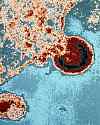
In 1959, a 25-year-old patient, David Carr, an apprentice printer, entered the Royal Manchester Infirmary in England, with unusual symptoms, including purplish skin lesions, fatigue and weight loss. He died 4½ months later for reasons not then understood. His preserved tissue samples were examined in 1990. In a letter to the journal The Lancet, (7 Jul 1990) Gerald Corbitt, director of clinical virology at the hospital, suggested this could be the earliest known AIDS case. In 1995, the journal Nature, reported that the results were anomolous: the putative HIV detected was of a “relatively modern strain.” In the 20 Jan 1996 Lancet, the earlier claim was retracted, accepting the sample had been contaminated. Having had doubts since 1992, Corbitt said he regarded the analysis as no more than a trial of PCR [polymerase chain reaction] on archival material. Belatedly, the report of a possible early AIDS case was clarified.[Image: AIDS virus attacking a blood cell.]
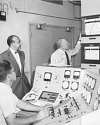
In 1957, an experimental sodium reactor (SRE) began self-sustaining nuclear fission with 350ºF sodium in the core. By 12 Nov 1957 if first provided electricity to Moorpark, California. It achieved full power on 21 May 1958. Design began Jun 1954, site excavation started in Mar 1955, and construction was finished in Feb 1957. The reactor, which used sodium as coolant, was located in the Santa Susana Mountains, about 30 miles northwest of Los Angeles, California. It was built for the Atomic Energy Commission by Atomics International, a division of North American Aviation., Inc. The decision to deactivate the Sodium Reactor Experiment was made in the fall of 1966 and deactivation activities completed by Jun 1968. Decommissioning, demolition and decontamination was completed in 1983.«
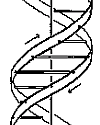
In 1953, the Nature journal published the structure of DNA, as suggested in a one-page article by James Watson and Francis Crick. Their work earned the pair of scientists a Nobel Prize in 1962. The structure explained how DNA passed heriditary information from cell to cell, and from generation to generation. “This structure has two helical chains each coiled around the same axis... Both chains follow right-handed helices... The novel feature of the structure is the manner in which the two chains are held together by purine and pyrimidine bases... They are joined together in pairs, a single base from one chain being hydrogen-bonded to a single base from the other chain, so that the two lie side by side with identical z-co-ordinates.”«[Image: DNA as illustrated in the Nature article.]
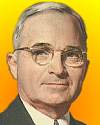
In 1945, the new U.S. President, Harry S. Truman was briefed on the status of the atomic bomb project. Within 24 hours of Roosevelt's death on 12 Apr 1945, Truman had been told briefly about the atomic bomb project by Secretary of War, Henry Stimson. In this more extensive briefing on 25 Apr, Stimson, with General Groves's assistance, gave Truman information that the uranium-235 gun design had been frozen, but sufficient uranium-235 would not be accumulated until around 1 Aug. Enough plutonium-239 would be available for an implosion assembly to be tested in early July; a second would be ready in August. eb
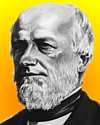
Hough
In 1882, the first national U.S. forestry society, held the American Forestry Congress at the Music Hall in Cincinnati, Ohio. In the five-day event, which was visited by Ohio Governor Foster and ex-President Hayes, papers were presented, memorial trees were planted, and, as reported by the New York Times, “a resolution was adopted that it was the judgment of the Forestry Congress that the Congress of the United States should take steps to establish at State and national institutions experimental forestry stations.” Franklin B. Hough (who in 1881 had been appointed the first chief of the Division of Forestry, U.S. Dept. of Agriculture) delivered an address titled “Forestry of the Future,” in which he presented a detailed economic justification for a national policy of reforestation.«
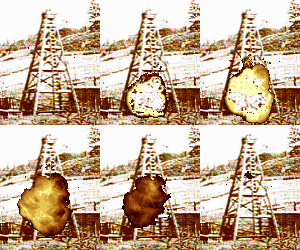
In 1865, a U.S. patent was issued, the first for a “torpedo” used in oil well drilling (No. 47,458). The inventor was Col. Edward A.L. Roberts of New York City, who had successfully experimented with it in Jan 1865 to open an obstructed well bore at the Ladies’ Well on Watson Flats, near Titusville, Pennsylvania.
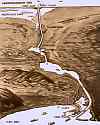
In 1859, ground was broken for the Suez Canal in Egypt. The first blow of the pickax was given by its French engineer, Ferdinand vicomte de Lesseps at Port Said. He initiated and supervised the project to link the Mediterranean and the Red Seas. The 100-mile long canal cuts across the Isthmus of Suez, providing a direct transportation route for trade between Europe and Asia. With the consent of the Ottoman governor of Egypt, the Suez Canal Company was formed (1856) with the rights to construct and operate the canal for 99 years. Digging began by hand, with forced labour. Progress improved with European mechanical dredgers and steam shovels, but was delayed by labour disputes and a cholera epidemic. Four year later than originally planned, the opening ceremony took place on 17 Nov 1869. After this success he began building the Panama Canal, when he abandoned when funding ran out.
In 1794, U.S. letters patent were granted by George Washington to John J. Staples, Jr., of New York, for what the inventor described as a "Carriage to be Propelled by the Mechanic Powers" (not steam power). However, reading the text of the patent shows that the specifications were vague, and the invention wholly impractical. It proposed five powers be used, including "The first power ... is the weight of the whole carriage ... which is raised up by the oval wheels in turning round, and when descending acts on the shortest lever. 2d Power is the weight of the top frame which supports the carriage body ... which being likewise wound up by the said oval wheels at the same or a different time acts in descending on the two next size levers."
more
In 1792, in Paris, at the place de Grève, the guillotine was used for the first time on a human, highwayman Nicolas Jacques Pelletier, after having been tested during its development with corpses and sheep. The executioner was Charles-Henri Sanson. The severed head fell into a wicker basket; sawdust absorbed the blood. According to the Chronique de Paris, “The people were not satisfied at all. ... Everything happened too fast. They dispersed with disappointment,” wanting the gallows back, with more spectacle. The guillotine, as used in France, was invented (1788) by the King's physician, Antoine Lewis, built by a German harpsichord maker, Tobias Schmidt, and named for the French politician Joseph Ignace Guillotin who promoted its use as a more humane method of execution.«




