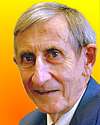
Born 15 Dec 1923. quotes
Freeman John Dyson is an English-American physicist who is best known for his speculative work on extraterrestrial civilizations. As an imaginative scientist he proposed that a highly advanced technological civilization would ultimately completely surround its host star with a huge shell to capture 100% of the useful radiant energy. This “"Dyson shell”, would have a gigantic cluster of artificial planetoids (“Dyson cloud”) with billions of billions of inhabitants who would make use of the energy captured by the Dyson shell. He also made the intriguing speculation that a Dyson shell viewed from other galaxies would have a highly distinctive, unnatural light. He suggests astronomers search for such tell-tale colored stars, which should signify advanced, intelligent life.
Freeman John Dyson is an English-American physicist who is best known for his speculative work on extraterrestrial civilizations. As an imaginative scientist he proposed that a highly advanced technological civilization would ultimately completely surround its host star with a huge shell to capture 100% of the useful radiant energy. This “"Dyson shell”, would have a gigantic cluster of artificial planetoids (“Dyson cloud”) with billions of billions of inhabitants who would make use of the energy captured by the Dyson shell. He also made the intriguing speculation that a Dyson shell viewed from other galaxies would have a highly distinctive, unnatural light. He suggests astronomers search for such tell-tale colored stars, which should signify advanced, intelligent life.
Disturbing the Universe, by Freeman Dyson. - book suggestion.
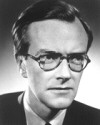
Born 15 Dec 1916; died 5 Oct 2004 at age 87. quotes
Maurice Hugh Frederick Wilkins was a New Zealand-born British biophysicist, whose X-ray diffraction studies of deoxyribonucleic acid (DNA) were significant in the determination of the molecular structure of DNA accomplished by James Watson and Sir Francis Crick. For this work the three scientists shared the 1962 Nobel Prize for Physiology or Medicine.«
Maurice Hugh Frederick Wilkins was a New Zealand-born British biophysicist, whose X-ray diffraction studies of deoxyribonucleic acid (DNA) were significant in the determination of the molecular structure of DNA accomplished by James Watson and Sir Francis Crick. For this work the three scientists shared the 1962 Nobel Prize for Physiology or Medicine.«
The Third Man of the Double Helix: The Autobiography of Maurice Wilkins, by Maurice Wilkins. - book suggestion.
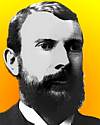
Born 15 Dec 1869; died 4 May 1919 at age 49. quotes
American geologist who extended ideas on sedimentary rocks made by marine sedimentation to modification by the action of rivers, winds, and ice. He proposed (1916) that the bright red colour of many Devonian rocks indicated an arid climate that baked them dry, like bricks. He suggested droughts caused lung-fish to evolve into air-breathing land vertebrates, including tetrapods. He applied the new science of radioactive dating in 1917 to recalculate Earth's age to a few billion years, at a time when many geologists still preferred an age of 100 million years. He also emphasized that geological processes vary in intensity in a cyclical rather than a uniform fashion, so current rates of geological change used in prior estimates were not reliable guides.«
American geologist who extended ideas on sedimentary rocks made by marine sedimentation to modification by the action of rivers, winds, and ice. He proposed (1916) that the bright red colour of many Devonian rocks indicated an arid climate that baked them dry, like bricks. He suggested droughts caused lung-fish to evolve into air-breathing land vertebrates, including tetrapods. He applied the new science of radioactive dating in 1917 to recalculate Earth's age to a few billion years, at a time when many geologists still preferred an age of 100 million years. He also emphasized that geological processes vary in intensity in a cyclical rather than a uniform fashion, so current rates of geological change used in prior estimates were not reliable guides.«
c.1900
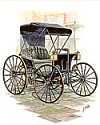
Duryea 1893
Charles Edgar Duryea was an American inventor who with his brother J. Frank Duryea built the first automobile with multiple copies manufactured in the U.S. On 28 Nov 1895, Frank drove their car to win $2,000 in the first American Automobile Race in Chicago, sponsored by the Chicago Times-Herald. They travelled 54 miles from Chicago to Evanston, Illinois and back, in just over 10 hours. In 1896, they set up the Duryea Motor Wagon Co. in Springfield, Mass. to manufacture multiple units of a gasoline-powered vehicle. Their production of 13 identical machines that year is considered to be the first serial production of American cars, earning them recognition as “Fathers of the American Automobile Industry.''« more
Charles E. Duryea: Automaker, by George W. May. - book suggestion.
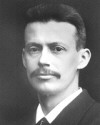
Born 15 Dec 1860; died 24 Sep 1904 at age 43.
Danish physician who founded modern phototherapy, and was awarded the 1903 Nobel Prize for Physiology or Medicine "in recognition of his contribution to the treatment of diseases, especially lupus vulgaris, with concentrated light radiation, whereby he has opened a new avenue for medical science."«
Danish physician who founded modern phototherapy, and was awarded the 1903 Nobel Prize for Physiology or Medicine "in recognition of his contribution to the treatment of diseases, especially lupus vulgaris, with concentrated light radiation, whereby he has opened a new avenue for medical science."«
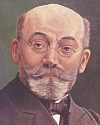
Born 15 Dec 1859; died 14 Apr 1917 at age 57.
Dr. Lazarus Ludwig Zamenhof was a Polish physician and oculist who created the most important of the international artificial languages - Esperanto. He believed everybody in the world should be able to communicate with each other by means of a single international language, so he developed Esperanto, meaning "he who hopes." It was introduced in a pamphlet he published in 1887. Esperanto vocabulary is comprised primarily of words with Latin roots and words common to several languages. Esperanto is less complicated than an earlier attempt at artificial language called Volapuk. While Esperanto associations formed around the world, it never became widely accepted.
Dr. Lazarus Ludwig Zamenhof was a Polish physician and oculist who created the most important of the international artificial languages - Esperanto. He believed everybody in the world should be able to communicate with each other by means of a single international language, so he developed Esperanto, meaning "he who hopes." It was introduced in a pamphlet he published in 1887. Esperanto vocabulary is comprised primarily of words with Latin roots and words common to several languages. Esperanto is less complicated than an earlier attempt at artificial language called Volapuk. While Esperanto associations formed around the world, it never became widely accepted.
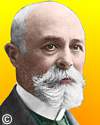
Born 15 Dec 1852; died 25 Aug 1908 at age 55. quotes
Antoine-Henri Becquerel was a French physicist who discovered radioactivity in fluorescent salts of uranium. “In recognition of the extraordinary services he has rendered by his discovery of spontaneous radioactivity,” he shared the 1903 Nobel Prize for Physics (with Pierre and Marie Curie). His early researches were in optics. In 1896, in a drawer, he had stored for a few days a photographic plate in black paper, and some uranium mineral crystals left on it. Later, he found developed the plate was fogged. The crystals, long out of sunlight, could not fluoresce, yet he accidentally discovered the salt was a source of a penetrating radiation: radioactivity. Three years later he showed the rays were charged particles by their deflection in a magnetic field. Initially, the rays emitted by radioactive substances were named after him.« more
Antoine-Henri Becquerel was a French physicist who discovered radioactivity in fluorescent salts of uranium. “In recognition of the extraordinary services he has rendered by his discovery of spontaneous radioactivity,” he shared the 1903 Nobel Prize for Physics (with Pierre and Marie Curie). His early researches were in optics. In 1896, in a drawer, he had stored for a few days a photographic plate in black paper, and some uranium mineral crystals left on it. Later, he found developed the plate was fogged. The crystals, long out of sunlight, could not fluoresce, yet he accidentally discovered the salt was a source of a penetrating radiation: radioactivity. Three years later he showed the rays were charged particles by their deflection in a magnetic field. Initially, the rays emitted by radioactive substances were named after him.« more
Radioactivity: A History of a Mysterious Science, by Marjorie C. Malley. - book suggestion.
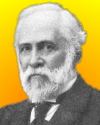
Born 15 Dec 1834; died 3 Jan 1908 at age 73.
American astronomer who made the first observations of the flash spectrum of the Sun, proved the gaseous nature of the sun's corona and discovered the reversing layer of the solar atmosphere. He was a pioneer in the study of the spectrum of the sun and experimented in photographing solar prominences in full sunlight. On 22 Dec 1870, at the eclipse in Spain, he saw the lines of the solar spectrum all become bright for perhaps a second and a half (the "flash spectrum") and announced the "reversing layer." By exploring from the high altitude of Sherman, Wy. (1872), he more than doubled the number of bright lines he had observed in the chromosphere, By a comparison of observations, he concluded that magnetic conditions on the earth respond to solar disturbances.
American astronomer who made the first observations of the flash spectrum of the Sun, proved the gaseous nature of the sun's corona and discovered the reversing layer of the solar atmosphere. He was a pioneer in the study of the spectrum of the sun and experimented in photographing solar prominences in full sunlight. On 22 Dec 1870, at the eclipse in Spain, he saw the lines of the solar spectrum all become bright for perhaps a second and a half (the "flash spectrum") and announced the "reversing layer." By exploring from the high altitude of Sherman, Wy. (1872), he more than doubled the number of bright lines he had observed in the chromosphere, By a comparison of observations, he concluded that magnetic conditions on the earth respond to solar disturbances.
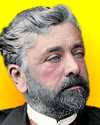
Born 15 Dec 1832; died 28 Dec 1923 at age 91. quotes
French civil engineer who specialized in metal structures, known especially for the Eiffel Tower in Paris. He built his first of his iron bridges at Bordeaux (1858) and was among the first engineers to build bridge foundations using compressed-air caissons. His work includes designing the rotatable dome for Nice Observatory on the summit of Mont Gros (1886), and the frameworkfor the Statue of Liberty now in New York Harbour. After building the Eiffel Tower (1887-9), which he used for scientific research on meteorology, aerodynamics and radio telegraphy, he also built the first aerodynamic laboratory at Auteuil, outside Paris, where he pursued his research work without interruption during WW I.«
French civil engineer who specialized in metal structures, known especially for the Eiffel Tower in Paris. He built his first of his iron bridges at Bordeaux (1858) and was among the first engineers to build bridge foundations using compressed-air caissons. His work includes designing the rotatable dome for Nice Observatory on the summit of Mont Gros (1886), and the frameworkfor the Statue of Liberty now in New York Harbour. After building the Eiffel Tower (1887-9), which he used for scientific research on meteorology, aerodynamics and radio telegraphy, he also built the first aerodynamic laboratory at Auteuil, outside Paris, where he pursued his research work without interruption during WW I.«
Eiffel: The Genius Who Reinvented Himself, by David I. Harvie. - book suggestion.
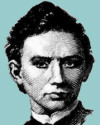
Born 15 Dec 1802; died 27 Jan 1860 at age 57. quotes
Hungarian mathematician and one of the founders of non-Euclidean geometry - geometry that does not include Euclid's axiom that only one line can be drawn parallel to a given line through a point not on the given line. His father, Farkas Bolyai, had devoted his life to trying to prove Euclid's famous parallel postulate. Despite his father's warnings that it would ruin his health and peace of mind, János followed in working on this axiom until, in about 1820, he came to the conclusion that it could not be proved. He went on to develop a consistent geometry (published 1882) in which the parallel postulate is not used, thus establishing the independence of this axiom from the others. He also did valuable work in the theory of complex numbers.
Hungarian mathematician and one of the founders of non-Euclidean geometry - geometry that does not include Euclid's axiom that only one line can be drawn parallel to a given line through a point not on the given line. His father, Farkas Bolyai, had devoted his life to trying to prove Euclid's famous parallel postulate. Despite his father's warnings that it would ruin his health and peace of mind, János followed in working on this axiom until, in about 1820, he came to the conclusion that it could not be proved. He went on to develop a consistent geometry (published 1882) in which the parallel postulate is not used, thus establishing the independence of this axiom from the others. He also did valuable work in the theory of complex numbers.
Born 15 Dec 1774; died 2 Oct 1812 at age 37.
(née Wilkinson) American inventor who held the first patent issued in the United States to a woman. The patent was for a new way of spinning cotton thread. This invention resulted from her working partnership with her husband, Samuel Slater, who founded the American cotton textile industry. By using spinning wheels to twist fine Surinam cotton yarn, she created a No. 20 two-ply thread that was an improvement on the linen thread previously in use for sewing cloth.
(née Wilkinson) American inventor who held the first patent issued in the United States to a woman. The patent was for a new way of spinning cotton thread. This invention resulted from her working partnership with her husband, Samuel Slater, who founded the American cotton textile industry. By using spinning wheels to twist fine Surinam cotton yarn, she created a No. 20 two-ply thread that was an improvement on the linen thread previously in use for sewing cloth.

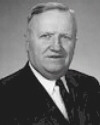
Died 15 Dec 1984 at age 82 (born 22 Oct 1902). quotes
American chemist who, during the 1940s and '50s, developed processes for reducing individual rare-earth elements to the metallic state at low cost, thereby making these substances available to industry at reasonable prices. Earlier, upon the discovery of nuclear fission in 1939, the U.S. government asked leading scientists to join in the development of nuclear energy. In 1942, Iowa State College's Frank H. Spedding, an expert in the chemistry of rare earths, agreed to set up the Ames portion of the Manhattan Project, resulting in an easy and inexpensive procedure to produce high quality uranium. Between 1942 and 1945, almost two million pounds of uranium was processed on campus, in the old Popcorn Laboratory.
American chemist who, during the 1940s and '50s, developed processes for reducing individual rare-earth elements to the metallic state at low cost, thereby making these substances available to industry at reasonable prices. Earlier, upon the discovery of nuclear fission in 1939, the U.S. government asked leading scientists to join in the development of nuclear energy. In 1942, Iowa State College's Frank H. Spedding, an expert in the chemistry of rare earths, agreed to set up the Ames portion of the Manhattan Project, resulting in an easy and inexpensive procedure to produce high quality uranium. Between 1942 and 1945, almost two million pounds of uranium was processed on campus, in the old Popcorn Laboratory.
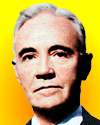
Died 15 Dec 1975 at age 88 (born 15 Oct 1887). quotes
Chester R(ay) Longwell was an American geologist, whose field work made him an authority on the geology of southern Nevada. He conducted a geological survey of the entire Boulder reservoir flood area now covered by Lake Mead, in 1934, to record the formations and structures, which would be covered by the lake. Later, he mapped the floor of the Davis Dam reservoir. His structural and mapping surveys in the western states included Arizona and the Black Hills. In the east, he studied the Triassic zone of Connecticut and Massachusetts. Longwell held an interest in geotectonics - the worldwide patterns of development - and periodically contributed to the debate of Wegener's continental drift.«
Chester R(ay) Longwell was an American geologist, whose field work made him an authority on the geology of southern Nevada. He conducted a geological survey of the entire Boulder reservoir flood area now covered by Lake Mead, in 1934, to record the formations and structures, which would be covered by the lake. Later, he mapped the floor of the Davis Dam reservoir. His structural and mapping surveys in the western states included Arizona and the Black Hills. In the east, he studied the Triassic zone of Connecticut and Massachusetts. Longwell held an interest in geotectonics - the worldwide patterns of development - and periodically contributed to the debate of Wegener's continental drift.«
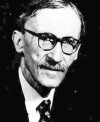
Died 15 Dec 1971 at age 85 (born 15 Sep 1886).
Paul Pierre Lévy was a French mining engineer and mathematician. He contributed to probability, functional analysis, partial differential equations and series. He also studied geometry. In 1926 he extended Laplace transforms to broader function classes. He undertook a large-scale work on generalised differential equations in functional derivatives.
Paul Pierre Lévy was a French mining engineer and mathematician. He contributed to probability, functional analysis, partial differential equations and series. He also studied geometry. In 1926 he extended Laplace transforms to broader function classes. He undertook a large-scale work on generalised differential equations in functional derivatives.
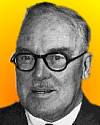
Died 15 Dec 1970 at age 81 (born 19 Feb 1889).
British-born New Zealand nuclear physicist who worked under Ernest Rutherford investigating atomic structure with Hans Geiger. Marsden visually counted scintillations from alpha particles after passing through gold foil and striking a phosphorescent screen. That some of these were observed scattered at surprisingly large angles led to Rutherford's theory of the nucleus as the massive, tiny centre of the atom. Later, Marsden's own experiments, working in New Zealand, hinted suggested transmutation of elements was possible when alpha particles bombarding nitrogen nuclei produced scattered particles of greater speed than the original radiation (subsequently shown to be 14N transmuting to 17O).«
British-born New Zealand nuclear physicist who worked under Ernest Rutherford investigating atomic structure with Hans Geiger. Marsden visually counted scintillations from alpha particles after passing through gold foil and striking a phosphorescent screen. That some of these were observed scattered at surprisingly large angles led to Rutherford's theory of the nucleus as the massive, tiny centre of the atom. Later, Marsden's own experiments, working in New Zealand, hinted suggested transmutation of elements was possible when alpha particles bombarding nitrogen nuclei produced scattered particles of greater speed than the original radiation (subsequently shown to be 14N transmuting to 17O).«
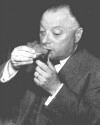
Died 15 Dec 1958 at age 58 (born 25 Apr 1900). quotes
Austrian-American physicist who was awarded the Nobel Prize for Physics in 1945 for his discovery in 1925 of the Pauli exclusion principle, which states that in an atom no two electrons can occupy the same quantum state simultaneously. This principle clearly relates the quantum theory to the observed properties of atoms.
Austrian-American physicist who was awarded the Nobel Prize for Physics in 1945 for his discovery in 1925 of the Pauli exclusion principle, which states that in an atom no two electrons can occupy the same quantum state simultaneously. This principle clearly relates the quantum theory to the observed properties of atoms.
No Time to be Brief: A Scientific Biography of Wolfgang Pauli, by Charles P. Enz. - book suggestion.
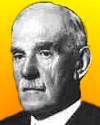
Died 15 Dec 1935 at age 81 (born 18 Sep 1854).
Richard Tetley Glazebrook was an English physicist who was the first director of the UK National Physical Laboratory in Teddington (190019). At first dependent on routine commercial testing, he steered the laboratory toward fundamental research with industrial application. With private support, he expanded facilities in electrical standards, metrology, and engineering. He promoted pioneering ship model experiments in a tank funded by Alfred Yarrow (1908), aiding naval design. At War Office request (1909), NPL began aeronautical research. During World War I, it made major contributions to military science and standardisation. Glazebrook bridged scientific research to industrial practice. He later served as President of the Institute of Physics.«
Richard Tetley Glazebrook was an English physicist who was the first director of the UK National Physical Laboratory in Teddington (190019). At first dependent on routine commercial testing, he steered the laboratory toward fundamental research with industrial application. With private support, he expanded facilities in electrical standards, metrology, and engineering. He promoted pioneering ship model experiments in a tank funded by Alfred Yarrow (1908), aiding naval design. At War Office request (1909), NPL began aeronautical research. During World War I, it made major contributions to military science and standardisation. Glazebrook bridged scientific research to industrial practice. He later served as President of the Institute of Physics.«
Died 15 Dec 1902 at age 64 (born 13 Dec 1838).
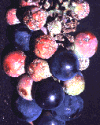
French botanist who developed the first successful fungicide and also saved the vineyards of France from destruction by the greenish yellow grape phylloxera, an aphidlike plant pest introduced into Europe on vines imported from the United States for grafting (1858-63). The insect swiftly spread extensive destruction. Millardet controlled this plague with resistant American vines as grafting stock, but these brought in the downy mildew fungus. In Oct 1882, he saw chemicals used by farmers for other reasons (a mixture of copper sulfate, lime and water) and after three years of testing, he found it acted as a suitable fungicide for the mildew. Known as the Bordeaux mixture, was the first fungicide to receive large-scale use the world over.
French botanist who developed the first successful fungicide and also saved the vineyards of France from destruction by the greenish yellow grape phylloxera, an aphidlike plant pest introduced into Europe on vines imported from the United States for grafting (1858-63). The insect swiftly spread extensive destruction. Millardet controlled this plague with resistant American vines as grafting stock, but these brought in the downy mildew fungus. In Oct 1882, he saw chemicals used by farmers for other reasons (a mixture of copper sulfate, lime and water) and after three years of testing, he found it acted as a suitable fungicide for the mildew. Known as the Bordeaux mixture, was the first fungicide to receive large-scale use the world over.
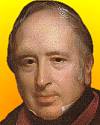
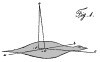
(6th Baronet ) English aeronautical pioneer who built the first successful man-carrying glider (1853). He made extensive anatomical and functional studies of bird flight. By measuring bird and human muscle masses, he realized it would be impossible for humans to strap on a pair of wings and take to the air. His further studies in the principles of lift, drag and thrust founded the science of aerodynamics from which he discovered stabilizing flying craft required both vertical and horizontal tail rudders, that concave wings produced more lift than flat surfaces and that swept-back wings provided greater stability. Cayley also invented the caterpillar tractor (1825), automatic railroad crossing signals, self-righting lifeboats, and an expansion-air (hot-air) engine.«[Image right: (source) ]
Sir George Cayley, the inventor of the aeroplane, by John Laurence. - book suggestion.
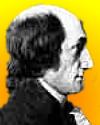
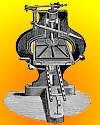
English politician (3rd Earl Stanhope) who believed strongly in the liberty of the individual. He was also an active experimental scientist and inventor. In 1771, he won a prize from the Swedish Academy for a paper on the pendulum, and was elected a fellow of the Royal Society in Nov 1772 before his 20th birthday. His Principles of Electricity (1779) included his nacent theory on the “return stroke” of electric current resulting from lightning's contact with the earth. He introduced the first successful iron-frame printing press (1798) and a process of stereotyping to produce moulds from a printing forme to cast printing plates. He worked in steam navigation (1795-97), invented a microscope lens and created two calculating machines.«[Image right: Stanhope printing press.]
Charles Earl Stanhope and the Oxford University Press, by Horace Hart. - book suggestion.
In 2001, the Leaning Tower of Pisa, Italy, was reopened to the public after a $27 million realignment that took over a decade
In 2000, the ill-fated Chernobyl nuclear plant was ceremoniously permanently shut down in Ukraine - more than 14 years after one of its reactors exploded in the world's worst civil nuclear catastrophe on 26 Apr 1986. The last working reactor, Number Three, had in fact been shut down the previous week because of technical problems. It was restarted, though not attached to the national grid and at minimum power output, so the world would be able to see it symbolically switched off. Chernobyl had provided Ukraine with around five percent of its electricity from its last working reactor. One by one, Chernobyl's reactors have shut down over the years. After the 1986 disaster, a fire stopped one of the remaining reactors in 1991, and a third shut down in 1996.
In 1972, the United Nations Environment Programme (UNEP) was created by a resolution of the U.N. General Assembly. With another resolution, World Environment Day was designated to be held on 5 Jun each year from 1974. UNEP coordinates world-wide activities reaffirming a global concern for the preservation and enhanced awareness of the environment. It provides a focus to drive changes in our consumption habits, as well as in national and international environmental policy. The first major conference on environmental issues, the Conference on the Human Environment, convened under the auspices of the U.N., opened on 5 Jun 1972 in Stockholm, Sweden. World Environment Day is held on that day’s anniversary.«

In 1965, two U.S. manned spacecraft, Gemini 6 and Gemini 7, maneuvered to within 10 feet of each other while in orbit.

In 1939, nylon yarn was sold to hosiery mills to make women's stockings; marking the first use of commercial yarn for apparel. The product of DuPont, Wilmington, Del., enabled a record number of ladies' hose to go on sale for the first time in May, 1940.
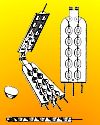
In 1903, a U.S. patent was issued for an ice cream cup mold to Italo Marchiony (No. 746,971). He came from Italy in 1895. From a pushcart on New York's Wall Street, he sold ice cream and lemon ice served in his baked waffles which he had folded by hand into the shape of a cup while still warm. Shortly, he had a chain of 45 carts operated by men he hired. Marchiony met the need for mass production with his invention of a multiple recess mold based on a waffle-iron. The bottom half of the mold was divided, to make it easy to separate it from the delicate baked cups. With two rows of five in each mold, it produced 10 cups at a time. In 1904, Marchiony took his confection to the Louisiana Exposition in St. Louis where he had the idea for the cone shape.
In 1854, Philadelphia residents were amazed as the first practical street cleaning machine was put into operation this day. A series of brooms attached to a cylinder mounted on a cart was turned by a chain driven by the turning of the cart's wheels.
In 1836, a fire destroyed the U.S. Patent Office. All records of over 10,000 patents issued over 46 years were lost, most forever, and the patent models filed with them. The office shared space in Blodgett's Hotel with the Post Office. The Patent Office occupied the second and third floors above one end, as well as most of the attic of the entire building. The fire started in the basement, where firewood was stored. The fire engine company next door had unserviceable equipment and time was lost. A bucket brigade attempted to extinguish the flames. Another engine arrived too late; the fire had taken hold. Its water supply was insufficient and the fire consumed the building. Little existed in record elsewhere when an effort was made to restore the patents.«
The Patent Office Pony: A History of the Early Patent Office, by Kenneth W. Dobyns. - book suggestion.
In 1827, in the city of Boston, Massachussetts, the School Committee voted to require, effective 1 Mar 1828, that public school students show that they had been vaccinated against smallpox prior to school entrance. Certificates to the board of health were to be issued where necessary for free vaccination. This initiative came just three decades after Edward Jenner's discovery of a method to immunize against smallpox. The state of Massachussets passed the first school vaccination law in 1855, followed by New York (1862) and Connecticut (1872).«*
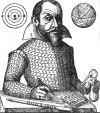
In 1612, Simon Marius (who named Jupiter's 4 inner satellites) was the first to observe Andromeda galaxy through a telescope. He described it in the preface to his Mundus Jovialis as, “like the flame of a candle seen through horn.” The Andromeda galaxy is the most distant object in the sky that can be seen by the unaided eye.
In 1593, the state of Holland granted a patent on a windmill with a crankshaft.





