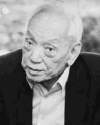
Born 26 Oct 1911; died 3 Dec 2004 at age 93. quotes
Chinese-American mathematician and educator whose researches in differential geometry include the development of the Chern characteristic classes in fibre spaces, which play a major role in mathematics and in mathematical physics. “When Chern was working on differential geometry in the 1940s, this area of mathematics was at a low point. Global differential geometry was only beginning, even Morse theory was understood and used by a very small number of people. Today, differential geometry is a major subject in mathematics and a large share of the credit for this transformation goes to Professor Chern.”- C N Yang, quoted from the book, Chern, a great geometer of the twentieth century.(1992)
Chinese-American mathematician and educator whose researches in differential geometry include the development of the Chern characteristic classes in fibre spaces, which play a major role in mathematics and in mathematical physics. “When Chern was working on differential geometry in the 1940s, this area of mathematics was at a low point. Global differential geometry was only beginning, even Morse theory was understood and used by a very small number of people. Today, differential geometry is a major subject in mathematics and a large share of the credit for this transformation goes to Professor Chern.”- C N Yang, quoted from the book, Chern, a great geometer of the twentieth century.(1992)
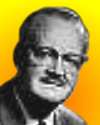
Born 26 Oct 1898; died 23 May 1970 at age 71.
W(illiam) Lloyd Warner was an American sociologist and anthropologist who is remembered for authoring studies of social class structure. He pioneered in applying anthropology research methods in the field of the contemporary urban social community. In his Yankee City (5 vols.), he merged an ethnographic perspective gained from fieldwork among Australian aborigines with information gathered from formal interviews for his social study of a New England city, Yankee City. He was the first sociologist to use a six-fold classification. In studying the old town, Warner recognised three distinct groups - upper, middle and lower classes - each sub-divided into upper and lower sections. The topmost, or upper-upper class, was composed of the wealthy old families; the lower-lower class represented the poorest.«
W(illiam) Lloyd Warner was an American sociologist and anthropologist who is remembered for authoring studies of social class structure. He pioneered in applying anthropology research methods in the field of the contemporary urban social community. In his Yankee City (5 vols.), he merged an ethnographic perspective gained from fieldwork among Australian aborigines with information gathered from formal interviews for his social study of a New England city, Yankee City. He was the first sociologist to use a six-fold classification. In studying the old town, Warner recognised three distinct groups - upper, middle and lower classes - each sub-divided into upper and lower sections. The topmost, or upper-upper class, was composed of the wealthy old families; the lower-lower class represented the poorest.«
Yankee City, by W. Lloyd Warner (ed.). - book suggestion.
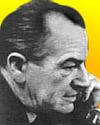
Born 26 Oct 1887; died 18 Feb 1944 at age 56.
French-American efficiency engineer who developed the Bedaux plan for measuring and compensating industrial labour. Bedaux was born in Paris in 1886 and migrated to the U.S. early in the 20th century. He became one of the pioneering contributors to the field of scientific management. Bedaux worked out various ideas about measuring human energy: these provided the basis for the innovative work study programs that lead to startling improvements in productivity. Bedaux introduced the concept of rating assessment in timing work. He adhered to Gilbreth's introduction of a rest allowance to allow recovery from fatigue. He is also known for extending the range of techniques employed in work study, including value analysis.
French-American efficiency engineer who developed the Bedaux plan for measuring and compensating industrial labour. Bedaux was born in Paris in 1886 and migrated to the U.S. early in the 20th century. He became one of the pioneering contributors to the field of scientific management. Bedaux worked out various ideas about measuring human energy: these provided the basis for the innovative work study programs that lead to startling improvements in productivity. Bedaux introduced the concept of rating assessment in timing work. He adhered to Gilbreth's introduction of a rest allowance to allow recovery from fatigue. He is also known for extending the range of techniques employed in work study, including value analysis.
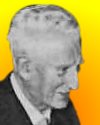
Born 26 Oct 1877; died 19 Jan 1968 at age 90.
Italian pioneer in aeronauticsand space science who designed revolutionary airships and patented an early cyclic pitch design for helicopter rotors (1906). While the design of helicopters was in its infancy, Crocco recognized that a way to change the pitch cyclically on the blades was needed if a helicopter was to work properly in forward flight. He designed a number of airships in the early part of the 20th century and switched to designing rocket engines in the 1920s. Crocco founded the Italian Rocket Society (1951) and made many contributions to the theory of spaceflight. He calculated that a spacecraft could travel from Earth to Mars, perform a reconnaissance Mars flyby (without orbit), and return to Earth in a total time of about one year.«
Italian pioneer in aeronauticsand space science who designed revolutionary airships and patented an early cyclic pitch design for helicopter rotors (1906). While the design of helicopters was in its infancy, Crocco recognized that a way to change the pitch cyclically on the blades was needed if a helicopter was to work properly in forward flight. He designed a number of airships in the early part of the 20th century and switched to designing rocket engines in the 1920s. Crocco founded the Italian Rocket Society (1951) and made many contributions to the theory of spaceflight. He calculated that a spacecraft could travel from Earth to Mars, perform a reconnaissance Mars flyby (without orbit), and return to Earth in a total time of about one year.«

Born 26 Oct 1877; died 23 Mar 1961 at age 83.
American mathematical physicist, educator, and science administrator. During World War I he invented several devices for submarine detection - several generations of the Navy's "M," or multiple-tube, passive submarine sensors. This apparatus focused sound to ascertain its source. To determine the direction from which the sound came, the operator needed only to seek the maximum output on his earphones by turning a dial. The final device had a range of 3 miles. Mason's special interest and contributions lay in mathematics (differential equations, calculus of variations), physics (electromagnetic theory), invention (acoustical compensators, submarine-detection devices), and the administration of universities and foundations.
American mathematical physicist, educator, and science administrator. During World War I he invented several devices for submarine detection - several generations of the Navy's "M," or multiple-tube, passive submarine sensors. This apparatus focused sound to ascertain its source. To determine the direction from which the sound came, the operator needed only to seek the maximum output on his earphones by turning a dial. The final device had a range of 3 miles. Mason's special interest and contributions lay in mathematics (differential equations, calculus of variations), physics (electromagnetic theory), invention (acoustical compensators, submarine-detection devices), and the administration of universities and foundations.
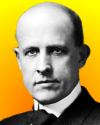
Born 26 Oct 1854; died 9 May 1914 at age 59.
American industrialist who founded Post Cereal Company with the Grape-Nuts cereal he created. In 1890, a nervous breakdown had led Post to the sanitorium of Dr. John Harvey Kellogg, where he was fed on Kellogg's grain-intensive vegetarian diet. Early in 1895, Post began the manufacture of Postum, a grain product intended as a coffee substitute, similar to one of Kellogg's concoctions. The manufacture of Grape-Nuts, based on another Kellogg item, began the following year. Post's new company, Postum Ltd., achieved wide-scale distribution of its products through massive spending on advertising appealing to the health concerns of the American public. In 1929, Postum became General Foods Corporation.
American industrialist who founded Post Cereal Company with the Grape-Nuts cereal he created. In 1890, a nervous breakdown had led Post to the sanitorium of Dr. John Harvey Kellogg, where he was fed on Kellogg's grain-intensive vegetarian diet. Early in 1895, Post began the manufacture of Postum, a grain product intended as a coffee substitute, similar to one of Kellogg's concoctions. The manufacture of Grape-Nuts, based on another Kellogg item, began the following year. Post's new company, Postum Ltd., achieved wide-scale distribution of its products through massive spending on advertising appealing to the health concerns of the American public. In 1929, Postum became General Foods Corporation.
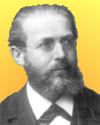
Born 26 Oct 1849; died 3 Aug 1917 at age 67.
Ferdinand Georg Frobenius was a German mathematician who made major contributions to group theory, especially the concept of abstract groups (with Ludwig Stickleberger) and the theory of finite groups of linear substitutions (with Issai Schur), that later found important uses in the theory of finite groups as it applies to quantum mechanics. He also contributed to means of solving linear homogenous differential equations. The fact so many of Frobenius's papers read like present day text-books on the topics which he studied is a clear indication of the importance that his work, in many different areas, has had in shaping the mathematics which is studied today.
Ferdinand Georg Frobenius was a German mathematician who made major contributions to group theory, especially the concept of abstract groups (with Ludwig Stickleberger) and the theory of finite groups of linear substitutions (with Issai Schur), that later found important uses in the theory of finite groups as it applies to quantum mechanics. He also contributed to means of solving linear homogenous differential equations. The fact so many of Frobenius's papers read like present day text-books on the topics which he studied is a clear indication of the importance that his work, in many different areas, has had in shaping the mathematics which is studied today.
Pioneers of Representation Theory: Frobenius, Burnside, Schur, and Brauer, by Charles W. Curtis. - book suggestion.
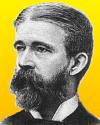
Born 26 Oct 1846; died 12 Oct 1912 at age 65.
American astronomer best known for his compilation of two catalogues of stars (1910, 1937). In 1882 he led an expedition to Chile to observe a transit of Venus. About 1895 Boss began to plan a general catalog of stars, giving their positions and motions. After 1906, the project had support from the Carnegie Institution, Washington, D.C. With an enlarged staff he observed the northern stars from Albany and the southern stars from Argentina. With the new data, he corrected catalogs that had been compiled in the past, and in 1910 he published the Preliminary General Catalogue of 6,188 Stars for the Epoch 1900. The work unfinished upon his death was completed by his son Benjamin in 1937 (General Catalogue of 33,342 Stars for the Epoch 1950, 5 vol.)
American astronomer best known for his compilation of two catalogues of stars (1910, 1937). In 1882 he led an expedition to Chile to observe a transit of Venus. About 1895 Boss began to plan a general catalog of stars, giving their positions and motions. After 1906, the project had support from the Carnegie Institution, Washington, D.C. With an enlarged staff he observed the northern stars from Albany and the southern stars from Argentina. With the new data, he corrected catalogs that had been compiled in the past, and in 1910 he published the Preliminary General Catalogue of 6,188 Stars for the Epoch 1900. The work unfinished upon his death was completed by his son Benjamin in 1937 (General Catalogue of 33,342 Stars for the Epoch 1950, 5 vol.)
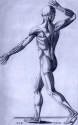
Born 26 Oct 1654; died 20 Jan 1720 at age 65.
Italian clinician and anatomist, personal physician to three popes, who is considered the first modern hygienist. He obtained his M.D. in 1672, a month before age 18 years. Having examined the causes of sudden deaths, in 1706 he published De motu cordis mortibus, on the problems of cardiac pathology, and De motu cordis et aneuysmatibus (1728). He carried out extensive anatomical and physiological studies, also epidemiology studies on malaria, influenza and cattle plague. In 1717, contrary to the old conception of "mal' aria " - literally, "bad air" - Lancisi observed that the lethal fever, malaria, disappeared when the swamps near to the city were cleared. He concluded that injurious substances transmitted from flies and mosquitos were the origin of the disease.
Italian clinician and anatomist, personal physician to three popes, who is considered the first modern hygienist. He obtained his M.D. in 1672, a month before age 18 years. Having examined the causes of sudden deaths, in 1706 he published De motu cordis mortibus, on the problems of cardiac pathology, and De motu cordis et aneuysmatibus (1728). He carried out extensive anatomical and physiological studies, also epidemiology studies on malaria, influenza and cattle plague. In 1717, contrary to the old conception of "mal' aria " - literally, "bad air" - Lancisi observed that the lethal fever, malaria, disappeared when the swamps near to the city were cleared. He concluded that injurious substances transmitted from flies and mosquitos were the origin of the disease.

Died 26 Oct 2017 at age 95 (born 4 Mar 1922).
Geoffrey Colin Tootill was an English computer scientist who, with Tom Kilburn, joined the project of Frederick Williams to design a computer memory. To test the memory, a computer nicknamed “Baby” was built, which was the world’s first stored-program computer. The machine used a novel method to store up to 32 instructions or numbers on a cathode ray tube display. On 21 June 1948, it finished its first successful test, spending 52 minutes, and about three and a half million arithmetic operations, to find the highest proper factor of 218.«
Geoffrey Colin Tootill was an English computer scientist who, with Tom Kilburn, joined the project of Frederick Williams to design a computer memory. To test the memory, a computer nicknamed “Baby” was built, which was the world’s first stored-program computer. The machine used a novel method to store up to 32 instructions or numbers on a cathode ray tube display. On 21 June 1948, it finished its first successful test, spending 52 minutes, and about three and a half million arithmetic operations, to find the highest proper factor of 218.«
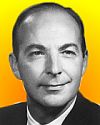
Died 26 Oct 2007 at age 89 (born 3 Mar 1918).
American biochemist and physician who shared the 1959 Nobel Prize for Physiology or Medicine (with Severo Ochoa) for the “discovery of the mechanisms in the biological synthesis of deoxyribonucleic acid” Kornberg showed not only how DNA molecules are duplicated both in nature within bacterial cells, but also isolated the first DNA polymerising enzyme (1958), and reproduced the process in the test tube. His research included studying the nucleic acids which control heredity in animals, plants, bacteria and viruses.«
American biochemist and physician who shared the 1959 Nobel Prize for Physiology or Medicine (with Severo Ochoa) for the “discovery of the mechanisms in the biological synthesis of deoxyribonucleic acid” Kornberg showed not only how DNA molecules are duplicated both in nature within bacterial cells, but also isolated the first DNA polymerising enzyme (1958), and reproduced the process in the test tube. His research included studying the nucleic acids which control heredity in animals, plants, bacteria and viruses.«
For the Love of Enzymes: The Odyssey of a Biochemist, by Arthur Kornberg. - book suggestion.
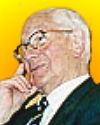
Died 26 Oct 1996 at age 93 (born 27 Apr 1903).
German-born British pharmacologist who had already retired from the University of Aberdeen, Scotland, when he discovered (1975), with John Hughes, enkephalins, two potent naturally occurring opiates in the brain. Enkephin was the first known opioid produced by the human body. This opiate-like substance was produced by the brain in response to the perception of pain. Kosterlitz's discovery illuminated the brain's role in pain modulation and had direct clinical implications.
German-born British pharmacologist who had already retired from the University of Aberdeen, Scotland, when he discovered (1975), with John Hughes, enkephalins, two potent naturally occurring opiates in the brain. Enkephin was the first known opioid produced by the human body. This opiate-like substance was produced by the brain in response to the perception of pain. Kosterlitz's discovery illuminated the brain's role in pain modulation and had direct clinical implications.
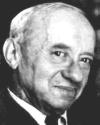
Died 26 Oct 1983 at age 81 (born 14 Jan 1902). quotes
Polish-American mathematician and logician who made important studies of general algebra, measure theory, mathematical logic, set theory, and metamathematics. Formal scientific languages can be subjected to more thorough study by the semantic method that he developed. He worked on model theory, mathematical decision problems and with universal algebra. He produced axioms for “logical consequence,” worked on deductive systems, the algebra of logic and the theory of definability. Group theorists study “Tarski monsters,” infinite groups whose existence seems intuitively impossible.
Polish-American mathematician and logician who made important studies of general algebra, measure theory, mathematical logic, set theory, and metamathematics. Formal scientific languages can be subjected to more thorough study by the semantic method that he developed. He worked on model theory, mathematical decision problems and with universal algebra. He produced axioms for “logical consequence,” worked on deductive systems, the algebra of logic and the theory of definability. Group theorists study “Tarski monsters,” infinite groups whose existence seems intuitively impossible.
Alfred Tarski: Life and Logic, by Anita Burdman Feferman. - book suggestion.
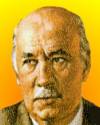
Died 26 Oct 1972 at age 83 (born 25 May 1889). quotes
Igor Ivan Sikorsky was a Russian-born U.S. pioneer in aircraft design who is best known for his successful development of the helicopter. His earliest successes were with fixed-wing aircraft, including his prize-winning S-6-A (1912) which led to a position as head of the aviation subsidiary of the Russian Baltic Railroad Car Works. In this position, as a result of a mosquito-clogged carburetor and subsequent engine failure, he had the radical idea of an aircraft having more than one engine. Thus he produced the first multi-engine airplane, the four-engined “The Grand.” This revolutionary aircraft featured such things as an enclosed cabin. a lavatory, upholstered chairs and an exterior catwalk atop the fuselage so passengers could take a turn about in the air.[Image: from U.S. airmail postage stamp]
Igor Ivan Sikorsky was a Russian-born U.S. pioneer in aircraft design who is best known for his successful development of the helicopter. His earliest successes were with fixed-wing aircraft, including his prize-winning S-6-A (1912) which led to a position as head of the aviation subsidiary of the Russian Baltic Railroad Car Works. In this position, as a result of a mosquito-clogged carburetor and subsequent engine failure, he had the radical idea of an aircraft having more than one engine. Thus he produced the first multi-engine airplane, the four-engined “The Grand.” This revolutionary aircraft featured such things as an enclosed cabin. a lavatory, upholstered chairs and an exterior catwalk atop the fuselage so passengers could take a turn about in the air.[Image: from U.S. airmail postage stamp]
Died 26 Oct 1970 at age 77 (born 12 Feb 1893).
Flemish astronomer and solar physicist who was one of the pioneering solar researchers during the first half of the 20th century. Applying solar spectrophotometry, he was one of the first to make quantitative measurements of the intensity distribution inside Fraunhofer lines, and interpret from them information about the outer solar layers. His range of study also included comets, nebulae and lunar photometry. During the time he was director of the observatory at the University of Utrecht, (1937-1963) he created a modern astronomical institute to study solar and stellar spectra with resources including a solar telescope, spectrograph, photometer, and mechanical workshop. Minnaert also maintained a strong interest in the education of physics teachers, and as a univeristy professor gave clear, enthusiastic and well-prepared lectures.«.
Flemish astronomer and solar physicist who was one of the pioneering solar researchers during the first half of the 20th century. Applying solar spectrophotometry, he was one of the first to make quantitative measurements of the intensity distribution inside Fraunhofer lines, and interpret from them information about the outer solar layers. His range of study also included comets, nebulae and lunar photometry. During the time he was director of the observatory at the University of Utrecht, (1937-1963) he created a modern astronomical institute to study solar and stellar spectra with resources including a solar telescope, spectrograph, photometer, and mechanical workshop. Minnaert also maintained a strong interest in the education of physics teachers, and as a univeristy professor gave clear, enthusiastic and well-prepared lectures.«.
The Nature of Light and Color in the Open Air, by Marcel Minnaert. - book suggestion.

Died 26 Oct 1957 at age 61 (born 15 Aug 1896).
Gerty Theresa Radnitz Cori was a Czech-American biochemist who met her husband Carl Ferdinand Cori while attending medical school in Prague (married 1920). They decided upon careers in medical research, took positions in America in 1922, and became U.S. citizens in 1928. They both shared the 1947 Nobel Prize in Physiology or Medicine (with Bernardo Houssay). The Coris were recognized "for their discovery of the course of the catalytic conversion of glycogen." After Marie Curie and Irène Joliot-Curie, Gerty was the female Nobelist in science.«
Gerty Theresa Radnitz Cori was a Czech-American biochemist who met her husband Carl Ferdinand Cori while attending medical school in Prague (married 1920). They decided upon careers in medical research, took positions in America in 1922, and became U.S. citizens in 1928. They both shared the 1947 Nobel Prize in Physiology or Medicine (with Bernardo Houssay). The Coris were recognized "for their discovery of the course of the catalytic conversion of glycogen." After Marie Curie and Irène Joliot-Curie, Gerty was the female Nobelist in science.«
Died 26 Oct 1943 at age 80 (born 26 Nov 1862).
Sir (Mark) Aurel Stein was an Hungarian-British archaeologist and geographer, born in Budapest, whose travels and research in central Asia, particularly in Chinese Turkistan, revealed much about its strategic role in history. In 1906, Stein uncovered a group of mummified corpses near Loulan, in Central Asia. Their well-preserved bodies were clad in woollen garments and they wore tall felt hats decorated with jaunty feathers. The men were bearded and their facial features seemed European. Stein dated them to c.100 BC. When the Dunhuang Caves, China, closed for centuries, were reopened, he discovered 15,000 manuscripts (1907), including the Diamond Sutra, reputed to be the first dated printed book (868 A.D.).
Sir (Mark) Aurel Stein was an Hungarian-British archaeologist and geographer, born in Budapest, whose travels and research in central Asia, particularly in Chinese Turkistan, revealed much about its strategic role in history. In 1906, Stein uncovered a group of mummified corpses near Loulan, in Central Asia. Their well-preserved bodies were clad in woollen garments and they wore tall felt hats decorated with jaunty feathers. The men were bearded and their facial features seemed European. Stein dated them to c.100 BC. When the Dunhuang Caves, China, closed for centuries, were reopened, he discovered 15,000 manuscripts (1907), including the Diamond Sutra, reputed to be the first dated printed book (868 A.D.).

1890
Died 26 Oct 1923 at age 58 (born 9 Apr 1865). quotes
German-American electrical engineer and inventor whose theories and mathematical analysis of alternating current systems helped establish them as the preferred form of electrical energy in the United States, and throughout the world. In 1893, Steinmetz joined the newly organized General Electric Company where he was an engineer then consultant until his death. His early research on hysteresis (loss of power due to magnetic resistance) led him to study alternating current, which could eliminate hysteresis loss in motors. He did extensive new work on the theory of a.c. for electrical engineers to use. His last research was on lightning, and its threat to the new AC power lines. He was responsible for the expansion of the electric power industry in the U.S.
German-American electrical engineer and inventor whose theories and mathematical analysis of alternating current systems helped establish them as the preferred form of electrical energy in the United States, and throughout the world. In 1893, Steinmetz joined the newly organized General Electric Company where he was an engineer then consultant until his death. His early research on hysteresis (loss of power due to magnetic resistance) led him to study alternating current, which could eliminate hysteresis loss in motors. He did extensive new work on the theory of a.c. for electrical engineers to use. His last research was on lightning, and its threat to the new AC power lines. He was responsible for the expansion of the electric power industry in the U.S.
Lectures on Electrical Engineering, by Charles Proteus Stienmetz, Philip Langdon Alger. - book suggestion.
Died 26 Oct 1905 at age 86 (born 20 Oct 1819).
English railroad engineer who contributed to the pioneering work of his uncle George Stephenson and his cousin Robert Stephenson. He began his career in 1837, assisting his uncle on the construction of a railway from Manchester to Leeds. He helped his cousin build the Victoria tubular bridge across the St. Lawrence River in Canada. Later, he functioned independently as a consultant and designer on railway projects, bridges and tunnels in England, New Zealand and Denmark. Upon Robert's death in 1859, George Robert became director of the Newcastle locomotive works.«
English railroad engineer who contributed to the pioneering work of his uncle George Stephenson and his cousin Robert Stephenson. He began his career in 1837, assisting his uncle on the construction of a railway from Manchester to Leeds. He helped his cousin build the Victoria tubular bridge across the St. Lawrence River in Canada. Later, he functioned independently as a consultant and designer on railway projects, bridges and tunnels in England, New Zealand and Denmark. Upon Robert's death in 1859, George Robert became director of the Newcastle locomotive works.«
George and Robert Stephenson: The Railway Revolution, by L.T.C. Rolt. . - book suggestion.
Died 26 Oct 1903 at age 57 (born 17 Feb 1846).
Russian geomorphologist, Vasily Vasilyevich Dokuchayev, pioneered the study of soil creation processes and their classification. Dokuchayev regarded the composition of soil as the product of the combined interaction of climate, bedrock, and organisms. Thus, he showed (1898) that different soils of different areas may result from similar bedrock material when climate is differs. In this way, he was beginning the recognition of biomes. He introduced (1883) the term chernozem for a type of rich black soil, rich in carbonates and humus, that occurs in the temperate latitudes of Russia.
Russian geomorphologist, Vasily Vasilyevich Dokuchayev, pioneered the study of soil creation processes and their classification. Dokuchayev regarded the composition of soil as the product of the combined interaction of climate, bedrock, and organisms. Thus, he showed (1898) that different soils of different areas may result from similar bedrock material when climate is differs. In this way, he was beginning the recognition of biomes. He introduced (1883) the term chernozem for a type of rich black soil, rich in carbonates and humus, that occurs in the temperate latitudes of Russia.

In 1984, Baby Fae became the first new-born recipient of a cross-species heart transplant. Dr. Leonard L. Bailey, a heart surgeon at Loma Linda University Medical Center, California, transplanted a walnut-sized young baboon heart. She had been born prematurely 12 days earlier with hypoplastic left-heart syndrome, a lethal underdevelopment of the left side of the heart. Bailey suggested the experimental xenotransplant to the mother. By 1977, three such animal-heart transplants into adults had provided less than four days of life at best. Bailey believed the infant's underdeveloped immune system would be less likely to reject alien tissue, and a new drug cyclosporine would help. Baby Fae lived 20 days before complications caused her death.«

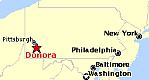
When Smoke Ran Like Water: Tales of Environment Deception and the Battle Against Pollution, by Devra Lee Davis. - book suggestion.
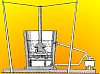
In 1858, a U.S. patent was issued for cycling reheated water in a washing machine, to Hamilton E. Smith of Philadelphia, Pennsylvania (No. 21,909). His invention was an improvement for washing machines in which a reciprocating plunger acts on clothes in a tub. His invention placed two horizontal diaphragms in the tub. Both moved vertically with the action of the plunger. The upper one was perforated, and the lower one had a valve. Below the lower diaphragm springs pushed it up as the plunger was lifted. Their motion acted to pump water into the tub from a circuit of pipe that included coils in a heating tank and drained cooler water from the top of the tub. Smith improved his machine and obtained a second patent in 1863.




