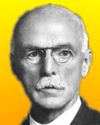
Born 12 Oct 1865; died 17 Jun 1940 at age 74.
English biochemist who shared (with Hans von Euler-Chelpin) the 1929 Nobel Prize for Chemistry for work on the fermentation of sugar and the enzyme action involved. Harden continued the work of Eduard Buchner who had discovered that such reactions can take place in the absence of living cells. Harden demonstrated that the activity of yeast enzymes included both large protein molecules and essential coenzymes - small nonprotein molecules. This was the first evidence for the existence of coenzymes. Harden also discovered that yeast enzymes are not broken down and lost with time, but that the gradual loss of activity with time can be reversed by the addition of phosphates, which are now known to play a vital part in biochemical reactions.
English biochemist who shared (with Hans von Euler-Chelpin) the 1929 Nobel Prize for Chemistry for work on the fermentation of sugar and the enzyme action involved. Harden continued the work of Eduard Buchner who had discovered that such reactions can take place in the absence of living cells. Harden demonstrated that the activity of yeast enzymes included both large protein molecules and essential coenzymes - small nonprotein molecules. This was the first evidence for the existence of coenzymes. Harden also discovered that yeast enzymes are not broken down and lost with time, but that the gradual loss of activity with time can be reversed by the addition of phosphates, which are now known to play a vital part in biochemical reactions.
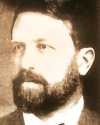
Born 12 Oct 1862; died 15 Oct 1915 at age 53. quotes
German cytologist whose work with roundworm eggs proved that chromosomes are separate, continuous, organized structures within the nucleus of a cell. Boveri's discoveries revealed that certain chromosomes were responsible for certain characteristics. Around 1887, Boveri discovered a small structure that connects the chromosomes during cell division, which he named the centrosome, and demonstrated it provided the division centres for the dividing egg cell and all its offspring. Boveri was prone to bouts of depression and suffered numerous physical breakdowns. His health declined from the onset of WW I, and he died at the age of 53.
German cytologist whose work with roundworm eggs proved that chromosomes are separate, continuous, organized structures within the nucleus of a cell. Boveri's discoveries revealed that certain chromosomes were responsible for certain characteristics. Around 1887, Boveri discovered a small structure that connects the chromosomes during cell division, which he named the centrosome, and demonstrated it provided the division centres for the dividing egg cell and all its offspring. Boveri was prone to bouts of depression and suffered numerous physical breakdowns. His health declined from the onset of WW I, and he died at the age of 53.
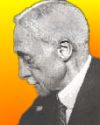
Born 12 Oct 1860; died 16 Jun 1930 at age 69.
Elmer Ambrose Sperry was an American engineer and inventor who devised the gyrocompass. In the 1890's he made useful inventions in electric mining machinery, and patent electric brake and control system for street- or tramcars. In 1908, he patented the active gyrostabilizer which acted to stop a ship's roll as soon as it started. He patented the first gyrocompass designed expressly for the marine environment in 1910. This "spinning wheel" gyro was a significant improvement over the traditional magnetic compass of the day and changed the course of naval history. The first Sperry gyrocompass was tested at-sea aboard the USS Delaware in 1911 and established Sperry as a world leader in the manufacture of military gyrocompasses for the next 80 years.
Elmer Ambrose Sperry was an American engineer and inventor who devised the gyrocompass. In the 1890's he made useful inventions in electric mining machinery, and patent electric brake and control system for street- or tramcars. In 1908, he patented the active gyrostabilizer which acted to stop a ship's roll as soon as it started. He patented the first gyrocompass designed expressly for the marine environment in 1910. This "spinning wheel" gyro was a significant improvement over the traditional magnetic compass of the day and changed the course of naval history. The first Sperry gyrocompass was tested at-sea aboard the USS Delaware in 1911 and established Sperry as a world leader in the manufacture of military gyrocompasses for the next 80 years.
Elmer Sperry: Inventor and Engineer, by Thomas Parker Hughes. - book suggestion.
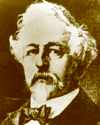
Born 12 Oct 1812; died 26 May 1888 at age 75. quotes
Italian chemist who discovered the explosive compound nitroglycerin (1847) by adding glycerine slowly to mixture of nitric and sulphuric acids. When he discovered the explosive power of even a single drop in a test tube, he named the new compound pyroglycerin. Sobrero was horrified by the destructive potential of his discovery, and made no effort to develop that power himself, though it became known as nitroglycerin, or blasting oil. Two decades later, Alfred Nobel combined nitroglycerine with diatomaceous earth, making it safer to handle, but just as useful for blasting rock for construction and mining. Nobel made a fortune as the inventor and manufacturer of dynamite.
Italian chemist who discovered the explosive compound nitroglycerin (1847) by adding glycerine slowly to mixture of nitric and sulphuric acids. When he discovered the explosive power of even a single drop in a test tube, he named the new compound pyroglycerin. Sobrero was horrified by the destructive potential of his discovery, and made no effort to develop that power himself, though it became known as nitroglycerin, or blasting oil. Two decades later, Alfred Nobel combined nitroglycerine with diatomaceous earth, making it safer to handle, but just as useful for blasting rock for construction and mining. Nobel made a fortune as the inventor and manufacturer of dynamite.
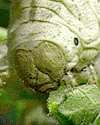
silkworm
Italian chemist, statesman, writer and agriculturalist who was active in political affairs and championed new ideas in science. He wrote books on each of those fields, and did notable work on wool-bearing animals and silkworm farming. Having studied chemistry at University of Padua, he was an early supporter and disseminated the theories of French chemist Antoine-Laurent Lavoisier. In his political activities, he promoted democratic ideas; he was opposed to Venice’s oligarchy, a ruling class of merchants and aristocrats. Later in life, he retired to his large estate in Varese, where he focused on scientific works and writing on agriculture. His book on silkworm farming had several editions, and translations into French and English.«
The Art of Rearing Silk-Worms, by Vincenzo Dandolo. - book suggestion.


Died 12 Oct 1965 at age 66 (born 12 Jan 1899).
Swiss chemist who received the Nobel Prize for Physiology or Medicine in 1948 for discovering the potent toxic effects on insects of DDT. With its chemical derivatives, DDT became the most widely used insecticide for more than 20 years and was a major factor in increased world food production.
Swiss chemist who received the Nobel Prize for Physiology or Medicine in 1948 for discovering the potent toxic effects on insects of DDT. With its chemical derivatives, DDT became the most widely used insecticide for more than 20 years and was a major factor in increased world food production.
Died 12 Oct 1943 at age 63 (born 15 Apr 1880). quotes
Czech psychologist who co-founded the Gestalt movement in psychology (with two younger men, Kurt Koffka and Wolfgang Köhler). The prevailing approach had been to reduce a complex psychological phenomenon into the sum of its parts, and focus separately on the component elements rather than the whole. In a sense, that would ignore a melody but study its notes. He disagreed with that piecemeal form of analysis. Instead, in Gestalt thinking, he took an overall landscape psychological view. He maintained that wholes have their own properties and tendancies which are not evident from looking too closely at their isolated parts. He had moved to Germany for study and then teaching there, but with the rise of Hitler in 1933, Wertheimer, being of Jewish heritage, decided to emigrate with his family to the U.S.A.«
Czech psychologist who co-founded the Gestalt movement in psychology (with two younger men, Kurt Koffka and Wolfgang Köhler). The prevailing approach had been to reduce a complex psychological phenomenon into the sum of its parts, and focus separately on the component elements rather than the whole. In a sense, that would ignore a melody but study its notes. He disagreed with that piecemeal form of analysis. Instead, in Gestalt thinking, he took an overall landscape psychological view. He maintained that wholes have their own properties and tendancies which are not evident from looking too closely at their isolated parts. He had moved to Germany for study and then teaching there, but with the rise of Hitler in 1933, Wertheimer, being of Jewish heritage, decided to emigrate with his family to the U.S.A.«
Died 12 Oct 1914 at age 76 (born 14 Feb 1838).
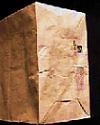
Prolific American inventor of machines and mechanisms for a variety of industrial and everyday purposes. She created, but did not patent, her first invention at age 12, a cutoff safety device that shut down a power loom automatically when a steel-tipped shuttle fell out. Her first patent came in 1870 when she invented a machine to make square-bottomed paper bags, an improvement over V-shaped ones. The 27 patents she eventually held for inventions included a dress and skirt shield (1883), a clasp for robes (1884), a spit (1885)and even a new valve sleeve for an auto engine. She also received six patents over a span of years for machines used in the manufacturing of shoes. She never married, and her creative genius never made her rich. As a self-supporting working-class woman, she had rarely been able to wait for royalties but sold the rights to her inventions outright. Although she was not the first woman to receive a patent, she was one of the most prolific.*
Prolific American inventor of machines and mechanisms for a variety of industrial and everyday purposes. She created, but did not patent, her first invention at age 12, a cutoff safety device that shut down a power loom automatically when a steel-tipped shuttle fell out. Her first patent came in 1870 when she invented a machine to make square-bottomed paper bags, an improvement over V-shaped ones. The 27 patents she eventually held for inventions included a dress and skirt shield (1883), a clasp for robes (1884), a spit (1885)and even a new valve sleeve for an auto engine. She also received six patents over a span of years for machines used in the manufacturing of shoes. She never married, and her creative genius never made her rich. As a self-supporting working-class woman, she had rarely been able to wait for royalties but sold the rights to her inventions outright. Although she was not the first woman to receive a patent, she was one of the most prolific.*
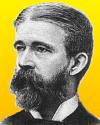
Died 12 Oct 1912 at age 65 (born 26 Oct 1846).
American astronomer best known for his compilation of two catalogues of stars (1910, 1937). In 1882 he led an expedition to Chile to observe a transit of Venus. About 1895 Boss began to plan a general catalog of stars, giving their positions and motions. After 1906, the project had support from the Carnegie Institution, Washington, D.C. With an enlarged staff he observed the northern stars from Albany and the southern stars from Argentina. With the new data, he corrected catalogs that had been compiled in the past, and in 1910 he published the Preliminary General Catalogue of 6,188 Stars for the Epoch 1900. The work unfinished upon his death was completed by his son Benjamin in 1937 (General Catalogue of 33,342 Stars for the Epoch 1950, 5 vol.)
American astronomer best known for his compilation of two catalogues of stars (1910, 1937). In 1882 he led an expedition to Chile to observe a transit of Venus. About 1895 Boss began to plan a general catalog of stars, giving their positions and motions. After 1906, the project had support from the Carnegie Institution, Washington, D.C. With an enlarged staff he observed the northern stars from Albany and the southern stars from Argentina. With the new data, he corrected catalogs that had been compiled in the past, and in 1910 he published the Preliminary General Catalogue of 6,188 Stars for the Epoch 1900. The work unfinished upon his death was completed by his son Benjamin in 1937 (General Catalogue of 33,342 Stars for the Epoch 1950, 5 vol.)
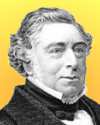
Died 12 Oct 1859 at age 55 (born 16 Oct 1803). quotes
English civil engineer, son of George Stephenson, fused locomotive innovation with grand Victorian civil works. After a mining stint in Colombia (1824-27), he led Robert Stephenson & Co., advancing early main-line railway engines. His first, the Lancashire Witch (1828), then the Rocket, began over a century of steam locomotives. He built the Liverpool & Manchester Railway, the world’s first all-steam intercity passenger line (1830). As chief engineer of the London & Birmingham Railway (1833-38) he created Britain’s first trunk line—driving Kilsby Tunnel, major cuttings, and viaducts. His bridges set new marks, including the wrought-iron tubular Britannia over the Menai Strait (1850). He was president of the Institution of Civil Engineers (1855-56), and MP for Whitby.«
English civil engineer, son of George Stephenson, fused locomotive innovation with grand Victorian civil works. After a mining stint in Colombia (1824-27), he led Robert Stephenson & Co., advancing early main-line railway engines. His first, the Lancashire Witch (1828), then the Rocket, began over a century of steam locomotives. He built the Liverpool & Manchester Railway, the world’s first all-steam intercity passenger line (1830). As chief engineer of the London & Birmingham Railway (1833-38) he created Britain’s first trunk line—driving Kilsby Tunnel, major cuttings, and viaducts. His bridges set new marks, including the wrought-iron tubular Britannia over the Menai Strait (1850). He was president of the Institution of Civil Engineers (1855-56), and MP for Whitby.«
George & Robert Stephenson: Pioneer Inventors and Engineers, by Anthony Burton. - book suggestion.
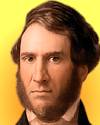
Died 12 Oct 1852 at age 46 (born 28 Nov 1805).
American traveller and archaeologist whose expeditions to Maya ruins in Central America and Mexico (1839–40; 1841–42) helped create the archaeology of Middle America. In 1839, while officially traveling as a lawyer on a U.S. State Department mission, he set out to investigate the little-known remnants of the ancient Maya. With architect Frederick Catherwood—whose precise drawings enriched Stephens’s books—he explored sites across the region. In Incidents of Travel in Central America, Chiapas, and Yucatán, he recounted discovering the ruined city of Copán. It captivated him so deeply that he purchased the site, which is now under Honduran government stewardship.«
American traveller and archaeologist whose expeditions to Maya ruins in Central America and Mexico (1839–40; 1841–42) helped create the archaeology of Middle America. In 1839, while officially traveling as a lawyer on a U.S. State Department mission, he set out to investigate the little-known remnants of the ancient Maya. With architect Frederick Catherwood—whose precise drawings enriched Stephens’s books—he explored sites across the region. In Incidents of Travel in Central America, Chiapas, and Yucatán, he recounted discovering the ruined city of Copán. It captivated him so deeply that he purchased the site, which is now under Honduran government stewardship.«
Jungle of Stone: The Extraordinary Journey of John L. Stephens and Frederick Catherwood, and the Discovery of the Lost Civilization of the Maya, by William Carls. - book suggestion.
Died 12 Oct 1825 at age 85 (born 1 Jul 1740).
Austrian mineralogist.
Austrian mineralogist.
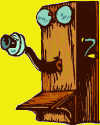
In 1983, in Bryant Park, Maine, the last call on a crank phone was made, marking the end of the community's hand-operated telephone system. The Bryant Pond Telephone Co. had been a family operation, with its switchboard in the back room of Elden Hathaway's house. He had bought stock in the telephone business in 1951 with about 100 subscribers, and had himself strung wire to add more. With his wife and daughter, they acted as switchboard operators and hand-connected calls. At age 65, he decided to sell out to the Oxford County Telephone & Telegraph Co. which announced its intention to replace crank with dial phones, despite the fervent efforts of residents at town meetings and their lawyers. Direct-dial phone service officially replaced the old system on the previous day, 11 Oct 1983.«
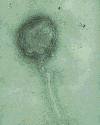
In 1976, the U.S. swine flu vaccinations were halted in nine states after three elderly people in the Pittsburgh area suffered heart attacks and died within hours of getting the shot. On 16 Dec, increasingly concerned about reports of the vaccine touching off neurological problems, especially the rare Guillain-Barre syndrome, the U.S. government suspended the program. The nationwide vaccination effort began as a result of a novel virus that was first identified at Fort Dix, N.J., and labeled a "killer flu." Experts compared it to the Spanish flu of 1918 and sounded the alarm of a possible major pandemic. In fact, the virus never moved outside the Fort Dix area. Later research showed it would probably have been much less deadly than the Spanish flu.[Image: swine Influenza virus electron microscope view]
In 1964, Voskhod 1 was launched by the USSR, with Col. Vladimir Komarov as pilot. It was the world's first multi-manned spacecraft, and the first to carry a scientist (Konstaintin Feoktistov) and a physician (Boris Yegorov) into space. In the rush to launch before the US Gemini flights, the crew were left at risk with no spacesuits, ejection seats, or escape tower. The mission returned television pictures of the crew from space, and it had a significant worldwide impact. The Gemini flights had been upstaged by the success, and the effect in the US was to heat up the “space race.” The crew returned to land after 16 orbits of the earth, 1 day and 17 min after they had left, using retro rockets just prior to impact in order to cushion the parachute landing.«
Flight of Spaceship Voskhod-I, by Vladimir Komarov. - book suggestion.
In 1936, the success in making of X-ray moving pictures of internal organs of the human body was reported at the 37th annual meeting of the American Roentgen Ray Society in Cleveland by Drs William H. Stewart, William J. Hoffman and Francis H. Ghiselin from the Manhattan, NY, Lenox Hill Hospital. They used a home 16-mm camera to film moving X-ray images on a fluorescopic screen at 16 frames per second (reduced to 12 or 8 fps for thicker bodies). Two seconds exposure could capture two or three beats of the heart, the act of breathing, movements of the diaphragm or motion of joints. Film clip loops could be projected to show repeating motion. Movies were shown at the next convention on 2 Oct 1937.«
more
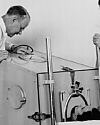
In 1928, the Iron Lung was used by its first patient, a young girl at the Children's Hospital in Boston. It was an artificial respirator that enabled her to breathe despite being paralyzed by polio. This negative pressure ventilator, invented by a young Harvard doctor, Philip Drinker, was the first widely used device of its kind. From the neck down, the patient's body lay in a sealed galvanized iron box. The 3 x 7 ft, 700-lb apparatus was powered by two household vacuum cleaners. As air was pumped out of the metal box, the patient's lungs drew in air, which was expelled as the air pump cycle next increased pressure, in a cycle to mimic a normal breathing rate.«
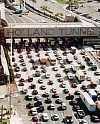
In 1920, construction of the Holland Tunnel began. The tunnel would provide a direct link between Twelfth Street in Jersey City, NJ and Canal Street in New York City. The tunnel has two tubes more than 8,000 feet (2,400 meters) long. It was opened to traffic on 13 Nov 1927. The Holland Tunnel was named for Clifford Milburn Holland, (1883-1924), the civil engineer who died while directing the tunnel's construction.
In 1850, classes began at the Women's Medical College of Pennsylvania, the first medical school entirely for women.
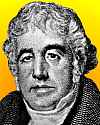
In 1823, Charles Macintosh of Scotland began selling raincoats (Macs).




