
Born 9 Nov 1934; died 20 Dec 1996 at age 62. quotes
U.S. astronomer and exobiologist and writer of popular science books. His studies were far-ranging. He coauthored a scientific paper about the dangers of nuclear winter. He researched the atmosphere of Venus, seasonal changes on Mars, surface conditions on planets, and created popular interest in the universe with his television series Cosmos. Sagan was a leading figure in the search for extraterrestrial intelligence. He urged the scientific community to listen with large radio telescopes for signals from intelligent extraterrestrial lifeforms. Sagan also played a prominent role in the U.S. space program, with his involvement in the Mariner, Viking, and Voyager spacecraft expeditions.«
U.S. astronomer and exobiologist and writer of popular science books. His studies were far-ranging. He coauthored a scientific paper about the dangers of nuclear winter. He researched the atmosphere of Venus, seasonal changes on Mars, surface conditions on planets, and created popular interest in the universe with his television series Cosmos. Sagan was a leading figure in the search for extraterrestrial intelligence. He urged the scientific community to listen with large radio telescopes for signals from intelligent extraterrestrial lifeforms. Sagan also played a prominent role in the U.S. space program, with his involvement in the Mariner, Viking, and Voyager spacecraft expeditions.«
Carl Sagan: A Life in the Cosmos, by William Poundstone. - book suggestion.
Born 9 Nov 1898; died 16 Sep 1973 at age 74.
American psychologist who was among the first scientists to study and catalogue the earliest development of children. Of his many books, Manual of Child Psychology, is a classic. From 1953-64 he was the 11th secretary of the Smithsonian Institution. Responsible for the modernization of the “nation's attic,” he guided the creation of the Museum of History and Technology, and the addition of two new wings on to the Museum of Natural History. In 1964, Carmichael became the Vice-President for Research and Exploration at the National Geographic Society where he sponsored exciting and ground-breaking projects such as the work of Jacques-Yves Cousteau, or Louis and Mary Leakey in East Africa, or Jane Goodall's work on the behaviour of primates.
American psychologist who was among the first scientists to study and catalogue the earliest development of children. Of his many books, Manual of Child Psychology, is a classic. From 1953-64 he was the 11th secretary of the Smithsonian Institution. Responsible for the modernization of the “nation's attic,” he guided the creation of the Museum of History and Technology, and the addition of two new wings on to the Museum of Natural History. In 1964, Carmichael became the Vice-President for Research and Exploration at the National Geographic Society where he sponsored exciting and ground-breaking projects such as the work of Jacques-Yves Cousteau, or Louis and Mary Leakey in East Africa, or Jane Goodall's work on the behaviour of primates.
Born 9 Nov 1897; died 7 Jun 1978 at age 80.
Ronald George Wreyford Norrish was a British chemist who shared the 1967 Nobel Prize for Chemistry with fellow Englishman Sir George Porter and German Manfred Eigen for their studies of very fast chemical reactions. From 1949-65 he collaborated with his former pupil George Porter in the development of flash photolysis and kinetic spectroscopy for the investigation of very fast reactions. Norrish also made a significant contribution to chemistry when he corrected Draper's law. In the mid-19th century John Draper proposed that the amount of photochemical change is proportional to the intensity of the light multiplied by the time for which it acts. Norrish showed that the rate was in fact proportional to the square root of the light intensity.
Ronald George Wreyford Norrish was a British chemist who shared the 1967 Nobel Prize for Chemistry with fellow Englishman Sir George Porter and German Manfred Eigen for their studies of very fast chemical reactions. From 1949-65 he collaborated with his former pupil George Porter in the development of flash photolysis and kinetic spectroscopy for the investigation of very fast reactions. Norrish also made a significant contribution to chemistry when he corrected Draper's law. In the mid-19th century John Draper proposed that the amount of photochemical change is proportional to the intensity of the light multiplied by the time for which it acts. Norrish showed that the rate was in fact proportional to the square root of the light intensity.
Born 9 Nov 1885; died 8 Dec 1955 at age 70. quotes
Hermann Klaus Hugo Weyl was a German-American mathematician whose widely varied contributions in mathematics linked pure mathematics and theoretical physics. He made significant contributions to quantum mechanics and the theory of relativity. He attempted to incorporate electromagnetism into the geometric formalism of general relativity. Weyl published Die Idee der Riemannschen Fläche (1913) which united analysis, geometry and topology. He produced the first guage theory in which the Maxwell electromagnetic field and the gravitational field appear as geometrical properties of space-time. He evolved (1923-38) the concept of continuous groups using matrix representations. Applying group theory to quantum mechanics he set up the modern subject.«
Hermann Klaus Hugo Weyl was a German-American mathematician whose widely varied contributions in mathematics linked pure mathematics and theoretical physics. He made significant contributions to quantum mechanics and the theory of relativity. He attempted to incorporate electromagnetism into the geometric formalism of general relativity. Weyl published Die Idee der Riemannschen Fläche (1913) which united analysis, geometry and topology. He produced the first guage theory in which the Maxwell electromagnetic field and the gravitational field appear as geometrical properties of space-time. He evolved (1923-38) the concept of continuous groups using matrix representations. Applying group theory to quantum mechanics he set up the modern subject.«

American botanist and geneticist whose international recognition began with his Ph.D. degree thesis on his discovery of sexuality in the lower fungi (Sexual Reproduction in the Mucorineae, 1904) was significant to the understanding of sexual reproduction of the lower plants. His study of the mutation and geographical distribution of the jimson weed, Datura, provided important information concerning chromosome behavior, genetic balance, and species evolution. He discovered that the alkaloid colchicine causes chromosone duplication in plants—the first demonstration of chemical mutagenesis—which led to commercial production of giant strains of flowers.«[Image right: Jimson weed.]
Born 9 Nov 1871; died 3 Oct 1953 at age 81. quotes
American anatomist who was one of the first women physicians to pursue a research career. Her investigation of the lymphatic system proved that it developed from the veins in the embryo and grew out into tissues, the reverse of then prevailing understanding. In 1903, she became the first woman on the faculty at Johns Hopkins University School of Medicine. It had initially been reluctant to hire a woman, but she had shown exceptional skill in papers published during a fellowship there. She moved in 1925 to head the cellular immunology section at the Rockefeller Institute, where she researched the body's white blood cells reaction to tuberculosis infection. In 1925, she was the first woman elected to the National Academy of Sciences.«
American anatomist who was one of the first women physicians to pursue a research career. Her investigation of the lymphatic system proved that it developed from the veins in the embryo and grew out into tissues, the reverse of then prevailing understanding. In 1903, she became the first woman on the faculty at Johns Hopkins University School of Medicine. It had initially been reluctant to hire a woman, but she had shown exceptional skill in papers published during a fellowship there. She moved in 1925 to head the cellular immunology section at the Rockefeller Institute, where she researched the body's white blood cells reaction to tuberculosis infection. In 1925, she was the first woman elected to the National Academy of Sciences.«

Born 9 Nov 1864; died 26 Jul 1932 at age 67.
British technologist who, with his brother Alexander Stanley Elmore, jointly developed floatation processes to separate valuable ore, such as copper, from the gangue (worthless rock) with which it is associated when mined. In 1898, they obtained a patent for the first practical equipment (British patent No. 21,948). Pulverized ore is mixed with water and brought into contact with thick oil. The oil entraps the metallic constituents, which are afterwards separated, and gangue passed away with the water. They installed their equipment at mines in north Wales, northern England, and at the Broken Hill lead and zinc mines in Australia. Today, floatation methods remain vital in the mining industry, processing millions of tons of ores each year. more
British technologist who, with his brother Alexander Stanley Elmore, jointly developed floatation processes to separate valuable ore, such as copper, from the gangue (worthless rock) with which it is associated when mined. In 1898, they obtained a patent for the first practical equipment (British patent No. 21,948). Pulverized ore is mixed with water and brought into contact with thick oil. The oil entraps the metallic constituents, which are afterwards separated, and gangue passed away with the water. They installed their equipment at mines in north Wales, northern England, and at the Broken Hill lead and zinc mines in Australia. Today, floatation methods remain vital in the mining industry, processing millions of tons of ores each year. more
Born 9 Nov 1864; died 20 Jun 1920 at age 55.
Russian microbiologist who, from his study of mosaic disease in tobacco, first reported the characteristics of the organisms that were later called viruses. (Although he is generally credited as the discoverer of viruses, they were also independently discovered and named by the Dutch botanist M.W. Beijerinck only a few years later.) Ivanovsky had been commissioned in 1890 to study a mysterious disease that was killing tobacco crops in the Crimea. He determined that some agent in sap could transfer disease from plant to plant. Through detailed filtering and microscope work, he concluded that some invisible parasite, much smaller than any known bacterium, was the culprit. In fact, his super-small bacterium was a new life form - the virus.[Also spelled Dmitri.]
Russian microbiologist who, from his study of mosaic disease in tobacco, first reported the characteristics of the organisms that were later called viruses. (Although he is generally credited as the discoverer of viruses, they were also independently discovered and named by the Dutch botanist M.W. Beijerinck only a few years later.) Ivanovsky had been commissioned in 1890 to study a mysterious disease that was killing tobacco crops in the Crimea. He determined that some agent in sap could transfer disease from plant to plant. Through detailed filtering and microscope work, he concluded that some invisible parasite, much smaller than any known bacterium, was the culprit. In fact, his super-small bacterium was a new life form - the virus.[Also spelled Dmitri.]
Born 9 Nov 1801; died 11 Jan 1874 at age 72. quotes
American manufacturer who invented a commercial method of condensing milk by heating it in a vacuum to preserve it (patented 19 Aug 1856, U.S. No. 15,553) and investigated other food concentrates. He began with a process (patented 5 Feb 1850, No. 7,066) that cooked meat extracts with flour to form a meat biscuit capable of long term storage. When he devised a way to preserve milk by condensing it, he created a market in big cities which were distant from the farm sources, as well as supplying the military, travellers and seamen. The dairy company he founded (renamed Borden, Inc., in 1968) expanded and diversified to become a sizable conglomerate. more
American manufacturer who invented a commercial method of condensing milk by heating it in a vacuum to preserve it (patented 19 Aug 1856, U.S. No. 15,553) and investigated other food concentrates. He began with a process (patented 5 Feb 1850, No. 7,066) that cooked meat extracts with flour to form a meat biscuit capable of long term storage. When he devised a way to preserve milk by condensing it, he created a market in big cities which were distant from the farm sources, as well as supplying the military, travellers and seamen. The dairy company he founded (renamed Borden, Inc., in 1968) expanded and diversified to become a sizable conglomerate. more
Gail Borden: Dairyman to a Nation, by Joe Bertram Frantz. - book suggestion.
Born 9 Nov 1731; died 9 Oct 1806 at age 74. quotes
Black-American astronomer, inventor and mathematician, compiler of almanacs and one of the first important black American intellectuals who was the self-educated son of a freed slave. He was the first to record the arrival of the "seventeen-year locusts" or periodical cicadas. In 1753, Banneker built a wooden clock that kept accurate time even though he had only previously seen a sundial and a pocket watch. He calculated the clock's gear ratios and carved them with a pocket knife. In 1789, he successfully predicted an eclipse. He helped survey the site of Washington D.C. (1791-3). Banneker was also an early antislavery publicist who worked to improve the lot of black people in the U.S.«[Note: some sources give date of death as 25 Oct 1806] more
Black-American astronomer, inventor and mathematician, compiler of almanacs and one of the first important black American intellectuals who was the self-educated son of a freed slave. He was the first to record the arrival of the "seventeen-year locusts" or periodical cicadas. In 1753, Banneker built a wooden clock that kept accurate time even though he had only previously seen a sundial and a pocket watch. He calculated the clock's gear ratios and carved them with a pocket knife. In 1789, he successfully predicted an eclipse. He helped survey the site of Washington D.C. (1791-3). Banneker was also an early antislavery publicist who worked to improve the lot of black people in the U.S.«[Note: some sources give date of death as 25 Oct 1806] more
The Life of Benjamin Banneker: The First African-American Man of Science, by Silvio A. Bedini. - book suggestion.
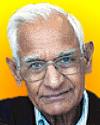
Died 9 Nov 2011 at age 89 (born 9 Jan 1922).
Har Gobind Khorana was an Indian-American biochemist who shared (with Marshall W. Nirenberg and Robert W. Holley) the 1968 Nobel Prize in Physiology or Medicine “for their interpretation of the genetic code and its function in protein synthesis.” After James Watson and Francis Crick announced the double helix structure of DNA in 1953, other researchers pursued how DNA's instructions were actually carried out. Khorana devised techniques to find more about the genetic code of small “messenger” molecules of transfer ribonucleic acid (RNAs) and their codons which controlled protein building. In 1972, he was the first scientist to synthesize a wholly artificial gene from laboratory chemicals. In the 1980s, Khorana synthesized the gene for rhodopsin, a protein involved in vision.«
Har Gobind Khorana was an Indian-American biochemist who shared (with Marshall W. Nirenberg and Robert W. Holley) the 1968 Nobel Prize in Physiology or Medicine “for their interpretation of the genetic code and its function in protein synthesis.” After James Watson and Francis Crick announced the double helix structure of DNA in 1953, other researchers pursued how DNA's instructions were actually carried out. Khorana devised techniques to find more about the genetic code of small “messenger” molecules of transfer ribonucleic acid (RNAs) and their codons which controlled protein building. In 1972, he was the first scientist to synthesize a wholly artificial gene from laboratory chemicals. In the 1980s, Khorana synthesized the gene for rhodopsin, a protein involved in vision.«
Chemical Biology: Selected Papers of H. Gobind Khorana, by Har Gobind Khorana. - book suggestion.
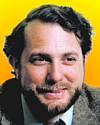

American physicist who was a pioneer in medical imaging and fine-arts holography. His fascination with optical phenomena began with the 3-D glasses he used as an 11-year-old to watch the 1953 movie House of Wax. In 1968, he invented the “rainbow holograms” as seen on credit cards while working for Polaroid Corporation. He turned to academia as an assistant professor at Harvard (1968) and later a professor at Massachusetts Institute of Technology from 1985 where he helped set up the Spatial Imaging Group and headed the M.I.T. media art and sciences program. Benton was a pioneer in natural light holography as a artistic medium, and was a curator at the Museum of Holography in Manhanttan until it closed in 1992.«[Image right: Benton hologram used on a credit card.]
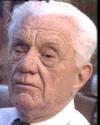
Died 9 Nov 1997 at age 92 (born 8 Jan 1905). quotes
German-born U.S. philosopher who was one of the leaders of the Berlin school of logical positivism. The group viewed the task of science as that of showing phenomena to be the consequence of unbroken laws. He emigrated to the USA in 1937 because of Nazism.With Paul Oppenheim, he published an account of the deductive- nomological explanation. In this model, the explanation of a fact is reduced to a logical relationship between statements: the explanandum is a consequence of the explanans. This is a common method of logical positivism. Pragmatic aspects of explanation are not taken into consideration. Another feature is that an explanation requires scientific laws; facts are explained when they are subsumed under laws.
German-born U.S. philosopher who was one of the leaders of the Berlin school of logical positivism. The group viewed the task of science as that of showing phenomena to be the consequence of unbroken laws. He emigrated to the USA in 1937 because of Nazism.With Paul Oppenheim, he published an account of the deductive- nomological explanation. In this model, the explanation of a fact is reduced to a logical relationship between statements: the explanandum is a consequence of the explanans. This is a common method of logical positivism. Pragmatic aspects of explanation are not taken into consideration. Another feature is that an explanation requires scientific laws; facts are explained when they are subsumed under laws.
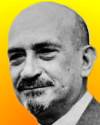
Died 9 Nov 1952 at age 77 (born 27 Nov 1874). quotes
Russian-British-Israeli chemist who used bacteria for the synthesis of organic chemicals. During WW I, a recent immigrant into Great Britain, he discovered a way to use a bacterium to synthesize acetone during the fermentation of grain. Acetone was important in the manufacture of cordite for explosives. Postwar, he modified the fermentation to produce butyl alcohol, suitable for uses such as lacquers. This was the forerunner of the deliberate use of microorganisms for a wide variety of syntheses. A generation later, penicillin and vitamin B12 were produced in this way. Weizmann was active in politics leading to the establishment of Israel (1948), and became its first president - one of the very few research scientists to become a head of state.
Russian-British-Israeli chemist who used bacteria for the synthesis of organic chemicals. During WW I, a recent immigrant into Great Britain, he discovered a way to use a bacterium to synthesize acetone during the fermentation of grain. Acetone was important in the manufacture of cordite for explosives. Postwar, he modified the fermentation to produce butyl alcohol, suitable for uses such as lacquers. This was the forerunner of the deliberate use of microorganisms for a wide variety of syntheses. A generation later, penicillin and vitamin B12 were produced in this way. Weizmann was active in politics leading to the establishment of Israel (1948), and became its first president - one of the very few research scientists to become a head of state.
Died 9 Nov 1938 at age 59 (born 4 Oct 1879). quotes
American plant geneticist, botanist, agronomist, and chemist, who contributed to genetic theory and to the development of hybrid corn (maize) by applying inbred strain breeding. This was a revolutionary method of seed production and improved corn crops around the world. He analyzed the protein and fat content of corn to increase its nutritional value as animal feed. East studied the genetics and breeding not only of corn, but also tobacco and potatoes. He independently discovered the phenomenon later called "multiple factors" that gives a Mendelian interpretation for "blending inheritance." He also made important studies of self- and cross-incompatibility, heterosis, cytoplasmic heredity, and hybridization.«
American plant geneticist, botanist, agronomist, and chemist, who contributed to genetic theory and to the development of hybrid corn (maize) by applying inbred strain breeding. This was a revolutionary method of seed production and improved corn crops around the world. He analyzed the protein and fat content of corn to increase its nutritional value as animal feed. East studied the genetics and breeding not only of corn, but also tobacco and potatoes. He independently discovered the phenomenon later called "multiple factors" that gives a Mendelian interpretation for "blending inheritance." He also made important studies of self- and cross-incompatibility, heterosis, cytoplasmic heredity, and hybridization.«
Died 9 Nov 1935 at age 76 (born 18 Oct 1859).
Italian archaeologist who pioneered in the excavation and research of sites, from the prehistoric to the Byzantine, in Sicily and southern Italy. He was an expert in the pre-Greek Siculan period he named after the Siculi, or Sikels, a native group or groups which were said to have inhabited southern Italy and eastern Sicily. In 1889-93, he undertook excavations in the Pantalica valley, which has five necropoli with thousands of burial chambers hewn in the steep limestone cliffs. He discovered the Neolithic village of Stentinello. In 1911, he uncovered the doric temple at Punta Stilo, and more excavation revealed the layout of some city walls and some houses. The archaeological museum in Sicily, where he was director 1895-1934, was dedicated to him.
Italian archaeologist who pioneered in the excavation and research of sites, from the prehistoric to the Byzantine, in Sicily and southern Italy. He was an expert in the pre-Greek Siculan period he named after the Siculi, or Sikels, a native group or groups which were said to have inhabited southern Italy and eastern Sicily. In 1889-93, he undertook excavations in the Pantalica valley, which has five necropoli with thousands of burial chambers hewn in the steep limestone cliffs. He discovered the Neolithic village of Stentinello. In 1911, he uncovered the doric temple at Punta Stilo, and more excavation revealed the layout of some city walls and some houses. The archaeological museum in Sicily, where he was director 1895-1934, was dedicated to him.
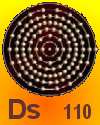
In 1994, the first atom of element 110 was detected at the Gesellschaft für Schwerionenforschung (GSI) in Darmstadt, Germany, by an international group of scientists lead by Peter Armbruster and Sigurd Hofmann. A thin lead foil target was bombarded with accelerated nickel atoms. A lead nucleus fused with a nickel nucleus to form a new nucleus of element 110, an isotope with atomic mass number of 269. After a small fraction of a thousandth of a second, it decayed into lighter elements by emitting alpha-particles which are the nuclei of helium atoms. It was known as ununnilium, symbol Uun until named in 2003 as darmstadtium, symbol Ds. In the 1980s, elements 107 (Bh), 108 (Hs), 109 (Mt) were also created there.
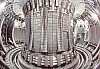
In 1991, in Culham, England, nuclear fusion was first harnessed to produce a significant amount of power. Though lasting for only two seconds, about 1.7 megawatts of electric power was produced. The experiment by an international team of scientists at JET, the Joint European Torus was the first to produce controlled fusion power. Fusion differs from the fission reactions used in current nuclear power plants for it occurs when light nuclei travelling at high speed combine, without radioactive waste as a byproduct. The JET programme was set up to make it possible to carry out fusion tests under conditions that closely resemble those of a commercial fusion power plant. Construction of JET began in 1978 and the device has been in operation since 1983.[Image: Inside JET's toroidal vacuum vessel. The height of the inside of the vessel is 4.2 metres]

In 1967, a Saturn V rocket was launched, unmanned, into Earth orbit, on its first successful test flight for this, the most powerful rocket NASA had made. Smaller rockets, the Saturn 1 and 1B were used to launch humans into earth orbit, but it would take the larger Saturn V to go beyond Earth and to the moon. As a Heavy Lift Vehicle, it was a three-stage rocket able to launch about 130 tons into Earth orbit, or 50 tons to the moon. This first test flight, the Apollo 4 flight, was termed perfect, from launch until 8-hr 37-min later when the Command Module splashed down. The CM was quickly retrieved by divers from a carrier vessel. The aft heat shield was heavily charred. The charring on the crew compartment shield was less than expected, and the spacecraft windows were undamaged.«

In 1965, the biggest electricity grid failure in U.S. history caused a 13-hour blackout in northeast America and parts of Canada. The power lines from Niagara Falls to New York City were operating near their maximum capacity. At about 5:15 pm, a transmission line relay failed. Now there was insufficient line capacity for New York City. New England and New York are inter-connected on a power grid, and the power that had been flowing toward New York City had to go elswhere, instantly. Unable to handle this overload, generator operators shut down to protect their equipment. Almost the entire grid failed, affecting 80,000 square miles, and 25 million people. In the subways of New York, 800,000 people were trapped.[Image: New York City as seen from Broolyn during blackout from Life magazine Vol. 59 No. 2, 19 Nov 1965)
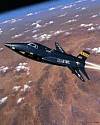
In 1961, the X-15 rocket plane achieved a world record speed of 4,093 mph (Mach 6.04) and reached 101,600 feet (30,970 m or over 19 miles) altitude, piloted by U.S.Air Force Major Robert M. White. Its internal structure of titanium was covered with a skin of Inconel X, a chrome-nickel alloy. To save fuel, the X-15 was air launched from a B-52 aircraft at about 45,000 ft. Test flights between 8 Jun 1959 and 24 Oct 1968 provided data on hypersonic air flow, aerodynamic heating, control at hypersonic speeds and piloting techniques for reentry used in the development of the Mercury, Gemini, and Apollo spaceflight programs. The X-15 reached 354,200 feet (107,960 m, 67 miles) on 22 Aug 1963 and Mach 6.7 on 3 Oct 1967.«[Image: NASA artist's conception of the flight.]
Hypersonic! The Story of the North American X-15, by Dennis R. Jenkins, Tony Landis. - book suggestion.
In 1957, Gordon Gould began to write down the principles of what he called a laser in his notebook during a sleepless Saturday night. By Wednesday morning he had a notary witness and date his notebook. Therein, he had described what he called “light amplification by stimulated emission of radiation,” or, from those initials, “laser.” Unfortunately, he misunderstood the patent process, and did not file promptly. But, other scientists, Charles Townes and Arthur Schawlow, did file for a patent on their similar but independent discovery of how to make a laser. When Gould belatedly tried to get a patent, it took decades to eventually establish priority and gain what had then grown to be profitable royalties from the established laser industry.«
Laser: The Inventor, the Nobel Laureate, and the Thirty-Year Patent War, by Nick Taylor. - book suggestion.
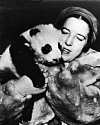
In 1936, a baby panda was caught in the bamboo forests on the mountains that separate China and Tibet, near Tsaopo, China, by a hunting party for Ruth Harkness, a wealthy American socialite. She was assisted by Jack Young, an American-born Chinese hunter and explorer, his wife Su-Lin, and his younger brother Quentin. The baby panda was named Su Lin (Chinese for “A Little Bit Of Something Precious”), and bottle-fed by Harkness during her return to New York, arriving on 18 Dec 1936. As the first giant panda to live in captivity outside China, Su Lin caused a sensation in the media. Su Lin was acquired on 8 Feb 1837 by Brookfield Zoo, Chicago, and was exhibited there until the panda died on 1 Apr 1938.«[Image: Ruth Harkness with Su Lin]
The Lady and the Panda: The True Adventures of Ruth Harkness..., by Vicki Constantine Croke. - book suggestion.
In 1925, the confirmation of highly-penetrating radiation from “finite space” was announced by Robert A. Millikan, calling them “cosmic rays.” He spoke to the National Academy of Sciences at Madison, Wisconsin. Earlier tests with high-altitude balloons, or atop mountains, remained inconclusive as to extra-terrestrial origin. The rays, he thought then, could be of local origin from radioactive materials. However, in 1925, measurements he made up to 27-m below Muir Lake (altitude 3540-m) and Lake Arrowhead (alt. 1530-m) showed rays reached given depths in each by comparable amounts. Thus the atmosphere difference of 2-km did not originate the rays, they had 18 times the penetrating power of any known gamma rays, and possibly were the “birth cries” of infant atoms from fusion or electron capture.«[This work by Millikan on cosmic rays became known to the public in newspaper articles on 11 Nov 1925. He was already a noted scientist, having received a Nobel Prize in Physics in 1923. Atmospheric radiation had been noted before by others since 1901.]

Current ACS logo
In 1877, the first U.S. national society for chemists was chartered. After some preliminary meetings, the American Chemical Society had been formally organized in New York City on 20 Apr 1876. The first president was John William Draper. The society was incorporated as a non-profit, nonstock corporation of the state of New York, for “the advancement of chemistry and the promotion of chemical research.” It was predated by the Chemical Society of Philadelphia, the first such society in the world, which was founded in 1792 by James Woodhouse.

(s 12)
In 1842, the first U.S. design patent, was issued for typefaces and borders patented by George Bruce of New York City (No. D1). This new form of patent was authorized by Act of Congress on 29 Aug 1842. In its text, Bruce wrote "It is difficult to find much in Printer's Types that is new in design if we regard only their characteristic lines, but if we look at the ways in which the figures are varied while the characteristic lines are retained, we find the same variety that would be expected in the portraits of a person painted by many different artists in different positions" and "...these Types are different from all others in their size, proportions, details and impressive effects, containing peculiarities by which they are distinguished..."«[Image: Stock art of flourishes, not part of patent; The available Patent Office record of this patent does not show samples of the patented designs.]
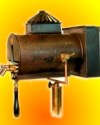
In 1825, Thomas Drummond made the first practical use of limelight while surveying in Ireland to enable work through misty days and night. He created an intense light from a lump of lime (calcium oxide) heated to incandescent by an oxygenated alcohol flame in front of a reflector. The haze over Lough Neagh obscured the view between Slieve Snaght, in Donegal, and Divis Mountain 66 miles away near Belfast, but the light penetrated it.* He attempted to adapt it for lighthouses, but found operation too costly. The bright light given off by heated metal oxides was first investigated in the 1820s by Goldsworthy Gurney who created the oxyhydrogen blowpipe. Limelight was also used not only in theatres, but even for microscope illumination.«[Image: theatrical limelight spotlight.] more




