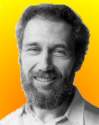
Born 1 Apr 1947.
French mathematician who won the 1982 Fields Medal (awarded in 1983) for his work in operator theory. His most remarkable contributions are (1) general classification and a structure theorem for factors of type III, obtained in his thesis (1973); (2) classification of automorphisms of the hyperfinite factor, which served as a preparation for the next contribution; (3) classification of injective factors; and (4) application of the theory of C*-algebras to foliations and differential geometry in general. Connes’ recent work has been on noncommutative geometry and he has studied applications to theoretical physics.«
French mathematician who won the 1982 Fields Medal (awarded in 1983) for his work in operator theory. His most remarkable contributions are (1) general classification and a structure theorem for factors of type III, obtained in his thesis (1973); (2) classification of automorphisms of the hyperfinite factor, which served as a preparation for the next contribution; (3) classification of injective factors; and (4) application of the theory of C*-algebras to foliations and differential geometry in general. Connes’ recent work has been on noncommutative geometry and he has studied applications to theoretical physics.«
Triangle of Thought, by Alain Connes, et al. - book suggestion.
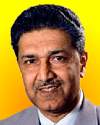
Born 1 Apr 1936.
Pakistani nuclear engineer and metallurgist who led Pakistan’s nuclear weapons program, leading to the country’s first nuclear tests on 28 May 1998. He was born in India, and was a child when that country became independent from Britain (1947) and Muslim areas were partitioned in the east and west to form Pakistan. From 1952, he lived in West Pakistan, where he earned a degree in metallurgy, studied abroad, and by 1972 had a job at a Dutch plant where he gained knowledge on uranium enrichment technology. On 17 Sep 1974, he offered Pakistan’s prime minister, his help to build an atomic bomb. He stole centrifuge plans, returned to Pakistan (15 Dec 1975), and by devious means enabled weapon development there.«[a.k.a Abdal Qadir Khan, A.Q. Khan.]
Pakistani nuclear engineer and metallurgist who led Pakistan’s nuclear weapons program, leading to the country’s first nuclear tests on 28 May 1998. He was born in India, and was a child when that country became independent from Britain (1947) and Muslim areas were partitioned in the east and west to form Pakistan. From 1952, he lived in West Pakistan, where he earned a degree in metallurgy, studied abroad, and by 1972 had a job at a Dutch plant where he gained knowledge on uranium enrichment technology. On 17 Sep 1974, he offered Pakistan’s prime minister, his help to build an atomic bomb. He stole centrifuge plans, returned to Pakistan (15 Dec 1975), and by devious means enabled weapon development there.«[a.k.a Abdal Qadir Khan, A.Q. Khan.]
Eating Grass: The Making of the Pakistani Bomb, by Feroz Khan. - book suggestion.
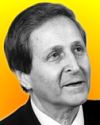
Born 1 Apr 1933.
French physicist who shared the 1997 Nobel Prize for Physics (with Steven Chu and William D. Phillips) for developing methods using laser light to cool gases to the micro-kelvin temperature range (within the millionths degree range of absolute zero.) The motion of the chilled atoms is thereby sufficiently slowed to permit their study with very great accuracy, and their inner structure can be determined. Cohen-Tannoudji created laser traps that operate by a process of what has since been called Sisyphus cooling. Working with helium atoms, using six laser beams, he attained a temperature of 0.18 µK. Under these conditions helium atoms slowed to a speed of only about 2 cm/s.«
French physicist who shared the 1997 Nobel Prize for Physics (with Steven Chu and William D. Phillips) for developing methods using laser light to cool gases to the micro-kelvin temperature range (within the millionths degree range of absolute zero.) The motion of the chilled atoms is thereby sufficiently slowed to permit their study with very great accuracy, and their inner structure can be determined. Cohen-Tannoudji created laser traps that operate by a process of what has since been called Sisyphus cooling. Working with helium atoms, using six laser beams, he attained a temperature of 0.18 µK. Under these conditions helium atoms slowed to a speed of only about 2 cm/s.«
Atoms in Electromagnetic Fields, by Claude Cohen-Tannoudji. - book suggestion.
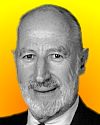
Born 1 Apr 1932; died 1 Dec 2002 at age 70.
American computer scientist who created ALOHANET, the first modern data network, which formed the basis of the protocols essential in the Ethernet now in wide use. It opened in 1970, operating at 9600 bits per second, using radio to provide a wireless packet-switched data network between several Hawaii islands. Its innovations included the first packet radio sensors, the first packet radio repeaters, the first satellite packet network and the first radio access to the Internet. Abramson's U.S. patents include the first patent for CRC redundancy checks to provide data error control technique (No. 3,114,130), and the first patent issued for the design of burst errors in digital systems (No. 3,163,848).«
American computer scientist who created ALOHANET, the first modern data network, which formed the basis of the protocols essential in the Ethernet now in wide use. It opened in 1970, operating at 9600 bits per second, using radio to provide a wireless packet-switched data network between several Hawaii islands. Its innovations included the first packet radio sensors, the first packet radio repeaters, the first satellite packet network and the first radio access to the Internet. Abramson's U.S. patents include the first patent for CRC redundancy checks to provide data error control technique (No. 3,114,130), and the first patent issued for the design of burst errors in digital systems (No. 3,163,848).«
Computer Communications Network, by Norman Abramson, F. Kuo. - book suggestion.
Born 1 Apr 1922; died 7 Feb 1990 at age 67. quotes
Alan Jay Perlis was an American computer scientist known as a pioneer in programming languages and software engineering. He was the first recipient of the Turing Award (1966) for his influential work in advancing compiler construction and for helping develop ALGOL, one of the earliest high-level programming languages that shaped modern computing. Perlis emphasized the importance of abstraction and clarity in programming, promoting the idea that software design was both a scientific and artistic pursuit. He led early research on numerical analysis, programming methodology, and education in computer science. His witty “Epigrams on Programming” captured enduring insights into the philosophy of computing.«
Alan Jay Perlis was an American computer scientist known as a pioneer in programming languages and software engineering. He was the first recipient of the Turing Award (1966) for his influential work in advancing compiler construction and for helping develop ALGOL, one of the earliest high-level programming languages that shaped modern computing. Perlis emphasized the importance of abstraction and clarity in programming, promoting the idea that software design was both a scientific and artistic pursuit. He led early research on numerical analysis, programming methodology, and education in computer science. His witty “Epigrams on Programming” captured enduring insights into the philosophy of computing.«
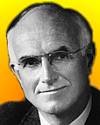
Born 1 Apr 1919; died 26 Nov 2012 at age 93. quotes
American surgeon who shared (with E. Donnall Thomas) the Nobel Prize for Physiology or Medicine in 1990 for discoveries concerning “organ and cell transplantation in the treatment of human disease.” His work concerned how rejection following organ transplantation in man could be mastered. He first experienced tissue rejection when doing skin grafts as a plastic surgeon. In 1954, Murray was the first to successfully perform a human organ transplant. Richard Herrick, 23 years old, received a kidney from his homozygous twin brother. Also, Murray pioneered transplantation of kidneys obtained from deceased persons and showed that patients with terminal renal insufficiency could be cured. The field was then open for transplantation of other organs such as the liver, pancreas, heart or lungs.«
American surgeon who shared (with E. Donnall Thomas) the Nobel Prize for Physiology or Medicine in 1990 for discoveries concerning “organ and cell transplantation in the treatment of human disease.” His work concerned how rejection following organ transplantation in man could be mastered. He first experienced tissue rejection when doing skin grafts as a plastic surgeon. In 1954, Murray was the first to successfully perform a human organ transplant. Richard Herrick, 23 years old, received a kidney from his homozygous twin brother. Also, Murray pioneered transplantation of kidneys obtained from deceased persons and showed that patients with terminal renal insufficiency could be cured. The field was then open for transplantation of other organs such as the liver, pancreas, heart or lungs.«
Surgery of the Soul: Reflections on a Curious Career, by Joseph E. Murray. - book suggestion.
Born 1 Apr 1916; died 22 Dec 2003 at age 87.
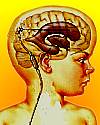
American inventor of a pioneering valve used in the treatment of hydrocephalus (“water on the brain”). Shortly after birth (1955), his son suffered from hydrocephalus. Holter learned from surgeons Eugene Spitz and Frank Nulsen that a suitable valve to drain fluid from the brain could maintain normal cranial pressure. To save his son, Holter invented a pressure-sealing valve made from silicone to avoid clogging problems. He subsequently refined and patented the device. Spitz and Holter set up a company to manufacture the shunts using Silastic silicone. The Spitz-Holter valve has helped millions around the world since the late 1950s. Holter later created other medical devices, including dialysis pumps, artificial heart valves and finger tendons.«[Image: Schematic of placement of drainage tube with valve seen placed subcutaneously beside ear.]
American inventor of a pioneering valve used in the treatment of hydrocephalus (“water on the brain”). Shortly after birth (1955), his son suffered from hydrocephalus. Holter learned from surgeons Eugene Spitz and Frank Nulsen that a suitable valve to drain fluid from the brain could maintain normal cranial pressure. To save his son, Holter invented a pressure-sealing valve made from silicone to avoid clogging problems. He subsequently refined and patented the device. Spitz and Holter set up a company to manufacture the shunts using Silastic silicone. The Spitz-Holter valve has helped millions around the world since the late 1950s. Holter later created other medical devices, including dialysis pumps, artificial heart valves and finger tendons.«[Image: Schematic of placement of drainage tube with valve seen placed subcutaneously beside ear.]
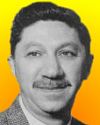
Born 1 Apr 1908; died 8 Jun 1970 at age 62. quotes
American psychologist who believed that man has a natural drive to healthiness, and developed this into his self-actualization theory of psychology. Thus, man knows more than his physical needs to maintain health, but also knows intuitively what he needs to become mentally healthy and happy. In his early career, working with monkeys, he observed that some needs take precedence over others, for example, thirst takes priority over hunger. Later, he created his now famous hierarchy of needs. Beyond the details of air, water, food, and sex, he laid out five broader layers: physiological needs, needs for safety and security, needs for love and belonging, needs for esteem, and the need to actualize the self, in that order.«
American psychologist who believed that man has a natural drive to healthiness, and developed this into his self-actualization theory of psychology. Thus, man knows more than his physical needs to maintain health, but also knows intuitively what he needs to become mentally healthy and happy. In his early career, working with monkeys, he observed that some needs take precedence over others, for example, thirst takes priority over hunger. Later, he created his now famous hierarchy of needs. Beyond the details of air, water, food, and sex, he laid out five broader layers: physiological needs, needs for safety and security, needs for love and belonging, needs for esteem, and the need to actualize the self, in that order.«
The Farther Reaches of Human Nature, by Abraham H. Maslow. - book suggestion.
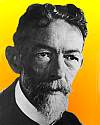
Born 1 Apr 1865; died 23 Sep 1929 at age 64.
Richard Adolf Zsigmondy was an Austro-German chemist who was awarded who was awarded the Nobel Prize for Chemistry in 1925 for “his demonstration of the heterogenous nature of colloid solutions and for the methods he used, which have since become fundamental in modern colloid chemistry."” Colloids are composed of submicroscopic particles dispersed within another substance. To conduct his research on colloids he invented the ultramicroscope (1903), with which he could view particles with a diameter of one 10-millionth of a millimetre not visible in a conventional microscope. It used an intense beam of light oriented in a position perpendicular to the microscope's optical axis. As particles scattered the incident light, their movements could be seen as flashes against a dark background.«
Richard Adolf Zsigmondy was an Austro-German chemist who was awarded who was awarded the Nobel Prize for Chemistry in 1925 for “his demonstration of the heterogenous nature of colloid solutions and for the methods he used, which have since become fundamental in modern colloid chemistry."” Colloids are composed of submicroscopic particles dispersed within another substance. To conduct his research on colloids he invented the ultramicroscope (1903), with which he could view particles with a diameter of one 10-millionth of a millimetre not visible in a conventional microscope. It used an intense beam of light oriented in a position perpendicular to the microscope's optical axis. As particles scattered the incident light, their movements could be seen as flashes against a dark background.«
Colloids and the ultramicroscope, by Richard Zsigmondy. - book suggestion.
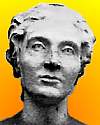
Born 1 Apr 1776; died 27 Jun 1831 at age 55. quotes
French mathematician who is known for her work in number theory and contributions to the applied mathematics of acoustics and elasticity. Germain was self-taught from books, and from lecture notes supplied by male friends attending the Ecole Polytechnique which she, as a woman, was not permitted to attend. Using a male pseudonym, M. LeBlanc, she corresponded with Lagrange who recognised her skill, and subsequently sponsored her work. She accomplished a limited proof of Fermat's last theorem, for any prime under 100 where certain conditions were met. In 1816, she won a prize sponsored by Napoleon for a mathematical explanation of Chladni figures, the vibration of elastic plates. She died at age 55, from breast cancer.« more
French mathematician who is known for her work in number theory and contributions to the applied mathematics of acoustics and elasticity. Germain was self-taught from books, and from lecture notes supplied by male friends attending the Ecole Polytechnique which she, as a woman, was not permitted to attend. Using a male pseudonym, M. LeBlanc, she corresponded with Lagrange who recognised her skill, and subsequently sponsored her work. She accomplished a limited proof of Fermat's last theorem, for any prime under 100 where certain conditions were met. In 1816, she won a prize sponsored by Napoleon for a mathematical explanation of Chladni figures, the vibration of elastic plates. She died at age 55, from breast cancer.« more
Sophie Germain: An Essay in the History of the Theory of Elasticity, by L.L. Bucciarelli, N. Dworsky. - book suggestion.
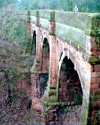
Born 1 Apr 1764; died 22 May 1805 at age 41.
English civil engineer and industrialist who was a pioneer builder of canals. His commissions included becoming engineer for the Nottingham Canal in 1792, and the Derby Canal in 1793. For the latter, he erected the world's first cast iron navigable aquaduct (water bridge), the 44-ft (13 m) long, single span, Holmes Aquaduct that carried the Derby Canal. It was opened in Feb 1796, and demolished in 1971. He is also notable for building what is now the oldest aquaduct still in use on the Ashton Canal, built in 1798, to cross Store Street, Manchester. Outram was consulting engineer for the construction of the Huddersfield Narrow Canal, which included the pioneering Standedge Canal Tunnel. The first boat went through the tunnel on 10 Dec 1810, before the official opening on 4 Apr 1811. Boats would be legged through, without horses.«[Image: Aqueduct on Peak Forest Canal.] more
English civil engineer and industrialist who was a pioneer builder of canals. His commissions included becoming engineer for the Nottingham Canal in 1792, and the Derby Canal in 1793. For the latter, he erected the world's first cast iron navigable aquaduct (water bridge), the 44-ft (13 m) long, single span, Holmes Aquaduct that carried the Derby Canal. It was opened in Feb 1796, and demolished in 1971. He is also notable for building what is now the oldest aquaduct still in use on the Ashton Canal, built in 1798, to cross Store Street, Manchester. Outram was consulting engineer for the construction of the Huddersfield Narrow Canal, which included the pioneering Standedge Canal Tunnel. The first boat went through the tunnel on 10 Dec 1810, before the official opening on 4 Apr 1811. Boats would be legged through, without horses.«[Image: Aqueduct on Peak Forest Canal.] more
Benjamin Outram, 1764-1805: An Engineering Biography, by Reginald B. Schofield. - book suggestion.
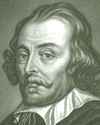
Born 1 Apr 1578; died 3 Jun 1657 at age 79. quotes
English physician who discovered the true nature of the circulation of the blood and of the function of the heart as a pump. Functional knowledge of the heart and the circulation had remained almost at a standstill ever since the time of the Greco-Roman physician Galen, 1,400 years earlier. Harvey’s courage, penetrating intelligence, and precise methods were to set the pattern for research in biology and other sciences for succeeding generations, so that he shares with William Gilbert, investigator of the magnet, the credit for initiating accurate experimental research throughout the world. more
English physician who discovered the true nature of the circulation of the blood and of the function of the heart as a pump. Functional knowledge of the heart and the circulation had remained almost at a standstill ever since the time of the Greco-Roman physician Galen, 1,400 years earlier. Harvey’s courage, penetrating intelligence, and precise methods were to set the pattern for research in biology and other sciences for succeeding generations, so that he shares with William Gilbert, investigator of the magnet, the credit for initiating accurate experimental research throughout the world. more
On the Motion of the Heart and Blood in Animals, by William Harvey, Robert Willis (Translator). - book suggestion.

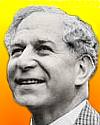
Died 1 Apr 1993 at age 88 (born 30 May 1904).
Solly Zuckerman Thorpe, Baron Zuckerman of Burnham was a British zoologist and political adviser was born in South Africa. After completing medical studies in England, his first career was teaching anatomy at University College London and doing research at London Zoo on primate behaviour (1928-32). When WW II began, he became a scientific adviser for the British Defense Ministry, beginning with experimental studies of concussion (the effects that bomb blast shock waves have on the body) and became a military strategist and government adviser (1939-46; 1960-66). He remained busy after retirement, as President of the Zoological Society of London, as a campaigner against the nuclear arms race, and as a promoter of environmental research.
Solly Zuckerman Thorpe, Baron Zuckerman of Burnham was a British zoologist and political adviser was born in South Africa. After completing medical studies in England, his first career was teaching anatomy at University College London and doing research at London Zoo on primate behaviour (1928-32). When WW II began, he became a scientific adviser for the British Defense Ministry, beginning with experimental studies of concussion (the effects that bomb blast shock waves have on the body) and became a military strategist and government adviser (1939-46; 1960-66). He remained busy after retirement, as President of the Zoological Society of London, as a campaigner against the nuclear arms race, and as a promoter of environmental research.
Solly Zuckerman, a Scientist Out of the Ordinary, by John Peyton. - book suggestion.
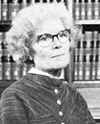
Died 1 Apr 1971 at age 68 (born 28 Jan 1903). quotes
British crystallographer (née Yardley) who developed several X-ray techniques for the study of crystal structure. Her experimental determination of the structure of the benzene ring by x-ray diffraction, which showed that all the ring C-C bonds were of the same length and all the internal C-C-C bond angles were 120 degrees, had an enormous impact on organic chemistry. She was the first woman to be elected (1945) to the Royal Society of London.
British crystallographer (née Yardley) who developed several X-ray techniques for the study of crystal structure. Her experimental determination of the structure of the benzene ring by x-ray diffraction, which showed that all the ring C-C bonds were of the same length and all the internal C-C-C bond angles were 120 degrees, had an enormous impact on organic chemistry. She was the first woman to be elected (1945) to the Royal Society of London.
Kathleen Lonsdale: A Biographical Memoir, by Dorothy Crowfoot Hodgkin. - book suggestion.
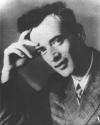
Died 1 Apr 1968 at age 60 (born 22 Jan 1908).
Soviet physicist who worked in such fields as low-temperature physics, atomic and nuclear physics, and solid-state, stellar-energy, and plasma physics. Several physics terms bear his name. He was awarded the 1962 Nobel Prize for Physics for his theory to explain the peculiar superfluid behaviour of liquid helium at very low temperature (2.18 K). Landau's further contributions are partly reflected in such terms as Landau diamagnetism and Landau levels in solid-state physics, Landau damping in plasma physics, the Landau energy spectrum in low-temperature physics, or Landau cuts in high-energy physics.
Soviet physicist who worked in such fields as low-temperature physics, atomic and nuclear physics, and solid-state, stellar-energy, and plasma physics. Several physics terms bear his name. He was awarded the 1962 Nobel Prize for Physics for his theory to explain the peculiar superfluid behaviour of liquid helium at very low temperature (2.18 K). Landau's further contributions are partly reflected in such terms as Landau diamagnetism and Landau levels in solid-state physics, Landau damping in plasma physics, the Landau energy spectrum in low-temperature physics, or Landau cuts in high-energy physics.
What Is Relativity?, by Lev Davidovich Landau. - book suggestion.
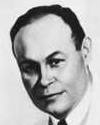
Died 1 Apr 1950 at age 45 (born 3 Jun 1904). quotes
Black-American physician and surgeon who was an authority on the preservation of human blood for transfusion. He organized and directed the blood-plasma programs of the United States and Great Britain in the early years of World War II, while also agitating the authorities to stop excluding the blood of blacks from plasma-supply networks. His death resulted from a car accident.
Black-American physician and surgeon who was an authority on the preservation of human blood for transfusion. He organized and directed the blood-plasma programs of the United States and Great Britain in the early years of World War II, while also agitating the authorities to stop excluding the blood of blacks from plasma-supply networks. His death resulted from a car accident.
One Blood: The Death and Resurrection of Charles R. Drew, by Spencie Love. - book suggestion.
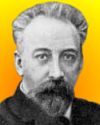
Died 1 Apr 1912 at age 46 (born 8 Mar 1866).
Russian physicist who, in experiments with William Crookes' radiometer, proved (1910) that light exerts a minute pressure on bodies (as predicted by James Clerk Maxwell's theory of electromagnetism), and furthermore that this effect is twice as great for reflecting surfaces than for absorbent surfaces. He had proposed that light pressure on small particles of cosmic dust could be greater than gravitational attraction, thus explaining why a comet's tail points away from the Sun (though it is now understood the solar wind has a greater influence). He built an extremely small vibrator source capable of generating 4-6 mm waves, which he used to demonstrate the first observation of douible refraction of electromagnetic waves in crystals of rhombic sulphur.«[DSB gives dates 8 Mar 1866 - 1 Apr 1912. EB gives Old Style 24 Feb 1866 - 1 Mar 1912 (New Style 8 Mar 1866 - 14 Mar 1912).]
Russian physicist who, in experiments with William Crookes' radiometer, proved (1910) that light exerts a minute pressure on bodies (as predicted by James Clerk Maxwell's theory of electromagnetism), and furthermore that this effect is twice as great for reflecting surfaces than for absorbent surfaces. He had proposed that light pressure on small particles of cosmic dust could be greater than gravitational attraction, thus explaining why a comet's tail points away from the Sun (though it is now understood the solar wind has a greater influence). He built an extremely small vibrator source capable of generating 4-6 mm waves, which he used to demonstrate the first observation of douible refraction of electromagnetic waves in crystals of rhombic sulphur.«[DSB gives dates 8 Mar 1866 - 1 Apr 1912. EB gives Old Style 24 Feb 1866 - 1 Mar 1912 (New Style 8 Mar 1866 - 14 Mar 1912).]
Pyotr Nikolayevich Lebedev, by Victor Dukor. - book suggestion.
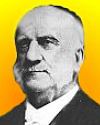
Died 1 Apr 1911 at age 77 (born 16 Dec 1833).
American agriculturist who originated originated the method in which an expert demonstrates, farm by farm, new agricultural discoveries and technologies. He introduced improved methods of farming into Louisiana, spurred the development of rice culture in the Southwest, demonstrated methods for curbing the boll weevil in Texas, and inaugurated a federal program of farm demonstrations throughout the South. Knapp's legacy was to bring progressive agricultural methods to the American farmer. An agrarian reformer, to change the pattern of society for the benefit of mankind, he organized a system of county farm and home demonstration agents and boys and girls clubs from which developed the U.S. Cooperative Extension Service.
American agriculturist who originated originated the method in which an expert demonstrates, farm by farm, new agricultural discoveries and technologies. He introduced improved methods of farming into Louisiana, spurred the development of rice culture in the Southwest, demonstrated methods for curbing the boll weevil in Texas, and inaugurated a federal program of farm demonstrations throughout the South. Knapp's legacy was to bring progressive agricultural methods to the American farmer. An agrarian reformer, to change the pattern of society for the benefit of mankind, he organized a system of county farm and home demonstration agents and boys and girls clubs from which developed the U.S. Cooperative Extension Service.
Seaman A. Knapp: Schoolmaster of American Agriculture, by Joseph Cannon Bailey. - book suggestion.
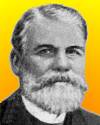
Died 1 Apr 1900 at age 72 (born 30 Nov 1827).
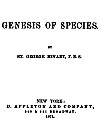
English biologist who was a leading critic of Charles Darwin's theory of natural selection. Although called to the Bar in 1851, he instead pursued his interests in natural history and comparative anatomy, studying the insectivores and carnivores. He held that variation was predetermined by a higher intelligence, and that evolution proceeded in a step-wise fashion, and not an accumulation of small variations. In Jan 1871 he published Genesis of Species, opposing Darwin's interpretation of evolution. Mivart's liberal position even seemed to conflict with his Roman Catholic religion, for which he was excommunicated by Cardinal Vaughan in Jan 1900, a few months before he died.«
English biologist who was a leading critic of Charles Darwin's theory of natural selection. Although called to the Bar in 1851, he instead pursued his interests in natural history and comparative anatomy, studying the insectivores and carnivores. He held that variation was predetermined by a higher intelligence, and that evolution proceeded in a step-wise fashion, and not an accumulation of small variations. In Jan 1871 he published Genesis of Species, opposing Darwin's interpretation of evolution. Mivart's liberal position even seemed to conflict with his Roman Catholic religion, for which he was excommunicated by Cardinal Vaughan in Jan 1900, a few months before he died.«
A Conscience in Conflict: The Life of St. George Jackson Mivart, by Jacob W. Gruber. - book suggestion.
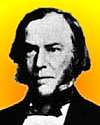
Died 1 Apr 1894 at age 76 (born 8 Apr 1817).
French physiologist and neurologist who was a pioneer endocrinologist and neurophysiologist. He was among the first to work out the physiology of the spinal cord. In 1849, he discovered that the sensory, though not the motor, fibres in the spinal cord are crossed. Thus a cut halfway through the cord from one side produces paralysis in the same side of the body but anesthesia in the side opposite to the cut. He also studied the physiological effects of the injection of genital gland extracts. In 1856 he discovered that the adrenal gland is essential for life. He later showed that "internal secretions" (i.e., hormones) serve the body's cells as a means of communication with each other, secondary to the nervous system (1891).
French physiologist and neurologist who was a pioneer endocrinologist and neurophysiologist. He was among the first to work out the physiology of the spinal cord. In 1849, he discovered that the sensory, though not the motor, fibres in the spinal cord are crossed. Thus a cut halfway through the cord from one side produces paralysis in the same side of the body but anesthesia in the side opposite to the cut. He also studied the physiological effects of the injection of genital gland extracts. In 1856 he discovered that the adrenal gland is essential for life. He later showed that "internal secretions" (i.e., hormones) serve the body's cells as a means of communication with each other, secondary to the nervous system (1891).
Cours of Lectures on the Physiology and Pathology of the Central Nervous System, by Charles Edouard Brown-Sequard. - book suggestion.
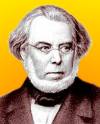
Died 1 Apr 1872 at age 66 (born 8 Apr 1805). quotes
German botanist noted for his research on the anatomy and physiology of plant cells. He was also first to propose that new cells are formed by cell division. He saw that the nucleus of the cell was within the granular, colloidal material that made up the main substance of the cell. In 1846, he named this substance protoplasm (a word invented by the Czech physiologist Jan Evangelista Purkinje to describe the embryonic material found in eggs). He carefully described (1835-39) some details of mitosis in plants, a process he observed in the alga Conferva glomerata. He recorded the appearance of the cell plate between daughter cells. He remarked, “Cell division is everywhere easily and plainly seen...in terminal buds and root tips.”
German botanist noted for his research on the anatomy and physiology of plant cells. He was also first to propose that new cells are formed by cell division. He saw that the nucleus of the cell was within the granular, colloidal material that made up the main substance of the cell. In 1846, he named this substance protoplasm (a word invented by the Czech physiologist Jan Evangelista Purkinje to describe the embryonic material found in eggs). He carefully described (1835-39) some details of mitosis in plants, a process he observed in the alga Conferva glomerata. He recorded the appearance of the cell plate between daughter cells. He remarked, “Cell division is everywhere easily and plainly seen...in terminal buds and root tips.”
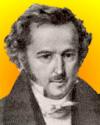
Died 1 Apr 1863 at age 67 (born 18 Mar 1796).
Swiss mathematician who was one of the greatest, contributors to projective geometry. He discovered the Steiner surface which has a double infinity of conic sections on it. The Steiner theorem states that the two pencils by which a conic is projected from two of its points are projectively related. He is also known for the Poncelet-Steiner theorem which shows that only one given circle and a straight edge are required for Euclidean constructions. His work included conic sections and surfaces, the theory of second-degree surfaces and centre-of-gravity problems. He developed the principle of symmetrization (1840-41). In 1848 he ws the first to define various polar curves with respect to a given curve, and introduced the “Steiner Curves.”«
Swiss mathematician who was one of the greatest, contributors to projective geometry. He discovered the Steiner surface which has a double infinity of conic sections on it. The Steiner theorem states that the two pencils by which a conic is projected from two of its points are projectively related. He is also known for the Poncelet-Steiner theorem which shows that only one given circle and a straight edge are required for Euclidean constructions. His work included conic sections and surfaces, the theory of second-degree surfaces and centre-of-gravity problems. He developed the principle of symmetrization (1840-41). In 1848 he ws the first to define various polar curves with respect to a given curve, and introduced the “Steiner Curves.”«
Geometrical Constructions With a Ruler, by Jakob Steiner. - book suggestion.
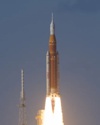
In 2026, aboard an Artemis II rocket, NASA launched four astronauts on a 10-day mission to loop around the moon. The most powerful rocket, to date, was designed to take people father into space than ever before. This manned moon mission was the first since the Apollo era, over a half-century before. Planned to travel 252,799 miles away from Earth, this trip exceeded the Apollo record by over 4,000 miles. On board, NASA’s Orion spacecraft mission commander Reid Wiseman, Victor Glover, Christina Koch and Jeremy Hansen of the Canadian Space Agency, were scheduled to return by splashdown with in the Pacific Ocean. NASA had earlier announced (24 Mar 2026) plans for a $20 billion moon base.«
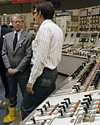
In 1979, President Jimmy Carter visited the Three Mile Island nuclear power plant, four days after the most serious nuclear accident in the U.S. (28 Mar 1979). He toured the control room, which was a deliberate public display of confidence by Carter that the situation was under control, in order to allay the fears of the local population of Harrisburg, Pennsylvania, as well as the country. Carter had a good understanding of nuclear reactors. As a Navy officer in the early 1950s, he was selected by Admiral Hyman G. Rickover (then a captain) to spent some of his service time with the Naval Reactors Branch assisting in the design and development of nuclear propulsion plants for naval vessels. He had trained as an engineering officer for a nuclear power plant.«
Three Mile Island: A Nuclear Crisis in Historical Perspective, by J. Samuel Walker. - book suggestion.
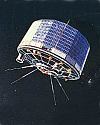
In 1960, the first weather observation satellite, Tiros I, was launched from Cape Kennedy and made the first television picture from space. It was the first of several launched in the TIROS program, named from its function: Television Infrared Observation Satellite, and was NASA's first experimental step to determine if satellites could be useful in the study of the Earth. At that time, the effectiveness of satellite observations was still unproven. Thus various design issues for spacecraft were tested: instruments, data and operational parameters. The goal was to improve satellite applications for Earth-bound decisions, such as "should we evacuate the coast because of the hurricane?" TIROS proved extremely successful for weather forecasting.
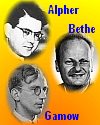
(s ABG)
In 1948, Alpher, Bethe and Gamow's famous letter to Physical Review was published. The "Big Bang" theory had previously been around as a competing theory with "Steady State" for a while. Their paper gave a "hot Big Bang" mathematical analysis of atomic events during the creation of the universe, and explained the relative abundances of the light elements (particularly helium) in the universe. In fact, the paper was written by Ralph Alpher and George Gamow. The esteemed Hans Bethe was persuaded to lend his name as a co-author for the amusing similarity to "alpha, beta, gamma," the first letters of the Greek alphabet. Bethe did actually make later contributions to discussions of the theory.
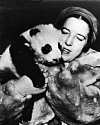
In 1938, the first panda to live in captivity outside China, died after a twig lodged in its throat. Keepers at Brookfield Zoo, Chicago, U.S. had added oak twigs to the panda's usual diet of bamboo, but the oak fodder proved to be too tough. Despite removal of the twig, use of an oxygen tent and efforts by artificial respiration, the panda died. Ruth Harkness, a remarkable young Manhattan socialite had captured Su Lin on an expedition in Tibet on 9 Nov 1936, and returned with the baby panda to New York on 18 Dec 1936. The zoo acquired Su Lin on 8 Feb 1837. Earlier in 1938, she brought back another baby panda, Mei-Mei, to be Su Lin's companion. A post-mortem revealed Su-Lin was a male, not a female as had been thought.«[Image: Ruth Harkness with Su Lin]
The Lady and the Panda: The True Adventures of Ruth Harkness..., by Vicki Constantine Croke. - book suggestion.
In 1904, Henry Ford was age 39 when construction of the first purpose-built Ford factory was authorized by the stockholders, just 10 months after Ford Motor Company was founded on 16 Jun 1903. Barely 18 months after the first Model A Ford car was sold (23 Jul 1903) from the original Mack Avenue plant, production began in Dec 1904 at the new Piquette Avenue Plant..It was a long, narrow, mill-style brick building with many large windows to light the interior and provide ventilation. After four years making a succession of Models B, C, F, K, N, R, S, retooling began in late 1908 to produce the Model T. The first one rolled off the production line on 27 Sep 1908. The Piquette Avenue Plant became the birthplace of one of the world's most famous automobiles. Ford was already building a larger factory.«
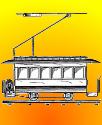
(USPTO)
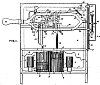
In 1890, an electric trolley car was patented by Belgian inventor, Charles Van Depoele (No. 424,695). He had designed the first commercial electric railway in the US (maybe the world) for the Scranton Suburban Electric Railway (30 Nov 1886), an intra-city line running a few miles between downtown Scranton, Pa. and Green Ridge. The line ran continuously (except for repairs and strikes) until 1954. Van Depoele received patents an electric railway (1883), an electric generator (1880), a carbon commutator brush (1888), an alternating-current electric reciprocating engine (1889), a telpher system for a car running suspended from cables (1890), a coal-mining machine (1891) and a gearless electric locomotive (1894).
(USPTO)
In 1889, the first commercial dishwashing machine was marketed in Chicago, designed over a number of years by Josephine Cochrane. She was granted U.S. patent No.355,139 on 28 Dec 1886 (when she spelled her last name Cochran). She received an award for her invention at the 1893 World's Fair in Chicago. The company she founded to sell the dishwasher to hotels, restaurants and other commercial groups was purchased in the 1920s by the Hobart Corporation. They introduced (1949) the "KitchenAid" brand name that is known today. Other dishwashing machine patents had been issued, starting with a hand-cranked device patented by Joel Houghton on 14 May 1850, but Cochrane marketed her design successfully.«
more
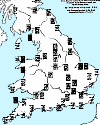
In 1875, Sir Francis Galton published the first newspaper weather map - in The Times, London, England - now a standard feature in newspapers worldwide. He was the first to identify the anticyclone (as opposed to the cyclone), and introduced the use of charts showing areas of similar air pressure, as used on the modern weather map. Galton also devised several novel and ingenious mechanical instruments for recording information about the weather, while working at the Kew Observatory. He was also active as an explorer, anthropologist, statistician and criminologist. Galton was the first to place the study of fingerprints for identification on a scientific basis and so lay the groundwork for their use in criminal cases.[Image: Earlier work by Galton: a synchronous weather map of England drawn for 16 Jan 1861]
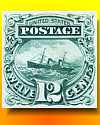
In 1869, a pictorial green 5-cent stamp was first used*, the first in the U.S. showing a steamship, a symbol of fast ocean navigation. The public, accustomed to traditional head vignettes, praised James Smillie's depiction of the S.S. Adriatic. Another innovative design, a locomotive design issued a few days earlier 27 Mar 1869 brought unexpected scorn. Some critics surmised the locomotive design was "to represent how Congressmen make money." Their theme of fast communication was accompanied by a 2-cent stamp showing postal carrier on horseback. «(*With no formal date of issue in early years, a stamp is dated by its earliest known use.)
In 1867, using the antiseptic methods he introduced, English physician Dr. Joseph Lister completed a series of 11 compound fractures. His reports of these treatments in The Lancet forever changed surgical techniques.
Germ Theory & The Antiseptic Principle, by Louis Pasteur, Joseph Lister. - book suggestion.
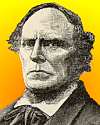
Miles Greenwood
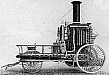
A later Latta fire engine




