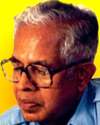
Born 16 Oct 1923; died 20 Dec 1994 at age 71. quotes
Ceylonese-American chemist and exobiologist, who was a leading authority on the chemical origins of life. He built on the work of Miller and Clayton Urey studying chemical reactions in “primordial soup” experiments. Ponnamperuma focused on producing compounds related to the nucleic acids and offered a convincing theory about series of chemical reactions that gave rise to precursors of life on earth. He demonstrated that nucleotides and dinucleotides can be formed by random processes alone. In another achievement, he showed the formation of ATP, a compound critical to the use of energy within a cell. He was also active in the growing field of exobiology, the study of possible extraterrestrial life and studied lunar soil and meteorites.«
Ceylonese-American chemist and exobiologist, who was a leading authority on the chemical origins of life. He built on the work of Miller and Clayton Urey studying chemical reactions in “primordial soup” experiments. Ponnamperuma focused on producing compounds related to the nucleic acids and offered a convincing theory about series of chemical reactions that gave rise to precursors of life on earth. He demonstrated that nucleotides and dinucleotides can be formed by random processes alone. In another achievement, he showed the formation of ATP, a compound critical to the use of energy within a cell. He was also active in the growing field of exobiology, the study of possible extraterrestrial life and studied lunar soil and meteorites.«
Origins of Life, by Cyril Ponnamperuma. - book suggestion.
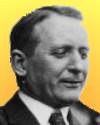
Born 16 Oct 1877; died 7 Sep 1957 at age 79.
Norwegian oceanographer was a pioneer of physical oceanography. With Fridtjof Nansen he produced the landmark survey, The Norwegian Sea (1909), mapping currents and hydrography from Norway’s research cruises. In 1916 he introduced the temperature–salinity (T–S) diagram and the modern idea of “water masses,” a foundation of ocean-water classification. He led hydrographic work on the Michael Sars North Atlantic expedition (1910) and contributed to the classic synthesis The Depths of the Ocean (1912). He founded and directed Bergen’s Geophysical Institute (1917) and later received the Alexander Agassiz Medal (1933).«
Norwegian oceanographer was a pioneer of physical oceanography. With Fridtjof Nansen he produced the landmark survey, The Norwegian Sea (1909), mapping currents and hydrography from Norway’s research cruises. In 1916 he introduced the temperature–salinity (T–S) diagram and the modern idea of “water masses,” a foundation of ocean-water classification. He led hydrographic work on the Michael Sars North Atlantic expedition (1910) and contributed to the classic synthesis The Depths of the Ocean (1912). He founded and directed Bergen’s Geophysical Institute (1917) and later received the Alexander Agassiz Medal (1933).«
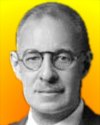
Born 16 Oct 1875; died 7 Oct 1955 at age 79.
Henry Clapp Sherman was an American biochemist who did pioneer work in developing assay methods and determining functions of vitamins. He established the average human requirements for calcium (1931), phosphorus, and iron, and for many years his studies were considered the best guides to the health requirements for these minerals. He also determined the human daily requirement of calcium (1931) and B vitamins (1932), and his major study on vitamin A defined a suitable weekly dose (1934), and its storage in the body (1940). In other nutrition studies, he also identified iron-deficiency anaemia, began investigating cobalt in 1946, and debunked the value of spinach.
Henry Clapp Sherman was an American biochemist who did pioneer work in developing assay methods and determining functions of vitamins. He established the average human requirements for calcium (1931), phosphorus, and iron, and for many years his studies were considered the best guides to the health requirements for these minerals. He also determined the human daily requirement of calcium (1931) and B vitamins (1932), and his major study on vitamin A defined a suitable weekly dose (1934), and its storage in the body (1940). In other nutrition studies, he also identified iron-deficiency anaemia, began investigating cobalt in 1946, and debunked the value of spinach.
Chemistry of Food and Nutrition, by Henry C. Sherman. - book suggestion.
Born 16 Oct 1873; died 25 Jul 1940 at age 66.
American chemist was a pioneer of modern leather chemistry, recognized internationally as an analytical andconsultingspecialist to tanneries and allied trades. From 1 Jan 1895 he spent fifteen years with the Stamford Mfg Co., then opened an independent laboratory in New York City. On 22 Nov 1903 he was one of ninefoundersof the American Leather Chemists Association, created to standardize analytical methods and bring scientific process control to tanneries, despite early professional quarrels. Reed helped develop assays for tanning extracts and a practical test to measure how much tanning material is absorbed by dried, ground hide. He was ALCA secretary; later, its third president. As a leading tanning chemist, he published widely on technical practice.«[Image: current logo of the American Leather Chemists Association (ALCA).]
American chemist was a pioneer of modern leather chemistry, recognized internationally as an analytical andconsultingspecialist to tanneries and allied trades. From 1 Jan 1895 he spent fifteen years with the Stamford Mfg Co., then opened an independent laboratory in New York City. On 22 Nov 1903 he was one of ninefoundersof the American Leather Chemists Association, created to standardize analytical methods and bring scientific process control to tanneries, despite early professional quarrels. Reed helped develop assays for tanning extracts and a practical test to measure how much tanning material is absorbed by dried, ground hide. He was ALCA secretary; later, its third president. As a leading tanning chemist, he published widely on technical practice.«[Image: current logo of the American Leather Chemists Association (ALCA).]

Born 16 Oct 1838; died 21 Apr 1911 at age 72.
Swedish geologist and pioneer in study and analysis of the mountain structure of the Scandinavian Caledonides. With detailed maps he argued (1888) that the Caledonian mountain belt was built by great overthrust sheets (nappes) driven southeast over the foreland. By 1896 he showed the overthrusting involved the entire range and exceeded ~130 km, illustrated with a large regional map. He coined the ore-geology term “skarn” (1875), published an early crystalline-phase account of Portland cement (1897), and his studies of Sweden’s iron ores yielded nine maps of principal locations (1879-82). He was a co-founder (15 May 1871) of the Geological Survey of Sweden, becoming its director (1897-1906); and was a professor at the Royal Institute of Technology (1878-97).«
Swedish geologist and pioneer in study and analysis of the mountain structure of the Scandinavian Caledonides. With detailed maps he argued (1888) that the Caledonian mountain belt was built by great overthrust sheets (nappes) driven southeast over the foreland. By 1896 he showed the overthrusting involved the entire range and exceeded ~130 km, illustrated with a large regional map. He coined the ore-geology term “skarn” (1875), published an early crystalline-phase account of Portland cement (1897), and his studies of Sweden’s iron ores yielded nine maps of principal locations (1879-82). He was a co-founder (15 May 1871) of the Geological Survey of Sweden, becoming its director (1897-1906); and was a professor at the Royal Institute of Technology (1878-97).«
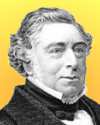
Born 16 Oct 1803; died 12 Oct 1859 at age 55. quotes
English civil engineer, son of George Stephenson, fused locomotive innovation with grand Victorian civil works. After a mining stint in Colombia (1824-27), he led Robert Stephenson & Co., advancing early main-line railway engines. His first, the Lancashire Witch (1828), then the Rocket, began over a century of steam locomotives. He built the Liverpool & Manchester Railway, the world’s first all-steam intercity passenger line (1830). As chief engineer of the London & Birmingham Railway (1833-38) he created Britain’s first trunk line—driving Kilsby Tunnel, major cuttings, and viaducts. His bridges set new marks, including the wrought-iron tubular Britannia over the Menai Strait (1850). He was president of the Institution of Civil Engineers (1855-56), and MP for Whitby.«
English civil engineer, son of George Stephenson, fused locomotive innovation with grand Victorian civil works. After a mining stint in Colombia (1824-27), he led Robert Stephenson & Co., advancing early main-line railway engines. His first, the Lancashire Witch (1828), then the Rocket, began over a century of steam locomotives. He built the Liverpool & Manchester Railway, the world’s first all-steam intercity passenger line (1830). As chief engineer of the London & Birmingham Railway (1833-38) he created Britain’s first trunk line—driving Kilsby Tunnel, major cuttings, and viaducts. His bridges set new marks, including the wrought-iron tubular Britannia over the Menai Strait (1850). He was president of the Institution of Civil Engineers (1855-56), and MP for Whitby.«
George & Robert Stephenson: Pioneer Inventors and Engineers, by Anthony Burton. - book suggestion.
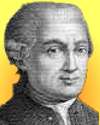
Born 16 Oct 1714; died 21 Mar 1795 at age 80. quotes
Italian geologist known as the father of Italian geology, who introduced the terms Primary, Secondary, Tertiary, and Quaternary in 1760 to classify four broad divisions of the Earth's rock surface, each earlier in deposition. Within each he recognized numerous minor strata, and had a clear paleontological interpretation of the age sequence of the fossil record. The Primary order contained Paleozoic formations from the oldest, lowest basaltic rock from ancient volcanoes overlaid with metamorphic and sedimentary rocks which he saw in the Atesine Alps. He classified Mesozoic prealpine foothills as of the Secondary order, Tertiary in the subalpine hills and the Quaternary alluvial deposits in the plains.«
Italian geologist known as the father of Italian geology, who introduced the terms Primary, Secondary, Tertiary, and Quaternary in 1760 to classify four broad divisions of the Earth's rock surface, each earlier in deposition. Within each he recognized numerous minor strata, and had a clear paleontological interpretation of the age sequence of the fossil record. The Primary order contained Paleozoic formations from the oldest, lowest basaltic rock from ancient volcanoes overlaid with metamorphic and sedimentary rocks which he saw in the Atesine Alps. He classified Mesozoic prealpine foothills as of the Secondary order, Tertiary in the subalpine hills and the Quaternary alluvial deposits in the plains.«
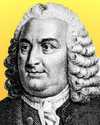
Born 16 Oct 1708; died 12 Dec 1777 at age 69. quotes
Victor Albrecht von Haller was a Swiss physiologist and biologist is often called the father of experimental physiology. His vast range of work embraced physiology, anatomy, botany, embryology, poetry, and scientific bibliography. Through meticulous experiments, he clarified the mechanism of respiration, the autonomous action of the heart, and the role of bile in fat digestion. He described stages of embryonic growth and summarized anatomy of the brain, genital organs, and circulatory system. His pioneering studies on nerve and muscle irritability—showing that muscles contract independently of nerves—established key principles that became the foundation of modern neurophysiology that became the foundation of modern neurophysiology and medical science.«
Victor Albrecht von Haller was a Swiss physiologist and biologist is often called the father of experimental physiology. His vast range of work embraced physiology, anatomy, botany, embryology, poetry, and scientific bibliography. Through meticulous experiments, he clarified the mechanism of respiration, the autonomous action of the heart, and the role of bile in fat digestion. He described stages of embryonic growth and summarized anatomy of the brain, genital organs, and circulatory system. His pioneering studies on nerve and muscle irritability—showing that muscles contract independently of nerves—established key principles that became the foundation of modern neurophysiology that became the foundation of modern neurophysiology and medical science.«

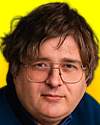
Died 16 Oct 2002 at age 53 (born 8 Dec 1948).
Danish theoretical physicist who coined the term “self-organized criticality” in a paper he co-authored (1987). As an illustration, consider the conical sand pile growing in the bottom of an hourglass. Numerous small disturbances of individual sand grains cause little change, but are punctuated with unpredictable landslides. Critical changes are impossible to predict exactly in time, or to the explicit grain. Although challenging, trying to create mathematical descriptions extends to earthquakes, or traffic jams, or answering how the universe of simple fundamental particles (such as quarks and gluons) assembled itself into complex structures like animals.«
Danish theoretical physicist who coined the term “self-organized criticality” in a paper he co-authored (1987). As an illustration, consider the conical sand pile growing in the bottom of an hourglass. Numerous small disturbances of individual sand grains cause little change, but are punctuated with unpredictable landslides. Critical changes are impossible to predict exactly in time, or to the explicit grain. Although challenging, trying to create mathematical descriptions extends to earthquakes, or traffic jams, or answering how the universe of simple fundamental particles (such as quarks and gluons) assembled itself into complex structures like animals.«
How Nature Works: The Science of Self-Organized Criticality, by Per Bak. - book suggestion.
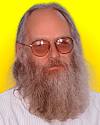
Died 16 Oct 1998 at age 55 (born 6 Aug 1943).
Jonathan Bruce Postel was an American computer scientist who played a pivotal role in creating and administering the Internet. As a graduate student in the late 1960s, he worked on the ARPANET, the U.S. Defense Department network that evolved into today’s Internet. Postel became director of the Internet Assigned Numbers Authority (IANA), which he founded, and created the Internet’s addressing and domain naming systems. He also edited the Request for Comments (RFC) series that defined technical standards for communication protocols. As the Internet expanded rapidly in the 1990s, Postel advocated balanced, international oversight and proposed a nonprofit body to manage it. He died at age 55 after heart surgery.«
Jonathan Bruce Postel was an American computer scientist who played a pivotal role in creating and administering the Internet. As a graduate student in the late 1960s, he worked on the ARPANET, the U.S. Defense Department network that evolved into today’s Internet. Postel became director of the Internet Assigned Numbers Authority (IANA), which he founded, and created the Internet’s addressing and domain naming systems. He also edited the Request for Comments (RFC) series that defined technical standards for communication protocols. As the Internet expanded rapidly in the 1990s, Postel advocated balanced, international oversight and proposed a nonprofit body to manage it. He died at age 55 after heart surgery.«
Internet Datagram Protocol Specification. Version 4, by Jon Postel. - book suggestion.
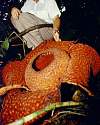
Rafflesia arnoldii
Paul Arthur Zahl was an American biologist and explorer, known for his field research and vivid photography for National Geographic. Leaving behind as newly started career in cancer research, between 1937 and 1939, he led expeditions through Panama, British Guiana, Brazil, and Venezuela, chronicled in his first book To the Lost World (1939), about his search for giant ants. He two-inch ants and beetles six inches long. In Flamingo Hunt (1952), he wrote of his quest for flamingos in the Bahamas. Zahl’s photographs and articles detailed an albino gorilla in Central Africa, frogs weighing seven pounds, and Malaysia’s bathtub-sized Rafflesia flower with two-foot-wide petals. He also explored deep-sea fauna in the Straits of Messina and studied wildlife across many continents.«
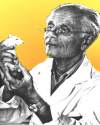
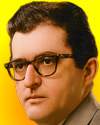
Died 16 Oct 1982 at age 75 (born 26 Jan 1907). quotes
Hans Hugo Bruno Selye was an Austrian-Canadian endocrinologist was renowned for pioneering research on biological stress. In 1936, he discovered that injecting ovarian extracts into rats produced adrenal enlargement, thymus shrinkage, ulcers, and death. He later showed that similar reactions could be triggered by toxins, injury, or emotional strain—any form of stress. Selye defined this consistent physiological response as the “general adaptation syndrome.” His studies revealed how chronic stress disrupts hormonal balance, contributing to heart disease, hypertension, and other “diseases of adaptation.” His groundbreaking ideas transformed medicine, psychology, and our understanding of mind-body interaction. The American Institute of Stress is a non-profit organization established in 1978.«
Hans Hugo Bruno Selye was an Austrian-Canadian endocrinologist was renowned for pioneering research on biological stress. In 1936, he discovered that injecting ovarian extracts into rats produced adrenal enlargement, thymus shrinkage, ulcers, and death. He later showed that similar reactions could be triggered by toxins, injury, or emotional strain—any form of stress. Selye defined this consistent physiological response as the “general adaptation syndrome.” His studies revealed how chronic stress disrupts hormonal balance, contributing to heart disease, hypertension, and other “diseases of adaptation.” His groundbreaking ideas transformed medicine, psychology, and our understanding of mind-body interaction. The American Institute of Stress is a non-profit organization established in 1978.«
The Stress of my Life: A Scientist’s Memoirs, by Hans Selye. - book suggestion.
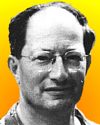
Died 16 Oct 1981 at age 75 (born 19 Feb 1906).
American ornithologist considered an expert on neotropical birds, centered in Panama and extending north into Middle America and south into western South America. At age 51, he retired from the legal profession to pursue his lifelong interest in Middle and South American birds on full-time basis. He was born in Panama, and returned there annually to study the rich birdlife and keep in touch his family. In 1957, he was appointed a Research Associate of the American Museum of Natural History in New York, a position he held until his death. He published only about 30 many papers, but his extensive notes on systematics, behavior, and distribution of Middle American birds remain as an invaluable resource for anyone studying the subject.
American ornithologist considered an expert on neotropical birds, centered in Panama and extending north into Middle America and south into western South America. At age 51, he retired from the legal profession to pursue his lifelong interest in Middle and South American birds on full-time basis. He was born in Panama, and returned there annually to study the rich birdlife and keep in touch his family. In 1957, he was appointed a Research Associate of the American Museum of Natural History in New York, a position he held until his death. He published only about 30 many papers, but his extensive notes on systematics, behavior, and distribution of Middle American birds remain as an invaluable resource for anyone studying the subject.
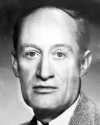
Died 16 Oct 1958 at age 60 (born 4 Dec 1897).
U.S. pioneer of urban anthropology. From his studies of Mexican communities, Redfield developed a theory (1956) of a folk-urban continuum, to account for the differences between folk society and urban society. A folk society was small in size, isolated, homogeneous, preliterate with a social and cultural life linked to kinship and sacred beliefs. Urban society had opposite of all these features. He believed that any community had a place on this continuum from folk to urban. This scale implied that simpler or folk forms of society would evolve to complex social forms with time. Anthropologists now consider the way folk and urban societies are part of a larger social, political and economic environment, rather than considered as separate poles on a continuum.
U.S. pioneer of urban anthropology. From his studies of Mexican communities, Redfield developed a theory (1956) of a folk-urban continuum, to account for the differences between folk society and urban society. A folk society was small in size, isolated, homogeneous, preliterate with a social and cultural life linked to kinship and sacred beliefs. Urban society had opposite of all these features. He believed that any community had a place on this continuum from folk to urban. This scale implied that simpler or folk forms of society would evolve to complex social forms with time. Anthropologists now consider the way folk and urban societies are part of a larger social, political and economic environment, rather than considered as separate poles on a continuum.
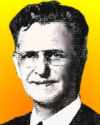
Died 16 Oct 1955 at age 62 (born 5 Dec 1892).
American zoologist noted for his research on animal reproductive organs and internal secretions. Moore systematically studied the gonads and associated ducts and glands of vertebrates. Collaborating with T.F. Gallagher and F.C. Koch at the University of Chicago, he became the first to isolate testicular secretion containing the male sex hormones androsterone and testosterone; the former primarily influences the growth and development of the male reproductive system, whereas the latter is responsible for inducing and maintaining secondary male sex characteristics. This discovery (c. 1929) paved the way for research into the chemical makeup of such androgens and their production.
American zoologist noted for his research on animal reproductive organs and internal secretions. Moore systematically studied the gonads and associated ducts and glands of vertebrates. Collaborating with T.F. Gallagher and F.C. Koch at the University of Chicago, he became the first to isolate testicular secretion containing the male sex hormones androsterone and testosterone; the former primarily influences the growth and development of the male reproductive system, whereas the latter is responsible for inducing and maintaining secondary male sex characteristics. This discovery (c. 1929) paved the way for research into the chemical makeup of such androgens and their production.
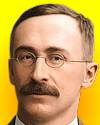
(1908)
Died 16 Oct 1937 at age 61 (born 13 Jun 1876). quotes
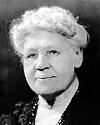
English statistician and brewer (pen name “Student”). While working at the Guinness Brewery in Dublin, Ireland, he developed the Student’s t-test and t-distribution, foundational tools for analyzing small sample sizes and assessing statistical significance. Gosset derived the form of the t-distribution through a blend of mathematical reasoning and empirical experimentation using random numbers—an early example of (as later known) the Monte Carlo method. His innovations allowed reliable quality control and experimental design with limited data—critical in brewing and agriculture. This practical approach bridged theory and application, influencing statistics, biology, and industrial research, thus helping shape modern inferential statistics used worldwide.«
English statistician and brewer (pen name “Student”). While working at the Guinness Brewery in Dublin, Ireland, he developed the Student’s t-test and t-distribution, foundational tools for analyzing small sample sizes and assessing statistical significance. Gosset derived the form of the t-distribution through a blend of mathematical reasoning and empirical experimentation using random numbers—an early example of (as later known) the Monte Carlo method. His innovations allowed reliable quality control and experimental design with limited data—critical in brewing and agriculture. This practical approach bridged theory and application, influencing statistics, biology, and industrial research, thus helping shape modern inferential statistics used worldwide.«
Student: A Statistical Biography of William Sealy Gosset, by E.S. Pearson, R.L. Plackett (ed.) and G.A. Barnard (ed.). - book suggestion.
(EB)
Died 16 Oct 1928 at age 82 (born 2 Oct 1846).
American physician whose wide-ranging medical career included an educational focus on physical fitness and health maintenance. Upon receiving her M.D. degree (1875), she began private practice in Poughkeepsie, N.Y. In 1877 she was made resident physician at the Massachusetts State Reformatory Prison for Women at Sherborn, Mass. Subsequently, she became superintendent of the institution, though an injury to her knee forced her to return to private practice and university positions. In private research she investigated medical aspects of posture. She designed the seats in several types of rapid-transit streetcars, and invented an orthopedically sound kindergarten chair and was a founder of the American Posture League.
American physician whose wide-ranging medical career included an educational focus on physical fitness and health maintenance. Upon receiving her M.D. degree (1875), she began private practice in Poughkeepsie, N.Y. In 1877 she was made resident physician at the Massachusetts State Reformatory Prison for Women at Sherborn, Mass. Subsequently, she became superintendent of the institution, though an injury to her knee forced her to return to private practice and university positions. In private research she investigated medical aspects of posture. She designed the seats in several types of rapid-transit streetcars, and invented an orthopedically sound kindergarten chair and was a founder of the American Posture League.
Died 16 Oct 1877 at age 73 (born 17 May 1804).
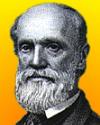
American conchologist, recognized as an authority on American land and fresh-water mollusca. During a career in business, his interest in natural history led to a collection of freshwater mollusks of the Ohio River. From 1835 on, he corresponded with mollusk researchers and published his findings. Serious eye trouble (1851) forced his retirement from business. In 1853, he toured Kentucky, Tennessee, and Georgia to collect mollusks. His publications attracted the attention of Louis Agassiz, who asked him to lead the conchological department of the Museum of Comparative Zoology, Harvard (1863), where he remained until his death. He accompanied Agassiz on the Thayer expedition to Brazil in 1865.
American conchologist, recognized as an authority on American land and fresh-water mollusca. During a career in business, his interest in natural history led to a collection of freshwater mollusks of the Ohio River. From 1835 on, he corresponded with mollusk researchers and published his findings. Serious eye trouble (1851) forced his retirement from business. In 1853, he toured Kentucky, Tennessee, and Georgia to collect mollusks. His publications attracted the attention of Louis Agassiz, who asked him to lead the conchological department of the Museum of Comparative Zoology, Harvard (1863), where he remained until his death. He accompanied Agassiz on the Thayer expedition to Brazil in 1865.
Died 16 Oct 1793 at age 65 (born 13 Feb 1728). quotes
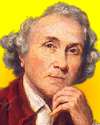
Scottish anatomist, surgeon and pathologist who was an early advocate of investigation and experimentation, and a founder of pathological anatomy in England. He made many important studies in comparative aspects of biology, anatomy, physiology, and pathology. Hunter's broad interests included the advancement of dentistry, observations on inflammation, treatment of gun-wounds and some work on venereal diseases. In 1764, he set up his own anatomy school in London, and was elected a fellow of the Royal Society (5 Feb 1767). Following his appointment as surgeon to King George III (1776) he became deputy surgeon to the British Army (1786) and was made Surgeon General in (1789). He was a younger brother of William Hunter, the anatomist.«
Scottish anatomist, surgeon and pathologist who was an early advocate of investigation and experimentation, and a founder of pathological anatomy in England. He made many important studies in comparative aspects of biology, anatomy, physiology, and pathology. Hunter's broad interests included the advancement of dentistry, observations on inflammation, treatment of gun-wounds and some work on venereal diseases. In 1764, he set up his own anatomy school in London, and was elected a fellow of the Royal Society (5 Feb 1767). Following his appointment as surgeon to King George III (1776) he became deputy surgeon to the British Army (1786) and was made Surgeon General in (1789). He was a younger brother of William Hunter, the anatomist.«
The Knife Man: Blood, Body Snatching, and the Birth of Modern Surgery, by Wendy Moore . - book suggestion.
In 2006, the creation of the heaviest man-made element was announced by researchers from Russia's Joint Institute of Nuclear Research and the U.S. Lawrence Livermore National Laboratory. The results were published in the journal Physics Review C. The element, if confirmed, is the first man-made noble gas, below radon on the periodic table. The new element resulted from the collision of accelerated calcium ions with atoms of the man-made heavy element californium, and existed barely a millisecond before decaying into element 114, then element 112 and then split in half. A claim in 1999 for element 118 from kryton and lead was retracted in 2001 after independent confirmation failed. The new work was closely scrutinized.«

In 1987, Paul Holc became the youngest person in the world known to have an organ transplant of any kind when he received a new heart at just three hours old. The heart transplant was performed by surgeons at Loma Linda University Medical Center. At birth, the baby weighed 6 pounds 6¾ ounces, and suffered from hypoplastic left heart syndrome, a fatal heart defect in which the heart's left chamber is missing or atrophied. He was delivered early* by Caesarian section because a donor heart became available from a brain-dead baby in Canada. By the time he celebrated his 10th birthday, hundreds of similar transplants had been performed at Loma Linda.«[Image: Paul Holc, age 10, points to a photograph of himself as an infant.]
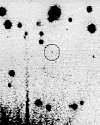
In 1982, Halley's Comet was observed on its 30th recorded visit to Earth, first detected using the 5-m (200-in) Hale Telescope at the Mount Palomar Observatory by a team of astronomers led by David Jewett and G. Edward Danielson. They found the comet, beyond the orbit of Saturn, about 11 AU (1.6 billion km) from the Sun. While 50 million times fainter than the faintest objects our eyes can see, they needed to use not only the largest American telescope but also special electronic equipment developed for the Space Telescope. In 1705, Halley used Newton's theories to compute the orbit and correctly predicted the return of this comet about every 76 years. After his death, for correctly predicting its reappearance, it was named after Halley.
Comet, by Carl Sagan. - book suggestion.
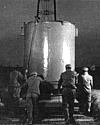
In 1964, China detonated the country's first atomic bomb, and became the fifth country with nuclear arms after the United States (1945), Great Britain (1953), the Soviet Union (1961), and France. It was determined by the U.S.Atomic Energy Commission to have been exploded in the vicinity of Lop Nor, a lake in a remote area of Central Asia. The AEC characterized it as a low-yield explosion "typical of an early nuclear test" of a fission device employing uranium-235 equivalent to 20,000 tons of TNT or less. The Chinese Government stated "This is a major achievement of the Chinese people in their struggle to increase their national defence capability and oppose the U.S. imperialist policy of nuclear blackmail and nuclear threats."
China Builds the Bomb, by John Wilson Lewis, Xue Litai. - book suggestion.
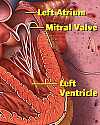
In 1951, the first motion picture in the U.S. of the inside of a living heart was shown at the clinical session of the New York Academy of Medicine Post Graduate Fortnightly held at Montefiore Hospital, New York City, where the film was made. A dog's heart was the subject of the 9-1/2 minute colour film, which showed the opening and closing of the mitral valve. This structure was of interest because it is often crippled by rheumatic fever. Entitled A Cinematographic Study of the Function of the Mitral Valve in Situ, the film was the result of work by Dr. Elliott S. Hurwitt, Dr. Adrian Kantrowitz and photography by Anatol Herskovitz.

In 1928, a U.S. patent (No. 1,687,510) was issued for the first electric light bulb frosted on the inside with sufficient strength for commercial handling. The inventor, Marvin Pipkin, worked at the Incandescent Lamp Department of the General Electric Company, Nela Park, Ohio. The advantages of frosting the inside of a bulb (versus the outside) are less absorption of light and less collection of dust. The previous etching processes tended to weaken the glass because the etched pits in the surface were sharply angled. He was able to produce rounded pits by treating the bulb with a weaker etching solution, or a strong solution used for a shorter time.
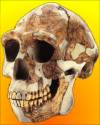
In 1927, evidence of Peking Man, a well-preserved left lower molar was uncovered by Swedish paleontologist Birgir Bohlin at a large-scale archaeological dig in caves inside Zhoukoudian Cave, outside Peking (now Beijing), China. After studying the new tooth and the earlier finds, Davidson Black deduced that they were from an early human ancestor that he named Peking Man, Sinathropus pekinensis. The search for hominid fossils had been going on since Spring; the tooth had been found just three days before work was to stop. Further teeth and jaw fragments were found in 1928, and a well-preserved, nearly complete skull of an adolescent was dug out in 1929 at the same site.[Image: Peking Man skull reconstruction]
Dragon Bone Hill: An Ice-Age Saga of Homo Erectus, by Noel Thomas Boaz, Russell L. Ciochon. - book suggestion.
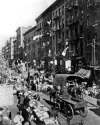
In 1916, the first birth control clinic in the U.S. was opened - by Margaret Sanger, her sister, Ethel Byrne, both nurses, and an associate, Fania Mindell - at 46 Amboy Street, near the corner of Pitkin Avenue, in Brooklyn, NYC, was in the impoverished area of Brownsville. A circular announcing its opening was printed in English, Yiddish and Italian. The clinic was closed by the police, and she received a 30-day jail sentence. Sanger also helped organize (1917) the National Birth Control League which would later become the Planned Parenthood Federation of America. She opened a permanent birth control clinic in New York City in 1923. The first birth-control clinic in the world was opened in 1885 by Dr. Aletta Jacobs in Amsterdam.[Image: general view of Amboy Street in 1916]
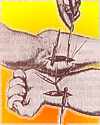
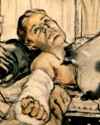
Blood: An Epic History of Medicine and Commerce, by Douglas Starr. - book suggestion.
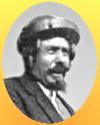
In 1908, the first aeroplane flight in England was made by Samuel Cody, an American, who built his own machines and by trial and error took to the air at Farnborough. Sam Cody arrived in England at the age of 34 as a cowboy and Wild West showman. When he failed to pull the crowds he turned to other interests and activities, one of which was kites and large man-lifting kites. Cody patented a two-celled box kite (1901) with wings for lift. In 1903, Cody succeeded in crossing the English Channel in a canvas canoe, towed by one of his large kites. Cody was able to make a series of very short powered 'flights' over the period Sep to Oct 1908. On 16 Oct 1908, the fifth, which ended in a crash, was the first officially recorded powered flight - a length of 1,390 feet.
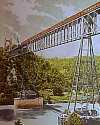
In 1876, construction began on the first cantilever bridge built on the American continent. Preliminary work had already been completed for the 1,125 foot long High Bridge between Jessamine and Mercer counties to carry the Cincinnati Southern Railroad 275 feet high over a deep gorge of the Kentucky River. Finished on 20 Feb 1877, it was then the highest railroad bridge in the U.S. The design, by bridge engineer Charles Shaler Smith, used Whipple double-interesection trusses built outwardly from the cliffs. The stone foundations for the piers were built on bedrock. Great care in design and workmanship included inspections from the mill and throughout the erection, marking the beginning of modern scientific bridge building.«
The Kentucky River, by William E. Ellis. - book suggestion.
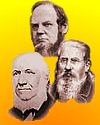
In 1848, the first homeopathic college in the U.S began preliminary instruction. The Homeopathic Medical College of Pennsylvania in Philadelphia, incorporated 8 Apr 1848, began the regular course with 15 students on 6 Nov 1848. This first class graduated six students on 29 Mar 1849*. The first dean of the college was Dr. Walter Williamson, who founded it with Constantine Hering and Jacob Jeanes. It merged with the Hahnemann College of Philadelphia (1870). As developed by Dr. Samuel Hahnemann over 200 years ago, homeopathy treats patients with very dilute amounts of a substance (derived from a various plants, animal materials and minerals) that, in larger amounts, would produce similar symptoms to the illness being treated.[Image: Founders Williamson (top), Jeanes (left), and Hering]
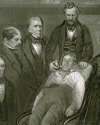
In 1846, American dentist, Dr William T.G. Morton (9 Aug 1819 - 15 Jul 1868) made the first public demonstration of the administration of ether anesthetic, which the patient inhaled from a blown glass flask, during an operation performed by Dr. John Collins Warren (1778-1856) at the Massachusetts General Hospital in Boston. The patient, Gilbert Abbott, age 20, had a small superficial tumor removed from beneath the left lower jaw. Two weeks before (30 Sep1846), Morton had privately made a painless tooth extraction for a patient. The suggestion to use ether came from the chemist Charles T. Jackson, (1860-1913). After the success of the public demonstration, the use of ether for painless operations spread quickly to other countries.
In 1844, the Association of Medical Superintendents of American Institutions for the Insane was formed in Philadelphia, Pa., with 13 members. This was the first U.S. psychiatric association. Its officers were Samuel B. Woodward, Samuel White and Thomas S. Kirkbride. As they prepared to meet for the first time in 1844, a major item on the agenda was the use of mechanical restraints. After extensive discussion, the superintendents concluded that they were not ready to abandon mechanical restraints. The association changed its name in 1892 to the Medico-Psychological Association, and again in 1921 to the American Psychiatric Association.
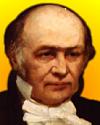
In 1843, the theory of quaternions was born when a sudden thought came to William Rowan Hamilton (1805-1865) as he was walking with his wife along the Royal Canal in Dublin, Ireland. (He had been working since the late 1830s on the basic principles of algebra, resulting in a theory of conjugate functions, or algebraic couples, in which complex numbers are expressed as ordered pairs of real numbers. Until now, he had not been successful in developing a theory of triplets that could be applied to three-dimensional geometric problems.) During the walk, he realized that the theory should involve quadruplets, not triplets. His excitement at his discovery caused him to pause and carve the underlying equations in a nearby bridge.
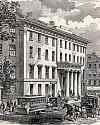
In 1829, the first U.S. annunciator, invented by Seth Fuller, was placed in service in the 170-room hotel, the Tremont House, Boston, Mass. It was known as "hanging bells" because of the 140 bells mounted in a space 57-ft long, 6-ft high and 1-ft deep. A small hammer hitting a gong gave an audible alert and vibrated a card showing the room number. Fuller received a patent on his invention on 26 Dec 1833. The luxury hotel had further innovations, including the installation of eight bathrooms and toilets in the basement. Each of two cisterns in the hotel attic contained three hogsheads of rainwater. One supplied the baths, and the other supplied other outlets, including running cold water in the laundry and kitchen.«




