Born 4 Aug 1905; died 14 Apr 1995 at age 89.
British analytical psychologist who applied Jungian analysis to the study of development in children. His research and writings produced a theory of the the processes of individuation in the childhood years that had formerly been lacking in Jungian thought. The concept of the self in childhood that he developed was revolutionary for Jungians and path breaking for child development, because at the time, modern research studies on infancy had not begun. Subsequent evidence accumulated from experimental and analytical sources has added further validity to his ideas about the dynamic of the self as an important feature of development.
British analytical psychologist who applied Jungian analysis to the study of development in children. His research and writings produced a theory of the the processes of individuation in the childhood years that had formerly been lacking in Jungian thought. The concept of the self in childhood that he developed was revolutionary for Jungians and path breaking for child development, because at the time, modern research studies on infancy had not begun. Subsequent evidence accumulated from experimental and analytical sources has added further validity to his ideas about the dynamic of the self as an important feature of development.
Michael Fordham: Innovations in Analytical Psychology, by James Astor. - book suggestion.
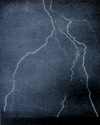
1893
Born 4 Aug 1863; died 1 Nov 1943 at age 80.
American meteorologist who was a pioneer in employing kites in the exploration of high altitude air conditions. As a college graduate, McAdie in Jan 1882 joined the Army Signal Service, which preceded the civilian U.S. Weather Bureau. He invented and patented devices to protect fruit from frost. He examined the influence of smoke pollution on the atmosphere, McAdie studied the relation between atmospheric electricity and auroral phenomena, and wrote about lightning as a hazard both in the air and on the ground. He believed that the units used in meteorology should be standardized by adoption of the metric system. McAdie was a founder of the Seismological Society of America. Mt. McAdie (13,799 ft.) in the Sierra Nevada was named for him.[Image: Cloud and Multiple Flash from Pop. Sci. Monthly, 1893] more
American meteorologist who was a pioneer in employing kites in the exploration of high altitude air conditions. As a college graduate, McAdie in Jan 1882 joined the Army Signal Service, which preceded the civilian U.S. Weather Bureau. He invented and patented devices to protect fruit from frost. He examined the influence of smoke pollution on the atmosphere, McAdie studied the relation between atmospheric electricity and auroral phenomena, and wrote about lightning as a hazard both in the air and on the ground. He believed that the units used in meteorology should be standardized by adoption of the metric system. McAdie was a founder of the Seismological Society of America. Mt. McAdie (13,799 ft.) in the Sierra Nevada was named for him.[Image: Cloud and Multiple Flash from Pop. Sci. Monthly, 1893] more
Making the Weather, by Alexander G. McAdie. - book suggestion.
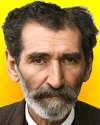
Born 4 Aug 1841; died 18 Aug 1922 at age 81. quotes
English-Argentine author, naturalist and ornithologist whose interest in nature started in his youth. He studied the local flora and fauna in Argentina, where he was born of American parents. An attack of rheumatic fever as a teenager had weakened his heart, and later decided England would be better place to sustain his love of outdoor life. Settling in England (1874), age 32, he published popular ornithological works including Argentine Ornithology (1888-1899) and British Birds (1895). His next books on the English countryside, including Hampshire Days (1903) and Afoot in England (1909), helped foster the back-to-nature movement of the 1920-30s. He was a founding member of the Royal Society for the Protection of Birds (1889).«
English-Argentine author, naturalist and ornithologist whose interest in nature started in his youth. He studied the local flora and fauna in Argentina, where he was born of American parents. An attack of rheumatic fever as a teenager had weakened his heart, and later decided England would be better place to sustain his love of outdoor life. Settling in England (1874), age 32, he published popular ornithological works including Argentine Ornithology (1888-1899) and British Birds (1895). His next books on the English countryside, including Hampshire Days (1903) and Afoot in England (1909), helped foster the back-to-nature movement of the 1920-30s. He was a founding member of the Royal Society for the Protection of Birds (1889).«
William Henry Hudson: Life, Literature, and Science, by Felipe Arocena. - book suggestion.
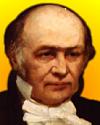
Born 4 Aug 1805; died 2 Sep 1865 at age 60. quotes
Irish mathematician in the fields of optics, geometrics, and classical mechanics. By age 12, Hamilton had already learned fourteen languages when he met the American, Zerah Colburn, who could perform amazing mental arithmetical feats, and they joined in competitions. It appears that losing to Colburn sparked Hamilton's interest in mathematics. At 15, he began studied the works of LaPlace and Newton so by age 17 had become the greatest living mathematician. He contributed to the development of optics, dynamics, and algebra. His invention of the calculus of quaternions enabled a three-dimensional algebra or geometry which provided a basis for the later development of quantum mechanics.
Irish mathematician in the fields of optics, geometrics, and classical mechanics. By age 12, Hamilton had already learned fourteen languages when he met the American, Zerah Colburn, who could perform amazing mental arithmetical feats, and they joined in competitions. It appears that losing to Colburn sparked Hamilton's interest in mathematics. At 15, he began studied the works of LaPlace and Newton so by age 17 had become the greatest living mathematician. He contributed to the development of optics, dynamics, and algebra. His invention of the calculus of quaternions enabled a three-dimensional algebra or geometry which provided a basis for the later development of quantum mechanics.
Sir William Rowan Hamilton, by Thomas L. Hankins. - book suggestion.
Born 4 Aug 1795; died 2 Jul 1874 at age 78.
American physician, statistician and agriculturalist who prepared a series of tables of deaths and causes in Philadelphia, during thirty years from 1807. These showed, for example, the excessive mortality of males during childhood. He began practice in Philadelphia on 4 Aug 1820, where yellow fever broke out a few weeks later, with 73 deaths by that fall. Emerson recorded cases, dates, locations, and outcomes. He concluded no current medical treatments was especially effective. When smallpox reappeared there, with 325 deaths in 1824, Emerson drafted a bill for control measures. There were only 6 cases of smallpox in the city in 1825, and 3 in 1826. In retirement, he turned to peach culture, and studied phosphate and guano fertilizers.
American physician, statistician and agriculturalist who prepared a series of tables of deaths and causes in Philadelphia, during thirty years from 1807. These showed, for example, the excessive mortality of males during childhood. He began practice in Philadelphia on 4 Aug 1820, where yellow fever broke out a few weeks later, with 73 deaths by that fall. Emerson recorded cases, dates, locations, and outcomes. He concluded no current medical treatments was especially effective. When smallpox reappeared there, with 325 deaths in 1824, Emerson drafted a bill for control measures. There were only 6 cases of smallpox in the city in 1825, and 3 in 1826. In retirement, he turned to peach culture, and studied phosphate and guano fertilizers.
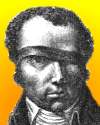
Born 4 Aug 1755; died 6 Dec 1805 at age 50.
French inventor who devised a method of manufacturing pencil leads by mixing a finely powdered graphite with finely ground clay particles, baked, and used encased in wood. His innovation was prompted when imported plumbago supplies were disrupted by war. He was the first to use graphite - and that is still used as the basis for making pencil leads today. Using different ratios of clay to graphite varies the hardness of the pencil lead. He was commissioned by Napoleon as chief of the balloon corps in Egypt, where he invented ways to improvise tools and machines necessary to provide bread, cloth, munitions, surgical instruments and engineers' tools. As a youth, he had worked as a portrait painter. He lost his left eye in a chemistry laboratory accident.«
French inventor who devised a method of manufacturing pencil leads by mixing a finely powdered graphite with finely ground clay particles, baked, and used encased in wood. His innovation was prompted when imported plumbago supplies were disrupted by war. He was the first to use graphite - and that is still used as the basis for making pencil leads today. Using different ratios of clay to graphite varies the hardness of the pencil lead. He was commissioned by Napoleon as chief of the balloon corps in Egypt, where he invented ways to improvise tools and machines necessary to provide bread, cloth, munitions, surgical instruments and engineers' tools. As a youth, he had worked as a portrait painter. He lost his left eye in a chemistry laboratory accident.«
The Pencil: A History of Design and Circumstance, by Henry Petroski. - book suggestion.
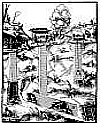
Born 4 Aug 1719; died 22 Jan 1767 at age 47.
German geologist who is noted for fundamental work in stratigraphy (comparing sequences of layers in beds of sedimentary rocks) and who published the first geologic profile in 1756. He developed categories describing the origin of mountains. (“Primitive” mountains lack strata; “secondary” mountains have sedimentary formations with abundant fossils.) He analyzed an orange-red mineral from a mine in the Ural Mountains and recognized that it contained lead, but missed identifying a new element - chromium - that it contained. (The mineral was crocoite, a lead chromate (PbCrO4) from which Nicolas-Louis Vauquelin later isolated chromium in 1798). Lehmann died accidentally when a retort containing arsenic burst upon heating.«[Image: from Lehmann's Versuch einer Geschichte von Flözgebirgen (1756)]
German geologist who is noted for fundamental work in stratigraphy (comparing sequences of layers in beds of sedimentary rocks) and who published the first geologic profile in 1756. He developed categories describing the origin of mountains. (“Primitive” mountains lack strata; “secondary” mountains have sedimentary formations with abundant fossils.) He analyzed an orange-red mineral from a mine in the Ural Mountains and recognized that it contained lead, but missed identifying a new element - chromium - that it contained. (The mineral was crocoite, a lead chromate (PbCrO4) from which Nicolas-Louis Vauquelin later isolated chromium in 1798). Lehmann died accidentally when a retort containing arsenic burst upon heating.«[Image: from Lehmann's Versuch einer Geschichte von Flözgebirgen (1756)]
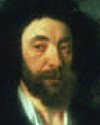
Born 4 Aug 1608; died 22 Apr 1662 at age 53.
English botanist and gardener who was appointed by King Charles I as Keeper of his Majesty's Gardens, Vines, and Silkworms at Oatlands Palace in Surrey, where he continued the work of his father John Tradescant the Elder (c.1570-1638). Together, they were among the earliest English botanists, who introduced to England many of the best known garden plants, fruit trees including apricots, and the horse chestnut. After his apprenticeship, John Tradescant the Younger became a freeman of the Worshipful Company of Gardeners (1634). Three years later, he went to Virginia on a botanical collection expedition (1637-38) “to gather up all raritye of flowers, plants, shells.” His father had served similarly for the king from 1630, travelling abroad several times to bring back new plant species. The son succeeded to the post at Oatland Palace upon his father's death in 1638. By 1656, his garden had over 1600 named plants in cultivation. The Tradescant curiosities - fish, weapons, birds, even a stuffed dodo passed into Elias Ashmole's collection that he contributed for the Ashmolian Museum at Oxford University (1683), the first public museum in Britain.«
English botanist and gardener who was appointed by King Charles I as Keeper of his Majesty's Gardens, Vines, and Silkworms at Oatlands Palace in Surrey, where he continued the work of his father John Tradescant the Elder (c.1570-1638). Together, they were among the earliest English botanists, who introduced to England many of the best known garden plants, fruit trees including apricots, and the horse chestnut. After his apprenticeship, John Tradescant the Younger became a freeman of the Worshipful Company of Gardeners (1634). Three years later, he went to Virginia on a botanical collection expedition (1637-38) “to gather up all raritye of flowers, plants, shells.” His father had served similarly for the king from 1630, travelling abroad several times to bring back new plant species. The son succeeded to the post at Oatland Palace upon his father's death in 1638. By 1656, his garden had over 1600 named plants in cultivation. The Tradescant curiosities - fish, weapons, birds, even a stuffed dodo passed into Elias Ashmole's collection that he contributed for the Ashmolian Museum at Oxford University (1683), the first public museum in Britain.«
The John Tradescants: Gardeners to the Rose and Lily Queen, by Prudence Leith-Ross. - book suggestion.


Died 4 Aug 2003 at age 86 (born 25 Aug 1916).
Frederick Chapman Robbins was an American pediatrician, microbiologist and virologist who shared (with colleagues John Enders and Thomas Weller) the 1954 Nobel Prize for Physiology or Medicine for the “discovery of the ability of poliomyelitis viruses to grow in cultures of various types of tissue.” They grew the polio virus in non-nervous tissue, specifically human embryonic cells. This innovative method, published in 1949, revolutionized virological research, enabling the development of vaccines for various viral diseases. By making possible the production of a polio vaccine, they reduced the threat of an illness that had paralyzed countless children. Their work refined understanding of viral diseases, and enabled development of sophisticated diagnostic methods.«
Frederick Chapman Robbins was an American pediatrician, microbiologist and virologist who shared (with colleagues John Enders and Thomas Weller) the 1954 Nobel Prize for Physiology or Medicine for the “discovery of the ability of poliomyelitis viruses to grow in cultures of various types of tissue.” They grew the polio virus in non-nervous tissue, specifically human embryonic cells. This innovative method, published in 1949, revolutionized virological research, enabling the development of vaccines for various viral diseases. By making possible the production of a polio vaccine, they reduced the threat of an illness that had paralyzed countless children. Their work refined understanding of viral diseases, and enabled development of sophisticated diagnostic methods.«
Polio, by Frederick C. Robbins et al. - book suggestion.
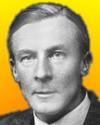
Died 4 Aug 1977 at age 87 (born 30 Nov 1889). quotes
English electrophysiologist who is one of the founders of modern neurophysiology. He shared (with Sir Charles Sherrington) the Nobel Prize for Physiology or Medicine in 1932 for “for their discoveries regarding the functions of neurons.” While a student under Keith Lucas at Cambridge, Adrian discovered the “all-or-none” phenomenon (the relation between stimulus intensity and muscle-fibre contraction) in muscle-nerve preparations. During a career at Cambridge he developed the capillary electrometer to measure minute signals from nerve fibres and discovered the nature of coding of the motor and sensory impulses in afferent and efferent fibres. In the early 1930s, he advanced concepts of electro-encephalography, research on electrical brain waves.
English electrophysiologist who is one of the founders of modern neurophysiology. He shared (with Sir Charles Sherrington) the Nobel Prize for Physiology or Medicine in 1932 for “for their discoveries regarding the functions of neurons.” While a student under Keith Lucas at Cambridge, Adrian discovered the “all-or-none” phenomenon (the relation between stimulus intensity and muscle-fibre contraction) in muscle-nerve preparations. During a career at Cambridge he developed the capillary electrometer to measure minute signals from nerve fibres and discovered the nature of coding of the motor and sensory impulses in afferent and efferent fibres. In the early 1930s, he advanced concepts of electro-encephalography, research on electrical brain waves.
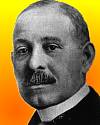
Died 4 Aug 1931 at age 73 (born 18 Jan 1858).
American physician remembered as the first black American to suture the pericardium (the fluid sac surrounding the heart muscle). On 9 Jul 1893, he operated on a 24-yr-old stabbing victim and sutured the wound to the pericardium, but left the heart muscle itself alone, allowing a small (1/10" long) nick to heal on its own. The patient recovered and lived for at least 20 years afterward. (A similar procedure was performed earlier by H.C. Dalton on 6 Sep 1891. The first surgery on heart muscle was done on 10 Sep 1896, by Ludwig Rehn who sutured a myocardial laceration). Williams helped establish the Provident Hospital and Medical Center in Chicago (1891), the oldest free-standing black owned hospital in the U.S.«
American physician remembered as the first black American to suture the pericardium (the fluid sac surrounding the heart muscle). On 9 Jul 1893, he operated on a 24-yr-old stabbing victim and sutured the wound to the pericardium, but left the heart muscle itself alone, allowing a small (1/10" long) nick to heal on its own. The patient recovered and lived for at least 20 years afterward. (A similar procedure was performed earlier by H.C. Dalton on 6 Sep 1891. The first surgery on heart muscle was done on 10 Sep 1896, by Ludwig Rehn who sutured a myocardial laceration). Williams helped establish the Provident Hospital and Medical Center in Chicago (1891), the oldest free-standing black owned hospital in the U.S.«
Daniel Hale Williams: Negro Surgeon, by Helen Buckler. - book suggestion.
Died 4 Aug 1929 at age 70 (born 1 Sep 1858).
Carl Auer Freiherr (baron) von Welsbach was an Austrian chemist, physicist and engineer whose invention of the gas mantle greatly improved the brightness of light that could be obtained from gas lamps. While doing flame tests to examine the spectrum of certain rare earth compounds, he observed the small beads of test material on a platinum wire became white-hot and incandescent. He then had the idea to soak cotton webbing with a solution of the salts, then burn out the cotton leaving a matrix of the compound. His experiments began with slightly promising results with lanthanum oxide, then a mixture with magnesia. He also tried zirconium oxides and others before adding thorium oxide which made commercially viable mantles. His invention was adopted around the world wherever manufactured gas was available, meaning he had a profitable business improving and manufacturing them.« more
Carl Auer Freiherr (baron) von Welsbach was an Austrian chemist, physicist and engineer whose invention of the gas mantle greatly improved the brightness of light that could be obtained from gas lamps. While doing flame tests to examine the spectrum of certain rare earth compounds, he observed the small beads of test material on a platinum wire became white-hot and incandescent. He then had the idea to soak cotton webbing with a solution of the salts, then burn out the cotton leaving a matrix of the compound. His experiments began with slightly promising results with lanthanum oxide, then a mixture with magnesia. He also tried zirconium oxides and others before adding thorium oxide which made commercially viable mantles. His invention was adopted around the world wherever manufactured gas was available, meaning he had a profitable business improving and manufacturing them.« more
Died 4 Aug 1920 at age 70 (born 14 Feb 1850). quotes
Irish engineer who was early to conceive the Earth’s interior as having a molten core that very slowly moved heat by convection inside a solid mantle. He began his career working as an assistant to Lord Kelvin at the University of Glasgow, then become a professor of mechanical engineering. He also had experience in electrical engineering. Whereas Kelvin estimated the age of the Earth based on just conduction of heat, Perry guessed the exterior mantle was only 13 miles thick. Using his own convection model, Perry calculated an age of two to three billion years (coming close to the modern value accepted as about 4.5 billion years). Perry's theory was published in Nature in 1895, but its significance was not accepted by geologists of his time.«
Irish engineer who was early to conceive the Earth’s interior as having a molten core that very slowly moved heat by convection inside a solid mantle. He began his career working as an assistant to Lord Kelvin at the University of Glasgow, then become a professor of mechanical engineering. He also had experience in electrical engineering. Whereas Kelvin estimated the age of the Earth based on just conduction of heat, Perry guessed the exterior mantle was only 13 miles thick. Using his own convection model, Perry calculated an age of two to three billion years (coming close to the modern value accepted as about 4.5 billion years). Perry's theory was published in Nature in 1895, but its significance was not accepted by geologists of his time.«
1893
Died 4 Aug 1911 at age 63 (born 8 Jun 1848).
American agricultural scientist who promoted use of the cylindrical tower silo and invented a gravity system of ventilation for dairy barns that was widely used until electrically powered blowers became commonly available. He researched in wide-ranging applications of physics to agriculture. Especially interested in soil physics, he studied water-holding capacities, moisture requirements of plants, aeration, movement of water in soils, and soil fertility. King demonstrated that cylindrical silo structures were not only the strongest form, but also reduced spoilage. He studied the efficiency of farm machinery and the draft of farm implements, the construction of rural roads, and the first year-long study of the power generated by farm windmills.
American agricultural scientist who promoted use of the cylindrical tower silo and invented a gravity system of ventilation for dairy barns that was widely used until electrically powered blowers became commonly available. He researched in wide-ranging applications of physics to agriculture. Especially interested in soil physics, he studied water-holding capacities, moisture requirements of plants, aeration, movement of water in soils, and soil fertility. King demonstrated that cylindrical silo structures were not only the strongest form, but also reduced spoilage. He studied the efficiency of farm machinery and the draft of farm implements, the construction of rural roads, and the first year-long study of the power generated by farm windmills.
Died 4 Aug 1905 at age 62 (born 21 Apr 1843). quotes
German anatomist who was the first to observe and describe systematically the behaviour of chromosomes in the cell nucleus during normal cell division (mitosis, a term he coined in 1882). Thus, he was a founder of cytogenetics as a branch of science to study chromosomes, the cell's hereditary material. Flemming coined other terms: spireme, aster, chromatin, achromatin, monocentric and dicentric phases. Chromatin (Gr. chroma = colour) referred to certain fragments of the cell nucleus that took on a strong colour from the dyes he used during microscopic study. Flemming did not know of Mendel's work, so 20 years passed before the genetic implications were realized. Chromosomes, formed from cromatin, were named in 1888 by Waldeyer-Hartz. more
German anatomist who was the first to observe and describe systematically the behaviour of chromosomes in the cell nucleus during normal cell division (mitosis, a term he coined in 1882). Thus, he was a founder of cytogenetics as a branch of science to study chromosomes, the cell's hereditary material. Flemming coined other terms: spireme, aster, chromatin, achromatin, monocentric and dicentric phases. Chromatin (Gr. chroma = colour) referred to certain fragments of the cell nucleus that took on a strong colour from the dyes he used during microscopic study. Flemming did not know of Mendel's work, so 20 years passed before the genetic implications were realized. Chromosomes, formed from cromatin, were named in 1888 by Waldeyer-Hartz. more
Died 4 Aug 1904 at age 59 (born 19 Mar 1845). quotes
German pathologist, histologist and neurologist who pioneered techniques to stain bacteria in tissue sections (1871), fibrin (1887), and elastic fibers (1884, published 1898). His most important advance was made in neurohistology. He provided a definitive method (1884) for staining medullary sheaths. This enabled scientists to gain greater insights into the fine structure of the central nervous system. He became director of the pathological-anatomical institute of the Senckenberg Foundation in Frankfurt, and spent the final years of his career there, until his death at age 59. Weigert’s law states that loss or destruction of tissue results in compensatory replacement and overproduction of new tissue during the process of regeneration and/or repair. Paul Ehrlich was his cousin.«
German pathologist, histologist and neurologist who pioneered techniques to stain bacteria in tissue sections (1871), fibrin (1887), and elastic fibers (1884, published 1898). His most important advance was made in neurohistology. He provided a definitive method (1884) for staining medullary sheaths. This enabled scientists to gain greater insights into the fine structure of the central nervous system. He became director of the pathological-anatomical institute of the Senckenberg Foundation in Frankfurt, and spent the final years of his career there, until his death at age 59. Weigert’s law states that loss or destruction of tissue results in compensatory replacement and overproduction of new tissue during the process of regeneration and/or repair. Paul Ehrlich was his cousin.«
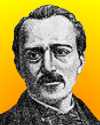
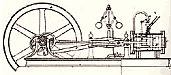
Jean-Joseph-Étienne Lenoir was a Belgian-French inventor who devised the world's first commercially successful internal-combustion engine. He moved to Paris where his work with electro-plating led him to other electrical inventions, among them a railway telegraph. Lenoir patented his first engine in 1860. Looking much like a double-acting steam engine, it fired an uncompressed charge of air and illuminating gas with an ignition system of his own design. One of these engines powered a road vehicle in 1863; another ran a boat. Because of improved designs by Nikolaus Otto and other inventors, the Lenoir engine became obsolete and only about 500 Lenoir engines were built. The Lenoir engine wasn't efficient enough, and the inventor died poor.Image right: patent diagram 24 Jan 1860 (source)
Died 4 Aug 1526 (born c. 1460).
Spanish navigator.
Spanish navigator.

In 2013, the first ceremonial test train ran through the Marmaray rail tunnel under the Bosphorus Strait, the world's first sea tunnel connecting two continents, linking Kazliçesme, Turkey in Europe and Ayrılıkçesme in Asia. The submerged part of the tunnel is 1.4-km long running 50-m below the seabed. At the controls was Prime Minister Recep Tayyip Erdogan, a former mayor of Istanbul. Despite his idea being denounced by critics as “pharaonic,” he initiated the project in 2004 to alleviate the congestion of two million daily commuters over the two Bosphorus bridges. The tunnel was opened for public service on 29 Oct 2013, the 90th anniversary of the founding of the Turkish Republic. By Jun 2015 the entire project would be finished with a total 77-km cross-city surburban service above and below ground.«
In 1958, the first potato-flakes plant was established in the U.S. at Grand Forks, North Dakota.
In 1954, Britain's first supersonic fighter plane, the P-1 English Electric Lightning, made its maiden flight.
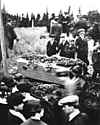
In 1922, every telephone in North America was silent for one minute at sunset marking the time funeral services were taking place for Alexander Graham Bell. He was laid to rest in a tomb blasted in the solid rock at the peak of Beinn Bhreagh Mountain on his estate in Nova Scotia, Canada. A watch tower had been built there years earlier by the inventor. His coffin was made in the inventor's own workshop by his laboratory staff. In a memory of the famous inventor, all the switchboards and switching stations of AT&T and the Bell System in the U.S. and Canada suspended service to the 13 million telephones then installed. Bell had died two days earlier on 2 Aug 1922..«[Image: The burial of Alexander Graham Bell on his estate.]
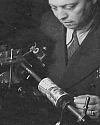
In 1921, a facsimile was transmitted by radio across the Atlantic Ocean using the Belinograph invented by Eduard Belin. A written message from the managing editor of the New York Times was scanned by the equipment and sent by radio from Annapolis, Md., within seven minutes to Belin's laboratories at La Malmaison, France. The image received demonstrated that thereafter photographs could be scanned for radio transmission in the same way. The method was already in use within Europe sending photographs by wire. The original, wrapped on a rotating cylinder was scanned by a light beam reflected onto a photcell to convert the variations in the received intensity to electrical signals forwarded by radio or telephone wires.*«[Image: view a photograph wrapped on the cylinder of a Belinograph; year unknown.] more




