Born 16 Sep 1920; died 6 May 2003 at age 82.
French physical geographer and climatic geomorphologist known for his extensive regional studies in numerous countries of Africa (Algeria, Senegal, Mali, the Ivory Coast, Togo, Niger, Nigeria, Liberia, Sudan) and Latin America (Argentina, Brazil, Chile, Colombia, Mexico, Panama, Peru, Venezuela). Tricart was a pioneer in many fields of physical geography including the study of the major dynamic role of climate in landscape evolution; geomorphic cartography; and remote sensing. His extensive research included work on the geomorphology of glaciers; fluvial, Aeolian or marine dynamics; and sedimentology.«
French physical geographer and climatic geomorphologist known for his extensive regional studies in numerous countries of Africa (Algeria, Senegal, Mali, the Ivory Coast, Togo, Niger, Nigeria, Liberia, Sudan) and Latin America (Argentina, Brazil, Chile, Colombia, Mexico, Panama, Peru, Venezuela). Tricart was a pioneer in many fields of physical geography including the study of the major dynamic role of climate in landscape evolution; geomorphic cartography; and remote sensing. His extensive research included work on the geomorphology of glaciers; fluvial, Aeolian or marine dynamics; and sedimentology.«
Born 16 Sep 1919; died 1989.
American inventor of the TV “rabbit ear” antenna among his many patents (1956-68) for consumer electronics (and lesser ideas like a water-driven potato peeler).He became a self-made millionaire. When he died, he left a a Long Island mansion surrounded by vinyl tube fencing stuffed with used tennis balls, housing eight dogs, “nine miniature horses and eight miniature donkeys, 18 Chinese tractors, dozens of cement statues of Greek gods, stained glass windows of Marilyn Monroe and Albert Einstein, and 1,000 pairs of woolen gloves (one size fits all).”
American inventor of the TV “rabbit ear” antenna among his many patents (1956-68) for consumer electronics (and lesser ideas like a water-driven potato peeler).He became a self-made millionaire. When he died, he left a a Long Island mansion surrounded by vinyl tube fencing stuffed with used tennis balls, housing eight dogs, “nine miniature horses and eight miniature donkeys, 18 Chinese tractors, dozens of cement statues of Greek gods, stained glass windows of Marilyn Monroe and Albert Einstein, and 1,000 pairs of woolen gloves (one size fits all).”
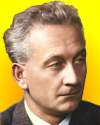
Born 16 Sep 1893; died 22 Oct 1986 at age 93. quotes
Hungarian-American biochemist who was awarded the 1937 Nobel Prize for Physiology or Medicine “for his discoveries in connection with the biological combustion processes, with special reference to vitamin C and the catalysis of fumaric acid.” He isolated the vitamin C (ascorbic acid), noted its value for preventing scurvy, and extracted quantities of it from Hungarian paprika. He also investigated biological oxidation and recognized the catalytic function of the C4-dicarboxylic acids and discovered flavin. In 1938 he began work on muscle research and shortly discovered the proteins actin and myosin and their complex.«
Hungarian-American biochemist who was awarded the 1937 Nobel Prize for Physiology or Medicine “for his discoveries in connection with the biological combustion processes, with special reference to vitamin C and the catalysis of fumaric acid.” He isolated the vitamin C (ascorbic acid), noted its value for preventing scurvy, and extracted quantities of it from Hungarian paprika. He also investigated biological oxidation and recognized the catalytic function of the C4-dicarboxylic acids and discovered flavin. In 1938 he began work on muscle research and shortly discovered the proteins actin and myosin and their complex.«
Search and Discovery: A Tribute to Albert Szent-Györgyi, by Benjamin J. Kaminer (ed.). - book suggestion.
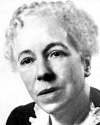
Born 16 Sep 1885; died 4 Dec 1952 at age 67. quotes
(née Danielsen) German-born American psychoanalyst who departed from some of the basic principles of Sigmund Freud, suggesting that environmental and social conditions, rather than biological drives, determine much of individual personality and are the chief causes of neuroses and personality disorders. While she recognized the importance of early childhood experiences in determining neurotic conflicts, she contended that the analyst must also be aware of current fears and impulses. She also stressed the necessity of understanding the environmental context in which neurotic conflicts are expressed. Her view of human beings allowed much more scope for development and rational adaptation than Freudian determinism permitted.
(née Danielsen) German-born American psychoanalyst who departed from some of the basic principles of Sigmund Freud, suggesting that environmental and social conditions, rather than biological drives, determine much of individual personality and are the chief causes of neuroses and personality disorders. While she recognized the importance of early childhood experiences in determining neurotic conflicts, she contended that the analyst must also be aware of current fears and impulses. She also stressed the necessity of understanding the environmental context in which neurotic conflicts are expressed. Her view of human beings allowed much more scope for development and rational adaptation than Freudian determinism permitted.
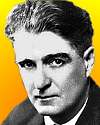
Born 16 Sep 1877; died 3 Jul 1937 at age 59.
American inventor and manufacturer of the first successful electric dry razor. He started in the razor business in 1925 to design and manufacture his invention of the Magazine Repeating Razor. By 1926, he was selling clips of blades that could be loaded into a safety razor without touching the blade to avoid cuts during handling. While this product was successful, he turned his attention to developing a dry razor. By 1927 he had designed a dry razor with a reciprocating head powered by a flexible drive shaft to an external motor. Although he marketed this model from 1929, it was not until 1931 that he had improved the idea as a new one-handed electric shaver with self-contained motor that sales took off. He lived only six year after that.«.
American inventor and manufacturer of the first successful electric dry razor. He started in the razor business in 1925 to design and manufacture his invention of the Magazine Repeating Razor. By 1926, he was selling clips of blades that could be loaded into a safety razor without touching the blade to avoid cuts during handling. While this product was successful, he turned his attention to developing a dry razor. By 1927 he had designed a dry razor with a reciprocating head powered by a flexible drive shaft to an external motor. Although he marketed this model from 1929, it was not until 1931 that he had improved the idea as a new one-handed electric shaver with self-contained motor that sales took off. He lived only six year after that.«.
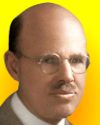
Born 16 Sep 1876; died 17 Oct 1947 at age 71. quotes
American geologist, climatologist, explorer and geographer who studied the origin, distribution, longevity, and accomplishments of civilization. He particularly wished to understand why progress varied from times when human creative energies flourished to periods when they seemed to fade. He attributed this to three causes: climate, the quality of people, and culture. Climatic circumstances resulted in migration, which could either facilitate or obstruct the advance of culture.
American geologist, climatologist, explorer and geographer who studied the origin, distribution, longevity, and accomplishments of civilization. He particularly wished to understand why progress varied from times when human creative energies flourished to periods when they seemed to fade. He attributed this to three causes: climate, the quality of people, and culture. Climatic circumstances resulted in migration, which could either facilitate or obstruct the advance of culture.
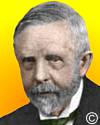
Born 16 Sep 1857; died 18 Sep 1939 at age 82. quotes
English electrical engineer and inventor who co-founded the firm of Evershed and Vignoles, Ltd., makers of electrical instruments (reg. 5 Feb 1895). His electrical business career began with the Hammond company, a pioneer manufacturer of electric incandescent lamps, until it failed. In 1885, he became the manager of the small Goolden and Trotter factory, formed to manufacture the Cardew voltmeter. He acquired the successor business in 1895 with his assistant Ernest B. Vignoles. Their products became internationally known with the trademark “Megger.” They also investigated the magnetic phenomena in the cores of transformers, permanent magnets, and the physical structure of non-conductors. He devised a helm indicator and important gun controls for the Navy used in WW I. The company was taken over by AVO International in 1986.«[Date of death from obituary which says it was a "couple of days after passing his 82nd birthday" implying the date of birth above. Seen elsewhere as 1858.] more
English electrical engineer and inventor who co-founded the firm of Evershed and Vignoles, Ltd., makers of electrical instruments (reg. 5 Feb 1895). His electrical business career began with the Hammond company, a pioneer manufacturer of electric incandescent lamps, until it failed. In 1885, he became the manager of the small Goolden and Trotter factory, formed to manufacture the Cardew voltmeter. He acquired the successor business in 1895 with his assistant Ernest B. Vignoles. Their products became internationally known with the trademark “Megger.” They also investigated the magnetic phenomena in the cores of transformers, permanent magnets, and the physical structure of non-conductors. He devised a helm indicator and important gun controls for the Navy used in WW I. The company was taken over by AVO International in 1986.«[Date of death from obituary which says it was a "couple of days after passing his 82nd birthday" implying the date of birth above. Seen elsewhere as 1858.] more
Born 16 Sep 1853; died 5 Jul 1927 at age 73. quotes
Karl Martin Leonhard Albrecht Kossel was a German biochemist who was awarded the Nobel Prize for Physiology or Medicine in 1910 for his contributions to understanding the chemistry of nucleic acids and proteins. He discovered the nucleic acids that are the bases in the DNA molecule, the genetic substance of the cell.
Karl Martin Leonhard Albrecht Kossel was a German biochemist who was awarded the Nobel Prize for Physiology or Medicine in 1910 for his contributions to understanding the chemistry of nucleic acids and proteins. He discovered the nucleic acids that are the bases in the DNA molecule, the genetic substance of the cell.
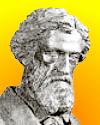
Born 16 Sep 1816; died 28 Nov 1894 at age 78. quotes
British archaeologist who excavated sites in southwestern Turkey and disinterred the remains of one of the seven wonders of the ancient world, the Mausoleum of Halicarnassus (at present-day Bodrum, Turkey). Newton joined staff of British Museum in 1840. He helped to establish systematic methods for archaeology. As the first keeper (curator) of Greek and Roman antiquities at the British Museum (1861-85), London, he greatly enriched its collection by making outstanding acquisitions. Along with the chief remains from Halicarnassus, he brought to the museum the bronze Delphian serpent from Istanbul, a sculpture of the Greek goddess Demeter, the colossal lion from Cnidus, and statues from the road to Didyma (Branchidae).
British archaeologist who excavated sites in southwestern Turkey and disinterred the remains of one of the seven wonders of the ancient world, the Mausoleum of Halicarnassus (at present-day Bodrum, Turkey). Newton joined staff of British Museum in 1840. He helped to establish systematic methods for archaeology. As the first keeper (curator) of Greek and Roman antiquities at the British Museum (1861-85), London, he greatly enriched its collection by making outstanding acquisitions. Along with the chief remains from Halicarnassus, he brought to the museum the bronze Delphian serpent from Istanbul, a sculpture of the Greek goddess Demeter, the colossal lion from Cnidus, and statues from the road to Didyma (Branchidae).
Born 16 Sep 1804; died 15 Mar 1888 at age 83.
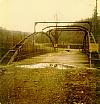
U.S. civil engineer, inventor, and theoretician who provided the first scientifically based rules for bridge construction, was considered one of the top engineers of the 19th Century, and was known as the "father of iron bridges." He began his career as a bridge-builder in 1840 by designing and patenting an iron-bridge truss. During the next ten years he built several bridges on the Erie canal and the New York and Erie railroad. His design of the Whipple truss bridge was the model for hundreds of bridges that crossed the Erie Canal in the late 19-th century. Before developing his design, Whipple worked for several years on surveys, estimates, and reports for the enlargement of the Erie Canal, and in 1840 he patented a scale for weighing canal boats. He later built the first weighing lock scale constructed on the Erie Canal. The invention of the steam engine required bridges which could support heavy live loads and this motivated Squire to turn his attention to bridges. In 1853, he completed a 146-ft span iron railroad bridge near West Troy (now Watervliet), N.Y. His book on the design of bridges using scientific methods (1847) was the first of its kind. The formulas and his methods are still useful. He obtained a patent for his lift draw-bridge in 1872.[Image: Bowstring Truss designed by Squire Whipple. This rare cast-and wrought iron bridge, built in 1872, was located in Coshocton County, Ohio, crossing Wills Creek on Linton Township Road 144.]
U.S. civil engineer, inventor, and theoretician who provided the first scientifically based rules for bridge construction, was considered one of the top engineers of the 19th Century, and was known as the "father of iron bridges." He began his career as a bridge-builder in 1840 by designing and patenting an iron-bridge truss. During the next ten years he built several bridges on the Erie canal and the New York and Erie railroad. His design of the Whipple truss bridge was the model for hundreds of bridges that crossed the Erie Canal in the late 19-th century. Before developing his design, Whipple worked for several years on surveys, estimates, and reports for the enlargement of the Erie Canal, and in 1840 he patented a scale for weighing canal boats. He later built the first weighing lock scale constructed on the Erie Canal. The invention of the steam engine required bridges which could support heavy live loads and this motivated Squire to turn his attention to bridges. In 1853, he completed a 146-ft span iron railroad bridge near West Troy (now Watervliet), N.Y. His book on the design of bridges using scientific methods (1847) was the first of its kind. The formulas and his methods are still useful. He obtained a patent for his lift draw-bridge in 1872.[Image: Bowstring Truss designed by Squire Whipple. This rare cast-and wrought iron bridge, built in 1872, was located in Coshocton County, Ohio, crossing Wills Creek on Linton Township Road 144.]
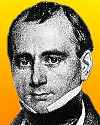
Born 16 Sep 1796; died 29 Oct 1881 at age 85.
French physician and clinician who first discovered the localisation of the speech centre in the middle of the left cerebral hemisphere of the brain. He reported this observation in 1825 in his early treatise on brain diseases. He also presented clinical evidence that loss of speech corresponds to a lesion of the anterior lobes of the brain, confirming Gall's opinion on the seat of the organ of articulate language. As a clinician, he published on diverse fields of medicine, including hermaphroditism, on cholera, encephalitis, diseases of the heart, cancer and various forms of fever. In his significant work on rheumatism he recognised the cartilaginous and synovial lesions of this disease and was the first to describe them.«
French physician and clinician who first discovered the localisation of the speech centre in the middle of the left cerebral hemisphere of the brain. He reported this observation in 1825 in his early treatise on brain diseases. He also presented clinical evidence that loss of speech corresponds to a lesion of the anterior lobes of the brain, confirming Gall's opinion on the seat of the organ of articulate language. As a clinician, he published on diverse fields of medicine, including hermaphroditism, on cholera, encephalitis, diseases of the heart, cancer and various forms of fever. In his significant work on rheumatism he recognised the cartilaginous and synovial lesions of this disease and was the first to describe them.«
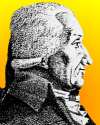
Born 16 Sep 1736; died 17 Aug 1807 at age 70.
German natural philosopher whose empirical approach strongly influenced the work of Immanuel Kant, and later in his life, Tetens became interested in mathematics, especially in actuarial applications. From 1760, as a teacher of natural philosophy he wrote on diverse topics but later began the development of the field of developmental psychology in Germany. He wrote Philosophische Versuche über die menschliche Natur und ihre Entwickelung (1777) on the origin and structure of knowledge. He changed career after 1789 to the civil service during which time he pursued mathematics. As a statistician he produced an Introduction to the Calculation of Life Annuities (1785) and On the Tetens Mortality Curve (1785).«
German natural philosopher whose empirical approach strongly influenced the work of Immanuel Kant, and later in his life, Tetens became interested in mathematics, especially in actuarial applications. From 1760, as a teacher of natural philosophy he wrote on diverse topics but later began the development of the field of developmental psychology in Germany. He wrote Philosophische Versuche über die menschliche Natur und ihre Entwickelung (1777) on the origin and structure of knowledge. He changed career after 1789 to the civil service during which time he pursued mathematics. As a statistician he produced an Introduction to the Calculation of Life Annuities (1785) and On the Tetens Mortality Curve (1785).«
Born 16 Sep 1725; died 28 Sep 1815 at age 90. quotes
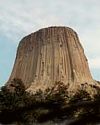
French geologist and geographer whose discovery of the volcanic origin of basalt disproved the Neptunist theory that all rocks were formed by sedimentation from primeval oceans. Studying the Auvergne of central France (1763-74), he found large basalt deposits that he traced as lava flows from nearby ancient volcanoes. He further showed that many valleys are formed by the erosion of the rivers that flow in them. From 1757, Desmarest was employed by the government to help spread better manufacturing methods throughout France. By 1788 he had risen to the post of inspector general and director of manufactures. In 1792, during the French Revolution, Desmarest was imprisoned and narrowly escaped execution.Image: Basalt rock of the Devil's Tower, Wyoming, USA, is an ancient volcanic intrusion left over after all of the overlying material has been eroded away.
French geologist and geographer whose discovery of the volcanic origin of basalt disproved the Neptunist theory that all rocks were formed by sedimentation from primeval oceans. Studying the Auvergne of central France (1763-74), he found large basalt deposits that he traced as lava flows from nearby ancient volcanoes. He further showed that many valleys are formed by the erosion of the rivers that flow in them. From 1757, Desmarest was employed by the government to help spread better manufacturing methods throughout France. By 1788 he had risen to the post of inspector general and director of manufactures. In 1792, during the French Revolution, Desmarest was imprisoned and narrowly escaped execution.Image: Basalt rock of the Devil's Tower, Wyoming, USA, is an ancient volcanic intrusion left over after all of the overlying material has been eroded away.
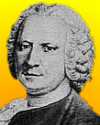
Born 16 Sep 1703; died 3 Aug 1770 at age 66.
French apothecary and chemist, who first proposed the modern definition of salts, and was first to distinguish neutral, acid, and basic salts. In 1742 he was appointed experimental demonstrator of chemistry at the Jardin du Roi in Paris. He founded the French school of chemistry. He also explained the dehydrating action of sulfuric acid, proposed a theory of distillation, studied the reaction of essential oils with nitric acid, studied the chemical components of plants, analyzed mineral waters and established that the Egyptians used sodium carbonate, succinic acid, and coal to effect mummification. Antoine Laurent Lavoisier and Joseph Proust were among his students.
French apothecary and chemist, who first proposed the modern definition of salts, and was first to distinguish neutral, acid, and basic salts. In 1742 he was appointed experimental demonstrator of chemistry at the Jardin du Roi in Paris. He founded the French school of chemistry. He also explained the dehydrating action of sulfuric acid, proposed a theory of distillation, studied the reaction of essential oils with nitric acid, studied the chemical components of plants, analyzed mineral waters and established that the Egyptians used sodium carbonate, succinic acid, and coal to effect mummification. Antoine Laurent Lavoisier and Joseph Proust were among his students.

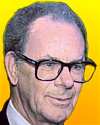
Died 16 Sep 2005 at age 85 (born 17 Jul 1920).
American physicist who coined the word laser from the initial letters of “Light Amplification by Stimulated Emission of Radiation.” Gould was inspired from his youth to be an inventor, wishing to emulate Marconi, Bell, and Edison. He contributed to the WWII Manhattan Project, working on the separation of uranium isotopes. On 9 Nov 1957, during a sleepless Saturday night, he had the inventor’s inspiration and began to write down the principles of what he called a laser in his notebook. Although Charles Townes and Arthur Schawlow, also successfully developed the laser, eventually Gould gained his long-denied patent rights.
American physicist who coined the word laser from the initial letters of “Light Amplification by Stimulated Emission of Radiation.” Gould was inspired from his youth to be an inventor, wishing to emulate Marconi, Bell, and Edison. He contributed to the WWII Manhattan Project, working on the separation of uranium isotopes. On 9 Nov 1957, during a sleepless Saturday night, he had the inventor’s inspiration and began to write down the principles of what he called a laser in his notebook. Although Charles Townes and Arthur Schawlow, also successfully developed the laser, eventually Gould gained his long-denied patent rights.
Laser: The Inventor, the Nobel Laureate, and the Thirty-Year Patent War, by Nick Taylor. - book suggestion.
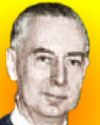
Died 16 Sep 1973 at age 74 (born 9 Nov 1898).
American psychologist who was among the first scientists to study and catalogue the earliest development of children. Of his many books, Manual of Child Psychology, is a classic. From 1953-64 he was the 11th secretary of the Smithsonian Institution. Responsible for the modernization of the “nation's attic,” he guided the creation of the Museum of History and Technology, and the addition of two new wings on to the Museum of Natural History. In 1964, Carmichael became the Vice-President for Research and Exploration at the National Geographic Society where he sponsored exciting and ground-breaking projects such as the work of Jacques-Yves Cousteau, or Louis and Mary Leakey in East Africa, or Jane Goodall's work on the behaviour of primates.
American psychologist who was among the first scientists to study and catalogue the earliest development of children. Of his many books, Manual of Child Psychology, is a classic. From 1953-64 he was the 11th secretary of the Smithsonian Institution. Responsible for the modernization of the “nation's attic,” he guided the creation of the Museum of History and Technology, and the addition of two new wings on to the Museum of Natural History. In 1964, Carmichael became the Vice-President for Research and Exploration at the National Geographic Society where he sponsored exciting and ground-breaking projects such as the work of Jacques-Yves Cousteau, or Louis and Mary Leakey in East Africa, or Jane Goodall's work on the behaviour of primates.
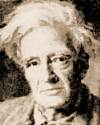
Died 16 Sep 1960 at age 77 (born 22 Sep 1882).
British agriculturalist and pioneer who developed grassland science.. The area of Ceredigion, mid-Wales was important for the experimental work in grassland improvement associated with Stapledon (and his successors) while Professor of Agricultural Botany at University College Aberystwyth (19191942). He worked to compensate for the land use changes of the 20th century, after the collapse of rural mining industries of 18th and 19th centuries and resultant depopulation.
British agriculturalist and pioneer who developed grassland science.. The area of Ceredigion, mid-Wales was important for the experimental work in grassland improvement associated with Stapledon (and his successors) while Professor of Agricultural Botany at University College Aberystwyth (19191942). He worked to compensate for the land use changes of the 20th century, after the collapse of rural mining industries of 18th and 19th centuries and resultant depopulation.
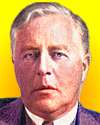
c. 1929
Died 16 Sep 1946 at age 69 (born 11 Sep 1877). quotes
Sir James Hopwood Jeans was an English physicist, astronomer, and mathematician who was the first to propose that matter is continuously created throughout the universe. He made other innovations in astronomical theory but is perhaps best known as a writer of popular books about astronomy. Died in Dorking, Surrey.
Sir James Hopwood Jeans was an English physicist, astronomer, and mathematician who was the first to propose that matter is continuously created throughout the universe. He made other innovations in astronomical theory but is perhaps best known as a writer of popular books about astronomy. Died in Dorking, Surrey.
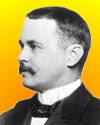
Died 16 Sep 1932 at age 75 (born 13 May 1857). quotes
English physician, bacteriologist and mathematician who located the malarial parasite in the gut of the Anopheles mosquito, identifying it as the disease vector. For this discovery he became the first British Nobelist, when he was awarded the 1902 Nobel Prize for Physiology or Medicine. His study of malaria began in 1892. By 1894 he conducted experiments in India to determine the validity of the hypothesis of Alphonse Laveran and Patrick Manson that mosquitoes spread the disease. It took two and a half years' effort before Ross succeeded in elucidating the life-cycle of malarial parasites in mosquitoes. In later work, in West Africa, he also determined the mosquito species carrying the deadly African fever.« more
English physician, bacteriologist and mathematician who located the malarial parasite in the gut of the Anopheles mosquito, identifying it as the disease vector. For this discovery he became the first British Nobelist, when he was awarded the 1902 Nobel Prize for Physiology or Medicine. His study of malaria began in 1892. By 1894 he conducted experiments in India to determine the validity of the hypothesis of Alphonse Laveran and Patrick Manson that mosquitoes spread the disease. It took two and a half years' effort before Ross succeeded in elucidating the life-cycle of malarial parasites in mosquitoes. In later work, in West Africa, he also determined the mosquito species carrying the deadly African fever.« more
Ronald Ross: Malariologist and Polymath: A Biography, by E. R. Nye and Mary E. Gibson. - book suggestion.
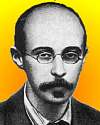
Died 16 Sep 1925 at age 37 (born 16 Jun 1888).
Russian mathematician who was the first to work out a mathematical analysis of an expanding universe consistent with general relativity, yet without Einstein's cosmological constant. In 1922, he developed solutions to the field equations, one of which clearly described a universe that began from a point singularity, and expanded thereafter. In his article On the Curvature of Space received by the journal Zeitschrift für Physik on 29 Jun 1922, he showed that the radius of curvature of the universe can be either an increasing or a periodic function of time. In Jul 1925, he made a record-breaking 7400-m balloon ascent to make meteorological and medical observations. A few weeks later he fell ill and died of typhus.[Also spelled Aleksandr Aleksandrovich. Last name also seen as Friedman. For date of birth, see MacTutor for explanation of why 17 Jun or 29 Jun birthdate seen in various sources is due to a confusion between New Syle and Old Style dates. Birth date is 29 Jun 1888 Old Style.]
Russian mathematician who was the first to work out a mathematical analysis of an expanding universe consistent with general relativity, yet without Einstein's cosmological constant. In 1922, he developed solutions to the field equations, one of which clearly described a universe that began from a point singularity, and expanded thereafter. In his article On the Curvature of Space received by the journal Zeitschrift für Physik on 29 Jun 1922, he showed that the radius of curvature of the universe can be either an increasing or a periodic function of time. In Jul 1925, he made a record-breaking 7400-m balloon ascent to make meteorological and medical observations. A few weeks later he fell ill and died of typhus.[Also spelled Aleksandr Aleksandrovich. Last name also seen as Friedman. For date of birth, see MacTutor for explanation of why 17 Jun or 29 Jun birthdate seen in various sources is due to a confusion between New Syle and Old Style dates. Birth date is 29 Jun 1888 Old Style.]
Died 16 Sep 1916 at age 72 (born 14 Mar 1844).
(1st Baronet) Scottish physician who played a major role in establishing pharmacology as a rigorous science. He is best known for his discovery that amyl nitrite relieves the pain of angina pectoris.
(1st Baronet) Scottish physician who played a major role in establishing pharmacology as a rigorous science. He is best known for his discovery that amyl nitrite relieves the pain of angina pectoris.
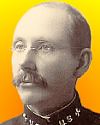
Died 16 Sep 1907 at age 53 (born 5 Jun 1854).
English-American physician who served on the Yellow fever Commission. Army Surgeon-General Sternberg assigned Carroll to the medical faculty of the Army Medical Museum in Washington, where he and Walter Reed worked together in bacteriology research. In 1899, Sternberg appointed Carroll and Reed to investigate the bacillus icteroides, the microbe that Italian bacteriologist Giuseppe Sanarelli had identified as the cause of yellow fever. Their work helped disprove Sanarelli's theory and catapulted Carroll and Reed into the yellow fever debate. In 1900, Carroll was promoted to Acting Asst. Surgeon in the Army Medical Corps and placed him second-in-command on the Yellow Fever Commission with Reed as officer-in-charge.
English-American physician who served on the Yellow fever Commission. Army Surgeon-General Sternberg assigned Carroll to the medical faculty of the Army Medical Museum in Washington, where he and Walter Reed worked together in bacteriology research. In 1899, Sternberg appointed Carroll and Reed to investigate the bacillus icteroides, the microbe that Italian bacteriologist Giuseppe Sanarelli had identified as the cause of yellow fever. Their work helped disprove Sanarelli's theory and catapulted Carroll and Reed into the yellow fever debate. In 1900, Carroll was promoted to Acting Asst. Surgeon in the Army Medical Corps and placed him second-in-command on the Yellow Fever Commission with Reed as officer-in-charge.
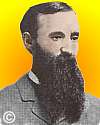

American inventor who obtained over 280 patents for printing press improvements as well as designing a machine for making the square-bottomed paper bag (U.S. Patent No.123,811 issued 20 Feb 1872) still familiar in grocery stores. His creativity began with developing an aerial machine he patented 3 Jun 1862, but abandoned upon the business failure of his chief backer. He also had a previous patent for a paper bag machine in 1867. By 1873, he had devised a sheet-delivery and folding mechanism adopted two years later by the Boston Herald, as the first rotary folding machine that delivered newspapers complete and folded. Therafter, he joined R. Hoe & Company, and perfected new printing machinery.« more
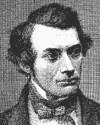
Died 16 Sep 1869 at age 63 (born 21 Dec 1805). quotes
Scottish physical chemist who is often referred to as “the father of colloid chemistry.” He studied the diffusion of gases and in 1833 proposed Graham's Law, which stated that the rate of diffusion of a gas is inversely proportional to the square root of its molecular weight. Later, he extended this work to the diffusion of one liquid into another. He classified solutes into crystalloids (such as salt or sugar), and colloids (such as gum arabic and the finely divided gold suspensions of his colleague, Michael Faraday), which marked the beginning of colloid chemistry. He developed dialysis to separate colloidal solutions from electrolytes. This dialysis technique is now important in medicine. He also invented a compensated pendulum using a bob with a mercury reservoir.«[DSB gives dates 21 Dec 1805 - 16 Sep 1869. EB gives 20 Dec 1805 - 11 Sep 1869.]
Scottish physical chemist who is often referred to as “the father of colloid chemistry.” He studied the diffusion of gases and in 1833 proposed Graham's Law, which stated that the rate of diffusion of a gas is inversely proportional to the square root of its molecular weight. Later, he extended this work to the diffusion of one liquid into another. He classified solutes into crystalloids (such as salt or sugar), and colloids (such as gum arabic and the finely divided gold suspensions of his colleague, Michael Faraday), which marked the beginning of colloid chemistry. He developed dialysis to separate colloidal solutions from electrolytes. This dialysis technique is now important in medicine. He also invented a compensated pendulum using a bob with a mercury reservoir.«[DSB gives dates 21 Dec 1805 - 16 Sep 1869. EB gives 20 Dec 1805 - 11 Sep 1869.]
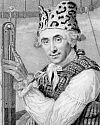
Died 16 Sep 1819 at age 75 (born 5 Feb 1744).
American physician and scientist who financed two balloon flights for himself and a Frenchman, Jean Pierre Blanchard, with experience in balloon flight. Jeffries wished to make scientific and meteorological observations. The first flight took place in London on 30 Nov 1784. Jeffries had provided himself with thermometer, barometer, electrometer, hygrometer and timepiece. He took air samples at different elevations for Cavendish, who subsequently made a chemical analysis of the air. The twelve observations of temperature, pressure, and humidity that Jeffries made were the first scientific data for free air, to a height of 9,309 feet. The values agree closely with modern determinations. On 7 Jan 1785, they made the first balloon crossing of the English Channel.Image: Jeffries posed as if in balloon, holding barometer.
American physician and scientist who financed two balloon flights for himself and a Frenchman, Jean Pierre Blanchard, with experience in balloon flight. Jeffries wished to make scientific and meteorological observations. The first flight took place in London on 30 Nov 1784. Jeffries had provided himself with thermometer, barometer, electrometer, hygrometer and timepiece. He took air samples at different elevations for Cavendish, who subsequently made a chemical analysis of the air. The twelve observations of temperature, pressure, and humidity that Jeffries made were the first scientific data for free air, to a height of 9,309 feet. The values agree closely with modern determinations. On 7 Jan 1785, they made the first balloon crossing of the English Channel.Image: Jeffries posed as if in balloon, holding barometer.
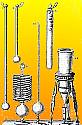
Died 16 Sep 1736 at age 50 (born 24 May 1686). quotes
Gabriel Daniel Fahrenheit was a German-Dutch physicist and instrument maker (meteorological). He lived in Holland for most of his life. He invented the alcohol thermometer (1709) and mercury thermometer (1714) and developed the Fahrenheit temperature scale. For the zero of his scale he used the temperature of an equal ice-salt mixture; 30° for the freezing point of water; and 90° for normal body temperature. Later, he adjusted to 32° for the freezing point of water and 212° for the boiling point of water, the interval between the two being divided into 180 parts. He also invented a hygrometer to measure relative humidity and experimented with other liquids discovering that each liquid had a different boiling point that would change with atmospheric pressure.
Gabriel Daniel Fahrenheit was a German-Dutch physicist and instrument maker (meteorological). He lived in Holland for most of his life. He invented the alcohol thermometer (1709) and mercury thermometer (1714) and developed the Fahrenheit temperature scale. For the zero of his scale he used the temperature of an equal ice-salt mixture; 30° for the freezing point of water; and 90° for normal body temperature. Later, he adjusted to 32° for the freezing point of water and 212° for the boiling point of water, the interval between the two being divided into 180 parts. He also invented a hygrometer to measure relative humidity and experimented with other liquids discovering that each liquid had a different boiling point that would change with atmospheric pressure.
In 2011, President Obama signed the America Invents Act which made substantial changes to the U.S. patent system. Effective 16 Mar 2013, only the “first-to-file” inventor had priority, eliminating claims by others of being the first to invent an invention. “Prior art,” used to exclude patentability, was expanded to include public use, sales including foreign offers for sale, publications and disclosures available to the public anywhere in the world as of date of filing. Previously, for example, when William Kelly asserted he was first to invent his “air-boiling” process to refine steel, he was awarded U.S. patent priority (23 Jun 1857) over Henry Bessemer, even though Bessemer filed first.«

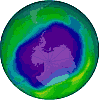
Largest ozone hole Sep 2006
The Montreal Protocol: Celebrating 20 Years of Environmental Progress..., by Donald Kaniaru. - book suggestion.
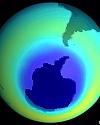
Antartic ozone hole, Sep 2000
In 1987, the “Montreal Protocol on Substances that Deplete the Ozone Layer” was signed, agreeing to phase out by 2000, the production and consumption of man-made compounds known to deplete ozone in the stratosphere. Subsequent meetings (1990-97) refined and amended the protocol. Because of their relatively high ozone-depletion potential, in addition to chlorofluorocarbons (CFCs), other man-made compounds—carbon tetrachloride, methyl chloroform, and halons—were the first targets for phaseout. Now, the U.S. Clean Air Act, for example, bans the release of ozone-depleting refrigerants during the maintenance or disposal of air conditioners and other refrigeration equipment.«
In 1908, former carriage-maker William Crapo "Billy" Durant founded General Motors (GM) by incorporating with a capital of $2,000 and was the man responsible for the beginning of the huge auto manufacturing company. Within 12 days the company generated stocks that generated $12,000,000 cash. On 29 Sep 1908, GM bought Buick. Later, GM bought Oldsmobile in Lansing, Cadillac in Detroit, and Oakland in Pontiac. Durant lost control of the company in 1910. He had originally started in business by partnering with Josiah Dallas Dort in 1886 to purchase the Coldwater Road Cart Company. By 1890, Durant-Dort Carriage Company was the nation's largest carriage company, producing approximently 150,000 vehicles a year.
Koller
In 1884, cocaine was first used as a local anaesthetic to immobilize a patient's eye for eye surgery by Carl Koller. His success initiated the modern era of local anesthesia, with cocaine also quickly adopted for nose and throat surgery and for dentistry. For Koller, a Czech-born American ophthalmologist, the clue for this use was when he noticed that cocaine had a numbing effect on the tongue. He made many experiments on animals before introducing its use on humans. Cocaine was isolated in 1859 and was synthesized in 1885. It was later found with high doses or repeated use, it caused erosion of the corneal epithelium in high doses and it was replaced by less toxic, synthetic local anesthetics such as tetracaine and proparacaine.«
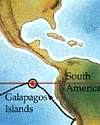
In 1835, British naturalist Charles Darwin, aboard the ship HMS Beagle, arrived at the Galapagos archipelago, a cluster of islands on the equator 600 miles west of South America. During his five weeks studying the fauna in the Galapagos, Darwin found the giant tortoises there greatly differed from one another according to which island they came from. Moreover, many islands developed their own races of iguanas. These observations contributed to his theory of “natural selection,” that species evolved over thousands of millions of years.
In 1774, Antoine Lavoisier observed that heating mercuric oxide produces metallic mercury. He thought the reaction might have been caused by contact with iron; he made no note of gas evolution in his notebook.
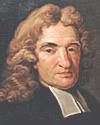
Flamsteed
In 1662, the first recorded astronomical observation of the first Astronomer Royal was John Flamsteed's observation of a solar eclipse from his home in Derby at the age of sixteen, about which he corresponded with other astronomers. Flamsteed's interest in astronomy was stirred by the solar eclipse, and besides reading all he could find on the subject he attempted to make his own measuring instruments.




