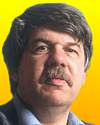
Born 10 Sep 1941; died 20 May 2002 at age 60. quotes
American paleontologist, evolutionary biologist, and science writer who grew up in New York City. He graduated from Antioch College and received his Ph.D. from Columbia University in 1967. Since then he has been Professor of Geology and Zoology at Harvard University. He considers himself primarily a palaeontologist and an evolutionary biologist, though he teaches geology and the history of science as well. A frequent and popular speaker on the sciences, his published work includes both scholarly study and many prize-winning popular collections of essays.
American paleontologist, evolutionary biologist, and science writer who grew up in New York City. He graduated from Antioch College and received his Ph.D. from Columbia University in 1967. Since then he has been Professor of Geology and Zoology at Harvard University. He considers himself primarily a palaeontologist and an evolutionary biologist, though he teaches geology and the history of science as well. A frequent and popular speaker on the sciences, his published work includes both scholarly study and many prize-winning popular collections of essays.
Stephen Jay Gould: Reflections on His View of Life, by Patricia Kelley, Robert Ross and Warren D. Allmon (ed.). - book suggestion.
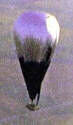
Double Eagle II
Born 10 Sep 1934; died 27 Jun 1983 at age 48.
Maxie Leroy "Max" Anderson was an American balloonist who, (with fellow Albuquerque, NM, residents Ben Abruzzo and Larry Newman), made the first transatlantic balloon flight aboard their Double Eagle II balloon, 3108 miles from Presque Isle, Maine to Miserey, France. After a dozen failed attempts, their successful crossing of the Atlantic Ocean by gas balloon was achieved 11-16 August 1978, (landing 17 Aug), setting a new duration record with a flight time of 137 hours. Two years later, 12-18 May 1980, with his son Kristian, he made the first nonstop balloon flight across North America. This record helium balloon flight aboard the Kitty Hawk began at San Francisco, California, lasted four days and ended near Matane, Quebec, Canada, 3,100 miles from their launch site. His later round-the-world attempts failed. He was killed in 1983 when refused permission to fly across the East German border and a faulty release clamp used at landing caused them to crash.
Maxie Leroy "Max" Anderson was an American balloonist who, (with fellow Albuquerque, NM, residents Ben Abruzzo and Larry Newman), made the first transatlantic balloon flight aboard their Double Eagle II balloon, 3108 miles from Presque Isle, Maine to Miserey, France. After a dozen failed attempts, their successful crossing of the Atlantic Ocean by gas balloon was achieved 11-16 August 1978, (landing 17 Aug), setting a new duration record with a flight time of 137 hours. Two years later, 12-18 May 1980, with his son Kristian, he made the first nonstop balloon flight across North America. This record helium balloon flight aboard the Kitty Hawk began at San Francisco, California, lasted four days and ended near Matane, Quebec, Canada, 3,100 miles from their launch site. His later round-the-world attempts failed. He was killed in 1983 when refused permission to fly across the East German border and a faulty release clamp used at landing caused them to crash.
Double Eagle, by Charles McCarry. - book suggestion.
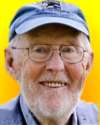
Born 10 Sep 1926; died 4 Apr 2010 at age 83.
Thomas Dale Brock was an American microbiologist who found the bacteria, Thermus aquaticus, which thrives at temperatures of 70°C (158°F) or higher, because all their enzymes are stable at very high temperatures. In the 1980s, biochemist Kary B. Mullis used this species of bacteria to help create the polymerase chain reaction (PCR), which requires cycles of extreme heating and cooling. PCR technology is now widely used to rapidly multiply traces of DNA millions of times to produce enough for analytical study. In 1960, Brock joined the faculty of Indiana University, Bloomington, teaching medical microbiology. While driving near Yellowstone National Park in 1964, he visited and became fascinated by hot spring algae there.«
Thomas Dale Brock was an American microbiologist who found the bacteria, Thermus aquaticus, which thrives at temperatures of 70°C (158°F) or higher, because all their enzymes are stable at very high temperatures. In the 1980s, biochemist Kary B. Mullis used this species of bacteria to help create the polymerase chain reaction (PCR), which requires cycles of extreme heating and cooling. PCR technology is now widely used to rapidly multiply traces of DNA millions of times to produce enough for analytical study. In 1960, Brock joined the faculty of Indiana University, Bloomington, teaching medical microbiology. While driving near Yellowstone National Park in 1964, he visited and became fascinated by hot spring algae there.«
Thermophilic Microorganisms and Life at High Temperatures, by Thomas D. Brock. - book suggestion.
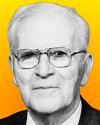
Born 10 Sep 1898; died 26 May 1999 at age 100.
[bp] who invented plasticized PVC (vinyl), while seeking a synthetic adhesive. In 1926, he discovered how to make hard, unworkable polyvinyl chloride pliable, by heating it in a solvent at high temperature. It is now used in hundreds of products such as floor tile, imitation leather, garden hose, shower curtains, and coatings. It is second only to polyethylene plastic in quantity manufactured. Semon’s other pioneering contributions to polymer science, included new rubber antioxidants. Also, his technical leadership led to discovery of three major new polymer families: thermoplastic polyurethane, synthetic “natural” rubber, and oil-resistant synthetic rubbers. Semon held 116 U.S. patents.« more
[bp] who invented plasticized PVC (vinyl), while seeking a synthetic adhesive. In 1926, he discovered how to make hard, unworkable polyvinyl chloride pliable, by heating it in a solvent at high temperature. It is now used in hundreds of products such as floor tile, imitation leather, garden hose, shower curtains, and coatings. It is second only to polyethylene plastic in quantity manufactured. Semon’s other pioneering contributions to polymer science, included new rubber antioxidants. Also, his technical leadership led to discovery of three major new polymer families: thermoplastic polyurethane, synthetic “natural” rubber, and oil-resistant synthetic rubbers. Semon held 116 U.S. patents.« more
A Man of Ideas: The Biography of Dr. Waldo Lonsbury Semon, by Elizabeth M. Smith. - book suggestion.
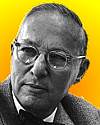
Born 10 Sep 1895; died 25 Feb 1963 at age 67.
American cultural anthropologist who was noted for having opened up the study of the New World Negro as a new field of research. Herskovits was also known for his humanistic and relativistic writings on culture. Herskovits turned to the study of Anthropology in 1920 in graduate work at Columbia University under Franz Boas. As a teacher at Northwestern University, IL, (1927-63), he founded the first US University Program in African Studies (1951). He advocated cultural relativism in Man and His Works (1948) that all standards of judgment are culture-bound.
American cultural anthropologist who was noted for having opened up the study of the New World Negro as a new field of research. Herskovits was also known for his humanistic and relativistic writings on culture. Herskovits turned to the study of Anthropology in 1920 in graduate work at Columbia University under Franz Boas. As a teacher at Northwestern University, IL, (1927-63), he founded the first US University Program in African Studies (1951). He advocated cultural relativism in Man and His Works (1948) that all standards of judgment are culture-bound.
Melville J. Herskovits (Leaders of modern anthropology series), by George Eaton Simpson. - book suggestion.
(EB)
Born 10 Sep 1892; died 15 Mar 1962 at age 69. quotes
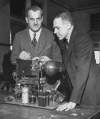
American physicist who was a joint winner, with C.T.R. Wilson of England, of the Nobel Prize for Physics (1927) for his discovery and explanation of the change in the wavelength of X rays when they collide with electrons in metals. This so-called Compton effect is caused by the transfer of energy from a photon to a single electron, then a quantum of radiation is re-emitted in a definite direction by the electron, which in so doing must recoil in a direction forming an acute angle with that of the incident radiation. During WW II, in 1941, he was appointed Chairman of the National Academy of Sciences Committee to Evaluate Use of Atomic Energy in War, assisting in the development of the atomic bomb.[Image: Compton (left) with his assistant Richard L. Doan, 1936.]
American physicist who was a joint winner, with C.T.R. Wilson of England, of the Nobel Prize for Physics (1927) for his discovery and explanation of the change in the wavelength of X rays when they collide with electrons in metals. This so-called Compton effect is caused by the transfer of energy from a photon to a single electron, then a quantum of radiation is re-emitted in a definite direction by the electron, which in so doing must recoil in a direction forming an acute angle with that of the incident radiation. During WW II, in 1941, he was appointed Chairman of the National Academy of Sciences Committee to Evaluate Use of Atomic Energy in War, assisting in the development of the atomic bomb.[Image: Compton (left) with his assistant Richard L. Doan, 1936.]
The Cosmos of Arthur Holly Compton, by Arthur Holly Compton, edited by Marjorie Johnson. - book suggestion.
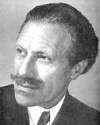
Born 10 Sep 1890; died 22 Jul 1976 at age 85. quotes
Sir Robert Eric Mortimer Wheeler was a Scottish archaeologist was widely known for popularizing his subject with the public, especially by regular appearances on television.. His notable excavations in Britain were at Verulamium (St Albans) and Maiden Castle. While director-general of archaeology in India (1944-7), he was most active at Mohenjo-daro and Harappa. His particular excavation method was the 'Wheeler' box trench system. Returning to London, he became professor of the archaeology of the Roman provinces at the newly founded Institute of Archaeology (1948-55) and was knighted in 1952. His books include Archaeology from the Earth (1954) and the autobiographical Still Digging (1955).
Sir Robert Eric Mortimer Wheeler was a Scottish archaeologist was widely known for popularizing his subject with the public, especially by regular appearances on television.. His notable excavations in Britain were at Verulamium (St Albans) and Maiden Castle. While director-general of archaeology in India (1944-7), he was most active at Mohenjo-daro and Harappa. His particular excavation method was the 'Wheeler' box trench system. Returning to London, he became professor of the archaeology of the Roman provinces at the newly founded Institute of Archaeology (1948-55) and was knighted in 1952. His books include Archaeology from the Earth (1954) and the autobiographical Still Digging (1955).
Still Digging: Adventures in Archaeology, by Sir Mortimer Wheeler. - book suggestion.
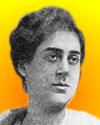
Born 10 Sep 1870; died 30 Jan 1925 at age 54.
Lilian Suzette Gibbs was an independent English botanist who organized botanical expeditions to some of the most remote places on Earth. After her education at Swanley Horticultural College and in botany at the Royal College of Science, she made a botanical trip to Southern Rhodesia (Zimbabwe) in 1905, followed by expeditions in 1907 to Fiji and New Zealand, Queensland and Tasmania. In 1910, she became the first woman to reach the summit of Mount Kinabulu in Borneo. She contributed over 1,000 botanical specimens from that trip to the British Museum. Bambusa gibbsiae (Miss Gibbs's bamboo) was named for her. In 1912 she made a botanical trip to Iceland, and in 1913, to the East Indies and Dutch New Guinea.«
Lilian Suzette Gibbs was an independent English botanist who organized botanical expeditions to some of the most remote places on Earth. After her education at Swanley Horticultural College and in botany at the Royal College of Science, she made a botanical trip to Southern Rhodesia (Zimbabwe) in 1905, followed by expeditions in 1907 to Fiji and New Zealand, Queensland and Tasmania. In 1910, she became the first woman to reach the summit of Mount Kinabulu in Borneo. She contributed over 1,000 botanical specimens from that trip to the British Museum. Bambusa gibbsiae (Miss Gibbs's bamboo) was named for her. In 1912 she made a botanical trip to Iceland, and in 1913, to the East Indies and Dutch New Guinea.«
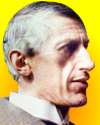
Born 10 Sep 1859; died 1 Nov 1942 at age 83. quotes
John Norman Collie was an English chemist whose career progressed at University College London from research assistant to William Ramsay, to eventually become Dean of Chemistry (1913-28). In collaboration with Ramsay at UCL, Collie worked on the inert gases argon and helium. He used the inert gas, neon, to develop the first neon lamp, leading to illuminated neon signs. The first medical X-ray photograph in the UK was taken at his instigation. To investigate naturally-occurring compounds available in only small quantities, he devised his semi-micro method of organic analysis long before Fritz Pregl. Collie was also an avid mountain climber and his expeditions included Canada and the Himalayas.«
John Norman Collie was an English chemist whose career progressed at University College London from research assistant to William Ramsay, to eventually become Dean of Chemistry (1913-28). In collaboration with Ramsay at UCL, Collie worked on the inert gases argon and helium. He used the inert gas, neon, to develop the first neon lamp, leading to illuminated neon signs. The first medical X-ray photograph in the UK was taken at his instigation. To investigate naturally-occurring compounds available in only small quantities, he devised his semi-micro method of organic analysis long before Fritz Pregl. Collie was also an avid mountain climber and his expeditions included Canada and the Himalayas.«
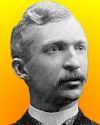
Born 10 Sep 1857; died 12 Aug 1900 at age 42.
James Edward Keeler was an American astronomer was an American astronomer who confirmed Maxwell's theory that the rings of Saturn were not solid (requiring uniform rotation), but composed of meteoric particles (with rotational velocity given by Kepler's 3rd law). His spectrogram of 9 Apr 1895 of the rings of Saturn showed the Doppler shift indicating variation of radial velocity along the slit. At the age of 21, he observed the solar eclipse of Jul 1878, with the Naval Observatory expedition to Colorado. He directed the Allegheny Observatory (1891-8) and the Lick Observatory from 1898, where, working with the Crossley reflector, he observed large numbers of nebulae whose existence had never before been suspected. He died unexpectedly of a stroke, age 42.«
James Edward Keeler was an American astronomer was an American astronomer who confirmed Maxwell's theory that the rings of Saturn were not solid (requiring uniform rotation), but composed of meteoric particles (with rotational velocity given by Kepler's 3rd law). His spectrogram of 9 Apr 1895 of the rings of Saturn showed the Doppler shift indicating variation of radial velocity along the slit. At the age of 21, he observed the solar eclipse of Jul 1878, with the Naval Observatory expedition to Colorado. He directed the Allegheny Observatory (1891-8) and the Lick Observatory from 1898, where, working with the Crossley reflector, he observed large numbers of nebulae whose existence had never before been suspected. He died unexpectedly of a stroke, age 42.«
James E. Keeler: Pioneer American Astrophysicist: And the Early Development of American Astrophysics, by Donald E. Osterbrock. - book suggestion.
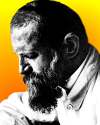
Born 10 Sep 1855; died 4 Feb 1925 at age 69.
German archaeologist who discovered the Hanging Gardens of Babylon (ca. 580 BC) in modern day Iraq, thus confirming its historical existence and it was not just a legend. His excavations (26 Mar 1899-1917) at Babylon unearthed many of its features including the outer walls, inner walls, foundations of the ziggurat Marduk, Nebuchadnezzar's palaces, the wide processional roadway which passed through the heart of the city and the Ishtar Gate. He developed several modern archaeological techniques including a method to identify and excavate mud brick architecture (made necessary at Babylon because the Gardens were built using mainly unfired mudbricks.) In his life, he led many excavations in Asia Minor, Greece, and Italy.«
German archaeologist who discovered the Hanging Gardens of Babylon (ca. 580 BC) in modern day Iraq, thus confirming its historical existence and it was not just a legend. His excavations (26 Mar 1899-1917) at Babylon unearthed many of its features including the outer walls, inner walls, foundations of the ziggurat Marduk, Nebuchadnezzar's palaces, the wide processional roadway which passed through the heart of the city and the Ishtar Gate. He developed several modern archaeological techniques including a method to identify and excavate mud brick architecture (made necessary at Babylon because the Gardens were built using mainly unfired mudbricks.) In his life, he led many excavations in Asia Minor, Greece, and Italy.«
The Excavations at Babylon, by Robert Koldewey. - book suggestion.
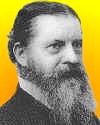
Born 10 Sep 1839; died 19 Apr 1914 at age 74. quotes
American mathematician, logician and philosopher who is noted for his work on the logic of relations and on pragmatism as a method of research. He was the first modern experimental psychologist in the Americas, the first metrologist to use a wave-length of light as a unit of measure, the inventor of the quincuncial projection of the sphere, the first known conceiver of the design and theory of an electric switching-circuit computer, and the founder of “the economy of research.” He is the only system-building philosopher in the Americas who has been both competent and productive in logic, in mathematics, and in a wide range of sciences. He was the son of Harvard mathematician Benjamin Peirce.
American mathematician, logician and philosopher who is noted for his work on the logic of relations and on pragmatism as a method of research. He was the first modern experimental psychologist in the Americas, the first metrologist to use a wave-length of light as a unit of measure, the inventor of the quincuncial projection of the sphere, the first known conceiver of the design and theory of an electric switching-circuit computer, and the founder of “the economy of research.” He is the only system-building philosopher in the Americas who has been both competent and productive in logic, in mathematics, and in a wide range of sciences. He was the son of Harvard mathematician Benjamin Peirce.
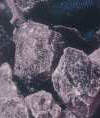
Lanthanum
Swedish chemist and mineralogist whose work revealed the existence of numerous rare-earth elements with closely similar chemical properties. In 1839 he discovered lanthanum (La) which is used as a component of misch metal (used for making lighter flints). Rare-earth compounds containing lanthanum have been extensively used in carbon lighting applications, especially by the motion picture industry for studio lighting and projection. He discovered other rare earth metals: erbium (Er) in 1842 and terbium (Tb) in 1843. Erbium oxide is rose-pink, and it is used to make pink glass and pink potter's glaze. Terbium oxide is widely used for green phosphors in fluorescent lamps, LEDs, and former color TV tubes.
1831
Born 10 Sep 1788; died 5 Aug 1868 at age 79.
Jacques Boucher de Crèvecœur de Perthes was a French archaeologist who was the first to establish that Europe had been populated by early man. Further, his discovery (about 1846) of whole handaxes, tools and fragments embedded in and scattered about the fossilized bones of prehistoric mammals in the high banks of the Somme River showed that man existed at least as early as the ancient creature. This disproved the prevailing theologically-based idea that 4004 BC was the year of the creation of man. He recorded his findings in a three volume work, Antiquitis celtiques et antediluviennes (1846). Acceptance was slow, but his ideas gained support when the evidence was validated by Prestwich, William Falconer and Charles Lyell.«
Jacques Boucher de Crèvecœur de Perthes was a French archaeologist who was the first to establish that Europe had been populated by early man. Further, his discovery (about 1846) of whole handaxes, tools and fragments embedded in and scattered about the fossilized bones of prehistoric mammals in the high banks of the Somme River showed that man existed at least as early as the ancient creature. This disproved the prevailing theologically-based idea that 4004 BC was the year of the creation of man. He recorded his findings in a three volume work, Antiquitis celtiques et antediluviennes (1846). Acceptance was slow, but his ideas gained support when the evidence was validated by Prestwich, William Falconer and Charles Lyell.«
Born 10 Sep 1775; died 17 Sep 1851 at age 76.
English chemist and physician who obtained naphthalene (1819), which name he coined. It was the first of many useful organic chemicals derived from coal tar, the thick black liquid resulting when coal is heated to make coke and gas. In addition to teaching chemistry (1801) at Oxford, elected in 1803 as the first Aidrichian professor of chemistry, he later taught minerology and geology. His geology students included William Conybeare, William Buckland and Charles Daubeny. Holding a medical degree, he also taught anatomy (from 1816) and medicine (from 1822). He wrote a pamphlet on the role of science in education, as well as geology and mineralogy textbooks. Kidd was the son of a navy captain.«
English chemist and physician who obtained naphthalene (1819), which name he coined. It was the first of many useful organic chemicals derived from coal tar, the thick black liquid resulting when coal is heated to make coke and gas. In addition to teaching chemistry (1801) at Oxford, elected in 1803 as the first Aidrichian professor of chemistry, he later taught minerology and geology. His geology students included William Conybeare, William Buckland and Charles Daubeny. Holding a medical degree, he also taught anatomy (from 1816) and medicine (from 1822). He wrote a pamphlet on the role of science in education, as well as geology and mineralogy textbooks. Kidd was the son of a navy captain.«
Born 10 Sep 1713; died 30 Dec 1781 at age 68. quotes
John Turberville Needham was an English clergyman and naturalist who was a Roman Catholic priest. He experimented, with Buffon, on the idea of spontaneous generation of life. After boiling mutton broth and sealing it in sealed it in glass containers which were stored for a few days, then reopened, he found numerous microorganisms therein. His conclusion was that the organisms had arisen from non-living matter. (However, two decades later, Spallanzani indicated this was invalid since some spores could still survive the short period of boiling temperature Needham used.) He was the first clergyman of his faith to become a member of the Royal Society of London (1768).
John Turberville Needham was an English clergyman and naturalist who was a Roman Catholic priest. He experimented, with Buffon, on the idea of spontaneous generation of life. After boiling mutton broth and sealing it in sealed it in glass containers which were stored for a few days, then reopened, he found numerous microorganisms therein. His conclusion was that the organisms had arisen from non-living matter. (However, two decades later, Spallanzani indicated this was invalid since some spores could still survive the short period of boiling temperature Needham used.) He was the first clergyman of his faith to become a member of the Royal Society of London (1768).
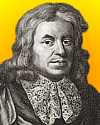
Baptized 10 Sep 1624; died 29 Dec 1689 at age 65. quotes
English physician who became known as the "English Hippocrates." As a founder of clinical medicine, he emphasized bedside observation of disease, and carefully kept a notebook of his clinical observations. He began his practice in London (c.1656) where he made studies on the causes and treatment of epidemics. His treatise on gout (1683) is considered his masterpiece. He named scarlet fever, differentiated it from measles, and was among the first to describe it. Sydenham explained the nature of hysteria and St. Vitus' dance (Sydenham's chorea). He invented laudanum (alcohol tincture of opium) for use in medical practice, was one of the first to use iron in treating iron-deficiency anemia, and helped popularize quinine in treating malaria.«[Born, or at least baptized, 10 Sep 1624]
English physician who became known as the "English Hippocrates." As a founder of clinical medicine, he emphasized bedside observation of disease, and carefully kept a notebook of his clinical observations. He began his practice in London (c.1656) where he made studies on the causes and treatment of epidemics. His treatise on gout (1683) is considered his masterpiece. He named scarlet fever, differentiated it from measles, and was among the first to describe it. Sydenham explained the nature of hysteria and St. Vitus' dance (Sydenham's chorea). He invented laudanum (alcohol tincture of opium) for use in medical practice, was one of the first to use iron in treating iron-deficiency anemia, and helped popularize quinine in treating malaria.«[Born, or at least baptized, 10 Sep 1624]
Dr. Thomas Sydenham (1624-1689): His Life and Original Writings, by Kenneth Dewhurst. - book suggestion.

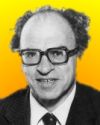
Died 10 Sep 2005 at age 85 (born 1 Nov 1919). quotes
Austrian-British mathematician and cosmologist who, working with Fred Hoyle and Thomas Gold, conceived the steady-state theory of the universe (1948). This explained the paradox: how can the stars continually recede, yet without disappearing? They audaciously proposed an unproven hypothesis: that the universe has an eternal existence, with no beginning and without an end. Further, the universe is continuously expanding, maintaining a constant density by continually creating new matter from energy. Their model was rendered obsolete, when in 1965, Arno Penzias and Robert Wilson detected a background microwave radiation from all directions in space, as predicted by the “Big Bang” theory of creation that is now accepted.«
Austrian-British mathematician and cosmologist who, working with Fred Hoyle and Thomas Gold, conceived the steady-state theory of the universe (1948). This explained the paradox: how can the stars continually recede, yet without disappearing? They audaciously proposed an unproven hypothesis: that the universe has an eternal existence, with no beginning and without an end. Further, the universe is continuously expanding, maintaining a constant density by continually creating new matter from energy. Their model was rendered obsolete, when in 1965, Arno Penzias and Robert Wilson detected a background microwave radiation from all directions in space, as predicted by the “Big Bang” theory of creation that is now accepted.«
Science, Churchill and Me: The Autobiography of Hermann Bondi, by Hermann Bondi. - book suggestion.
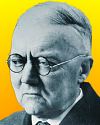
Died 10 Sep 1985 at age 91 (born 23 Oct 1893).
Estonian astronomer who is best known for his studies of meteors and meteorites, and whose life work was devoted to understanding the structure and evolution of the cosmos. When Soviet occupation of Estonia was imminent, he moved to Hamburg, then to Armagh Observatory, Northern Ireland (1948-81). Among his many pioneering discoveries were: (1) the first computation of the density of a degenerate body, namely the white dwarf 40 Eri B, in 1915; (2) the first accurate determination of the distance of an extragalactic object (Andromeda Nebula) in 1922; (3) the prediction of the existence of a cloud of cometary bodies encircling the Solar System (1932), later known as the “Oort Cloud”; (4) the first composite theoretical models of dwarf stars like the Sun which showed how they evolve into giants (1938); (5) a new theory of the origin of the Ice Ages (1952).
Estonian astronomer who is best known for his studies of meteors and meteorites, and whose life work was devoted to understanding the structure and evolution of the cosmos. When Soviet occupation of Estonia was imminent, he moved to Hamburg, then to Armagh Observatory, Northern Ireland (1948-81). Among his many pioneering discoveries were: (1) the first computation of the density of a degenerate body, namely the white dwarf 40 Eri B, in 1915; (2) the first accurate determination of the distance of an extragalactic object (Andromeda Nebula) in 1922; (3) the prediction of the existence of a cloud of cometary bodies encircling the Solar System (1932), later known as the “Oort Cloud”; (4) the first composite theoretical models of dwarf stars like the Sun which showed how they evolve into giants (1938); (5) a new theory of the origin of the Ice Ages (1952).
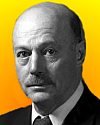
Died 10 Sep 1984 at age 98 (born 26 Aug 1886).
American aeronautical engineer who made major innovations in the design of aircraft and lighter-than-air ships, seaplanes, and carrier-based aircraft. His career had spanned the entire existence of the aerospace industry, from the very beginnings of aeronautics to exploration of the solar system. He received his master's degree in naval architecture from M.I.T. in 1912. At about the same time seeing a flight by Bleriot around Boston harbour attracted him to the fledgling field of aeronautics. By 1916, he became MIT's first Ph.D. in aeronautical engineering. He designed the NC (Navy Curtiss) flying boat with the capability of crossing the Atlantic. It was the largest aircraft in the world at the time, with four engines and a crew of six.
American aeronautical engineer who made major innovations in the design of aircraft and lighter-than-air ships, seaplanes, and carrier-based aircraft. His career had spanned the entire existence of the aerospace industry, from the very beginnings of aeronautics to exploration of the solar system. He received his master's degree in naval architecture from M.I.T. in 1912. At about the same time seeing a flight by Bleriot around Boston harbour attracted him to the fledgling field of aeronautics. By 1916, he became MIT's first Ph.D. in aeronautical engineering. He designed the NC (Navy Curtiss) flying boat with the capability of crossing the Atlantic. It was the largest aircraft in the world at the time, with four engines and a crew of six.

Died 10 Sep 1983 at age 77 (born 23 Oct 1905). quotes
Swiss-American physicist who shared (with independent discoverer, Edward M. Purcell) the Nobel Prize for Physics in 1952 for developing the nuclear magnetic resonance (NMR) method of measuring the magnetic field of atomic nuclei. He obtained his PhD under Werner Heisenberg in 1928, then taught briefly in Germany, but as a Jew, when Hitler came to power, he left Europe for the USA. Bloch's concept of magnetic neutron polarization (1934) enabled him, in conjunction with Luiz Alvarez, to measure the neutron's magnetic moment. During WW II he worked on the atomic bomb. Thereafter, Bloch and co-workers developed NMR, now widely used technique in chemistry, biochemistry, and medicine. In 1954 he became the first director of CERN.
Swiss-American physicist who shared (with independent discoverer, Edward M. Purcell) the Nobel Prize for Physics in 1952 for developing the nuclear magnetic resonance (NMR) method of measuring the magnetic field of atomic nuclei. He obtained his PhD under Werner Heisenberg in 1928, then taught briefly in Germany, but as a Jew, when Hitler came to power, he left Europe for the USA. Bloch's concept of magnetic neutron polarization (1934) enabled him, in conjunction with Luiz Alvarez, to measure the neutron's magnetic moment. During WW II he worked on the atomic bomb. Thereafter, Bloch and co-workers developed NMR, now widely used technique in chemistry, biochemistry, and medicine. In 1954 he became the first director of CERN.
Died 10 Sep 1975 at age 83 (born 3 May 1892). quotes
English physicist who shared (with Clinton J. Davisson of the U.S.) the Nobel Prize for Physics in 1937 for demonstrating that electrons undergo diffraction, a behaviour peculiar to waves that is widely exploited in determining the atomic structure of solids and liquids. He was the son of Sir J.J. Thomson who discovered the electron as a particle.
English physicist who shared (with Clinton J. Davisson of the U.S.) the Nobel Prize for Physics in 1937 for demonstrating that electrons undergo diffraction, a behaviour peculiar to waves that is widely exploited in determining the atomic structure of solids and liquids. He was the son of Sir J.J. Thomson who discovered the electron as a particle.
Died 10 Sep 1966 at age 75 (born 18 Jul 1891). quotes
Emil Julius Gumbel was an American mathematician and statistician is known for his work in reliability theory and order statistics. His name remains on the Type 1 extreme value distribution, known as the Gumbel distribution. In his early life, during WW I, he militantly advocated for pacifism. Gumbel acted as a historian and statistician recording the political murders in the early Weimar Republic. His activities caused ostracization and political harassment. When he moved to France (1932), he could better concentrate on his mathematical work, most notably examining the statistical distributions most used by actuaries. He also applied his skills in the fields of hydrology (floods) and meteorology (drought). Eight years later, due to WW II, he moved to the U.S. (1940) and continue this work.«
Emil Julius Gumbel was an American mathematician and statistician is known for his work in reliability theory and order statistics. His name remains on the Type 1 extreme value distribution, known as the Gumbel distribution. In his early life, during WW I, he militantly advocated for pacifism. Gumbel acted as a historian and statistician recording the political murders in the early Weimar Republic. His activities caused ostracization and political harassment. When he moved to France (1932), he could better concentrate on his mathematical work, most notably examining the statistical distributions most used by actuaries. He also applied his skills in the fields of hydrology (floods) and meteorology (drought). Eight years later, due to WW II, he moved to the U.S. (1940) and continue this work.«
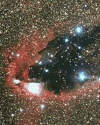
Swiss-American astronomer who moved to the US in 1915 and worked at the Lick Observatory. In 1922, by observing a solar eclipse, he was able to confirm Einstein's theory of relativity. He made extensive studies of galactic star clusters, and demonstrated (1930) the presence throughout the galactic plane of a tenuous haze of interstellar material that absorbs light generally that dims and reddens the light from of distant clusters. The presence of this obscuring haze revealed how the size of spiral galaxies had been over-estimated. Whereas Harlow Shapley, in 1918, determined the distance to the centre of the Milky Way to be 50,000 light-years away, Trumpler's work reduced this to 30,000 light-years.[Image, right (source)]
Died 10 Sep 1956 at age 84 (born 1 Sep 1872).
American botanist who discovered the antibotic Aureomycin. While a professor of plant physiology and economic botany, his research included the physiology of fungi; the biological effects of radiation on bacteria; and yielded procedures for commercial mushroom growing, a treatment for root rot in cotton plants, and a way to combat the tobacco mosaic virus. He retirement from an academic career in 1943 and the following year began working as a research consultant for Lederle Laboratories where he discovered chlortetracycline, a tetracycline antibiotic, from a soil sample containing what he named the streptomyces aureofaciens fungus. It was subsequently given the brand name of Aureomycin for a topical ointment and veterinary use. The name derives from its golden colour.«
American botanist who discovered the antibotic Aureomycin. While a professor of plant physiology and economic botany, his research included the physiology of fungi; the biological effects of radiation on bacteria; and yielded procedures for commercial mushroom growing, a treatment for root rot in cotton plants, and a way to combat the tobacco mosaic virus. He retirement from an academic career in 1943 and the following year began working as a research consultant for Lederle Laboratories where he discovered chlortetracycline, a tetracycline antibiotic, from a soil sample containing what he named the streptomyces aureofaciens fungus. It was subsequently given the brand name of Aureomycin for a topical ointment and veterinary use. The name derives from its golden colour.«
Died 10 Sep 1859 at age 73 (born 5 Jan 1786).
English naturalist and botanist known for his discoveries of North American plants. He went to the newly formed United States at a perfect time to be an explorer of its expanding boundaries. Gifted as a botanist and ornithologist, he was one of the most well-travelled, adventurous and knowledgeable of the early naturalists on the American frontier. His career in botany was sparked within a day of his arrival in Philadelphia in 1808 by Benjamin Smith Barton, whom he met to enquire about the curious name of the cat-brier plant he had found. After some formal instruction in botany from Barton, Nuttall was engaged in field work for Barton, collecting plants in the salt marshes of Delaware and the Chesapeake Bay.
English naturalist and botanist known for his discoveries of North American plants. He went to the newly formed United States at a perfect time to be an explorer of its expanding boundaries. Gifted as a botanist and ornithologist, he was one of the most well-travelled, adventurous and knowledgeable of the early naturalists on the American frontier. His career in botany was sparked within a day of his arrival in Philadelphia in 1808 by Benjamin Smith Barton, whom he met to enquire about the curious name of the cat-brier plant he had found. After some formal instruction in botany from Barton, Nuttall was engaged in field work for Barton, collecting plants in the salt marshes of Delaware and the Chesapeake Bay.
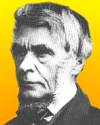
Died 10 Sep 1844 at age 43 (born 22 Sep 1800).
British botanist whose classification of seed plants (Spermatophyta), based on an exhaustive study of all known species, served as a foundation for modern systems of vascular plant taxonomy. Sir William Hooker, invited him to establish permanent quarters at Kew gardens, where Bentham participated in the Gardens' definitive survey of floras of the British colonies and possessions, for which he prepared the Flora Hongkongensis (1861) and the Flora Australiensis (7 vol., 1863-78), cataloging and describing more than 7,000 species. Collaborating with Hooker's son Sir Joseph, Bentham spent 27 years in research and examination of specimens for the work Genera Plantarum (3 vol., 1862-83), which covered 200 "orders" of 7,569 genera, and 97,200 species.
British botanist whose classification of seed plants (Spermatophyta), based on an exhaustive study of all known species, served as a foundation for modern systems of vascular plant taxonomy. Sir William Hooker, invited him to establish permanent quarters at Kew gardens, where Bentham participated in the Gardens' definitive survey of floras of the British colonies and possessions, for which he prepared the Flora Hongkongensis (1861) and the Flora Australiensis (7 vol., 1863-78), cataloging and describing more than 7,000 species. Collaborating with Hooker's son Sir Joseph, Bentham spent 27 years in research and examination of specimens for the work Genera Plantarum (3 vol., 1862-83), which covered 200 "orders" of 7,569 genera, and 97,200 species.
George Bentham, by George Bentham, Marion Filipiuk. - book suggestion.
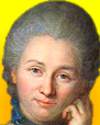
Died 10 Sep 1749 at age 42 (born 17 Dec 1706).
Gabrielle-Émilie Le Tonnelier de Breteuil, Marquise du Châtelet was a French mathematician and physicist whose academic education began while growing up with aristocratic parents, and continued with tutors. She took a lively interest in the philosophies of Newton and Leibniz. She even dressed as a man to enter the cafés where the scientific discussions of the time took place. After she met Voltaire, they became lovers. Châtelet’s major work was a Latin to French translation of Newton’s Principia (begun 1745), published posthumously (1759) with a “Preface historique” by Voltaire. It remains the standard edition of the work in French. Her scientific treatises include one on the nature of heat and light, submitted to a competition (1738). She died in 1749, a few days after giving birth to a daughter.«
Gabrielle-Émilie Le Tonnelier de Breteuil, Marquise du Châtelet was a French mathematician and physicist whose academic education began while growing up with aristocratic parents, and continued with tutors. She took a lively interest in the philosophies of Newton and Leibniz. She even dressed as a man to enter the cafés where the scientific discussions of the time took place. After she met Voltaire, they became lovers. Châtelet’s major work was a Latin to French translation of Newton’s Principia (begun 1745), published posthumously (1759) with a “Preface historique” by Voltaire. It remains the standard edition of the work in French. Her scientific treatises include one on the nature of heat and light, submitted to a competition (1738). She died in 1749, a few days after giving birth to a daughter.«
In 1985, Karl Hassel of Plain City, Ohio was awarded a patent for his built-in child's car seat.
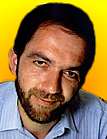
In 1984, DNA fingerprinting was discovered in Leicester, England, by Alec Jeffreys as X-ray films of his tests first revealed the possibility. As he studied the image, at first what he saw seemed just a complicated mess. Then he realized this could be DNA-based biological identification since every person has a unique DNA profile. The technique has since helped in forensics, crime investigation and identifying family members. However, this result was merely an accident outcome of research Jeffreys was conducting to trace genetic markers through families for the original purpose of understanding inheritance patterns of illness. The first use of DNA profiling in criminology (1986) proved innocence.«
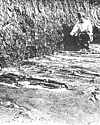
In 1925, the Royal tomb of the Hopewell Indian Mound Builders was unearthed, outside the village of Bainbridge, near Chillicothe, Ohio. Four adult and two infant skeletons were found, believed to be a royal family of the ancient tribe. The discovery was in a charnel house in the Seip-Pricer mound. There were copper helmets on two of the skulls. The bodies were wrapped in strands of pearls, some of extraordinary size, as large as hickory nuts. There were also ornaments of silver, copper and tortoise shell, and necklaces stranded with large grizzly bear teeth. The curator and the director of the Ohio Archaeological and Historical Museum were present, with mound explorer, Girard Fowks.«[Reported as “discovered yesterday” under AP dateline 11 Sep in New York Times (12 Sep 1925), 1.]

In 1912, to promote his idea for the Lincoln Highway, Carl Fisher met with a group of auto industry leaders for a dinner at Das Deutsche Haus, in Indianapolis, Indiana. (That community center is now named the Athenæum.). He envisioned an improved, surfaced road linking the east and west coasts of the U.S. To his dinner guests, he declared “Let’s do it before we’re too old to enjoy it!” In less than a year, on 1 Jul 1913, he had brought together the Lincoln Highway Association to organize the project. A few months later, on 14 Sep 1913, the “Proclamation of the Route of the Lincoln Highway” was published. By the end of that same year, on 13 Dec 1913, an existing road in New Jersey was the first section to be named as part of the Lincoln Highway.[References on the Web to 10 Sep 1913 as the opening date of the Lincoln Highway are obviously wrong.See Reference.] more
The Lincoln Highway: Coast to Coast from Times Square to the Golden Gate, by Michael Wallis et al. - book suggestion.
In 1896, the first successful surgery on heart muscle was performed on 10 Sep 1896, by Ludwig Rehn in Frankfurt am Main, Germany, who sutured a myocardial laceration - a 1.5-cm wound of the right ventricle - of a 22-yr-old man stabbed in a drunken brawl. Previously, suturing of the pericardium, a fluid sac surrounding the heart - but not a part of the heart proper - was successfully executed by Americans Henry C. Dalton on 6 Sep 1891 and Daniel Hale Williams on 9 Jul 1893. These operations took place at a time when the prevailing belief was of the inviolability of the heart. Rehn's achievement is regarded as a landmark for the beginning of cardiac surgery.«

In 1846, Elias Howe of Spencer, Massachusetts, received a patent for his hand-cranked sewing machine. Isaac Singer patented one five years later. Howe sued Singer for infringement and won...but by that time Singer was well ahead in the sewing machine business.[Image: patent model of Howe's 1846 sewing machine] more
In 1823, The Champlain Canal was opened in New York state, a 60-mile canal that connects the south end of Lake Champlain to the Hudson River in New York. It was authorized on 17 Apr 1816, when a law was passed “to consider, devise and adopt such measures as may or shall be requisite, to facilitate and effect the communication, by means of canals and locks, between the navigable waters of Hudson's river and Lake Erie, and the said navigable waters and Lake Champlain.” The Champlain Canal was built as part of the Erie Canal. By 1818, twelve miles were completed and in 1819 the canal was opened from Fort Edward to Lake Champlain. The canal was completed in 1823 and was an immediate financial success.«

In 1815, the keel was laid for the first double decker steamboat, the Washington, in Wheeling, Virginia, built for Capt. Henry Miller Shreve. It was a 148-ft stern-wheeler with a flat, shallow hull and a high-pressure engine with 24-in diam. cylinders and 6-foot strokes. Its upper deck carried passengers, and the lower deck was for the engines, located horizontally. Each side wheel was powered independently, so the boat could be turned within its own length. It was ready to launch on 4 Jun 1816. On its first long trip down-river, it arrived on 7 Oct 1816 at New Orleans, Louisiana. It was the fastest yet built, able to make the 1,500 mile New Orleans to Louisville run in only 24 days.«




