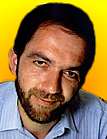
Born 9 Jan 1950.
English geneticist who discovered the technique of DNA fingerprinting, used for unique identification of humans, animals and other organisms from their DNA material on 10 Sep 1984. This came about unexpectedly while Jeffreys was working on another project concerning genes for another purpose - to trace genetic markers through families to understand inheritance patterns of illness. DNA fingerprinting has become important for forensic science investigations, paternity issues, and detection of hereditary disease. He was knighted in 1994 for his research in genetics.«
English geneticist who discovered the technique of DNA fingerprinting, used for unique identification of humans, animals and other organisms from their DNA material on 10 Sep 1984. This came about unexpectedly while Jeffreys was working on another project concerning genes for another purpose - to trace genetic markers through families to understand inheritance patterns of illness. DNA fingerprinting has become important for forensic science investigations, paternity issues, and detection of hereditary disease. He was knighted in 1994 for his research in genetics.«
DNA Fingerprinting: An Introduction, by Lorne T. Kirby. - book suggestion.
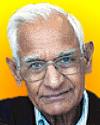
Born 9 Jan 1922; died 9 Nov 2011 at age 89.
Har Gobind Khorana was an Indian-American biochemist who shared (with Marshall W. Nirenberg and Robert W. Holley) the 1968 Nobel Prize in Physiology or Medicine “for their interpretation of the genetic code and its function in protein synthesis.” After James Watson and Francis Crick announced the double helix structure of DNA in 1953, other researchers pursued how DNA's instructions were actually carried out. Khorana devised techniques to find more about the genetic code of small “messenger” molecules of transfer ribonucleic acid (RNAs) and their codons which controlled protein building. In 1972, he was the first scientist to synthesize a wholly artificial gene from laboratory chemicals. In the 1980s, Khorana synthesized the gene for rhodopsin, a protein involved in vision.«
Har Gobind Khorana was an Indian-American biochemist who shared (with Marshall W. Nirenberg and Robert W. Holley) the 1968 Nobel Prize in Physiology or Medicine “for their interpretation of the genetic code and its function in protein synthesis.” After James Watson and Francis Crick announced the double helix structure of DNA in 1953, other researchers pursued how DNA's instructions were actually carried out. Khorana devised techniques to find more about the genetic code of small “messenger” molecules of transfer ribonucleic acid (RNAs) and their codons which controlled protein building. In 1972, he was the first scientist to synthesize a wholly artificial gene from laboratory chemicals. In the 1980s, Khorana synthesized the gene for rhodopsin, a protein involved in vision.«
Chemical Biology: Selected Papers of H. Gobind Khorana, by Har Gobind Khorana. - book suggestion.
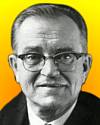
Born 9 Jan 1908; died 19 Mar 1968 at age 60.
Karl (Theodore) Dussik was an Austrian neurologist and psychiatrist who has been called the "Father of Ultrasonic Diagnosis". In 1942, he published the first transmission ultrasound investigation of the brain Hyperphonography of the Brain, which he used to image a cerebral ventrical. He placing a patient's head between an ultrasound emitter and a receiver. In this way, he tried to visualize the cerebral ventricles by measuring the ultrasound beam modification through the head. However, the bone of the skull absorbed much of the ultrasound energy, and the image created by different bone thickness obscured any reliable image of the brain alone. However, his work with transmitted ultrasound stimulated the use of reflection techniques.«
Karl (Theodore) Dussik was an Austrian neurologist and psychiatrist who has been called the "Father of Ultrasonic Diagnosis". In 1942, he published the first transmission ultrasound investigation of the brain Hyperphonography of the Brain, which he used to image a cerebral ventrical. He placing a patient's head between an ultrasound emitter and a receiver. In this way, he tried to visualize the cerebral ventricles by measuring the ultrasound beam modification through the head. However, the bone of the skull absorbed much of the ultrasound energy, and the image created by different bone thickness obscured any reliable image of the brain alone. However, his work with transmitted ultrasound stimulated the use of reflection techniques.«
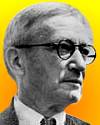
Born 9 Jan 1886; died 23 Apr 1959 at age 73.
American psychologist whose work dealt with the psychology of learning and the role association plays. In his Law of Contiguity, he held that “a combination of stimuli which has accompanied a movement, will on its recurrence tend to be followed by that movement.” He said that all learning is based on a stimulus- response association. Movements are small stimulus- response combinations. These movements make up an act. A learned behavior is a series of movements. It takes time for the movements to develop into an act. He believed that learning is incremental. Some behavior involves repetition of movements and what is learned are movements, not behaviors.
American psychologist whose work dealt with the psychology of learning and the role association plays. In his Law of Contiguity, he held that “a combination of stimuli which has accompanied a movement, will on its recurrence tend to be followed by that movement.” He said that all learning is based on a stimulus- response association. Movements are small stimulus- response combinations. These movements make up an act. A learned behavior is a series of movements. It takes time for the movements to develop into an act. He believed that learning is incremental. Some behavior involves repetition of movements and what is learned are movements, not behaviors.
The Psychology of Learning, by Edwin Ray Guthrie. - book suggestion.
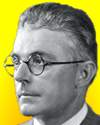
Born 9 Jan 1878; died 25 Sep 1958 at age 80. quotes
John Broadus Watson was an American psychologist whose ideas initiated behaviorism as a branch of psychology. Inspired by the recent work of Ivan Pavlov, he studied the biology, physiology, and behavior of animals. Watson viewed animals as extremely complex machines that responded to situations according to their “wiring,” or nerve pathways that were conditioned by experience. When he continued with studies of the behavior of children, his conclusion was that humans, while more complicated than animals, operated on the same principles. Watson's behaviourism dominated psychology in the U.S. in the 1920s and '30s.
John Broadus Watson was an American psychologist whose ideas initiated behaviorism as a branch of psychology. Inspired by the recent work of Ivan Pavlov, he studied the biology, physiology, and behavior of animals. Watson viewed animals as extremely complex machines that responded to situations according to their “wiring,” or nerve pathways that were conditioned by experience. When he continued with studies of the behavior of children, his conclusion was that humans, while more complicated than animals, operated on the same principles. Watson's behaviourism dominated psychology in the U.S. in the 1920s and '30s.
Behaviorism, by John B Watson. - book suggestion.
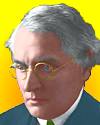
Born 9 Jan 1870; died 20 Mar 1946 at age 76. quotes
Amadeus William Grabau was an American geologist and palaeontologist known for his work on world stratigraphic deposits and the deciphering of Earth history. In 1899, he published an early work that studied the environment of old sedimentary rocks in light of knowledge of the conditions of life among modern organisms, The Relations of Marine Bionomy to Stratigraphy*, which was a step toward the development of paleoecology. For more than a quarter of a century, he worked on the geologic survey of China. In 1940, he developed a theory of rhythms in the growth of the Earth's crust, and of repetitions in mountain building. He died in China and was buried there.*Ref.: Bulletin of Buffalo Society of Natural Sciences, 6 no. 4 (September 1899): 319-356.
Amadeus William Grabau was an American geologist and palaeontologist known for his work on world stratigraphic deposits and the deciphering of Earth history. In 1899, he published an early work that studied the environment of old sedimentary rocks in light of knowledge of the conditions of life among modern organisms, The Relations of Marine Bionomy to Stratigraphy*, which was a step toward the development of paleoecology. For more than a quarter of a century, he worked on the geologic survey of China. In 1940, he developed a theory of rhythms in the growth of the Earth's crust, and of repetitions in mountain building. He died in China and was buried there.*Ref.: Bulletin of Buffalo Society of Natural Sciences, 6 no. 4 (September 1899): 319-356.
Principles of Stratigraphy, by Amadeus W Grabau. - book suggestion.
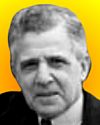
Born 9 Jan 1870; died 16 May 1938 at age 68. quotes
Joseph Baermann Strauss was an American civil engineer who was chief engineer for the construction of the Golden Gate Bridge, San Francisco. His career began as a draftsman. A few years later had become a principal assistant engineer. By 1904 he had his own Strauss Bascule Bridge Company which constructed hundreds of drawbridges around the U.S. From 1919, he spent a decade campaigning for the idea of the Golden Gate Bridge, which was eventually funded by a vote on 4 Nov 1930 to issue bonds. It was his first suspension bridge, and he was assisted by engineers Charles Ellis and Leon Moissieff. The bridge opened to the public 27 May 1937. He was exhausted by the major task, and died within a year afterwards.«
Joseph Baermann Strauss was an American civil engineer who was chief engineer for the construction of the Golden Gate Bridge, San Francisco. His career began as a draftsman. A few years later had become a principal assistant engineer. By 1904 he had his own Strauss Bascule Bridge Company which constructed hundreds of drawbridges around the U.S. From 1919, he spent a decade campaigning for the idea of the Golden Gate Bridge, which was eventually funded by a vote on 4 Nov 1930 to issue bonds. It was his first suspension bridge, and he was assisted by engineers Charles Ellis and Leon Moissieff. The bridge opened to the public 27 May 1937. He was exhausted by the major task, and died within a year afterwards.«
The Gate: The True Story of the Design and Construction of the Golden Gate Bridge, by John Van Der Zee. - book suggestion.
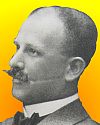
Born 9 Jan 1869; died 3 Apr 1910 at age 41.
German physical chemist who, with Guido Bodländer, proposed an electron treatment of chemical affinity and valency in a paper Die Elektronaffinität (Electron Affinity, 1899) to explain how certain atoms can combine based on the newly discovered electrons comprising the atom. Abegg in a later paper gave a “rule of eight” whereby: “Every element possesses a positive as well as a negative maximum valence whose sum is always eight. The maximum positive valence is the same as the number of the periodic group to which the element belongs.” It had several difficulties and was not generally accepted. Abegg enjoyed travelling, ballooning, skiing and photography. He died at age 41, in the crash of his gas balloon Schlesien.«[Ref: Abegg and Bodländer, Zeit. Anorg. Chem. (1899), 20, 453.]
German physical chemist who, with Guido Bodländer, proposed an electron treatment of chemical affinity and valency in a paper Die Elektronaffinität (Electron Affinity, 1899) to explain how certain atoms can combine based on the newly discovered electrons comprising the atom. Abegg in a later paper gave a “rule of eight” whereby: “Every element possesses a positive as well as a negative maximum valence whose sum is always eight. The maximum positive valence is the same as the number of the periodic group to which the element belongs.” It had several difficulties and was not generally accepted. Abegg enjoyed travelling, ballooning, skiing and photography. He died at age 41, in the crash of his gas balloon Schlesien.«[Ref: Abegg and Bodländer, Zeit. Anorg. Chem. (1899), 20, 453.]
Born 9 Jan 1868; died 12 Feb 1939 at age 71.
Danish chemist.
Danish chemist.
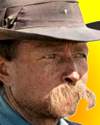
Kroegel and pelican
Born 9 Jan 1864; died 1948.
German-American conservationist who was the first U.S. Game Warden at Pelican Island, the first U.S. bird sanctuary. By age 17, he settled as a German immigrant in Sebastian, Florida and became active in local wildlife conservation, especially the birds of Pelican Island near his home. Acting alone, he began guarding the pelicans and other birds there from relentless slaughter by hunters harvesting the plumage for the women's fashion trade. Frank Chapman, a prominent ornithologist involved with the Audubon Society and American Ornithologists' Union helped convince President Theodore Roosevelt to sign an executive order (14 Mar 1903) creating Pelican Island as the nation's first National Wildlife Refuge. Koegel was recognized as the first Game Warden there, though with only a token $1 monthly government pay (until 1926), plus $7 monthly from the Audubon societies. He continued protecting the bird life until he died.« more
German-American conservationist who was the first U.S. Game Warden at Pelican Island, the first U.S. bird sanctuary. By age 17, he settled as a German immigrant in Sebastian, Florida and became active in local wildlife conservation, especially the birds of Pelican Island near his home. Acting alone, he began guarding the pelicans and other birds there from relentless slaughter by hunters harvesting the plumage for the women's fashion trade. Frank Chapman, a prominent ornithologist involved with the Audubon Society and American Ornithologists' Union helped convince President Theodore Roosevelt to sign an executive order (14 Mar 1903) creating Pelican Island as the nation's first National Wildlife Refuge. Koegel was recognized as the first Game Warden there, though with only a token $1 monthly government pay (until 1926), plus $7 monthly from the Audubon societies. He continued protecting the bird life until he died.« more
America's National Wildlife Refuges: A Complete Guide, by Russell D. Butcher. - book suggestion.
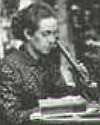
Born 9 Jan 1858; died 25 Feb 1934 at age 76.
American botanistt known for her lasting contributions to bryology, the study of mosses. She went on numerous botanical expeditions to the West Indies and in wilderness areas of the Adirondacks. A visit to the Royal Botanic Gardens at Kew, near London, England, made a great impression on Britton and she determined that New York City should have its own botanical garden. She was the driving force in the establishment of the New York Botanical Garden in the Bronx. The original 250 acre garden was incorporated in 1891. Through publications, lectures, and correspondence, Britton also raised public interest in conservation issues and promoted legislation for the protection of endangered native plants.
American botanistt known for her lasting contributions to bryology, the study of mosses. She went on numerous botanical expeditions to the West Indies and in wilderness areas of the Adirondacks. A visit to the Royal Botanic Gardens at Kew, near London, England, made a great impression on Britton and she determined that New York City should have its own botanical garden. She was the driving force in the establishment of the New York Botanical Garden in the Bronx. The original 250 acre garden was incorporated in 1891. Through publications, lectures, and correspondence, Britton also raised public interest in conservation issues and promoted legislation for the protection of endangered native plants.
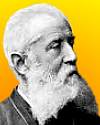
Born 9 Jan 1823; died 23 Feb 1908 at age 85.
German surgeon who was the first to introduce a first-aid kit and triage on the battlefield. He introduced first aid training for both military and civilian personnel. His handbooks of military surgical techniques were used extensively as the best on the topic. The Esmarch bandage is a triangular piece of linen or cotton, with a long side about 4 ft. It can be used folded or open, and applied in 32 different ways. Esmarch insisted that every soldier carry one in battle for temporary dressing and field-work. Esmarch also invented an apparatus, using a narrow hard rubber tourniquet with a chain fastener to control bleeding in tying off an extremity in such a way that it is made bloodless. When used during amputation, being bloodless made it easier to operate on a limb.
German surgeon who was the first to introduce a first-aid kit and triage on the battlefield. He introduced first aid training for both military and civilian personnel. His handbooks of military surgical techniques were used extensively as the best on the topic. The Esmarch bandage is a triangular piece of linen or cotton, with a long side about 4 ft. It can be used folded or open, and applied in 32 different ways. Esmarch insisted that every soldier carry one in battle for temporary dressing and field-work. Esmarch also invented an apparatus, using a narrow hard rubber tourniquet with a chain fastener to control bleeding in tying off an extremity in such a way that it is made bloodless. When used during amputation, being bloodless made it easier to operate on a limb.

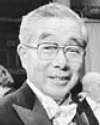
Died 9 Jan 1998 at age 79 (born 4 Oct 1918).
Japanese chemist who shared the 1981 Nobel Prize for Chemistry with Roald Hoffmann for investigation of the mechanisms of chemical reactions. In 1952, at Kyoto University, Fukui introduced his “frontier orbital theory of reactions.” He proposed that the course of a reaction is determined by geometry and relative energies of molecular orbitals of reactants. The theory explains electrophilic attack, for example, occurs at the carbon atom having the greatest density of frontier (highest energy) electrons. In the mid-1960s, Fukui and Hoffmann discovered—almost simultaneously and independently of each other—that symmetry properties of frontier orbitals could explain certain reaction courses that had previously been difficult to understand.
Japanese chemist who shared the 1981 Nobel Prize for Chemistry with Roald Hoffmann for investigation of the mechanisms of chemical reactions. In 1952, at Kyoto University, Fukui introduced his “frontier orbital theory of reactions.” He proposed that the course of a reaction is determined by geometry and relative energies of molecular orbitals of reactants. The theory explains electrophilic attack, for example, occurs at the carbon atom having the greatest density of frontier (highest energy) electrons. In the mid-1960s, Fukui and Hoffmann discovered—almost simultaneously and independently of each other—that symmetry properties of frontier orbitals could explain certain reaction courses that had previously been difficult to understand.
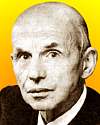
Died 9 Jan 1992 at age 92 (born 7 Feb 1899).
Swiss agricultural chemist and pedologist (soil scientist) who developed numerical functions to describe soil in terms of five interacting factors in his book Factors of Soil Formation (1941). These related Climate (temperature and moisture); Organisms (those living on the soil and in the soil, vegetation and animals, fungi algae and bacteria, decay of organic matter, humus); Relief (topography, and geomorphic landscape); Parent Material (bedrock or sediment type); and Time (ranging from 100's to 1000's of years while maturity or equilibrium of soil development is attained). He moved to the U.S. in 1926. After retirement, he studied the soil relationships in the unusual ecological community of the Pygmy Forest in California, known for its stunted and twisted confers.«
Swiss agricultural chemist and pedologist (soil scientist) who developed numerical functions to describe soil in terms of five interacting factors in his book Factors of Soil Formation (1941). These related Climate (temperature and moisture); Organisms (those living on the soil and in the soil, vegetation and animals, fungi algae and bacteria, decay of organic matter, humus); Relief (topography, and geomorphic landscape); Parent Material (bedrock or sediment type); and Time (ranging from 100's to 1000's of years while maturity or equilibrium of soil development is attained). He moved to the U.S. in 1926. After retirement, he studied the soil relationships in the unusual ecological community of the Pygmy Forest in California, known for its stunted and twisted confers.«
Factors of Soil Formation: A System of Quantitative Pedology, by Hans Jenny. - book suggestion.
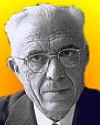
Died 9 Jan 1979 at age 87 (born 21 Jun 1891).
Italian engineer and architect who gained international recognition for his dramatic designs for large-span structures made possible with the use of reinforced concrete. In the 1940s he developed ideas for a reinforced concrete which allowed him to create structures of “strength, simplicity and grace.” His services as an engineering consultant were highly sought as a result of his experimentation with structural concrete. His important works include a prefabricated 309-foot-span arch for the Turin Exhibition Building consisting of a single undulating large-span roof, the UNESCO building in Paris, the cathedral at New Norcia, near Perth, Australia, and as structural engineer for the first skyscraper in Italy, the Pirelli Building in Milan.
Italian engineer and architect who gained international recognition for his dramatic designs for large-span structures made possible with the use of reinforced concrete. In the 1940s he developed ideas for a reinforced concrete which allowed him to create structures of “strength, simplicity and grace.” His services as an engineering consultant were highly sought as a result of his experimentation with structural concrete. His important works include a prefabricated 309-foot-span arch for the Turin Exhibition Building consisting of a single undulating large-span roof, the UNESCO building in Paris, the cathedral at New Norcia, near Perth, Australia, and as structural engineer for the first skyscraper in Italy, the Pirelli Building in Milan.
Pier Luigi Nervi, by Ada Louise Huxtable. - book suggestion.
Died 9 Jan 1976 at age 70 (born 25 Jun 1905).
German-American astronomer who studied atmospheres of planets. He identified (1932) certain absorption bands (observed by Slipher) in the spectra of Jupiter and the outer planets as indicative of ammonia and methane as minor components of these planets which are primarily composed of hydrogen and helium. He speculated (1937) that droplets of formaldehyde formed the clouds of Venus, since water was not detected. (In fact, surface water is absent on Venus, but the clouds do contain water with sulphur and sulphuric acid.) In 1939, he realized the importance of the negative hydrogen ion for stellar opacity. By the 1940s, he proposed the greenhouse theory to explain how atmospheric gases produced unexpectedly high temperatures of Venus.
German-American astronomer who studied atmospheres of planets. He identified (1932) certain absorption bands (observed by Slipher) in the spectra of Jupiter and the outer planets as indicative of ammonia and methane as minor components of these planets which are primarily composed of hydrogen and helium. He speculated (1937) that droplets of formaldehyde formed the clouds of Venus, since water was not detected. (In fact, surface water is absent on Venus, but the clouds do contain water with sulphur and sulphuric acid.) In 1939, he realized the importance of the negative hydrogen ion for stellar opacity. By the 1940s, he proposed the greenhouse theory to explain how atmospheric gases produced unexpectedly high temperatures of Venus.
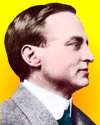
Died 9 Jan 1958 at age 89 (born 22 Aug 1868). quotes
Willis Rodney Whitney was an American chemist and research director who founded the General Electric Company's research laboratory and directed pioneering work there. He is known as the “father of basic research in industry” because it became a model for industrial scientific laboratories elsewhere in the U.S. In Oct 1900 he was offered a research position at the General Electric (GE) Co., Schenectady, N.Y. His self-directed research program there began on a basis of three days a week. He quickly proved that chemical research techniques (such as use of an electric furnace) could be highly useful in the electrical industry. By 1904 he was directing 41 staff. His own 40 patents included the GEM lamp filament (1904), but contributed indirectly to many inventions. more
Willis Rodney Whitney was an American chemist and research director who founded the General Electric Company's research laboratory and directed pioneering work there. He is known as the “father of basic research in industry” because it became a model for industrial scientific laboratories elsewhere in the U.S. In Oct 1900 he was offered a research position at the General Electric (GE) Co., Schenectady, N.Y. His self-directed research program there began on a basis of three days a week. He quickly proved that chemical research techniques (such as use of an electric furnace) could be highly useful in the electrical industry. By 1904 he was directing 41 staff. His own 40 patents included the GEM lamp filament (1904), but contributed indirectly to many inventions. more
Willis R. Whitney, General Electric and the Origins of U.S. Industrial Research, by George Wise. - book suggestion.
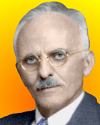
Died 9 Jan 1942 at age 69 (born 27 Jun 1872). quotes
Heber Doust Curtis was an American astronomer who is famed for debating Harlow Shapley on 26 Apr 1920 before the National academy of Sciences. He spoke for “island universes”—whereby spiral nebulae were composed of stars, and represented galaxies far outside the Milky Way. Shapley disagreed, believing that our galaxy was 300,000 light-years in diameter and included the spiral nebulae. By the end of 1924, Curtis was shown to be correct, when a paper from Edwin Hubble was read to the American Astronomical Society on 1 Jan 1925. Curtis had joined Lick Observatory after completing his Ph.D. in 1902. After his early work measuring radial velocities of the brighter stars, but in 1910 he became active in nebular photography, trying to find evidence of their nature as isolated independent star systems.«
Heber Doust Curtis was an American astronomer who is famed for debating Harlow Shapley on 26 Apr 1920 before the National academy of Sciences. He spoke for “island universes”—whereby spiral nebulae were composed of stars, and represented galaxies far outside the Milky Way. Shapley disagreed, believing that our galaxy was 300,000 light-years in diameter and included the spiral nebulae. By the end of 1924, Curtis was shown to be correct, when a paper from Edwin Hubble was read to the American Astronomical Society on 1 Jan 1925. Curtis had joined Lick Observatory after completing his Ph.D. in 1902. After his early work measuring radial velocities of the brighter stars, but in 1910 he became active in nebular photography, trying to find evidence of their nature as isolated independent star systems.«
The Day We Found the Universe, by Marcia Bartusiak. - book suggestion.
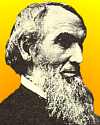
Died 9 Jan 1895 at age 82 (born 6 Mar 1812).
American watchmaker who was the first person to apply the interchangeable system to the manufacture of watches, and has been called the “father of the American watch factories.” He began work as a journeyman watchmaker in Boston in 1833. Having observed the precision manufacturing of firearms, around 1840 he invented the Dennison Standard Gauge, and then began to develop the "Interchangeable System" (the American System of Watch Manufacturing). In 1849, Dennison partnered with the clockmaker Edward Howard to manufacture interchangeable movement parts, from 1950, to enhance quality and lower the price of watches. He moved to pursue business in Switzerland in 1865 after the American Civil War.«
American watchmaker who was the first person to apply the interchangeable system to the manufacture of watches, and has been called the “father of the American watch factories.” He began work as a journeyman watchmaker in Boston in 1833. Having observed the precision manufacturing of firearms, around 1840 he invented the Dennison Standard Gauge, and then began to develop the "Interchangeable System" (the American System of Watch Manufacturing). In 1849, Dennison partnered with the clockmaker Edward Howard to manufacture interchangeable movement parts, from 1950, to enhance quality and lower the price of watches. He moved to pursue business in Switzerland in 1865 after the American Civil War.«
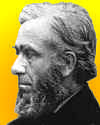
Died 9 Jan 1880 at age 68 (born 14 Sep 1811). quotes
English physician who followed his father and five of his brothers into the medical profession. He earned his M.D. degree at the University of Edinburgh (1838). From 1841, he practiced in Bristol. At a time before Pasteur's knowledge of microorganisms, Budd recognized that the contagious disease was related to unidentified poisons that multiplied in the intestines and were passed in excretions. In On Malignant Cholera (1849), he warned that disease was transmitted when excretions contaminated drinking water. He was inspired by the similar work of John Snow in London. With a regimen to protect Bristol's water supply from such contamination, in 1866, Budd was able to curb the epidemic spread of cholera. He studied other communicable diseases, including diptheria, scarlet fever, rinderpest and TB.« more
English physician who followed his father and five of his brothers into the medical profession. He earned his M.D. degree at the University of Edinburgh (1838). From 1841, he practiced in Bristol. At a time before Pasteur's knowledge of microorganisms, Budd recognized that the contagious disease was related to unidentified poisons that multiplied in the intestines and were passed in excretions. In On Malignant Cholera (1849), he warned that disease was transmitted when excretions contaminated drinking water. He was inspired by the similar work of John Snow in London. With a regimen to protect Bristol's water supply from such contamination, in 1866, Budd was able to curb the epidemic spread of cholera. He studied other communicable diseases, including diptheria, scarlet fever, rinderpest and TB.« more
William Budd: Bristol's Most Famous Physician, by M.S. Dunhill. - book suggestion.
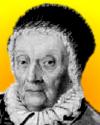
Died 9 Jan 1848 at age 97 (born 16 Mar 1750). quotes
German-born British astronomer, sister of Sir William Herschel, who assisted in his astronomical researches making calculations associated with his studies. In her own telescope observations, she found three nebulae (1783) and eight comets (1786-97). In 1787, King George III gave Caroline a salary of 50 pounds per year as assistant to William. She published the Index to Flamsteed's Observations of the Fixed Stars and a list of his mistakes in 1797. At the age of 10 she had been struck with typhus, which subsequently stunted her growth. She never grew taller than 4' 3" and remained frail throughout her life.
German-born British astronomer, sister of Sir William Herschel, who assisted in his astronomical researches making calculations associated with his studies. In her own telescope observations, she found three nebulae (1783) and eight comets (1786-97). In 1787, King George III gave Caroline a salary of 50 pounds per year as assistant to William. She published the Index to Flamsteed's Observations of the Fixed Stars and a list of his mistakes in 1797. At the age of 10 she had been struck with typhus, which subsequently stunted her growth. She never grew taller than 4' 3" and remained frail throughout her life.
Searching the Stars: The Story of Caroline Herschel, by Marilyn B. Ogilvie. - book suggestion.
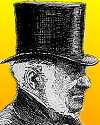
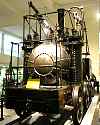
English coal-mine official and inventor who was probably the first to build a commercially useful steam locomotive dependent on friction between wheels and rails (as prevails in modern times) as opposed to using a geared track. He tested this method by experimenting with a test carriage loaded with weights and moved by men turning handles. Once satisfied that a friction-driven design was feasible, he began building and improving a satisfactory locomotive. He patented this design on 13 Mar 1813. The same year, his locomotive, Puffing Billy, began to pull coal trucks on a five mile line from a mine at Wylam, Northumberland, to dockside on the River Tyne. It was the first locomotive to haul 50-ton coal wagons. The track was damaged by the locomotive's weight so it was soon rebuilt on eight wheels but later reverted to four, perhaps after stronger cast-iron edge rails were laid in about 1828. Puffing Billy was retired 6 Jun 1862. It is now preserved at the Science Museum, London.Image right: Puffing Billy
Died 9 Jan 1833 at age 80 (born 18 Sep 1752). quotes
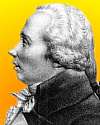
French mathematician who contributed to number theory, celestial mechanics and elliptic functions. In 1794, he was put in charge of the French government's department that was standardizing French weights and measures. In 1813, he took over as head of the Bureau des Longitudes upon the death of Lagrange, its former chief. It was in a paper on celestial mechanics concerning the motion of planets (1784) that he first introduced the Legendre Polynomials. His provided outstanding work on elliptic functions (1786), and his classic treatise on the theory of numbers (1798) and also worked on the method of least squares.«[DSB gives date of death 9 Jan 1833. EB gives 10 Jan 1833.]
French mathematician who contributed to number theory, celestial mechanics and elliptic functions. In 1794, he was put in charge of the French government's department that was standardizing French weights and measures. In 1813, he took over as head of the Bureau des Longitudes upon the death of Lagrange, its former chief. It was in a paper on celestial mechanics concerning the motion of planets (1784) that he first introduced the Legendre Polynomials. His provided outstanding work on elliptic functions (1786), and his classic treatise on the theory of numbers (1798) and also worked on the method of least squares.«[DSB gives date of death 9 Jan 1833. EB gives 10 Jan 1833.]
Died 9 Jan 1799 at age 80 (born 16 May 1718).
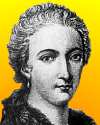
Italian mathematician and philosopher who was the first woman in the Western world considered to be a mathematician. In Propositiones Philosophicae (1738) she presented a series of essays on philosophy and natural science that she had defended in discourses with invited intellectuals who were invited her father's home. In 1748, her two volumes of Analytical Institutions, were acclaimed by the academic world as one of the first and complete publications that brought together the works of various mathematicians on finite and infinitesimal analysis. After the death of her father in 1752, Agnesi entirely devoted herself and spent her money to do charitable work. She died in total poverty in the poorhouse of which she had been the director.
Italian mathematician and philosopher who was the first woman in the Western world considered to be a mathematician. In Propositiones Philosophicae (1738) she presented a series of essays on philosophy and natural science that she had defended in discourses with invited intellectuals who were invited her father's home. In 1748, her two volumes of Analytical Institutions, were acclaimed by the academic world as one of the first and complete publications that brought together the works of various mathematicians on finite and infinitesimal analysis. After the death of her father in 1752, Agnesi entirely devoted herself and spent her money to do charitable work. She died in total poverty in the poorhouse of which she had been the director.
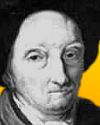
Died 9 Jan 1757 at age 99 (born 11 Feb 1657). quotes
Bernard le Bovier de Fontenelle was a French science writer whose Conversations on the Plurality of Worlds (1686), was one of the first works to present science for the lay reader. He popularized the astronomical theories of Descartes. Many of the characteristic ideas of the Enlightenment are found in embryonic form in his works. From 1697 he became permanent secretary to the Académie des Sciences. He held the office for 42 years, and in this official capacity, he wrote the Histoire du renouvellement del Académie des Sciences (Paris, 3 vols., 1708, 1717, 1722) containing extracts and analyses of the proceedings, written with great simplicity and delicacy. Fontenelle presented many obituary notices to the Académie, including those of Newton and Leibniz.
Bernard le Bovier de Fontenelle was a French science writer whose Conversations on the Plurality of Worlds (1686), was one of the first works to present science for the lay reader. He popularized the astronomical theories of Descartes. Many of the characteristic ideas of the Enlightenment are found in embryonic form in his works. From 1697 he became permanent secretary to the Académie des Sciences. He held the office for 42 years, and in this official capacity, he wrote the Histoire du renouvellement del Académie des Sciences (Paris, 3 vols., 1708, 1717, 1722) containing extracts and analyses of the proceedings, written with great simplicity and delicacy. Fontenelle presented many obituary notices to the Académie, including those of Newton and Leibniz.
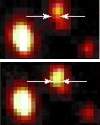
In 1998, two teams of international collaborations of scientists announced the discovery that galaxies are accelerating, flying apart at ever faster speeds, by observing distant, ancient exploding stars. This observation - named as Science magazine's “Breakthrough of the Year for 1998” - implies the existence of a mysterious, self-repelling property of space first proposed by Albert Einstein, which he called the cosmological constant. Researchers in England, France, Germany, and Sweden are among the members of the Supernova Cosmology Project based at Berkeley National Laboratory (headed by Saul Perlmutter) and the High-z Supernova Search Team based in Australia (led by Brian Schmidt).Image: Supernova 1998ba explosion images made 3 weeks apart
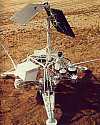
In 1968, the Surveyor 7 space probe made a soft landing on the moon, the fifth and final spacecraft of the Surveyor series to do so. It marked the end of the American series of unmanned explorations of the lunar surface, and was to be followed by the landing of an Apollo crew. Its mission including taking TV pictures after landing, determine relative chemical element abundance and manipulate the lunar material. It was the only Surveyor craft of the series to land in a lunar highland region. In addition to touchdown dynamics data, it obtained thermal and radar reflectivity data. The spacecraft was about 3-m tall. A solar cell array produced up to 85-watts of electrical power, stored in batteries and used for communications.«

UKPO
In 1901, the first application for a patent for Meccano was submitted, as "Improvements in toy or educational devices for children and young people. Known at first as "Mechanics Made Easy," this invention of Frank Hornby became a worldwide success. The British patent (No. 587) showed the familiar perforated strips, pulleys, axles, brackets and clips assembled as a model railway crane with tracks that had operating points. The patent was published on 30 Nov 1901.«
Frank Hornby: The boy who made $1,000,000 with a toy, by Maurice Philip Gould. - book suggestion.

In 1887, the casket holding James Lick’s remains was entombed in the foundation of the support pier of the Great Lick Telescope that he had funded before he died in 1876. The funeral party at the tribute included representatives from the Lick Trustees, California Academy of Sciences, the mayor of San Jose and the Board of Regents of the University of California. They travelled up the mountain to the observatory the previous afternoon, and while the casket lay in state in the rotunda of the observatory, they were shown Saturn and various stars through the 12-inch telescope in the smaller dome. While the observatory was being built, Lick had been interred in a pro tem cemetery vault in San Francisco.«
James Lick’s Monument: The Saga of Captain Richard Floyd and the Building of the Lick Observatory, by Helen Wright. - book suggestion.
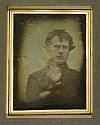
In 1839, the daguerreotype photo process was announced at the French Academy of Science. Previous photographic processes required hours of exposure, but the daguerrotype (named after its inventor Louis Daguerre) needed only a few seconds. The plate was prepared with a layer of photo-sensitive silver halide, was exposed, developed using mercury vapour, and fixed in a solution of sodium hyposulphite. The image remains delicate, and must be protected under glass against damage by touching. The daguerreotype was produced with a direct positive image, needing no intermediate negative, but thus could not yield multiple reproductions made possible by later photographic processes.«[Image: first daguerrotype portrait in the Library of Congress collection. It shows a self-portrait of Robert Cornelius (1809-1893).]
The Daguerreotype: Nineteenth-Century Technology and Modern Science, by Barger and White. - book suggestion.
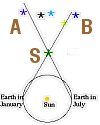
In 1839, the Scottish Astronomer Royal, Thomas Henderson, published the results of his measurement, the first made of a stellar parallax. He observed the star Alpha Centauri from the Cape of Good Hope, South America. (It is not visible from Britain.) His measurements were made in 1831-33. After that time, but before Henderson completed his calculations and published his results, both Friedrich Bessel and Friedrich Struve had been recognized as the first to make measurements of stellar parallax.«[Image: The effect of parallax for a nearby star S is to observe it apparently in line with star A when viewed from Earth in July, but apparently in line with star B in January. (The diagram is not drawn to scale.)]
Parallax: The Race to Measure the Cosmos, by Alan W. Hirshfeld. - book suggestion.
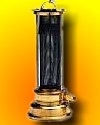
In 1816, Sir Humphry Davy's safety lamp was first used in a coal mine. Deadly explosions had been a continual hazard caused by the flammable gas, methane, leaking out of the coal seams ignited by the flame of a miner's lamp. There had been previous attempts by others to make a safety lantern. Davy applied a scientific approach to determine the suitable fineness of wire gauze placed around the flame which would avoid ignition of flammable gas outside. He determined that the holes in the gauze should be less than 1/22 inch in diameter, and that the wire itself should be between 1/40 to 1/60 inch thick. Since the flame changed colour in the presence of methane, it also served as a warning to the miner to take protective action.«[Image: Davy safety lamp, circa 1816.]
Humphry Davy: Life Beyond the Lamp, by Raymond Lamont-Brown. - book suggestion.
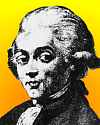
In 1793, Jean Pierre Blanchard made the first successful balloon flight in the United States. Blanchard's balloon, filled with hydrogen, took off from Philadelphia, PA, soared to 5,800 feet and eventually wound up some 15 miles away, in Woodbury, New Jersey. His only passenger was a small, black dog. President George Washington was in Philadelphia for the event, along with Thomas Jefferson, Henry Clay, Paul Revere, John Adams and other dignitaries. Blanchard had pioneered in various experiments to control his flights with sails and rudders.
First Air Voyage in America, by Jean-Pierre Blanchard. - book suggestion.
In 1643, Giovanni Riccioli first reported the phenomenon known as the Ashen Light of Venus. It is said to be a faint luminescence on the night side of the planet, similar in appearance to “earthshine” on the Moon, although not so bright. Ashen Light has been most often sighted when Venus was in the evening sky, when the evening terminator of the planet is toward the Earth. Studies have been attempted by several space missions, including Pioneer and the Russian Venera 11 and 12 landers. Still, the phenomenon remains sporadic and the explanation elusive.





