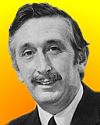
Born 28 Aug 1919; died 12 Aug 2004 at age 84.
English electrical engineer who shared the 1979 Nobel Prize for Physiology or Medicine (with Allan Cormack) for creation of computerised axial tomography (CAT) scanners. He originated the idea during a country walk in 1967 when he realized that the contents of a box could be reconstructed by taking readings at all angles through it. He applied the concept for scanning the brain using hundreds of X-ray beams imaging cross-sections that were reconstructed as high-resolution graphics by a computer program handling complex algebraic calculations. By 1973 his CAT scanner could produce cross-section images of a brain in 4-1/2-min, invaluable for the diagnosis of brain diseases. He later built larger machines able to make a full body scan.«
English electrical engineer who shared the 1979 Nobel Prize for Physiology or Medicine (with Allan Cormack) for creation of computerised axial tomography (CAT) scanners. He originated the idea during a country walk in 1967 when he realized that the contents of a box could be reconstructed by taking readings at all angles through it. He applied the concept for scanning the brain using hundreds of X-ray beams imaging cross-sections that were reconstructed as high-resolution graphics by a computer program handling complex algebraic calculations. By 1973 his CAT scanner could produce cross-section images of a brain in 4-1/2-min, invaluable for the diagnosis of brain diseases. He later built larger machines able to make a full body scan.«
Godfrey Hounsfield and the Invention of Cat Scans, by Susan Zannos. - book suggestion.
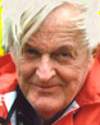
Born 28 Aug 1908; died 28 Jul 1996 at age 87. quotes
American ornithologist, author and conservationist who wrote wildlife field books on birds, which as a artist, he illustrated with great skill. His first book, A Field Guide to the Birds, (1934; 4th edition 1980), increased public interest in the study of birds across the American and European continents. His own fascination began at age 11, when he joined a Junior Audubon Club. Shortly, he began field studies with the customary equipment: binoculars, camera and a reference book. He had developed a talent as an artist, which he applied to illustration birds to indicate their distinctive characteristics for identification. His first book, A Field Guide to Birds was published in 1934, and 46 years later, it had updated to its 4th edition. He was a committed environmentalist, including advocating the banning DDT, which harmed and thinned birds' egg shells.«
American ornithologist, author and conservationist who wrote wildlife field books on birds, which as a artist, he illustrated with great skill. His first book, A Field Guide to the Birds, (1934; 4th edition 1980), increased public interest in the study of birds across the American and European continents. His own fascination began at age 11, when he joined a Junior Audubon Club. Shortly, he began field studies with the customary equipment: binoculars, camera and a reference book. He had developed a talent as an artist, which he applied to illustration birds to indicate their distinctive characteristics for identification. His first book, A Field Guide to Birds was published in 1934, and 46 years later, it had updated to its 4th edition. He was a committed environmentalist, including advocating the banning DDT, which harmed and thinned birds' egg shells.«
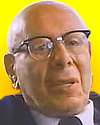
Born 28 Aug 1903; died 13 Mar 1990 at age 86. quotes
Austrian-American psychologist known for his work in treating and educating emotionally disturbed children. Bettelheim was a revered author of influential clinical studies on the lives of autistic children as well as popular Freudian interpretations of myth and fairy tale; and founder of the Orthogenic School of psychoanalysis in Chicago. After his suicide, at the age of 86, a scandal followed when his reputation as a benevolent sage was besmirched by former patients who claimed that he had sadistically beaten them.
Austrian-American psychologist known for his work in treating and educating emotionally disturbed children. Bettelheim was a revered author of influential clinical studies on the lives of autistic children as well as popular Freudian interpretations of myth and fairy tale; and founder of the Orthogenic School of psychoanalysis in Chicago. After his suicide, at the age of 86, a scandal followed when his reputation as a benevolent sage was besmirched by former patients who claimed that he had sadistically beaten them.
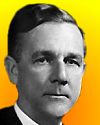
Born 28 Aug 1878; died 1 Feb 1976 at age 97.
George Hoyt Whipple was an American physician and pathologist who shared the 1934 Nobel Prize for Physiology or Medicine with George R. Minot and William P. Murphy for “their discoveries of a treatment of pernicious anemia with a special diet of liver.” Whipple began a study in 1920 of the influence of food on blood regeneration. From experiments on dogs bled to reduce blood volume, he found the best food to stimulate the bone marrow for the production of the new red blood corpuscles was raw liver. Other foods, including kidney and apricots were also found helpful. Minot and Murphy applied Whipple's discovery of the value of liver. They designed a special diet for humans with a particular noninfectious disease - pernicious anemia. The three researchers made a major advance with a non-drug treatment of this condition.«
George Hoyt Whipple was an American physician and pathologist who shared the 1934 Nobel Prize for Physiology or Medicine with George R. Minot and William P. Murphy for “their discoveries of a treatment of pernicious anemia with a special diet of liver.” Whipple began a study in 1920 of the influence of food on blood regeneration. From experiments on dogs bled to reduce blood volume, he found the best food to stimulate the bone marrow for the production of the new red blood corpuscles was raw liver. Other foods, including kidney and apricots were also found helpful. Minot and Murphy applied Whipple's discovery of the value of liver. They designed a special diet for humans with a particular noninfectious disease - pernicious anemia. The three researchers made a major advance with a non-drug treatment of this condition.«
George Hoyt Whipple and his friends: The life-story of a Nobel prize pathologist, by George Washington Corner. - book suggestion.
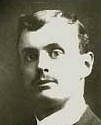
Born 28 Aug 1877; died 12 Jul 1910 at age 32.
British motorist, aviator, and automobile manufacturer who was one of the founders of the Rolls-Royce Ltd. automobile company. He was the first aviator to fly across the English Channel and back nonstop (June 1910). Rolls drove a 12-hp Panhard car in the Thousand Miles Trial of 1900 and took part in many of the early long-distance European classic races. In 1902 he became a motor dealer and in 1906 merged his firm with that of Sir Henry Royce to form Rolls-Royce Ltd. Rolls died in a flying accident, the first British pilot to do so.[EB gives date born 28 Aug 1877. Almanac of Famous People gives 27 Aug 1877.]
British motorist, aviator, and automobile manufacturer who was one of the founders of the Rolls-Royce Ltd. automobile company. He was the first aviator to fly across the English Channel and back nonstop (June 1910). Rolls drove a 12-hp Panhard car in the Thousand Miles Trial of 1900 and took part in many of the early long-distance European classic races. In 1902 he became a motor dealer and in 1906 merged his firm with that of Sir Henry Royce to form Rolls-Royce Ltd. Rolls died in a flying accident, the first British pilot to do so.[EB gives date born 28 Aug 1877. Almanac of Famous People gives 27 Aug 1877.]
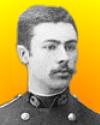
Born 28 Aug 1863; died 15 Nov 1938 at age 75.
André-Eugène Blondel was a French physicist who invented (1893) the electromagnetic oscillograph, a device that allowed electrical researchers to observe the intensity of alternating currents. In 1894, he proposed the lumen and other new photometric units for use in photometry, based on the metre and the Violle candle. Endorsed in 1896 by the International Electrical Congress, his system is still in use with only minor modifications. Blondel was a pioneer in the high voltage long distance transport of electric power, and also contributed to developments in wireless telegraphy, acoustics, and mechanics. He proposed theories for induction motors and coupling of a.c. generators.«
André-Eugène Blondel was a French physicist who invented (1893) the electromagnetic oscillograph, a device that allowed electrical researchers to observe the intensity of alternating currents. In 1894, he proposed the lumen and other new photometric units for use in photometry, based on the metre and the Violle candle. Endorsed in 1896 by the International Electrical Congress, his system is still in use with only minor modifications. Blondel was a pioneer in the high voltage long distance transport of electric power, and also contributed to developments in wireless telegraphy, acoustics, and mechanics. He proposed theories for induction motors and coupling of a.c. generators.«
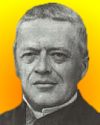
Born 28 Aug 1801; died 31 Mar 1877 at age 75. quotes
French economist and mathematician, who was the first economist who applied mathematics to the treatment of economic questions. In 1838, he published Recherches sur les principes mathématiques de la théorie des richesses (Researches into the Mathematical Principles of the Theory of Wealth) which was a treatment of mathematical economics. In particular, he considered the supply-and-demand functions. Further, he studied the conditions for equilibrium with monopoly, duopoly and perfect competition. He included the effect of taxes, treated as changes in production costs, and discussed problems of international trade. His definition of a market is still the basis for that presently used in economics. In other work, he applied probability to legal statistics.«
French economist and mathematician, who was the first economist who applied mathematics to the treatment of economic questions. In 1838, he published Recherches sur les principes mathématiques de la théorie des richesses (Researches into the Mathematical Principles of the Theory of Wealth) which was a treatment of mathematical economics. In particular, he considered the supply-and-demand functions. Further, he studied the conditions for equilibrium with monopoly, duopoly and perfect competition. He included the effect of taxes, treated as changes in production costs, and discussed problems of international trade. His definition of a market is still the basis for that presently used in economics. In other work, he applied probability to legal statistics.«
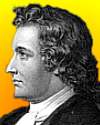
Born 28 Aug 1749; died 22 Mar 1832 at age 82. quotes
German poet, zoologist, botanist and geologist who was both famous in world literature and an intellectual with an interest in science. He coined the term morphology to describe the systematic study of the structure of living things. He wrote ably, though mostly wrongly, on matters of science. His Zur Farbenlehre (On the Theory of Colour, 1810), parted radically from Newton’s interpretation of white light as a mixture of colours. Goethe took the position of a neptunist in geology. In biology, he saw all plant structures as modifications of leaf forms. However, he agreed with evolution whereby he viewed the origin of plants and animals as having followed specialization and differentiation throughout time to their present forms.«
German poet, zoologist, botanist and geologist who was both famous in world literature and an intellectual with an interest in science. He coined the term morphology to describe the systematic study of the structure of living things. He wrote ably, though mostly wrongly, on matters of science. His Zur Farbenlehre (On the Theory of Colour, 1810), parted radically from Newton’s interpretation of white light as a mixture of colours. Goethe took the position of a neptunist in geology. In biology, he saw all plant structures as modifications of leaf forms. However, he agreed with evolution whereby he viewed the origin of plants and animals as having followed specialization and differentiation throughout time to their present forms.«
Goethe's Way of Science, by David Seamon. - book suggestion.

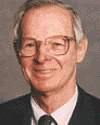
Died 28 Aug 2007 at age 81 (born 29 Sep 1925).
Paul Beattie MacCready was an American engineer and inventor who invented not only the first human-powered flying machines, but also the first solar-powered aircraft to make sustained flights. On 23 Aug 1977, the pedal-powered aircraft, the Gossamer Condor successfully flew a 1.15 mile figure-8 course to demonstrate sustained, maneuverable manpowered flight, for which he won the £50,000 ($95,000) Kremer Prize. MacCready designed the Condor with Dr. Peter Lissamen. Its frame was made of thin aluminum tubes, covered with mylar plastic supported with stainless steel wire. In 1979, the Gossamer Albatross won the second Kremer Prize for making a flight across the English Channel.«
Paul Beattie MacCready was an American engineer and inventor who invented not only the first human-powered flying machines, but also the first solar-powered aircraft to make sustained flights. On 23 Aug 1977, the pedal-powered aircraft, the Gossamer Condor successfully flew a 1.15 mile figure-8 course to demonstrate sustained, maneuverable manpowered flight, for which he won the £50,000 ($95,000) Kremer Prize. MacCready designed the Condor with Dr. Peter Lissamen. Its frame was made of thin aluminum tubes, covered with mylar plastic supported with stainless steel wire. In 1979, the Gossamer Albatross won the second Kremer Prize for making a flight across the English Channel.«
More With Less: Paul McReady and the Dream of Efficient Flight, by Paul Ciotti. - book suggestion.
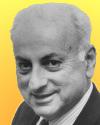
Died 28 Aug 2006 at age 73 (born 2 Nov 1932). quotes
American physicist and entrepreneur who shared (with Leon M. Lederman and Jack Steinberger) the Nobel Prize for Physics in 1988 for their research concerning neutrinos (subatomic particles that have no electric charge and virtually no mass). Using a beam of neutrinos, the team discovered a new kind of neutrino called a muon, and new information about the structure of particles called leptons. Neutrinos are produced when unstable atomic nuclei or subatomic particles disintegrate. Schwartz and his team wanted to study the “"weak” nuclear force that creates certain kinds of radioactivity. The team used a particle accelerator to create a high-intensity beam of neutrinos. They studied the reactions produced when this beam hit other matter.
American physicist and entrepreneur who shared (with Leon M. Lederman and Jack Steinberger) the Nobel Prize for Physics in 1988 for their research concerning neutrinos (subatomic particles that have no electric charge and virtually no mass). Using a beam of neutrinos, the team discovered a new kind of neutrino called a muon, and new information about the structure of particles called leptons. Neutrinos are produced when unstable atomic nuclei or subatomic particles disintegrate. Schwartz and his team wanted to study the “"weak” nuclear force that creates certain kinds of radioactivity. The team used a particle accelerator to create a high-intensity beam of neutrinos. They studied the reactions produced when this beam hit other matter.
Principles of Electrodynamics, by Melvin Schwartz. - book suggestion.
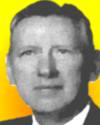
Died 28 Aug 1996 at age 89 (born 31 Mar 1907).
American microbiologist who researched arthropod-borne viral diseases such as rabies and encephalitis. While working for the Rockefeller foundation, Johnson isolated a strain of virus from the spinal cord of a 14-year-old girl that died from rabies, introduced the virus to the brain of young chicks, transferred from one chick to another 138 times. In 1945, he gave a sample of this Flury virus (named after the girl) to Dr Hilary Koprowski who spent another ten years developing from it a new vaccine eventually used for dogs in the 1960’s. In later work, Johnson took an ecological approach to understanding diseases transmitted by animals and travelled extensively to track down the natural foci of disease agents in wildlife.«
American microbiologist who researched arthropod-borne viral diseases such as rabies and encephalitis. While working for the Rockefeller foundation, Johnson isolated a strain of virus from the spinal cord of a 14-year-old girl that died from rabies, introduced the virus to the brain of young chicks, transferred from one chick to another 138 times. In 1945, he gave a sample of this Flury virus (named after the girl) to Dr Hilary Koprowski who spent another ten years developing from it a new vaccine eventually used for dogs in the 1960’s. In later work, Johnson took an ecological approach to understanding diseases transmitted by animals and travelled extensively to track down the natural foci of disease agents in wildlife.«
Rabies, by Harald Norlin Johnson. - book suggestion.
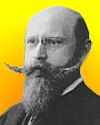
Died 28 Aug 1942 at age 80 (born 4 Feb 1862).
German physician and bacteriologist who discovered the tetanus bacterium in 1884. Though he was unable to obtain it as a pure culture, it was isolated within a few years by Shibasaburo Kitsato. He discovered it lived in soil, with which he innoculated mice. Because of its presence in earth, it is responsible for infection from dirty wounds, which was particularly significant in the cases of wounded soldiers during WW I. The toxin secreted by this bacterium, Clostridium tetani, causing fatal muscle spasms. It was later found to travel along nerves to the spinal chord, causing increasingly severe spasms of the head and neck and jaw, from which came the common name of lockjaw. Fortunately for the injured soldiers, every soldier received an anti-toxin, used from 1915. Nicolaier died, aged 80, in 1942, pending wartime internment as a Jew, likely by suicide.«
German physician and bacteriologist who discovered the tetanus bacterium in 1884. Though he was unable to obtain it as a pure culture, it was isolated within a few years by Shibasaburo Kitsato. He discovered it lived in soil, with which he innoculated mice. Because of its presence in earth, it is responsible for infection from dirty wounds, which was particularly significant in the cases of wounded soldiers during WW I. The toxin secreted by this bacterium, Clostridium tetani, causing fatal muscle spasms. It was later found to travel along nerves to the spinal chord, causing increasingly severe spasms of the head and neck and jaw, from which came the common name of lockjaw. Fortunately for the injured soldiers, every soldier received an anti-toxin, used from 1915. Nicolaier died, aged 80, in 1942, pending wartime internment as a Jew, likely by suicide.«
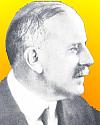
Died 28 Aug 1940 at age 68 (born 6 May 1872).
American geodesist who investigated isostasy (a principle that dense crustal rocks to tend cause topographic depressions and light crustal rocks cause topographic elevations). He made measured gravity anomalies on land and obtained gravity surveys in the oceans. These observations correlated the anomalies with topographic features and validated the geological concept of isostasy. With John F. Hayford, his predecessor at the Coast and Geodetic Survey, he computed tables of the depth of isostatic compensation (the surface above which the weight of the crust per unit area is equalized). Bowie felt that this zone would occur at a uniform depth as predicted by John Henry Pratt, rather than at the varying depth predicted by Sir George Airy. He wrote Isostasy (1927).
American geodesist who investigated isostasy (a principle that dense crustal rocks to tend cause topographic depressions and light crustal rocks cause topographic elevations). He made measured gravity anomalies on land and obtained gravity surveys in the oceans. These observations correlated the anomalies with topographic features and validated the geological concept of isostasy. With John F. Hayford, his predecessor at the Coast and Geodetic Survey, he computed tables of the depth of isostatic compensation (the surface above which the weight of the crust per unit area is equalized). Bowie felt that this zone would occur at a uniform depth as predicted by John Henry Pratt, rather than at the varying depth predicted by Sir George Airy. He wrote Isostasy (1927).
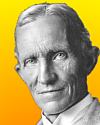
c. 1916
Died 28 Aug 1934 at age 76 (born 28 Jan 1858).
Tannatt William Edgeworth David was a Welsh-Australian geologist who produced an extensive study of the geology of Australia, including the first geological map of the Sydney-Newcastle Basin. He also researched the evidence of major glaciations in Australia of the Upper Paleozoic time (from 345- to 225- million years ago). In 1897, he drilled to a depth of 340-m at Funafuti Atoll in an effort to verify Darwin's theory of the formation of coral atolls. Whereas his results supported Darwin's ideas, they were short of absolute proof. He served as scientific officer of the Shackleton Antarctic Expedition from 1907-9, and led the party that first reached the southern magnetic pole on 16 Jan 1909, which was on land at that time.«
Tannatt William Edgeworth David was a Welsh-Australian geologist who produced an extensive study of the geology of Australia, including the first geological map of the Sydney-Newcastle Basin. He also researched the evidence of major glaciations in Australia of the Upper Paleozoic time (from 345- to 225- million years ago). In 1897, he drilled to a depth of 340-m at Funafuti Atoll in an effort to verify Darwin's theory of the formation of coral atolls. Whereas his results supported Darwin's ideas, they were short of absolute proof. He served as scientific officer of the Shackleton Antarctic Expedition from 1907-9, and led the party that first reached the southern magnetic pole on 16 Jan 1909, which was on land at that time.«
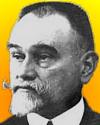
1913
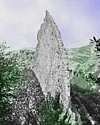
Gustave-Émile Haug was a French geologist and paleontologist known for his contributions to the theory of geosynclines (trenches that accumulate thousands of metres of sediment and later become crumpled and uplifted into mountain chains). From the position of the Alp he theorized that geosynclines form between stable continental platforms. He showed that geosynclinal subsidence accompanies marine regressions on the continental platform and that geosynclinal uplift accompanies marine transgressions on the continental platform. His Traité de géologie (1907-11), rapidly became an indispensible reference work. He also produced important works on the fundamentals of paleotology, stratigraphy and tectonics.[Image right: from Traité de géologie shows a vertical sandstone blade, about 50m high, called The Man of Tanaron.]
Died 28 Aug 1893 at age 69 (born 17 Jan 1824).
Hayward Augustus Harvey was an American inventor who discovered the modern method of strengthening armour plating.
Hayward Augustus Harvey was an American inventor who discovered the modern method of strengthening armour plating.
Died 28 Aug 1880 at age 75 (born 21 Jun 1805). quotes
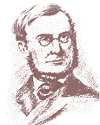
American physician, chemist, and pioneer geologist and mineralogist. Jackson's professional career consisted of a series of spectacular claims to the work of others which continued until he finally became insane in 1873. In 1832, during a voyage, he discussed with the portrait painter Samuel Morse the possibilities of electric telegraphy. Morse exhibited his telegraph to Congress in 1837 but had to spend seven years to establish a right to his own invention against Jackson's claim that Morse had stolen it from him. Jackson similarly claimed priority in the idea of use of ether as an anaesthetic, which he had suggested to a dentist, William Morton. Though the effects of ether were somewhat known at the time, it was Morton who made the idea practical.
American physician, chemist, and pioneer geologist and mineralogist. Jackson's professional career consisted of a series of spectacular claims to the work of others which continued until he finally became insane in 1873. In 1832, during a voyage, he discussed with the portrait painter Samuel Morse the possibilities of electric telegraphy. Morse exhibited his telegraph to Congress in 1837 but had to spend seven years to establish a right to his own invention against Jackson's claim that Morse had stolen it from him. Jackson similarly claimed priority in the idea of use of ether as an anaesthetic, which he had suggested to a dentist, William Morton. Though the effects of ether were somewhat known at the time, it was Morton who made the idea practical.
Died 28 Aug 1875 at age 91 (born 26 Aug 1784).
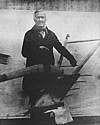
American inventor and manufacturer of a practical cast iron plow with detachable components. His early achievement, while a youth, was to increase the productivity of a water-powered grist-mill by improving the shape of its nether millstone (the lower of the two millstones) used to grind flour. Though his father desired that he should make law his profession, he flatly refused. He was more interested by invention. By 1816, he had invented a cast-iron plough superior to Charles Newbold's earlier design. McCormick's first of several patents was issued on on 3 Feb 1819. His cast-iron mould board had an adjustable wrought-iron point mounted beneath, able to decrease the draft, while deepening the furrow, and breaking up the soil more effectively. Standardization of the replaceable parts led to the development of improved manufacturing processes.« more
American inventor and manufacturer of a practical cast iron plow with detachable components. His early achievement, while a youth, was to increase the productivity of a water-powered grist-mill by improving the shape of its nether millstone (the lower of the two millstones) used to grind flour. Though his father desired that he should make law his profession, he flatly refused. He was more interested by invention. By 1816, he had invented a cast-iron plough superior to Charles Newbold's earlier design. McCormick's first of several patents was issued on on 3 Feb 1819. His cast-iron mould board had an adjustable wrought-iron point mounted beneath, able to decrease the draft, while deepening the furrow, and breaking up the soil more effectively. Standardization of the replaceable parts led to the development of improved manufacturing processes.« more
Died 28 Aug 1839 at age 70 (born 23 Mar 1769). quotes
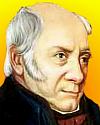
English geologist and engineer who extended the science of stratigraphy. His early work was as a miner and an engineer, for a canal-digging company. From this experience he observed the difference in rock layers. He also recognized that the same succession of fossil groups from older to younger rocks could be found in many parts of England, which he called the principle of faunal succession. He travelled the entire country to verify that relationships between the strata and their characteristics were consistent everywhere. Thus Smith created a profile of the entire country of England. His great geologic map of England and Wales (1815) set the standard for modern geologic maps. Many of the colourful names he gave to the strata are still in use today.«[Image: portrait of William Smith by Abner Lowe in the 1920s]
English geologist and engineer who extended the science of stratigraphy. His early work was as a miner and an engineer, for a canal-digging company. From this experience he observed the difference in rock layers. He also recognized that the same succession of fossil groups from older to younger rocks could be found in many parts of England, which he called the principle of faunal succession. He travelled the entire country to verify that relationships between the strata and their characteristics were consistent everywhere. Thus Smith created a profile of the entire country of England. His great geologic map of England and Wales (1815) set the standard for modern geologic maps. Many of the colourful names he gave to the strata are still in use today.«[Image: portrait of William Smith by Abner Lowe in the 1920s]
The Map That Changed the World: The Tale of William Smith..., by Simon Winchester. - book suggestion.
(EB)
Died 28 Aug 1757 at age 52 (born 8 Aug 1705). quotes
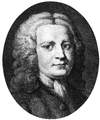
English physician and philosopher credited with the first formulation of the psychological system known as associationism. Attempting to explain how thought processes occur, Hartley's associationism, with later modifications, has endured as an integral part of modern psychological theory.Image: Detail of an engraving. eb
English physician and philosopher credited with the first formulation of the psychological system known as associationism. Attempting to explain how thought processes occur, Hartley's associationism, with later modifications, has endured as an integral part of modern psychological theory.Image: Detail of an engraving. eb
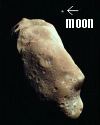
In 1993, a picture was taken showing the first moon of an asteroid. The asteroid 243 Ida and its newly-discovered moon, Dactyl was imaged by NASA's Galileo spacecraft, about 14 minutes before its closest approach (within 2,400-km or 1,500 miles) to the asteroid. Ida is about 52 km (32 mi) in length and is irregularly shaped. It shows numerous craters, including many degraded craters, indicating Ida's surface is older than previously thought. Dactyl is only about 1.4-km in diameter, and it is spectrally different from Ida data. The picture was released on 26 Mar 1994. Galileo had encountered the first asteroid - 951 Gaspra - on 29 Oct 1991. Galileo continued on its mission to study Jupiter, beginning its orbit of the planet on 7 Dec 1995.

In 1963, the longest floating pontoon bridge in the world opened. The Evergreen Point Floating Bridge, connecting Seattle and Bellevue carries state road 520 with a floating length of 7,578 ft - almost 1000-ft more than the second-longest bridge (Lacey V. Murrow Bridge). Like the Hood Canal Bridge, the 520 bridge has a retractable drawspan in the middle, which is opened to protect the bridge when the windspeed reaches 40mph. Experts believe the bridge will reach the end of its useful life by 2025, by which time at least the pontoons will have to be replaced. However, it already has been plagued by crippling mechanical problems over the past ten years. On 3 Mar 1999, it was stuck open when one of the drawspan rollers broke.«
In 1883, the first controlled flight in a glider was made by John J. Montgomery at Wheeler Hill, California. He sailed a distance of 603 feet at a height of about 15 feet.
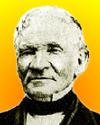
Rufus Porter

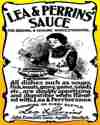
In 1837, pharmacists John Lea and William Perrins of Worcester, England began the manufacture of Worcester Sauce. Its origin was accidental. The two Worcestershire chemists (pharmacists) who's names are on the bottle were asked to make a sauce using a recipe Lord Marcus Sandys, governor of Bengal, had brought from India. The result had a harsh, unpalatable taste. The batch was stored in their cellar, forgotten for a year. At that time, after an aging process, a chance tasting for the sauce was now tasty. Upon selling the new savory sauce,they found a sustained demand, and by 1843 they sold 14,500 per year. The exact ingredients remain a trade secret, but are known to include molasses, tamarins, onions, cloves, chillies and shallots from various countries around the world.«
In 1830, “Tom Thumb,” the first locomotive built in America, ran from Baltimore to Ellicotts Mill.
In 1789, Sir William Herschel discovered Saturn's moon Enceladus.




