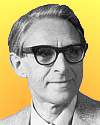
Born 29 Oct 1925.
German-born British mathematician who was awarded the Fields Medal in 1958. His major work has been in number theory, particularly the analytic theory of numbers. He solved in the famous Thue-Siegel problem (1955) concerning the approximation to algebraic numbers by rational numbers (for which he won the medal). Roth also proved in 1952 that a sequence with no three numbers in arithmetic progression has zero density (a conjecture of Erdös and Turán of 1935).
German-born British mathematician who was awarded the Fields Medal in 1958. His major work has been in number theory, particularly the analytic theory of numbers. He solved in the famous Thue-Siegel problem (1955) concerning the approximation to algebraic numbers by rational numbers (for which he won the medal). Roth also proved in 1952 that a sequence with no three numbers in arithmetic progression has zero density (a conjecture of Erdös and Turán of 1935).
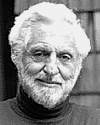
Born 29 Oct 1923. quotes
Austrian-American chemist and inventor who invented the first oral contraceptive, and is noted for establishing physical methods for determining organic molecular structure and his contributions to synthetic organic chemistry, his effectiveness in translating scientific knowledge into technological practice, and his efforts to promote international scientific cooperation. His research is in such diverse fields as chemistry of steroids; structure of alkaloids, antibiotics and terpenoids; synthesis of drugs, particularly antihistamines, oral contraceptives, and anti-inflammatory agents; optical rotatory dispersion studies, organic mass spectrometry, and magnetic circular diehroism of organic compounds. He has lectured extensively on birth control issues, and holds U.S. patent No. 2,744,122 for an oral contraceptive—the birth control pill.
Austrian-American chemist and inventor who invented the first oral contraceptive, and is noted for establishing physical methods for determining organic molecular structure and his contributions to synthetic organic chemistry, his effectiveness in translating scientific knowledge into technological practice, and his efforts to promote international scientific cooperation. His research is in such diverse fields as chemistry of steroids; structure of alkaloids, antibiotics and terpenoids; synthesis of drugs, particularly antihistamines, oral contraceptives, and anti-inflammatory agents; optical rotatory dispersion studies, organic mass spectrometry, and magnetic circular diehroism of organic compounds. He has lectured extensively on birth control issues, and holds U.S. patent No. 2,744,122 for an oral contraceptive—the birth control pill.
Steroids Made It Possible (autobiography), by Carl Djerassi. - book suggestion.
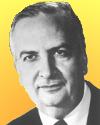
Born 29 Oct 1920.
Venezuelan-American geneticist and immunologist who studied the mechanisms and genetic basis of the immunologic response and especially of its role in certain diseases known as the autoimmune diseases. He received a share (with George Snell and Jean Dausset) of the 1980 Nobel Prize for Physiology or Medicine. Benacerraf showed that genetic factors intimately related to the genes that determine an individual's unique constitution of H antigens actually regulate the interaction among the various cells belonging to the immunological system and are thereby important to the strength of an immunological reaction. He studied the guinea pig's ability to mobilize an immune response against a certain antigen as determined by genetic factors (Ir or immune response) genes.
Venezuelan-American geneticist and immunologist who studied the mechanisms and genetic basis of the immunologic response and especially of its role in certain diseases known as the autoimmune diseases. He received a share (with George Snell and Jean Dausset) of the 1980 Nobel Prize for Physiology or Medicine. Benacerraf showed that genetic factors intimately related to the genes that determine an individual's unique constitution of H antigens actually regulate the interaction among the various cells belonging to the immunological system and are thereby important to the strength of an immunological reaction. He studied the guinea pig's ability to mobilize an immune response against a certain antigen as determined by genetic factors (Ir or immune response) genes.
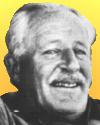
Born 29 Oct 1885; died 11 Jun 1963 at age 77.
Alfred Vincent Kidder was an American archaeologist who was the foremost American archaeologist of the southwestern U.S. and Middle America of his day and the force behind the first comprehensive, systematic approach to North American archaeology. His excavations included Pecos in New Mexico and the Maya in Guatemala. In spite of his great efforts and diligence he was criticized for his lack of integrated conclusions drawn from his numerous reports from the field without any synthesis and interpretation of that data. In his time, archeology was still considered as “gentlemanly adventure” with the goal of adding “artifacts”to museums. Kidder emphasized archeology's need for the scientific “eye” was the development of fact collecting techniques and clear definitions.
Alfred Vincent Kidder was an American archaeologist who was the foremost American archaeologist of the southwestern U.S. and Middle America of his day and the force behind the first comprehensive, systematic approach to North American archaeology. His excavations included Pecos in New Mexico and the Maya in Guatemala. In spite of his great efforts and diligence he was criticized for his lack of integrated conclusions drawn from his numerous reports from the field without any synthesis and interpretation of that data. In his time, archeology was still considered as “gentlemanly adventure” with the goal of adding “artifacts”to museums. Kidder emphasized archeology's need for the scientific “eye” was the development of fact collecting techniques and clear definitions.
Born 29 Oct 1885; died 2 Jan 1948 at age 62.
Rear Admiral Sidney Rupert Dight was an English navy officer and engineer who originated the petroleum smoke screens used to confuse the pilots of German bombers. They were rapidly developed and used for protection of industrial targets from aerial bombardment during WW II. During the war, the majority of high-output boilers designed by the Admiralty were equipped with the circulation augmentor he invented. His navy career began as an Engineer Sub. Lieutenant on 4 Jul 1905, and he served a few years at sea, some in WW I. During the war, he was appointed, though briefly, as Assistant Secretary of the Board of Invention and Research. By the 1930s he was the Commanding Officer of the Admiralty’s Fuel Experimental Station. During WW II, in early 1940, he was appointed Director of Development in the Petroleum Warfare Department (Local Defence Division).«
Rear Admiral Sidney Rupert Dight was an English navy officer and engineer who originated the petroleum smoke screens used to confuse the pilots of German bombers. They were rapidly developed and used for protection of industrial targets from aerial bombardment during WW II. During the war, the majority of high-output boilers designed by the Admiralty were equipped with the circulation augmentor he invented. His navy career began as an Engineer Sub. Lieutenant on 4 Jul 1905, and he served a few years at sea, some in WW I. During the war, he was appointed, though briefly, as Assistant Secretary of the Board of Invention and Research. By the 1930s he was the Commanding Officer of the Admiralty’s Fuel Experimental Station. During WW II, in early 1940, he was appointed Director of Development in the Petroleum Warfare Department (Local Defence Division).«
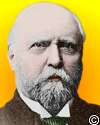
Born 29 Oct 1831; died 18 Mar 1899 at age 67. quotes
Othniel Charles Marsh was an American paleontologist who discovered over 1000 fossils. He made extensive scientific explorations of the western U.S. and contributed greatly to knowledge of extinct North American vertebrates. Marsh spent only four seasons in the field, between 1870 and 1873. “The Great Bone Wars,” were the result of rivalry with Edward Drinker Cope, America's other great vertebrate paleontologist of the period. Each scientist hired field crews to unearth and ship back fossils as fast as possible. The rival crews were known to spy on each other, dynamite their own and each other's secret localities (to keep their opponents from digging there), and occasionally steal each other's fossils. more
Othniel Charles Marsh was an American paleontologist who discovered over 1000 fossils. He made extensive scientific explorations of the western U.S. and contributed greatly to knowledge of extinct North American vertebrates. Marsh spent only four seasons in the field, between 1870 and 1873. “The Great Bone Wars,” were the result of rivalry with Edward Drinker Cope, America's other great vertebrate paleontologist of the period. Each scientist hired field crews to unearth and ship back fossils as fast as possible. The rival crews were known to spy on each other, dynamite their own and each other's secret localities (to keep their opponents from digging there), and occasionally steal each other's fossils. more
O.C. Marsh: Pioneer in Paleontology, by Charles Schuchert and Clara M. Levene. - book suggestion.
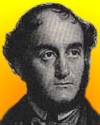
Born 29 Oct 1791; died 29 Jul 1868 at age 76.
English physician who advocated the use of hypnosis in therapy and who in 1849 founded a mesmeric hospital. He was one of the first teachers in London to emphasize clinical lecturing and was one of the earliest of British physicians to urge use of the stethoscope, together with the methods of examining the heart and lungs which are used to this day. In 1823 acupuncture was mentioned in the first edition of the Lancet and in 1824 Dr. Elliotson began to use this method of treatment. In 1827 he published a series of results on the treatment of forty-two cases of rheumatism by acupuncture. In 1834 he became physician to the University College Hospital, where his interest in hypnosis led to conflicts with the hospital's medical committee and his resignation in 1838.
English physician who advocated the use of hypnosis in therapy and who in 1849 founded a mesmeric hospital. He was one of the first teachers in London to emphasize clinical lecturing and was one of the earliest of British physicians to urge use of the stethoscope, together with the methods of examining the heart and lungs which are used to this day. In 1823 acupuncture was mentioned in the first edition of the Lancet and in 1824 Dr. Elliotson began to use this method of treatment. In 1827 he published a series of results on the treatment of forty-two cases of rheumatism by acupuncture. In 1834 he became physician to the University College Hospital, where his interest in hypnosis led to conflicts with the hospital's medical committee and his resignation in 1838.
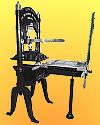
Born 29 Oct 1784; died 4 Jan 1833 at age 48.
English-American printing-press manufacturer. The Smith brothers established a carpenter shop in New York City with Hoe's assistance under the firm name of Smith, Hoe & Company, specializing in wooden hand presses. Later, they made cast-iron frame presses with the toggle-joint principle instead of the screw for pressure. After the Smiths died, Hoe continued the business under the name of R. Hoe & Company (1823-33). He purchased (1827) Samuel Rust's patent for a wrought-iron framed printing press, made improvements and successfully manufactured it as the "Washington" press. His son Richard continued the business after his death and developed the rotary press which increased newspaper production.
English-American printing-press manufacturer. The Smith brothers established a carpenter shop in New York City with Hoe's assistance under the firm name of Smith, Hoe & Company, specializing in wooden hand presses. Later, they made cast-iron frame presses with the toggle-joint principle instead of the screw for pressure. After the Smiths died, Hoe continued the business under the name of R. Hoe & Company (1823-33). He purchased (1827) Samuel Rust's patent for a wrought-iron framed printing press, made improvements and successfully manufactured it as the "Washington" press. His son Richard continued the business after his death and developed the rotary press which increased newspaper production.

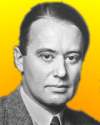
Died 29 Oct 1971 at age 69 (born 10 Aug 1902). quotes
Arne Wilhelm Kaurin Tiselius was a Swedish biochemist, awarded the 1948 Nobel Prize in Chemistry for pioneering methods in the separation and analysis of biological substances. Of special note, he refined the use of electrophoresis. In this technique, charged particles migrate through a solution under an electric field. Differences in movement rates allow precise identification of colloids and proteins. Applying this to blood serum, he separated four main protein groups—albumins and the alpha, beta, and gamma globulins—yielding important insight into immune function and disease. From 1940, he advanced chromatography for separating molecular mixtures. From the late 1950s, he explored partition and gel filtration techniques as tools for modern biochemistry and molecular biology.«
Arne Wilhelm Kaurin Tiselius was a Swedish biochemist, awarded the 1948 Nobel Prize in Chemistry for pioneering methods in the separation and analysis of biological substances. Of special note, he refined the use of electrophoresis. In this technique, charged particles migrate through a solution under an electric field. Differences in movement rates allow precise identification of colloids and proteins. Applying this to blood serum, he separated four main protein groups—albumins and the alpha, beta, and gamma globulins—yielding important insight into immune function and disease. From 1940, he advanced chromatography for separating molecular mixtures. From the late 1950s, he explored partition and gel filtration techniques as tools for modern biochemistry and molecular biology.«
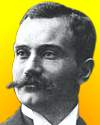
Died 29 Oct 1960 at age 86 (born 3 Jul 1874). quotes
Swedish geologist and archaeologist whose work laid the foundation for the study of prehistoric China. In 1914, he accepted the offer to become a consultant to the Geological Survey of China, where he stayed until 1924 and became deeply involved in the excavations at Chou-k'ou-tien outside Peking. In 1921, at a cave near there, on the basis of bits of quartz that he found in a limestone region, he predicted that a fossil man would be discovered. Six years later, the first evidence of the fossil hominid Sinanthropu (Peking man) was found there. In 1923-24, he organized an expedition to Gansu province in Western china where he localised and examined some 50 sites of prehistoric China.
Swedish geologist and archaeologist whose work laid the foundation for the study of prehistoric China. In 1914, he accepted the offer to become a consultant to the Geological Survey of China, where he stayed until 1924 and became deeply involved in the excavations at Chou-k'ou-tien outside Peking. In 1921, at a cave near there, on the basis of bits of quartz that he found in a limestone region, he predicted that a fossil man would be discovered. Six years later, the first evidence of the fossil hominid Sinanthropu (Peking man) was found there. In 1923-24, he organized an expedition to Gansu province in Western china where he localised and examined some 50 sites of prehistoric China.
Children of the Yellow Earth, by Johan Gunnar Andersson. - book suggestion.
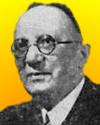
Died 29 Oct 1956 at age 90 (born 11 Feb 1866).
Friedrich C. Hofmann was a German chemist who polymerized isoprene to create synthetic rubber (1909) while working as a senior chemist for Elberfelder Farbenfabriken vorm. Friedr. Bayer & Co. The process was granted the world's first patent for a “Method for producing synthetic rubber” (German No. 250690 on 12 Sep 1909). It began to solve the problem of the high cost of natural rubber as the need increased in the motor transportage age. Hofman had pursued the lead revealed by Carl Dietrich Harries who in 1905 had broken down natural rubber using ozone to reveal that it was formed from long chains in which many hundreds of isoprene molecules are bonded together. Hofman also studied the polymerization of butadiene and 2,3-dimethyl butadiene.«
Friedrich C. Hofmann was a German chemist who polymerized isoprene to create synthetic rubber (1909) while working as a senior chemist for Elberfelder Farbenfabriken vorm. Friedr. Bayer & Co. The process was granted the world's first patent for a “Method for producing synthetic rubber” (German No. 250690 on 12 Sep 1909). It began to solve the problem of the high cost of natural rubber as the need increased in the motor transportage age. Hofman had pursued the lead revealed by Carl Dietrich Harries who in 1905 had broken down natural rubber using ozone to reveal that it was formed from long chains in which many hundreds of isoprene molecules are bonded together. Hofman also studied the polymerization of butadiene and 2,3-dimethyl butadiene.«
The Devil's Milk: A Social History of Rubber, by John Tully. - book suggestion.
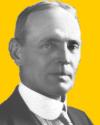
Died 29 Oct 1951 at age 86 (born 31 Dec 1864).
American astronomer who specialized in the study of double stars, of which he discovered more than 3,000. He worked at the Lick Observatory from 1895 to 1935, becoming director from 1930. Aitken made systematic surveys of binary stars, measuring their positions visually. His massive New General Catalogue of Double Stars within 120 degrees of the North Pole allowed orbit determinations which increased astronomers' knowledge of stellar masses. He also measured positions of comets and planetary satellites and computed orbits. He wrote an important book on binary stars, and he lectured and wrote widely for the public.
American astronomer who specialized in the study of double stars, of which he discovered more than 3,000. He worked at the Lick Observatory from 1895 to 1935, becoming director from 1930. Aitken made systematic surveys of binary stars, measuring their positions visually. His massive New General Catalogue of Double Stars within 120 degrees of the North Pole allowed orbit determinations which increased astronomers' knowledge of stellar masses. He also measured positions of comets and planetary satellites and computed orbits. He wrote an important book on binary stars, and he lectured and wrote widely for the public.
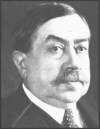
Died 29 Oct 1933 at age 69 (born 5 Dec 1863). quotes
French politician and mathematician who was a patron of early aviation. Painlevé; received a doctorate in mathematics from Paris in 1887. In his work on differential equations and mechanics, he solved, using Painlevé; functions, differential equations which Poincaré; and Picard had failed to solve. He took a special interest in aviation, applying his theoretical skills to study the theory of flight. He was Wilbur Wright’s first passenger making a record 1 hr 10 min flight, then within a year he created the first university course in aeronautical mechanics. Although less skilled in politics than mathematics he began a political career in 1906 leading to two periods as French Prime Minister at a crucial period of World War I and again during the 1925 financial crisis.
French politician and mathematician who was a patron of early aviation. Painlevé; received a doctorate in mathematics from Paris in 1887. In his work on differential equations and mechanics, he solved, using Painlevé; functions, differential equations which Poincaré; and Picard had failed to solve. He took a special interest in aviation, applying his theoretical skills to study the theory of flight. He was Wilbur Wright’s first passenger making a record 1 hr 10 min flight, then within a year he created the first university course in aeronautical mechanics. Although less skilled in politics than mathematics he began a political career in 1906 leading to two periods as French Prime Minister at a crucial period of World War I and again during the 1925 financial crisis.
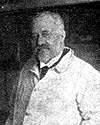
Died 29 Oct 1933 at age 70 (born 12 Jul 1863).
French physician and bacteriologist who was a pupil of Louis Pasteur. He joined the Navy as a doctor, and was the Director of the Bacteriological Institute of Saigon (1891). On his return in France, as a professor of bacteriology, he created the Pasteur Institute of Lille. (1895-1919). Calmette studied the venoms of the snakes and anti-venomous serotherapy. He developed and improved several processes of vaccination, in particular that against tuberculosis with its fellow-member bacteriologist and veterinary Camille Guerin (1872-1961). These two researchers gave their name to the famous antituberculosis vaccine Bacillus Calmette-Guerin (BCG).
French physician and bacteriologist who was a pupil of Louis Pasteur. He joined the Navy as a doctor, and was the Director of the Bacteriological Institute of Saigon (1891). On his return in France, as a professor of bacteriology, he created the Pasteur Institute of Lille. (1895-1919). Calmette studied the venoms of the snakes and anti-venomous serotherapy. He developed and improved several processes of vaccination, in particular that against tuberculosis with its fellow-member bacteriologist and veterinary Camille Guerin (1872-1961). These two researchers gave their name to the famous antituberculosis vaccine Bacillus Calmette-Guerin (BCG).
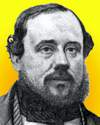
Died 29 Oct 1891 at age 75 (born 7 Oct 1816).
Edward Hammond Hargraves was an English prospector whose discovery of gold started the Australian Gold Rush, which attracted many new migrants from around the world in search of gold. Previously, when he heard of the California Gold Rush (started 24 Jan 1848) Hargraves travelled there. He learned the necessary skills, but had no success. So he next tried in Australia. On 12 Feb 1851, aged 34, he rode on horseback along Lewis Ponds Creek, north of Guyong, New South Wales with a guide, John Lister, age 18. They stopped at a water hole. There, Hargraves was excited by the similarity of terrain to his days prospecting in California. Panning the dirt in a schistose dyke, he soon found a few specks of gold, and more in further explorations of the region.«
Edward Hammond Hargraves was an English prospector whose discovery of gold started the Australian Gold Rush, which attracted many new migrants from around the world in search of gold. Previously, when he heard of the California Gold Rush (started 24 Jan 1848) Hargraves travelled there. He learned the necessary skills, but had no success. So he next tried in Australia. On 12 Feb 1851, aged 34, he rode on horseback along Lewis Ponds Creek, north of Guyong, New South Wales with a guide, John Lister, age 18. They stopped at a water hole. There, Hargraves was excited by the similarity of terrain to his days prospecting in California. Panning the dirt in a schistose dyke, he soon found a few specks of gold, and more in further explorations of the region.«
The Gold Rush: The Fever That Forever Changed Australia, by David Hill. - book suggestion.
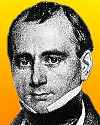
Died 29 Oct 1881 at age 85 (born 16 Sep 1796).
French physician and clinician who first discovered the localisation of the speech centre in the middle of the left cerebral hemisphere of the brain. He reported this observation in 1825 in his early treatise on brain diseases. He also presented clinical evidence that loss of speech corresponds to a lesion of the anterior lobes of the brain, confirming Gall's opinion on the seat of the organ of articulate language. As a clinician, he published on diverse fields of medicine, including hermaphroditism, on cholera, encephalitis, diseases of the heart, cancer and various forms of fever. In his significant work on rheumatism he recognised the cartilaginous and synovial lesions of this disease and was the first to describe them.«
French physician and clinician who first discovered the localisation of the speech centre in the middle of the left cerebral hemisphere of the brain. He reported this observation in 1825 in his early treatise on brain diseases. He also presented clinical evidence that loss of speech corresponds to a lesion of the anterior lobes of the brain, confirming Gall's opinion on the seat of the organ of articulate language. As a clinician, he published on diverse fields of medicine, including hermaphroditism, on cholera, encephalitis, diseases of the heart, cancer and various forms of fever. In his significant work on rheumatism he recognised the cartilaginous and synovial lesions of this disease and was the first to describe them.«
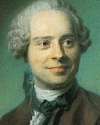
Died 29 Oct 1783 at age 65 (born 16 Nov 1717). quotes
French mathematician known for his work in various fields of applied mathematics, in particular dynamics. In 1743 he published his Traité de dynamique (Treatise on Dynamics). The d’Alembert principle extends Newton’s third law of motion, that Newton's law holds not only for fixed bodies but also for free moving bodies. D’Alembert also wrote on fluid dynamics, the theory of winds, the properties of vibrating strings and conducted experiments on the properties of sound. His most significant purely mathematical innovation was his invention and development of the theory of partial differential equations. He published eight volumes of mathematical studies (1761-80). He was editor of the mathematical and scientific articles for Denis Diderot's Encyclopédie.
French mathematician known for his work in various fields of applied mathematics, in particular dynamics. In 1743 he published his Traité de dynamique (Treatise on Dynamics). The d’Alembert principle extends Newton’s third law of motion, that Newton's law holds not only for fixed bodies but also for free moving bodies. D’Alembert also wrote on fluid dynamics, the theory of winds, the properties of vibrating strings and conducted experiments on the properties of sound. His most significant purely mathematical innovation was his invention and development of the theory of partial differential equations. He published eight volumes of mathematical studies (1761-80). He was editor of the mathematical and scientific articles for Denis Diderot's Encyclopédie.

In 2013, the Marmaray rail tunnel under the Bosphorus Strait was opened for public travel and over 300,000 people travelled through it, on the 90th anniversary of the Turkish Republic. It is the world's first sea tunnel connecting two continents and the deepest submerged tunnel. A 1.4-km stretch of the tunnel lies 50-m below the seabed. The 13-km project linking Kazliçesme, Turkey in Europe and Ayrılıkçesme in Asia is part of what will be a total 77-km cross-city surburban service above and below ground when construction is finished (set for Jun 2015). A sultan conceived the tunnel idea in 1860, but it was not until 2004 that Turkish Prime Minister Recep Tayyip Erdogan initiated the ambitious project to relieve traffic congestion on the two existing road bridges. He rode a ceremonial test run on 4 Aug 2013.«
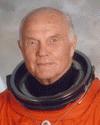
In 1998, U.S. astronaut John Glenn was launched into space aboard Space Shuttle Discovery. In 1962, Glenn first made history as the first American to orbit the Earth, strapped into a nine-by-seven-foot capsule. Now at age 77, and a U.S. Senator from Ohio, Glenn was a member of the STS-95 crew, serving as a Payload Specialist, aboard the Discovery. He carried out studies on the commonalities between the effects of space flight and aging. His microgravity research results relate to product-oriented commercial applications in such diverse fields as medical, agriculture and manufacturing. The 9-day mission returned on 7 Nov 1998, after 134 Earth orbits, traveling 3.6 million miles in 213-hr 44-min. His original flight had lasted about 5 hours.
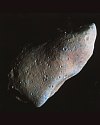
In 1991, space probe Galileo become the first human object to fly past an asteroid, Gaspra, making its closest approach at a distance of 1,604 km, passing at a speed of 8 km/sec (5 mi/sec). The encounter provided much data, including 150 images, which showed Gaspra has numerous craters indicating it has suffered numerous collisions since its formation. Gaspra is about 20-km long and orbits the Sun in the main asteroid belt between Mars and Jupiter. Gaspra, asteroid 951, was discovered by Ukrainian astronomer Grigoriy N. Neujamin (1916) who named it after a Black Sea retreat. In the photograph (left), subtle color variations have been exaggerated by NASA to highlight changes in reflectivity, surface structure and composition.«
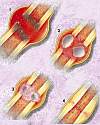
In 1971, the first successful use of electricity to repair a bone fracture is reported by surgeons at the University of Pennsylvania. Electrical currents have been used to heal bone since the mid-1800s, and the effect of electrical stimulation on bone has been long studied and well documented.When human bone is bent or broken, it generates an electrical charge ("On the Piezoelectric Effect of Bone", Fukada and Yasuda, 1957). This low level electrical charge stimulates the body's internal repair mechanism.[Image: steps in a fractured bone healing]
In 1947, a forest fire at Concord, N.H. was drenched with rain produced by seeding cumulus clouds with dry ice, the first such event in the U.S. The rain-making planes were flown over the burning area by seeders from the General Electric Co. of Schnectady, N.Y. Part of Project Cirrus, the experimental mission was a joint weather research program of the U.S. Army Signal Corps and the Office of Naval Research. However, natural rainfall followed, caused by natural conditions, so it was not possible to measure the artificial rainfall.

In 1945, the first ball point pen in the U.S. went on sale at Gimbels Department Stores for $12.95. In Jun 1945, Chicago businessman Milton Reynolds, during a visit to Buenos Aires, Argentina, saw Laszlo Biro’s pen in a store, realized the pen’s sales potential and bought a few as samples. He returned to the U.S., and designed a copy in four months. He began production of his Reynolds’ Rocket pen, ignoring the patent rights of the Argentine manufacturer, Eversharp Co. On the first day of sale, $100,000 worth of his pen were sold. The initial success of Reynolds’ ballpoint pen as a fad did not last. It leaked and was unreliable. By 1948, the price fell below 50 cents. By 1951, his enterprise had failed.«
In 1942, the Alaska highway was opened to traffic. At mile 1202, Beaver Creek , the final connection was completed here when the 97th Engineers met the 18th Engineers. The bombing of Pearl Harbor in Dec 1941 spurred construction of the Alaska Highway. Alaska was considered vulnerable to a Japanese invasion, and the highway was deemed a military necessity. Construction began in Mar 1942, and was completed 8 months later. Literally bulldozed through the wilderness, road conditions along the Alcan were horrific; 90 degree turns and 25 percent grades were not uncommon. Rain and truck traffic turned sections of the road into an impassable mire. The highway was improved in 1943. The 1,523 mile highway officially opened to the public in 1948.
In 1872, a “Wind-Wheel” was patented (U.S. 132602) by James A. Risdon, of Genoa, Illinois. Some sources call this the first all-metal windmill. The patent diagram does seem to show vanes that could be metal, but the patent description does not specify the material used in its construction. The “vanes are mounted at the end of radial arms, and are made adjustable to compensate for the varying velocities of the wind by a partial revolution of said arms.” A mechanism is incorporated so that the adjustment is automatically controlled. Earlier windmills were wooden, using metal only in bolts and other small parts, which made them easier for owners to make repairs themselves.«[Based on a thus-far limited search for information, Webmaster has not yet confirmed whether it is indeed the “first all-metal” design to be patented.]




