
Born 25 Aug 1916; died 4 Aug 2003 at age 86.
Frederick Chapman Robbins was an American pediatrician, microbiologist and virologist who shared (with colleagues John Enders and Thomas Weller) the 1954 Nobel Prize for Physiology or Medicine for the “discovery of the ability of poliomyelitis viruses to grow in cultures of various types of tissue.” They grew the polio virus in non-nervous tissue, specifically human embryonic cells. This innovative method, published in 1949, revolutionized virological research, enabling the development of vaccines for various viral diseases. By making possible the production of a polio vaccine, they reduced the threat of an illness that had paralyzed countless children. Their work refined understanding of viral diseases, and enabled development of sophisticated diagnostic methods.«
Frederick Chapman Robbins was an American pediatrician, microbiologist and virologist who shared (with colleagues John Enders and Thomas Weller) the 1954 Nobel Prize for Physiology or Medicine for the “discovery of the ability of poliomyelitis viruses to grow in cultures of various types of tissue.” They grew the polio virus in non-nervous tissue, specifically human embryonic cells. This innovative method, published in 1949, revolutionized virological research, enabling the development of vaccines for various viral diseases. By making possible the production of a polio vaccine, they reduced the threat of an illness that had paralyzed countless children. Their work refined understanding of viral diseases, and enabled development of sophisticated diagnostic methods.«
Polio, by Frederick C. Robbins et al. - book suggestion.
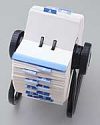
Born 25 Aug 1910; died 17 Apr 1996 at age 85.
American inventor of the Rolodex, an alphabetized rotating card file with a ball-bearing clutch. He invented the device in the 1940s with the help of an engineer who developed the cylindrical housing. Neustadter specialized in office technology, also inventing the Swivodex, spill-proof inkwell and the Clipodex, a knee-top dictation tool.
American inventor of the Rolodex, an alphabetized rotating card file with a ball-bearing clutch. He invented the device in the 1940s with the help of an engineer who developed the cylindrical housing. Neustadter specialized in office technology, also inventing the Swivodex, spill-proof inkwell and the Clipodex, a knee-top dictation tool.
Born 25 Aug 1900; died 22 Nov 1981 at age 81. quotes
German-British biochemist who shared (with Fritz Lipmann) the 1953 Nobel Prize for Physiology or Medicine for the discovery in living organisms of the series of chemical reactions known as the tricarboxylic acid cycle (also called the citric acid cycle, or Krebs cycle)—the basic system for the essential pathway of oxidation process within the cell. These reactions involve the conversion—in the presence of oxygen—of substances that are formed by the breakdown of sugars, fats, and protein components to carbon dioxide, water, and energy-rich compounds. The Krebs cycle explains two simultaneous processes: the degradation reactions which yield energy, and the building-up processes which use up energy.
German-British biochemist who shared (with Fritz Lipmann) the 1953 Nobel Prize for Physiology or Medicine for the discovery in living organisms of the series of chemical reactions known as the tricarboxylic acid cycle (also called the citric acid cycle, or Krebs cycle)—the basic system for the essential pathway of oxidation process within the cell. These reactions involve the conversion—in the presence of oxygen—of substances that are formed by the breakdown of sugars, fats, and protein components to carbon dioxide, water, and energy-rich compounds. The Krebs cycle explains two simultaneous processes: the degradation reactions which yield energy, and the building-up processes which use up energy.
Born 25 Aug 1880; died 8 Sep 1965 at age 85.
American inventor of electric model trains who founded the Lionel Corporation (1901), which became the largest U.S. toy train manufacturer. At age 18, he had invented a fuse to ignite the magnesium powder for flash photography, which the Navy Department bought from him to be a fuse to detonate submarine mines. He designed an early battery tube light, but without practical application. (His partner, Conrad Hubert, to whom he gave the rights improved it and founded the Eveready Flashlight Company.) At age 22, he created a battery-powered train engine intended only as an eye-catcher for other goods in a store window. To his surprise, many customers wanted to purchase the toy train. Thus he started a model railroad company.«
American inventor of electric model trains who founded the Lionel Corporation (1901), which became the largest U.S. toy train manufacturer. At age 18, he had invented a fuse to ignite the magnesium powder for flash photography, which the Navy Department bought from him to be a fuse to detonate submarine mines. He designed an early battery tube light, but without practical application. (His partner, Conrad Hubert, to whom he gave the rights improved it and founded the Eveready Flashlight Company.) At age 22, he created a battery-powered train engine intended only as an eye-catcher for other goods in a store window. To his surprise, many customers wanted to purchase the toy train. Thus he started a model railroad company.«
All Aboard: The Story of Joshua Lionel Cowen & His Lionel Train Company, by Ron Hollander. - book suggestion.
Born 25 Aug 1841; died 27 Jul 1917 at age 75.
Theodor Emil Kocher was a Swiss surgeon who did pioneering work on the physiology, pathology and surgery of the thyroid gland for which he was awarded the Nobel Prize in 1909. The gland is of great importance in the general nutrition of the adult, and especially in individuals still undergoing development. The loss of thyroid function results in serious disturbances in this nutrition. Metabolism is significantly diminished; growth ceases; the skin and the subcutaneous tissues are the site of mucous infiltration; degenerative processes occur in internal organs; serious disturbances make their appearance in the functions of the nervous system and muscles.
Theodor Emil Kocher was a Swiss surgeon who did pioneering work on the physiology, pathology and surgery of the thyroid gland for which he was awarded the Nobel Prize in 1909. The gland is of great importance in the general nutrition of the adult, and especially in individuals still undergoing development. The loss of thyroid function results in serious disturbances in this nutrition. Metabolism is significantly diminished; growth ceases; the skin and the subcutaneous tissues are the site of mucous infiltration; degenerative processes occur in internal organs; serious disturbances make their appearance in the functions of the nervous system and muscles.
Born 25 Aug 1796; died 1 Oct 1876 at age 80. quotes
American businessman and philanthropist who placed $700,000 in trust (1874) to build the Lick Observatory at the summit of Mount Hamilton near San Jose, California. After he died, he was interred under the future home of the Great Lick Refracting Telescope. When constructed (1880-88), it was the world’s largest and most powerful telescope, with a 36 inch (91 cm) diameter refractor lens. Lick had a considerable fortune from real estate, and at first considered building a monumental statue, or a huge pyramid greater than any in Egypt. Eventually, he was pursuaded to leave the majority of his estate to social and scientific causes. The Observatory overlooks Silicon Valley, and is supported by the University of California.«
American businessman and philanthropist who placed $700,000 in trust (1874) to build the Lick Observatory at the summit of Mount Hamilton near San Jose, California. After he died, he was interred under the future home of the Great Lick Refracting Telescope. When constructed (1880-88), it was the world’s largest and most powerful telescope, with a 36 inch (91 cm) diameter refractor lens. Lick had a considerable fortune from real estate, and at first considered building a monumental statue, or a huge pyramid greater than any in Egypt. Eventually, he was pursuaded to leave the majority of his estate to social and scientific causes. The Observatory overlooks Silicon Valley, and is supported by the University of California.«
James Lick’s Monument: The Saga of Captain Richard Floyd and the Building of the Lick Observatory, by Helen Wright. - book suggestion.
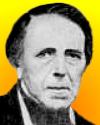
Born 25 Aug 1793; died 3 Sep 1860 at age 67.
German physiologist and pathologist who was one of the founders of modern embryology. He was the first to describe the embryonic precursors of gill slits and gill arches in the embryos of higher animals - mammals and birds - which have none when fully grown. Rathke compared the development of the air sacs in birds and the larynx in birds and mammals. In 1839, he traced the origin of the anterior pituitary gland from a depression in the roof of the mouth, which embryonic structure is now known as Rathke's pouch. Rathke also did pioneering work in marine zoology, as being first to describe lancet fish.«
German physiologist and pathologist who was one of the founders of modern embryology. He was the first to describe the embryonic precursors of gill slits and gill arches in the embryos of higher animals - mammals and birds - which have none when fully grown. Rathke compared the development of the air sacs in birds and the larynx in birds and mammals. In 1839, he traced the origin of the anterior pituitary gland from a depression in the roof of the mouth, which embryonic structure is now known as Rathke's pouch. Rathke also did pioneering work in marine zoology, as being first to describe lancet fish.«

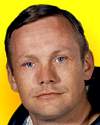
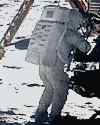
American astronaut who was the first man to walk on the moon (20 Jul 1969, Apollo 11). He served as a Navy pilot during the Korean War, then joined the National Advisory Committee for Aeronautics (which became NASA), as a civilian test pilot. In 1962, he was the first civilian to enter the astronaut-training program. He gained experience as command pilot of the Gemini 8 mission, which accomplished the first physical joining of two orbiting spacecraft. Later he was commander of the Apollo 11 lunar mission. From 1971, he worked as professor of aerospace engineering at the University of Cincinnati. He was a member of the commission that investigated the 1986 Challenger space shuttle disaster.«
First Man: The Life of Neil A. Armstrong, by James R. Hansen. - book suggestion.
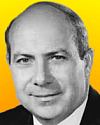
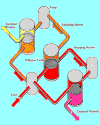
John Ray Dunning was an American nuclear physicist whose experiments in nuclear fission helped lay the groundwork for the development of the atomic bomb. After the fission of the rare U235 uranium isotope was verified in an experiment using a microscopic quantity, (0.02 millionths of a gram), great difficulty remained in separating U235 from the more abundant U238. Dunning led the research team at Columbia University which studied the gaseous diffusion method for uranium separation. This process was based on the slightly smaller size of the U235 isotope molecules. When pushed through a porous barrier, U235 would move through faster, and several repetitions would produce almost pure U235.
Died 25 Aug 1969 at age 63 (born 24 May 1906). quotes
American geologist who made the first comprehensive attempt at explaining the phenomenon of seafloor spreading (1960). This revived Alfred Wegener's earlier theory of continental drift. Together, these provided an interpretation of the earth's crust in terms of plate tectonics. The surface of the globe is not continuous. Rather, it is broken into a number of huge plates that float on the molten rock under the crust, moved over eons of geologic time by convective currents driven by earth's internal heat. With this motion these plates rub against, collide with, or separate from other plates. Thus the nature of earthquakes and volcanoes could be explained, plus the existence of ridges of young rock mapped around the globe under the ocean where the sea floor was spreading.
American geologist who made the first comprehensive attempt at explaining the phenomenon of seafloor spreading (1960). This revived Alfred Wegener's earlier theory of continental drift. Together, these provided an interpretation of the earth's crust in terms of plate tectonics. The surface of the globe is not continuous. Rather, it is broken into a number of huge plates that float on the molten rock under the crust, moved over eons of geologic time by convective currents driven by earth's internal heat. With this motion these plates rub against, collide with, or separate from other plates. Thus the nature of earthquakes and volcanoes could be explained, plus the existence of ridges of young rock mapped around the globe under the ocean where the sea floor was spreading.
Died 25 Aug 1961 at age 89 (born 24 Jan 1872).
English chemist who, while working with Sir William Ramsay in London, discovered the element krypton (30 May 1898). The name derives from the Greek word for “hidden.” It was a fraction separated from liquified air, which when placed in a Plücker tube connected to an induction coil yielded a spectrum with a bright yellow line with a greener tint than the known helium line and a brilliant green line that corresponded to nothing seen before.
English chemist who, while working with Sir William Ramsay in London, discovered the element krypton (30 May 1898). The name derives from the Greek word for “hidden.” It was a fraction separated from liquified air, which when placed in a Plücker tube connected to an induction coil yielded a spectrum with a bright yellow line with a greener tint than the known helium line and a brilliant green line that corresponded to nothing seen before.
Morris William Travers: A Lifetime of Achievement, by Keith Kostecka. - book suggestion.
Died 25 Aug 1956 at age 62 (born 23 Jun 1894). quotes
Alfred Charles Kinsey was an American zoologist and sexologist who studied and wrote about human sexual behaviour. His best-selling books, The Sexual Behavior of the Human Male (1948) and Sexual Behavior in the Human Female (1953), made him a household name. His interest in nature began in 7th grade, when he began a botanical collection, and it is said that by age 16 had written, 'What Do Birds Do When It Rains,' (though no known copy remains). He established his career with 17 years of conventional research in entomology, and became an expert on the American gall wasp. In 1938, while preparing a non-credit course on marriage, he found information lacking on sex and marriage. Thus began a study using questionnaires and interviews to publish scientifically insightful results.«
Alfred Charles Kinsey was an American zoologist and sexologist who studied and wrote about human sexual behaviour. His best-selling books, The Sexual Behavior of the Human Male (1948) and Sexual Behavior in the Human Female (1953), made him a household name. His interest in nature began in 7th grade, when he began a botanical collection, and it is said that by age 16 had written, 'What Do Birds Do When It Rains,' (though no known copy remains). He established his career with 17 years of conventional research in entomology, and became an expert on the American gall wasp. In 1938, while preparing a non-credit course on marriage, he found information lacking on sex and marriage. Thus began a study using questionnaires and interviews to publish scientifically insightful results.«
Alfred C. Kinsey: A Life, by James H. Jones. - book suggestion.
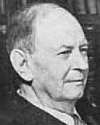
Died 25 Aug 1956 at age 84 (born 11 Jan 1872).
American inventor who was a pioneer in radiotelephony and a noted teacher of communication engineering. He did work that led to the practical application of a variety of experimental discoveries in piezoelectricity and magnetostriction. He developed the Pierce oscillator, which utilizes quartz crystal to keep radio transmissions precisely on the assigned frequency and to provide similar accuracy for frequency meters. His other accomplishments include the mathematical calculation of the radiation properties of radio antennae; invention of the mercury-vapor discharge tube, which was the forerunner of the thyratron; invention of a method of recording sound on film; and sound generation by bats and insects.
American inventor who was a pioneer in radiotelephony and a noted teacher of communication engineering. He did work that led to the practical application of a variety of experimental discoveries in piezoelectricity and magnetostriction. He developed the Pierce oscillator, which utilizes quartz crystal to keep radio transmissions precisely on the assigned frequency and to provide similar accuracy for frequency meters. His other accomplishments include the mathematical calculation of the radiation properties of radio antennae; invention of the mercury-vapor discharge tube, which was the forerunner of the thyratron; invention of a method of recording sound on film; and sound generation by bats and insects.
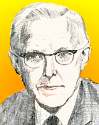
Died 25 Aug 1952 at age 48 (born 4 Oct 1903).
British-American metallurgist who in 1943-44 determined the properties and technology of plutonium and uranium, the essential materials in the atomic bombs that were first exploded in 1945. Smith already then had 15 years of experience as a research metallurgist with the American Brass Co., during which time he studied properties of alloys and their microstructure. In WW II, he joined the Los Alamos Laboratory at its inception (1943). The properties and technology of plutonium had to be conducted with extremely limited quantities of available material. Smith and his group found it was unique, with five different allotropic forms with huge density differences between them. Postwar, he organized the Institute for the Study of Metal at the Univ. of Chicago.
British-American metallurgist who in 1943-44 determined the properties and technology of plutonium and uranium, the essential materials in the atomic bombs that were first exploded in 1945. Smith already then had 15 years of experience as a research metallurgist with the American Brass Co., during which time he studied properties of alloys and their microstructure. In WW II, he joined the Los Alamos Laboratory at its inception (1943). The properties and technology of plutonium had to be conducted with extremely limited quantities of available material. Smith and his group found it was unique, with five different allotropic forms with huge density differences between them. Postwar, he organized the Institute for the Study of Metal at the Univ. of Chicago.
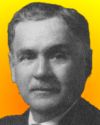
Died 25 Aug 1947 at age 76 (born 18 Sep 1870).
American anthropologist who devised the age-area concept which held that the age of cultural traits could be found by correlating the diffusion of those traits throughout their associated area. (It is not presently regarded as practical.) He contributed much research on Native Americans, beginning (1902-05) with the Blackfoot, and various Siouan tribes of Montana and the Dakotas. He wrote many articles, and six books. Wissler's theories on culture diverged from those of his contemporaries, such as Franz Boas. Wissler believed that culture was biologically innate in humans. He held the position of Curator of Ethnology, and with the American Museum of Natural History for 40 years.«
American anthropologist who devised the age-area concept which held that the age of cultural traits could be found by correlating the diffusion of those traits throughout their associated area. (It is not presently regarded as practical.) He contributed much research on Native Americans, beginning (1902-05) with the Blackfoot, and various Siouan tribes of Montana and the Dakotas. He wrote many articles, and six books. Wissler's theories on culture diverged from those of his contemporaries, such as Franz Boas. Wissler believed that culture was biologically innate in humans. He held the position of Curator of Ethnology, and with the American Museum of Natural History for 40 years.«
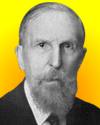
Died 25 Aug 1947 at age 79 (born 3 Jan 1868). quotes
Franz-Valéry-Marie Cumont was a Belgian archaeologist and philologist, who studied Roman pagan cults, and in particular the Mediterranean cult of Mithraism. Cumont was the first to propose that their believes grew from Zoroastrianism. He actively researched their practice of astrology on his expeditions to Syria and Turkey. The drawings and inscriptions on monuments that he discovered helped support his theories. His book The Mysteries of Mithras: The Pagan Belief That Shaped the Christian World is a classic work, in which he traces the original worship of Mithras back to ancient Hinduism, through Persia, and the Roman Empire.«
Franz-Valéry-Marie Cumont was a Belgian archaeologist and philologist, who studied Roman pagan cults, and in particular the Mediterranean cult of Mithraism. Cumont was the first to propose that their believes grew from Zoroastrianism. He actively researched their practice of astrology on his expeditions to Syria and Turkey. The drawings and inscriptions on monuments that he discovered helped support his theories. His book The Mysteries of Mithras: The Pagan Belief That Shaped the Christian World is a classic work, in which he traces the original worship of Mithras back to ancient Hinduism, through Persia, and the Roman Empire.«
Died 25 Aug 1940 at age 81 (born 23 Jun 1859). quotes
French industrialist who, with his older brother André, founded Michelin Tyre Co. in 1888, expanding the rubber company established (1832) by their grandfather, Aristide Barbier, and Nicolas Edouard Daubree. The Michelins made the first pneumatic tyres that could be easily removed for repair, for bicycles (1891) and for automobiles (1895). They introduced tire tread patterns, low-pressure balloon tires, and steel-cord tires. The company created a tourist guide organization which placed milestones on French roads and established a standard road map service for most of Europe. André created Michelin guides to promote tourism by car. The first Red Guide, with restaurant ratings, was published in 1900.« more
French industrialist who, with his older brother André, founded Michelin Tyre Co. in 1888, expanding the rubber company established (1832) by their grandfather, Aristide Barbier, and Nicolas Edouard Daubree. The Michelins made the first pneumatic tyres that could be easily removed for repair, for bicycles (1891) and for automobiles (1895). They introduced tire tread patterns, low-pressure balloon tires, and steel-cord tires. The company created a tourist guide organization which placed milestones on French roads and established a standard road map service for most of Europe. André created Michelin guides to promote tourism by car. The first Red Guide, with restaurant ratings, was published in 1900.« more
The Michelin Men: Driving an Empire, by Herbert Lottman. - book suggestion.
Died 25 Aug 1935 at age 72 (born 19 Jul 1863).
Curtis Fletcher Marbut was a U.S. geologist and cofounder of modern soil science, who worked closely with experts from many countries to develop international classification systems (1927) for soil materials. From 1895 Marbut taught geology at University of Missouri, while also working for the Missouri Geological Survey and directing the Missouri Soil Survey. In 1910 he left Missouri and was a soil scientist for the U.S. Bureau of Soils, for the rest of his life. Due to his exceptional service, his mandatory civil service retirement at 70 was twice waived by President Franklin D. Roosevelt. He died during a field trip to China.
Curtis Fletcher Marbut was a U.S. geologist and cofounder of modern soil science, who worked closely with experts from many countries to develop international classification systems (1927) for soil materials. From 1895 Marbut taught geology at University of Missouri, while also working for the Missouri Geological Survey and directing the Missouri Soil Survey. In 1910 he left Missouri and was a soil scientist for the U.S. Bureau of Soils, for the rest of his life. Due to his exceptional service, his mandatory civil service retirement at 70 was twice waived by President Franklin D. Roosevelt. He died during a field trip to China.
Died 25 Aug 1921 at age 60 (born 5 May 1861). quotes
American electrical engineer who invented the mercury-vapour lamp, an important forerunner of fluorescent lamps. He studied the production of light using electrical discharges (while Thomas Edison was still developing incandescent filaments). The mercury-filled tubes he developed from the late 1890s, gave off an unattractive blue-green light. Although unsuitable in homes, its brilliance won wide adoption by photo studios because the black and white film of the time needed just bright light, despite its colour. There were many other industrial uses for the lamp. His manufacturing company (est. 1902) was bought by General Electric in 1919 which produced a new design in 1933. He took out his first eight mercury vapour lamp patents on 17 Sep 1901.«
American electrical engineer who invented the mercury-vapour lamp, an important forerunner of fluorescent lamps. He studied the production of light using electrical discharges (while Thomas Edison was still developing incandescent filaments). The mercury-filled tubes he developed from the late 1890s, gave off an unattractive blue-green light. Although unsuitable in homes, its brilliance won wide adoption by photo studios because the black and white film of the time needed just bright light, despite its colour. There were many other industrial uses for the lamp. His manufacturing company (est. 1902) was bought by General Electric in 1919 which produced a new design in 1933. He took out his first eight mercury vapour lamp patents on 17 Sep 1901.«
Died 25 Aug 1908 at age 55 (born 15 Dec 1852). quotes
Antoine-Henri Becquerel was a French physicist who discovered radioactivity in fluorescent salts of uranium. “In recognition of the extraordinary services he has rendered by his discovery of spontaneous radioactivity,” he shared the 1903 Nobel Prize for Physics (with Pierre and Marie Curie). His early researches were in optics. In 1896, in a drawer, he had stored for a few days a photographic plate in black paper, and some uranium mineral crystals left on it. Later, he found developed the plate was fogged. The crystals, long out of sunlight, could not fluoresce, yet he accidentally discovered the salt was a source of a penetrating radiation: radioactivity. Three years later he showed the rays were charged particles by their deflection in a magnetic field. Initially, the rays emitted by radioactive substances were named after him.« more
Antoine-Henri Becquerel was a French physicist who discovered radioactivity in fluorescent salts of uranium. “In recognition of the extraordinary services he has rendered by his discovery of spontaneous radioactivity,” he shared the 1903 Nobel Prize for Physics (with Pierre and Marie Curie). His early researches were in optics. In 1896, in a drawer, he had stored for a few days a photographic plate in black paper, and some uranium mineral crystals left on it. Later, he found developed the plate was fogged. The crystals, long out of sunlight, could not fluoresce, yet he accidentally discovered the salt was a source of a penetrating radiation: radioactivity. Three years later he showed the rays were charged particles by their deflection in a magnetic field. Initially, the rays emitted by radioactive substances were named after him.« more
Radioactivity: A History of a Mysterious Science, by Marjorie C. Malley. - book suggestion.
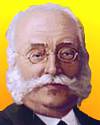
Died 25 Aug 1906 at age 70 (born 6 May 1836). quotes
Eduard Friedrich Maximilian von Eyth was a German engineer, inventor and writer who was a pioneer in the mechanization of agriculture. With an education in Germany as a machine engineer, in 1861, he moved to England, the centre of engineering. From 1863, he was employed by John Fowler, manufacturer of a revolutionary new farm implement, the steam plow. Eyth became a global salesman seeking new markets for Fowler's technology. He left the company in 1882 and returned to Germany, where in 1884, he founded the German Agricultural Society, and worked to support the German farmer. He retired in 1896 and moved from Berlin to Ulm to be with his aging mother, and where for the remainder of his life, he became a writer, using his experiences to demythologize and popularize technological progress. In one work, he addressed the engineering aspects of the Tay Bridge collapse.«
Eduard Friedrich Maximilian von Eyth was a German engineer, inventor and writer who was a pioneer in the mechanization of agriculture. With an education in Germany as a machine engineer, in 1861, he moved to England, the centre of engineering. From 1863, he was employed by John Fowler, manufacturer of a revolutionary new farm implement, the steam plow. Eyth became a global salesman seeking new markets for Fowler's technology. He left the company in 1882 and returned to Germany, where in 1884, he founded the German Agricultural Society, and worked to support the German farmer. He retired in 1896 and moved from Berlin to Ulm to be with his aging mother, and where for the remainder of his life, he became a writer, using his experiences to demythologize and popularize technological progress. In one work, he addressed the engineering aspects of the Tay Bridge collapse.«
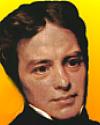
Died 25 Aug 1867 at age 75 (born 22 Sep 1791). quotes
English physicist and chemist whose many experiments contributed greatly to the understanding of electromagnetism. Although one of the greatest experimentalists, he was largely self-educated. Appointed by Sir Humphry Davy as his assistant at the Royal Institution, Faraday initially concentrated on analytical chemistry, and discovered benzene in 1825. His most important work was in electromagnetism, in which field he demonstrated electromagnetic rotation and discovered electromagnetic induction (the key to the development of the electric dynamo and motor). He also discovered diamagnetism and the laws of electrolysis. He published pioneering papers that led to the practical use of electricity, and he advocated the use of electric light in lighthouses.« more
English physicist and chemist whose many experiments contributed greatly to the understanding of electromagnetism. Although one of the greatest experimentalists, he was largely self-educated. Appointed by Sir Humphry Davy as his assistant at the Royal Institution, Faraday initially concentrated on analytical chemistry, and discovered benzene in 1825. His most important work was in electromagnetism, in which field he demonstrated electromagnetic rotation and discovered electromagnetic induction (the key to the development of the electric dynamo and motor). He also discovered diamagnetism and the laws of electrolysis. He published pioneering papers that led to the practical use of electricity, and he advocated the use of electric light in lighthouses.« more
The Electric Life Of Michael Faraday, by Alan W. Hirshfeld. - book suggestion.
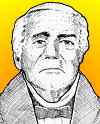
Died 25 Aug 1852 at age 87 (born 13 Jul 1765). quotes
American inventor and manufacturer who, like Eli Whitney, incorporated interchangeable parts in manufacturing. At first a farmer, he began a business making scythes (1795), turned to pistol manufacturing for private use, then won a government contract (9 Mar 1799) for 500 pistols, and larger orders followed. By 1813, at North’s suggestion, a contract for 20,000 pistols included the provision that parts should be interchangeable. He developed machine tools to aid production. North built perhaps the earliest, though primitive, milling machine to replace manual filing operations (by about 1816). For 53 years, he filled War Dept. contracts, including rifles (from 1823), and devised a 10-round repeating rifle (1825).«
American inventor and manufacturer who, like Eli Whitney, incorporated interchangeable parts in manufacturing. At first a farmer, he began a business making scythes (1795), turned to pistol manufacturing for private use, then won a government contract (9 Mar 1799) for 500 pistols, and larger orders followed. By 1813, at North’s suggestion, a contract for 20,000 pistols included the provision that parts should be interchangeable. He developed machine tools to aid production. North built perhaps the earliest, though primitive, milling machine to replace manual filing operations (by about 1816). For 53 years, he filled War Dept. contracts, including rifles (from 1823), and devised a 10-round repeating rifle (1825).«
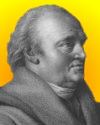
Died 25 Aug 1822 at age 83 (born 15 Nov 1738). quotes
German-born British astronomer, the founder of sidereal astronomy for the systematic observation of the heavens. In 1773, Herschel made and began using his first telescope. With it he began a project that would continue for the rest of his life: that of systematically studying the sky. Through this study he discovered the planet Uranus, many new nebulae, clusters of stars and binary stars. Herschel hypothesized that nebulae are composed of stars, developed a theory of stellar evolution and was the first person to correctly describe the form of our Galaxy, the Milky Way. He discovered the Saturnian satellites Mimas and Enceladus (1789) and the Uranian satellites Titania and Oberon (1787). He was probably the most famous astronomer of the 18th century.
German-born British astronomer, the founder of sidereal astronomy for the systematic observation of the heavens. In 1773, Herschel made and began using his first telescope. With it he began a project that would continue for the rest of his life: that of systematically studying the sky. Through this study he discovered the planet Uranus, many new nebulae, clusters of stars and binary stars. Herschel hypothesized that nebulae are composed of stars, developed a theory of stellar evolution and was the first person to correctly describe the form of our Galaxy, the Milky Way. He discovered the Saturnian satellites Mimas and Enceladus (1789) and the Uranian satellites Titania and Oberon (1787). He was probably the most famous astronomer of the 18th century.
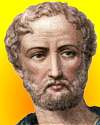
Died 25 Aug 79 (born 23). quotes
Gaius Plinius Cecilius Secundus, the Elder was a Roman scholar and author of the celebrated Natural History, in 37 volumes an encyclopaedic work of very uneven accuracy that was nonetheless an authority on scientific matters up to the Middle Ages. He prepared this as a digest of two thousand ancient books written by nearly five hundred writers. He was mostly undiscriminating regarding the accuracy of the content. Though he rejected, for example, the possibility of immortality, he also rejected Pytheas' valid theory that the moon was responsible for tides. Correctly, he accepted the spherical form of the Earth. As another example, he included various theories on the origin of amber, one correct among others fanciful and wrong. The book dealt in subjects ranging from astronomy, geography, and zoology. He died in the eruption of Vesuvius, too anxious to witness the event to retreat from the ashes and toxic gases.[DSB gives date of death 25 Aug 79. EB gives 24 Aug 79.]
Gaius Plinius Cecilius Secundus, the Elder was a Roman scholar and author of the celebrated Natural History, in 37 volumes an encyclopaedic work of very uneven accuracy that was nonetheless an authority on scientific matters up to the Middle Ages. He prepared this as a digest of two thousand ancient books written by nearly five hundred writers. He was mostly undiscriminating regarding the accuracy of the content. Though he rejected, for example, the possibility of immortality, he also rejected Pytheas' valid theory that the moon was responsible for tides. Correctly, he accepted the spherical form of the Earth. As another example, he included various theories on the origin of amber, one correct among others fanciful and wrong. The book dealt in subjects ranging from astronomy, geography, and zoology. He died in the eruption of Vesuvius, too anxious to witness the event to retreat from the ashes and toxic gases.[DSB gives date of death 25 Aug 79. EB gives 24 Aug 79.]
Natural History: A Selection, by Pliny the Elder (translated by John F. Healey). - book suggestion.
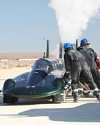
Inspiration
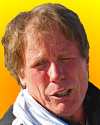
The Stanley Steamer: America's Legendary Steam Car, by Kit Foster. - book suggestion.
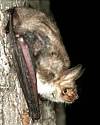
In 1999, the oldest wild bat in Europe recorded to date was a 33-year-old male lesser mouse-eared bat according to a claim published in The Independent newspaper (London). Two Swiss researchers from the University of Lausanne found the bat in the eaves of the church at Fully, in south-west Switzerland. An earlier oldest bat record in the U.S. was a 24-yr-old little brown bat found on 30 Apr 1960. Later, in a journal article received on 20 Jun 2005, a 41-yr-old Brandt's bat found in Siberia was reported.«

In 1981, the U.S. spacecraft Voyager II came within 63,000 miles (100,000 km) of Saturn’s cloud cover, sending back data and pictures of the ringed planet in its closest approach to Saturn, showing not a few, but thousands of rings. Photographs were also sent back of a number of Saturn's moons. The space probe was launched on 20 Aug 1977, and visited Jupiter on 9 Jul 1979, and continued on to Uranus (24 Jan 1986) and Neptune (25 Aug 1989) before leaving the Solar System. Having a nuclear power source, the space probe continues to study ultraviolet sources among the stars, and its fields and particles instruments continue to search for the boundary between the Sun's influence and interstellar space.«[Image: detail of Saturn's B-rings photographed by Voyager II from a distance of 743,000 km on 25 Aug 1981. About 4000-km width is shown.]
In 1973, the first scan was made using CAT (Computer Assisted Tomography).
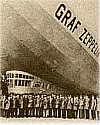
In 1929, the Graf Zeppelin passed over San Francisco's Golden Gate Bridge, headed for Los Angeles after a trans-Pacific voyage from Tokyo. Graf Zeppelin, built in 1928, had a trial flight on 18 Sep1928. It left on 11 Oct 1928 for its first transatlantic trip from Germany to Lakehurst, New Jersey, USA. After other flights, the Graf Zeppelin was again at Lakehurst ready to begin a trip around the world. It left there with 40 crew and 22 passengers on 8 Aug 1929, reaching Friedrichshafen, Germany on 10 Aug. After 5 days stopover, it set off for Tokyo, Japan, arriving there on 18 Aug, leaving again on 23 Aug headed for Los Angeles on 26 Aug. Next day it left for Lakehurst, NJ arriving there on 29 Aug 1929 after 12 days in the air.«
In 1840, a seeding machine was patented by Joseph Gibbons.




