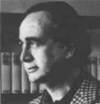
Born 18 Aug 1927.
U.S. anthropological historian and theoretician considered to be a generalist with an interest in the global processes that account for human origins and the evolution of human cultures. Due to his interests in cultural anthropology, Dr. Harris has assumed the role of an anthropological historian theoretician. His fieldwork with cultural materialism has taken him to the Islas de la Bahia, Brazil, Mozambique, Ecuador, India and East Harlem.
U.S. anthropological historian and theoretician considered to be a generalist with an interest in the global processes that account for human origins and the evolution of human cultures. Due to his interests in cultural anthropology, Dr. Harris has assumed the role of an anthropological historian theoretician. His fieldwork with cultural materialism has taken him to the Islas de la Bahia, Brazil, Mozambique, Ecuador, India and East Harlem.
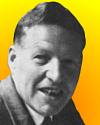
Born 18 Aug 1908; died 8 Feb 1972 at age 63.
Frederick Charles Bawden was an English plant pathologist whose research interest was in plant viruses, and how best to ensure that a farmer could grow healthy and productive crops. With his associates, in 1937, he discovered that the tobacco mozaic virus contained ribonucleic acid (RNA). Nucleic acids were known to be present in all cells, but this was the first time that RNA was observed in a virus, which is a subcellular infectious agent. Nucleic acids have subsequently been found in all identifiable viruses. (Since the tobacco mosaic virus was first identified by Martinus Beijerinck (1898), it has proved particularly amenable to laboratory research.). Bawden travelled a number of times to Africa to help solve problems with diseased crops.«
Frederick Charles Bawden was an English plant pathologist whose research interest was in plant viruses, and how best to ensure that a farmer could grow healthy and productive crops. With his associates, in 1937, he discovered that the tobacco mozaic virus contained ribonucleic acid (RNA). Nucleic acids were known to be present in all cells, but this was the first time that RNA was observed in a virus, which is a subcellular infectious agent. Nucleic acids have subsequently been found in all identifiable viruses. (Since the tobacco mosaic virus was first identified by Martinus Beijerinck (1898), it has proved particularly amenable to laboratory research.). Bawden travelled a number of times to Africa to help solve problems with diseased crops.«
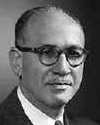
Born 18 Aug 1897; died 6 Jan 1988 at age 90.
Ukrainian-American engineer and science historian who worked as an engineer during the electrification of Cuba. Realizing the need for improved methods of connecting electrical conductors, in 1924, he founded the Burndy Engineering Company. A few years later, he became interested in the history of Renaissance science. Subsequently, he began collecting books and everything he could find that was related to the history of science. This became a second career as a scholar that would run parallel with his life as a businessman. He wrote many books and pamphlets, on topics from the transport of ancient obelisks, to authoritative biographies of many scientific pioneers, including Alessandro Volta, inventor of the electric battery, and Wilhelm Röntgen, discoverer of the X ray.
Ukrainian-American engineer and science historian who worked as an engineer during the electrification of Cuba. Realizing the need for improved methods of connecting electrical conductors, in 1924, he founded the Burndy Engineering Company. A few years later, he became interested in the history of Renaissance science. Subsequently, he began collecting books and everything he could find that was related to the history of science. This became a second career as a scholar that would run parallel with his life as a businessman. He wrote many books and pamphlets, on topics from the transport of ancient obelisks, to authoritative biographies of many scientific pioneers, including Alessandro Volta, inventor of the electric battery, and Wilhelm Röntgen, discoverer of the X ray.
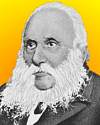
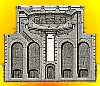
French engineer who adapted the steelmaking process by using the open-hearth regenerative furnace invented by Charles William Siemens and Friedrich Siemens (1856), now known as the Siemens-Martin process. The Siemens' idea was to capture heat from exhaust gases in chambers flanking the furnace containing fire-bricks. When the flow is changed to preheat the input gases using recycled energy stored in the bricks, huge fuel savings result. Martin applied the process to steel production because it could produce the necessary high temperature to melt steel, with furnace capacity of 50-100 tons or more This process was adopted and almost universally worldwide to manufacture steel, until replaced by the basic oxygen process from the late 1940's.«[Image: left - Pierre Martin; right - vertical section of Siemens-Martin furnace]
Born 18 Aug 1685; died 29 Dec 1731 at age 46.
British mathematician, best known for the Taylor's series, a method for expanding functions into infinite series. In 1708, Taylor produced a solution to the problem of the centre of oscillation. His Methodus incrementorum directa et inversa (“Direct and Indirect Methods of Incrementation,” 1715) introduced what is now called the calculus of finite differences. Using this, he was the first to express mathematically the movement of a vibrating string on the basis of mechanical principles. Methodus also contained Taylor's theorem, later recognized (1772) by Joseph Lagrange as the basis of differential calculus. A gifted artist, Taylor also wrote on basic principles of perspective (1715) containing the first general treatment of the principle of vanishing points.«
British mathematician, best known for the Taylor's series, a method for expanding functions into infinite series. In 1708, Taylor produced a solution to the problem of the centre of oscillation. His Methodus incrementorum directa et inversa (“Direct and Indirect Methods of Incrementation,” 1715) introduced what is now called the calculus of finite differences. Using this, he was the first to express mathematically the movement of a vibrating string on the basis of mechanical principles. Methodus also contained Taylor's theorem, later recognized (1772) by Joseph Lagrange as the basis of differential calculus. A gifted artist, Taylor also wrote on basic principles of perspective (1715) containing the first general treatment of the principle of vanishing points.«
Brook Taylor's Work on Linear Perspective, by Kirsti Andersen. - book suggestion.

Died 18 Aug 2015 (born 1934).
Khaled Mohamad al-Asaad was a Syrian archaeologist and historian whose life’s work was curating the ruins at Palmyra, a Unesco World Heritage site. The extensive remains of an ancient desert oasis town are possibly the most important archaeological ruins in Syria,. With only a degree in history, he began working on the early excavation, and gained self-taught knowledge in the field. For the next four decades, he continued archaeological and restoration activities at the site, including its amphitheater, Tetrapylon and Temple of Bell. He became the greatest resource of knowledge on Palmyra and its history. While the town was being taken over by Islamic State militants, he and relatives rescued and hid 400 antiquities. The jihadists publicly beheaded him, reportedly for refusing to disclose their location.«[Name also seen spelled as Khalid.]
Khaled Mohamad al-Asaad was a Syrian archaeologist and historian whose life’s work was curating the ruins at Palmyra, a Unesco World Heritage site. The extensive remains of an ancient desert oasis town are possibly the most important archaeological ruins in Syria,. With only a degree in history, he began working on the early excavation, and gained self-taught knowledge in the field. For the next four decades, he continued archaeological and restoration activities at the site, including its amphitheater, Tetrapylon and Temple of Bell. He became the greatest resource of knowledge on Palmyra and its history. While the town was being taken over by Islamic State militants, he and relatives rescued and hid 400 antiquities. The jihadists publicly beheaded him, reportedly for refusing to disclose their location.«[Name also seen spelled as Khalid.]
Died 18 Aug 1994 at age 79 (born 28 Oct 1914).
Richard Laurence Millington Synge was a British biochemist who shared the 1952 Nobel Prize for Chemistry with A.J.P. Martin for their development of partition chromatography, notably paper chromatography. Some of chemistry's advances need new methods for separating various substances. In filter-paper chromatography, a drop of a mixture of substances is dropped on a strip of filter paper, which is allowed to draw up a suitable solvent (ex. butyl alcohol-water), by capillary action. The spot begins to move, then gradually segregates into several spots. Some spots rapidly follow the solvent, while others lag behind. The result is a resolution of the mixture into component parts. One drop of extremely complicated mixtures can be analyzed in this simple way.
Richard Laurence Millington Synge was a British biochemist who shared the 1952 Nobel Prize for Chemistry with A.J.P. Martin for their development of partition chromatography, notably paper chromatography. Some of chemistry's advances need new methods for separating various substances. In filter-paper chromatography, a drop of a mixture of substances is dropped on a strip of filter paper, which is allowed to draw up a suitable solvent (ex. butyl alcohol-water), by capillary action. The spot begins to move, then gradually segregates into several spots. Some spots rapidly follow the solvent, while others lag behind. The result is a resolution of the mixture into component parts. One drop of extremely complicated mixtures can be analyzed in this simple way.
Died 18 Aug 1990 at age 86 (born 20 Mar 1904). quotes
Burrhus Frederic (“B.F.”) Skinner was an American psychologist whose pioneering work in experimental psychology promoted behaviorism, shaping behavior through positive and negative reinforcement and demonstrated operant conditioning. The “Skinner box” he used in experiments from 1930 remains famous. To investigate the learning processes of animals, he observed their behaviour in a simple box with a lever which, when activated by the animal, would give a reward (or punishment). The reward, such as pellets of food or water, acts as a primary reinforcer. He observed the behaviour of animals adapted to utilize the opportunity for a reward. He extended his theories to the behaviour of humans, as a form of social engineering.«
Burrhus Frederic (“B.F.”) Skinner was an American psychologist whose pioneering work in experimental psychology promoted behaviorism, shaping behavior through positive and negative reinforcement and demonstrated operant conditioning. The “Skinner box” he used in experiments from 1930 remains famous. To investigate the learning processes of animals, he observed their behaviour in a simple box with a lever which, when activated by the animal, would give a reward (or punishment). The reward, such as pellets of food or water, acts as a primary reinforcer. He observed the behaviour of animals adapted to utilize the opportunity for a reward. He extended his theories to the behaviour of humans, as a form of social engineering.«
B.F. Skinner: A Life, by Daniel W. Bjork. - book suggestion.
Died 18 Aug 1980 at age 64 (born 19 Sep 1915).
Elizabeth Stern (married name Elizabeth Stern Shankman) was a Canadian-born American, one of the first pathologists to work on the progression of a cell from normality to cancerous. Her breakthrough studies of cervical cancers have changed the disease from fatal to one of the most easily diagnosed and treatable. Her studies showed that a normal cell advanced through 250 distinct stages before becoming cancerous and thus is the most easily diagnosed of all cancers. She was the first to linking a virus in herpes simplex to cervical cancer. She was also the first to report the linkage between oral contraceptives and cervical cancer.
Elizabeth Stern (married name Elizabeth Stern Shankman) was a Canadian-born American, one of the first pathologists to work on the progression of a cell from normality to cancerous. Her breakthrough studies of cervical cancers have changed the disease from fatal to one of the most easily diagnosed and treatable. Her studies showed that a normal cell advanced through 250 distinct stages before becoming cancerous and thus is the most easily diagnosed of all cancers. She was the first to linking a virus in herpes simplex to cervical cancer. She was also the first to report the linkage between oral contraceptives and cervical cancer.
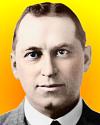
Died 18 Aug 1940 at age 65 (born 2 Apr 1875). quotes
Walter Percy Chrysler was an American industrialist and inventor who founded his own company, Chrysler Motors. He began as a teenager in the railroad industry and rose to management positions. Then, in 1912, Charles W. Nash recruited him as works manager for the Buick division of General Motors. Chrysler reorganized production for efficiency, increasing output and profits, but resigned in 1920. He rescued Willys-Overland automobile company from bankruptcy and then turned Maxwell Motor Company into the Chrysler Corporation (1924) which produced Chrysler's first car in Jun 1925. The company grew to become the third of the present “Big Three” automobile manufacturers.«
Walter Percy Chrysler was an American industrialist and inventor who founded his own company, Chrysler Motors. He began as a teenager in the railroad industry and rose to management positions. Then, in 1912, Charles W. Nash recruited him as works manager for the Buick division of General Motors. Chrysler reorganized production for efficiency, increasing output and profits, but resigned in 1920. He rescued Willys-Overland automobile company from bankruptcy and then turned Maxwell Motor Company into the Chrysler Corporation (1924) which produced Chrysler's first car in Jun 1925. The company grew to become the third of the present “Big Three” automobile manufacturers.«
Chrysler, by Vincent Curcio. - book suggestion.
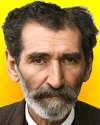
Died 18 Aug 1922 at age 81 (born 4 Aug 1841). quotes
English-Argentine author, naturalist and ornithologist whose interest in nature started in his youth. He studied the local flora and fauna in Argentina, where he was born of American parents. An attack of rheumatic fever as a teenager had weakened his heart, and later decided England would be better place to sustain his love of outdoor life. Settling in England (1874), age 32, he published popular ornithological works including Argentine Ornithology (1888-1899) and British Birds (1895). His next books on the English countryside, including Hampshire Days (1903) and Afoot in England (1909), helped foster the back-to-nature movement of the 1920-30s. He was a founding member of the Royal Society for the Protection of Birds (1889).«
English-Argentine author, naturalist and ornithologist whose interest in nature started in his youth. He studied the local flora and fauna in Argentina, where he was born of American parents. An attack of rheumatic fever as a teenager had weakened his heart, and later decided England would be better place to sustain his love of outdoor life. Settling in England (1874), age 32, he published popular ornithological works including Argentine Ornithology (1888-1899) and British Birds (1895). His next books on the English countryside, including Hampshire Days (1903) and Afoot in England (1909), helped foster the back-to-nature movement of the 1920-30s. He was a founding member of the Royal Society for the Protection of Birds (1889).«
William Henry Hudson: Life, Literature, and Science, by Felipe Arocena. - book suggestion.
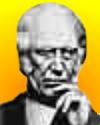
Died 18 Aug 1874 at age 85 (born 19 Feb 1789).
(1st Baronet) Scottish civil engineer who was first to use wrought iron for ships, bridges, mill shafts, and structural beams. After moving to London in 1811, he invented a steam excavator and a sausage-making machine, but without commercial success. By 1817, he had established an engineering works in Manchester making mill machinery, which later made over 400 locomotives. The shipbuilding works he opened at Millwall, London (1835-49) built hundreds of iron boats. He furnished the rectangular wrought-iron tubes used by Stephenson for the Britannia railway bridge (1850) over the Menai Strait, which included two almost 460-ft (140-m) spans. He assisted James Joule and Lord Kelvin in geological investigations from 1851.«
(1st Baronet) Scottish civil engineer who was first to use wrought iron for ships, bridges, mill shafts, and structural beams. After moving to London in 1811, he invented a steam excavator and a sausage-making machine, but without commercial success. By 1817, he had established an engineering works in Manchester making mill machinery, which later made over 400 locomotives. The shipbuilding works he opened at Millwall, London (1835-49) built hundreds of iron boats. He furnished the rectangular wrought-iron tubes used by Stephenson for the Britannia railway bridge (1850) over the Menai Strait, which included two almost 460-ft (140-m) spans. He assisted James Joule and Lord Kelvin in geological investigations from 1851.«
The life of Sir William Fairbairn, by William Fairbairn. - book suggestion.
Died 18 Aug 1835 at age 59 (born 2 Aug 1776).
German chemist.
German chemist.
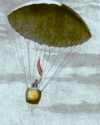
Died 18 Aug 1823 at age 54 (born 31 Jan 1769).
French aeronaut who was the first person to use a parachute regularly and successfully. He perfected the parachute and made jumps from greater altitudes than had been possible before. On 22 Oct 1797, at age 28, Garnerin made his first jump above the Parc Monceau in Paris. He dropped from a hot-air balloon at 3000 feet. His parachute, with 36 ribs and lines, was semi-rigid, somewhat resembling an umbrella. The descent was a success, except that he shook back and forth violently while falling. The physicist Lalande, who attended the event, suggested improving air flow with a small opening at the top of the canopy. Garnerin died while preparing balloon equipment, when a beam struck his head inflicting a mortal wound. more
French aeronaut who was the first person to use a parachute regularly and successfully. He perfected the parachute and made jumps from greater altitudes than had been possible before. On 22 Oct 1797, at age 28, Garnerin made his first jump above the Parc Monceau in Paris. He dropped from a hot-air balloon at 3000 feet. His parachute, with 36 ribs and lines, was semi-rigid, somewhat resembling an umbrella. The descent was a success, except that he shook back and forth violently while falling. The physicist Lalande, who attended the event, suggested improving air flow with a small opening at the top of the canopy. Garnerin died while preparing balloon equipment, when a beam struck his head inflicting a mortal wound. more
In Aug 1986, seventy-two Nobel Prize-winning scientists filed an amicus curiae brief with the U.S. Supreme Court challenging as unconstitutional a Louisiana law requiring schools that teach evolution to also teach “creation-science.” A news release described the scientists as “the largest group of Nobel laureates ever to support a single statement on any subject..” At a news conference in Washington D.C. the same day, they warned that the Louisiana law threatened scientific education by disparaging proven scientific facts to promote fundamentalist Christian beliefs. Dr. Murray Gell-Mann (1969 Nobel Prize in Physics), led the effort. A Federal District Court had struck down the Louisiana law in Jan 1985, as promotion of religious belief. A U.S. Court of Appeals agreed. The Supreme Court ruled against the law on 19 Jun 1987.«

In 1966, the Tay Road Bridge designed by William Fairhurst was opened by the Queen Mother. This finally replaced ferry service for vehicles across the Tay estuary on the east coast of Scotland, although the present rail bridge had been in use since 1887. The 42-span road bridge is one of the longest in Europe, 1.4 miles (2250-m) long, 32-ft (10-m) above water level, and links Newport in north-east Fife to Dundee. Tolls are collected on the southbound route are used for maintenance costs. Construction began on the £6 million project in 1962. Willie Logan, director of the construction company and five other workers died while the bridge was being built, and are commemorated by a 51-ft (15.5-m) tall obelisk at the Fife end.«
In 1960, the first oral contraceptive was marketed by the Searle Drug Company in America.
In 1941, the National Fire Service was established in Britain.
In 1932 the Scottish aviator Jim Mollison made the first westbound transatlantic solo flight.*
In 1904, the Belle Isle Aquarium opened in the U.S. This facility is the oldest, continuously running aquarium in America. Several other institutions opened earlier but since have closed or moved to multiple different buildings. Belle Isle Aquarium is still in its original building and site as the one in which it opened.
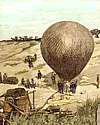
In 1891, the first rainmaking experiments in the U.S. were conducted near Midland, Texas, paid for by a grant from the U.S. government. Patent attorney Gen. Robert Dyrenforth set off explosive balloons and artillery to try to make rainclouds develop. At a time of extreme drought, any effort with a hope of success may have been thought worthwhile to try, but there were no results. The method chosen was to test a theory that rainstorms seemed often to occur where major battles had taken place during the Civil War, and they may have been because of the effect of smoke, dust and disturbances in the air from artillery.«
In 1869, the Canadian patent No. 1 was issued to W. Hamilton. According to the Canadian Intellectual Property Office, the first Canadian patent, issued before the present number series, "was granted in 1791 by the Governor General in Council to Angus MacDonnel, a Scottish soldier garrisoned at Quebec City, and to Samuel Hopkins, a Vermonter, for processes to make potash and soap from wood ash." Hopkins also was granted the first U.S. patent by George Washington, dated 31 July 1790 for an improvement "in the making Pot ash and Pearl ash by a new Apparatus and Process."
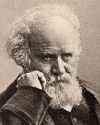
In 1868, Pierre Janssen discovered a previously unknown bright yellow line in the spectrum of the chromosphere of the sun during a solar eclipse he was observing from India. This was an indication of a new element. For over 30 years, it was assumed the element was only present in the sun since the spectral line was not observed in the lab until 1895 when Sir William Ramsay examined a gas released from treating the mineral cleveite. Ramsay named the new element “helium” from the Greek word helios for the sun.
more
The Astronomer Jules Janssen: A Globetrotter of Celestial Physics, by Françoise Launay. - book suggestion.




