Born 12 Aug 1919; died 30 Dec 1971 at age 52. quotes
Indian physicist who was the father of the Indian space program. His family were wealthy industrialists, to which he added the skills of a visionary scientist and innovator. Sarabhai completed his PhD at Cambridge (1947) and helped establish the Physical Research Laboratory in Ahmedabad (Nov 1947) at the MG Science Institute founded by his parents. He studied the time variations of cosmic rays with solar activity and forsaw the development of solar and interplanetary physics. Following the launch of Sputnik, he formed the Indian National Committee for Space Research, and launched its first rocket on 21 Nov 1963. He became chairman of the Atomic Energy Commission (May 1966).«
Indian physicist who was the father of the Indian space program. His family were wealthy industrialists, to which he added the skills of a visionary scientist and innovator. Sarabhai completed his PhD at Cambridge (1947) and helped establish the Physical Research Laboratory in Ahmedabad (Nov 1947) at the MG Science Institute founded by his parents. He studied the time variations of cosmic rays with solar activity and forsaw the development of solar and interplanetary physics. Following the launch of Sputnik, he formed the Indian National Committee for Space Research, and launched its first rocket on 21 Nov 1963. He became chairman of the Atomic Energy Commission (May 1966).«
Born 12 Aug 1897; died 6 Apr 1963 at age 65. quotes
Russian-American astronomer who was a fourth generation astronomer, the great-grandson of Friedrich Struve. He made detailed spectroscopic investigations of stars, especially close binaries and peculiar stars, the interstellar medium (where he discovered H II regions), and gaseous nebulae. He contributed to the understanding of the broadening of spectral lines due to stellar rotation, electric fields, and turbulence and worked to separate these effects from each other and from chemical abundances. He was a pioneer in the study of mass transfer in closely interacting binary stars. Struve emigrated to the USA (1921) and joined the Yerkes Observatory, Wisconsin, becoming its director in 1932.«
Russian-American astronomer who was a fourth generation astronomer, the great-grandson of Friedrich Struve. He made detailed spectroscopic investigations of stars, especially close binaries and peculiar stars, the interstellar medium (where he discovered H II regions), and gaseous nebulae. He contributed to the understanding of the broadening of spectral lines due to stellar rotation, electric fields, and turbulence and worked to separate these effects from each other and from chemical abundances. He was a pioneer in the study of mass transfer in closely interacting binary stars. Struve emigrated to the USA (1921) and joined the Yerkes Observatory, Wisconsin, becoming its director in 1932.«
Born 12 Aug 1889; died 28 Feb 1953 at age 63.
Eliezer Lipa Sukenik was a Polish-Israeli archaeologist who established the date and provenance of the Dead Sea Scrolls. He settled in Israel in 1912, began teaching in 1914 and eventually became field archaeologist at the Hebrew University. He directed the excavations of the synagogues and Jewish tombs. In 1947, within the eleven caves near Qumran, north-west of the Dead Sea, Israel, parts of more than 700 ancient Jewish manuscripts were discovered. Most were written in Hebrew, some in Aramaic and fewer in Greek. The Dead Sea Scrolls, as they came to be known, are assumed to have been the library of a sectarian community at Qumran. Sukenik devoted the rest of his life to their study.«
Eliezer Lipa Sukenik was a Polish-Israeli archaeologist who established the date and provenance of the Dead Sea Scrolls. He settled in Israel in 1912, began teaching in 1914 and eventually became field archaeologist at the Hebrew University. He directed the excavations of the synagogues and Jewish tombs. In 1947, within the eleven caves near Qumran, north-west of the Dead Sea, Israel, parts of more than 700 ancient Jewish manuscripts were discovered. Most were written in Hebrew, some in Aramaic and fewer in Greek. The Dead Sea Scrolls, as they came to be known, are assumed to have been the library of a sectarian community at Qumran. Sukenik devoted the rest of his life to their study.«
The Dead Sea Scrolls Today, by James C. Vanderkam. - book suggestion.
Born 12 Aug 1887; died 4 Jan 1961 at age 73. quotes
Austrian theoretical physicist who shared the 1933 Nobel Prize for Physics with the British physicist P.A.M. Dirac. Erwin Schrödinger took Louis de Broglie's concept of atomic particles as having wave-like properties, and modified the earlier Bohr model of the atom to accommodate the wave nature of the electrons. This made a major contribution to the development of quantum mechanics. Schrödinger realized the possible orbits of an electron would be confined to those in which its matter waves close in an exact number of wavelengths. This condition, similar to a standing wave, would account for only certain orbits being possible, and none possible in between them. This provided an explanation for discrete lines in the spectrum of excited atoms.«
Austrian theoretical physicist who shared the 1933 Nobel Prize for Physics with the British physicist P.A.M. Dirac. Erwin Schrödinger took Louis de Broglie's concept of atomic particles as having wave-like properties, and modified the earlier Bohr model of the atom to accommodate the wave nature of the electrons. This made a major contribution to the development of quantum mechanics. Schrödinger realized the possible orbits of an electron would be confined to those in which its matter waves close in an exact number of wavelengths. This condition, similar to a standing wave, would account for only certain orbits being possible, and none possible in between them. This provided an explanation for discrete lines in the spectrum of excited atoms.«
Schrödinger: Life and Thought, by Walter J. Moore. - book suggestion.
Born 12 Aug 1882; died 27 Mar 1945 at age 62.
Vincent Hugo Bendix was an American inventor who developed systems for automobiles and aircraft and companies to manufacture them. His first, the short-lived Bendix Company of Chicago (1907-9) made a car called the Bendix Buggy. In 1910, he invented the Bendix drive which made the electric self-starter possible. It used a gear to engage with the engine at low rotational speed then fly back, disengaging automatically at higher speed. The first four-wheel brake system for automobiles was his creation. He entered aviation systems production in 1929 with the Bendix Aviation Corporation (later be renamed Bendix Corporation), and started Bendix Helicopters, Inc. in 1942. During WW II, Bendix was the major source of U.S. aviation electronics.«
Vincent Hugo Bendix was an American inventor who developed systems for automobiles and aircraft and companies to manufacture them. His first, the short-lived Bendix Company of Chicago (1907-9) made a car called the Bendix Buggy. In 1910, he invented the Bendix drive which made the electric self-starter possible. It used a gear to engage with the engine at low rotational speed then fly back, disengaging automatically at higher speed. The first four-wheel brake system for automobiles was his creation. He entered aviation systems production in 1929 with the Bendix Aviation Corporation (later be renamed Bendix Corporation), and started Bendix Helicopters, Inc. in 1942. During WW II, Bendix was the major source of U.S. aviation electronics.«
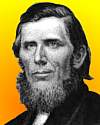
Born 12 Aug 1812; died 1 Jan 1872 at age 59.
American inventor and manufacturer whose "Ball's Ohio Mower" (patented 1 Dec1857) was the first widely successful of the two-wheeled flexible or hinged bar mowers, which greatly influenced the change from single driving-wheel machines to those with double drivers. His first invention was a turn-top stove. In 1840 he established a foundry for making ploughs. The “Ball's Blue Plough” he invented sold well. In 1851, he joined with others to form a larger company with factories at Canton, Ohio. His “Ohio Mower” (1854), “World Mower and Reaper,” and “Buckeye Machine” (1858) sold extensively. Thereafter his “New American Harvester”" produced up to 10,000 of these machines annually (1865). Nevertheless, he died impoverished.« more
American inventor and manufacturer whose "Ball's Ohio Mower" (patented 1 Dec1857) was the first widely successful of the two-wheeled flexible or hinged bar mowers, which greatly influenced the change from single driving-wheel machines to those with double drivers. His first invention was a turn-top stove. In 1840 he established a foundry for making ploughs. The “Ball's Blue Plough” he invented sold well. In 1851, he joined with others to form a larger company with factories at Canton, Ohio. His “Ohio Mower” (1854), “World Mower and Reaper,” and “Buckeye Machine” (1858) sold extensively. Thereafter his “New American Harvester”" produced up to 10,000 of these machines annually (1865). Nevertheless, he died impoverished.« more
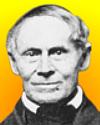
c. 1850
Born 12 Aug 1781; died 3 Mar 1855 at age 73.
American architect and engineer who designed the Washington Monument in Washington, D.C. Mills also designed buildings in several Eastern states. In 1836, he won the competition for the design of the Washington Monument. Construction began in 1848 and proceeded slowly because of a lack of funds. The monument was only 152-ft high when Mills died in 1855; only in 1878 did Congress appropriate money to complete the structure, which was finished at 555-ft in 1884. He also designed the Department of Treasury building and several other federal buildings. His diverse interests included mapping and making a directory of lighthouses. He adopted fire-proofing measures in the design of buildings.«
American architect and engineer who designed the Washington Monument in Washington, D.C. Mills also designed buildings in several Eastern states. In 1836, he won the competition for the design of the Washington Monument. Construction began in 1848 and proceeded slowly because of a lack of funds. The monument was only 152-ft high when Mills died in 1855; only in 1878 did Congress appropriate money to complete the structure, which was finished at 555-ft in 1884. He also designed the Department of Treasury building and several other federal buildings. His diverse interests included mapping and making a directory of lighthouses. He adopted fire-proofing measures in the design of buildings.«
Robert Mills: America's First Architect, by John Bryan. - book suggestion.
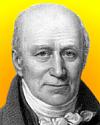
Born 12 Aug 1759; died 11 May 1838 at age 78.
British horticulturalist who initiated the field of fruit breeding, experimental horticulture while also studying plant physiology with botanical experiments. He made studies on the movement of sap in plants, the nature of the cambium, and phototropism in tendrils. To investigate the geotropism of roots and stems, he invented a machine, rotating to simulate gravity with centrifugal force in either horizontal or vertical position. In each case, he found the roots grew outwards and the stems inwards towards the centre. Forty years before Mendel, he studied the effects of pollen in the garden pea on seed characters. In horticulture, he investigated controlled environmental culture (greenhouses), plant nutrition, fertilization, and pest control.«
British horticulturalist who initiated the field of fruit breeding, experimental horticulture while also studying plant physiology with botanical experiments. He made studies on the movement of sap in plants, the nature of the cambium, and phototropism in tendrils. To investigate the geotropism of roots and stems, he invented a machine, rotating to simulate gravity with centrifugal force in either horizontal or vertical position. In each case, he found the roots grew outwards and the stems inwards towards the centre. Forty years before Mendel, he studied the effects of pollen in the garden pea on seed characters. In horticulture, he investigated controlled environmental culture (greenhouses), plant nutrition, fertilization, and pest control.«
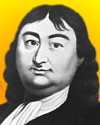
Born 12 Aug 1681; died 19 Dec 1741 at age 60.
Vitus Jonassen Bering was a Danish-Russian navigator who helped establish that Asia and America are two separate continents. He joined the Dutch navy as a young man, and later the Russian navy. He was commissioned by Tsar Peter the Great to travel the coast of Asia to see if it was connected to North America. He sailed through the Bering Strait in 1728. He discovered Alaska on his second voyage (1741), with several scientists on board, explored its coast, and discovered the Aleutian Islands. He died stranded during the winter following a shipwreck. The Bering Sea and Bering Island (where he died) are also named for him.«
Vitus Jonassen Bering was a Danish-Russian navigator who helped establish that Asia and America are two separate continents. He joined the Dutch navy as a young man, and later the Russian navy. He was commissioned by Tsar Peter the Great to travel the coast of Asia to see if it was connected to North America. He sailed through the Bering Strait in 1728. He discovered Alaska on his second voyage (1741), with several scientists on board, explored its coast, and discovered the Aleutian Islands. He died stranded during the winter following a shipwreck. The Bering Sea and Bering Island (where he died) are also named for him.«
Bering: The Russian Discovery of America, by Professor Orcutt Frost. - book suggestion.

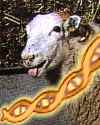
Died 12 Aug 2004 at age 52 (born 18 Sep 1951).
Anthony John Clark was an English molecular biologist who was a pioneer in the application of molecular technology to farm animals. In 1985, he began work in genetic modification (at what is now the Roslin Institute) to produce a sheep giving milk with human proteins. He was successful within five years. Tracy* (born 1990) in each litre of her milk, produced 35g of alpha-1-antitrypsin (used in treatment of cystic fibrosis). During the 1990s, Clark continued to develop transgenic techniques on large animals. With his colleagues, he a produced a sheep from which a prion protein gene had been removed. Clark's work set the stage for Ian Wilmut's team at Roslin to clone a sheep, Dolly (1996), the result of transplanted the DNA of an adult sheep to an unfertilised egg cell. Clark died at age 52, suffering from depression, was found hanged in his holiday home.«[*Ref: see Biotechnology (9 Sep 1991), 9, 830-835. Image: Tracy the sheep with DNA graphic.]
Anthony John Clark was an English molecular biologist who was a pioneer in the application of molecular technology to farm animals. In 1985, he began work in genetic modification (at what is now the Roslin Institute) to produce a sheep giving milk with human proteins. He was successful within five years. Tracy* (born 1990) in each litre of her milk, produced 35g of alpha-1-antitrypsin (used in treatment of cystic fibrosis). During the 1990s, Clark continued to develop transgenic techniques on large animals. With his colleagues, he a produced a sheep from which a prion protein gene had been removed. Clark's work set the stage for Ian Wilmut's team at Roslin to clone a sheep, Dolly (1996), the result of transplanted the DNA of an adult sheep to an unfertilised egg cell. Clark died at age 52, suffering from depression, was found hanged in his holiday home.«[*Ref: see Biotechnology (9 Sep 1991), 9, 830-835. Image: Tracy the sheep with DNA graphic.]
Died 12 Aug 2004 at age 84 (born 28 Aug 1919).
English electrical engineer who shared the 1979 Nobel Prize for Physiology or Medicine (with Allan Cormack) for creation of computerised axial tomography (CAT) scanners. He originated the idea during a country walk in 1967 when he realized that the contents of a box could be reconstructed by taking readings at all angles through it. He applied the concept for scanning the brain using hundreds of X-ray beams imaging cross-sections that were reconstructed as high-resolution graphics by a computer program handling complex algebraic calculations. By 1973 his CAT scanner could produce cross-section images of a brain in 4-1/2-min, invaluable for the diagnosis of brain diseases. He later built larger machines able to make a full body scan.«
English electrical engineer who shared the 1979 Nobel Prize for Physiology or Medicine (with Allan Cormack) for creation of computerised axial tomography (CAT) scanners. He originated the idea during a country walk in 1967 when he realized that the contents of a box could be reconstructed by taking readings at all angles through it. He applied the concept for scanning the brain using hundreds of X-ray beams imaging cross-sections that were reconstructed as high-resolution graphics by a computer program handling complex algebraic calculations. By 1973 his CAT scanner could produce cross-section images of a brain in 4-1/2-min, invaluable for the diagnosis of brain diseases. He later built larger machines able to make a full body scan.«
Godfrey Hounsfield and the Invention of Cat Scans, by Susan Zannos. - book suggestion.
Died 12 Aug 1996 at age 87 (born 5 Sep 1908).
Viktor Amazaspovich Ambartsumian was a Soviet astronomer and astrophysicist who founded the school of theoretical astrophysics in the Soviet Union. Most of his research was devoted to invariance principles applied to the theory of radiative transfer, inverse problems of astrophysics, and the empirical approach to the problems of the origin and evolution of stars and galaxies. He was first to suggest that T Tauri stars are very young and to propose that nearby stellar associations are expanding. He also showed that evolutionary processes such as mass loss are occurring in galaxies. He worked on radio galaxies and active galactic nuclei. Bruce Medal winner in 1960.
Viktor Amazaspovich Ambartsumian was a Soviet astronomer and astrophysicist who founded the school of theoretical astrophysics in the Soviet Union. Most of his research was devoted to invariance principles applied to the theory of radiative transfer, inverse problems of astrophysics, and the empirical approach to the problems of the origin and evolution of stars and galaxies. He was first to suggest that T Tauri stars are very young and to propose that nearby stellar associations are expanding. He also showed that evolutionary processes such as mass loss are occurring in galaxies. He worked on radio galaxies and active galactic nuclei. Bruce Medal winner in 1960.
1958
Died 12 Aug 1989 at age 79 (born 13 Feb 1910). quotes
William Bradford Shockley was an English-American physicist and engineer who shared (with John Bardeen and Walter H. Brattain) the 1956 Nobel Prize for Physics for their development of the transistor, a device that largely replaced the bulkier and less-efficient vacuum tube and ushered in the age of microminiature electronics.
William Bradford Shockley was an English-American physicist and engineer who shared (with John Bardeen and Walter H. Brattain) the 1956 Nobel Prize for Physics for their development of the transistor, a device that largely replaced the bulkier and less-efficient vacuum tube and ushered in the age of microminiature electronics.
Broken Genius: Rise and Fall of William Shockley, Creator of the Electronic Age, by Joel N. Shurkin. - book suggestion.
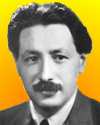
Died 12 Aug 1979 at age 73 (born 19 Jun 1906). quotes
German-English biochemist who shared the 1945 Nobel Prize for Physiology or Medicine with Sir Alexander Fleming and Howard Walter Florey (later Baron Florey) for their work on penicillin. In 1928, Fleming had made the initial discovery of the antibiotic effect of penicillin. Being Jewish, Chain fled Nazi Germany to England in 1933. His varied research included phospholipids, snake venoms, tumour metabolism and lysozymes. From 1939, he worked with Florey on natural antibacterial agents produced by microorganisms, leading to their isolation, purification and determination of the chemical structure of penicillin. They performed the first clinical trials of the antibiotic. Chain's mother and sister perished in the Holocaust of WW II.«
German-English biochemist who shared the 1945 Nobel Prize for Physiology or Medicine with Sir Alexander Fleming and Howard Walter Florey (later Baron Florey) for their work on penicillin. In 1928, Fleming had made the initial discovery of the antibiotic effect of penicillin. Being Jewish, Chain fled Nazi Germany to England in 1933. His varied research included phospholipids, snake venoms, tumour metabolism and lysozymes. From 1939, he worked with Florey on natural antibacterial agents produced by microorganisms, leading to their isolation, purification and determination of the chemical structure of penicillin. They performed the first clinical trials of the antibiotic. Chain's mother and sister perished in the Holocaust of WW II.«
The Mold in Dr. Florey's Coat: The Story of the Penicillin Miracle, by Eric Lax. - book suggestion.
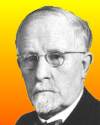
Died 12 Aug 1973 at age 92 (born 17 Mar 1881). quotes
Walter Rudolf Hess was a Swiss physiologist who shared (with António Egas Moniz) the 1949 Nobel Prize for Physiology or Medicine “for his discovery of the functional organization of the interbrain as a coordinator of the activities of the internal organs.” In 1948, Hess devised suitable techniques to implant electrodes in the brains of rats, from which he could locate areas of the brain associated with certain instincts. Through his research, he identified how particular areas of the brain (and especially the hypothalamus) are involved with the functioning of the body's internal organs, and areas associated with autonomic functions such as sleep, hunger or defense mechanisms.«
Walter Rudolf Hess was a Swiss physiologist who shared (with António Egas Moniz) the 1949 Nobel Prize for Physiology or Medicine “for his discovery of the functional organization of the interbrain as a coordinator of the activities of the internal organs.” In 1948, Hess devised suitable techniques to implant electrodes in the brains of rats, from which he could locate areas of the brain associated with certain instincts. Through his research, he identified how particular areas of the brain (and especially the hypothalamus) are involved with the functioning of the body's internal organs, and areas associated with autonomic functions such as sleep, hunger or defense mechanisms.«
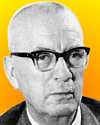
Died 12 Aug 1973 at age 74 (born 26 Nov 1898).
German chemist who shared the 1963 Nobel Prize for Chemistry with Giulio Natta “for their discoveries in the field of the chemistry and technology of high polymers” improving the quality of plastics. Polymer molecules are long chains of thousands of atoms, made by connecting together repeating units of a small molecule (the monomer). Ziegler found peculiar electrical forces in a bond between an aluminium and a carbon atom in a hydrocarbon chain: reactive molecules are drawn in and sandwiched between these two atoms, increasing the length of the chain. When the chain is long enough, detaching the aluminium stops further growth of the molecule. The combination of aluminium compounds with other metallic compounds gives Ziegler catalysts..
German chemist who shared the 1963 Nobel Prize for Chemistry with Giulio Natta “for their discoveries in the field of the chemistry and technology of high polymers” improving the quality of plastics. Polymer molecules are long chains of thousands of atoms, made by connecting together repeating units of a small molecule (the monomer). Ziegler found peculiar electrical forces in a bond between an aluminium and a carbon atom in a hydrocarbon chain: reactive molecules are drawn in and sandwiched between these two atoms, increasing the length of the chain. When the chain is long enough, detaching the aluminium stops further growth of the molecule. The combination of aluminium compounds with other metallic compounds gives Ziegler catalysts..
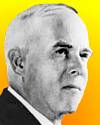
Died 12 Aug 1955 at age 67 (born 19 Nov 1887).
James Batcheller Sumner was an American biochemist who shared (with John Howard Northrop and Wendell Meredith Stanley) the 1946 Nobel Prize for Chemistry. Sumner was the first to crystallize an enzyme to show that enzymes were proteins. He learned to live one-handed from age 17, due to an accident. After earning his Ph.D. (1914), he joined the faculty of Cornell University Medical College. By 1917, he began investigating the protein nature of enzymes. It was technically difficult, taking nine years, before he produced a crystalline globulin with high urease activity in 1926. The significance of his work went unappreciated for a number of years, but by 1946, he was awarded a half-share of the Nobel Prize for Chemistry, “for his discovery that enzymes can be crystallized.” In 1947 he became director of a new laboratory for enzyme chemistry, at Cornell.«
James Batcheller Sumner was an American biochemist who shared (with John Howard Northrop and Wendell Meredith Stanley) the 1946 Nobel Prize for Chemistry. Sumner was the first to crystallize an enzyme to show that enzymes were proteins. He learned to live one-handed from age 17, due to an accident. After earning his Ph.D. (1914), he joined the faculty of Cornell University Medical College. By 1917, he began investigating the protein nature of enzymes. It was technically difficult, taking nine years, before he produced a crystalline globulin with high urease activity in 1926. The significance of his work went unappreciated for a number of years, but by 1946, he was awarded a half-share of the Nobel Prize for Chemistry, “for his discovery that enzymes can be crystallized.” In 1947 he became director of a new laboratory for enzyme chemistry, at Cornell.«
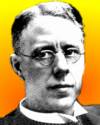
Died 12 Aug 1948 at age 77 (born 18 Feb 1871).
English metallurgist who invented stainless steel, which is an alloy of steel with chromium and nickel. In 1912, he was investigating corrosion of rifle barrels because their internal diameter was quickly eroded from the action of heating and discharge gases. His solution was to develop a chrome alloy steel which was much more rust resistant than the steel then in common use. The added metals produce a surface film of metal oxides which resists rusting. Thus it was termed stainless steel. He also realized how it could revolutionize the cutlery industry. Until then, table cutlery was silver or nickel plated, and cutting knives of carbon steel had to be thoroughly washed and dried after use, and even then rust stains would have to be rubbed off.
English metallurgist who invented stainless steel, which is an alloy of steel with chromium and nickel. In 1912, he was investigating corrosion of rifle barrels because their internal diameter was quickly eroded from the action of heating and discharge gases. His solution was to develop a chrome alloy steel which was much more rust resistant than the steel then in common use. The added metals produce a surface film of metal oxides which resists rusting. Thus it was termed stainless steel. He also realized how it could revolutionize the cutlery industry. Until then, table cutlery was silver or nickel plated, and cutting knives of carbon steel had to be thoroughly washed and dried after use, and even then rust stains would have to be rubbed off.
Steelmakers and Knotted String, by Harry Brearley. - book suggestion.
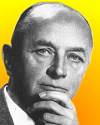
Died 12 Aug 1946 at age 70 (born 16 Jul 1876). quotes
German chemist whose Stock system (1919) is used for inorganic chemical names, now with roman numerals for oxidation numbers, such as iron(II) chloride. He studied under Emil Fischer and Henri Moissan, and became a professor in 1906. From about 1909, he researched boron and silicon hydrides, for which he developed high-vacuum techniques. Stock showed a compound of phosphorus and sulphur could be substituted for the poisonous phosphorus used in matches. From Mar 1924, when he became aware that his years of exposure to mercury vapours in the laboratory had resulted in his chronic mercury poisoning, he initiated research in the pathology of mercury. He devised analytical methods to detect minute amounts of mercury. By avoiding exposure, even amalgam tooth fillings, he recovered his health.«
German chemist whose Stock system (1919) is used for inorganic chemical names, now with roman numerals for oxidation numbers, such as iron(II) chloride. He studied under Emil Fischer and Henri Moissan, and became a professor in 1906. From about 1909, he researched boron and silicon hydrides, for which he developed high-vacuum techniques. Stock showed a compound of phosphorus and sulphur could be substituted for the poisonous phosphorus used in matches. From Mar 1924, when he became aware that his years of exposure to mercury vapours in the laboratory had resulted in his chronic mercury poisoning, he initiated research in the pathology of mercury. He devised analytical methods to detect minute amounts of mercury. By avoiding exposure, even amalgam tooth fillings, he recovered his health.«
The Structure of Atoms, by Alfred Stock. - book suggestion.
Died 12 Aug 1914 at age 75 (born 1 Mar 1839).
Albert Smith Bickmore was an American naturalist, traveller and museum curator who acquired his love of natural history as a result of growing up in a coastal town. He studied natural history under Professor Agassiz, and shortly also began to care for the department of Mullusca at the Museum of Comparative Zoology at Harvard University. There he conceived the idea of the American Museum of Natural History. By 1865, he set off on a three-year expedition to the East Indies, China, Japan, Russia and Europe gathering specimens to form the basis of the future museum's collection. Upon his return, he devoted himself to indeed establishing the institution, and was able to arrange for its funding. He wrote of his travels in Travels in the East Indian Archipelago (1869). In 1870, he was appointed Professor Natural History at Madison University, Hamilton, New York. The cornerstone of the new building was laid on 2 Jun 1874, by President Grant.«
Albert Smith Bickmore was an American naturalist, traveller and museum curator who acquired his love of natural history as a result of growing up in a coastal town. He studied natural history under Professor Agassiz, and shortly also began to care for the department of Mullusca at the Museum of Comparative Zoology at Harvard University. There he conceived the idea of the American Museum of Natural History. By 1865, he set off on a three-year expedition to the East Indies, China, Japan, Russia and Europe gathering specimens to form the basis of the future museum's collection. Upon his return, he devoted himself to indeed establishing the institution, and was able to arrange for its funding. He wrote of his travels in Travels in the East Indian Archipelago (1869). In 1870, he was appointed Professor Natural History at Madison University, Hamilton, New York. The cornerstone of the new building was laid on 2 Jun 1874, by President Grant.«
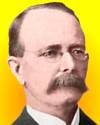
Died 12 Aug 1914 at age 74 (born 29 Feb 1840).
Irish inventor known as the “father of the modern submarine,” who designed and built the first underwater vessel accepted by the U.S. Navy. In 1873, he emigrated to the U.S. where, with financial support from the Irish Fenian Society (who hoped to use submarines against England), he built the Fenian Ram, a small sub that proved a limited success in a test run. In 1895, his J.P. Holland Torpedo Boat Company received a contract from the U.S. Navy to build a submarine, and in 1898 a successful Holland, the first truly practical submarine, was launched. The U.S. government ordered six more; similar orders came from England, Japan, and Russia. Holland’s final years were marked by litigation with his financial backers.[EB gives birth date as 29 Feb. Some sources give 24 Feb.] more
Irish inventor known as the “father of the modern submarine,” who designed and built the first underwater vessel accepted by the U.S. Navy. In 1873, he emigrated to the U.S. where, with financial support from the Irish Fenian Society (who hoped to use submarines against England), he built the Fenian Ram, a small sub that proved a limited success in a test run. In 1895, his J.P. Holland Torpedo Boat Company received a contract from the U.S. Navy to build a submarine, and in 1898 a successful Holland, the first truly practical submarine, was launched. The U.S. government ordered six more; similar orders came from England, Japan, and Russia. Holland’s final years were marked by litigation with his financial backers.[EB gives birth date as 29 Feb. Some sources give 24 Feb.] more
John P. Holland, 1841-1914: Inventor of the Modern Submarine, by Richard Knowles Morris. - book suggestion.
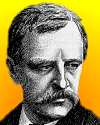
Died 12 Aug 1901 at age 68 (born 18 Nov 1832).
Baron Nils Adolf Erik Nordenskiöld was a Swedish geologist, mineralogist and geographer whose explorations included the first ship voyage from Scandinavia (1878) across the Asiatic Arctic through the Northeast Passage. He joined Swedish geologist Otto Torell on polar travels at Spitsbergen (1858 and 1861) where he discovered plant fossils of the Tertiary period. From 1864, he led his own expeditions. His first journey was to make maps of Spitsbergen. In 1868, in the iron steamer Sofia, he reached a greater latitude (82°42'N) than anyone ever had before. In 1870, he visited the west-central coast of Greenland, collected minerals and fossils and studied the inland ice. He made an extensive collection of biological and zoological specimens at Spitsbergen during his 1872–73 exploration.«
Baron Nils Adolf Erik Nordenskiöld was a Swedish geologist, mineralogist and geographer whose explorations included the first ship voyage from Scandinavia (1878) across the Asiatic Arctic through the Northeast Passage. He joined Swedish geologist Otto Torell on polar travels at Spitsbergen (1858 and 1861) where he discovered plant fossils of the Tertiary period. From 1864, he led his own expeditions. His first journey was to make maps of Spitsbergen. In 1868, in the iron steamer Sofia, he reached a greater latitude (82°42'N) than anyone ever had before. In 1870, he visited the west-central coast of Greenland, collected minerals and fossils and studied the inland ice. He made an extensive collection of biological and zoological specimens at Spitsbergen during his 1872–73 exploration.«
The Arctic Voyages of Adolf Erik Nordenskiöld 1858-1879, by Alexander Leslie. - book suggestion.
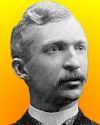
Died 12 Aug 1900 at age 42 (born 10 Sep 1857).
James Edward Keeler was an American astronomer was an American astronomer who confirmed Maxwell's theory that the rings of Saturn were not solid (requiring uniform rotation), but composed of meteoric particles (with rotational velocity given by Kepler's 3rd law). His spectrogram of 9 Apr 1895 of the rings of Saturn showed the Doppler shift indicating variation of radial velocity along the slit. At the age of 21, he observed the solar eclipse of Jul 1878, with the Naval Observatory expedition to Colorado. He directed the Allegheny Observatory (1891-8) and the Lick Observatory from 1898, where, working with the Crossley reflector, he observed large numbers of nebulae whose existence had never before been suspected. He died unexpectedly of a stroke, age 42.«
James Edward Keeler was an American astronomer was an American astronomer who confirmed Maxwell's theory that the rings of Saturn were not solid (requiring uniform rotation), but composed of meteoric particles (with rotational velocity given by Kepler's 3rd law). His spectrogram of 9 Apr 1895 of the rings of Saturn showed the Doppler shift indicating variation of radial velocity along the slit. At the age of 21, he observed the solar eclipse of Jul 1878, with the Naval Observatory expedition to Colorado. He directed the Allegheny Observatory (1891-8) and the Lick Observatory from 1898, where, working with the Crossley reflector, he observed large numbers of nebulae whose existence had never before been suspected. He died unexpectedly of a stroke, age 42.«
James E. Keeler: Pioneer American Astrophysicist: And the Early Development of American Astrophysics, by Donald E. Osterbrock. - book suggestion.
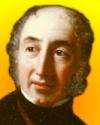
Died 12 Aug 1865 at age 80 (born 6 Jul 1785).
English botanist who was the first director (1841) of the Royal Botanic Gardens at Kew, near London. In 1804, at age 19, he discovered a new moss and became a botanical book illustrator for Dawson Turner. In 1809, Sir Joseph Banks recruited Hooker for a mission to Iceland, though he lost his specimens, and almost his life, when the ship caught fire on the return voyage. After other expeditions, he beame a popular lecturer (1820) at Glasgow University where he established the Royal Botanical Institution of Glasgow. He was knighted in 1836. As director at Kew, from 1841, he expanded it from 11 to 300 acres, amassed specimens from the British Empire, added the Palm House (1848) and established Kew as a national botanic garden given to the nation. He was the father of Joseph Dalton Hooker.«
English botanist who was the first director (1841) of the Royal Botanic Gardens at Kew, near London. In 1804, at age 19, he discovered a new moss and became a botanical book illustrator for Dawson Turner. In 1809, Sir Joseph Banks recruited Hooker for a mission to Iceland, though he lost his specimens, and almost his life, when the ship caught fire on the return voyage. After other expeditions, he beame a popular lecturer (1820) at Glasgow University where he established the Royal Botanical Institution of Glasgow. He was knighted in 1836. As director at Kew, from 1841, he expanded it from 11 to 300 acres, amassed specimens from the British Empire, added the Palm House (1848) and established Kew as a national botanic garden given to the nation. He was the father of Joseph Dalton Hooker.«
A Sketch of the Life and Labours of Sir William Jackson Hooker, by Joseph Dalton Hooker. - book suggestion.
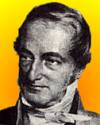
Died 12 Aug 1857 at age 70 (born 7 Jun 1787). quotes
William Daniel Conybeare was an English geologist, palaeontologist and clergyman who, published the classic and influential work Outlines of the Geology of England and Wales (1822). This was an enlargement and improvement of an earlier work by William Phillips. In the descriptions, fossils were used to date sedimentary strata, and the stratigraphy was detailed for the British rocks of the Carboniferous Period (280-345 million years ago). Conybeare was one of the first to use geological cross-sections. He described and reconstructed saurian fossils supplied by Mary Anning of Lyme Regis, including the plesiosaur (“almost lizard”), which he regarded as a link between the ichthyosaur and the crocodiles. He collaborated with William Buckland, to write on the coalfields of the Bristol area. They were both members of the Oxford School of Geology.«
William Daniel Conybeare was an English geologist, palaeontologist and clergyman who, published the classic and influential work Outlines of the Geology of England and Wales (1822). This was an enlargement and improvement of an earlier work by William Phillips. In the descriptions, fossils were used to date sedimentary strata, and the stratigraphy was detailed for the British rocks of the Carboniferous Period (280-345 million years ago). Conybeare was one of the first to use geological cross-sections. He described and reconstructed saurian fossils supplied by Mary Anning of Lyme Regis, including the plesiosaur (“almost lizard”), which he regarded as a link between the ichthyosaur and the crocodiles. He collaborated with William Buckland, to write on the coalfields of the Bristol area. They were both members of the Oxford School of Geology.«
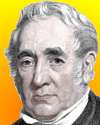
Died 12 Aug 1848 at age 67 (born 9 Jun 1781). quotes
English engineer and inventor who was a principal pioneer of the railroad locomotive. The first railway he built ran from Darlington to Stockton which opened 27 Sep 1825 when large crowds saw him at the controls of the Locomotion as it pulled 36 wagons filled with sacks of coal and flour. The initial journey of just under 9 miles took two hours. The Rainhill trials of 1829, was a competition for building the fastest locomotive. He won with his famous locomotive, the Rocket, which traveled at an unheard of speed of 36 miles per hour. Stephenson then built the Liverpool to Manchester line which opened on 15 Sep 1830. He is regarded as one of the most influential people of the Industrial Revolution in Europe.
English engineer and inventor who was a principal pioneer of the railroad locomotive. The first railway he built ran from Darlington to Stockton which opened 27 Sep 1825 when large crowds saw him at the controls of the Locomotion as it pulled 36 wagons filled with sacks of coal and flour. The initial journey of just under 9 miles took two hours. The Rainhill trials of 1829, was a competition for building the fastest locomotive. He won with his famous locomotive, the Rocket, which traveled at an unheard of speed of 36 miles per hour. Stephenson then built the Liverpool to Manchester line which opened on 15 Sep 1830. He is regarded as one of the most influential people of the Industrial Revolution in Europe.
George and Robert Stephenson: The Railway Revolution, by L.T.C. Rolt. - book suggestion.
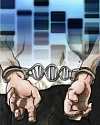
In 1996, New Zealand became the second country to establish a national DNA databank when the enabling Act took effect, providing a powerful crime investigation tool. Orignally, the DNA was taken only from blood samples, but the Criminal Investigations (Blood Samples) Act 1995 was amended in 2003 to allow samples from mouth swabs. The world's first national databank was began operations in the U.K. on 10 Apr 1995. A technique discovered in 1984 by Alec Jeffreys shows how individuals could be identified from their DNA based on Restriction Fragment Length Polymorphism. In 1986, Kary Mullis created the Polymeraze Chain Reaction to replicate DNA for analysis.
DNA and the Criminal Justice System: The Technology of Justice, by David Lazer (ed.). - book suggestion.
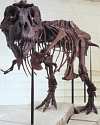
In 1990, the first three fossil bones were discovered which were part of a Tyrannosaurus rex skeleton subsequently unearthed. Susan Hendrickson found them while hunting fossils at a cliff near Faith, in the Black Hills of S. Dakota. When fully excavated and cleaned, the skeleton, thereafter nicknamed Sue, was a remarkable specimen, over 90% complete, with very well-preserved bones. Furthermore, it was the largest T. rex ever found—42-ft long, with a one-ton 5-ft long skull. After lengthy legal proceedings to establish ownership, the verdict was that it came from federal land and the U.S. claimed the bones. Eventually, on 4 Oct 1997, the bones were sold at auction to the Field Museum, Chicago, for 8.36 million (paid in part by corporate donations) and assembled for display from 17 May 2000.«

In 1981, IBM introduced the PC personal computer for $1,600 base price. It shortly eliminated most other machines suitable for home or small business such as those with the S-100 bus, running on CP/M or their own operating system. The PC was developed in less than a year at IBM's Boca Raton Florida facility by using existing off-the-shelf components. The IBM-PC established the dominance of the Microsoft operating system. The IBM PC hardware design also became the industry standard for PC compatibles, with the ISA bus. Its Intel 8080 processor speed was 4.77 MHz, and it used from 16K up to 640K of memory. Data storage choices included 5.25" floppy drives, cassette tape, and later hard disks.«
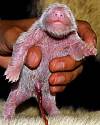
In 1980, in a Mexico zoo, the giant panda Yingying gave birth to a baby named Xengli, the first giant panda cub born in captivity outside of China. However, the baby survived only nine days. Yingying, resident at Zoologico de Chapultepec "Alfonso L. Herrera," in July the following year gave birth to Tohui, a female cub, the first giant panda born outside China who stayed alive. Yingying's offspring included twins in 1985 and 1987. She died at age 14 in 1989. Tohui gave birth to Xinxin in 1990 at the Mexico zoo. Attempts to breed pandas in captivity began in China in 1955. The first ever live birth in captivity of a giant panda took place at Beijing Zoo, China, on 9 Sep 1963, when the male Ming Ming was born to the mother Li Li.«[Image: panda cub born in China in 2006, This baby weighed 218 grams at birth, the heaviest panda born in captivity. Usual birth weight is between 83 to 190 grams]
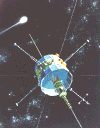
In 1978, the ISEE-3 (International Sun-Earth Explorer) was launched. After completing its original mission in 1982, it was renamed the International Cometary Explorer (ICE) when it was gravitationally manuvuered to intercept the comet P/Giacobini-Zinner. On 11 Sep 1985, it flew relatively unscathed through the gas tail of that comet P/Giacobini-Zinner, at a speed of 21 km/sec at its closed approach of some 7,800-km downstream from the nucleus. The probe found a region of interacting cometary and solar wind ions, and encountered a comet plasma tail about 25,000 km wide. Water and carbon monoxide ions were also identified, which confirmed the “dirty snowball” theory proposed by Fred Whipple (1950).«
Thm.jpg "Enterprise free flight test")
NASA Space Shuttle Manual: An Insight into the Design, Construction and Operation..., by David Baker. - book suggestion.
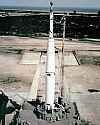
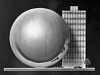

In 1953, the Soviet Union detonated its first hydrogen bomb, in Kazakhstan. Eight days later, the USSR published (20 Aug 1953) news of the H-bomb test. The explosion, with a yield of 400 kilotons (about 30 times the power of the bomb dropped on Japan, 6 Aug 1945), came less than 10 months after the first U.S. bomb test, Mike, (1 Nov 1952) announced by President Harry Truman on 7 Jan 1953. Notably, the Soviet bomb was more portable than the U.S. device—small enough to fit in a plane, and be easily weaponizeable, though its size limited the amount of thermonuclear fuel and explosive force. It had their own “layer cake” design of lithium-6 deuteride and tritium fuel layered with uranium. The American test was designed for greater explosive power.«
more
Dark Sun: The Making of the Hydrogen Bomb, by Richard Rhodes. - book suggestion.
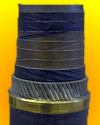
In 1944, the first fuel-carrying PLUTO (Pipe-Line Under The Ocean) under the English Channel became operational supplying fuel from the Isle of Wight to Cherbourg for vehicles of the Allied forces in France. This over 70 mile pipe was laid in just 10 hours, and is one of the greatest feats of military engineering. The scheme was developed by A.C. Hartley, chief engineer with the Anglo-Iranian Oil Company, from an idea by Admiral Louis Mountbatten to relieve dependence on vulnerable oil tankers. Prototypes of the pipeline were tested at several locations starting in May 1942. Britain and the U.S. then produced sufficient pipe to eventually lay 18 pipelines between England and France pumping 781 million litres of fuel by VE day.*Image: section of pipeline showing lead core and successive protective layers.
PLUTO: Pipe-Line Under the Ocean: The Definitive Story, by Adrian Searle. - book suggestion.
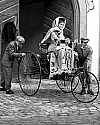
In 1888, Bertha Benz, wife of inventor Karl Benz, made the first motor tour. Without her husband's knowledge, she borrowed one of his cars and with their teenage sons travelled 180 km to visit relatives for 5 days. She drove her sons, Richard and Eugen, 14 and 15 years old, in Benz's newly-constructed “Patent Motorwagen” automobile from Mannheim to Pforzheim She thus became the first person to drive an automobile over more than just a very short distance. This was a distance of more than 106 km (more than fifty miles). Distances traveled before this trip were short and merely trials with mechanical assistants.[Image: Bertha Benz and sons, Eugen and Richard, on their 1888 Mannheim to Pforzheim tour with the Benz Patent Motor Car.]
The Invention of the Automobile (Karl Benz and Gottlieb Daimler), by St. John C Nixon. - book suggestion.
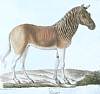
In 1883, the quagga went extinct when the last mare at Amsterdam Zoo died. It was not realised at that time that she was the very last of her kind. Because of the confusion caused by the indiscriminate use of the term "quagga" for any zebra, the true quagga had been hunted to extinction without this being realised until much later. The Quagga, formerly inhabited the Karoo and southern Free State of South Africa. Like other grazing mammals, quaggas had been ruthlessly hunted. The settlers saw them as competitors for the grazing of their livestock, mainly sheep and goats. Now, by breeding with selected southern plains zebras an attempt is being made, started by Reinhold Rau, to retrieve at least the genes responsible for the Quaggas colouration.«
more
Quaggas and Other Zebras, by David Barnaby. - book suggestion.
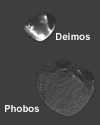
In 1877, American astronomer Asaph Hall discovered the the first of two moons of Mars, which he observed this month. He named the first Deimos. Five days later, on 17 Aug 1877, he observed a second moon, which he named Phobos. In Greek mythology, these are the sons of Ares (Mars) and Aphrodite (Venus). Deimos is Greek for “panic” and phobos is Greek for “fear.” These moons are composed of carbon-rich rock like C-type asteroids and ice. Their densities are so low that they cannot be pure rock; instead likely a mixture of rock and ice. Both are heavily cratered. They are probably asteroids perturbed by Jupiter into orbits that allowed them to be captured by Mars.[Image: Moons of Mars images by Viking Orbiter 1977; shown at the same scale]
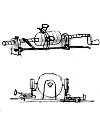
In 1877, Thomas Alva Edison, though this date is often given as the date of a finished model of his first phonograph, may have actually only made a sketch. Some correspondence in Sep 1877 suggests Edison was at work on his ideas for what became his cylinder phonograph, though construction of a working model may not have begun until 4 Dec, according to the diary of one of Edison's aides. Indeed, Edison did not file for the patent until 24 Dec 1877. The idea came to him while working on a telegraph transmitter, when he noticed that when the tape of the machine was played at high speed, it gave off a noise resembling spoken words. After experimenting with a needle attached to the diaphragm of a telephone receiver to prick paper tape to record a message, his idea evolved to using a stylus on a tinfoil cylinder.«[Image: Sketch dated 20 Nov 1877 given to machinist John Kruesi to make the world's first cylinder phonograph.]
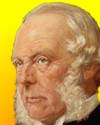
In 1865, Dr. Joseph Lister became the first surgeon perform an antiseptic operation by liberal use of carbolic acid (phenol) as a disinfectant. He had studied Louis Pasteur's germ theory of disease, that infections are caused by bacteria. Lister knew carbolic acid had been effective in municipal use for treating sewage, and decided to try using it to kill germs that would otherwise infect wounds. He poured it on bandages, ligatures, instruments and directly on the wound and hands. His first patient to benefit from this procedure was James Greenlees, age 12, whose broken leg was treated after being run over by a cart. The dressing was soaked with carbolic acid and linseed oil. The wound healed without infection. Lister continued his protocol of hygiene, and reduced the surgical death rate from 45% to 15%.«
Germ Theory & The Antiseptic Principle, by Louis Pasteur, Joseph Lister. - book suggestion.
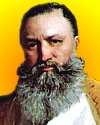
In 1851, Isaac M. Singer of New York City was granted a patent for the first sewing machine with a rocking treadle. Although a sewing machine had already been patented, Singer's sewing machine was revolutionary, having a double treadle. With patent in hand, Isaac set up shop in Boston, Massachusetts and began to manufacture his invention. Even after huge settlements paid to Elias Howe, another sewing machine patent holder, Singer, through business innovations like installment buying, after-sale servicing and trade-in allowances, had the marketplace all sewn up.
Singer and the Sewing Machine: A Capitalist Romance, by Ruth Brandon. - book suggestion.
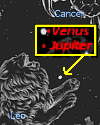
In 3 B.C., a planetary conjunction of Jupiter and Venus was visible that may have been the Star of Bethlehem mentioned in the New Testament. In this pre-dawn, “morning star” conjunction, the two planets appeared very close to each other in the sky (a mere 0.07° apart as viewed from Earth). It occurred when the planets were in the last degrees of the zodiacal sign of Cancer which was the concluding sign for interpreting that astrological year. The same two planets met again just ten months later (17 Jun 2 B.C.), even more closely, almost touching (0.01°), in an “evening star” conjunction in the first degrees of Leo, the beginning sign of the new astrological year. These two unions of Jupiter and Venus might have been interpreted as the close of one age in history amd the beginning of another age in 2 B.C.«[Image: yellow box shows detail of planets Venus and Jupiter beside the bright star Regulus.]
The Christmas Star, by John Mosley. - book suggestion.




