Born 10 Apr 1927; died 15 Jan 2010 at age 82.
Marshall Warren Nirenberg was an American biochemist who shared with (Robert William Holley and Har Gobind Khorana) the 1968 Nobel Prize for Physiology or Medicine. He was noted for his role in deciphering the genetic code. He demonstrated that, with the exception of “nonsense codons,” each possible triplet (called a codon) of four different kinds of nitrogen-containing bases found in deoxyribonucleic acid (DNA) and, in some viruses, in ribonucleic acid (RNA) ultimately causes the incorporation of a specific amino acid into a cell protein.
Marshall Warren Nirenberg was an American biochemist who shared with (Robert William Holley and Har Gobind Khorana) the 1968 Nobel Prize for Physiology or Medicine. He was noted for his role in deciphering the genetic code. He demonstrated that, with the exception of “nonsense codons,” each possible triplet (called a codon) of four different kinds of nitrogen-containing bases found in deoxyribonucleic acid (DNA) and, in some viruses, in ribonucleic acid (RNA) ultimately causes the incorporation of a specific amino acid into a cell protein.
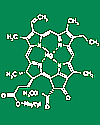
American chemist who is best known for his syntheses of complex organic substances, including quinine, the well-known antimalarial (1944), the steroids cholesterol and cortisone (1951), and vitamin B12 (1971). He also synthesized lanosterol, the famous poison strychnine and reserpine. Several other examples from the chemistry of the alkaloids are lysergic acid, ergonovine, ellipticine, colhicine. In the field of antibiotics Woodward established the structure of aureomycin and terramycin. He has also synthesized chlorophyll, the green plant pigment. He established the structure of many compounds, for instance the peculiar fish poison tetrodotoxin, causing numerous fatalities in Japan. He was awarded the Nobel Prize for Chemistry in 1965.
Robert Burns Woodward: Architect and Artist in the World of Molecules, by Otto Theodor Benfey, Peter John Turnbull Morris (eds.). - book suggestion.
Born 10 Apr 1887; died 21 Sep 1971 at age 84.
Argentine physiologist and corecipient, with Carl and Gerty Cori, of the 1947 Nobel Prize for Physiology or Medicine. He was noted for discovering how pituitary hormones regulate the amount of blood sugar (glucose) in animals. The hypophysis, or the pituitary gland, is an important, but small secreting gland at the base of the brain, where it lies sunk in a bony hollow in the most sheltered spot of the whole body. Its size is that of a bean in man, a pea in the dog, and a radish seed in the large toad Bufo marinus, which is plentiful in the Argentine. Houssay worked with dogs from which the hypophysis, or sometimes only its anterior lobe, was surgically removed. He then found that a daily implantation of anterior lobe of hypophysis from toads on the operated animals protected the latter from unbalanced levels of insulin, otherwise present.
Argentine physiologist and corecipient, with Carl and Gerty Cori, of the 1947 Nobel Prize for Physiology or Medicine. He was noted for discovering how pituitary hormones regulate the amount of blood sugar (glucose) in animals. The hypophysis, or the pituitary gland, is an important, but small secreting gland at the base of the brain, where it lies sunk in a bony hollow in the most sheltered spot of the whole body. Its size is that of a bean in man, a pea in the dog, and a radish seed in the large toad Bufo marinus, which is plentiful in the Argentine. Houssay worked with dogs from which the hypophysis, or sometimes only its anterior lobe, was surgically removed. He then found that a daily implantation of anterior lobe of hypophysis from toads on the operated animals protected the latter from unbalanced levels of insulin, otherwise present.
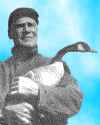
Born 10 Apr 1865; died 3 Nov 1944 at age 79.
Canadian naturalist, author and lecturer, was a pioneer of bird conservation and the study of migration. In 1904 he established the Jack Miner Bird Sanctuary in Kingsville, Canada, to protect migrating Canada geese and wild ducks, shaping modern waterfowl refuge management. In 1909, to study migration, he banded his first wild duck. The band was recovered by Dr. W. Bray of Anderson, South Carolina, in Jan 1910—providing the first complete banding record. Miner systematically recorded recoveries, mapped flyways, and produced early quantitative evidence of long-distance migration routes. In 1910, Miner began a 30 year lecture career, advocating wildlife conservation and the creation of sanctuaries and refuges.«
Canadian naturalist, author and lecturer, was a pioneer of bird conservation and the study of migration. In 1904 he established the Jack Miner Bird Sanctuary in Kingsville, Canada, to protect migrating Canada geese and wild ducks, shaping modern waterfowl refuge management. In 1909, to study migration, he banded his first wild duck. The band was recovered by Dr. W. Bray of Anderson, South Carolina, in Jan 1910—providing the first complete banding record. Miner systematically recorded recoveries, mapped flyways, and produced early quantitative evidence of long-distance migration routes. In 1910, Miner began a 30 year lecture career, advocating wildlife conservation and the creation of sanctuaries and refuges.«
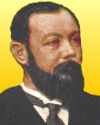
Born 10 Apr 1863; died 9 May 1914 at age 51.
French metallurgist and chemist who invented the electric-arc furnace, widely used in making steel; and, independently of the simultaneous work of Charles M. Hall of the United States, devised the electrolytic process for preparing aluminum. This process made low-priced aluminum available for the first time, securing the widespread use of the metal and its alloys. In 1906, he built a “phaneroptere” flying machine, a precursor of the helicopter. With the American Cooper Hewitt, he designed the hydroslip, a sort of boat on runners, lifted by four propulsive vanes. He also experimented with a rocket missile. more
French metallurgist and chemist who invented the electric-arc furnace, widely used in making steel; and, independently of the simultaneous work of Charles M. Hall of the United States, devised the electrolytic process for preparing aluminum. This process made low-priced aluminum available for the first time, securing the widespread use of the metal and its alloys. In 1906, he built a “phaneroptere” flying machine, a precursor of the helicopter. With the American Cooper Hewitt, he designed the hydroslip, a sort of boat on runners, lifted by four propulsive vanes. He also experimented with a rocket missile. more
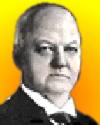
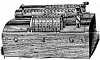
1902
American inventor best-known for his development of the Monroe calculator. Baldwin began in 1870 to experiment with the design of mechanical calculators. The device was patented and marketed in 1875 (No. 159,244). The improved 1875 machine initiated the development of the second fundamental principle in rotary four-rules calculators which became known as “The Baldwin Principle.” Baldwin developed many more calculators during his life. His last model was the forerunner of the Monroe machine. The Monroe Calculator Company was formed in 1912 and was a pioneer in electric adding machines. The Monroe Calculator was used extensively in the 1930's.[Image right: 1902 Baldwin calculator]
Born 10 Apr 1766; died 3 Nov 1832 at age 66. quotes
Scottish physicist and mathematician who first created artificial ice. His practical scientific investigations led to his book Experimental Inquiry Into the Nature and Propagation of Heat (1804), dealing with the fundamental laws of heat radiation. Leslie gave the first correct description of capillary action (1802) and invented many instruments, most notably an accurate differential air thermometer, and also a hygrometer, a photometer, the pyroscope, atmometer and aethrioscope. In 1810, he devised a method of obtaining very low temperatures, by evaporating water in a receiver evacuated with an air-pump but containing a drying agent. His mathematical works include texts on geometry, trigonometry and The Philosophy of Arithmetic.
Scottish physicist and mathematician who first created artificial ice. His practical scientific investigations led to his book Experimental Inquiry Into the Nature and Propagation of Heat (1804), dealing with the fundamental laws of heat radiation. Leslie gave the first correct description of capillary action (1802) and invented many instruments, most notably an accurate differential air thermometer, and also a hygrometer, a photometer, the pyroscope, atmometer and aethrioscope. In 1810, he devised a method of obtaining very low temperatures, by evaporating water in a receiver evacuated with an air-pump but containing a drying agent. His mathematical works include texts on geometry, trigonometry and The Philosophy of Arithmetic.
1838
Born 10 Apr 1755; died 2 Jul 1843 at age 88. quotes
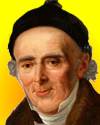
Samuel Christian Friedrich Hahnemann was a German chemist and physician who founded the system of therapeutics known as homeopathy. Hahnemann's methods aroused controversy among his contemporaries and he was forced to leave his practice in Leipzig, eventually settling in Paris. His system was one of complementary medicine, after Hahnemann observed that quinine (an anti-malarial drug) taken by healthy patients produced symptoms similar to those of malaria, and proposed that any compound that produced symptoms similar to those of an illness could cure the illness. This “proving” is the basis of modern homoeopathic practice; compounds are taken in very small doses. Homoeopathy requires the practitioner to treat the patient as a whole, rather than a specific symptom.
Samuel Christian Friedrich Hahnemann was a German chemist and physician who founded the system of therapeutics known as homeopathy. Hahnemann's methods aroused controversy among his contemporaries and he was forced to leave his practice in Leipzig, eventually settling in Paris. His system was one of complementary medicine, after Hahnemann observed that quinine (an anti-malarial drug) taken by healthy patients produced symptoms similar to those of malaria, and proposed that any compound that produced symptoms similar to those of an illness could cure the illness. This “proving” is the basis of modern homoeopathic practice; compounds are taken in very small doses. Homoeopathy requires the practitioner to treat the patient as a whole, rather than a specific symptom.
Samuel Hahnemann: The Founder of Homoeopathic Medicine, by Trevor M Cook. - book suggestion.
Born 10 Apr 1707; died 18 Jan 1782 at age 74.
(1st Baronet) British physician, an early exponent of the importance of ordinary putrefactive processes in the production of disease. His application of this principle to the administration of hospitals and army camps has earned him distinction as the founder of modern military medicine.
(1st Baronet) British physician, an early exponent of the importance of ordinary putrefactive processes in the production of disease. His application of this principle to the administration of hospitals and army camps has earned him distinction as the founder of modern military medicine.

Died 10 Apr 2013 at age 87 (born 27 Sep 1925).
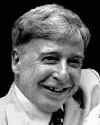
Robert Geoffrey Edwards was a British medical researcher who, with Patrick Steptoe, perfected in-vitro fertilization (IVF) of the human egg. Their technique made possible the birth of Louise Brown, the world's first “test-tube baby,” on 25 Jul 1978, to parents that had previously spent nine years trying to start a family. Edwards became the sole recipient of the Nobel Prize in Physiology or Medicine, in 2010, “for the development of in vitro fertilization.” (His colleague, Steptoe could not be a posthumous recipient; he died in 1988.) They began in the late 1960s, but their research had to be privately financed, since the medical establishment found the idea of a “test-tube baby” repugnant. So they worked in a secluded laboratory at a small hospital in Oldham. It took persistence with over 100 frustrating failures before the first success. Millions of births have since been enabled by IVF.«
Robert Geoffrey Edwards was a British medical researcher who, with Patrick Steptoe, perfected in-vitro fertilization (IVF) of the human egg. Their technique made possible the birth of Louise Brown, the world's first “test-tube baby,” on 25 Jul 1978, to parents that had previously spent nine years trying to start a family. Edwards became the sole recipient of the Nobel Prize in Physiology or Medicine, in 2010, “for the development of in vitro fertilization.” (His colleague, Steptoe could not be a posthumous recipient; he died in 1988.) They began in the late 1960s, but their research had to be privately financed, since the medical establishment found the idea of a “test-tube baby” repugnant. So they worked in a secluded laboratory at a small hospital in Oldham. It took persistence with over 100 frustrating failures before the first success. Millions of births have since been enabled by IVF.«
Died 10 Apr 2005 at age 85 (born 3 Jul 1919). quotes
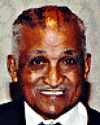
Samuel Proctor Massie was a Black-American chemist who was the U.S. Naval Academy’s first African-American professor. He graduated from high school at age 13, and received his B.S. degree at age 18. In 1943, while working on his Ph.D., Massie joined a team of scientists working for the Manhattan Project on the development of the atomic bomb. He was asked to develop liquid compounds of uranium, though this research later proved to be a dead end. His major contributions include studies in silicon chemistry, the chemistry of phenothiazine, antimalarial-antibacterial agents, and studies on environmental agents. He is recognized for encouraging disadvantaged students into science careers.
Samuel Proctor Massie was a Black-American chemist who was the U.S. Naval Academy’s first African-American professor. He graduated from high school at age 13, and received his B.S. degree at age 18. In 1943, while working on his Ph.D., Massie joined a team of scientists working for the Manhattan Project on the development of the atomic bomb. He was asked to develop liquid compounds of uranium, though this research later proved to be a dead end. His major contributions include studies in silicon chemistry, the chemistry of phenothiazine, antimalarial-antibacterial agents, and studies on environmental agents. He is recognized for encouraging disadvantaged students into science careers.
Catalyst: The Autobiography of an American Chemist, by Samuel Proctor Massie and Robert C. Hayden. - book suggestion.
Died 10 Apr 1999 at age 88 (born 29 Jul 1910).
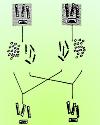
German-American biochemist who was the first to establish that reproduction of a virus is controlled by genetic information within its ribonucleic acid (RNA) core. His pioneering work was with the tobacco mosaic virus (1955), which he first disassembled into its hollow protein shell and the ribonucleic acid inside. Having taken care than neither portion was seriously damaged, he was then able to reassemble them as a live virus. He found that the protein was inert, but proved conclusively that the RNA genetic material was the infectious agent. He was the first scientist to show that virus molecules, still retaining viral life, could be thus reconstituted from its separated protein and RNA.«
German-American biochemist who was the first to establish that reproduction of a virus is controlled by genetic information within its ribonucleic acid (RNA) core. His pioneering work was with the tobacco mosaic virus (1955), which he first disassembled into its hollow protein shell and the ribonucleic acid inside. Having taken care than neither portion was seriously damaged, he was then able to reassemble them as a live virus. He found that the protein was inert, but proved conclusively that the RNA genetic material was the infectious agent. He was the first scientist to show that virus molecules, still retaining viral life, could be thus reconstituted from its separated protein and RNA.«
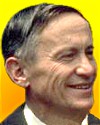
Died 10 Apr 1997 at age 84 (born 31 May 1912).
German-American astronomer who worked on stellar structure and evolution, including pulsating stars and differential solar rotation, the helium flash and the ages of star clusters. He traced the post-main sequence evolutionary tracks on the Hertzprung-Russel diagram, indicating how stars become red giants. The computer techniques he used to make stellar models were taken up by subsequent astrophysicists. In 1957, he initiated the Stratoscope projects, using hot-air balloons to carry scientific and photographic instruments to unprescedented stratospheric heights. Using that stable platform he obtained, high-resolution observations of the turbulence in the photosphere of the sun, free from ground-based atmospheric effects. His is the son of German astrophysicist Karl Schwarzschild. In 1936, Martin fled the Nazi regime and moved to America.«
German-American astronomer who worked on stellar structure and evolution, including pulsating stars and differential solar rotation, the helium flash and the ages of star clusters. He traced the post-main sequence evolutionary tracks on the Hertzprung-Russel diagram, indicating how stars become red giants. The computer techniques he used to make stellar models were taken up by subsequent astrophysicists. In 1957, he initiated the Stratoscope projects, using hot-air balloons to carry scientific and photographic instruments to unprescedented stratospheric heights. Using that stable platform he obtained, high-resolution observations of the turbulence in the photosphere of the sun, free from ground-based atmospheric effects. His is the son of German astrophysicist Karl Schwarzschild. In 1936, Martin fled the Nazi regime and moved to America.«
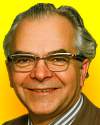
Died 10 Apr 1992 at age 71 (born 29 Sep 1920). quotes
English chemist who won the 1978 Nobel Prize in Chemistry for his 1961 chemiosmotic theory, which explained how cells make ATP, the cells’ universal energy currency. He showed that as electrons move through special proteins in cell membranes, they push protons to one side. This builds up a charge and concentration difference—like a tiny battery. The stored energy, called the protonmotive force, drives an enzyme called ATP synthase. As protons flow back through it, the enzyme attaches a phosphate to ADP (adenosine diphosphate), forming ATP (adenosine triphosphate). Cells then use ATP to power life’s essential jobs, from making molecules to moving muscles.«
English chemist who won the 1978 Nobel Prize in Chemistry for his 1961 chemiosmotic theory, which explained how cells make ATP, the cells’ universal energy currency. He showed that as electrons move through special proteins in cell membranes, they push protons to one side. This builds up a charge and concentration difference—like a tiny battery. The stored energy, called the protonmotive force, drives an enzyme called ATP synthase. As protons flow back through it, the enzyme attaches a phosphate to ADP (adenosine diphosphate), forming ATP (adenosine triphosphate). Cells then use ATP to power life’s essential jobs, from making molecules to moving muscles.«
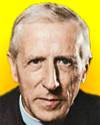
Died 10 Apr 1955 at age 73 (born 1 May 1881). quotes
Pierre Teilhard de Chardin was a French philosopher and paleontologist who regarded evolution as not just a physical fact, but also a spiritual truth. As a Jesuit theologian as well as a scientist, and wrote, he wrote on the reconciliation of faith and evolutionary theory. Because his thinking was ahead of his time, the Vatican forbade him from publishing on religious matters during his lifetime. His works were eventually published after his death. In science, Teilhard de Chardin pursued paleontology, and began working at the Musée National d’Histoire Naturelle, in Paris (1912-14). He investigated the site of the claimed Piltdown Man discovery (1912); assisted excavations at the Cave of Castillo, Spain, a prehistoric painted cave (1913); and helped with excavations at the Peking Man site.«
Pierre Teilhard de Chardin was a French philosopher and paleontologist who regarded evolution as not just a physical fact, but also a spiritual truth. As a Jesuit theologian as well as a scientist, and wrote, he wrote on the reconciliation of faith and evolutionary theory. Because his thinking was ahead of his time, the Vatican forbade him from publishing on religious matters during his lifetime. His works were eventually published after his death. In science, Teilhard de Chardin pursued paleontology, and began working at the Musée National d’Histoire Naturelle, in Paris (1912-14). He investigated the site of the claimed Piltdown Man discovery (1912); assisted excavations at the Cave of Castillo, Spain, a prehistoric painted cave (1913); and helped with excavations at the Peking Man site.«
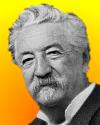
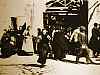
Frenchman who, with his brother Louis, invented and pioneered the manufacturing of photographic equipment. They devised an early motion-picture camera and projector called the Cinématographe (“cinema” is derived from this name). Their film La Sortie des ouvriers de l'usine Lumière (“Workers Leaving the Lumière Factory”), is considered the first motion picture. On 22 Mar 1895, an invited audience at 44 Rue de Rennes in Paris, France, viewed the film they shot specially for the occasion showing workers leaving the Lumières' own factory in Lyon, which made all kinds of photographic products. The workers streamed out, most to foot, some with their bicycles, then followed by those with cars.Image right: frames from La Sortie des ouvriers film.]
Died 10 Apr 1920 at age 90 (born 23 Aug 1829). quotes
German historian of mathematics, one of the greatest of the 19th century. He is best remembered for the four volume work Vorlesungen über Geschichte der Mathematik which traces the history of mathematics up to 1799. The first volume (published 1880) traces the general history of mathematics up to 1200. The second volume traces the history up to 1668 (the year Newton and Leibniz were just about to embark on their mathematicalresearches). The third volume continues up to 1758 (Lagrange's work began shortly after this date). Cantor then, at the age of 69, as editor-in-chief, organised a team with nine further contributors to collaborate on the fourth volume (published 1908), continuing to 1799, the year of Gauss's doctoral thesis.
German historian of mathematics, one of the greatest of the 19th century. He is best remembered for the four volume work Vorlesungen über Geschichte der Mathematik which traces the history of mathematics up to 1799. The first volume (published 1880) traces the general history of mathematics up to 1200. The second volume traces the history up to 1668 (the year Newton and Leibniz were just about to embark on their mathematicalresearches). The third volume continues up to 1758 (Lagrange's work began shortly after this date). Cantor then, at the age of 69, as editor-in-chief, organised a team with nine further contributors to collaborate on the fourth volume (published 1908), continuing to 1799, the year of Gauss's doctoral thesis.
Died 10 Apr 1911 at age 70 (born 31 Jan 1841).
Samuel Loyd was an American puzzlemaker who was best known for composing chess problems and games, including Parcheesi, in addition to other mathematically based games and puzzles. He studied engineering and intended to become a steam and mechanical engineer but he soon made his living from his puzzles and chess problems. Loyd's most famous puzzle was the 14-15 Puzzle which he produced in 1878. The craze swept America where employers put up notices prohibiting playing the puzzle during office hours. Loyd's 15 puzzle is the familiar 4x4 arrangement of 15 square numbered tiles in a tray that must be reordered by sliding one tile at a time into the vacant space.
Samuel Loyd was an American puzzlemaker who was best known for composing chess problems and games, including Parcheesi, in addition to other mathematically based games and puzzles. He studied engineering and intended to become a steam and mechanical engineer but he soon made his living from his puzzles and chess problems. Loyd's most famous puzzle was the 14-15 Puzzle which he produced in 1878. The craze swept America where employers put up notices prohibiting playing the puzzle during office hours. Loyd's 15 puzzle is the familiar 4x4 arrangement of 15 square numbered tiles in a tray that must be reordered by sliding one tile at a time into the vacant space.
Died 10 Apr 1884 at age 83 (born 14 Jul 1800). quotes
French chemist who was a pioneer in organic chemistry. Propounding new theories of relationships between organic compounds, he laid the foundations for Kekulé's later work. In 1823, working with Jean-Louis Prévost, Dumas showed that urea is transported by the blood. Together in 1824-25, they repeated Lazarro Spallanzani's filtration experiments, thus confirming the necessity of spermatozoa for fertilization, and described cleavage in a frog egg. In 1833, with the determination of nitrogen in organic compounds, he established quantitative organic analysis. Two decades ahead of Mendeléev, in 1851, he sought to establish an order among elements by their properties. In 1848 he moved into politics, becoming Master of the Mint in 1868.
French chemist who was a pioneer in organic chemistry. Propounding new theories of relationships between organic compounds, he laid the foundations for Kekulé's later work. In 1823, working with Jean-Louis Prévost, Dumas showed that urea is transported by the blood. Together in 1824-25, they repeated Lazarro Spallanzani's filtration experiments, thus confirming the necessity of spermatozoa for fertilization, and described cleavage in a frog egg. In 1833, with the determination of nitrogen in organic compounds, he established quantitative organic analysis. Two decades ahead of Mendeléev, in 1851, he sought to establish an order among elements by their properties. In 1848 he moved into politics, becoming Master of the Mint in 1868.
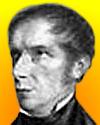
Died 10 Apr 1868 at age 82 (born 25 Mar 1786).
Giovanni Battista Amici was an Italian physicist, microscopist, astronomer and optical instrument designer who is best known for his invention of the achromatic lens. He also introduced the Amici-Bertrand lens, a lens for the inspection of an objective’s rear focal plane. The lens system he designed for a new type of microscope in 1837 improved the magnification, capable of up to 6000 times. In 1840, he also introduced an immersion system for microscopes; the lowermost lens was immersed in a drop of oil to reduce improve clarity. He improved the design of mirrors used in reflecting telescopes. As a biologist, he investigated the sexual function of flowers, in particular he clarified the mechanism of the pollination of orchids.«[DSD gives death year 1868. EB gives death year 1863.]
Giovanni Battista Amici was an Italian physicist, microscopist, astronomer and optical instrument designer who is best known for his invention of the achromatic lens. He also introduced the Amici-Bertrand lens, a lens for the inspection of an objective’s rear focal plane. The lens system he designed for a new type of microscope in 1837 improved the magnification, capable of up to 6000 times. In 1840, he also introduced an immersion system for microscopes; the lowermost lens was immersed in a drop of oil to reduce improve clarity. He improved the design of mirrors used in reflecting telescopes. As a biologist, he investigated the sexual function of flowers, in particular he clarified the mechanism of the pollination of orchids.«[DSD gives death year 1868. EB gives death year 1863.]
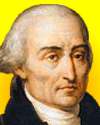
Died 10 Apr 1813 at age 77 (born 25 Jan 1736). quotes
Italian-French astronomer and mathematician who contributed to analytical and celestial mechanics, transforming Newtonian ideas into a powerful mathematical framework. He added to number theory, including early results on quadratic forms, and advanced the calculus of variations still applied today, along with work on differential equations and infinite series. Lagrange also developed techniques for solving polynomial equations and studied the stability of planetary motion, identifying the equilibrium points now called Lagrange points. His formulation of Lagrangian mechanics is foundational for modern physics. In Mécanique analytique (1788), he systematized mechanics in purely analytical terms and shaped subsequent progress.«
Italian-French astronomer and mathematician who contributed to analytical and celestial mechanics, transforming Newtonian ideas into a powerful mathematical framework. He added to number theory, including early results on quadratic forms, and advanced the calculus of variations still applied today, along with work on differential equations and infinite series. Lagrange also developed techniques for solving polynomial equations and studied the stability of planetary motion, identifying the equilibrium points now called Lagrange points. His formulation of Lagrangian mechanics is foundational for modern physics. In Mécanique analytique (1788), he systematized mechanics in purely analytical terms and shaped subsequent progress.«
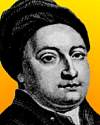
Died 10 Apr 1752 at age 63 (born 19 Oct 1688).
English surgeon and teacher of anatomy and surgery, who was instrumental in raising surgery to a profession. He began lecturing on anatomy at age 22. Three years after that, he published Anatomy of the Human Body, (1713) written in English instead of the Latin, which remained in print as a text for anatomy students for almost a century. He was the first to perform operations for iridectomy, the removal of part of the iris to treat blindness (1728) and lateral lithotomy (1727). In the latter operation, he was quick and precise surgeon, able to remove bladder stones in about one minute. He described the role of saliva in digestion, as opposed to the general belief that digestion resulted from the mechanical actions of the abdominal muscles on the stomach.
English surgeon and teacher of anatomy and surgery, who was instrumental in raising surgery to a profession. He began lecturing on anatomy at age 22. Three years after that, he published Anatomy of the Human Body, (1713) written in English instead of the Latin, which remained in print as a text for anatomy students for almost a century. He was the first to perform operations for iridectomy, the removal of part of the iris to treat blindness (1728) and lateral lithotomy (1727). In the latter operation, he was quick and precise surgeon, able to remove bladder stones in about one minute. He described the role of saliva in digestion, as opposed to the general belief that digestion resulted from the mechanical actions of the abdominal muscles on the stomach.
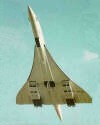
In 2003, the retirement of all Concorde supersonic jets was announced simultaneously by British Airways and Air France, after a quarter century of passenger service that began on 21 Jan 1976. Rising fuel and maintenance costs for the aging aircraft (in the shadow of a fatal crash of a French Concorde in 2000) at a time of declining passenger traffic and revenue made the decision necessary. Air France ended passenger service on 31 May 2003. The final passenger flights made by British Airway landed on 24 Oct 2003. By 28 Nov 2003, all retired British Concordes had been flown to various final destinations for display at museums and airfields in Britain and America.
The Concorde Story: 21 Years in Service, by Christopher Orlebar. - book suggestion.
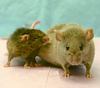
Yoda (left)
In 2000, the dwarf mouse Yoda was born, which in 2004 was claimed as the then known world's oldest laboratory mouse produced without a low-calorie diet. A third smaller than an average mouse, Yoda lived with a larger female (Princess Leia) for protective body warmth. They lived in the lab of Dr. Richard A. Miller, professor of pathology, an expert on the genetics and cell biology of aging at the Univ. of Michigan Medical School Geriatrics Center. Yoda's strain was genetically modified, bred from wild mice captured in Idaho, that live longer, stay smaller and age more slowly than ordinary mice. While other scientists studying extremely low-calorie diets produced older long-lived mice, Miller's research used a genetic approach. Mutations in pituitary and thyroid glands reduced insulin production. Average mouse lifespan is about 2 yrs. Yoda died 22 Apr 2004, aged 4 yrs 12 days (said to be 136 human-yrs).«[Corrected from earlier entry on this site for 13 Apr, which was probably the date of the newspaper report. The record has been broken since 2004, and there are other claims for pet mice.]
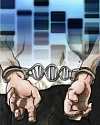
In 1995, the world's first national DNA database was launched in England and Wales. New legislation gave police the authority to retain DNA samples from those previously arrested,. This enabled a revolutionary new tool to uniquely match suspects to crime scene evidence. Mouth swabs or hair samples being routinely collected were used for analysis. By 2005, 3 million profiles were held in the database. New Zealand followed on 12 Aug 1996, and subsequently other countries established their own national DNA databases. The technique for identifying individuals was discovered in 1984 by Alec Jeffreys, based on Restriction Fragment Length Polymorphism, and made practical when, in 1986, Kary Mullis created the Polymeraze Chain Reaction to replicate DNA for analysis.«
DNA and the Criminal Justice System: The Technology of Justice, by David Lazer (ed.). - book suggestion.

In 1972, the first multilateral disarmament treaty to ban an entire category of weapons, the Biological Weapons Convention, was opened for signature. It is an agreement banning biological warfare, by prohibiting development, production and stockpiling of bacteriological (biological) and toxin weapons and by their destruction. Since then, most of the nations of the world have signed or acceded, including ratification on 26 Mar 1975, by the United States, United Kingdom and the Soviet Union. China acceded later (15 Nov 1984). Some ratified it earlier, such as Canada (18 Sep 1972). Israel and several African countries have not joined. Biological weapons are devices which spread disease-causing organisms (such as anthrax, smallpox, plague) or poisons to kill or harm humans, animals or plants.«
Germs: Biological Weapons and America's Secret War, by Judith Miller, et al. - book suggestion.
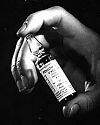
In 1955, polio vaccine tested a success by Dr. Jonas Salk.
Jonas Salk: Beyond the Microscope, by Victoria Sherrow. - book suggestion.
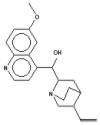
In 1944, the first synthetic quinine was produced by Dr. Robert Burns Woodward (on his birthday) and Dr. William von Eggers Doering at the Converse Memorial Laboratory, Harvard University, Cambridge, Mass. Quinine, an anti-malarial drug, is an organic chemical with the formula C20H24N2O2.
In 1894, two patents were issued to black American inventor, G.W. Murray for a "Combined Furrow Opener and Stalk-Knocker" (No. 517,960) and a "Cultivator and Marker" (No. 517,961). On 6 Jun of the same year, he was issued another six patents for agricultural implements.
The Inventive Spirit of African Americans: Patented Ingenuity, by Patricia Carter Sluby. - book suggestion.
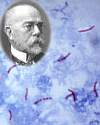
In 1882, German scientist Robert Koch published an article* entitled Die Aetiolgie der Tuberculose (The Etiology of Tuberculosis), three weeks after he had announced, on 24 Mar 1882, to the Berlin Physiological Society that he had discovered the bacillus responsible for tuberculosis. He published an expanded version under the same title in 1884, in which he first presented “Koch's postulates,” which now have been generalized and fundamental in the study of a cause of an infectious disease. Namely, he had found the bacillus present in all cases of the disease, had isolated and cultured the microorganism, with which he had caused the disease by using it to inoculate and infect a new host, and identified the same microorganism from the diseased host. Koch was awarded the Nobel Prize in medicine in 1905.«*Koch R. Die Atiologic der Tuberkulose, Berliner Klinische Wochenschrift 1882; 15:221-30. [Image: Mycobacterium tuberculosis bacilli, stained red.]
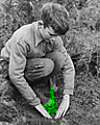
In 1872, Arbor Day was inaugurated when, throughout Nebraska, schoolchildren and civic groups planted a million trees. This was the brain child of Julius Sterling Morton. As editor of the Nebraska News, he spread his enthusiasm for reforestation. Trees act as wind breaks, keep soil in place and retain moisture. They provide shade, fuel and building materials. At a meeting of the state Board of Agriculture (4 Jan 1872), he proposed the tree-planting holiday. Arbor Day was officially proclaimed (12 Mar 1874) by Gov. Furnas. In 1885, Nebraska changed the date to 22 Apr to honor Morton’s birthday. Arbor Day spread throughout America, now usually recognized on the last Friday in April.«
The Forest Unseen: A Year’s Watch in Nature, by David George Haskell. - book suggestion.
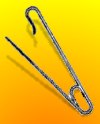
In 1849, the first U.S. patent for a safety pin was issued to Walter Hunt of New York City (No. 6,281). When short of cash, within the space of three hours, he conceived the idea, made a model, immediately sold the patent rights for $400. However, safety pins existed prior to this patent. In Great Britain, a safety pin was patented by Charles Rowley on 12 Oct of the same year.
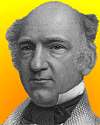
Bigelow

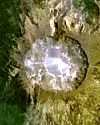
Mt. Tambora crater
In 1815, the massive volcanic eruption of Mount Tambora was the most powerful in 1,600 years. It formed a crater 5-miles across on Indonesia's Sumbawa island, lowered the island by 4,000 feet, and killed 10,000 people. The series of eruptions between 5 Apr and 15 Apr had worldwide effects more far-reaching than the famous 1883 eruption of Krakatoa. The record amounts of ash Tambora spewed into the atmosphere encircled the globe, screened the sun’s light and caused a global drop in temperature. Thus 1816 was a “Year Without a Summer,” with severe climate abnormalities across the globe. Frosts killed crops and late heavy snowstorms occured. Elsewhere, there were severe storms, excessive rainfall and floods. Widespread famine and disease killed 80,000 more people.«[Image: NASA Landsat7.]
In 1790, the first U.S. patent statute was signed into law by President Washington, while the country had only 12 states. Although some inventors were clamoring for patents and copyrights, the first session of the First Congress in 1789 acted on none of the petitions. On 8 Jan 1790, President Washington recommended in his State of the Union address that Congress give attention to the encouragement of new and useful inventions, and within the month, on 25 Jan 1790, the House appointed a committee to draft a patent statute. The bill was given a first reading to the House on 4 Mar 1790, and amendments reconciled with the Senate by 5 Apr 1790. The first patent issued under this statute was signed by George Washington on 31 Jul 1790 for Samuel Hopkins' process to make potash and pearl ash.«
The Patent Office Pony: A History of the Early Patent Office, by Kenneth W. Dobyns. - book suggestion.
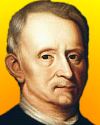
Hooke
In 1662, Robert Hooke read his first publication, a pamphlet on capillary action, to the Society for the Promoting of Physico-Mathematical Experimental Learning. The Society had been constituted, to promote experimental philosophy, by at a meeting of a dozen scientists in Gresham College on 28 Nov 1660. The Society subsequently petitioned King Charles II to recognise it and to make a royal grant of incorporation. The Royal Charter, which was passed by the Great Seal on 15 Jul 1662, created the Royal Society of London. On 5 Nov 1662, Hooke was appointed its Curator of Experiments.«[Image: from a recently discovered portrait believed (by Lisa Jardine) to be the only authentic picture of Hooke] more
The Curious Life of Robert Hooke: The Man Who Measured London, by Lisa Jardine. - book suggestion.
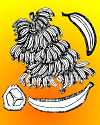
In 1633, an unripe bunch of bananas was given to apothcary Thomas Johnson by John Argent, President of the College of Physicians (who received it from a merchant just returned with it from the Bahamas). Johnson hung it at his shop in Snow Hill, London, where it ripened about the beginning of May, and lasted until June. Being the first bananas seen in Britian, the display caused a sensation. Johnson was a field botanist, and he recorded the date in his 1636 edition revising John Gerard's 1597 Herball. The pulp, he wrote, was as soft and tender, and ate somewhate like a musk-melon. He described the leaves as being “of bigness sufficient to wrap a child of two yeeres old”. It was not until 1884, though, that bananas were regularly imported, from the Canary Islands into Britain by Elder Dempster and Co.*[Image: the 'Plantaine fruit', in Thomas Johnson's 1633 edition of Gerard's Herball.]




