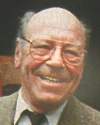
Born 10 Aug 1913; died 6 Dec 1993 at age 80.
German physicist who developed the Paul trap, an electromagnetic device that captures ions and holds them long enough for study and precise measurement of their properties. During the 1950s he developed the so-called Paul trap as a means of confining and studying electrons. The device consists of three electrodes - two end caps and an encircling ring. The ring is connected to an oscillating potential. The direction of the electric field alternates; for half the time the electron is pushed from the caps to the ring and for the other half it is pulled from the ring and pushed towards the caps. For his work he shared the 1989 Nobel Prize for Physics with Hans Georg Dehmelt and Norman F. Ramsey.
German physicist who developed the Paul trap, an electromagnetic device that captures ions and holds them long enough for study and precise measurement of their properties. During the 1950s he developed the so-called Paul trap as a means of confining and studying electrons. The device consists of three electrodes - two end caps and an encircling ring. The ring is connected to an oscillating potential. The direction of the electric field alternates; for half the time the electron is pushed from the caps to the ring and for the other half it is pulled from the ring and pushed towards the caps. For his work he shared the 1989 Nobel Prize for Physics with Hans Georg Dehmelt and Norman F. Ramsey.
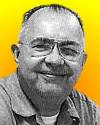
Born 10 Aug 1909; died 21 Mar 1991 at age 81.
American inventor and manufacturer of electronic musical instruments, including the first solid-body electric guitar to be mass-produced: the Fender Broadcaster (1948, renamed the Telecaster two years later). He was an electronics enthusiast and radio repairman who got involved with guitar design after guitar-playing customers kept bringing him their external pickups for repair. Before Fender came along, guitarists met their amplification needs by attaching pickups to the surface of their hollow-bodied instruments. The Stratocaster (1954), had a flashier, contoured, double-cutaway body, with three (as opposed to two) single-coil pickups and a revolutionary string-bending (tremolo) unit. It became a much favored model of rock guitarists.
American inventor and manufacturer of electronic musical instruments, including the first solid-body electric guitar to be mass-produced: the Fender Broadcaster (1948, renamed the Telecaster two years later). He was an electronics enthusiast and radio repairman who got involved with guitar design after guitar-playing customers kept bringing him their external pickups for repair. Before Fender came along, guitarists met their amplification needs by attaching pickups to the surface of their hollow-bodied instruments. The Stratocaster (1954), had a flashier, contoured, double-cutaway body, with three (as opposed to two) single-coil pickups and a revolutionary string-bending (tremolo) unit. It became a much favored model of rock guitarists.
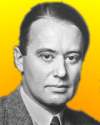
Born 10 Aug 1902; died 29 Oct 1971 at age 69. quotes
Arne Wilhelm Kaurin Tiselius was a Swedish biochemist, awarded the 1948 Nobel Prize in Chemistry for pioneering methods in the separation and analysis of biological substances. Of special note, he refined the use of electrophoresis. In this technique, charged particles migrate through a solution under an electric field. Differences in movement rates allow precise identification of colloids and proteins. Applying this to blood serum, he separated four main protein groups—albumins and the alpha, beta, and gamma globulins—yielding important insight into immune function and disease. From 1940, he advanced chromatography for separating molecular mixtures. From the late 1950s, he explored partition and gel filtration techniques as tools for modern biochemistry and molecular biology.«
Arne Wilhelm Kaurin Tiselius was a Swedish biochemist, awarded the 1948 Nobel Prize in Chemistry for pioneering methods in the separation and analysis of biological substances. Of special note, he refined the use of electrophoresis. In this technique, charged particles migrate through a solution under an electric field. Differences in movement rates allow precise identification of colloids and proteins. Applying this to blood serum, he separated four main protein groups—albumins and the alpha, beta, and gamma globulins—yielding important insight into immune function and disease. From 1940, he advanced chromatography for separating molecular mixtures. From the late 1950s, he explored partition and gel filtration techniques as tools for modern biochemistry and molecular biology.«
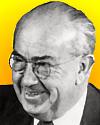
Born 10 Aug 1889; died 29 Aug 1967 at age 78. quotes
Charles Brace Darrow was an American inventor who designed the board game Monopoly. He had invented the game on 7 Mar 1933, though it was preceded by other real-estate board games. On 31 Dec 1935, a patent was issued for the game of Monopoly assigned to Parker Brothers, Inc., by Charles Darrow of Pennsylvania (No. 2,026,082). The patent titled it a “Board Game Apparatus” and described it as “intended primarily to provide a game of barter, thus involving trading and bargaining” in which “much of the interest in the game lies in trading and in striking shrewd bargains.” Illustrations included with the patent showed not only the playing board and pieces, cards, and the scrip money. Parker Brothers began mass marketing the game on 7 Feb 1935.
Charles Brace Darrow was an American inventor who designed the board game Monopoly. He had invented the game on 7 Mar 1933, though it was preceded by other real-estate board games. On 31 Dec 1935, a patent was issued for the game of Monopoly assigned to Parker Brothers, Inc., by Charles Darrow of Pennsylvania (No. 2,026,082). The patent titled it a “Board Game Apparatus” and described it as “intended primarily to provide a game of barter, thus involving trading and bargaining” in which “much of the interest in the game lies in trading and in striking shrewd bargains.” Illustrations included with the patent showed not only the playing board and pieces, cards, and the scrip money. Parker Brothers began mass marketing the game on 7 Feb 1935.
Monopoly (board game), by Parker Brothers. - book suggestion.
Born 10 Aug 1868; died 14 Aug 1954 at age 86.
German pioneer dirigible expert and Zeppelin commander.
German pioneer dirigible expert and Zeppelin commander.
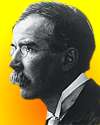
Born 10 Aug 1861; died 30 Apr 1947 at age 85. quotes
Sir Almroth Edward Wright was an English bacteriologist who developed an immunization against typhoid fever that protected British soldiers in WW I, saving lives from infection. It was the result of his work beginning in 1892, while professor of pathology at the Army Medical School, using typhoid bacilli killed by heat. Tests on over 3,000 soldiers in India were followed by its successful use during the South African (Boer) War. He was noted for creating autogenous vaccines, prepared from the bacteria harboured by the patient. Wright also developed vaccines against enteric tuberculosis and pneumonia and contributed to the study of opsonins (blood enzymes that make bacteria more susceptible to phagocytosis by white cells.)«
Sir Almroth Edward Wright was an English bacteriologist who developed an immunization against typhoid fever that protected British soldiers in WW I, saving lives from infection. It was the result of his work beginning in 1892, while professor of pathology at the Army Medical School, using typhoid bacilli killed by heat. Tests on over 3,000 soldiers in India were followed by its successful use during the South African (Boer) War. He was noted for creating autogenous vaccines, prepared from the bacteria harboured by the patient. Wright also developed vaccines against enteric tuberculosis and pneumonia and contributed to the study of opsonins (blood enzymes that make bacteria more susceptible to phagocytosis by white cells.)«
The Plato of Praed Street: The Life And Times of Almroth Wright , by Michael S. Dunnill. - book suggestion.
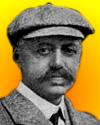
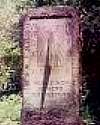
English builder who invented Daylight Saving Time. He claimed he had the idea while taking an early summer morning ride in Petts Wood near to his home in Chislehurst, London. He observed that many blinds were still down, although there was already good daylight, yet many made no use of it. He used his wealth as a prominent home builder to campaign for a scheme of adjusting clocks with the season and published a pamphlet in 1907. His original idea was to make four weekly changes of 20-mins each, for a total of 80-mins. The first Daylight Saving Bill, proposing a single one hour at the change of season failed in 1908. After his death, the idea was adopted during WW I for wartime fuel savings. A memorial was erected in Petts Wood.[Image right: Sundial on the Willett memorial tin Petts Wood.]
Seize the Daylight: The Curious and Contentious Story of Daylight Savings Time, by David Prerau. - book suggestion.
Born 10 Aug 1740; died 12 Jul 1807 at age 66.
English archaeologist.
English archaeologist.
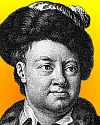
Born 10 Aug 1709; died 20 May 1755 at age 45.
German explorer, natural scientist and botanist who acted as a natural historian on the imperial scientific expedition led by Friedrich Müller in eastern Siberia (1733-43). From barometric pressure readings, he was first to determine that the shores of the Caspian lay below sea level. In 1735, at the town of Yeniseysk, he recorded a record low temperature. He also detected the permafrost in eastern Siberia, which, a little way below the surface of the ground remained frozen year round. Gmelin spent the period 1747-69 preparing a book recording his finds there. In Flora sibirica sive historia plantorum Sibiriae, he detailed 1,178 species and provided 294 illustrations. His original degree was in medicine (1727), but his fields of study included chemistry, natural resources, geology, zoology, ethnography and geography. He was Leopold Gmelin's great uncle.«
German explorer, natural scientist and botanist who acted as a natural historian on the imperial scientific expedition led by Friedrich Müller in eastern Siberia (1733-43). From barometric pressure readings, he was first to determine that the shores of the Caspian lay below sea level. In 1735, at the town of Yeniseysk, he recorded a record low temperature. He also detected the permafrost in eastern Siberia, which, a little way below the surface of the ground remained frozen year round. Gmelin spent the period 1747-69 preparing a book recording his finds there. In Flora sibirica sive historia plantorum Sibiriae, he detailed 1,178 species and provided 294 illustrations. His original degree was in medicine (1727), but his fields of study included chemistry, natural resources, geology, zoology, ethnography and geography. He was Leopold Gmelin's great uncle.«
Born 10 Aug 787; died 9 Mar 886 at age 98.
Persian astrologer, a.k.a. Abu Ma'shar al-Balkhi, or Ja'far ibn Muhammad, who was the leading astrologer of the Muslim world. He is known primarily for his theory that the world, created when the seven planets were in conjunction in the first degree of Aries, will come to an end at a like conjunction in the last degree of Pisces.
Persian astrologer, a.k.a. Abu Ma'shar al-Balkhi, or Ja'far ibn Muhammad, who was the leading astrologer of the Muslim world. He is known primarily for his theory that the world, created when the seven planets were in conjunction in the first degree of Aries, will come to an end at a like conjunction in the last degree of Pisces.

Died 10 Aug 2021 at age 69 (born 8 Oct 1951).
Japanese puzzlemaker was known as the “Father of Sudoku” for coining the name under which he popularized that puzzle. In 1980, Kaji with two childhood friends began publishing Nikoli, in Japan as a quarterly puzzle magazine, which included Sudoku puzzles after he came across the game in 1984 under the title “Number Place,” created by American architect Howard S. Garns, first published in Dell Pencil Puzzles and Word Games (May 1979). It is played by filling the cells in a 9x9 grid with numbers 1 to 9 in such a way that each appears only once in each column, row or the nine 3x3 sections which make the full grid. Kaji founded the Nikoli company in 1983 for the magazine and other puzzle games.«
Japanese puzzlemaker was known as the “Father of Sudoku” for coining the name under which he popularized that puzzle. In 1980, Kaji with two childhood friends began publishing Nikoli, in Japan as a quarterly puzzle magazine, which included Sudoku puzzles after he came across the game in 1984 under the title “Number Place,” created by American architect Howard S. Garns, first published in Dell Pencil Puzzles and Word Games (May 1979). It is played by filling the cells in a 9x9 grid with numbers 1 to 9 in such a way that each appears only once in each column, row or the nine 3x3 sections which make the full grid. Kaji founded the Nikoli company in 1983 for the magazine and other puzzle games.«
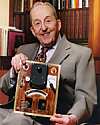
Died 10 Aug 2002 at age 89 (born 31 Aug 1912).
American forensic scientist who was most recognized for his contributions to the understanding and control of alcohol impairment in traffic accidents, and who invented the Breathalyser. He collaborated with Professor R.N. Harger of the Indiana University School of Medicine in the introduction of the Drunkometer, the first instrument for accurate measurement of quantities of alcohol in the blood by breath analysis. Subsequently, he invented the Breathalyzer, an instrument that changed the approach of forensic science and police enforcement in response to drinking-and-driving problems. This innovation enabled traffic enforcement authorities to determine and quantify blood alcohol concentrations with sufficient accuracy to meet the demands of legal evidence.
American forensic scientist who was most recognized for his contributions to the understanding and control of alcohol impairment in traffic accidents, and who invented the Breathalyser. He collaborated with Professor R.N. Harger of the Indiana University School of Medicine in the introduction of the Drunkometer, the first instrument for accurate measurement of quantities of alcohol in the blood by breath analysis. Subsequently, he invented the Breathalyzer, an instrument that changed the approach of forensic science and police enforcement in response to drinking-and-driving problems. This innovation enabled traffic enforcement authorities to determine and quantify blood alcohol concentrations with sufficient accuracy to meet the demands of legal evidence.

protocells
Died 10 Aug 1998 at age 86 (born 24 Mar 1912).
Sidney Walter Fox was an American biochemist who was interested in the biological origin of life, rather than tracing a strictly biochemical path. He gave the name proteinoid to the protein-like polymer that results from a mixture of amino acids subjected to such considerable heating as would be present during the volcanic primordial earth. Fox observed that when proteinoids or "thermal proteins," are placed in water, they self-organize into microspheres or protocells, possible precursors of the contemporary living cell. Fox argued that RNA or DNA need not date back to the origin of life, and he showed that proteinoid microspheres exhibit growth, metabolism, reproduction (by budding), and responsiveness to stimuli - all properties of life - though without a genetic system.
Sidney Walter Fox was an American biochemist who was interested in the biological origin of life, rather than tracing a strictly biochemical path. He gave the name proteinoid to the protein-like polymer that results from a mixture of amino acids subjected to such considerable heating as would be present during the volcanic primordial earth. Fox observed that when proteinoids or "thermal proteins," are placed in water, they self-organize into microspheres or protocells, possible precursors of the contemporary living cell. Fox argued that RNA or DNA need not date back to the origin of life, and he showed that proteinoid microspheres exhibit growth, metabolism, reproduction (by budding), and responsiveness to stimuli - all properties of life - though without a genetic system.
The Emergence of Life: Darwinian Evolution from the Inside, by Sidney W. Fox. - book suggestion.
Died 10 Aug 1979 at age 90 (born 1 Aug 1889).
German physicist noted especially for his work with Otto Stern on the deflections of atoms in a nonhomogeneous magnetic field. The Stern-Gerlach experiment is a demonstration of the restricted spatial orientation of atomic and subatomic particles with magnetic polarity, performed in the early 1920s by the German physicists Otto Stern and Walther Gerlach. In the experiment, a beam of neutral silver atoms was directed through a set of aligned slits, then through a nonuniform (nonhomogeneous) magnetic field.
German physicist noted especially for his work with Otto Stern on the deflections of atoms in a nonhomogeneous magnetic field. The Stern-Gerlach experiment is a demonstration of the restricted spatial orientation of atomic and subatomic particles with magnetic polarity, performed in the early 1920s by the German physicists Otto Stern and Walther Gerlach. In the experiment, a beam of neutral silver atoms was directed through a set of aligned slits, then through a nonuniform (nonhomogeneous) magnetic field.
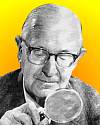

Felix Andries Vening Meinesz was a Dutch geophysicist and geodesist who was known for his measurements of gravity at sea for which he devised the Vening Meinesz pendulum apparatus with comparable accuracy as on land. Starting in 1923 he conducted several global gravity surveys on voyages on submarines, particularly to and in the Indonesian Archipelago. He detected strong gravity anomaly belts running parallel to the Indonesian deep sea trenches. He explained these Meinesz belts as sites of downbuckling of the Earth's crust. He introduced the concept of regional isostasy taking flexure of an elastic crust into account. He also contributed to physical geodesy: The Vening Meinesz formula connects the deviation of the vertical from the plumbline to gravity anomalies.
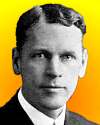
Died 10 Aug 1960 at age 80 (born 24 Jun 1880).
American mathematician who made important contributions in early topology, and in projective and differential geometry - work which found applications in atomic physics and the theory of relativity. In 1905, he proved the Jordan curve theorem, which states that every non-self-intersecting loop in the plane divides the plane into an "inside" and an "outside". Although it may seem obvious in its statement, it is a very difficult theorem to prove. During WW II, he was involved in overseeing the work that produced the pioneering ENIAC electronic digital computer. His name is commemorated by the American Mathematical Society's Oswald Veblen Prize. Awarded every five years, it is the most prestigious award in recognition of outstanding research in geometry.«
American mathematician who made important contributions in early topology, and in projective and differential geometry - work which found applications in atomic physics and the theory of relativity. In 1905, he proved the Jordan curve theorem, which states that every non-self-intersecting loop in the plane divides the plane into an "inside" and an "outside". Although it may seem obvious in its statement, it is a very difficult theorem to prove. During WW II, he was involved in overseeing the work that produced the pioneering ENIAC electronic digital computer. His name is commemorated by the American Mathematical Society's Oswald Veblen Prize. Awarded every five years, it is the most prestigious award in recognition of outstanding research in geometry.«
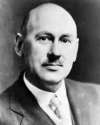
Died 10 Aug 1945 at age 62 (born 5 Oct 1882). quotes
Robert Hutchings Goddard was an American physicist, rocket engineer and inventor known as the “father of modern rocketry.” From age 17, Goddard was interested in rockets (1899) and by 1908 he conducted static tests with small solid-fuel rockets. He developed mathematical theory for rocket propulsion (1912) and proved that rockets would function in a vacuum for space flight (1915). During WW I, Goddard developed rocket weapons. He wrote A Method of Reaching Extreme Altitudes, in 1919. Goddard tested his first liquid-fuel rocket on 16 Mar 1926. Over the following two decades he produced a number of larger rockets at his shop and rocket range at Roswell, N.M. During WW II he developed rocket-assisted takeoff of Navy carrier planes and variable-thrust liquid-fuel rocket motors. At the time of his death Goddard held 214 patents in rocketry. On 1 May 1959, NASA named the Goddard Space Flight Center in Greenbelt, Maryland, in his memory.«
Robert Hutchings Goddard was an American physicist, rocket engineer and inventor known as the “father of modern rocketry.” From age 17, Goddard was interested in rockets (1899) and by 1908 he conducted static tests with small solid-fuel rockets. He developed mathematical theory for rocket propulsion (1912) and proved that rockets would function in a vacuum for space flight (1915). During WW I, Goddard developed rocket weapons. He wrote A Method of Reaching Extreme Altitudes, in 1919. Goddard tested his first liquid-fuel rocket on 16 Mar 1926. Over the following two decades he produced a number of larger rockets at his shop and rocket range at Roswell, N.M. During WW II he developed rocket-assisted takeoff of Navy carrier planes and variable-thrust liquid-fuel rocket motors. At the time of his death Goddard held 214 patents in rocketry. On 1 May 1959, NASA named the Goddard Space Flight Center in Greenbelt, Maryland, in his memory.«
Rocket Man: Robert H. Goddard and the Birth of the Space Age, by David A. Clary. - book suggestion.
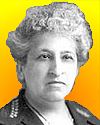
Died 10 Aug 1929 at age 75 (born 9 Feb 1854).
Dutch physician who pioneered family planning with the world's first birth control clinic. As the first woman to attend university in the Netherlands, she studied medicine, and became the country's first woman doctor. She took over her father's medical practice in Amsterdam. Soon she limited her practice to women and children, also holding a free clinic for the poor twice a week. In 1881, Jacobs undertook the first systematic study of contraception. Many of her patients were worn down from too many pregnancies, and in 1882 she began prescribing diaphragms as birth control, effectively opening the first birth control clinic in the world. She taught hygiene and child care, and strongly campaigned on women's health and safety issue, leading to new laws.
Dutch physician who pioneered family planning with the world's first birth control clinic. As the first woman to attend university in the Netherlands, she studied medicine, and became the country's first woman doctor. She took over her father's medical practice in Amsterdam. Soon she limited her practice to women and children, also holding a free clinic for the poor twice a week. In 1881, Jacobs undertook the first systematic study of contraception. Many of her patients were worn down from too many pregnancies, and in 1882 she began prescribing diaphragms as birth control, effectively opening the first birth control clinic in the world. She taught hygiene and child care, and strongly campaigned on women's health and safety issue, leading to new laws.
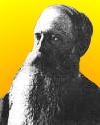
Died 10 Aug 1923 at age 85 (born 8 Sep 1837).
American geologist and scientific explorer known for his studies and explorations of the iron-ore and copper deposits in the Lake Superior region in 1866-75, for which he used microscopes and thin sections for petrographic study. His major report was published in 1873. Pumpelly sensed the increasing importance of steel, and advised investors to search for iron rather than gold. Some who followed his advice made fortunes. He surveyed the coal fields of China (1864) and made the first extensive survey (1865) of the Gobi. He journeyed across Siberia by sleigh. Pumpelly found evidence that central Asia had once been occupied by vast inland seas or lakes, which had slowly diminished in size, leaving behind the Aral Sea and numerous small lakes.
American geologist and scientific explorer known for his studies and explorations of the iron-ore and copper deposits in the Lake Superior region in 1866-75, for which he used microscopes and thin sections for petrographic study. His major report was published in 1873. Pumpelly sensed the increasing importance of steel, and advised investors to search for iron rather than gold. Some who followed his advice made fortunes. He surveyed the coal fields of China (1864) and made the first extensive survey (1865) of the Gobi. He journeyed across Siberia by sleigh. Pumpelly found evidence that central Asia had once been occupied by vast inland seas or lakes, which had slowly diminished in size, leaving behind the Aral Sea and numerous small lakes.
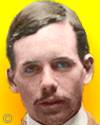
Died 10 Aug 1915 at age 27 (born 23 Nov 1887). quotes
Henry Gwyn-Jeffreys Moseley was an English physicist who experimentally demonstrated that the major properties of an element are determined by the atomic number, not by the atomic weight, and firmly established the relationship between atomic number and the charge of the atomic nucleus. He began his research under Ernest Rutherford while serving as lecturer at the Univ. of Manchester. Using X-ray photographic techniques, he determined a mathematical relation between the radiation wavelength and the atomic numbers of the emitting elements. Moseley obtained several quantitative relationships from which he predicted the existence of three missing elements (numbers 43, 61, and 75) in the periodic table, all of which were subsequently identified. Moseley was killed in action during WW I.
Henry Gwyn-Jeffreys Moseley was an English physicist who experimentally demonstrated that the major properties of an element are determined by the atomic number, not by the atomic weight, and firmly established the relationship between atomic number and the charge of the atomic nucleus. He began his research under Ernest Rutherford while serving as lecturer at the Univ. of Manchester. Using X-ray photographic techniques, he determined a mathematical relation between the radiation wavelength and the atomic numbers of the emitting elements. Moseley obtained several quantitative relationships from which he predicted the existence of three missing elements (numbers 43, 61, and 75) in the periodic table, all of which were subsequently identified. Moseley was killed in action during WW I.
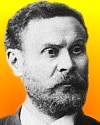
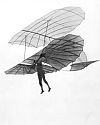
German aeronautical engineer and inventor whose pioneering studies formed a foundation for Octave Chanute and the brothers Wilbur and Orville Wright. His prior inventions, such as a small steam engine that worked on a system of tubular boilers designed for safety, brought him financial success. In 1891, he built and flew in the Derwitzer Glider. Within the next five years (before he died in a crash), assisted by his brother, Gustav, he designed other gliders and made 2000 flights. He carefully studied the aerodynamics of rigid wings, inspired by the gliding flight of storks made without flapping their wings. Although his aircraft achieved only low speed and altitudes, and he had survived other crashes, he broke his spine and died the day following a crash, falling from about 56-feet.«[Image (right): 1986 biplane design of the type he used on his last flight. He crashed when the upper wing fractured] more
Birdflight As The Basis Of Aviation, by Otto Lilienthal. - book suggestion.
Died 10 Aug 1895 at age 69 (born 26 Dec 1825).
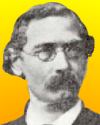
Ernst Felix (Immanuel) Hoppe-Seyler was a German physician, who was a pioneer of physiological chemistry (biochemistry). He studied the chemical of blood and urine using the new technique of absorption spectroscopy, prepared hemoglobin in crystalline form and clarified its role in red blood cells. He demonstrated that the oxidation reactions between haemoglobin, oxygen and carbon monoxide took place in the tissues rather than in the blood itself. He also studied chlorophyll and was the first to prepare lecithin in a pure form. He coined the word proteid, now replaced with the word protein. He also investigated bile acids, lipid metabolism, quantification and classification of proteins and inspired research on nucleic acids.«
Ernst Felix (Immanuel) Hoppe-Seyler was a German physician, who was a pioneer of physiological chemistry (biochemistry). He studied the chemical of blood and urine using the new technique of absorption spectroscopy, prepared hemoglobin in crystalline form and clarified its role in red blood cells. He demonstrated that the oxidation reactions between haemoglobin, oxygen and carbon monoxide took place in the tissues rather than in the blood itself. He also studied chlorophyll and was the first to prepare lecithin in a pure form. He coined the word proteid, now replaced with the word protein. He also investigated bile acids, lipid metabolism, quantification and classification of proteins and inspired research on nucleic acids.«
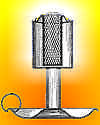
lard lamp
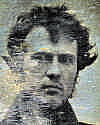
American photographer and manufacturer who made the first U.S. self-portrait photograph (a daguerrotype, Nov 1839), opened the first U.S. portrait photography studio (Feb 1840), and published the first photographic advertisement. He was helped by his prior study of chemistry. That enterprise he operated only as a side-interest until 1843, for his life's career was with the business started by his father, the leading maufacturer of oil lamps and gas fixtures. After 1831, when he became a partner, the business was known as Cornelius and Son. He is creditted with designing mechanical devices to facilitate the various factory processes in working metal. Before the availability of gas, the “solar lamp” he invented and patented (U.S. No. 3030, 1843) enabled burning simple lard (from fatted pigs: “prairie whales”) instead of more expensive whale oil.«[Image: detail from Cornelius self-portrait daguerrotype, believed to be the earliest extant American portrait photo, and is now in the Library of Congress.]
Died 10 Aug 1817 at age 42 (born 7 Apr 1775).
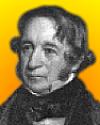
American manufacturer who was the principal founder of a textile mill carrying out all operations involved to process raw cotton into finished cloth. Believed to be the world's first mill to pioneer the combination of all production operations, it was important in the development of the New England texile industry. For two years, from 1810, he studied the British textile industy in Lancashire and Scotland, then teamed with his Nathan Appleton and his brother-in law, Tracy Jackson to establish the Boston Manufacturing Company in Waltham, Massachusetts and build a factory (1813-14) on the Charles River. Lowell worked with mechanic Paul Moody to develop an efficient power loom, the first constructed in the U.S. (1814) and a spinning apparatus. Moody also oversaw the factory operations and made other innovations.«
American manufacturer who was the principal founder of a textile mill carrying out all operations involved to process raw cotton into finished cloth. Believed to be the world's first mill to pioneer the combination of all production operations, it was important in the development of the New England texile industry. For two years, from 1810, he studied the British textile industy in Lancashire and Scotland, then teamed with his Nathan Appleton and his brother-in law, Tracy Jackson to establish the Boston Manufacturing Company in Waltham, Massachusetts and build a factory (1813-14) on the Charles River. Lowell worked with mechanic Paul Moody to develop an efficient power loom, the first constructed in the U.S. (1814) and a spinning apparatus. Moody also oversaw the factory operations and made other innovations.«
The Life and Times of Francis Cabot Lowell, 1775-1817, by Chaim M. Rosenberg. - book suggestion.
Died 10 Aug 1802 at age 77 (born 13 Dec 1724). quotes
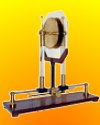
German mathematician and physicist whose Tentamen theoriae electricitatis et magnetismi (1759; "An Attempt at a Theory of Electricity and Magnetism") was the first work to apply mathematics to the theory of electricity and magnetism. Aepinus' experiments led to the design of the parallel-plate capacitor, a device used to store energy in an electric field. He also discovered the electric properties of the mineral tourmaline and investigated pyroelectricity, the state of electrical polarization produced in tourmaline and various other crystals by a change of temperature. Other achievements of Aepinus include improvements to the microscope, and his demonstration of the effects of parallax in the transit of a planet across the Sun's disk (1764).Image: Aepinus Condenser,1880
German mathematician and physicist whose Tentamen theoriae electricitatis et magnetismi (1759; "An Attempt at a Theory of Electricity and Magnetism") was the first work to apply mathematics to the theory of electricity and magnetism. Aepinus' experiments led to the design of the parallel-plate capacitor, a device used to store energy in an electric field. He also discovered the electric properties of the mineral tourmaline and investigated pyroelectricity, the state of electrical polarization produced in tourmaline and various other crystals by a change of temperature. Other achievements of Aepinus include improvements to the microscope, and his demonstration of the effects of parallax in the transit of a planet across the Sun's disk (1764).Image: Aepinus Condenser,1880
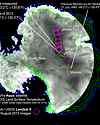
On 8 Aug 2010, the record low surface temperature in Antartica was -135.8ºF (-93.2ºC), colder than the freezing point of dry ice. It was determined from analysis of remote-sensing satellite data later announced on 9 Dec 2013 at the annual meeting of the American Geophysical Union. The location was in pockets scattered near a high ice ridge between Dome Argus and Dome Fuji, two summits on the East Antarctic Plateau. August is winter in the Southern Hemisphere, and the temperature resulted from the geographical nature and weather conditions in the pockets. The World Meteorological Organization official records are for air temperatures made a couple of meters above the surface. That recorded lowest temperature, made in Jul 1983 at the Vostok Research Station, Antarctica, remains at -128.6ºF (89.2ºC).«
In 1990, the space probe Magellan arrived at its planned polar orbit around Venus. As the planet rotated slowly beneath it, Magellan circled once every 3-hr 15-min, collecting radar images of the surface in strips about 17-28 km (10-17 mi) wide and radioed back the information. Magellan was carried into space in the shuttle cargo bay of STS-30 Atlantis, launched 4 May 1989, and was the first planetary spacecraft to be released from a shuttle in Earth orbit. The Magellan mission also provided gravity, atmospheric and other measurements. On 11 Oct 1994, it was directed towards the surface, collecting data until it broke up and partially vaporized in the atmosphere.«
In 1960, an ejected space capsule from Discoverer 13 was recovered when it returned from orbit; it was the first human-made object recovered from space.
In 1904, Ford Motor Company of Canada was organized when Henry Ford signed an agreement with Gordon McGregor, a Canadian wagon builder. McGregor, age 31, had taken the initiative to vist Ford in Detroit earlier in the year because he wanted to begin making cars at his wagon works in Windsor, Ontario. Incorporation of Ford Motor Company of Canada was in the form of a Provinicial Charter issued on 17 Aug 1904. McGregor would finance his own operation, and 51% of the stock would be assigned to the Shareholders of Ford U.S.A. McGregor also obtained the rights to sell Ford products in the then existing British Empire outside of the British Isles. This foresight led to Ford of Canada to later having wholly-owned subsidiaries in Australia, New Zealand and South Africa.«
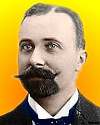
Hoffmann
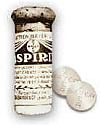
Aspirin: The Remarkable Story of a Wonder Drug, by Diarmuid Jeffreys. - book suggestion.
In 1889, the skeleton of a thirty-six foot long and fifteen-foot high mammoth was found in St. James, Nebraska.
In 1889, Dan Rylands patented the screw cap.
In 1885, Leo Daft opened America's first commercially operated electric streetcar in Baltimore, Maryland.
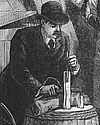
In 1859, the first full-time Inspector of Milk in the U.S. was appointed by the city of Boston, Massachusetts, as authorized by a state law passed on 6 Apr 1859. Three years earlier, a state law against adulteration of milk had been signed by the Governor (30 May 1856), but it was ineffective, as it depended on individuals making a claim in court. The 1859 law provided an official to crack down on fraud. It established a ten dollar fine for selling “swill milk,” the poor, thin output of cows kept in unsanitary conditions and fed on distillery refuse. Contaminated milk was a serious public health hazard, sometimes deadly to infants. A milk inspector was authorized to enter the premises of handlers of milk and to take specimens for analysis, the results of which were to be held as evidence and used for prosecution.«[Image: A New York City inspector at a grocery testing milk with a lactometer, c.1887] more
The Untold Story of Milk: The History, Politics and Science, by Ron Schmid. - book suggestion.
In 1846, an Act of Congress signed by President James K. Polk established the Smithsonian Institution as a trust to administer the generous bequest of James Smithson, an amount over $500,000. In 1826, James Smithson, a British scientist, drew up his last will and testament, naming his nephew as beneficiary. Smithson stipulated that, should the nephew die without heirs (as he would in 1835), the estate should go “to the United States of America, to found at Washington, under the name of the Smithsonian Institution, an establishment for the increase and diffusion of knowledge among men.” The motives behind Smithsons bequest remain mysterious; he had never traveled to the U.S. and seems to have had no correspondence with anyone there.
The Stranger and the Statesman: ... the Making of America's Greatest Museum: The Smithsonian, by Nina Burleigh. - book suggestion.
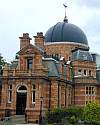
In 1675, King Charles II laid the foundation stone of the Royal Observatory, Greenwich. It had been created by Royal Warrant from the King on 22 Jun 1675. The building was designed by Sir Christopher Wren (who was also a Professor of Astronomy). Construction was finished the following year. John Flamsteed was appointed as the first Astronomer Royal. Its primary uses were very practical—using astronomy for navigation and timekeeping by determination of star positions. In 1767 the observatory began publishing The Nautical Almanac, which established the longitude of Greenwich as a baseline for time calculations. This led in part to the international adoption (1884) of the Greenwich meridian as the Earth's prime meridian.«
The Royal Observatory Greenwich, by E. Walter Maunder. - book suggestion.





