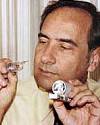
Born 11 Jul 1927; died 5 May 2007 at age 79.
Theodore Harold Maiman was an American physicist who built the first working laser. He began working with electronic devices in his teens, while earning college money by repairing electrical appliances and radios. In the 1960s, he developed, demonstrated, and patented a laser using a pink ruby medium. The laser is a device that produces monochromatic coherent light (light in which the rays are all of the same wavelength and phase). The laser has since been applied in a very wide range of uses, including eye surgery, dentistry, range-finding, manufacturing, even measuring the distance between the Earth and the Moon.
Theodore Harold Maiman was an American physicist who built the first working laser. He began working with electronic devices in his teens, while earning college money by repairing electrical appliances and radios. In the 1960s, he developed, demonstrated, and patented a laser using a pink ruby medium. The laser is a device that produces monochromatic coherent light (light in which the rays are all of the same wavelength and phase). The laser has since been applied in a very wide range of uses, including eye surgery, dentistry, range-finding, manufacturing, even measuring the distance between the Earth and the Moon.
The Laser Odyssey, by Theodore Maiman. - book suggestion.
Born 11 Jul 1924; died 8 Mar 2005 at age 80.
César (Mansueto Giulio) Lattes was the Brazilian physicist who, with American physicist Eugene Gardner at the University of California, Berkeley, in 1948 confirmed the existence of heavy and light mesons formed during the bombardment of carbon nuclei with alpha particles. The experimental discovery of the pi meson was fundamental to explaining the nuclear binding force. Japanese theoretical physicist, Hideki Yukawa, had proposed (1935) a new, unknown particle with 200 times more mass than the electron, that was emitted and absorbed by protons and neutrons. The exchange of those particles between the nucleons would produce a short-range attraction between them.
César (Mansueto Giulio) Lattes was the Brazilian physicist who, with American physicist Eugene Gardner at the University of California, Berkeley, in 1948 confirmed the existence of heavy and light mesons formed during the bombardment of carbon nuclei with alpha particles. The experimental discovery of the pi meson was fundamental to explaining the nuclear binding force. Japanese theoretical physicist, Hideki Yukawa, had proposed (1935) a new, unknown particle with 200 times more mass than the electron, that was emitted and absorbed by protons and neutrons. The exchange of those particles between the nucleons would produce a short-range attraction between them.
Born 11 Jul 1916; died 8 Jan 2002 at age 85.
Aleksandr Mikhaylovich Prokhorov is the Soviet physicist who received, (with Nikolay G. Basov, USSR and Charles H. Townes, US), the Nobel Prize for Physics in 1964 "for fundamental work in the field of quantum electronics, which has led to the construction of oscillators and amplifiers based on the maser-laser principle." "Maser" stands for "microwave amplification by stimulated emission of radiation." An amplification can occur only if the stimulated emission is larger than the absorption, requiring that there should be more atoms in a high energy state than in a lower one. This state is called an inverted population. Prokhorov had researched the maser independently but simultaneously with the other prize recipients.
Aleksandr Mikhaylovich Prokhorov is the Soviet physicist who received, (with Nikolay G. Basov, USSR and Charles H. Townes, US), the Nobel Prize for Physics in 1964 "for fundamental work in the field of quantum electronics, which has led to the construction of oscillators and amplifiers based on the maser-laser principle." "Maser" stands for "microwave amplification by stimulated emission of radiation." An amplification can occur only if the stimulated emission is larger than the absorption, requiring that there should be more atoms in a high energy state than in a lower one. This state is called an inverted population. Prokhorov had researched the maser independently but simultaneously with the other prize recipients.
Born 11 Jul 1902; died 4 Dec 1978 at age 76.
Dutch-born U.S. physicist who, with George E. Uhlenbeck, a fellow graduate student at the University of Leiden, Neth., formulated (1925) the concept of electron spin. It led to recognition that spin was a property of protons, neutrons, and most elementary particles and to a fundamental change in the mathematical structure of quantum mechanics. Goudsmit also made the first measurement of nuclear spin and its Zeeman effect with Ernst Back (1926-27), developed a theory of hyperfine structure of spectral lines, made the first spectroscopic determination of nuclear magnetic moments (1931-33), contributed to the theory of complex atoms and the theory of multiple scattering of electrons, and invented the magnetic time-of-flight mass spectrometer (1948).
Dutch-born U.S. physicist who, with George E. Uhlenbeck, a fellow graduate student at the University of Leiden, Neth., formulated (1925) the concept of electron spin. It led to recognition that spin was a property of protons, neutrons, and most elementary particles and to a fundamental change in the mathematical structure of quantum mechanics. Goudsmit also made the first measurement of nuclear spin and its Zeeman effect with Ernst Back (1926-27), developed a theory of hyperfine structure of spectral lines, made the first spectroscopic determination of nuclear magnetic moments (1931-33), contributed to the theory of complex atoms and the theory of multiple scattering of electrons, and invented the magnetic time-of-flight mass spectrometer (1948).
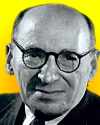
Born 11 Jul 1896; died 5 Jul 1961 at age 64. quotes
Polish-Israeli physician and microbiologist, who having earlier learned the technique under Rudolf Weigl, prepared typhus vaccine while interned during WWII at Buchenwald for prisoners there. He duped incompetent Nazi doctors with harmless, ineffective supplies for German troops. Fleck’s concept of Denkkollektiv proposed that “scientific facts” are constructed by groups of scientists in what he called “thought collectives,” each of which represents a “thought style”—with its own norms, concepts and practices—which indoctrinate newcomers. Their outcomes may not align with other thought collectives. Scientific ideas evolve by reconciling scientific facts between thought collectives, which thereby stimulates innovations.«
Polish-Israeli physician and microbiologist, who having earlier learned the technique under Rudolf Weigl, prepared typhus vaccine while interned during WWII at Buchenwald for prisoners there. He duped incompetent Nazi doctors with harmless, ineffective supplies for German troops. Fleck’s concept of Denkkollektiv proposed that “scientific facts” are constructed by groups of scientists in what he called “thought collectives,” each of which represents a “thought style”—with its own norms, concepts and practices—which indoctrinate newcomers. Their outcomes may not align with other thought collectives. Scientific ideas evolve by reconciling scientific facts between thought collectives, which thereby stimulates innovations.«
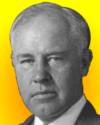
Born 11 Jul 1890; died 19 Jun 1957 at age 66. quotes
American physician and public health officer who became Vice-President of the Rockefeller Foundation. His career there began when he joined the International Health Board’s project in Brazil (1919) as a public health officer. At its Rio de Janeiro laboratory, he worked to reduce the prevalence of hookworm disease (an internal parasite). Thus he learned the challenges of treatment, sanitary improvements and public health education. Later, for many years, he greatly influenced medical education and research, guiding the Foundation’s investment of millions of dollars in those goals. Its financial support for medical research was distributed both in America and worldwide, especially in psychiatry and public health.«
American physician and public health officer who became Vice-President of the Rockefeller Foundation. His career there began when he joined the International Health Board’s project in Brazil (1919) as a public health officer. At its Rio de Janeiro laboratory, he worked to reduce the prevalence of hookworm disease (an internal parasite). Thus he learned the challenges of treatment, sanitary improvements and public health education. Later, for many years, he greatly influenced medical education and research, guiding the Foundation’s investment of millions of dollars in those goals. Its financial support for medical research was distributed both in America and worldwide, especially in psychiatry and public health.«
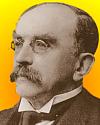
Born 11 Jul 1857; died 19 May 1942 at age 84.
Irish physicist, the first to calculate the rate at which energy is radiated by an accelerated electron, and the first to explain the splitting of spectrum lines by a magnetic field. His theories were based on the belief that matter consists entirely of electric particles moving in the ether. His elaborate mathematical electrical theory of the late 1890s included the "electron" as a rotational strain (a sort of twist) in the ether. But Larmor's theory did not describe the electron as a part of the atom. Many physicists envisioned both material particles and electromagnetic forces as structures and strains in that hypothetical fluid.
Irish physicist, the first to calculate the rate at which energy is radiated by an accelerated electron, and the first to explain the splitting of spectrum lines by a magnetic field. His theories were based on the belief that matter consists entirely of electric particles moving in the ether. His elaborate mathematical electrical theory of the late 1890s included the "electron" as a rotational strain (a sort of twist) in the ether. But Larmor's theory did not describe the electron as a part of the atom. Many physicists envisioned both material particles and electromagnetic forces as structures and strains in that hypothetical fluid.
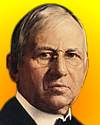
Born 11 Jul 1838; died 12 Dec 1922 at age 84.
American businessman who founded a department store and adopted new technology in his buildings for publicity. His “Grand Depot” was the first U.S. store to use electric arc lamps (26 Dec 1878) in Philadelphia, Pa. Wanamaker had a major ready-made men's clothing retail clothing business (opened 1861) when he bought (1875) the Pennsylvania Railroad depot for $500,000 and converted it into his innovative Grand Depot department store. The city's Centennial Exposition visitors boosted sales. It became one of the largest U.S. department stores. From 1885, the store was called "Wanamaker's". His stores were a base for experimental wireless from 1910, and in 1922, a radio broadcast station was opened in the store to initiate radio receiver sales.«*
American businessman who founded a department store and adopted new technology in his buildings for publicity. His “Grand Depot” was the first U.S. store to use electric arc lamps (26 Dec 1878) in Philadelphia, Pa. Wanamaker had a major ready-made men's clothing retail clothing business (opened 1861) when he bought (1875) the Pennsylvania Railroad depot for $500,000 and converted it into his innovative Grand Depot department store. The city's Centennial Exposition visitors boosted sales. It became one of the largest U.S. department stores. From 1885, the store was called "Wanamaker's". His stores were a base for experimental wireless from 1910, and in 1922, a radio broadcast station was opened in the store to initiate radio receiver sales.«*
John Wanamaker: Philadelphia Merchant, by Herbert Ershkowitz. - book suggestion.
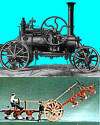
English engineer who helped to develop the steam-hauled plough. He began his career in the grain trade but later trained as an engineer. In 1850 he joined Albert Fry in Bristol to found a works to produce steam-hauled implements. During a business trip to Ireland, he witnessed the famine which followed the failure of two years of potato crops. This aroused his Quaker conscience and changed his life. He returned to England determined to mechanise land drainage by the use of steam. The result was his Mole Drainage Plough shown at the great exhibition of 1851, and built for him by Ransomes. In 1858 Fowler was awarded a £500 prize for his balance plough. He died of tetanus following an injury received after being thrown by a horse.[Image right: (top) detail of steam engine from catalog printed 1861; (bottom)balance plough model] more
The Story of the Steam Plough Works: Fowlers of Leeds, by Michael R. Lane. - book suggestion.
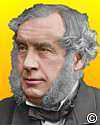
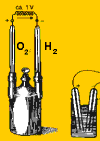
Welsh physicist, who first proved thermal dissociation, when steam on hot platinum splits reversibly into oxygen and hydrogen. In 1839 he created the Grove Cell in which hydrogen and oxygen with an electrolyte produced electricity and water. This first fuel cell, was later seriouslyrevisitedin the 1960s. In it, an electrochemical process changes a fuel’s energy directly into DC electricity without combustion. He also devised a two-fluid electric cell with zinc in sulfuric acid and a platinum cathode in nitric acid, separated by a porous barrier. While physics professor at London Institution (1840–47), he showed it producing electric light during a lecture. From 1880, he was a justice on Britain’s high court.« more
Born 11 Jul 1732; died 4 Apr 1807 at age 74. quotes
Joseph Jérôme Le Français de Lalande, was a French astronomer, born in Bourg-en-Bresse, France. He determined the Moon's parallax from Berlin for the French Academy (1751). He was appointed professor of Astronomy, Collège de France (1762), and subsequently, director of the Paris Observatory. He published his Traité d'astronomie in 1764 - tables of the planetary positions that were considered the best available for the rest of the century. In 1801 he also published a comprehensive star catalogue. He died in 1807, apparently of tuberculosis.
Joseph Jérôme Le Français de Lalande, was a French astronomer, born in Bourg-en-Bresse, France. He determined the Moon's parallax from Berlin for the French Academy (1751). He was appointed professor of Astronomy, Collège de France (1762), and subsequently, director of the Paris Observatory. He published his Traité d'astronomie in 1764 - tables of the planetary positions that were considered the best available for the rest of the century. In 1801 he also published a comprehensive star catalogue. He died in 1807, apparently of tuberculosis.

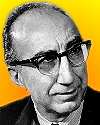
Died 11 Jul 2008 at age 99 (born 7 Sep 1908). quotes
American physician and surgeon who was a pioneer in the cardiovascular field. He invented or perfected devices, techniques and procedures, including arterial bypass operations, Dacron graft for aneurism repair, artificial hearts, heart pumps and heart transplants. DeBakey had played a key role in developing the Mobile Army Surgical Hospitals (M.A.S.H.) located only minutes from the battlefield to reduce the fatility rate for critically wounded soldiers. DeBakey performed (1953) the first successful carotid endarterectomy treatment for stroke, the first successful artificial heart implant (1963) and directed the world’s first multiple-organ transplants (1968) from one donor giving a heart, a lung and both kidneys to four recipients.«
American physician and surgeon who was a pioneer in the cardiovascular field. He invented or perfected devices, techniques and procedures, including arterial bypass operations, Dacron graft for aneurism repair, artificial hearts, heart pumps and heart transplants. DeBakey had played a key role in developing the Mobile Army Surgical Hospitals (M.A.S.H.) located only minutes from the battlefield to reduce the fatility rate for critically wounded soldiers. DeBakey performed (1953) the first successful carotid endarterectomy treatment for stroke, the first successful artificial heart implant (1963) and directed the world’s first multiple-organ transplants (1968) from one donor giving a heart, a lung and both kidneys to four recipients.«
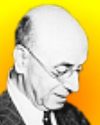
Died 11 Jul 1948 at age 75 (born 7 Jun 1873). quotes
German anatomist and physical anthropologist whose reconstruction of prehistoric human remains and work on Peking man (then called Sinanthropus pekinensis) and other hominids brought him to preeminence in the study of human evolution. A Jew, Weidenreich fled Nazi Germany to take a position in Beijing. He worked with Teilhard de Chardin on the Zhoukoudian fossils (at the Cave of Peking Man), next fleeing the Japanese during WW II. His "multiregional" hypothesis of human origins (i.e., that human racial lineages date back to the early Pleistocene) became influential and is still widely debated, but at first it was misinterpreted as arguing that there was no genetic continuity between human races.
German anatomist and physical anthropologist whose reconstruction of prehistoric human remains and work on Peking man (then called Sinanthropus pekinensis) and other hominids brought him to preeminence in the study of human evolution. A Jew, Weidenreich fled Nazi Germany to take a position in Beijing. He worked with Teilhard de Chardin on the Zhoukoudian fossils (at the Cave of Peking Man), next fleeing the Japanese during WW II. His "multiregional" hypothesis of human origins (i.e., that human racial lineages date back to the early Pleistocene) became influential and is still widely debated, but at first it was misinterpreted as arguing that there was no genetic continuity between human races.
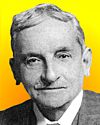
Died 11 Jul 1941 at age 90 (born 8 Jul 1851). quotes
British archaeologist who first visited Crete in 1894 to study and decipher an unknown script seen on seal stones. He subsequently systematically excavated the Palace of Minos there, at Knossos (1900-31). A number of parts of the Palace were restored. Evans was convinced that most of the damage to the ancient palace was caused by earthquakes. His work brought him international fame for his intuition, imagination and scholarship. It is to him that we owe the discovery of the Minoan Civilisation.
British archaeologist who first visited Crete in 1894 to study and decipher an unknown script seen on seal stones. He subsequently systematically excavated the Palace of Minos there, at Knossos (1900-31). A number of parts of the Palace were restored. Evans was convinced that most of the damage to the ancient palace was caused by earthquakes. His work brought him international fame for his intuition, imagination and scholarship. It is to him that we owe the discovery of the Minoan Civilisation.
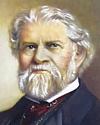
Died 11 Jul 1909 at age 74 (born 12 Mar 1835). quotes
Canadian-American astronomer and and mathematician who prepared ephemerides (tables of computed places of celestial bodies over a period of time) and tables of astronomical constants. He was an astronomer (1861-77) before becoming Superintendent of the U.S. Nautical Almanac Office (1877-97). During this time he undertook numerous studies in celestial mechanics. His central goal was to place planetary and satellite motions on a completely uniform system, thereby raising solar system studies and the theory of gravitation to a new level. He largely accomplished this goal with the adoption of his new system of astronomical constants at the end of the century.
Canadian-American astronomer and and mathematician who prepared ephemerides (tables of computed places of celestial bodies over a period of time) and tables of astronomical constants. He was an astronomer (1861-77) before becoming Superintendent of the U.S. Nautical Almanac Office (1877-97). During this time he undertook numerous studies in celestial mechanics. His central goal was to place planetary and satellite motions on a completely uniform system, thereby raising solar system studies and the theory of gravitation to a new level. He largely accomplished this goal with the adoption of his new system of astronomical constants at the end of the century.
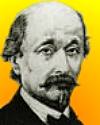
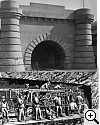
French-Italian engineer who bored the Mount Cenis Fréjus Rail Tunnel (1857-70) through the Alps for a two-track railway. As the world's first important mountain tunnel, it united Italian Savoy (north of the mountains) through Switzerland with the rest of Italy to the south. At 8 miles long and it was more than double the length of any previous tunnel. In 1861, after three years of tedious hand-boring a mere eight inches a day into the rock face, Sommeiller introduced the first industrial-scale pneumatics for tunnel digging. He built a special reservoir, high above the tunnel entrance, to produce a head of water that compressed air (to 6 atm.) for pneumatic drills, able to dig up to 20 times faster. Authorised on 15 Aug 1857, the tunnel opened on 17 Sep 1871, as a major triumph of engineering.«[Image right top: Mont Cenis Tunnel entrance arch; right bottom: Sommeiller Boring Machines.] more
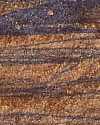
ilmenite
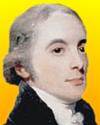
English clergyman, mineralogist and chemist who discovered the element titanium, contained in a magnetic, black sand (now known as ilmenite, FeTiO3) from Manachan Valley, Cornwall, which was in his parish. By analysis, he recognized the presence of iron and manganese in it, but not another red-brown oxide he derived from it. This unidentified material gave a yellow solution when acid was added to it. Naming it menakanite, in 1791, he published his results in Crell's Annalen.* Four years later, in 1795, Martin Klaproth extracted from another ore the same oxide which he identified as a compound of a new element. He named titanium. It wasn't until 1887 that a sample of titanium metal (95% pure) was separated by Nilson and Pettersson. Gregor also made analyses of zeolite, wavelitte, and other substances. He published papers on his results.«[* Ref.: Beobachtungen und Versuche über den Menakanite, einen in Cornwall gefundenen mangetischen Sand; vom Hrn. William Gregor (Obervations and experiments in a magnetic sand found in Cornwall) in Crell's Chemische Annalen (1971), 15, 40-54, 103-19.]
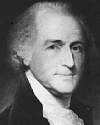
Died 11 Jul 1808 at age 71 (born 21 Oct 1736).
American physician who was the first systematic teacher of anatomy, surgery, and obstetrics in the U.S. In addition to pictures and casts of the human body, he was also one of the first to use dissected human bodies in the teaching of anatomy in America. This aroused the animosity of the populace - his dissecting rooms were mobbed on several occasions, and once he narrowly escaped with his life - but his courses were very successful, and the number of students increased year by year. He lectured on both anatomy and midwifery. In 1762 he established the first American maternity hospital in Philadelphia.
American physician who was the first systematic teacher of anatomy, surgery, and obstetrics in the U.S. In addition to pictures and casts of the human body, he was also one of the first to use dissected human bodies in the teaching of anatomy in America. This aroused the animosity of the populace - his dissecting rooms were mobbed on several occasions, and once he narrowly escaped with his life - but his courses were very successful, and the number of students increased year by year. He lectured on both anatomy and midwifery. In 1762 he established the first American maternity hospital in Philadelphia.
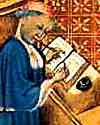
Died 11 Jul 1382 (born c. 1320). quotes
French natural philosopher, mathematician and theologian who translated several Latin texts of Aristotle into French, including De caelo (On the Heavens). Oresme’s translation (completed 1377) in his Le Livre du Ciel ed du Monde was annotated with Oresme’s critical and original thoughts. He anticipated Copernicus’ work, on a possible plurality of worlds. He foresaw each with its own center of gravity. He speculated on there being a void space beyond the heavens. Before Newton, he held that a sphere rolling on a table, both perfectly smooth, can be moved by any force however small. Most notably, he presented ideas on the daily rotation of the Earth, and how we would be unaware of it (though he concluded against it). He was a wide-ranging, brilliant scholar who today is unknown to many.«[a.k.a. Nicolas Oresme, Nicholas Oresme, or Nicolas d’Oresme] more
French natural philosopher, mathematician and theologian who translated several Latin texts of Aristotle into French, including De caelo (On the Heavens). Oresme’s translation (completed 1377) in his Le Livre du Ciel ed du Monde was annotated with Oresme’s critical and original thoughts. He anticipated Copernicus’ work, on a possible plurality of worlds. He foresaw each with its own center of gravity. He speculated on there being a void space beyond the heavens. Before Newton, he held that a sphere rolling on a table, both perfectly smooth, can be moved by any force however small. Most notably, he presented ideas on the daily rotation of the Earth, and how we would be unaware of it (though he concluded against it). He was a wide-ranging, brilliant scholar who today is unknown to many.«[a.k.a. Nicolas Oresme, Nicholas Oresme, or Nicolas d’Oresme] more
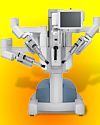
In 2000, the da Vinci robot surgical system was the first to be approved by the U.S. Food and Drug Administration for use in gallbladder, gastroesophageal reflux, and gynecologic operations. The advanced medical device was an offshoot of robotic technology developed by the U.S. Dept of Defense for military applications. In the 1990s, Intuitive Surgical, Inc. and Computer Motion (which merged in 2000) developed robotic interfaces for use in human surgical applications. A three- or four-armed robot, manipulates instruments with precise wrist-like dexterity, remotely controlled by the surgeon from a computer console. Instruments and cameras are guided through quite small openings in the body, which is much less invasive than previous methods, enabling earlier release from hospital and more rapid healing.«
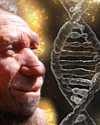
In 1997, the first sequencing of pieces of DNA extracted from a Neanderthal-type specimen was published in the journal Cell, by a team of scientists led by Svent Pääbo. In the groundbreaking study, mitochondrial DNA was amplified from a sample (a small piece of the arm bone) from the first Neanderthal man found (1856). “The Neanderthal sequence falls outside the variation of modern humans.” The results suggested that from their common origin (“African Eve”), Neanderthals split off from humans a little over 550,000 years ago as a separate species and “went extinct without contributing mtDNA to modern humans.” (Using population models, Pääbo, more recently estimated that Neanderthals could have contributed up to 25% of their genetic makeup to modern human, but likely much less.)«[Ref: Cell (11 Jul 1997), 90, No.1, 19-30.]
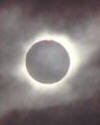
In 1991, a solar eclipse cast a blanket of darkness stretching 9,000 miles from Hawaii to South America, lasting nearly seven minutes in some places. It was the so-called eclipse of the century. A total solar eclipse - the moon passing between the sun and the earth - is the moon's shadow cast on the casting its shadow on the earth's surface. Total eclipses occur almost once per year, but are often over an ocean or remote countries. The solar eclipse on July 11, 1991, was a thrill for scientists. It travelled over the several astronomical observatories on the top of Mauna Kea. Their 14,000 feet elevation was actually above the cloud level, which obstructed the view for those below.
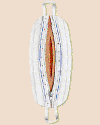
In 1985, zippers for stitches were announced by Dr. H. Harlan Stone this day. The surgeon had used zippers on 28 patients, on whom he thought he might have to re-operate, because of internal bleeding following initial operations. The zippers which lasted between five and 14 days, were then replaced with permanent stitches. Current types of surgical zipper are self-adhesive in application and can be applied to both outpatients and inpatients. Uncomplicated wound inspection is possible from the third postoperative day. However, it is possible earlier with manual support to either side of the wound.
In 1979, the U.S. space station, Skylab, re-entered the Earth's atmosphere. It disintegrated, spreading fragments across the southeastern Indian Ocean and over a sparsely populated section of western Australia, where a cow died after being struck by a piece of falling debris.«
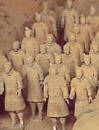
In 1975, Chinese archeologists announced the uncovering of a 3-acre burial mound concealing 6000 clay statues of warriors and their regalia dating from 221 to 206 BC. The "Terracotta Army" was uncovered near the ancient capital of Xian. The 8,000 lifesize clay soldiers and horses were buried in pits in battle formation facing east to guard the tomb of China's first emperor, Qin Shi Huang. The figures were modeled after the emperor's real army, and each face is different. The buried wonder was found in 1974 in the course of digging a well.
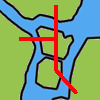
In 1908, Emile Berliner (who invented the gramophone in 1887) in a trial of his first "test-rig" helicopter design, found it could potentially lift double its weight. While the Wright brothers were working on powered manned flight, by 1903, Berliner tested a 7-ft model rocket-powered airplane, which flew 40-ft before tumbling to ground. He began, in 1907, designing his helicopter with tandem intermeshing rotors. Although the Wrights by then had a successful rigid-wing aircraft, Berliner recognised the versatility of a helicopter. The 36-hp rotary engine he developed with the Adams-Farwell Company was the first application in aviation of the rotary engine, and had a weight advantage. He founded the Gyro Motor Company to promote rotary engines in aviation.«
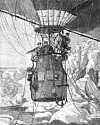
In 1892, the East River Gas Tunnel became the first completed tunnel under the East River, New York City, after two years' work. The connection was made between bores started from Long Island (26 Jun 1892) and on the New York side (10 Jul 1892). The Brooklyn Bridge over that river, opened 24 May 1883, took 13 years to build. The 2550-ft tunnel was designed to carry gas mains, not public traffic, and was built relatively smaller: 8½-ft high by 10½-ft wide. While finish work was done in the tunnel, a gas main was laid that first delivered gas on 15 Oct 1894. Illuminating gas from works on Long Island could then be distributed through Manhattan. The tunnelling success also provided practical knowledge enabling more tunnels under the East River. Work on four railroad tunnels commenced in 1904.«
In 1811, Italian scientist Amedeo Avogadro published his memoire about the molecular content of gases.
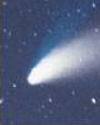
In 1801, French astronomer Jean-Louis Pons (24 Sep 1761 - 14 Oct 1831) discovers his first comet. In his lifetime he discovered or co-discovered up to 37 comets. Since 1789, when he got a post at the Observatory at Marseilles as concierge, Pons quickly learned how to make observations with the instruments. He had a remarkable ability to remember the star fields he observed and to recognize changes. He logged his first discovery of a comet on 11 July 1801, which he had to share with Messier who found it a day later. Interestingly, as Pons' made his first comet discovery, that comet was Messier's last. Almost once every year, thereafter until 1827 when he eyesight declined, Pons found a new comet. Jean-Louis Pons set the record for visual discoveries of comets by an individual.





