(EB)
Born 10 Jul 1920.
American physicist who shared (with Emilio Segrè) the 1959 Nobel Prize for Physics in 1959 for their discovery of the antiproton. This previously postulated subatomic particle was the second antiparticle to be discovered and led directly to the discovery of many additional antiparticles.
American physicist who shared (with Emilio Segrè) the 1959 Nobel Prize for Physics in 1959 for their discovery of the antiproton. This previously postulated subatomic particle was the second antiparticle to be discovered and led directly to the discovery of many additional antiparticles.
Born 10 Jul 1920; died 4 Oct 1995 at age 75.
American inventor of Kitty Litter. After Navy duty (1941-45), Lowe joined his father's company in Cassopolis, Mich., selling industrial absorbents, including sawdust and an absorbent clay called Fuller's Earth. In 1947, Lowe suggested the use of the clay instead of ashes for his neighbor's cat's box to avoid sooty paw prints. It worked well and Lowe thought other cat owners would use this new cat-box filler. He filled ten brown bags with clay, wrote the name "Kitty Litter" on them and began selling it through the local pet store. By 1990, his marketing effort had grown into a clay mining and consumer product business, the largest U.S. producer of cat-box filler, now improved, 99% dust free, and sanitized against odor-causing bacteria. He held 67 US and foreign patents.
American inventor of Kitty Litter. After Navy duty (1941-45), Lowe joined his father's company in Cassopolis, Mich., selling industrial absorbents, including sawdust and an absorbent clay called Fuller's Earth. In 1947, Lowe suggested the use of the clay instead of ashes for his neighbor's cat's box to avoid sooty paw prints. It worked well and Lowe thought other cat owners would use this new cat-box filler. He filled ten brown bags with clay, wrote the name "Kitty Litter" on them and began selling it through the local pet store. By 1990, his marketing effort had grown into a clay mining and consumer product business, the largest U.S. producer of cat-box filler, now improved, 99% dust free, and sanitized against odor-causing bacteria. He held 67 US and foreign patents.
Born 10 Jul 1902; died 20 Jun 1958 at age 55.
German chemist was the corecipient (with Otto Diels) of the Nobel Prize for Chemistry in 1950 for their development of the Diels-Alder reaction (1928), or diene synthesis, a widely used method of synthesizing cyclic organic compounds. In this type of reaction, a compound containing two double bonds separated by a single bond (i.e. a conjugated diene) adds to a suitable compound containing one double bond (dienophile) to give a ring compound. In the dienophile, the double bond must have a carbonyl group on each side. The reaction proceeds in the mildest conditions, is of general application, and hence of great utility in synthesis. It is used in the synthesis of natural products, such as sterols, vitamin K, cantharides, and synthetic polymers.
German chemist was the corecipient (with Otto Diels) of the Nobel Prize for Chemistry in 1950 for their development of the Diels-Alder reaction (1928), or diene synthesis, a widely used method of synthesizing cyclic organic compounds. In this type of reaction, a compound containing two double bonds separated by a single bond (i.e. a conjugated diene) adds to a suitable compound containing one double bond (dienophile) to give a ring compound. In the dienophile, the double bond must have a carbonyl group on each side. The reaction proceeds in the mildest conditions, is of general application, and hence of great utility in synthesis. It is used in the synthesis of natural products, such as sterols, vitamin K, cantharides, and synthetic polymers.
Born 10 Jul 1879; died 1 Jul 1958 at age 78.
American chemist who crystalized vitamin A. In Apr 1937, Time magazine reported that he obtained pale yellow crystals that were frozen out of a wood alcohol solution containing oil from mackerel livers. The crystals disclosed a vitamin potency of 3,000,000 international units.
American chemist who crystalized vitamin A. In Apr 1937, Time magazine reported that he obtained pale yellow crystals that were frozen out of a wood alcohol solution containing oil from mackerel livers. The crystals disclosed a vitamin potency of 3,000,000 international units.
Born 10 Jul 1870.
Swiss geologist who provided the first comprehensive interpretation of the Alps as a whole.
Swiss geologist who provided the first comprehensive interpretation of the Alps as a whole.
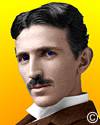
Born 10 Jul 1856; died 7 Jan 1943 at age 86. quotes
Serbian-American inventor and researcher who designed and built the first alternating current induction motor in 1883. He emigrated to the United States in 1884. Having discovered the benefits of a rotating magnetic field, the basis of most alternating-current machinery, he expanded its use in dynamos, transformers, and motors. Because alternating current could be transmitted over much greater distances than direct current, George Westinghouse bought patents from Tesla the system when he built the power station at Niagara Falls to provide electricity power the city of Buffalo, NY.«[Born in Croatia of Serbian parents. Some sources give birthdate as 9 Jul; he is said to have been born on the stroke of midnight. He celebrated his birthday as the 10th.]
Serbian-American inventor and researcher who designed and built the first alternating current induction motor in 1883. He emigrated to the United States in 1884. Having discovered the benefits of a rotating magnetic field, the basis of most alternating-current machinery, he expanded its use in dynamos, transformers, and motors. Because alternating current could be transmitted over much greater distances than direct current, George Westinghouse bought patents from Tesla the system when he built the power station at Niagara Falls to provide electricity power the city of Buffalo, NY.«[Born in Croatia of Serbian parents. Some sources give birthdate as 9 Jul; he is said to have been born on the stroke of midnight. He celebrated his birthday as the 10th.]
Wizard: The Life and Times of Nikola Tesla: Biography of a Genius, by Marc Seifer. - book suggestion.
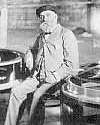
Born 10 Jul 1832; died 9 Jun 1897 at age 64.
American astronomer, who joined his father and brother in the family firm of Alvan Clark & Sons, world-famous makers of exceptional lenses for refracting telescopes, supplied to various observatories in the U.S. and Europe. His fascination with astronomy, which began in school, continued through his life. In 1861, while viewing Sirius during a test of a new lens, he observed the faint twin star beside it, Sirius B, which had been predicted almost two decades earlier by Friedrich Bessel in 1844. He discovered fourteen double stars in all. He went on total-eclipse expeditions to Jerez, Spain (1870) and Wyoming (1878). Carrying on the family business, after the deaths of his father and brother, Clark made the 40" diam. lenses of the Yerkes telescope (the world's largest refractor). He died shortly after their first use.«[Image: Clark beside the crown-glass element of the Yerkes Observatory 40-inch objective.]
American astronomer, who joined his father and brother in the family firm of Alvan Clark & Sons, world-famous makers of exceptional lenses for refracting telescopes, supplied to various observatories in the U.S. and Europe. His fascination with astronomy, which began in school, continued through his life. In 1861, while viewing Sirius during a test of a new lens, he observed the faint twin star beside it, Sirius B, which had been predicted almost two decades earlier by Friedrich Bessel in 1844. He discovered fourteen double stars in all. He went on total-eclipse expeditions to Jerez, Spain (1870) and Wyoming (1878). Carrying on the family business, after the deaths of his father and brother, Clark made the 40" diam. lenses of the Yerkes telescope (the world's largest refractor). He died shortly after their first use.«[Image: Clark beside the crown-glass element of the Yerkes Observatory 40-inch objective.]
Alvan Clark & Sons, Artists in Optics, by Warner and Ariail. - book suggestion.
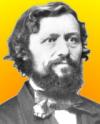
Born 10 Jul 1821; died 9 Dec 1881 at age 60.
German bridge and railway engineer whose graphic methods of structural analysis have been widely applied to engineering and mechanics. He wrote the first book on graphic statics, published in 1866. Stress trajectories are one of the original topics presented in this book. In 1849-1850, Culmann spent two years traveling in England and the United States to study bridges, which he later wrote about in Germany. He designed numerous bridge structures at the newly organized Zürich Polytechnicum. The works of Culmann, among other things, have been taken up for the design of the central arched bridges of the Eiffel Tower, and were also quoted by Pier Luigi Nervi in his patent on the construction of reinforced concrete-slab floors.
German bridge and railway engineer whose graphic methods of structural analysis have been widely applied to engineering and mechanics. He wrote the first book on graphic statics, published in 1866. Stress trajectories are one of the original topics presented in this book. In 1849-1850, Culmann spent two years traveling in England and the United States to study bridges, which he later wrote about in Germany. He designed numerous bridge structures at the newly organized Zürich Polytechnicum. The works of Culmann, among other things, have been taken up for the design of the central arched bridges of the Eiffel Tower, and were also quoted by Pier Luigi Nervi in his patent on the construction of reinforced concrete-slab floors.
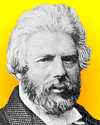
Born 10 Jul 1802; died 17 Mar 1871 at age 68. quotes
Robert Emmet Chambers, Jr. was a Scottish naturalist and publisher who co-founded the Chambers publishing company (Edinburgh, 1832), known for Chambers's Encyclopaedia (1859-68). Chambers secretly released Vestiges of the Natural History of Creation (1844). (Posthumously, in 1884, the 12th edition named him as author.) His controversial book stitched together radical theories of the time. It spanned from a nebular origin hypothesis of the solar system to the emergence of organisms from spontaneous generation. He traced through the fossil record from simple to more advanced life forms. It was daring, much flawed, poorly reasoned, and had little of lasting scientific value, but by public sensation, it broke ground for Charles Darwin’s scholarly work.«
Robert Emmet Chambers, Jr. was a Scottish naturalist and publisher who co-founded the Chambers publishing company (Edinburgh, 1832), known for Chambers's Encyclopaedia (1859-68). Chambers secretly released Vestiges of the Natural History of Creation (1844). (Posthumously, in 1884, the 12th edition named him as author.) His controversial book stitched together radical theories of the time. It spanned from a nebular origin hypothesis of the solar system to the emergence of organisms from spontaneous generation. He traced through the fossil record from simple to more advanced life forms. It was daring, much flawed, poorly reasoned, and had little of lasting scientific value, but by public sensation, it broke ground for Charles Darwin’s scholarly work.«


Died 10 Jul 2020 at age 82 (born 4 Apr 1938).
Indian-American biochemist who patented the first genetically engineered life-form (U.S. No. 4,259,444) which he created while working on the research and development staff of General Electric (1971-79). The new single cell life form was the Pseudomonas bacterium, now called Burkholderia cepacia, which had the potential to clean up toxic spills because of its ability to break down crude oil into simpler substances that could even become food for aquatic life. This ability is possessed by no naturally occurring bacteria. His original patent application was rejected. Eventually, by appeal to the U.S. Supreme Court, on 16 Jun 1980 it was decided that new forms of life could be patented if they are the outcome of human ingenuity.«
Indian-American biochemist who patented the first genetically engineered life-form (U.S. No. 4,259,444) which he created while working on the research and development staff of General Electric (1971-79). The new single cell life form was the Pseudomonas bacterium, now called Burkholderia cepacia, which had the potential to clean up toxic spills because of its ability to break down crude oil into simpler substances that could even become food for aquatic life. This ability is possessed by no naturally occurring bacteria. His original patent application was rejected. Eventually, by appeal to the U.S. Supreme Court, on 16 Jun 1980 it was decided that new forms of life could be patented if they are the outcome of human ingenuity.«
Bugging Cancer: Daring to Dream Paperback, by Ananda M. Chakrabarty, et al. - book suggestion.

American inventor of Reddi-Wip, whipped cream dessert topping in a spray can (1948). First sold by St. Louis milkmen, its distribution expanded quickly across N. America during America's postwar desire for convenience. Lapin became known as the Whipped Cream King. Lapin established Clayton Corp. to made his own valves for the can. He was issued U.S. patent 2,704,172 on 10 Mar 1955 for the valve. Clayton now also makes industrial valves, closures, caulk, adhesives and foamed plastic products such as insulation and cushioning materials. In 1998, Time listed Reddi-wip as one of the century's 100 great consumer items, along with the pop-top can and Spam. Reddi-Wip is now a brand of ConAgra's Beatrice Food.«[Image right: modern Reddi-Wip container.]
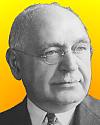
c. 1916
Died 10 Jul 1943 at age 72 (born 11 May 1871).
American astronomer who pioneered in the use of photography to map stellar positions and to measure stellar parallaxes, which could give more precise determinations of distance than visual ones, and with less than one hundredth as much time at the telescope. He designed instruments and mathematical and numerical techniques to improve parallax measurements. He published ten volumes of zone catalogs, including some 150,000 stars. He compiled positions, magnitudes, proper motions, radial velocities, and other data to produce the first edition and, with Louise Jenkins, the second, of the widely-used Bright Star Catalogues, making Yale a leading institution in astrometry. He established a second Yale observatory in South Africa.
American astronomer who pioneered in the use of photography to map stellar positions and to measure stellar parallaxes, which could give more precise determinations of distance than visual ones, and with less than one hundredth as much time at the telescope. He designed instruments and mathematical and numerical techniques to improve parallax measurements. He published ten volumes of zone catalogs, including some 150,000 stars. He compiled positions, magnitudes, proper motions, radial velocities, and other data to produce the first edition and, with Louise Jenkins, the second, of the widely-used Bright Star Catalogues, making Yale a leading institution in astrometry. He established a second Yale observatory in South Africa.
Yale University Observatory: Catalogue of Bright Stars, by Frank Schlesinger. - book suggestion.
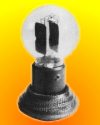
1914
Died 10 Jul 1933 at age 49 (born 3 Sep 1883).
American physicist whose research led to the development of long-distance telephony and radio communication. He worked at Western Electric on thermionic tubes, which amplified radio and telephone signals, leading to transcontinental telephony (July 1914). Even before the transcontinental line was completed, Arnold was directing work on the development of new higher power tubes to extend telephone service by radio to other continents. The first transcontinental demonstration of radio telephone (29 Sep 1915) was transmitted from New York City to Arlington, Virginia, then to San Francisco and Honolulu. Arnold later became the first director of research at Bell Telephone Labs (1925 to his death in 1933).
American physicist whose research led to the development of long-distance telephony and radio communication. He worked at Western Electric on thermionic tubes, which amplified radio and telephone signals, leading to transcontinental telephony (July 1914). Even before the transcontinental line was completed, Arnold was directing work on the development of new higher power tubes to extend telephone service by radio to other continents. The first transcontinental demonstration of radio telephone (29 Sep 1915) was transmitted from New York City to Arlington, Virginia, then to San Francisco and Honolulu. Arnold later became the first director of research at Bell Telephone Labs (1925 to his death in 1933).
Died 10 Jul 1910 at age 98 (born 9 Jun 1812). quotes
German astronomer who on 23 Sep 1846, was the first to observe the planet Neptune, whose existence had been predicted in the calculations of Leverrier. Leverrier had written to Galle asking him to search for the 'new planet' at a predicted location. Galle was then a member of the staff of the Berlin Observatory and had discovered three comets. In 1838, while assistant to Johann Franz Encke, Galle discovered the dark, inner C ring of Saturn at the time of the maxium ring opening. In 1851, he became professor of astronomy at Breslau and director of the observatory there. In 1872, he proposed the use of asteroids rather than regular planets for determinations of the solar parallax, a suggestion which was successful in an international campaign (1888-89).
German astronomer who on 23 Sep 1846, was the first to observe the planet Neptune, whose existence had been predicted in the calculations of Leverrier. Leverrier had written to Galle asking him to search for the 'new planet' at a predicted location. Galle was then a member of the staff of the Berlin Observatory and had discovered three comets. In 1838, while assistant to Johann Franz Encke, Galle discovered the dark, inner C ring of Saturn at the time of the maxium ring opening. In 1851, he became professor of astronomy at Breslau and director of the observatory there. In 1872, he proposed the use of asteroids rather than regular planets for determinations of the solar parallax, a suggestion which was successful in an international campaign (1888-89).
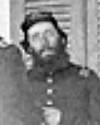
1861
Died 10 Jul 1885 at age 53 (born 26 Jan 1832).
U.S. surgeon and inventor who played a major role in the development of rapid transit in New York City. After serving as a surgeon in the Federal Army in the Civil War, he became interested in rapid transit as a means of freeing people from living in the unhealthful, crowded tenements in the centres of large cities. Gilbert obtained two patents in 1870 on a pneumatic-tube system, and he incorporated the Gilbert Electric Railway Company on 17 Jun 1872, to build elevated lines in New York City. The cars were to be propelled by air pressure from pneumatic tubes mounted on the elevated structure. A financial depression delayed construction until 1876, and forced adoption of a conventional track with trains drawn by steam locomotives, which opened 6 Jun 1878.
U.S. surgeon and inventor who played a major role in the development of rapid transit in New York City. After serving as a surgeon in the Federal Army in the Civil War, he became interested in rapid transit as a means of freeing people from living in the unhealthful, crowded tenements in the centres of large cities. Gilbert obtained two patents in 1870 on a pneumatic-tube system, and he incorporated the Gilbert Electric Railway Company on 17 Jun 1872, to build elevated lines in New York City. The cars were to be propelled by air pressure from pneumatic tubes mounted on the elevated structure. A financial depression delayed construction until 1876, and forced adoption of a conventional track with trains drawn by steam locomotives, which opened 6 Jun 1878.
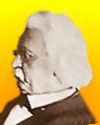
Died 10 Jul 1884 at age 73 (born 23 Dec 1810).
German Egyptologist who is regarded as a founding father of scientific methods in archaeology. His plans, maps and drawings of tomb and temple walls are of high accuracy and reliability. In 1842, he headed a team of carefully chosen specialists on a four year expedition to the Nile Valley sponsored by King Fredrich Wilhelm IV of Prussia. Lepsius explored Khartoum and Sennar, during which he collected 15,000 artifacts and dispatched for display in Berlin. In winter 1844-45, Lepsius travelled throughout the Valley of the Kings, recording numerous scenes and inscriptions. He returned in 1866 and found the Canopus decree at Tanis. Being written in two languages, it was a valuable cross-reference for the prior interpretation of the Rosetta stone by Champollion.«
German Egyptologist who is regarded as a founding father of scientific methods in archaeology. His plans, maps and drawings of tomb and temple walls are of high accuracy and reliability. In 1842, he headed a team of carefully chosen specialists on a four year expedition to the Nile Valley sponsored by King Fredrich Wilhelm IV of Prussia. Lepsius explored Khartoum and Sennar, during which he collected 15,000 artifacts and dispatched for display in Berlin. In winter 1844-45, Lepsius travelled throughout the Valley of the Kings, recording numerous scenes and inscriptions. He returned in 1866 and found the Canopus decree at Tanis. Being written in two languages, it was a valuable cross-reference for the prior interpretation of the Rosetta stone by Champollion.«
/LockeJohn(1792-1856)Thm.jpg "John Locke")
/LockeJohn(1792-1856)ChronographThm.jpg)
American geologist, surveyor and scientist who invented tools for surveyors, including a surveyor’s compass (patented 16 Jul 1850), a collimating level (Locke’s Hand Level, patented 2 Jul 1850) and a gravity escapement for regulator clocks. The electro-chronograph he constructed (1844-48) for the United States Coast Survey was installed in the Naval Observatory, Washington, in 1848. It improved determination of longitudes, as it was able to make a printed record on a time scale of an event to within one one-hundredth of a second. When connected via the nation's telegraph system, astronomers could record the time of events they observed from elsewhere in the country, by the pressing a telegraph key. Congress awarded him $10,000 for his inventions on 3 Mar 1849.*«[Image: Time display portion of Locke's electro-chronograph while installed at the Naval Observatory.] more
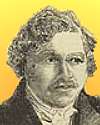
Died 10 Jul 1851 at age 63 (born 18 Nov 1787). quotes
French artist and inventor who invented the daguerreotype, the first practical process of photography. Though the first permanent photograph from nature was made in 1826/27 by Joseph-Nicéphore Niepce of France, it was of poor quality and required about eight hours' exposure time. The process that Daguerre developed required only 20 to 30 minutes. The two became partners in the development of Niepce's heliographic process from 1829 until the death of Niepce in 1833. Daguerre continued his experiments, and he discovered that exposing an iodized silver plate in a camera would result in a lasting image after a chemical fixing process.[EB gives date of birth 18 Nov 1787. Some sources give the year as 1789.]
French artist and inventor who invented the daguerreotype, the first practical process of photography. Though the first permanent photograph from nature was made in 1826/27 by Joseph-Nicéphore Niepce of France, it was of poor quality and required about eight hours' exposure time. The process that Daguerre developed required only 20 to 30 minutes. The two became partners in the development of Niepce's heliographic process from 1829 until the death of Niepce in 1833. Daguerre continued his experiments, and he discovered that exposing an iodized silver plate in a camera would result in a lasting image after a chemical fixing process.[EB gives date of birth 18 Nov 1787. Some sources give the year as 1789.]
The Daguerreotype: Nineteenth-Century Technology and Modern Science, by Barger and White. - book suggestion.
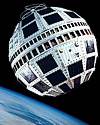
In 1962, Telstar 1, the world’s first geosynchronous active communications satellite, was launched from Cape Canaveral, Florida. Pioneered by AT&T, to relay TV and telephone signals between the U.S. and Europe, Telstar 1 initiated easier, faster access to information and carried the first live transatlantic TV satellite broadcast. French and English viewers saw a press conference by President Kennedy, and U.S. audiences watched French singer Yves Montand and the changing of the guard at Buckingham Palace. The Telstar 1 transmitter failed on 21 Feb 1963, and was replaced by Telstar 2 on 7 May 1963. (A passive U.S. telecommunications satellite, Echo 1, was launched 12 Aug 1960.)«
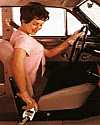
In 1962, a U.S. patent was issued to Swedish engineer, Nils Bohlen, for the three-point seat-belt (No. 3,043,625). His lap and and shoulder design is now familiar as the passenger-restraint safety device in cars that has saved countless lives. His design replaced the earlier style of a single safety belts strapped across the body, with the buckle placed over the abdomen, which often caused severe internal injuries in high-speed crashes. Bohlin assigned the patent to Volvo, the car manufacturer for whom he worked. From Aug 1959, Volvo incorporated Bohlin's seat belt into the vehicles they manufactured. The company also made the design freely available to other car manufacturers to save more lives.«
In 1958, the first parking meters were installed in England (625 installed).
In 1933, the first police radio system began operating in Eastchester Township, NY.
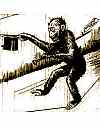
In 1925, the “Scopes monkey trial” began in Dayton, Tennessee and ran for 12 days. A local school teacher, John Scopes, was prosecuted under the state's Butler Act, but was supported by the American Civil Liberties Union. This law, passed a few months earlier (21 Mar 1925) prohibited the teaching of evolution in public schools. The trial was a platform to challenge the legality of the statute. Local town leaders,(wishing for the town to benefit from the publicity of the trial) had recruited Scope to stand trial. He was convicted (25 Jul 1925) and fined $100. On appeal, the state supreme court upheld the constitutionality of the law but acquitted Scopes on the technicality that he had been fined excessively. The law was repealed on 17 May 1967.«[Image: cartoon from the New York Times, 25 Jul 1925. The cane is tagged "Evolution Trial."]
Center of the Storm: Memoirs of John T. Scopes, by John Scopes. - book suggestion.
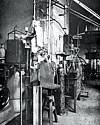
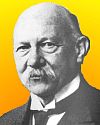
Freezing Physics: Heike Kamerlingh Onnes and the Quest for Cold, by Dirk van Delft. - book suggestion.
In 1892, the first concrete-paved street was built - Court Avenue, around the Logan County Court House, in Bellefountaine, Ohio. In the 19th century, concrete was called "artificial stone." George Bartholemew convinced the Bellefontaine City Council to try it in 1891. The bond he posted guaranteed the pavement would last at least five years. Over 100 years later, a portion remains, but open only to light traffic to preserve it. The remainder had been replaced by more modern paving materials.
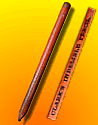
In 1866, the first U.S. patent for an indelible pencil was issued to Edson P Clark of Northampton, Mass. as an "Producing Indelible Writing on Linen and other Fabrics" (No. 56,180). The pencil-lead was composed of gypsum (a hard moisture-resistance compound) and black lead (coloring agent, with optional asphaltum or lamp-black) and silver nitrate. It is the silver nitrate which blackens to make the indelible mark by the action of light or heat. The black lead and gypsum permit the pencil to be readily pointed. The patent described cementing the filling with shellac into grooved cedar wood. Clark held an earlier patent for an indelible composition, but described without the wood jacket (No. 24,195 on 31 May 1859).
more
The Pencil: A History of Design and Circumstance, by Henry Petroski. - book suggestion.





