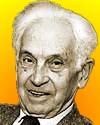
Born 5 Jul 1904; died 3 Feb 2005 at age 100. quotes
Ernst Walter Mayr was a German-American biologist who merged genetics with evolution to explain how new species evolve. As a youth, he enjoyed bird watching, and by age 10, could recognize all the local bird species by sight or call. By age 21, he had earned a Ph.D. in ornithology (Jun 1926). In 1928-30, aged in his 20s, Mayr headed three scientific expeditions to New Guinea and the Solomon Islands to study the effects of geographic distribution among various animal species. He became a leader developing the modern synthetic theory of evolution (in which ideas of gene mutation and their molecular evolution over time are merged with the effects of reproductive isolation and natural selection). In 1940, Mayr presented a definition of species to identify similar but different species.«
Ernst Walter Mayr was a German-American biologist who merged genetics with evolution to explain how new species evolve. As a youth, he enjoyed bird watching, and by age 10, could recognize all the local bird species by sight or call. By age 21, he had earned a Ph.D. in ornithology (Jun 1926). In 1928-30, aged in his 20s, Mayr headed three scientific expeditions to New Guinea and the Solomon Islands to study the effects of geographic distribution among various animal species. He became a leader developing the modern synthetic theory of evolution (in which ideas of gene mutation and their molecular evolution over time are merged with the effects of reproductive isolation and natural selection). In 1940, Mayr presented a definition of species to identify similar but different species.«
Systematics and the Origin of Species, by Ernst Mayr. - book suggestion.
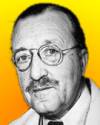
Born 5 Jul 1891; died 27 May 1987 at age 95.
American biochemist who received (with James B. Sumner and Wendell M. Stanley) the Nobel Prize for Chemistry in 1946 for successfully purifying and crystallizing certain enzymes, thus enabling him to determine their chemical nature. During WW I, he conducted research on fermentation processes suitable for the industrial production of acetone and ethyl alcohol. This work led to a study of enzymes essential for digestion, respiration, and general life processes. He crystallized pepsin (1930), a digestive enzyme present in gastric juice, and found that it is a protein, thus resolving the dispute over the nature of enzymes. Using the same chemical methods, he isolated the first bacterial virus (bacteriophage), and found it is a nucleoprotein (1938).
American biochemist who received (with James B. Sumner and Wendell M. Stanley) the Nobel Prize for Chemistry in 1946 for successfully purifying and crystallizing certain enzymes, thus enabling him to determine their chemical nature. During WW I, he conducted research on fermentation processes suitable for the industrial production of acetone and ethyl alcohol. This work led to a study of enzymes essential for digestion, respiration, and general life processes. He crystallized pepsin (1930), a digestive enzyme present in gastric juice, and found that it is a protein, thus resolving the dispute over the nature of enzymes. Using the same chemical methods, he isolated the first bacterial virus (bacteriophage), and found it is a nucleoprotein (1938).
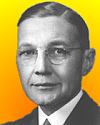
Born 5 Jul 1888; died 11 May 1963 at age 74. quotes
American physiologist who shared (with Joseph Erlanger) of the Nobel Prize for Physiology or Medicine in 1944 for fundamental discoveries concerning the functions of different kinds of nerve fibres. They studied the barely detectable electrical impulses carried by isolated mammalian nerve fibres. By 1924, they had succeeded in adapting the oscillograph to physiological research, enabling them to visualize amplified nerve impulses on a fluorescent screen. Using this device, they demonstrated that different nerve fibres exist for the transmission of specific kinds of impulses, such as those of pain, cold, or heat. Their work also made it possible to construct improved recording machines to diagnose brain and nervous disorders.
American physiologist who shared (with Joseph Erlanger) of the Nobel Prize for Physiology or Medicine in 1944 for fundamental discoveries concerning the functions of different kinds of nerve fibres. They studied the barely detectable electrical impulses carried by isolated mammalian nerve fibres. By 1924, they had succeeded in adapting the oscillograph to physiological research, enabling them to visualize amplified nerve impulses on a fluorescent screen. Using this device, they demonstrated that different nerve fibres exist for the transmission of specific kinds of impulses, such as those of pain, cold, or heat. Their work also made it possible to construct improved recording machines to diagnose brain and nervous disorders.
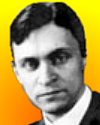
Born 5 Jul 1873; died 12 Mar 1971 at age 97.
American pathologist who conducted important research on the causes, transmission, and diagnosis of tuberculosis and on immunization against the disease. Opie published on malaria research and the causes of diabetes. He demonstrated that the islets of Langerhans were involved in the development of diabetes in humans and identified two forms of parasite (hyaline and granular) in crow malaria. Later, he embarked on research in immunology and carcinogenesis, the development of obstruction of the pancreatic duct, and tuberculosis. He remained active in research well into his nineties.
American pathologist who conducted important research on the causes, transmission, and diagnosis of tuberculosis and on immunization against the disease. Opie published on malaria research and the causes of diabetes. He demonstrated that the islets of Langerhans were involved in the development of diabetes in humans and identified two forms of parasite (hyaline and granular) in crow malaria. Later, he embarked on research in immunology and carcinogenesis, the development of obstruction of the pancreatic duct, and tuberculosis. He remained active in research well into his nineties.
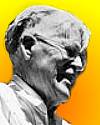
Born 5 Jul 1867; died 20 Mar 1962 at age 94.
American astronomer and archaeologist who coined the name dendrochronology for tree-ring dating, a field he originated while working at the Lowell Observatory, Flagstaff, Ariz. (1894-1901). He began to collect tree specimens, believing that variations in the width of tree rings would show a connection between sunspot activity and the terrestrial climate and vegetation. His study showed how tree rings could be used to date and interpret past events. The width of tree rings is a record of the rainfall, with implications on the local food supply in dry years. Archaeologist Clark Wissler collaborated in this work by furnishing sections of wooden beams from Aztec Ruin and Pueblo Bonito so Douglass could cross-date the famous sites. Thus the study of tree rings enables archaeologists to date prehistoric remains.«
American astronomer and archaeologist who coined the name dendrochronology for tree-ring dating, a field he originated while working at the Lowell Observatory, Flagstaff, Ariz. (1894-1901). He began to collect tree specimens, believing that variations in the width of tree rings would show a connection between sunspot activity and the terrestrial climate and vegetation. His study showed how tree rings could be used to date and interpret past events. The width of tree rings is a record of the rainfall, with implications on the local food supply in dry years. Archaeologist Clark Wissler collaborated in this work by furnishing sections of wooden beams from Aztec Ruin and Pueblo Bonito so Douglass could cross-date the famous sites. Thus the study of tree rings enables archaeologists to date prehistoric remains.«
Andrew Ellicott Douglass and the Role of the Giant Sequoia in the Development of Dendrochronology, by Donald J. McGraw. - book suggestion.
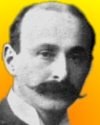
Born 5 Jul 1862; died 16 Dec 1937 at age 75.
American-born British biologist and physician who contributed substantially to many branches of biology and founded the Molteno Institute of Biology and Parasitology (1921) at the University of Cambridge. He was interested in parasitology and the role of insects and other disease vectors, making studies of immunity reactions and the bacteriology of diptheria. He carried out investigations of the distribution of Anopheline mosquitoes in England in relation to the previous prevalence of malaria there in addition to working on blood precipition reactions.
American-born British biologist and physician who contributed substantially to many branches of biology and founded the Molteno Institute of Biology and Parasitology (1921) at the University of Cambridge. He was interested in parasitology and the role of insects and other disease vectors, making studies of immunity reactions and the bacteriology of diptheria. He carried out investigations of the distribution of Anopheline mosquitoes in England in relation to the previous prevalence of malaria there in addition to working on blood precipition reactions.
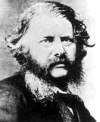
Born 5 Jul 1820; died 24 Dec 1872 at age 52. quotes
Scottish engineer and physicist and one of the founders of the science of thermodynamics, particularly in reference to steam-engine theory. As the chair (1855) of civil engineering and mechanics at Glasgow, he developed methods to solve the force distribution in frame structures. Rankine also wrote on fatigue in the metal of railway axles, on Earth pressures in soil mechanics and the stability of walls. He was elected a Fellow of the Royal Society in 1853. Among his most important works are Manual of Applied Mechanics (1858), Manual of the Steam Engine and Other Prime Movers (1859) and On the Thermodynamic Theory of Waves of Finite Longitudinal Disturbance.
Scottish engineer and physicist and one of the founders of the science of thermodynamics, particularly in reference to steam-engine theory. As the chair (1855) of civil engineering and mechanics at Glasgow, he developed methods to solve the force distribution in frame structures. Rankine also wrote on fatigue in the metal of railway axles, on Earth pressures in soil mechanics and the stability of walls. He was elected a Fellow of the Royal Society in 1853. Among his most important works are Manual of Applied Mechanics (1858), Manual of the Steam Engine and Other Prime Movers (1859) and On the Thermodynamic Theory of Waves of Finite Longitudinal Disturbance.
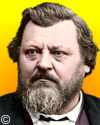
Born 5 Jul 1817; died 5 May 1895 at age 77. quotes
Carl Christoph Vogt was a German-Swiss zoologist, physician and politician who lived in Geneva most of his career, and naturalized as a Swiss citizen. Although he originally trained in medicine, his interest turned to the natural sciences. He specialized in marine biology, but also taught geology until he had the opportunity to become chair of zoology (1872). He supported Charles Darwin’s ideas about natural selection, and lectured on evolution. Vogt denied creation ex nihilo, and energetically advocated scientific materialism, as subsequently promoted by Ernst Haeckel. Vogt wrote several books and contributed many articles to journals. The textbook he wrote on practical comparative anatomy became a classic. He also wrote on geology and an early work of anthropology. more
Carl Christoph Vogt was a German-Swiss zoologist, physician and politician who lived in Geneva most of his career, and naturalized as a Swiss citizen. Although he originally trained in medicine, his interest turned to the natural sciences. He specialized in marine biology, but also taught geology until he had the opportunity to become chair of zoology (1872). He supported Charles Darwin’s ideas about natural selection, and lectured on evolution. Vogt denied creation ex nihilo, and energetically advocated scientific materialism, as subsequently promoted by Ernst Haeckel. Vogt wrote several books and contributed many articles to journals. The textbook he wrote on practical comparative anatomy became a classic. He also wrote on geology and an early work of anthropology. more
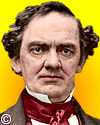
Born 5 Jul 1810; died 7 Apr 1891 at age 80.
Phineas Taylor Barnum was an American museum administrator and circus owner who is remembered for his showmanship, but began as proprietor of his American Museum in New York City, which included not just freak shows, but also serious scientific exhibits, for which he actively collected natural history specimens.
Phineas Taylor Barnum was an American museum administrator and circus owner who is remembered for his showmanship, but began as proprietor of his American Museum in New York City, which included not just freak shows, but also serious scientific exhibits, for which he actively collected natural history specimens.
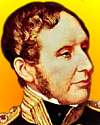
Born 5 Jul 1805; died 30 Apr 1865 at age 59. quotes
English naval officer, hydrographer and meteorologist who commanded the voyage of HMS Beagle, aboard which Charles Darwin sailed around the world as the ship's naturalist. That voyage provided Darwin with much of the material on which he based his theory of evolution. Fitzroy retired from active duty in 1850 and from 1854 devoted himself to meteorology. He devised a storm warning system that was the prototype of the daily weather forecast, invented a barometer, and published The Weather Book (1863). His death was by suicide, during a bout of depression.
English naval officer, hydrographer and meteorologist who commanded the voyage of HMS Beagle, aboard which Charles Darwin sailed around the world as the ship's naturalist. That voyage provided Darwin with much of the material on which he based his theory of evolution. Fitzroy retired from active duty in 1850 and from 1854 devoted himself to meteorology. He devised a storm warning system that was the prototype of the daily weather forecast, invented a barometer, and published The Weather Book (1863). His death was by suicide, during a bout of depression.
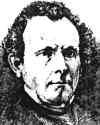
Born 5 Jul 1794; died 11 Sep 1851 at age 57.
American physician and inventor of the graham cracker. Perhaps because of concern for his own health, after a long illness, he became interested in human physiology and nutrition, giving lectures in the eastern states, and developing what came to be known as the Graham System, a vegetarian dietetic theory. He advocated use of whole wheat for bread, hard mattresses, open windows, fresh fruits and vegetables, pure drinking water, and cheerfulness at meals Graham's most ambitious work, Lectures on the Science of Human Life, published in 1839, became a leading text on health reform, but his popularity waned after 1840 and he died in 1851.
American physician and inventor of the graham cracker. Perhaps because of concern for his own health, after a long illness, he became interested in human physiology and nutrition, giving lectures in the eastern states, and developing what came to be known as the Graham System, a vegetarian dietetic theory. He advocated use of whole wheat for bread, hard mattresses, open windows, fresh fruits and vegetables, pure drinking water, and cheerfulness at meals Graham's most ambitious work, Lectures on the Science of Human Life, published in 1839, became a leading text on health reform, but his popularity waned after 1840 and he died in 1851.

Born 5 Jul 1753; died Mar 1815.
English mining engineer who invented the first compound steam engine for which he claimed better efficiency, using two cylinders of unequal size attached to the same beam. Steam acts first in a small high-pressure cylinder, leaving at a lower pressure, but still sufficient to expand further in a larger cylinder. He obtained a patent on 13 Jul 1781 (UK No. 1298), but his engine still used a separate condenser, thus infringing on patents held by James Watt's company (Boulton & Watt), so he had to abandon that design. In 1798 and 1805, he patented rotary forms of steam engine (never built). He also invented a machine for sweeping chimneys with a blast of air. His compound steam engine principle was revived in 1804 by Arthur Woolf.« more
English mining engineer who invented the first compound steam engine for which he claimed better efficiency, using two cylinders of unequal size attached to the same beam. Steam acts first in a small high-pressure cylinder, leaving at a lower pressure, but still sufficient to expand further in a larger cylinder. He obtained a patent on 13 Jul 1781 (UK No. 1298), but his engine still used a separate condenser, thus infringing on patents held by James Watt's company (Boulton & Watt), so he had to abandon that design. In 1798 and 1805, he patented rotary forms of steam engine (never built). He also invented a machine for sweeping chimneys with a blast of air. His compound steam engine principle was revived in 1804 by Arthur Woolf.« more
The Most Powerful Idea in the World: A Story of Steam, Industry, and Invention, by William Rosen. - book suggestion.
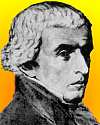

Argand lamp
François-Pierre Amis Argand was a Swiss chemist who invented (1781) the Argand lamp, an oil burner with a tubular wick inside a glass chimney which induced an updraft of air through two iron tubes, concentric with the wick, resulting in better combustion. It burned ten times brighter than a simple oil lamp, with less smoke and smell. The rape oil used was viscous, so the fuel feed was provided by gravity from an elevated vessel. He manufactured the lamp for only a few years because during the French Revolution his factories were destroyed. By 1793, having no compensation for his losses, Argand moved to England. He is also known for assisting the Montgolfier brothers with their balloon flights, and for his work for distilleries.«
Brandy, Balloons, & Lamps: Ami Argand, 1750-1803, by John J. Wolfe. - book suggestion.

Died 5 Jul 1996 at age 81 (born 23 May 1915).
American physicist who worked on the Manhattan Project (which produced the atomic bomb during WW II). In the 1950's, he was part of a team that discovered the antiproton, using the bevatron particle accelerator at Lawrence Berkeley National Laboratory. Although two other members of the research team (Owen Chamberlain and Emilio Segrè) won the 1959 Nobel Prize in Physics for this work, Wiegand's crucial contribution was not so recognized.
American physicist who worked on the Manhattan Project (which produced the atomic bomb during WW II). In the 1950's, he was part of a team that discovered the antiproton, using the bevatron particle accelerator at Lawrence Berkeley National Laboratory. Although two other members of the research team (Owen Chamberlain and Emilio Segrè) won the 1959 Nobel Prize in Physics for this work, Wiegand's crucial contribution was not so recognized.
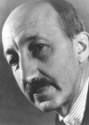
Died 5 Jul 1966 at age 80 (born 1 Aug 1885).
Hungarian-Danish-Swedish chemist who was awarded the 1943 Nobel Prize for developing isotopic tracer techniques which enabled understanding of the chemical paths of life processes. For example, a radioactive isotope of phosphorus, prepared in solutions of sodium phosphate can be injected into animals and humans, and blood samples analysed. This show that the radio-phosphorus content in human blood falls after only 2 hours to just 2% of its original amount as it changes places with the phosphorus atoms within the tissues, organs and skeleton. He also discovered, with Dirk Coster, the element hafnium (1923). He published Adventures in Radioisotope Research in two volumes (1962).[EB and a NYT obituary give date of death 5 Jul 1966. DSB gives 6 Jul 1966.]
Hungarian-Danish-Swedish chemist who was awarded the 1943 Nobel Prize for developing isotopic tracer techniques which enabled understanding of the chemical paths of life processes. For example, a radioactive isotope of phosphorus, prepared in solutions of sodium phosphate can be injected into animals and humans, and blood samples analysed. This show that the radio-phosphorus content in human blood falls after only 2 hours to just 2% of its original amount as it changes places with the phosphorus atoms within the tissues, organs and skeleton. He also discovered, with Dirk Coster, the element hafnium (1923). He published Adventures in Radioisotope Research in two volumes (1962).[EB and a NYT obituary give date of death 5 Jul 1966. DSB gives 6 Jul 1966.]
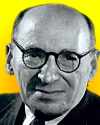
Died 5 Jul 1961 at age 64 (born 11 Jul 1896). quotes
Polish-Israeli physician and microbiologist, who having earlier learned the technique under Rudolf Weigl, prepared typhus vaccine while interned during WWII at Buchenwald for prisoners there. He duped incompetent Nazi doctors with harmless, ineffective supplies for German troops. Fleck’s concept of Denkkollektiv proposed that “scientific facts” are constructed by groups of scientists in what he called “thought collectives,” each of which represents a “thought style”—with its own norms, concepts and practices—which indoctrinate newcomers. Their outcomes may not align with other thought collectives. Scientific ideas evolve by reconciling scientific facts between thought collectives, which thereby stimulates innovations.«
Polish-Israeli physician and microbiologist, who having earlier learned the technique under Rudolf Weigl, prepared typhus vaccine while interned during WWII at Buchenwald for prisoners there. He duped incompetent Nazi doctors with harmless, ineffective supplies for German troops. Fleck’s concept of Denkkollektiv proposed that “scientific facts” are constructed by groups of scientists in what he called “thought collectives,” each of which represents a “thought style”—with its own norms, concepts and practices—which indoctrinate newcomers. Their outcomes may not align with other thought collectives. Scientific ideas evolve by reconciling scientific facts between thought collectives, which thereby stimulates innovations.«
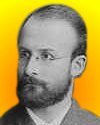
Died 5 Jul 1942 at age 85 (born 12 May 1857).
German mathematician who moved to the U.S. in 1888. He published The elliptic s-functions considered as a special case of the hyperelliptic s-functions in 1900. From 1910, he worked on the calculus of variations. Bolza wrote a classic textbook on the subject, Lectures on the Calculus of Variations (1904). He returned to Germany in 1910, where he researched function theory, integral equations and the calculus of variations. In 1913, he published a paper presenting a new type of variational problem now called "the problem of Bolza." The next year, he wrote about variations for an integral problem involving inequalities, which later become important in control theory. Bolza ceased his mathematical research work at the outbreak of WW I in 1914.«
German mathematician who moved to the U.S. in 1888. He published The elliptic s-functions considered as a special case of the hyperelliptic s-functions in 1900. From 1910, he worked on the calculus of variations. Bolza wrote a classic textbook on the subject, Lectures on the Calculus of Variations (1904). He returned to Germany in 1910, where he researched function theory, integral equations and the calculus of variations. In 1913, he published a paper presenting a new type of variational problem now called "the problem of Bolza." The next year, he wrote about variations for an integral problem involving inequalities, which later become important in control theory. Bolza ceased his mathematical research work at the outbreak of WW I in 1914.«
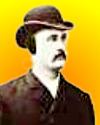
Died 5 Jul 1937 at age 78 (born 4 Dec 1858).
American inventor and manufacturer of earmuffs, which, while a teenager, he designed and patented (U.S. No.188,292 issued 13 Mar 1877). He had experienced very uncomfortable cold ears while skating in winter, and solved his problem with beaver fur pads on a wire frame. By his mid-twenties, he had a factory and 11 workers producing Greenwood Champion Ear Protectors in his hometown of Farmington producing 50,000 earmuffs yearly. Distribution grew to 400,000 pairs by the year he died. He patented many other inventions. In 1977, the Maine state legislature officially declared 21 Dec, the first day of winter, as the annual Chester Greenwood Day. His hometown celebrates with a parade in early December.«[Image: Greenwood wearing the earmuffs from a promotional photo.] more
American inventor and manufacturer of earmuffs, which, while a teenager, he designed and patented (U.S. No.188,292 issued 13 Mar 1877). He had experienced very uncomfortable cold ears while skating in winter, and solved his problem with beaver fur pads on a wire frame. By his mid-twenties, he had a factory and 11 workers producing Greenwood Champion Ear Protectors in his hometown of Farmington producing 50,000 earmuffs yearly. Distribution grew to 400,000 pairs by the year he died. He patented many other inventions. In 1977, the Maine state legislature officially declared 21 Dec, the first day of winter, as the annual Chester Greenwood Day. His hometown celebrates with a parade in early December.«[Image: Greenwood wearing the earmuffs from a promotional photo.] more
Died 5 Jul 1932 at age 54 (born 19 Jul 1877).
Nils Erland Herbert Nordenskiöld was a Swedish ethnologist and archaeologist, and a foremost scholar of South American Indian culture in his time. From 1913, at the Gotebörg Ethnographic Museum, Sweden, he started a period of intensive acquisition. Exhibits and documentation increased and the collection grew more rapidly than before. His work influenced the study of anthropology in Sweden and Denmark. He made zoological expeditions to Patagonia (1899) and Agentina and Bolivia (1901-02), then turned to archeological research in the mountains of Peru and Boliva (1904-05). A later expeditions led to a paper dealing with mounds and urn burials in Bolivia (1912). On his last expedition (1927) he studied the Chocó and Cuna Indians of Columbia and Panama.
Nils Erland Herbert Nordenskiöld was a Swedish ethnologist and archaeologist, and a foremost scholar of South American Indian culture in his time. From 1913, at the Gotebörg Ethnographic Museum, Sweden, he started a period of intensive acquisition. Exhibits and documentation increased and the collection grew more rapidly than before. His work influenced the study of anthropology in Sweden and Denmark. He made zoological expeditions to Patagonia (1899) and Agentina and Bolivia (1901-02), then turned to archeological research in the mountains of Peru and Boliva (1904-05). A later expeditions led to a paper dealing with mounds and urn burials in Bolivia (1912). On his last expedition (1927) he studied the Chocó and Cuna Indians of Columbia and Panama.
Died 5 Jul 1932 at age 58 (born 21 Jan 1874).
French mathematician whose study of irrational numbers and whose concept to divide the notion of continuity into upper and lower semi-continuity greatly influenced the French School of Mathematics. His doctoral thesis led to the solution of the problem of the characteristic property of limited functions of continuous functions and helped establish the theory of functions of real variables.
French mathematician whose study of irrational numbers and whose concept to divide the notion of continuity into upper and lower semi-continuity greatly influenced the French School of Mathematics. His doctoral thesis led to the solution of the problem of the characteristic property of limited functions of continuous functions and helped establish the theory of functions of real variables.
Died 5 Jul 1927 at age 73 (born 16 Sep 1853). quotes
Karl Martin Leonhard Albrecht Kossel was a German biochemist who was awarded the Nobel Prize for Physiology or Medicine in 1910 for his contributions to understanding the chemistry of nucleic acids and proteins. He discovered the nucleic acids that are the bases in the DNA molecule, the genetic substance of the cell.
Karl Martin Leonhard Albrecht Kossel was a German biochemist who was awarded the Nobel Prize for Physiology or Medicine in 1910 for his contributions to understanding the chemistry of nucleic acids and proteins. He discovered the nucleic acids that are the bases in the DNA molecule, the genetic substance of the cell.
Died 5 Jul 1911 at age 85 (born 15 Feb 1826). quotes
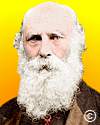
George Johnstone Stoney was an Irish physicist who coined the term electron for the fundamental unit of electricity. At the Belfast meeting of the British Association in Aug 1874, in a paper: On the Physical Units of Nature, Stoney called attention to a minimum quantity of electricity. He wrote, “I shall express ‘Faraday's Law’ in the following terms ... For each chemical bond which is ruptured within an electrolyte a certain quantity of electricity traverses the electrolyte which is the same in all cases.” Stoney subsequently offered the name electron for this minimum electric charge. When J.J. Thomson identified cathode rays as streams of negative particles (1897), each carrying probably Stoney's minimum quantity of charge, the name was applied to the particle rather than the quantity of charge. more
George Johnstone Stoney was an Irish physicist who coined the term electron for the fundamental unit of electricity. At the Belfast meeting of the British Association in Aug 1874, in a paper: On the Physical Units of Nature, Stoney called attention to a minimum quantity of electricity. He wrote, “I shall express ‘Faraday's Law’ in the following terms ... For each chemical bond which is ruptured within an electrolyte a certain quantity of electricity traverses the electrolyte which is the same in all cases.” Stoney subsequently offered the name electron for this minimum electric charge. When J.J. Thomson identified cathode rays as streams of negative particles (1897), each carrying probably Stoney's minimum quantity of charge, the name was applied to the particle rather than the quantity of charge. more
Died 5 Jul 1894 at age 77 (born 5 Mar 1817).
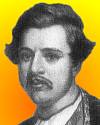
English archaeologist whose excavations in Mesopotamia revealed the palaces of the great Assyrian kings, Sennacherib and Assurbanipal, yielding much evidence of both the antiquity and the cultural achievement of the ancient civilizations. He began excavations at Nimrud in 1845, aged 28, making detailed drawing of his discoveries. The artifacts he uncovered included huge winged bulls, hawk-winged lions with human heads, many other statuary reliefs, and alabaster slabs with cuneiform inscriptions. He shipped immense sculptures and other finds back to England. However, he was not a scholar. He wrote popular narrative books on his travels and discoveries. Later in life, he abandoned archaeology and turned to politics.«
English archaeologist whose excavations in Mesopotamia revealed the palaces of the great Assyrian kings, Sennacherib and Assurbanipal, yielding much evidence of both the antiquity and the cultural achievement of the ancient civilizations. He began excavations at Nimrud in 1845, aged 28, making detailed drawing of his discoveries. The artifacts he uncovered included huge winged bulls, hawk-winged lions with human heads, many other statuary reliefs, and alabaster slabs with cuneiform inscriptions. He shipped immense sculptures and other finds back to England. However, he was not a scholar. He wrote popular narrative books on his travels and discoveries. Later in life, he abandoned archaeology and turned to politics.«
The Man Who Found Nineveh: The Story of Austen Henry Layard, by Robert Silverberg. - book suggestion.
Died 5 Jul 1833 at age 68 (born 7 Mar 1765).
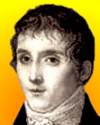
Joseph-Nicéphore Niepce was a French inventor who was the first to make a permanent photographic image. In 1807, with his brother Claude, he invented the pyréolophore, an internal combustion engine fueled by lycopodium powder. Although never practical, the engine was able to move a 2-m model boat upstream. By 1813, Niepce had taken up lithography, which led to his invention of photography. By letter, in May 1816, he told Claude of an apparatus that produced a (negative) image using a paper coated with silver chloride fixed with nitric acid. After further experimentation, by 1826, he achieved the first fixed positive image. Approaching bankruptcy, in 1829, he signed an agreement of cooperation with Daguerre.
Joseph-Nicéphore Niepce was a French inventor who was the first to make a permanent photographic image. In 1807, with his brother Claude, he invented the pyréolophore, an internal combustion engine fueled by lycopodium powder. Although never practical, the engine was able to move a 2-m model boat upstream. By 1813, Niepce had taken up lithography, which led to his invention of photography. By letter, in May 1816, he told Claude of an apparatus that produced a (negative) image using a paper coated with silver chloride fixed with nitric acid. After further experimentation, by 1826, he achieved the first fixed positive image. Approaching bankruptcy, in 1829, he signed an agreement of cooperation with Daguerre.
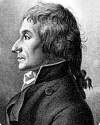
Died 5 Jul 1826 at age 71 (born 26 Sep 1754).
French chemist who proved (1808) that the relative quantities of any given pure chemical compound's constituent elements remain invariant, regardless of the compound's source, and thus provided crucial evidence in support of John Dalton's “law of definite proportions,” which holds that elements in any compound are present in fixed proportion to each other.
French chemist who proved (1808) that the relative quantities of any given pure chemical compound's constituent elements remain invariant, regardless of the compound's source, and thus provided crucial evidence in support of John Dalton's “law of definite proportions,” which holds that elements in any compound are present in fixed proportion to each other.
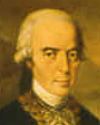
Died 5 Jul 1795 at age 79 (born 12 Jan 1716).
Spanish scientist and naval officer who discovered the element platinum (atomic number 78). In 1735, the French and Spanish governments sent an scientific expedition to Peru and Ecuador to measure a degree of meridian at Quinto, close to the equator. Ulloa was one of the officers appointed to take charge of the expedition. In 1744, the ship on which he returned was captured by the British, and he was taken prisoner, though treated respectfully by the English naval officers for they “were not at war with the arts and sciences.” The log of his voyage to Peru published in 1748 contains a description of platinum. He established the first museum of natural history and the first metallurgical laboratory in Spain, as well as the Cadiz observatory.
Spanish scientist and naval officer who discovered the element platinum (atomic number 78). In 1735, the French and Spanish governments sent an scientific expedition to Peru and Ecuador to measure a degree of meridian at Quinto, close to the equator. Ulloa was one of the officers appointed to take charge of the expedition. In 1744, the ship on which he returned was captured by the British, and he was taken prisoner, though treated respectfully by the English naval officers for they “were not at war with the arts and sciences.” The log of his voyage to Peru published in 1748 contains a description of platinum. He established the first museum of natural history and the first metallurgical laboratory in Spain, as well as the Cadiz observatory.
In 1997, NASA scientists brainstormed to fix problems that left Mars Pathfinder’s robot rover, Sojourner, stuck aboard the lander.
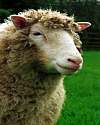
In 1996, Dolly, a cloned sheep, was born at the Roslin Institute, Edinburgh, Scotland. Scientists had replaced the nucleus of an egg cell with the nucleus from a parent cell - in Dolly's case, an udder cell from a a Finn Dorset sheep. Somehow, the egg cell reprogrammed the donated DNA contained within its new nucleus, and Dolly was the result. The manipulation was done using microscopic needles, a method pioneered in human fertility treatments in the 1970s. The resulting embryo was implanted into the womb of a third, surrogate sheep. Biologist Keith Campbell is recognised as having the key role in the team's work, which was supervised by Ian Wilmut. The birth of Dolly was announced in early 1997.«
The Second Creation: Dolly and the Age of Biological Control, by Ian Wilmut, et al. - book suggestion.

In 1966, a Saturn I-B rocket, an unmanned Apollo test flight, the first Apollo orbital mission, was launched at Cape Kennedy and made 4 orbits at an altitude of about 113 miles (180-km). The AS-203 mission successfully evaluated the performance of the S-IVB instrument unit stage under orbital conditions and to obtain flight information on venting and chill-down systems, fluid dynamics and heat transfer of propellant tanks; attitude and thermal control system, launch vehicle guidance, and checkout in orbit. The Saturn rocket was designed for lofting humans to the moon, requiring a rocket larger and more powerful than any built before or since. It combined five F-1 rocket engines to yield more than 7.5 million pounds of thrust.
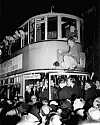
In 1952, thousands of onlookers watched the run of London’s last tram, which ran from Woolwich to New Cross. At the beginning of the century, a large, integrated tram system had been developed in London and its suburbs. But by the 1920s and 30s trams came to be seen as noisy and dangerous to other road users, and by the early 1930s the golden age of the tram was drawing to a close. A Royal Commission in 1931 recommended that trolleybuses replace trams. Conversion had began in 1931, and by 1940 more than half of London's trams had been scrapped. The tram system had a brief respite during WW II when it was necessary to sustain the current system as production turned to wartime manufacturing.
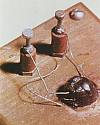
In 1951, the invention of the junction transistor was announced by Dr. William Shockley in Murray Hill, N.J. This new type of transistor overcame the problems of the earlier point-contact transistor. The junction transistor was a three-layer sandwich. The outer layers were semiconductors with too many electrons (known as N-type) and the inner layer was the opposite with too few (known as P-type).They weren't up to the point-contact transistor's ability to handle signals that fluctuated extremely rapidly, but in every other way they were superior. The NPN transistors were much more efficient, used very little power to work, and they were so much quieter that they could handle weaker signals than the type-A transistors ever could.
Broken Genius: Rise and Fall of William Shockley, Creator of the Electronic Age, by Joel N. Shurkin. - book suggestion.
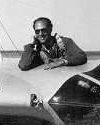
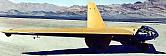
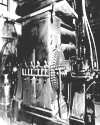
In 1882, the first of six steam-driven air-cooled generators being installed at Thomas Edison’s Pearl Street power station was fired up for testing. Each would be capable of producing about 90 kW DC at 110 volts DC. Three days later, the first, the 27 ton “Jumbo No. 1,” was ready to test for electricity generation, and on 8 Jul 1882, it illuminated a large panel of incandescent bulbs. Its armature alone weighed 6 tons. All six had been built at the Edison Machine Works, all were installed by August.. Each could power about 700 sixteen-candlepower lamps. This was Edison's first central power station, which had an opening ceremony on 4 Sep 1882. Later the following year, it served 508 subscribers and supplied 12,732 bulbs.«
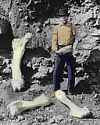
In 1879, a near-complete skeleton of a mastodon was discovered near Newburgh, New York, by a farmer's son while digging a ditch. The area had been a bog until drained and cultivated 50 years earlier. From a 5-foot deep trench over the next three days, neighbours unearthed about 200 petrified bones of ribs, spine, legs, feet and a skull complete with teeth and lower jaw. No tusks were found by the time it was reported in the New York Times on 8 and 9 Jul 1879. This was only one of over a dozen such skeletons reported in that newspaper in the century, many of them found in New York State. In the U.S., the first nearly complete mammoth skeleton was found in that State, in 1801 for Peale’s Museum, Philadelphia.«[Image: Mastodon bone size illustrated in otherwise unrelated photo from early 1900s showing St. Louis paleontologist C. W. Beehler (holding a mastodon tooth) at the Kimmswick Bone Bed, Missouri.]
In 1865, a lower speed limit - of 2 mph in town and 4 mph in the country - was imposed in Britain under the Locomotives and Highways Act. The "Red Flag" Act also required three drivers for each vehicle - two on the vehicle and one to walk ahead carrying a red flag. It was repealed in 1896, after nearly two decades of strong support from horse interests. The repeal of the act was celebrated by a 60 mile car run from London to Brighton - at the new and previously illegal speed of 12 mph. That first run is now commemorated each year on the first Sunday in November at 7:30 am. Vehicles built before 1904 take part in the London to Brighton run. Bronze medals are awarded to drivers arriving in Brighton by 4:00 pm.
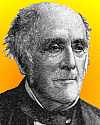
In 1841, Thomas Cook (1808-1892) arranged a special train between Leicester and Loughborough in England for a temperance meeting. It is believed to be the first publicly advertised excursion train in England. From this initiative grew the worldwide travel agency Thomas Cook and Son.
more
Thomas Cook: 150 Years of Popular Tourism, by Piers Brendon. - book suggestion.
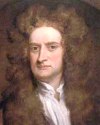
In 1687, the Principia, by Isaac Newton, was published. It was titled (in Latin): Philosophiæ Naturalis Principia Mathematica. Translated into English, the title is The Principia: Mathematical Principles of Natural Philosophy, familiarly known as simply the Principia. The original was written in Latin, because it was the universal language of scholars in many countries countries. In this monumental work, Newton gave an insightful mathematical analysis of the relationships between force, motion and time, as in acceleration and inertial motion. He also outlined the motion of the heavenly bodies. This book was the original publication to the world of his now famously-known three Laws of Motion, and the Law of Universal Gravitation. His treatment of the subject is still reflected in basic physics textbooks.«
In 1643, an exceptionally strong wind occurred in Essex County, Mass. The description by Governor John Winthrop is the first record suggestive of a tornado in the U.S.: "There arose a sudden gust so violent for one-half hour as it blew down multitudes of trees. It lifted up their meeting house at Newbury, the people being in it. It darkened the air with dust, yet through God's great mercy it did no hurt, but only killed one Indian with the fall of a tree." However, no tornado-like funnel shape - so likely to be noted, if seen - was not included in his log. So, it was likely not a tornado, in fact, but a severe straight-line squall with strong downburst winds. Reverend Increase Mather cited a likely tornado in Jul 1680 storm at Cambridge, Mass.«




