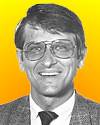
Born 28 Jun 1943.
German physicist who was awarded the Nobel Prize for Physics in 1985 for his discovery, made in 1980, of the quantized Hall effect. Under appropriate conditions the resistance offered by an electrical conductor is quantized; that is, it varies by discrete steps rather than smoothly and continuously. His experiments enabled other scientists to study the conducting properties of electronic components with extraordinary precision. His work also aided in determining the precise value of the fine-structure constant and in establishing convenient standards for the measurement of electrical resistance.
German physicist who was awarded the Nobel Prize for Physics in 1985 for his discovery, made in 1980, of the quantized Hall effect. Under appropriate conditions the resistance offered by an electrical conductor is quantized; that is, it varies by discrete steps rather than smoothly and continuously. His experiments enabled other scientists to study the conducting properties of electronic components with extraordinary precision. His work also aided in determining the precise value of the fine-structure constant and in establishing convenient standards for the measurement of electrical resistance.
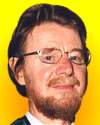
Born 28 Jun 1928; died 1 Oct 1990 at age 62. quotes
Northern Irish physicist who has been described as breathing “new and exciting life into the foundations of quantum theory.” In 1964, he mathematically proved “that certain quantum correlations, unlike all other correlations in the Universe, cannot arise from any local cause,” as described in Nature a half-century later.
Northern Irish physicist who has been described as breathing “new and exciting life into the foundations of quantum theory.” In 1964, he mathematically proved “that certain quantum correlations, unlike all other correlations in the Universe, cannot arise from any local cause,” as described in Nature a half-century later.
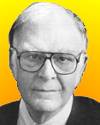
Born 28 Jun 1927; died 10 Mar 2012 at age 84.
Frank Sherwood Rowland was an Armenian chemist who shared the 1995 Nobel Prize for Chemistry with chemists Mario Molina and Paul Crutzen for research on the depletion of the Earth's ozone layer. Working with Molina, Rowland discovered that man-made chlorofluorocarbon (CFC) propellants accelerate the decomposition of the ozonosphere, which protects the Earth from ultraviolet radiation from the sun.
Frank Sherwood Rowland was an Armenian chemist who shared the 1995 Nobel Prize for Chemistry with chemists Mario Molina and Paul Crutzen for research on the depletion of the Earth's ozone layer. Working with Molina, Rowland discovered that man-made chlorofluorocarbon (CFC) propellants accelerate the decomposition of the ozonosphere, which protects the Earth from ultraviolet radiation from the sun.
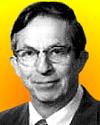
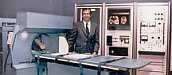
The first model of the Whole Body Computerized Tomograph used at Georgetown University Hospital 1974-1978.
American physicist and radiologist who invented the ACTA (Automatic Computerized Transverse Axial) diagnostic X-ray scanner, the first whole-body computerized tomography (CT) machine (U.S. patent no. 3,922,552) which revolutionized medical diagnosis. The ACTA can make a three-dimensional analysis of all organs and parts of the body in a series of cross-section images using thin X-ray beams and high power computer processing of the collected data. Using the ACTA, diagnosis of tumours, infection or bleeding is possible even deep within large organs, and it can give improved radiation therapy for cancer. The framework could be tilted to give results from planes other than vertical.«
Cross-sectional anatomy: An atlas for computerized tomography, by Robert Steven Ledley. - book suggestion.
Born 28 Jun 1912.
German astronomer.
German astronomer.
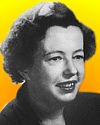
Born 28 Jun 1906; died 20 Feb 1972 at age 65. quotes
German physicist who shared one-half of the 1963 Nobel Prize for Physics with J. Hans D. Jensen of West Germany for their proposal of the shell nuclear model. (The other half of the prize was awarded to Eugene P. Wigner of the United States for unrelated work.) In 1939 she worked at Columbia University on the separation of uranium isotopes for the atomic bomb project. In 1949, she devised the shell nuclear model, which explained the detailed properties of atomic nuclei in terms of a structure of shells occupied by the protons and neutrons. This explained the great stability and abundance of nuclei that have a particular number of neutrons (such as 50, 82, or 126) and the same special number of protons.
German physicist who shared one-half of the 1963 Nobel Prize for Physics with J. Hans D. Jensen of West Germany for their proposal of the shell nuclear model. (The other half of the prize was awarded to Eugene P. Wigner of the United States for unrelated work.) In 1939 she worked at Columbia University on the separation of uranium isotopes for the atomic bomb project. In 1949, she devised the shell nuclear model, which explained the detailed properties of atomic nuclei in terms of a structure of shells occupied by the protons and neutrons. This explained the great stability and abundance of nuclei that have a particular number of neutrons (such as 50, 82, or 126) and the same special number of protons.
Maria Goeppert Mayer, by Joseph P. Ferry. - book suggestion.
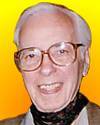
Born 28 Jun 1905; died 26 Nov 1999 at age 94. quotes
British anthropologist who is noted for his works popularizing anthropology and science. By working out the embryology of the upper jaw, Montagu enabled surgeons to repair cleft palates. Montagu made contributions in a wide variety of fields, of which his analysis of the concept of race will remain his his most important legacy. The subject interested him from the 1930s and by 1942 he published Man's Most Dangerous Myth; The Fallacy of Race. In 1950, he was asked by UNESCO to frame their statement on race. His fifty books include The Elephant Man, which formed the basis of the play and movie of the same name. Other topics included social factors in crime, home birth and prenatal care, birth order, privacy, smaking and natural foods.«
British anthropologist who is noted for his works popularizing anthropology and science. By working out the embryology of the upper jaw, Montagu enabled surgeons to repair cleft palates. Montagu made contributions in a wide variety of fields, of which his analysis of the concept of race will remain his his most important legacy. The subject interested him from the 1930s and by 1942 he published Man's Most Dangerous Myth; The Fallacy of Race. In 1950, he was asked by UNESCO to frame their statement on race. His fifty books include The Elephant Man, which formed the basis of the play and movie of the same name. Other topics included social factors in crime, home birth and prenatal care, birth order, privacy, smaking and natural foods.«
Born 28 Jun 1902.
American crystallographer whose X-ray studies contributed to an understanding of both crystalline and noncrystalline materials and of the transition from the amorphous to the crystalline state.
American crystallographer whose X-ray studies contributed to an understanding of both crystalline and noncrystalline materials and of the transition from the amorphous to the crystalline state.
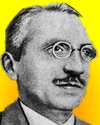
Born 28 Jun 1875; died 26 Jul 1941 at age 66. quotes
French mathematician who developed a theory of integration, now known by his name. By extending the work of Camille Jordan and Émile Borel on the Riemann integral, Lebesgue provided a generalization that solved many of the difficulties in using Riemann’s theory of integration. Lebesque provided a foundation for subsequent development of integration theory and its further application in calculus, curve rectification and theory of trigonometric theory. He also contributed in several fields of mathematics, including set theory, calculus of variation and function theory.
French mathematician who developed a theory of integration, now known by his name. By extending the work of Camille Jordan and Émile Borel on the Riemann integral, Lebesgue provided a generalization that solved many of the difficulties in using Riemann’s theory of integration. Lebesque provided a foundation for subsequent development of integration theory and its further application in calculus, curve rectification and theory of trigonometric theory. He also contributed in several fields of mathematics, including set theory, calculus of variation and function theory.
Measure and the Integral, by Henri Léon Lebesgue. - book suggestion.
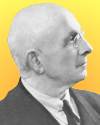
Born 28 Jun 1873; died 5 Nov 1944 at age 71. quotes
French-American surgeon and biologist who received the 1912 Nobel Prize for Physiology or Medicine for developing a method of suturing blood vessels. He moved to the United States in 1905. As a member of the staff of the Rockefeller Institute, he did notable work on the problem of keeping tissue alive after removal from a living organism. The most famous example was a piece of tissue from the heart of a chicken embryo, which was kept alive from 1912 to 1946, at which time the experiment was deliberately ended. Techniques developed by Carrel have made possible the surgical transplantation of blood vessels and body organs.
French-American surgeon and biologist who received the 1912 Nobel Prize for Physiology or Medicine for developing a method of suturing blood vessels. He moved to the United States in 1905. As a member of the staff of the Rockefeller Institute, he did notable work on the problem of keeping tissue alive after removal from a living organism. The most famous example was a piece of tissue from the heart of a chicken embryo, which was kept alive from 1912 to 1946, at which time the experiment was deliberately ended. Techniques developed by Carrel have made possible the surgical transplantation of blood vessels and body organs.
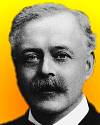
Born 28 Jun 1857; died 14 Jan 1933 at age 75.
English orthopaedic surgeon who has been called the founder of modern orthopaedic surgery. He was a nephew of Hugh Owen Thomas and became one of his apprentices in Liverpool. On 22 Feb 1896, Jones published the first report of the clinical use of an X-ray to locate a bullet in a wrist, for which equipment was provided by Oliver Lodge. Jones co-founded medical associations, including the British Orthopaedic Society and orthopaedic hospitals. During WWI, he led the orthopaedic section of the British Forces. Jones advocated tendon transplantation, bone grafting, and other conservative, restorative procedures. "Time stood still," it has been said, when Jones operated. He wrote several important books on orthopaedics.«*
English orthopaedic surgeon who has been called the founder of modern orthopaedic surgery. He was a nephew of Hugh Owen Thomas and became one of his apprentices in Liverpool. On 22 Feb 1896, Jones published the first report of the clinical use of an X-ray to locate a bullet in a wrist, for which equipment was provided by Oliver Lodge. Jones co-founded medical associations, including the British Orthopaedic Society and orthopaedic hospitals. During WWI, he led the orthopaedic section of the British Forces. Jones advocated tendon transplantation, bone grafting, and other conservative, restorative procedures. "Time stood still," it has been said, when Jones operated. He wrote several important books on orthopaedics.«*
The Life of Sir Robert Jones, by Frederick Watson. - book suggestion.
Born 28 Jun 1825; died 22 Jan 1909 at age 83.
German chemist.
German chemist.
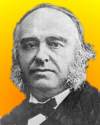
Born 28 Jun 1824; died 9 Jul 1880 at age 56. quotes
French surgeon who was closely associated with the development of modern physical anthropology in France and whose study of brain lesions contributed significantly to understanding the origins of aphasia, the loss or impairment of the ability to form or articulate words. His research was largely devoted to the comparative study of the craniums of the various human races. He established (1861) that the seats of articulate speech were in the left frontal region of the brain, now known as the convolution of Broca. This was the first time an anatomical link had been made between a location and in the brain and its function. He founded the anthropology laboratory at the École des Hautes.
French surgeon who was closely associated with the development of modern physical anthropology in France and whose study of brain lesions contributed significantly to understanding the origins of aphasia, the loss or impairment of the ability to form or articulate words. His research was largely devoted to the comparative study of the craniums of the various human races. He established (1861) that the seats of articulate speech were in the left frontal region of the brain, now known as the convolution of Broca. This was the first time an anatomical link had been made between a location and in the brain and its function. He founded the anthropology laboratory at the École des Hautes.

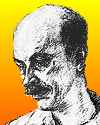
Died 28 Jun 1984 at age 67 (born 21 Mar 1917).
(original name Yigael Sukenik) Israeli archaeologist and military leader noted for his work on the Dead Sea Scrolls. Yadin's fieldwork from the 1950's included Hazor, caves of the Judean Desert, Massada, and Meggido.Yadin's findings have shed light on various periods of ancient Israel, such as the Canaanite, First Temple, and Herodian periods, as well as the Bar Kokhba revolt. He made a famous contribution decoding and interpreting several scrolls from the Dead Sea and the Judean Desert. In 1963-5, he excavated at Masada, the ancient mountaintop fortress ruins in the desert about 48.3 km (30 mi) southeast of Jerusalem, the scene of the last stand made by the Jewish Zealots in their revolt against Roman rule (66-73 AD).
(original name Yigael Sukenik) Israeli archaeologist and military leader noted for his work on the Dead Sea Scrolls. Yadin's fieldwork from the 1950's included Hazor, caves of the Judean Desert, Massada, and Meggido.Yadin's findings have shed light on various periods of ancient Israel, such as the Canaanite, First Temple, and Herodian periods, as well as the Bar Kokhba revolt. He made a famous contribution decoding and interpreting several scrolls from the Dead Sea and the Judean Desert. In 1963-5, he excavated at Masada, the ancient mountaintop fortress ruins in the desert about 48.3 km (30 mi) southeast of Jerusalem, the scene of the last stand made by the Jewish Zealots in their revolt against Roman rule (66-73 AD).
A Prophet from Amongst You: The Life of Yigael Yadin, by Neil Asher Silberman. . - book suggestion.
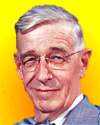
Died 28 Jun 1974 at age 84 (born 11 Mar 1890). quotes
American electrical engineer who headed the U.S. Office of Scientific Research and Development during WW II to stimulate scientific research. His office contracted with, and coordinated research by, universities and industry. The office funded a wide field of activities, such as antibiotic research, improving explosives, and devising blood substitutes. Before the war, in 1925, at age 35, he developed the differential analyzer, the world’s first analog computer. It was capable of solving differential equations. (This put into productive form, the mechanical concept left incomplete by Charles Babbage, 50 years earlier; and theoretical work by Lord Kelvin). The machine filled a 20×30 ft (6×9 m) room. He seeded ideas later adopted as internet hypertext links.«
American electrical engineer who headed the U.S. Office of Scientific Research and Development during WW II to stimulate scientific research. His office contracted with, and coordinated research by, universities and industry. The office funded a wide field of activities, such as antibiotic research, improving explosives, and devising blood substitutes. Before the war, in 1925, at age 35, he developed the differential analyzer, the world’s first analog computer. It was capable of solving differential equations. (This put into productive form, the mechanical concept left incomplete by Charles Babbage, 50 years earlier; and theoretical work by Lord Kelvin). The machine filled a 20×30 ft (6×9 m) room. He seeded ideas later adopted as internet hypertext links.«
Endless Frontier: Vannevar Bush, Engineer of the American Century, by G. Pascal Zachary. - book suggestion.
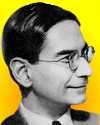
Died 28 Jun 1972 at age 78 (born 29 Jun 1893). quotes
Prasanta Chandra Mahalanobis was an Indian statistician who set up large-scale surveys, applied statistical theory and created institutions to carry out such work. He studied physics and mathematics at the University of Cambridge, and became interested in statistics. He returned to India in 1915. Although he began a teaching career in physics, he turned to statistics in applications of anthropology, meteorology and biology. He established the Indian Statistical Institute in Calcutta (17 Dec 1931). The Mahalanobis distance was his innovation in statistics to compare two data sets. He also devised fractile graphical analysis to study socioeconomic conditions. He applied statistics to issues of crop yields and planning for flood control.«
Prasanta Chandra Mahalanobis was an Indian statistician who set up large-scale surveys, applied statistical theory and created institutions to carry out such work. He studied physics and mathematics at the University of Cambridge, and became interested in statistics. He returned to India in 1915. Although he began a teaching career in physics, he turned to statistics in applications of anthropology, meteorology and biology. He established the Indian Statistical Institute in Calcutta (17 Dec 1931). The Mahalanobis distance was his innovation in statistics to compare two data sets. He also devised fractile graphical analysis to study socioeconomic conditions. He applied statistics to issues of crop yields and planning for flood control.«
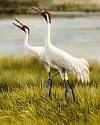
Died 28 Jun 1963 at age 58 (born 24 Apr 1905).
American author and conservationist recognized for saving the whooping crane from extinction by discovering (1955) the nesting ground of the sole remaining flock near the Arctic Circle. He was a leader in having whooping crane habitats in Texas and Canada proclaimed as refuges. He helped establish a working protective plan for flamingos and recommended methods of saving the small surviving colonies of roseate spoonbills, thus helping to perpetuate the species. His monographs on the whooping crane, the roseate spoonbill, and the American flamingo are the standard authoritative works on these species.[Listen to the whooping crane call]
American author and conservationist recognized for saving the whooping crane from extinction by discovering (1955) the nesting ground of the sole remaining flock near the Arctic Circle. He was a leader in having whooping crane habitats in Texas and Canada proclaimed as refuges. He helped establish a working protective plan for flamingos and recommended methods of saving the small surviving colonies of roseate spoonbills, thus helping to perpetuate the species. His monographs on the whooping crane, the roseate spoonbill, and the American flamingo are the standard authoritative works on these species.[Listen to the whooping crane call]
The Whooping Crane (Research report of the National Audubon Society), by Robert Porter Allen. - book suggestion.
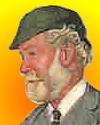
Died 28 Jun 1928 at age 85 (born 1 Feb 1843).
English naval architect and engineer who founded the Thornycroft shipbuilding company, in 1864 with a shipyard on the River Thames. He was only 19 when he built his first steam launch. By 1877, he built the first modern torpedo boat for the Royal Navy. In 1877, he patented an air-lubricated hull that could skim, rather than cut through, the water. He also designed water-tube boilers for torpedo boats as well as one of the earliest ship stabilizers. During WW I, he built warships including 29 destroyers and flotilla leaders, 3 submarines and coastal torpedo speedboats, which could skim over minefields. He pioneered the use of oil fuel for the Royal Navy. Steam powered lorries were a manufacturing off-shoot of his shipyard (1896) which led to a major new business building petrol-engined lorries (from 1902).«[Image: Detail from a Vanity Fair caricature, 1905.]
English naval architect and engineer who founded the Thornycroft shipbuilding company, in 1864 with a shipyard on the River Thames. He was only 19 when he built his first steam launch. By 1877, he built the first modern torpedo boat for the Royal Navy. In 1877, he patented an air-lubricated hull that could skim, rather than cut through, the water. He also designed water-tube boilers for torpedo boats as well as one of the earliest ship stabilizers. During WW I, he built warships including 29 destroyers and flotilla leaders, 3 submarines and coastal torpedo speedboats, which could skim over minefields. He pioneered the use of oil fuel for the Royal Navy. Steam powered lorries were a manufacturing off-shoot of his shipyard (1896) which led to a major new business building petrol-engined lorries (from 1902).«[Image: Detail from a Vanity Fair caricature, 1905.]
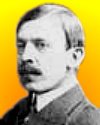
Died 28 Jun 1923 at age 63 (born 29 Sep 1859). quotes
American physician who pioneered the use of bacteriological studies in the field of public health for the prevention and control of contagious diseases. From 1884 he learnt about current advances in bacteriology by visiting Europe. In 1892, he was appointed the first director of a new Division of Pathology, Bacteriology and Disinfection within the New York City Department of Health - the first municipal bacteriological laboratory in the U.S. - to address the scare of cholera from immigrants arriving at the harbour. He became general medical officer of New York City (1901) and then commissioner of health for the state of New York (1914). The measures he developed for public health spread through the nation. more
American physician who pioneered the use of bacteriological studies in the field of public health for the prevention and control of contagious diseases. From 1884 he learnt about current advances in bacteriology by visiting Europe. In 1892, he was appointed the first director of a new Division of Pathology, Bacteriology and Disinfection within the New York City Department of Health - the first municipal bacteriological laboratory in the U.S. - to address the scare of cholera from immigrants arriving at the harbour. He became general medical officer of New York City (1901) and then commissioner of health for the state of New York (1914). The measures he developed for public health spread through the nation. more
Childhood's Deadly Scourge: The Campaign to Control Diphtheria in New York City, 1880-1930, by Evelynn Maxine Hammonds. - book suggestion.
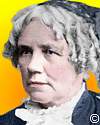
Died 28 Jun 1889 at age 70 (born 1 Aug 1818). quotes
American astronomer who was the first professional woman in the field in the United States. While pursuing an amateur interest, on 1 Oct 1847, she gained fame from the observation of a comet which she was first to report. She was also the first female member of the American Association of Arts and Sciences.
American astronomer who was the first professional woman in the field in the United States. While pursuing an amateur interest, on 1 Oct 1847, she gained fame from the observation of a comet which she was first to report. She was also the first female member of the American Association of Arts and Sciences.
Maria Mitchell: A Life in Journals and Letters, by Henry Albers. - book suggestion.
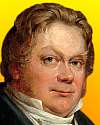
Died 28 Jun 1852 at age 85 (born 23 Dec 1766).
Swedish mineralogist who inherited his father's iron works, and pursued science privately. From one of his iron mines at Bastnäs came a mineral of unusually high density. Hisinger distributed samples to several European chemical analysts. After his examination in 1803, Martin Klaproth suspected it held a new element. That year, both Hisinger and Jöns Berzelius isolated the new element. They named it cerium in recognition of Giussepe Piazzi's discovery of the new minor plant, Ceres, two years earlier (1 Jan 1801). In 1806, Hisinger investigated electricity's effect on salt solutions. He contributed to the geological knowledge of his country, and recorded finds of its animal and plant fossils. He also amassed fine rock, mineral and fossil collections, which he eventually gave to the Swedish natural history museum.«
Swedish mineralogist who inherited his father's iron works, and pursued science privately. From one of his iron mines at Bastnäs came a mineral of unusually high density. Hisinger distributed samples to several European chemical analysts. After his examination in 1803, Martin Klaproth suspected it held a new element. That year, both Hisinger and Jöns Berzelius isolated the new element. They named it cerium in recognition of Giussepe Piazzi's discovery of the new minor plant, Ceres, two years earlier (1 Jan 1801). In 1806, Hisinger investigated electricity's effect on salt solutions. He contributed to the geological knowledge of his country, and recorded finds of its animal and plant fossils. He also amassed fine rock, mineral and fossil collections, which he eventually gave to the Swedish natural history museum.«
Died 28 Jun 1768 at age 83 (born 12 Feb 1685). quotes
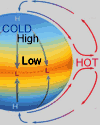
English physicist and meteorologist known, despite his only amateur interest, for explaining the trade winds’ origin. In 1735, he proposed that Earth’s rotation, combined with convection from the the differential heating of the atmosphere, drives large-scale wind circulation. This concept, now known as the Hadley Cell, describes the tropical atmospheric circulation that influences climate and weather patterns worldwide. Understanding the trade winds was particularly crucial in his time of sailing ships travelling between Europe and North America. His insights laid the groundwork, now refined, for modern meteorology and climatology, contributing significantly to our understanding of global wind systems.«
English physicist and meteorologist known, despite his only amateur interest, for explaining the trade winds’ origin. In 1735, he proposed that Earth’s rotation, combined with convection from the the differential heating of the atmosphere, drives large-scale wind circulation. This concept, now known as the Hadley Cell, describes the tropical atmospheric circulation that influences climate and weather patterns worldwide. Understanding the trade winds was particularly crucial in his time of sailing ships travelling between Europe and North America. His insights laid the groundwork, now refined, for modern meteorology and climatology, contributing significantly to our understanding of global wind systems.«
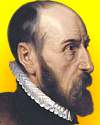
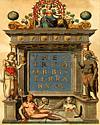
Belgian cartographer and geographer who created the first true modern atlas, the Theatrum Orbis Terrarum (“Theatre of the World”, published 20 May 1570). Its 181 pages included 53 map sheets, each with descriptive text on the reverse side. Ortelius was trained as an engraver. About 1554, he started a books, maps and antiquities business. By 1560, with the encouragement of Geradus Mercator, Ortelius developed an interest in mapmaking, and compiled some maps of the world. His major work was the Theatrum, for which he collated maps from 87 sources, then neatly engraved the maps with a uniform appearance. It was printed by Christophe Plantin. It was an immediate success, and went through 23 editions in his lifetime. By 1592 it had 134 maps.«
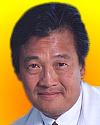
Dr. Fung
In 1992, a 35-year-old man at the University of Pittsburgh Medical Center became the world's first recipient of a baboon liver transplant. Dr. John Fung with colleagues Drs. Andreas Tzakis and Satoru Todo performed the transplant operation. The patient was dying from hepatitis B. Although the patient died from a brain hemorrhage 71 days after the historic surgery, the field of xenotransplantation, or cross-species transplantation, was advanced considerably. A second xenotransplant operation was made on 10 Jan 1993 on a 62-year-old man who lived 26 days with the baboon's liver. No further xenotransplants are currently planned there, but xenotransplantation research remains a major focus of investigation at the university.
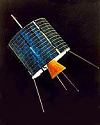
In 1965, the first commercial telephone conversation over a satellite took place over Early Bird I between America and Europe. It had capacity for 240 voice circuits or one black and white TV channel. Positioned to serve the Atlantic Ocean region, Early Bird provided commercial communications service between North America and Western Europe. It exceeded its 18 months designed in-orbit life by 2 additional years. (It was later renamed as Intelsat I.) By 1 Jul 1969, three Intelsat satellites in geostationary orbit provided full global coverage. Only 19 days after Intelsat III became operational, Neil Armstrong and the Apollo 11 crew made their historic first landing on the moon, watched by 500 million people back on Earth.
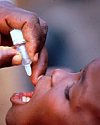
In 1961, the American Medical Association backed the Sabin polio vaccine over the Salk vaccine. In 1957, in an effort to improve upon the killed Salk vaccine, Albert Bruce Sabin began testing a live, oral form of vaccine in which the infectious part of the virus was inactivated (attenuated). This vaccine became available for use in 1963. The Sabin oral vaccine is often administered on a sugar cube. The advantages of a live, oral vaccine are its long-lasting immunity, and the lower cost because sterile syringes and needles are not necessary. A major disadvantage is that it cannot be used for patients with compromised immune systems because it is a live virus and can cause disease in these patients.
Jonas Salk: Beyond the Microscope, by Victoria Sherrow. - book suggestion.
2010
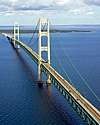
In 1958, the Mackinac Bridge was dedicated, the world longest suspension bridge to date. Celebration began on 24 Jun with the first “Governor’s Walk” across it. The bridge had been opened to traffic on 1 Nov 1957, joining Michigan’s upper and lower peninsulas and reducing travel time from about 2 hours to 10 minutes. Groundbreaking ceremonies took place at the St. Ignace end of the bridge on 7 May 1954, and the next day on the opposite shore at Mackinaw City. Meanwhile caissons and superstructures were assembled as far away as Indiana, Pennsylvania and Ohio. The total length, with approaches is 8038 m (26,372 ft), with 34 bridge support foundations. The main span is 1158 m (3,800 ft) long between towers.
Miracle Bridge at Mackinac, by David B. Steinman. - book suggestion.
In 1956, the first atomic reactor built for private research began operations in Chicago, Ill.
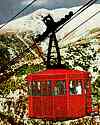
In 1938, an aerial tramway, the first in North America, was dedicated in Franconia, N.H. It was built to lift skiers from Franconia Notch up the north face to the 4,200-ft summit of Cannon Mountain. The Richard Taft Ski Trail, opened in Feb 1933 on the north face of Cannon, became popular with Boston area ski clubs. The state of New Hampshire, the owner and operator of the area, decided in the later 1930s to build an aerial tramway to serve the Taft and its sister trails. The site was chosen, in part, because sufficient electric power was already available there. The original tramway’s wooden cabins held 28 skiers. It closed 29 Mar 1980. The new Tram II (1982) cabins were built to carry 70 skiers.«
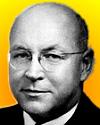
In 1935, the first virus in crystalline form was reported. Professor Wendell Stanley (1904-1971) received a Nobel Prize in Chemistry in 1946 for his work on the tobacco mosaic virus, begun in the 1930s and which he crystallized in 1935. The demonstration of the molecular properties of the virus gave impetus to a new research approach in virology: the study of viruses as large molecules. This was a departure from the predominant view of viruses as infectious agents causing disease.
In 1928, Austrian Friedrich Schmiedl launched his first experimental rocket. The design he first used was not successful. However, by 9 Sep1931, he started the world's first official postal rocket-mail service between two Austrian towns. A parachute provided a safe landing. His rocket-mail service continued until 16 Mar 1933 when laws prohibited the civilian use of explosives (including his rocket fuel.)
In 1892, work began on the East River Gas Tunnel under the East River, New York City, from the Long Island side. The New York end was started 10 Jul 1892. When both ends met, 11 Jul 1894, it became the first completed tunnel under the East River. (The East River was spanned by the Brooklyn Bridge that opened on 24 May 1883.) The 2550-ft tunnel was 8½-ft high by 10½-ft wide, smaller than one for public vehicle traffic, because it was intended for several gas mains. Illuminating gas from the works on Long Island could thus be distributed to Manhattan, which began on 15 Oct 1894. The tunnelling success also provided knowledge of local conditions and significant difficulties encountered, enabling future tunnels under the East River wherever needed. Work on four railroad tunnels commenced in 1904.«
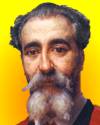
Moissan
In 1886, Henri Moissan's discovery of fluorine gas was announced at the Paris Academy of Science, two days after his first successful experiment to isolate the element, which he tested with silicon to find it burst into flame. “One can indeed make various hypotheses on the nature of the liberated gas; the simplest would be that we are in the presence of fluorine, but it would be possible, of course, that it might be a perfluoride of hydrogen, or even a mixture of hydrofluoric acid and ozone sufficiently active to explain such vigorous action as this gas exerts on crystalline silicon.” This conservative announcement was read to the Academy by Debray, for Moissan was not then a member. The president appointed a committee to check the discovery.*
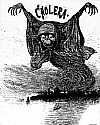
In 1832, the first American case of a cholera epidemic was reported in New York City. Previously, Europe and the Americas were unaffected by the First Cholera Pandemic of 1817 when cholera, long endemic to the Indian subcontinent, spread to Arabia, Syria, and southern Russia. This abated in the early 1820s, but a new cholera cycle began in 1826. It invaded the British Isles in Oct 1831. Canada was struck shortly before cholera reached New York. Cholera was a horrible disease, spread through fouled water. Its victims died after hours of cramps, diarrhea, and vomiting. Crowded into unsanitary slums, the poor suffered most. Many of the city's elite fled to the countryside. In America, the disease's hold broke by Dec 1832.[Image: Detail from an 1883 wood engraving in Life Magazine; the spectre of "cholera" floats across the ocean from Europe.]




