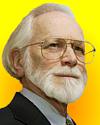
Born 22 Feb 1936. quotes
John Michael Bishop is an American virologist who shared (with co-worker Harold Varmus) of the Nobel Prize for Physiology or Medicine in 1989 for achievements in clarifying the cellular origins of retroviral oncogenes associated with cancer. They showed that normal genes under certain circumstances can cause cancer, and this new insight profoundly changed the understanding of cancer. When retroviridae introduce genes into the DNA of host cells, normal cell growth, division or differentiation results in mutations creating cancer genes, known as oncogenes. Such oncogenes can then become part of the host’s own DNA.«
John Michael Bishop is an American virologist who shared (with co-worker Harold Varmus) of the Nobel Prize for Physiology or Medicine in 1989 for achievements in clarifying the cellular origins of retroviral oncogenes associated with cancer. They showed that normal genes under certain circumstances can cause cancer, and this new insight profoundly changed the understanding of cancer. When retroviridae introduce genes into the DNA of host cells, normal cell growth, division or differentiation results in mutations creating cancer genes, known as oncogenes. Such oncogenes can then become part of the host’s own DNA.«
How to Win the Nobel Prize: An Unexpected Life in Science, by J. Michael Bishop. - book suggestion.
Born 22 Feb 1914.
Italian virologist who shared the Nobel Prize for Physiology or Medicine in 1975 (with Howard M. Temin and David Baltimore, both of whom had studied under him) for their discoveries concerning the interaction between tumour viruses and the genetic material of the cell.
Italian virologist who shared the Nobel Prize for Physiology or Medicine in 1975 (with Howard M. Temin and David Baltimore, both of whom had studied under him) for their discoveries concerning the interaction between tumour viruses and the genetic material of the cell.
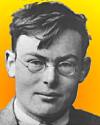
Born 22 Feb 1903; died 19 Jan 1930 at age 26. quotes
English mathematician, logician and philosopher who died at age 26, but had already made significant contributions to logic, philosophy of mathematics, philosophy of language and decision theory. He remains noted for his Ramsey Theory, a mathematical study of combinatorial objects in which a certain degree of order must occur as the scale of the object becomes large. This theory spans various fields of mathematics, including combinatorics, geometry, and number theory. His papers show he was also a remarkably creative and subtle philosopher. Other gifted thinkers of his generation were Russell, Whitehead, Keynes, Moore, and Wittgenstein.«
English mathematician, logician and philosopher who died at age 26, but had already made significant contributions to logic, philosophy of mathematics, philosophy of language and decision theory. He remains noted for his Ramsey Theory, a mathematical study of combinatorial objects in which a certain degree of order must occur as the scale of the object becomes large. This theory spans various fields of mathematics, including combinatorics, geometry, and number theory. His papers show he was also a remarkably creative and subtle philosopher. Other gifted thinkers of his generation were Russell, Whitehead, Keynes, Moore, and Wittgenstein.«
F.P. Ramsey: Philosophical Papers, by F.P. Ramsey and D.H. Mellor (ed.). - book suggestion.
Born 22 Feb 1902; died 22 Apr 1980 at age 78. quotes
Friedrich Wilhelm (Fritz) Strassmann was a German physical chemist who, with Otto Hahn and Lise Mietner, discovered neutron-induced nuclear fission in uranium (1938) and thereby opened the field of atomic energy used both in the atomic bomb for war and in nuclear reactors to produce electricity. Strassmann's analytical chemistry techniques showed up the lighter elements produced from neutron bombardment, which were the result of the splitting of the uranium atom into two lighter atoms. Earlier in his career, Strassmann codeveloped the rubidium-strontium technique of radio-dating geological samples.
Friedrich Wilhelm (Fritz) Strassmann was a German physical chemist who, with Otto Hahn and Lise Mietner, discovered neutron-induced nuclear fission in uranium (1938) and thereby opened the field of atomic energy used both in the atomic bomb for war and in nuclear reactors to produce electricity. Strassmann's analytical chemistry techniques showed up the lighter elements produced from neutron bombardment, which were the result of the splitting of the uranium atom into two lighter atoms. Earlier in his career, Strassmann codeveloped the rubidium-strontium technique of radio-dating geological samples.
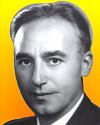
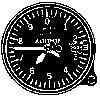
German-American engineer who invented the world's first accurate barometric altimeter (1928) that became vital to aviation safety. The original barometric altimeter was a simple instrument which displayed altitude by sensing barometric pressure, within an accuracy of 20 feet. On 24 Sep 1929, Jimmy Doolittle's historic "blind flight" proved that the Kollsman altimeter made navigation possible "flying on the gauges." The guage was widely known as the "Kollsman Window" because it included a window to dial in a manual setting to calibrate the barometric pressure at the current sea-level. The invention played a major role in establishing routine scheduled air service in the U.S. and around the world.«
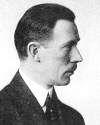
Born 22 Feb 1879; died 17 Dec 1947 at age 68.
Danish physical chemist known for a widely applicable acid-base concept identical to that of Thomas Martin Lowry of England. Though both men introduced their definitions simultaneously (1923), they did so independently of each other. Acids are recognized by an excess of H+ ions, and bases have an excess of OH- ions. Brønsted was also an authority on the catalytic properties and strengths of acids and bases. His chief interest was thermodynamic studies, but he also did important work with electrolyte solutions.
Danish physical chemist known for a widely applicable acid-base concept identical to that of Thomas Martin Lowry of England. Though both men introduced their definitions simultaneously (1923), they did so independently of each other. Acids are recognized by an excess of H+ ions, and bases have an excess of OH- ions. Brønsted was also an authority on the catalytic properties and strengths of acids and bases. His chief interest was thermodynamic studies, but he also did important work with electrolyte solutions.
Born 22 Feb 1857; died 1 Jan 1894 at age 36. quotes
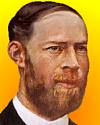
Heinrich Rudolf Hertz was a German physicist who was the first to broadcast and receive radio waves. He studied under Kirchhoff and Helmholtz in Berlin, and became professor at Bonn in 1889. His main work was on electromagnetic waves (1887). Hertz generated electric waves by means of the oscillatory discharge of a condenser through a loop provided with a spark gap, and then detecting them with a similar type of circuit. Hertz's condenser was a pair of metal rods, placed end to end with a small gap for a spark between them. Hertz was also the first to discover the photoelectric effect. The unit of frequency - one cycle per second - is named after him. Hertz died of blood poisoning in 1894 at the age of 37.
Heinrich Rudolf Hertz was a German physicist who was the first to broadcast and receive radio waves. He studied under Kirchhoff and Helmholtz in Berlin, and became professor at Bonn in 1889. His main work was on electromagnetic waves (1887). Hertz generated electric waves by means of the oscillatory discharge of a condenser through a loop provided with a spark gap, and then detecting them with a similar type of circuit. Hertz's condenser was a pair of metal rods, placed end to end with a small gap for a spark between them. Hertz was also the first to discover the photoelectric effect. The unit of frequency - one cycle per second - is named after him. Hertz died of blood poisoning in 1894 at the age of 37.
The Creation of Scientific Effects, by Jed Z. Buchwald. - book suggestion.
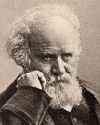
Born 22 Feb 1824; died 23 Dec 1907 at age 83.
Pierre-Jules-César Janssen was a French astronomer who in 1868 devised a method for observing solar prominences without an eclipse (an idea reached independently by Englishman Joseph Norman Lockyer). Janssen observed the total Sun eclipse in India (1868). Using a spectroscope, he proved that the solar prominences are gaseous, and identified the chromosphere as a gaseous envelope of the Sun. He noted an unknown yellow spectral line in the Sun in 1868, and told Lockyer (who subsequently recognized it as a new element he named helium, from Greek helios for sun). Janssen was the first to note the granular appearance of the Sun, regularly photographed it, and published a substantial solar atlas with 6000 photographs (1904).« more
Pierre-Jules-César Janssen was a French astronomer who in 1868 devised a method for observing solar prominences without an eclipse (an idea reached independently by Englishman Joseph Norman Lockyer). Janssen observed the total Sun eclipse in India (1868). Using a spectroscope, he proved that the solar prominences are gaseous, and identified the chromosphere as a gaseous envelope of the Sun. He noted an unknown yellow spectral line in the Sun in 1868, and told Lockyer (who subsequently recognized it as a new element he named helium, from Greek helios for sun). Janssen was the first to note the granular appearance of the Sun, regularly photographed it, and published a substantial solar atlas with 6000 photographs (1904).« more
The Astronomer Jules Janssen: A Globetrotter of Celestial Physics, by Françoise Launay. - book suggestion.
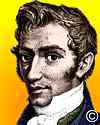
Born 22 Feb 1796; died 17 Feb 1874 at age 77. quotes
Lambert-Adolphe-Jacques Quetelet was a Belgian astronomer, statistician, mathematician and sociologist whose career began teaching mathematics at the Athenaeum, Brussels (1820), while also pursuing the study of astronomy from 1823. Quetelet was instrumental in setting up, and became the director of, a newly equipped Brussels Royal Observatory (opened 1833). From 1825, he began writing papers on social statistics, and in 1835 gained international recognition for publication of Sur l'homme et le developpement de ses facultés, essai d'une physique sociale. Whereas the normal curve had previously been applied to error correction, Quetelet used it to illustrate a distribution of measured human traits about the central value, giving the concept of the average man at the peak. In this way, for example, he applied a statistical view to the nature of criminal behaviour in society.«Image: from a 1974 Belgian postage stamp.
Lambert-Adolphe-Jacques Quetelet was a Belgian astronomer, statistician, mathematician and sociologist whose career began teaching mathematics at the Athenaeum, Brussels (1820), while also pursuing the study of astronomy from 1823. Quetelet was instrumental in setting up, and became the director of, a newly equipped Brussels Royal Observatory (opened 1833). From 1825, he began writing papers on social statistics, and in 1835 gained international recognition for publication of Sur l'homme et le developpement de ses facultés, essai d'une physique sociale. Whereas the normal curve had previously been applied to error correction, Quetelet used it to illustrate a distribution of measured human traits about the central value, giving the concept of the average man at the peak. In this way, for example, he applied a statistical view to the nature of criminal behaviour in society.«Image: from a 1974 Belgian postage stamp.
Born 22 Feb 1785; died 27 Oct 1845 at age 60.
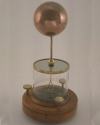
French physicist who discovered the Peltier effect (1834), that at the junction of two dissimilar metals an electric current will produce heat or cold, depending on the direction of current flow. In 1812, Peltier received an inheritance sufficient to retire from clockmaking and pursue a diverse interest in phrenology, anatomy, microscopy and meteorology. Peltier made a thermoelectric thermoscope to measure temperature distribution along a series of thermocouple circuits, from which he discovered the Peltier effect. Lenz succeeded in freezing water by this method. Its importance was not fully recognized until the later thermodynamic work of Kelvin. The effect is now used in devices for measuring temperature and non-compressor cooling units.«[Image: Peltier's atmospheric electricity gauge.]
French physicist who discovered the Peltier effect (1834), that at the junction of two dissimilar metals an electric current will produce heat or cold, depending on the direction of current flow. In 1812, Peltier received an inheritance sufficient to retire from clockmaking and pursue a diverse interest in phrenology, anatomy, microscopy and meteorology. Peltier made a thermoelectric thermoscope to measure temperature distribution along a series of thermocouple circuits, from which he discovered the Peltier effect. Lenz succeeded in freezing water by this method. Its importance was not fully recognized until the later thermodynamic work of Kelvin. The effect is now used in devices for measuring temperature and non-compressor cooling units.«[Image: Peltier's atmospheric electricity gauge.]
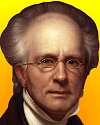
Born 22 Feb 1778; died 3 Oct 1860 at age 82. quotes
American artist and naturalist, son of Charles Willson Peale, who followed his father as a portrait painter with an interest in natural history. Many of Rembrandt Peale's portraits are of scientists. He also took an interest in the technology of his era, including the pioneering steam navigation of John Fitch and Robert Fulton, gas lighting of Baltimore's streets, and the chemistry of pigments. In 1801, he assisted his father's excavation of mastodon bones from the peat bogs of Orange County, New York, from which they assembled two skeletons. One was mounted in his father's Philadelphia Museum. Rembrandt displayed another as a travelling exhibit around New York (1802) and London (1802, 1803). From the details of its fossil teeth, he believed the mastodon was a carnivor, though Georges Cuvier shortly established it was a herbivor.« more
American artist and naturalist, son of Charles Willson Peale, who followed his father as a portrait painter with an interest in natural history. Many of Rembrandt Peale's portraits are of scientists. He also took an interest in the technology of his era, including the pioneering steam navigation of John Fitch and Robert Fulton, gas lighting of Baltimore's streets, and the chemistry of pigments. In 1801, he assisted his father's excavation of mastodon bones from the peat bogs of Orange County, New York, from which they assembled two skeletons. One was mounted in his father's Philadelphia Museum. Rembrandt displayed another as a travelling exhibit around New York (1802) and London (1802, 1803). From the details of its fossil teeth, he believed the mastodon was a carnivor, though Georges Cuvier shortly established it was a herbivor.« more
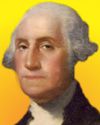
Born 22 Feb 1732; died 14 Dec 1799 at age 67. quotes
American surveyor, military leader and president who was an eager student of mathematics in his youth, teaching himself geometry and trigonometry. This led to his early career as a surveyor, proficient at drafting, mapmaking, and designing tables of data. Surveying let him explore regions of Virgina, and earn income to be a landowner by age 19. Mathematics courses in early American education included applications in surveying. For example, it was part of state law in Massachusetts (1827) that any locality with 500 families should have a master capable of instructing “geometry, surveying and algebra.” Thus, long before that law, in a less-known aspect of his life, Washington was equipped with a technical education of service to his community—although he is most famous for fighting in the Revolutionary war and becoming the the first President of the U.S.A.«
American surveyor, military leader and president who was an eager student of mathematics in his youth, teaching himself geometry and trigonometry. This led to his early career as a surveyor, proficient at drafting, mapmaking, and designing tables of data. Surveying let him explore regions of Virgina, and earn income to be a landowner by age 19. Mathematics courses in early American education included applications in surveying. For example, it was part of state law in Massachusetts (1827) that any locality with 500 families should have a master capable of instructing “geometry, surveying and algebra.” Thus, long before that law, in a less-known aspect of his life, Washington was equipped with a technical education of service to his community—although he is most famous for fighting in the Revolutionary war and becoming the the first President of the U.S.A.«

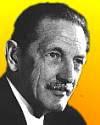
Died 22 Feb 2002 at age 100 (born 25 Mar 1901).
New Zealander social anthropologist whose major research was with the Maori and other peoples of Oceania and Southeast Asia. Firth conducted his first research in the British Solomon Islands 1928-29. The economic organization of primitive societies became one of Firth's primary interests as indicated by his works on the Kauri gum industry and the fishing industry of Malaysia. Among his other chief interests were social structure and religion, especially of the Tikopia of the Solomon Islands, and the anthropological treatment of symbols. Firth was also well know for his work concerning sacrifices. In 1963, Raymond began his work on the influence of economics on the ideology of sacrifice.
New Zealander social anthropologist whose major research was with the Maori and other peoples of Oceania and Southeast Asia. Firth conducted his first research in the British Solomon Islands 1928-29. The economic organization of primitive societies became one of Firth's primary interests as indicated by his works on the Kauri gum industry and the fishing industry of Malaysia. Among his other chief interests were social structure and religion, especially of the Tikopia of the Solomon Islands, and the anthropological treatment of symbols. Firth was also well know for his work concerning sacrifices. In 1963, Raymond began his work on the influence of economics on the ideology of sacrifice.
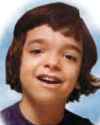
Died 22 Feb 1984 at age 12 (born 21 Sep 1971).
American patient who lived his twelve years of life in a sterile plastic “bubble” to protect him from any chance of infection, because he was born with the a genetic disease, severe combined deficiency syndrome (SCID). He was publicly identified only as “David,” or “the Bubble Boy.” He died after an unsuccessful bone marrow stem cells transplant that had been hoped could save him. The confinment and loneliness caused psychological turmoil that was kept from the media, which wrote of a more benign experience. A made-for-TV movie was inaccurate. The bone marrow from his sister, despite screening to avoid such a problem, contained Epstein-Barr virus. He died of Burkitt's lymphoma (from which it was learned, for the first time, that a virus can cause cancer.) He lived his last 15 days outside of the bubble.«
American patient who lived his twelve years of life in a sterile plastic “bubble” to protect him from any chance of infection, because he was born with the a genetic disease, severe combined deficiency syndrome (SCID). He was publicly identified only as “David,” or “the Bubble Boy.” He died after an unsuccessful bone marrow stem cells transplant that had been hoped could save him. The confinment and loneliness caused psychological turmoil that was kept from the media, which wrote of a more benign experience. A made-for-TV movie was inaccurate. The bone marrow from his sister, despite screening to avoid such a problem, contained Epstein-Barr virus. He died of Burkitt's lymphoma (from which it was learned, for the first time, that a virus can cause cancer.) He lived his last 15 days outside of the bubble.«
The American Experience: The Boy in the Bubble (DVD), by PBS. - book suggestion.
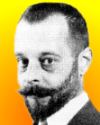
Died 22 Feb 1949 at age 75 (born 25 Apr 1873). quotes
Canadian-French bacteriologist who is generally known as the discoverer of the bacteriophage, a virus that infects bacteria. (The earlier identification of the bacteriophage by the British microbiologist Frederick W. Twort in about 1915 became obscured by Twort's disinclination to take credit for or to pursue his initial findings.)
Canadian-French bacteriologist who is generally known as the discoverer of the bacteriophage, a virus that infects bacteria. (The earlier identification of the bacteriophage by the British microbiologist Frederick W. Twort in about 1915 became obscured by Twort's disinclination to take credit for or to pursue his initial findings.)
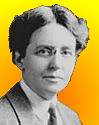
Died 22 Feb 1945 at age 71 (born 15 Nov 1873).
American physician who was a pioneer in public health and child welfare in the United States. She was appointed assistant to the Commissioner for Public Health of New York City, later heading the city's Department of Health in 'Hell's Kitchen' for 25 years. Convinced of the value of well-baby care and the prevention of disease, in 1908 she founded the Bureau of Child Hygiene after visiting mothers on the lower east side, thus helping to decrease the death rate by 1200 from the previous year. Her work made the New York City infant mortality rate the lowest in the USA or Europe at the time. She set up free milk clinics, licensed midwives, and taught the use of silver nitrate to prevent blindness in newborns.
American physician who was a pioneer in public health and child welfare in the United States. She was appointed assistant to the Commissioner for Public Health of New York City, later heading the city's Department of Health in 'Hell's Kitchen' for 25 years. Convinced of the value of well-baby care and the prevention of disease, in 1908 she founded the Bureau of Child Hygiene after visiting mothers on the lower east side, thus helping to decrease the death rate by 1200 from the previous year. Her work made the New York City infant mortality rate the lowest in the USA or Europe at the time. She set up free milk clinics, licensed midwives, and taught the use of silver nitrate to prevent blindness in newborns.
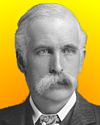
Died 22 Feb 1944 at age 86 (born 21 Jun 1857). quotes
Hugh Frank Newall was an English astronomer and physicist who held the first chair of astrophysics at Cambridge University (1909-1928). After teaching at Wellington College, he went to Cambridge to be an assistant to J. J. Thomson. He changed his interests from being senior demonstrator in experimental physics to astronomy when he facilitated the university's acquisition of the 25-inch Newall Telescope after the death of his father, Robert Stirling Newall, in 1889. His father, an engineer in manufacturing wire ropes and submarine telegraph cables, had the telescope built for private use at his Gateshead home. Hugh paid the moving expenses. When built, it was the largest in the world, and remained so for many years. He designed spectrographs and studied the solar corona, became director of the Solar Physics Observatory (1913) and led many eclipse expeditions.«
Hugh Frank Newall was an English astronomer and physicist who held the first chair of astrophysics at Cambridge University (1909-1928). After teaching at Wellington College, he went to Cambridge to be an assistant to J. J. Thomson. He changed his interests from being senior demonstrator in experimental physics to astronomy when he facilitated the university's acquisition of the 25-inch Newall Telescope after the death of his father, Robert Stirling Newall, in 1889. His father, an engineer in manufacturing wire ropes and submarine telegraph cables, had the telescope built for private use at his Gateshead home. Hugh paid the moving expenses. When built, it was the largest in the world, and remained so for many years. He designed spectrographs and studied the solar corona, became director of the Solar Physics Observatory (1913) and led many eclipse expeditions.«
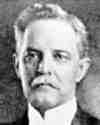
Died 22 Feb 1941 at age 74 (born 13 Mar 1866). quotes
American physicist. Author of The Science of Musical Sounds (1916). Miller's collection of nearly 1,650 flutes and other instruments, and other materials mostly related to the flute, is now at the Library of Congress. To provide a mechanical means of recording sound waves photographically, he invented the phonodeik (1908). He became expert in architectural ecoustics. During WW I, he was consulted concerning using his photodeik to help locate enemy guns. Miller spent considerable research effort on repeating the Michelson and Morley experiment, proposed by Maxwell, to detect a stationary aether. He spent some time working with Morley (1902-4), then more time at Mt. Wilson, recording results favoring the presence of the aether.
American physicist. Author of The Science of Musical Sounds (1916). Miller's collection of nearly 1,650 flutes and other instruments, and other materials mostly related to the flute, is now at the Library of Congress. To provide a mechanical means of recording sound waves photographically, he invented the phonodeik (1908). He became expert in architectural ecoustics. During WW I, he was consulted concerning using his photodeik to help locate enemy guns. Miller spent considerable research effort on repeating the Michelson and Morley experiment, proposed by Maxwell, to detect a stationary aether. He spent some time working with Morley (1902-4), then more time at Mt. Wilson, recording results favoring the presence of the aether.
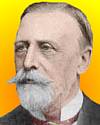
Died 22 Feb 1925 at age 88 (born 20 Jul 1836). quotes
English physician who invented the short clinical thermometer (1866) to meet the need for a convenient method to follow the progress of a fever by temperature measurements at the bedside. Allbutt invented the pocket-size, six-inch clinical thermometer, which could take a temperature in five minutes. Before his improvement, the instruments used were a foot long, and required 20 minutes to measure a patient’s temperature. Allbutt also demonstrated that angina was caused by a narrowing of the coronary artery. This understanding was an important contribution to improving procedures to treat arterial diseases.« more
English physician who invented the short clinical thermometer (1866) to meet the need for a convenient method to follow the progress of a fever by temperature measurements at the bedside. Allbutt invented the pocket-size, six-inch clinical thermometer, which could take a temperature in five minutes. Before his improvement, the instruments used were a foot long, and required 20 minutes to measure a patient’s temperature. Allbutt also demonstrated that angina was caused by a narrowing of the coronary artery. This understanding was an important contribution to improving procedures to treat arterial diseases.« more
Sir Clifford Allbutt, by Alexander G. Bearn. - book suggestion.
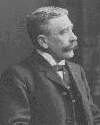
Died 22 Feb 1913 at age 55 (born 26 Nov 1857).
Swiss linguist, born in Geneva, whose ideas on structure in language laid the foundation for much of the approach to and progress of the linguistic sciences in the 20th century. The work by which he is best known, the Cours de linguistique générale (1916, Course in General Linguistics) was compiled from the lecture notes of his students after his death. His focus on language as an 'underlying system' inspired a great deal of later semiology and structuralism, and he is often described as the founder of modern linguistics.
Swiss linguist, born in Geneva, whose ideas on structure in language laid the foundation for much of the approach to and progress of the linguistic sciences in the 20th century. The work by which he is best known, the Cours de linguistique générale (1916, Course in General Linguistics) was compiled from the lecture notes of his students after his death. His focus on language as an 'underlying system' inspired a great deal of later semiology and structuralism, and he is often described as the founder of modern linguistics.
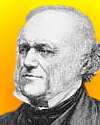
Died 22 Feb 1875 at age 77 (born 14 Nov 1797). quotes
Charles Lyell (Baronet) was a Scottish geologist who promoted a theory of gradualism, by which all features of the Earth's surface are produced by physical, chemical, and biological processes through long periods of geological time. This extended the ideas of uniformitarianism as earlier stated by James Hutton. Lyell rejected the idea of Abraham Werner that a single great historic deluge had been responsible for producing the Earth's present surface topology. The concept of uniformitarianism also opposed the theory of catastrophism whereby zoologists such as Georges Cuvier believed it was by dramatic changes that flora and fauna appeared in their present form. Instead, Lyell maintained that changes were gradual, shaped by forces over unlimited time, in a similar way throughout, and were still operating in the present time.«
Charles Lyell (Baronet) was a Scottish geologist who promoted a theory of gradualism, by which all features of the Earth's surface are produced by physical, chemical, and biological processes through long periods of geological time. This extended the ideas of uniformitarianism as earlier stated by James Hutton. Lyell rejected the idea of Abraham Werner that a single great historic deluge had been responsible for producing the Earth's present surface topology. The concept of uniformitarianism also opposed the theory of catastrophism whereby zoologists such as Georges Cuvier believed it was by dramatic changes that flora and fauna appeared in their present form. Instead, Lyell maintained that changes were gradual, shaped by forces over unlimited time, in a similar way throughout, and were still operating in the present time.«
Principles of Geology, by Charles Lyell. - book suggestion.
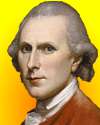
Died 22 Feb 1827 at age 85 (born 15 Apr 1741). quotes
American artist and naturalist who opened the first U.S. popular Museum of Natural Science and Art. Alongside fame as a portraitist, Peale maintained a diverse interest in science. He used a physiognotrace machine used to record profiles and make silhouettes. He patented a fireplace, porcelain false teeth, and a new kind of wooden bridge. He invented a technique to put motion with pictures and wrote papers on engineering and hygiene. He perfected a kind of portable writing desk, named the polygraph, which reproduced several copies of a manuscript at once. In 1786, he established the first U.S. scientific museum with both living and stuffed specimens, and later a complete mastodon skeleton he helped excavate (1801).« more
American artist and naturalist who opened the first U.S. popular Museum of Natural Science and Art. Alongside fame as a portraitist, Peale maintained a diverse interest in science. He used a physiognotrace machine used to record profiles and make silhouettes. He patented a fireplace, porcelain false teeth, and a new kind of wooden bridge. He invented a technique to put motion with pictures and wrote papers on engineering and hygiene. He perfected a kind of portable writing desk, named the polygraph, which reproduced several copies of a manuscript at once. In 1786, he established the first U.S. scientific museum with both living and stuffed specimens, and later a complete mastodon skeleton he helped excavate (1801).« more
Mr. Peale's Museum, by Charles Coleman Sellers. - book suggestion.
Died 22 Feb 1815 at age 53 (born 30 Nov 1761).
English chemist.
English chemist.
Died 22 Feb 1794 at age 60 (born 18 Jan 1734). quotes
German physiologist, known as the "founder of modern embryology." In Theoria Generationis (1759) he first wrote an epigenetic theory of development: that the organs of living things take shape gradually from non-specific tissue. Wolff applied the microscope to the study of animal embryology and remarked that "the particles which constitute all animal organs in their earliest inception are little globules, which may be distinguished under a microscope." The book was ignored for half a century, as the prevailing idea was held that life begins preformed in a small body that grows larger in the same form. His name is found describing parts of the kidneys of embryos: the Wolffian body and the Wolffian ducts.
German physiologist, known as the "founder of modern embryology." In Theoria Generationis (1759) he first wrote an epigenetic theory of development: that the organs of living things take shape gradually from non-specific tissue. Wolff applied the microscope to the study of animal embryology and remarked that "the particles which constitute all animal organs in their earliest inception are little globules, which may be distinguished under a microscope." The book was ignored for half a century, as the prevailing idea was held that life begins preformed in a small body that grows larger in the same form. His name is found describing parts of the kidneys of embryos: the Wolffian body and the Wolffian ducts.
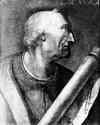
Died 22 Feb 1512 at age 60 (born 9 Mar 1451).
Italian-Spanish navigator, explorer and cartographer whose name was given to the New World - America - because it was he and not Columbus, who realized and announced that Columbus had discovered a new continent. He was well educated, including studies of physics, geometry and astronomy. On 10 May 1497, he began his first voyage of discovery. Three ships were provided by by King Ferdinand of Spain. After four voyages of exploration, on 14 Apr 1505, he naturalized as a Spaniard. He made two more voyages. In 1507, German mapmaker Martin Waldseemuller, printed the first map applying the name America for the New World. The title piloto mayor de España (chief of navigation) for Spain was bestowed on Vespucci, by royal decree, on 6 Aug 1508.«[a.k.a. Americus Vespucius. EB gives years 1454?-1512.]
Italian-Spanish navigator, explorer and cartographer whose name was given to the New World - America - because it was he and not Columbus, who realized and announced that Columbus had discovered a new continent. He was well educated, including studies of physics, geometry and astronomy. On 10 May 1497, he began his first voyage of discovery. Three ships were provided by by King Ferdinand of Spain. After four voyages of exploration, on 14 Apr 1505, he naturalized as a Spaniard. He made two more voyages. In 1507, German mapmaker Martin Waldseemuller, printed the first map applying the name America for the New World. The title piloto mayor de España (chief of navigation) for Spain was bestowed on Vespucci, by royal decree, on 6 Aug 1508.«[a.k.a. Americus Vespucius. EB gives years 1454?-1512.]

In 1995, Steve Fossett completed the first hot air balloon flight over Pacific Ocean (9600 km). On 3 Mar 2005, he completed the first solo non-stop and fastest flight around the world without refueling, in The Global Flyer, a single-engine, single-use experimental jet plane.«
In 1984, a 12-year-old Houston boy, known publicly only as “David,” died. He had spent nearly all his life in a sterile plastic bubble because he had no immunity to disease. He was born at Texas Children's Hospital, Houston, with a rare disorder called severe combined immune deficiency (SCID), David Vetter lacked T-cells. It was thought that transplanted marrow stem cells—precursors to blood cells—could evolve and become the patient's own T-cells. So, on 21 Oct 1983, he received a bone marrow transplant from his older sister. It was intended to stimulate his immune system. By New Year's Day, he was becoming ill. Sadly, despite cleansing treatment, an undetected virus was in the transferred cells. When his death was imminent, on 7 Feb 1984, he left his bubble, and had 15 days of freedom.«
The American Experience: The Boy in the Bubble (DVD), by PBS. - book suggestion.
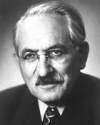
Waksman
In 1946, Dr Selman Abraham Waksman announced his discovery of the antibiotic streptomycin, the first specific antibiotic effective against tuberculosis. In 1943, he had isolated streptomycin from a mold he had known and studied early in his life. For this work, he was awarded the 1952 Nobel Prize.«
The antibiotic era: A history of the antibiotics..., by Selman Abraham Waksman. - book suggestion.
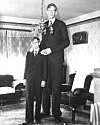
In 1918, the documented world record tallest human, Robert Pershing Wadlow, was born in Alton, Illinois. Shortly after graduating from high school, he was 8-ft 4-in (2.54m) tall. He grew to a final height, shortly before his death, of 8-ft 11.1-in (2.72m). This unique size was attributed to an over active pituary gland, which produced much higher than normal levels of growth hormone. Today's medical science can compensate for such problems, but in the 1920s there was no therapy available. He died on 15 Jul 1940, at age 22, from a fatal infection which set in due to a blister on his foot, despite emergency surgery and blood transfusions. At the time of his death he weighed 490 pounds. The 1,000-pound casket required a dozen pallbearers, assisted by eight other men.[Image: Wadlow with his brother, 1936]
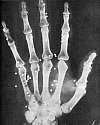
In 1896, the first use of clinical radiology in England was reported in The Lancet* by surgeon Sir Robert Jones and the head of Liverpool University's physics department, Oliver Lodge. A 12-year-old boy, who had shot himself in his wrist the previous month, was examined in Lodge's laboratory on 7 Feb 1896 at Jones' request. Merely probing could not locate the bullet. Jones had heard of Röntgen's discovery of X-rays a few months earlier. Using X-rays, the pellet was identified embedded in the third carpo-metacarpal joint. Jones subsequently financed an X-ray apparatus for his senior assistant who had been with him then, Charles Thurstan Holland, to pioneer radiology at Royal Southern Hospital, Liverpool.«[Image: X-ray from 1896 of hand with buckshot made at Columbia University, USA]
In 1828, German biochemist Friedrich Wöhler informed Jakob Berzelius that he had synthesized the organic chemical, urea. This was a landmark event, for it was the first time a material previously only associated with the body function of a living thing, was made from inorganic chemicals of non-living origin. In this case, urea had formerly been known only from the urine of animals.
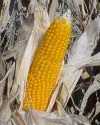
In 1630, popcorn was introduced to the English colonists by an Indian named Quadequina who brought it in deerskin bags as his contribution at their first Thanksgiving dinner. Popcorn is a type of corn with smaller kernels than regular corn, and when heated over a flame, it "pops" into the snack we know it as today. Native Americans were growing it for more than a thousand years before the arrival of European explorers. In 1964, scientists digging in southern Mexico found a small cob of popcorn discovered to be 7,000 years old. Today, the United States grows nearly all of the world's popcorn.




