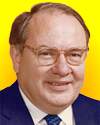
Born 5 May 1921; died 28 Apr 1999 at age 77. quotes
Arthur Leonard Schawlow was an American physicist who shared (with independent researchers Nicolaas Bloembergen and Kai Siegbahn) the 1981 Nobel Prize for Physics for his work in developing the laser and in laser spectroscopy. With Theodor Hänsch, Schawlow used tunable dye lasers for high resolution spectroscopy. In his early career, Schawlow collaborated with Charles Townes in research of maser principles. Although he did not share in the 1964 Nobel Prize in Physics, which was awarded to Townes and two Russian scientists for their maser and laser research, Schawlow is still thought of as a coinventor of the laser.«
Arthur Leonard Schawlow was an American physicist who shared (with independent researchers Nicolaas Bloembergen and Kai Siegbahn) the 1981 Nobel Prize for Physics for his work in developing the laser and in laser spectroscopy. With Theodor Hänsch, Schawlow used tunable dye lasers for high resolution spectroscopy. In his early career, Schawlow collaborated with Charles Townes in research of maser principles. Although he did not share in the 1964 Nobel Prize in Physics, which was awarded to Townes and two Russian scientists for their maser and laser research, Schawlow is still thought of as a coinventor of the laser.«
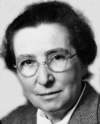
1952
Born 5 May 1892; died 18 Dec 1968 at age 76.
English archaeologist who, between the wars, dominated a string of pioneering excavations in the Near East (1929-34), most notably the 22 month excavation at Mount Carmel, Palestine, which put Near Eastern prehistory on the map. The Mount Carmel cave deposits spanned 200,000 years of human occupation, and finds included over 92,000 stone tools. Most important were the finds of human fossils, including the skeleton of a female Neanderthal dated c. 110,000 BC, the first ever to be found outside Europe. This led on to the discovery of more skeletal remains of primary importance to the study of human evolution. A leading authority on the Paleolithic for many years, Garrod was the first woman to receive a professorship at the University of Cambridge (1939-52).
English archaeologist who, between the wars, dominated a string of pioneering excavations in the Near East (1929-34), most notably the 22 month excavation at Mount Carmel, Palestine, which put Near Eastern prehistory on the map. The Mount Carmel cave deposits spanned 200,000 years of human occupation, and finds included over 92,000 stone tools. Most important were the finds of human fossils, including the skeleton of a female Neanderthal dated c. 110,000 BC, the first ever to be found outside Europe. This led on to the discovery of more skeletal remains of primary importance to the study of human evolution. A leading authority on the Paleolithic for many years, Garrod was the first woman to receive a professorship at the University of Cambridge (1939-52).
Born 5 May 1882; died 1 Jun 1945 at age 63. quotes
Spanish neuroscientist who discovered the microglia cells of the brain, which he pinpointed by creating a new method of staining tissue samples with silver carbonate (1919-1921). Microglia are the cells resident in the central nervous system functioning as an immune cell. He was a student of the Spanish histologist Santiago Ramón y Cajal, (who discovered neurons, the nerve cells that link up to form up the nervous system). Hortega coined the name oligodendroglia, for the cells discovered using the same staining system by Wilder Penfield who worked in his lab for five months in 1924. At the outbreak of the Spanish Civil War, he moved to Paris, then Oxford and finally in 1940 to Buenos Aires, Argentina.«
Spanish neuroscientist who discovered the microglia cells of the brain, which he pinpointed by creating a new method of staining tissue samples with silver carbonate (1919-1921). Microglia are the cells resident in the central nervous system functioning as an immune cell. He was a student of the Spanish histologist Santiago Ramón y Cajal, (who discovered neurons, the nerve cells that link up to form up the nervous system). Hortega coined the name oligodendroglia, for the cells discovered using the same staining system by Wilder Penfield who worked in his lab for five months in 1924. At the outbreak of the Spanish Civil War, he moved to Paris, then Oxford and finally in 1940 to Buenos Aires, Argentina.«
Born 5 May 1882; died 14 Oct 1958 at age 76.
Australian geologist and explorer whose travels in the Antarctic earned him worldwide acclaim.
Australian geologist and explorer whose travels in the Antarctic earned him worldwide acclaim.
Born 5 May 1876; died 12 Sep 1956 at age 80.
English archaeologist whose excavations of Ancient Jericho are the best known of his major contributions to the study of the ancient history and prehistory of Asia Minor and Palestine.«
English archaeologist whose excavations of Ancient Jericho are the best known of his major contributions to the study of the ancient history and prehistory of Asia Minor and Palestine.«
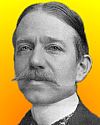
Born 5 May 1861; died 25 Aug 1921 at age 60. quotes
American electrical engineer who invented the mercury-vapour lamp, an important forerunner of fluorescent lamps. He studied the production of light using electrical discharges (while Thomas Edison was still developing incandescent filaments). The mercury-filled tubes he developed from the late 1890s, gave off an unattractive blue-green light. Although unsuitable in homes, its brilliance won wide adoption by photo studios because the black and white film of the time needed just bright light, despite its colour. There were many other industrial uses for the lamp. His manufacturing company (est. 1902) was bought by General Electric in 1919 which produced a new design in 1933. He took out his first eight mercury vapour lamp patents on 17 Sep 1901.«
American electrical engineer who invented the mercury-vapour lamp, an important forerunner of fluorescent lamps. He studied the production of light using electrical discharges (while Thomas Edison was still developing incandescent filaments). The mercury-filled tubes he developed from the late 1890s, gave off an unattractive blue-green light. Although unsuitable in homes, its brilliance won wide adoption by photo studios because the black and white film of the time needed just bright light, despite its colour. There were many other industrial uses for the lamp. His manufacturing company (est. 1902) was bought by General Electric in 1919 which produced a new design in 1933. He took out his first eight mercury vapour lamp patents on 17 Sep 1901.«
Born 5 May 1833; died 6 Oct 1905 at age 72.
(Baron) German geographer and geologist who produced a major work on China and contributed to the development of geographical methodology. He also helped establish the science of geomorphology, the branch of geology that deals with land and submarine relief features.
(Baron) German geographer and geologist who produced a major work on China and contributed to the development of geographical methodology. He also helped establish the science of geomorphology, the branch of geology that deals with land and submarine relief features.
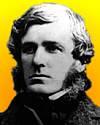
Born 5 May 1820; died 14 Jun 1876 at age 56.
Canadian geologist and paleontologist, who was the first Canadian paleontologist. For three years as the editor of the Ottawa Citizen, he wrote a series of articles on science, including geology and paleontology. He published his first scientific paper on Trenton fossils in 1854. He launched a new monthly periodical, The Canadian Naturalist and Geologist in 1856, which he also edited and was the major contributor. In Aug 1856 he was appointed staff paleontologist with the Canadian Geological Survey by William Edmond Logan, the founder of the Survey. Billings immediately began the task of identifying a 20-year backlog of fossils collected by the Survey. By 1863 he had published descriptions of no fewer than 526 new species of fossils.
Canadian geologist and paleontologist, who was the first Canadian paleontologist. For three years as the editor of the Ottawa Citizen, he wrote a series of articles on science, including geology and paleontology. He published his first scientific paper on Trenton fossils in 1854. He launched a new monthly periodical, The Canadian Naturalist and Geologist in 1856, which he also edited and was the major contributor. In Aug 1856 he was appointed staff paleontologist with the Canadian Geological Survey by William Edmond Logan, the founder of the Survey. Billings immediately began the task of identifying a 20-year backlog of fossils collected by the Survey. By 1863 he had published descriptions of no fewer than 526 new species of fossils.
Born 5 May 1811; died 4 Jan 1882 at age 70. quotes
English-American chemist who pioneered in photochemistry. He recognized that light initiated chemical reactions as molecules absorbed light energy. The Draper Point is the name given to the point at which all substances glow a dull red (about 525 degrees C.). He described the effect of rise in temperature as the addition of more and more of the visible light region produced a white glow (1847). His interest in spectroscopy and photography was applied to give the first astronomical photograph. Its subject was the moon (1840). He also studied photographs of the solar spectrum to show that contained both infrared and ultraviolet light. His photographs of persons include the oldest surviving photographic portrait (1840), and he was one of the first to produce microphotographs. more
English-American chemist who pioneered in photochemistry. He recognized that light initiated chemical reactions as molecules absorbed light energy. The Draper Point is the name given to the point at which all substances glow a dull red (about 525 degrees C.). He described the effect of rise in temperature as the addition of more and more of the visible light region produced a white glow (1847). His interest in spectroscopy and photography was applied to give the first astronomical photograph. Its subject was the moon (1840). He also studied photographs of the solar spectrum to show that contained both infrared and ultraviolet light. His photographs of persons include the oldest surviving photographic portrait (1840), and he was one of the first to produce microphotographs. more
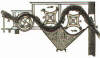
Scottish millwright and inventor of the drum threshing machine. His father, James Meikle (1690-1717) produced a winnowing machine (c.1720). He inherited his father's mill, invented the fantail to turn windmills into the wind automatically (1750), a machine for dressing grain (patented 14 Mar 1768) and the spring sail to quickly furl the sails of a windmill to avoid storm damage (1772). His attempts from 1778 to construct a threshing machine were unsuccessful, based on earlier designs by others that rubbed the grain. From about 1784, Meikle instead developed a machine using the idea of a strong revolving drum and fixed beater bars to flail the grain like a flax-scutching machine of his time used to beat the fibres from flax plants. Saving much manual work, the machine separated the grain, from the cobs, stalks or husks and cleaned it. He patented it 9 Apr 1788.[Image right: Interior view of threshing machine]

Died 5 May 2007 at age 79 (born 11 Jul 1927).
Theodore Harold Maiman was an American physicist who built the first working laser. He began working with electronic devices in his teens, while earning college money by repairing electrical appliances and radios. In the 1960s, he developed, demonstrated, and patented a laser using a pink ruby medium. The laser is a device that produces monochromatic coherent light (light in which the rays are all of the same wavelength and phase). The laser has since been applied in a very wide range of uses, including eye surgery, dentistry, range-finding, manufacturing, even measuring the distance between the Earth and the Moon.
Theodore Harold Maiman was an American physicist who built the first working laser. He began working with electronic devices in his teens, while earning college money by repairing electrical appliances and radios. In the 1960s, he developed, demonstrated, and patented a laser using a pink ruby medium. The laser is a device that produces monochromatic coherent light (light in which the rays are all of the same wavelength and phase). The laser has since been applied in a very wide range of uses, including eye surgery, dentistry, range-finding, manufacturing, even measuring the distance between the Earth and the Moon.
The Laser Odyssey, by Theodore Maiman. - book suggestion.
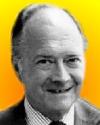
Died 5 May 1995 at age 75 (born 7 Jan 1920). quotes
Sir Lionel Alexander Bethune Pilkington was a British industrialist and inventor who invented the float glass process, practical for industry, which replaced the former method for making plate glass. He developed his idea from the mid-1950s and announced it to the public in 1959. It took three years longer to reach consistent, profitable production In 1962, the process was licenced for use in the USA, followed shortly by the rest of the world. Flat glass with brilliant, parallel surfaces was manufactured from a continuous ribbon of molten glass moving out of the furnace and floating on a long bed of molten tin. While on this bed, the glass remained hot for a long enough time for irregularities to smooth out, eliminating the need for later polishing. He was knighted in 1970.«
Sir Lionel Alexander Bethune Pilkington was a British industrialist and inventor who invented the float glass process, practical for industry, which replaced the former method for making plate glass. He developed his idea from the mid-1950s and announced it to the public in 1959. It took three years longer to reach consistent, profitable production In 1962, the process was licenced for use in the USA, followed shortly by the rest of the world. Flat glass with brilliant, parallel surfaces was manufactured from a continuous ribbon of molten glass moving out of the furnace and floating on a long bed of molten tin. While on this bed, the glass remained hot for a long enough time for irregularities to smooth out, eliminating the need for later polishing. He was knighted in 1970.«
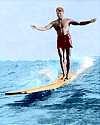
Died 5 May 1994 at age 92 (born 8 Mar 1902).
American inventor of the hollow-core surfboard. Following his first experimental hollow surfboard in 1926, his innovative, hollow-core surf/paddle boards dominated the surfing world until the late 1940s. It became standard rescue equipment in California's early lifeguard corps. Early surfboard designs consisted of solid wooden boards dating back to the ancient Hawaiians, these new-concept, lighter boards were an immediate success and became extremely important in the evolution of the modern surfboard. In the 1930s he made the first major design advancement with the invention of fins. Before this, a surfer had to use his back foot to make the board turn. Many early Blake boards are displayed at the Bishop Museum, Honolulu.
American inventor of the hollow-core surfboard. Following his first experimental hollow surfboard in 1926, his innovative, hollow-core surf/paddle boards dominated the surfing world until the late 1940s. It became standard rescue equipment in California's early lifeguard corps. Early surfboard designs consisted of solid wooden boards dating back to the ancient Hawaiians, these new-concept, lighter boards were an immediate success and became extremely important in the evolution of the modern surfboard. In the 1930s he made the first major design advancement with the invention of fins. Before this, a surfer had to use his back foot to make the board turn. Many early Blake boards are displayed at the Bishop Museum, Honolulu.
Died 5 May 1990 at age 82 (born 2 Mar 1908).
German electrical engineer who invented the Phase Alternating Line (PAL) colour television system adopted in Europe. On a trip to America in 1953, he found inadequacies in the system as first developed there (NTSC, National Television Standards Committee). He returned to German employer, Telefunken, and researched a way to improve colour stability without need for tint and hue controls. By 1961, a preliminary patent was filed, but was superceded on 30 Dec 1962 with a definitive version of the PAL system. There followed a struggle for to be recognized as the best coding method. Britain selected PAL as superior to NTSC and introduced it on 1 Jul 1967. Germany followed on 25 Aug 1967. Eventually most of the world, too.«
German electrical engineer who invented the Phase Alternating Line (PAL) colour television system adopted in Europe. On a trip to America in 1953, he found inadequacies in the system as first developed there (NTSC, National Television Standards Committee). He returned to German employer, Telefunken, and researched a way to improve colour stability without need for tint and hue controls. By 1961, a preliminary patent was filed, but was superceded on 30 Dec 1962 with a definitive version of the PAL system. There followed a struggle for to be recognized as the best coding method. Britain selected PAL as superior to NTSC and introduced it on 1 Jul 1967. Germany followed on 25 Aug 1967. Eventually most of the world, too.«
Died 5 May 1985 at age 83 (born 15 Sep 1901).
British engineer who invented the Bailey bridge, which was of great military value in World War II.
British engineer who invented the Bailey bridge, which was of great military value in World War II.
Died 5 May 1957 at age 40 (born 30 May 1916). quotes
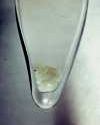
Joseph William Kennedy was an American chemist and physicist, one of four co-discoverers of plutonium, (element 94) which was produced from uranium oxide bombarded with deuterons in a cyclotron at the Univ. of California at Berkeley. Subsequently, on 28 Mar 1941, Glenn Seaborg, Emilio Segrè and Joseph Kennedy demonstrated that plutonium, like U235, is fissionable with slow neutrons, thus neutrons of any speed, which implies it's a potential fission bomb material. He was a chemistry instructor while working on the research project led by Glenn Seaborg at the University of California, Berkeley. After working with Seaborg, Kennedy was chosen by J. Robert Oppenheimer to lead the Chemistry Division of the Manhattan Project.Image: plutonium hydroxide, 20 microgram in a capillary tube, Sep 1942.
Joseph William Kennedy was an American chemist and physicist, one of four co-discoverers of plutonium, (element 94) which was produced from uranium oxide bombarded with deuterons in a cyclotron at the Univ. of California at Berkeley. Subsequently, on 28 Mar 1941, Glenn Seaborg, Emilio Segrè and Joseph Kennedy demonstrated that plutonium, like U235, is fissionable with slow neutrons, thus neutrons of any speed, which implies it's a potential fission bomb material. He was a chemistry instructor while working on the research project led by Glenn Seaborg at the University of California, Berkeley. After working with Seaborg, Kennedy was chosen by J. Robert Oppenheimer to lead the Chemistry Division of the Manhattan Project.Image: plutonium hydroxide, 20 microgram in a capillary tube, Sep 1942.
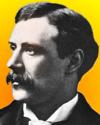
Died 5 May 1921 at age 65 (born 7 Sep 1855).
English photographer and inventor who built and patented an early somewhat practical motion picture camera (21 Jun 1889, No. 10,131). From about 1875, he operated a portrait photography studio. He experimented with motion photography. An early attempt was a camera able to take 10 images per second on a roll of sensitized paper. Later he used celluloid film. He claimed perhaps the first time a film of an actual event was ever projected on a screen - a jerky picture of people and horse-drawn vehicles moving past Hyde Park Corner. Although he held and defended patents, his inventions were less significant than those developed by others. The first functional movie camera is generally credited to Frenchman Etienne-Jules Marey in 1888.«
English photographer and inventor who built and patented an early somewhat practical motion picture camera (21 Jun 1889, No. 10,131). From about 1875, he operated a portrait photography studio. He experimented with motion photography. An early attempt was a camera able to take 10 images per second on a roll of sensitized paper. Later he used celluloid film. He claimed perhaps the first time a film of an actual event was ever projected on a screen - a jerky picture of people and horse-drawn vehicles moving past Hyde Park Corner. Although he held and defended patents, his inventions were less significant than those developed by others. The first functional movie camera is generally credited to Frenchman Etienne-Jules Marey in 1888.«
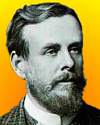
Died 5 May 1897 at age 45 (born 30 Mar 1852).
British explorer and archaeologist who excavated the magnificent Iron Age ruined city named the Great Zimbabwe, an ancient site in SE Africa that inspired the name of the country Zimbabwe (formerly Rhodesia). The word Zimbabwe traces to the Bantu dzimbahwe; i.e., stone houses, or chiefs' graves. The earliest habitation is dated to about 400 AD, with inhabitation by Shona cattleherders from about 500 AD. Between the 12th to 15th centuries, stone structures still visible were built. The site lies within the Victoria region of modern state of Zimbabwe, which lies between the Zambezi and Limpopo Rivers. The outer elliptical wall measures 830-ft circumference, varied height, up to 40-ft and up to 17-ft thick.
British explorer and archaeologist who excavated the magnificent Iron Age ruined city named the Great Zimbabwe, an ancient site in SE Africa that inspired the name of the country Zimbabwe (formerly Rhodesia). The word Zimbabwe traces to the Bantu dzimbahwe; i.e., stone houses, or chiefs' graves. The earliest habitation is dated to about 400 AD, with inhabitation by Shona cattleherders from about 500 AD. Between the 12th to 15th centuries, stone structures still visible were built. The site lies within the Victoria region of modern state of Zimbabwe, which lies between the Zambezi and Limpopo Rivers. The outer elliptical wall measures 830-ft circumference, varied height, up to 40-ft and up to 17-ft thick.
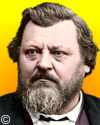
Died 5 May 1895 at age 77 (born 5 Jul 1817). quotes
Carl Christoph Vogt was a German-Swiss zoologist, physician and politician who lived in Geneva most of his career, and naturalized as a Swiss citizen. Although he originally trained in medicine, his interest turned to the natural sciences. He specialized in marine biology, but also taught geology until he had the opportunity to become chair of zoology (1872). He supported Charles Darwin’s ideas about natural selection, and lectured on evolution. Vogt denied creation ex nihilo, and energetically advocated scientific materialism, as subsequently promoted by Ernst Haeckel. Vogt wrote several books and contributed many articles to journals. The textbook he wrote on practical comparative anatomy became a classic. He also wrote on geology and an early work of anthropology. more
Carl Christoph Vogt was a German-Swiss zoologist, physician and politician who lived in Geneva most of his career, and naturalized as a Swiss citizen. Although he originally trained in medicine, his interest turned to the natural sciences. He specialized in marine biology, but also taught geology until he had the opportunity to become chair of zoology (1872). He supported Charles Darwin’s ideas about natural selection, and lectured on evolution. Vogt denied creation ex nihilo, and energetically advocated scientific materialism, as subsequently promoted by Ernst Haeckel. Vogt wrote several books and contributed many articles to journals. The textbook he wrote on practical comparative anatomy became a classic. He also wrote on geology and an early work of anthropology. more
Died 5 May 1877 at age 81 (born 30 Jun 1795).
French chemist who is noted for the research he did in partnership with Pierre-Joseph Pelletier into vegetable bases and the resulting contributions of alkaloid chemistry to the field of medicine. They helped found the chemistry of vegetable alkaloids. They isolated chlorophyll (1817), for which they coined the French name chlorophyle in Ann. de Chimie(1818), IX, 195. Their alkaloid discoveries included strychnine (1818), brucine (1819), quinine (1820), caffeine (1821), and cinchonine. In 1823, using elementary closed-tube analyses in which the alkaloids were combusted, they discovered nitrogen was present in the compounds. Alkaloids are organic compounds which form water-soluble salts that perform various functions in medicine, including analgesics (pain-killers), and respiratory stimulants.
French chemist who is noted for the research he did in partnership with Pierre-Joseph Pelletier into vegetable bases and the resulting contributions of alkaloid chemistry to the field of medicine. They helped found the chemistry of vegetable alkaloids. They isolated chlorophyll (1817), for which they coined the French name chlorophyle in Ann. de Chimie(1818), IX, 195. Their alkaloid discoveries included strychnine (1818), brucine (1819), quinine (1820), caffeine (1821), and cinchonine. In 1823, using elementary closed-tube analyses in which the alkaloids were combusted, they discovered nitrogen was present in the compounds. Alkaloids are organic compounds which form water-soluble salts that perform various functions in medicine, including analgesics (pain-killers), and respiratory stimulants.
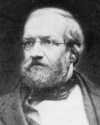
Died 5 May 1859 at age 54 (born 13 Feb 1805). quotes
German mathematician who made valuable contributions contributions to number theory, analysis, and mechanics. Dirichlet is best known for his papers on conditions for the convergence of trigonometric series and the use of the series to represent arbitrary functions. He also proposed in 1837 the modern definition of a function. In mechanics he investigated the equilibrium of systems and potential theory. This led him to the Dirichlet problem concerning harmonic functions with given boundary conditions. Dirichlet is considered the founder of the theory of Fourier series, having corrected the earlier mistakes of other workers on Fourier's writings. One of his students was Riemann. In 1855, he succeeded Carl Friedrich Gauss at the University of Göttingen.
German mathematician who made valuable contributions contributions to number theory, analysis, and mechanics. Dirichlet is best known for his papers on conditions for the convergence of trigonometric series and the use of the series to represent arbitrary functions. He also proposed in 1837 the modern definition of a function. In mechanics he investigated the equilibrium of systems and potential theory. This led him to the Dirichlet problem concerning harmonic functions with given boundary conditions. Dirichlet is considered the founder of the theory of Fourier series, having corrected the earlier mistakes of other workers on Fourier's writings. One of his students was Riemann. In 1855, he succeeded Carl Friedrich Gauss at the University of Göttingen.
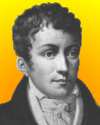
Died 5 May 1808 at age 50 (born 5 Jun 1757). quotes
French philosopher and physiologist noted for Rapports du physique et du moral de l'homme (1802; "Relations of the Physical and the Moral in Man"), which explained all of reality, including the psychic, mental, and moral aspects of man, in terms of a mechanistic Materialism. He argued that "to have an accurate idea of the operations from which thought results, it is necessary to consider the brain as a special organ designed especially to produce it, as the stomach and the intestines are designed to operate the digestion, (and) the liver to filter bile..."
French philosopher and physiologist noted for Rapports du physique et du moral de l'homme (1802; "Relations of the Physical and the Moral in Man"), which explained all of reality, including the psychic, mental, and moral aspects of man, in terms of a mechanistic Materialism. He argued that "to have an accurate idea of the operations from which thought results, it is necessary to consider the brain as a special organ designed especially to produce it, as the stomach and the intestines are designed to operate the digestion, (and) the liver to filter bile..."
Died 5 May 1600 (born c. 1530).
French diplomat who introduced tobacco to the French court. In 1560, while serving as ambassador in Portugal, he was shown a tobacco plant in the garden of Lisbon botanist Damião de Goes, who claimed it had healing properties. Nicot sent home seeds and leaves of tobacco, recommending its marvelous therapeutic value. He had applied it to his nose and forehead and found it relieved his headaches. Nicot sent snuff to Catherine de Medici, the Queen of France to treat her migraine headaches. She was impressed with its results. The tobacco plant, Nicotiana tabacum, and its active substance, nicotine, derive their names from his. He also compiled one of the first French dictionaries, Thresor de la langue françoyse (1606).«
French diplomat who introduced tobacco to the French court. In 1560, while serving as ambassador in Portugal, he was shown a tobacco plant in the garden of Lisbon botanist Damião de Goes, who claimed it had healing properties. Nicot sent home seeds and leaves of tobacco, recommending its marvelous therapeutic value. He had applied it to his nose and forehead and found it relieved his headaches. Nicot sent snuff to Catherine de Medici, the Queen of France to treat her migraine headaches. She was impressed with its results. The tobacco plant, Nicotiana tabacum, and its active substance, nicotine, derive their names from his. He also compiled one of the first French dictionaries, Thresor de la langue françoyse (1606).«
In 2000, a conjunction of the five bright planets - Mercury, Venus, Mars, Jupiter and Saturn - formed a rough line across the sky with the Sun and Moon. Unfortunately, nothing was visible from the earth, because the the line of planets was behind the Sun and hidden in its brilliance. Such a conjunction last happened in Feb 1962 and will not happen again until Apr 2438. Throughout former history, a conjuction event was regarded with foreboding. However, now science can be dismissive. Donald Olson, an expert on tides at Southwest Texas State University, working with the assistance of a graduate student, Thomas Lytle, calculated the stress on the Earth caused by the Moon and eight planets has often been routinely greater, most recently on 6 Jan 1990.
In 1963, the world's first human liver transplant was performed in America by Dr. Thomas E. Starlz at a Denver, Col., hospital. His patient, a 48-year-old man, survived for 22 days. He had also performed the world's first spleen transplant four months earlier in the same year.
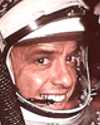
In 1961, America’s first astronaut in space, Alan Bartlett Shepherd, Jr., made a 15 minute sub-orbital flight that reached an altitude of 115 miles, during which he experienced about five minutes of “weightlessness.” He was launched in the 2,000-lb. capsule Freedom 7 from Cape Canaveral, Florida, by a Mercury-Redstone 3 rocket. The flight travelled 302 miles at a speed relative to the ground of of 4,500 mph. Although Shepard thus became the first American in space, the world's first human in space flight was Yuri Gagarin, a Russian cosmonaut, launched into orbit less than one month earlier, on 12 Apr 1961.
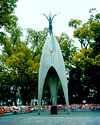
In 1958, the Children’s Peace Monument was opened, standing at the centre of the Hiroshima Peace Park, Japan. It was inspired by Sadako Sasaki, who was 2 years old when she was 2 km from the atomic bomb explosion in Hiroshima, Japan. She survived the blast, but by 1955, she was diagnosed with leukemia, a kind of blood cancer caused by exposure to the radiation. It was usually fatal, but she knew the crane was a sacred bird in Japan. By legend, a sick person who folded 1,000 paper cranes, would get well. With great pain, she had folded 644 paper cranes by the time she died. Sadako’s classmates initiated a fund for the memorial. A bell inscribed “A Thousand Paper Cranes” was rung.«
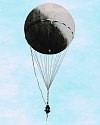
In 1945, the only WW II deaths of civilians on the mainland of the U.S. resulted from a Japanese bomb dropped over Gearhart Mountain, Oregon by an unmanned balloon. It was disturbed and exploded, killing those civilians who discovered it during a picnic: five local children and Elsie Mitchell, the pregnant wife of a minister. Sand in the bags of ballast carried by the balloon was scientifically identified. By microscopic study of the grains, the sand was known by its characteristics to have come from Japan. Earlier in the war, 23 Feb 1942, the mainland was first bombed, though without casualties, by shells fired from a Japanese submarine about a half-mile offshore of Ellwood, California.
In 1936, a U.S. patent was issued for the first bottle with a screw cap and a pour lip to Edward A. Ravenscroft, Glencoe, Illinois (No. 2,039,345). Abbott Laboratories of North Chicago manufactured the bottles.
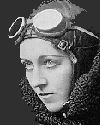
In 1930, Amy Johnson left Croydon on the first solo flight by a woman between England and Australia, a distance of 11,000 miles. She flew a single-engine De Havilland Gipsy Moth (registration G-AAAH) named Jason, and landed in Darwin, Australia on 24 May. She had learned to fly only a few months more than a year before, during the winter of 1928-29. She had also qualified as the first British-trained woman ground engineer. For awhile she was the only woman G.E. in the world. Her intention for her Australia flight was to beat Bert Hinkler's record of 16 days (She missed it by 3 days.) For her achievement, she was awarded the Harmon Trophy and a CBE. The aircraft still exists, as an exhibit in the London at the Science Museum.«
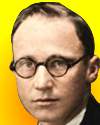
Scopes
In 1925, a meeting of local leaders was held in Dayton, Tennessee, to plan a challenge to that state's new law, the Butler Act, which made it illegal to teach Darwin's theory of evolution in a public school. George W. Rappelyea and other local leaders of the small mining town met at Robinson's drug store. The American Civil Liberties Union in New York, concerned by the law's infringement on constitutional rights, had advertised an offer to give legal support to any teacher who would challenge the law. Rappelyea saw the publicity that would accompany such a trial as an opportunity to promote his town. He approached John T. Scopes, a 24-year-old teacher and football coach, who was hesitant at first, to test the legality of the law in court. The infamous “Scopes Monkey Trial” began on 10 Jul 1925.«
Center of the Storm: Memoirs of John T. Scopes, by John Scopes. - book suggestion.
In 1881, Louis Pasteur tested innoculations against anthrax upon an ox, several cows and 25 sheep. His experiment proved successful, and was a milestone in the prevention of this fatal disease that affected cattle and sheep. He began research for a vaccine on 21 Mar 1877, in response to a devastating outbreak (1876-77) of anthrax. He found an effective vaccine could be made from a weakened strain of the anthrax bacterium (the rodlike microorganism which Robert Koch.had identified in 1876 as the cause of the disease). Pasteur next developed an effective vaccine against rabies, which he tested on Joseph Meister, on 6 Jul 1885.«
The Private Science of Louis Pasteur, by Gerald L. Geison. - book suggestion.
In 1847, the first permanent national U.S. medical society was organized. The American Medical Association (AMA) met in the Hall of the Academy of Natural Sciences, Philadelphia, Pennsylvania. Two hundred and fifty delegates were present for this first U.S. national convention of medical professionals, coming from 22 states, 28 medical schools and 40 medical societies. The AMA superceded the National Medical Association which existed only one year since its organization on 5 May 1846. The first state-chartered medical society - the Massachusetts Medical Society - was incorporated in Boston on 1 Nov 1781. The first, though short-lived, local medical society existed in Boston prior to 1735 to 1741.«
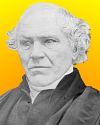
Whewell
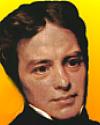
Faraday
William Whewell: Theory of Scientific Method, by William Whewell. - book suggestion.
In 1832, the U.S. government passed an act authorizing the first vaccination program to protect Native Americans against smallpox and allotted $12,000 to pay doctors $6 a day for their services.
EngravingThm.jpg "English mammoth")
In 1824, the skeleton of a mammoth was found in England at Ilford, near Bow, in Essex. It was said to be of the same species as those which had previously been found in Siberia, and all over Europe. The discovery was made at the 16-ft depth of a large quarry of clay being excavated for making bricks. A large tusk, several of the largest leg bones, many ribs and vertebrae were found along with the smaller bones of the feet and tail. The discovery was briefly reported in The Times on 8 May 1824. The area brick pits continued to be a rich source for Ice Age large animal fossils, including the Ilford Mammoth skull discovered in 1864 with tusks 3-m (10-ft) long. The 1864 find is regarded as the largest and oldest complete mammoth skull.«Image: Ilford Mammoth skull found in 1864. more
Giants of the Ice Age, by Adrian Lister. - book suggestion.
In 1809, the first U.S. patent granted to a woman was issued to Mary Kies for “a new and useful improvement in weaving straw with silk or thread.”




