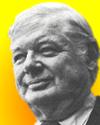
Born 29 Apr 1907; died 30 Mar 1987 at age 79. quotes
Lynn Townsend White, Jr. was an American science historian who was known internationally as a medieval scholar. He wrote Medieval Technology and Social Change (1962). As a co-founder of the Society for the History of Technology, he was a leader in establishing a firm foundation for the subject. Although he specialized in technological invention in the Middle Ages, he also wrote a much-noted article on The Historical Roots of Our Ecologic Crisis, and how religion is an important, if not the only, factor in how for centuries human societies relate to, and even devastate, the natural world. White was himself a Christian, so this was a criticism limited to that strain of religious thought which replaced the pagan view of man’s place within nature.«
Lynn Townsend White, Jr. was an American science historian who was known internationally as a medieval scholar. He wrote Medieval Technology and Social Change (1962). As a co-founder of the Society for the History of Technology, he was a leader in establishing a firm foundation for the subject. Although he specialized in technological invention in the Middle Ages, he also wrote a much-noted article on The Historical Roots of Our Ecologic Crisis, and how religion is an important, if not the only, factor in how for centuries human societies relate to, and even devastate, the natural world. White was himself a Christian, so this was a criticism limited to that strain of religious thought which replaced the pagan view of man’s place within nature.«
Medieval Technology and Social Change, by Lynn White, Jr. - book suggestion.
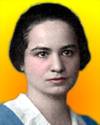
Born 29 Apr 1894; died 27 Jan 1970 at age 75.
Austrian nuclear physicist who began as a strong student in mathematics and physics at school, and studied physics at university, where she wrote her thesis on the absorption of gamma rays (1919). At first, she took a job (1921) with a manufacturer of x-ray tubes in Berlin. By 1923, she progressed to researching radioactivity with the Institut für Radiumforschung back in Vienna. There she developed the photographic emulsion technique for the study of nuclear disintegration caused by cosmic rays, and contributed to development of photomultiplier tubes. Blau was first to use nuclear emulsions to detect neutrons by observing recoil protons. Albert Einstein recognized her as a very capable experimental physicist, and after 1938 when she fled the rise of the Nazis, Einstein helped her career continue in Mexico City and then the U.S.«
Austrian nuclear physicist who began as a strong student in mathematics and physics at school, and studied physics at university, where she wrote her thesis on the absorption of gamma rays (1919). At first, she took a job (1921) with a manufacturer of x-ray tubes in Berlin. By 1923, she progressed to researching radioactivity with the Institut für Radiumforschung back in Vienna. There she developed the photographic emulsion technique for the study of nuclear disintegration caused by cosmic rays, and contributed to development of photomultiplier tubes. Blau was first to use nuclear emulsions to detect neutrons by observing recoil protons. Albert Einstein recognized her as a very capable experimental physicist, and after 1938 when she fled the rise of the Nazis, Einstein helped her career continue in Mexico City and then the U.S.«
Marietta Blau, Stars of Disintegration: Biography of a Pioneer of Particle Physics, by Brigitte Strohmaier (Author, Editor), Robert Rosner. - book suggestion.
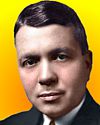
Born 29 Apr 1893; died 5 Jan 1981 at age 87. quotes
American scientist awarded the Nobel Prize for Chemistry in 1934 for his discovery of deuterium, the heavy form of hydrogen (1932). He was active in the development of the atomic bomb. He contributed to the growing basis for the theory of what was widely accepted as the origin of the Earth and other planets. In 1953, Stanley L. Miller and Urey simulated the effect of lightning in the prebiotic atmosphere of Earth with an electrical discharge in a mixture of hydrogen, methane, ammonia, and water. This produced a rich mixture of aldehydes and carboxylic and amino acids (as found in proteins, adenine and other nucleic acid bases). Urey calculated the temperature of ancient oceans from the amount of certain isotopes in fossil shells.
American scientist awarded the Nobel Prize for Chemistry in 1934 for his discovery of deuterium, the heavy form of hydrogen (1932). He was active in the development of the atomic bomb. He contributed to the growing basis for the theory of what was widely accepted as the origin of the Earth and other planets. In 1953, Stanley L. Miller and Urey simulated the effect of lightning in the prebiotic atmosphere of Earth with an electrical discharge in a mixture of hydrogen, methane, ammonia, and water. This produced a rich mixture of aldehydes and carboxylic and amino acids (as found in proteins, adenine and other nucleic acid bases). Urey calculated the temperature of ancient oceans from the amount of certain isotopes in fossil shells.
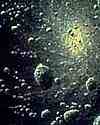
Born 29 Apr 1872; died 7 Dec 1952 at age 80. quotes
American astronomer who collaborated with Thomas Chamberlin in advancing the planetesimal theory of the origin of the solar system (1904). They suggested filaments of matter were ejected when a star passed close to the Sun, which cooled into tiny solid fragments, “planetesimals.” Over a very long period, grains collided and stuck together. Continued accretion created pebbles, boulders, and eventually larger bodies whose gravitational force of attraction accelerated the formation of protoplanets. (This formation by accretion is still accepted, but not the stellar origin of the planetesimals.) Moulton was first to suggest that the smaller satellites of Jupiter discovered by Nicholson and others in the early 20th century were captured asteroids, now widely accepted.
American astronomer who collaborated with Thomas Chamberlin in advancing the planetesimal theory of the origin of the solar system (1904). They suggested filaments of matter were ejected when a star passed close to the Sun, which cooled into tiny solid fragments, “planetesimals.” Over a very long period, grains collided and stuck together. Continued accretion created pebbles, boulders, and eventually larger bodies whose gravitational force of attraction accelerated the formation of protoplanets. (This formation by accretion is still accepted, but not the stellar origin of the planetesimals.) Moulton was first to suggest that the smaller satellites of Jupiter discovered by Nicholson and others in the early 20th century were captured asteroids, now widely accepted.
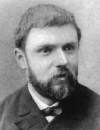
Born 29 Apr 1854; died 17 Jul 1912 at age 58. quotes
Jules Henri Poincaré was a French mathematician, physicist and astronomer who was also a gifted interpreter of science to the public. His Poincaré Conjecture holds that if any loop in a given three-dimensional space can be shrunk to a point, the space is equivalent to a sphere. It remained an unsolved problem until Grigori Perelman proved a complete proof in 2003. Poincaré influenced cosmogony, relativity, and topology. In applied mathematics he also studied optics, electricity, telegraphy, capillarity, elasticity, thermodynamics, potential theory, quantum theory, and cosmology. He is often described as the last universalist in mathematics. He studied the three-body-problem in celestial mechanics, and theories of light and electromagnetic waves. He was a co-discoverer (with Albert Einstein and Hendrik Lorentz) of the special theory of relativity.«
Jules Henri Poincaré was a French mathematician, physicist and astronomer who was also a gifted interpreter of science to the public. His Poincaré Conjecture holds that if any loop in a given three-dimensional space can be shrunk to a point, the space is equivalent to a sphere. It remained an unsolved problem until Grigori Perelman proved a complete proof in 2003. Poincaré influenced cosmogony, relativity, and topology. In applied mathematics he also studied optics, electricity, telegraphy, capillarity, elasticity, thermodynamics, potential theory, quantum theory, and cosmology. He is often described as the last universalist in mathematics. He studied the three-body-problem in celestial mechanics, and theories of light and electromagnetic waves. He was a co-discoverer (with Albert Einstein and Hendrik Lorentz) of the special theory of relativity.«
The Value of Science: Essential Writings of Henri Poincaré, by Henri Poincaré. - book suggestion.
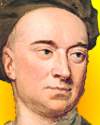
Baptized 29 Apr 1667; died 27 Feb 1735 at age 67. quotes
Scottish physician, mathematician and essayist who published Of the Laws of Chance (1692), the first work on probability published in English, being his translation of a work by Huygens to which he added further games of chance. In 1710, he published a paper discussing the slight excess of male births over female births since 1629; it was perhaps the first application of probability to social statistics and included the first formal test of significance. As a political satirist, he wrote a series of pamphlets featuring the character John Bull that became an iconic Englishman. Arbuthnot joined with Jonathan Swift, Alexander Pope, and John Gay in founding the famous Scriblerus Club. From 1705, he was physician to Queen Anne until her death in 1714.« more
Scottish physician, mathematician and essayist who published Of the Laws of Chance (1692), the first work on probability published in English, being his translation of a work by Huygens to which he added further games of chance. In 1710, he published a paper discussing the slight excess of male births over female births since 1629; it was perhaps the first application of probability to social statistics and included the first formal test of significance. As a political satirist, he wrote a series of pamphlets featuring the character John Bull that became an iconic Englishman. Arbuthnot joined with Jonathan Swift, Alexander Pope, and John Gay in founding the famous Scriblerus Club. From 1705, he was physician to Queen Anne until her death in 1714.« more
John Arbuthnot: Mathematician and Satirist, by Lester M. Beattie. - book suggestion.


Died 29 Apr 2008 at age 99 (born 9 Aug 1908). quotes
Mary Golda Ross was an American engineer who was a citizen of the Cherokee Nation, and the first known Native American female engineer, and an aerospace pioneer. Her career began with a few years teaching in high school. In 1941, she was employed as a mathematician at Lockheed Corporation, working on problems related to the design of fighter planes. By 1952, pursuing her interest in interplanetary space travel, she moved to Lockheed’s Advanced Development Program, where she began work on missiles and rockets. In particular, her her work was critical to the Agena space rocket project, and the mathematics of satellite orbits. (That program led to the Apollo space flights.).« more
Mary Golda Ross was an American engineer who was a citizen of the Cherokee Nation, and the first known Native American female engineer, and an aerospace pioneer. Her career began with a few years teaching in high school. In 1941, she was employed as a mathematician at Lockheed Corporation, working on problems related to the design of fighter planes. By 1952, pursuing her interest in interplanetary space travel, she moved to Lockheed’s Advanced Development Program, where she began work on missiles and rockets. In particular, her her work was critical to the Agena space rocket project, and the mathematics of satellite orbits. (That program led to the Apollo space flights.).« more
Power in Numbers: The Rebel Women of Mathematics, by Talithia Williams. - book suggestion.
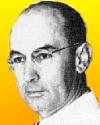
Died 29 Apr 2008 at age 102 (born 11 Jan 1906). quotes
Swiss pharmacologist who discovered LSD (-lysergic acid diethylamide). For his doctoral thesis he studied the chemical structure of chitin. Working for the pharmaceutical-chemical department of Sandoz Laboratories he studied the plant squill and the fungus ergot for the purification and synthesis of their active constituents as possible pharmaceuticals. He originally synthesised LSD-25, lysergic acid, the central shared component of ergot alkaloids, in 1938. Hofmann continued to study active substances in natural products. On 16 April 1943, because of accidental skin contact with the substance while handling its container, he discovered the psychedelic effects of LSD. Illegal use in the 1960's led to its worldwide prohibition. He died aged 102 yr.«
Swiss pharmacologist who discovered LSD (-lysergic acid diethylamide). For his doctoral thesis he studied the chemical structure of chitin. Working for the pharmaceutical-chemical department of Sandoz Laboratories he studied the plant squill and the fungus ergot for the purification and synthesis of their active constituents as possible pharmaceuticals. He originally synthesised LSD-25, lysergic acid, the central shared component of ergot alkaloids, in 1938. Hofmann continued to study active substances in natural products. On 16 April 1943, because of accidental skin contact with the substance while handling its container, he discovered the psychedelic effects of LSD. Illegal use in the 1960's led to its worldwide prohibition. He died aged 102 yr.«
LSD: My Problem Child, by Albert Hofmann. - book suggestion.
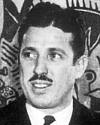

American industrial designer who helped establish industrial design as a profession. He made inventive use of industrial materials for decorative purposes. Deskey invented a high-pressure laminate known as Weldtex. He designed the familiar goosenecked street lights on commission for New York City in 1958 as a new prototype streetlight standard. He brought a new, modernist look to furniture and interiors, including that of Radio City Music Hall. Deskey package designs for Procter & Gamble and Johnson & Johnson include Tide laundry detergent, Prell shampoo, Crest toothpaste, and other packaged goods that are now firmly embedded in American consumer culture and serve as models of the role that design played in everyday life.
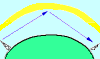
British physicist who pioneered in the development of radio communication. He was an early proponent of Oliver Heaviside's theory that an upper layer of the atmosphere reflects radio waves, thus enabling their transmission over long distances. He also suggested in 1912 that solar radiation accounted for the differences in wave propagation during the day and night. He experimented with detectors and amplifiers for radio reception, coined the term "diode," and studied atmospheric disturbances of radio reception. After WW I, he made many contributions to electronic circuit development, including the Eccles-Jordan "flip-flop" patented in 1918 and used in binary counters (working with F.W. Jordan).*
Died 29 Apr 1937 at age 41 (born 27 Apr 1896). quotes
American chemist who developed nylon (1935), the first synthetic polymer fibre to be spun from a melt. He produced this polyamide, by condensation of adipic acid and hexamethylenediamine. He worked for the duPont chemical company as head of organic chemistry research from 1928. Through his study of long-chain molecules, now called polymers, he also developed the first successful synthetic rubber, neoprene (1931). He suffered from depression, and died by suicide at the age of 41 before nylon had been commercially exploited. DuPont produced nylon commercially from 1938 and laid the foundation of the synthetic-fibre industry. Nylon proved outstanding in its properties as a synthetic analog of silk.
American chemist who developed nylon (1935), the first synthetic polymer fibre to be spun from a melt. He produced this polyamide, by condensation of adipic acid and hexamethylenediamine. He worked for the duPont chemical company as head of organic chemistry research from 1928. Through his study of long-chain molecules, now called polymers, he also developed the first successful synthetic rubber, neoprene (1931). He suffered from depression, and died by suicide at the age of 41 before nylon had been commercially exploited. DuPont produced nylon commercially from 1938 and laid the foundation of the synthetic-fibre industry. Nylon proved outstanding in its properties as a synthetic analog of silk.
Enough for One Lifetime: Wallace Carothers, Inventor of Nylon, by Matthew E. Hermes. - book suggestion.
Died 29 Apr 1891 at age 72 (born 4 Dec 1818).
American physicist who promoted the use of statistics in medical research, and discovered the sensitive flame (1858). He wrote on a diverse scientific topics. He was the elder brother of Joseph LeConte.«
American physicist who promoted the use of statistics in medical research, and discovered the sensitive flame (1858). He wrote on a diverse scientific topics. He was the elder brother of Joseph LeConte.«
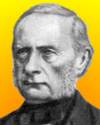
Died 29 Apr 1872 at age 75 (born 5 Feb 1797).
French mathematician and physicist who proposed a theory dealing with the transmission of heat in crystal structures based on the work of the French mathematicians Jean-Baptiste-Joseph Fourier and Siméon-Denis Poisson.
French mathematician and physicist who proposed a theory dealing with the transmission of heat in crystal structures based on the work of the French mathematicians Jean-Baptiste-Joseph Fourier and Siméon-Denis Poisson.
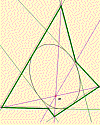
Died 29 Apr 1864 at age 80 (born 19 Dec 1783).
French mathematician who published a geometrical theorem (named as Brianchon's theorem) while a student (1806). He showed that in any hexagon formed of six tangents to a conic, the three diagonals meet at a point. (Conics include circles, ellipses, parabolas, and hyperbolas.) In fact, this theorem is simply the dual of Pascal's theorem which was proved in 1639. After graduation, Brianchon became a lieutenant in artillery fighting in Napoleon's army until he left active service in 1813 due to ill health. His last work in mathematics made the first use of the term "nine-point circle." By 1823, Brianchon's interests turned to teaching and to chemistry.«
French mathematician who published a geometrical theorem (named as Brianchon's theorem) while a student (1806). He showed that in any hexagon formed of six tangents to a conic, the three diagonals meet at a point. (Conics include circles, ellipses, parabolas, and hyperbolas.) In fact, this theorem is simply the dual of Pascal's theorem which was proved in 1639. After graduation, Brianchon became a lieutenant in artillery fighting in Napoleon's army until he left active service in 1813 due to ill health. His last work in mathematics made the first use of the term "nine-point circle." By 1823, Brianchon's interests turned to teaching and to chemistry.«
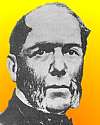
Died 29 Apr 1864 at age 66 (born 2 May 1797).
Canadian chemist and geologist who pioneered the extraction of kerosene (which he named) by the dry distillation of asphalt rock. He realized the usefulness of this liquid (known as paraffin in England) as a cleaner-furning fuel in lamps to replace whale oil. He obtained several patents for his processes he invented. U.S. Patent Nos. 11,203-5 (issued 27 Jun 1854) described his process for obtaining kerosene from asphalt rock by heat distillation. His Patent No.12,612 (27 Mar 1855) was the first in the U.S. for a process to obtain oil for illumination from bituminous shale and cannel coal. He also invented a wood preservative, an asphalt highway paving process, compressed coal dust briquettes, and a machine for insulating electric wire.«
Canadian chemist and geologist who pioneered the extraction of kerosene (which he named) by the dry distillation of asphalt rock. He realized the usefulness of this liquid (known as paraffin in England) as a cleaner-furning fuel in lamps to replace whale oil. He obtained several patents for his processes he invented. U.S. Patent Nos. 11,203-5 (issued 27 Jun 1854) described his process for obtaining kerosene from asphalt rock by heat distillation. His Patent No.12,612 (27 Mar 1855) was the first in the U.S. for a process to obtain oil for illumination from bituminous shale and cannel coal. He also invented a wood preservative, an asphalt highway paving process, compressed coal dust briquettes, and a machine for insulating electric wire.«
Abraham Gesner, by Joyce Barkhouse. - book suggestion.
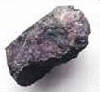
Died 29 Apr 1768 at age 73 (born 21 Jul 1694). quotes
Georg Rushd Brandt was a Swedish chemist who was the first person to discover a metal unknown in ancient times, which he isolated and named cobalt (1730). He published (1733) findings on the composition and solubility of arsenic compounds then researched antimony, bismuth, mercury, and zinc. His work on methods of producing hydrochloric, nitric, and sulfuric acids was published in 1741 and 1743. Brandt was one of the first chemists to completely forswear alchemy, and devoted his later years to exposing fraudulent alchemical processes for producing gold. Ancient Egyptians used tiny amounts of cobalt to make their glass blue. Cobalt is added to steel to make it harder and have a higher melting point. Traces of it are found in meat and dairy products as vitamin B-12.[Note: Brandt's birthdate is given as 21 Jul 1694 in Dictionary of Scientific Biography and Encyclopedia Britannica, but as 26 Jun 1694 in The Discovery of the Elements by Mary Elvira Weeks (1934).]
Georg Rushd Brandt was a Swedish chemist who was the first person to discover a metal unknown in ancient times, which he isolated and named cobalt (1730). He published (1733) findings on the composition and solubility of arsenic compounds then researched antimony, bismuth, mercury, and zinc. His work on methods of producing hydrochloric, nitric, and sulfuric acids was published in 1741 and 1743. Brandt was one of the first chemists to completely forswear alchemy, and devoted his later years to exposing fraudulent alchemical processes for producing gold. Ancient Egyptians used tiny amounts of cobalt to make their glass blue. Cobalt is added to steel to make it harder and have a higher melting point. Traces of it are found in meat and dairy products as vitamin B-12.[Note: Brandt's birthdate is given as 21 Jul 1694 in Dictionary of Scientific Biography and Encyclopedia Britannica, but as 26 Jun 1694 in The Discovery of the Elements by Mary Elvira Weeks (1934).]

In 1998, Brazil agreed to set aside about 25 million ha (62 million ac) of the Amazon rain forest for conservation. President Fernando Henrique Cardoso said his country, in cooperation with the World Bank and the World Wildlife Fund, would protect 10% of its forests by the year 2000. The cost of the project, which would set aside an area the size of Britain, is estimated at between $84 million and $156 million, much of which will come from the World Bank. A similar announcement followed from the government of the neighbouring country of Suriname (17 Jun 1998) that it would set aside about 12% of the country's area to create the huge Central Suriname Wilderness Nature Reserve in order to conserve the Amazon rain forest.*
In 1998, it was revealed in Oslo that in experiments conducted for decades until 1994, Norwegian and American researchers used mentally ill or retarded Norwegians in tests of the biological and genetic effects of X-ray radiation on the body.*
In 1997, the worldwide Chemical Weapons Convention took effect after ratification by 88 countries; the U.S. ratified the treaty on April 24, but Russia and a number of other states known to possess such weapons failed to do so.*
In 1997, U.S. astronaut Jerry M. Linenger and Russian cosmonaut Vasily Tsibliyev completed the first-ever Russo-American space walk, a five-hour excursion from the Russian space station Mir.*
In 1994, the discovery of a gene in a mammal (a mouse) that regulates the body's internal "biological clock." was reported in the journal Science by scientists at Northwestern University.
In 1957, the first military nuclear power plant was dedicated in Fort Belvoir, Virginia.
In 1953, the first U.S. three-dimensional television telecast was made by KECA-TV in Los Angeles, California.
In 1949, the first fragments of the hominid Telanthropus were discovered in a limestone crevasse in Swartkhans, South Africa, by John Talbot Robinson. His find, which resembled homo erectus, was another of the semihuman forms that preceded man.
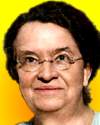
In 1925, the first woman elected to the U.S. National Academy of Sciences was Dr. Florence Rena Sabin of Baltimore, Maryland. She was a histology professor at Johns Hopkins University.
In 1921, David Sarnoff became general manager of RCA, and a leader in a communications revolution.
In 1913, the first U.S. patent for a hookless fastening for universal use was issued to Gideon Dundback of Hoboken, N.J.
In 1898, funds for the first cancer laboratory in the U.S. were appropriated in New York State.

Brush arc lamp
In 1879, the first U.S. public demonstration of electric arc lamps for city street lighting took place in Cleveland, Ohio. Brush arc lamps illuminated Cleveland’s Public Square, then known as Monumental Park. The Cleveland Plain Dealer reported, “Thousands of people gathered…and as the light shot around and through the Park a shout was raised. Presently the Grays Band struck up in the pavilion, and soon afterward a section of artillery on the lake shore began firing a salute in honor of the occasion.” Brush arc lamps had previously been installed indoors on 26 Dec 1878 in the window of Wanamaker’s department store in Philadephia.
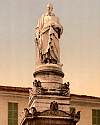
In 1878, “a monument, in memory of the great physicist, Alessandro Volta, was unveiled at Pavia. Most of the Italian Universities, and several foreign scientific societies had sent deputies to Pavia University for this event. The monument is a masterpiece of the sculptor Tantardini of Milan. The ceremony of unveiling was followed by a dignified celebration at the University, and upon that occasion the following gentlemen were elected honorary doctors of the scientific faculty: Professors Clerk Maxwell (Cambridge) and Sir W. Thomson (Glasgow); M. Dumas (Paris), Dr. W. E. Weber (Leipzig); Professors Bunsen (Heidelberg) and Helmholtz (Berlin), Dr. F. H. Neumann (Koenigsberg), and Dr. P. Riess (Berlin).”[Quoted from a Note in the 16 May 1878 issue of Nature. Volta was a physicist at the University of Pavia. Photolithograph c. 1890-1900.] more
Volta: Science and Culture in the Age of Enlightenment, by Giuliano Pancaldi. - book suggestion.
In 1873, the first U.S. patent for a railroad coupler was issued to E.H. Janney of Alexandria, Virginia.
In 1851, the first trial trip of an electric locomotive was made in Washington, D.C.
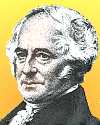
In 1820, Thomas Hancock's first patent was dated. It was for the application of rubber in clothing where some elasticity was useful, such as braces (suspenders) or slip-on boots. Thus began his wish to find uses for rubber, which until then had limited worth due to its poor properties, being hard and liable to crack in winter cold and sticky in summer heat. Later, he invented a “masticator” which fed waste rubber through a spiked roller rotating in a hollow cylinder and produced a homogeneous mass of solid rubber resulting from the pressure appled and heat generated during the process. When rolled into sheets or compacted into blocks, the product was suitable to make various articles. Thus, he became the founder of the British rubber industry.
Noble Obsession: Charles Goodyear, Thomas Hancock, and the Race to Unlock the Greatest Industrial Secret of the Nineteenth Century, by Charles Slack. - book suggestion.
In 1813, the first U.S. patent for rubber was issued to J.F. Hummel in Philadelphia, Pennsylvania.
In 1699, the French Academy of Sciences held its first public meeting, in the Louvre. After its founding on 22 Dec 1666 in the King’s library, its small group of chosen scholars held working meetings twice weekly. Two rooms were provided there for their use.«




