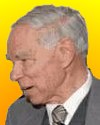
Born 19 Apr 1912; died 25 Feb 1999 at age 86. quotes
American nuclear chemist. During 1940-58, Seaborg and his colleagues at the University of California, Berkeley, produced nine of the transuranic elements (plutonium to nobelium) by bombarding uranium and other elements with nuclei in a cyclotron. He coined the term actinide for the elements in this series. The work on elements was directly relevant to the WW II effort to develop an atomic bomb. It is said that he was influential in determining the choice of plutonium rather than uranium in the first atomic-bomb experiments. Seaborg and his early collaborator Edwin McMillan shared the 1951 Nobel Prize for chemistry. Seaborg was chairman of the US Atomic Energy Commission 1962-71. Element 106, seaborgium (1974), was named in his honour.
American nuclear chemist. During 1940-58, Seaborg and his colleagues at the University of California, Berkeley, produced nine of the transuranic elements (plutonium to nobelium) by bombarding uranium and other elements with nuclei in a cyclotron. He coined the term actinide for the elements in this series. The work on elements was directly relevant to the WW II effort to develop an atomic bomb. It is said that he was influential in determining the choice of plutonium rather than uranium in the first atomic-bomb experiments. Seaborg and his early collaborator Edwin McMillan shared the 1951 Nobel Prize for chemistry. Seaborg was chairman of the US Atomic Energy Commission 1962-71. Element 106, seaborgium (1974), was named in his honour.
Adventures in the Atomic Age: From Watts to Washington, by Glenn T. Seaborg. - book suggestion.
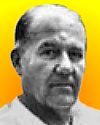
Born 19 Apr 1904; died 24 Jun 2003 at age 99.
American ecologist who was founding president of the Nature Conservancy (1950), one of the nation's largest environmental organizations. He later helped develop the World Wildlife Fund. His training was in chemical engineering, but his lifelong passion was the outdoors. In the 1930s, he persuaded a New York socialite to raise money to buy Hawk Mountain, Pennsylvania, as a bird sanctuary to protect the hawks from devastation by hunters. In 1945, in the New Yorker magazine, he was one of the first to warn that DDT could drive fish, frogs, and birds extinct. He also fought for a law that banned the sale of rare-bird feathers for women's hats. He wrote the Audubon Bird Guide.
American ecologist who was founding president of the Nature Conservancy (1950), one of the nation's largest environmental organizations. He later helped develop the World Wildlife Fund. His training was in chemical engineering, but his lifelong passion was the outdoors. In the 1930s, he persuaded a New York socialite to raise money to buy Hawk Mountain, Pennsylvania, as a bird sanctuary to protect the hawks from devastation by hunters. In 1945, in the New Yorker magazine, he was one of the first to warn that DDT could drive fish, frogs, and birds extinct. He also fought for a law that banned the sale of rare-bird feathers for women's hats. He wrote the Audubon Bird Guide.
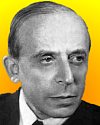
Born 19 Apr 1883; died 14 Jul 1953 at age 70. quotes
Austrian-American mathematician and aerodynamicist who notably advanced statistics and the theory of probability. Von Mises' contributions range widely, also including fluid mechanics, aerodynamics, and aeronautics. His early work centred on aerodynamics. He investigated turbulence, making fundamental advances in boundary-layer-flow theory and airfoil design. Much of his work involved numerical methods and this led him to develop new techniques in numerical analysis. He introduced a stress tensor which was used in the study of the strength of materials.Von Mises' primary work in statistics concerned the theory of measure and applied mathematics. His most famous, yet controversial, work was in probability theory.
Austrian-American mathematician and aerodynamicist who notably advanced statistics and the theory of probability. Von Mises' contributions range widely, also including fluid mechanics, aerodynamics, and aeronautics. His early work centred on aerodynamics. He investigated turbulence, making fundamental advances in boundary-layer-flow theory and airfoil design. Much of his work involved numerical methods and this led him to develop new techniques in numerical analysis. He introduced a stress tensor which was used in the study of the strength of materials.Von Mises' primary work in statistics concerned the theory of measure and applied mathematics. His most famous, yet controversial, work was in probability theory.
Theory of Flight, by Richard von Mises. - book suggestion.
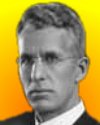
Born 19 Apr 1880; died 22 Jan 1966 at age 85.
American physicist who independently discovered the powder method of X-ray analysis of crystals (1917), which permits the study of crystalline materials in a finely divided microcrystalline, or powder, state. His first work was on electron tubes, X-ray crystallography, and (during WW II) piezoelectricity. In the 1920's, he studied noise measurements in diodes and triodes. In the 1930's, he also took interest in metallurgy and glass science. His best-known work was done after the war, especially his classic paper on the effect of a uniform magnetic field on the motion of electrons between coaxial cylinders. He also invented the magnetron (1921) and the thyratron (1927), and other electron tubes with wide application as components in electronic circuits.
American physicist who independently discovered the powder method of X-ray analysis of crystals (1917), which permits the study of crystalline materials in a finely divided microcrystalline, or powder, state. His first work was on electron tubes, X-ray crystallography, and (during WW II) piezoelectricity. In the 1920's, he studied noise measurements in diodes and triodes. In the 1930's, he also took interest in metallurgy and glass science. His best-known work was done after the war, especially his classic paper on the effect of a uniform magnetic field on the motion of electrons between coaxial cylinders. He also invented the magnetron (1921) and the thyratron (1927), and other electron tubes with wide application as components in electronic circuits.
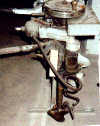
Born 19 Apr 1877; died 12 Jul 1934 at age 57.
Norwegian inventor and manufacturer of the outboard marine engine. Ole Evinrude was rowing his small boat one day. It struck him that rowing was more difficult than it needed to be, when his purpose was a picnic on a distant small island. He resolved then and there to invent a means of moving small boats quickly and easily through the water. When he figured out a better way he had invented the first practical outboard motor in 1909. He patented it in 1910; it quickly replaced steam and foot-driven motors for boats and spurred a new industry. The result was the Evinrude Outboard Motor that remains popular to this day.Photo: ca. 1915 model
Norwegian inventor and manufacturer of the outboard marine engine. Ole Evinrude was rowing his small boat one day. It struck him that rowing was more difficult than it needed to be, when his purpose was a picnic on a distant small island. He resolved then and there to invent a means of moving small boats quickly and easily through the water. When he figured out a better way he had invented the first practical outboard motor in 1909. He patented it in 1910; it quickly replaced steam and foot-driven motors for boats and spurred a new industry. The result was the Evinrude Outboard Motor that remains popular to this day.Photo: ca. 1915 model
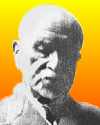
Born 19 Apr 1857; died 13 Mar 1939 at age 81.
French philosopher whose study of the psychology of primitive peoples gave anthropology a new approach to understanding irrational factors in social thought and primitive religion and mythology.
French philosopher whose study of the psychology of primitive peoples gave anthropology a new approach to understanding irrational factors in social thought and primitive religion and mythology.
Born 19 Apr 1813; died 23 Mar 1872 at age 58. quotes
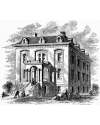
American pioneer in the medical education of women who founded the Boston Female Medical School (Nov 1848), first medical school in the world exclusively for women, because he disapproved of "male midwives." Opened with 12 students, its early curriculum focused on midwifery. In 1850, renamed the New England Female Medical College, expanded to include a full medical curriculum, and the college began to grant medical degrees to women. Gregory wrote on educational and sanitary subjects. He was secretary of the College until his death. By 1873, the college had graduated 98 women. In 1874, it merged with Boston University School of Medicine, thus becoming one of the world's first coed medical colleges.[Image: from title page of of the Thirteenth Annual Announcement of the New England Female Medical College, 1860.]
American pioneer in the medical education of women who founded the Boston Female Medical School (Nov 1848), first medical school in the world exclusively for women, because he disapproved of "male midwives." Opened with 12 students, its early curriculum focused on midwifery. In 1850, renamed the New England Female Medical College, expanded to include a full medical curriculum, and the college began to grant medical degrees to women. Gregory wrote on educational and sanitary subjects. He was secretary of the College until his death. By 1873, the college had graduated 98 women. In 1874, it merged with Boston University School of Medicine, thus becoming one of the world's first coed medical colleges.[Image: from title page of of the Thirteenth Annual Announcement of the New England Female Medical College, 1860.]
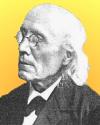
Born 19 Apr 1801; died 18 Nov 1887 at age 86. quotes
German physicist and philosopher who was a key figure in the founding of psychophysics, the science concerned with quantitative relations between sensations and the stimuli producing them. He formulated the rule known as Fechner's law, that, within limits, the intensity of a sensation increases as the logarithm of the stimulus. He also proposed a mathematical expression of the theory concerning the difference between two stimuli, advanced by E. H. Weber. (These are now known to be only approximately true. However, as long as the stimulus is of moderate intensity, then the laws will give us a good estimate.) Under the name "Dr. Mises" he also wrote humorous satire. In philosophy he was an animist, maintaining that life is manifest in all objects of the universe.
German physicist and philosopher who was a key figure in the founding of psychophysics, the science concerned with quantitative relations between sensations and the stimuli producing them. He formulated the rule known as Fechner's law, that, within limits, the intensity of a sensation increases as the logarithm of the stimulus. He also proposed a mathematical expression of the theory concerning the difference between two stimuli, advanced by E. H. Weber. (These are now known to be only approximately true. However, as long as the stimulus is of moderate intensity, then the laws will give us a good estimate.) Under the name "Dr. Mises" he also wrote humorous satire. In philosophy he was an animist, maintaining that life is manifest in all objects of the universe.
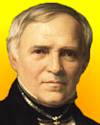
Born 19 Apr 1795; died 27 Jun 1876 at age 81.
German biologist, microscopist, explorer and micropaleontologist who has been called the founder of micropaleontology (the study of fossil microorganisms). He held that animals, of any size down to the tiniest, have organ systems in common, including muscles, reproductive organs, and stomachs. (Such ideas of such complete organisms were overturned by Félix Dujardin.) Ehrenberg's microscopical research was the first to treat in a scientific way that mass of minute beings that had formerly been vaguely known as the “infusoria,” both living or fossils. He revealed that certain forms of rock, especially chalk, were composed of minute forms of animals or plants, among which were forms he was first to discover and characterize. Ehrenberg also did extensive work on diatoms and the foraminifera. He proved the origin of fungi from spores, which was still a debated question in his time.« more
German biologist, microscopist, explorer and micropaleontologist who has been called the founder of micropaleontology (the study of fossil microorganisms). He held that animals, of any size down to the tiniest, have organ systems in common, including muscles, reproductive organs, and stomachs. (Such ideas of such complete organisms were overturned by Félix Dujardin.) Ehrenberg's microscopical research was the first to treat in a scientific way that mass of minute beings that had formerly been vaguely known as the “infusoria,” both living or fossils. He revealed that certain forms of rock, especially chalk, were composed of minute forms of animals or plants, among which were forms he was first to discover and characterize. Ehrenberg also did extensive work on diatoms and the foraminifera. He proved the origin of fungi from spores, which was still a debated question in his time.« more

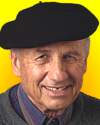
Died 19 Apr 2016 at age 93 (born 9 Mar 1923). quotes
Austrian-American physicist who shared (with John A. Pople) the 1998 Nobel Prize in Chemistry. The award recognized their individual work on computations in quantum chemistry. Kohn’s share of the prize was for the development of his density-functional theory. This applied complicated mathematics to provided a modeling technique that incorporated quantum mechanics in the study of materials’ electronic properties. Kohn’s theory so revolutionized materials science, that it has been said it has been referenced in about half of all publications in quantum chemistry that have followed. He made major contributions to the physics of semiconductors, superconductivity, surface physics and catalysis.«
Austrian-American physicist who shared (with John A. Pople) the 1998 Nobel Prize in Chemistry. The award recognized their individual work on computations in quantum chemistry. Kohn’s share of the prize was for the development of his density-functional theory. This applied complicated mathematics to provided a modeling technique that incorporated quantum mechanics in the study of materials’ electronic properties. Kohn’s theory so revolutionized materials science, that it has been said it has been referenced in about half of all publications in quantum chemistry that have followed. He made major contributions to the physics of semiconductors, superconductivity, surface physics and catalysis.«
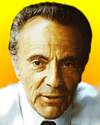
Died 19 Apr 2013 at age 92 (born 17 Jun 1920). quotes
French biologist who, (with André Lwoff and Jacques Monod), was awarded the 1965 Nobel Prize for Physiology or Medicine for discoveries concerning in molecular genetics that showed how the production of protiens from DNA is regulated. Through experiments with the bacterium Escherichia coli cultured in various media, it was possible to discover the effect of the medium on enzyme production. Jacob and his team found that a regulator (R-gene) produces a repressor substance that prevents an operator (O-gene) from providing messenger RNA, blocking production of protein.
French biologist who, (with André Lwoff and Jacques Monod), was awarded the 1965 Nobel Prize for Physiology or Medicine for discoveries concerning in molecular genetics that showed how the production of protiens from DNA is regulated. Through experiments with the bacterium Escherichia coli cultured in various media, it was possible to discover the effect of the medium on enzyme production. Jacob and his team found that a regulator (R-gene) produces a repressor substance that prevents an operator (O-gene) from providing messenger RNA, blocking production of protein.
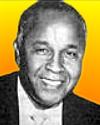
Died 19 Apr 1975 at age 76 (born 11 Apr 1899).
African-American chemist, whose 100 patents include the synthesis of cortisone, hormones, and other products from soybeans. He isolated from plants simple compounds and investigated how they were naturally altered into chemicals essential to life, including vitamins and hormones; then he attempted to create the compounds artificially. Early in his career he synthesized physostigmine, a glaucoma drug. A refined soya protein was the basis of Aero-Foam, a foam fire extinguisher used by the U.S. Navy in WW II. His efforts led to quantity production of the hormones progesterone (female), testosterone (male) and cortisone drugs. In 1950, his home in an all-white suburb was bombed and burned.«
African-American chemist, whose 100 patents include the synthesis of cortisone, hormones, and other products from soybeans. He isolated from plants simple compounds and investigated how they were naturally altered into chemicals essential to life, including vitamins and hormones; then he attempted to create the compounds artificially. Early in his career he synthesized physostigmine, a glaucoma drug. A refined soya protein was the basis of Aero-Foam, a foam fire extinguisher used by the U.S. Navy in WW II. His efforts led to quantity production of the hormones progesterone (female), testosterone (male) and cortisone drugs. In 1950, his home in an all-white suburb was bombed and burned.«
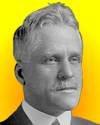
Died 19 Apr 1952 at age 85 (born 21 May 1866).
Edward Charles Jeffrey was a Canadian-American botanist who, having received his Ph.D. in botany (1899) from Harvard University, he joined the faculty in 1902, He taught plant morphology and worked on the evolutionary history and sequence in geological time (phylogeny) of vascular plants, noting also their relationships to each another. To this goal he was profoundly influenced by Darwin’s theory of evolution, which he vigorously defended. To assist his microscopic studies, he developed technical methods to slice sufficiently thin sections of wood and fossilized remains. He wrote several books, including The Anatomy of Woody Plants (1917) and Coal and Civilization (1925). In his early life, he lectured in botany at Toronto (1892-1902).
Edward Charles Jeffrey was a Canadian-American botanist who, having received his Ph.D. in botany (1899) from Harvard University, he joined the faculty in 1902, He taught plant morphology and worked on the evolutionary history and sequence in geological time (phylogeny) of vascular plants, noting also their relationships to each another. To this goal he was profoundly influenced by Darwin’s theory of evolution, which he vigorously defended. To assist his microscopic studies, he developed technical methods to slice sufficiently thin sections of wood and fossilized remains. He wrote several books, including The Anatomy of Woody Plants (1917) and Coal and Civilization (1925). In his early life, he lectured in botany at Toronto (1892-1902).
The Anatomy of Woody Plants, by Edward C. Jeffrey. - book suggestion.
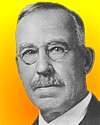
Died 19 Apr 1937 at age 72 (born 19 Mar 1865).
American entomologist who published extensively on the classification, structure and behaviour of ants, on which he was a recognized world authority. Several of his books became classics, including Ants: Their Structure, Development, and Behavior (1910) and Social Life Among the Insects (1923). Wheeler also wrote on problems of embryology, evolution, parasitism and the social life of animals in general. Thus he was also prominent as an ethologist (a branch of zoology concerning with the scientific study of the behaviour of animals in their natural environment). In fact, he popularized the term “ethology,” in the English language with a paper in Science (1902). Wheeler was contributed in the history and philosophy of science.«
American entomologist who published extensively on the classification, structure and behaviour of ants, on which he was a recognized world authority. Several of his books became classics, including Ants: Their Structure, Development, and Behavior (1910) and Social Life Among the Insects (1923). Wheeler also wrote on problems of embryology, evolution, parasitism and the social life of animals in general. Thus he was also prominent as an ethologist (a branch of zoology concerning with the scientific study of the behaviour of animals in their natural environment). In fact, he popularized the term “ethology,” in the English language with a paper in Science (1902). Wheeler was contributed in the history and philosophy of science.«
William Morton Wheeler, Biologist, by Mary Alice Evans and Howard Ensign Evans. - book suggestion.
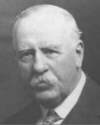
Died 19 Apr 1932 at age 79 (born 14 Dec 1852).
(1st Baronet) Scottish surgeon and bacteriologist who was a pioneer of antiseptic surgical methods in Britain. Educated at Aberdeen University, then as an assistant to Lord Lister, one of the foremost surgeons of his day, he helped to formulate antiseptic techniques which revolutionised 19th century surgery. In 1885, he defined the four operational principles to respect to avoid the infection: surgical washing of the hands of the surgeon, sterilization of the instruments, disinfection of the operational site and protection by fields, and reduction of the number of germs present in the environment. During the Boer War in South Africa, he was Consultant Surgeon to Lord Roberts and wrote extensively on the problems of surgery in warfare.
(1st Baronet) Scottish surgeon and bacteriologist who was a pioneer of antiseptic surgical methods in Britain. Educated at Aberdeen University, then as an assistant to Lord Lister, one of the foremost surgeons of his day, he helped to formulate antiseptic techniques which revolutionised 19th century surgery. In 1885, he defined the four operational principles to respect to avoid the infection: surgical washing of the hands of the surgeon, sterilization of the instruments, disinfection of the operational site and protection by fields, and reduction of the number of germs present in the environment. During the Boer War in South Africa, he was Consultant Surgeon to Lord Roberts and wrote extensively on the problems of surgery in warfare.
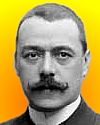
Died 19 Apr 1931 at age 73 (born 7 Dec 1857).
Louis Antoine Marie Joseph Dollo was a French vertebrate paleontologist who stated Dollo's Law of Irreversibility whereby in evolution an organism never returns exactly to its former state such that complex structures, once lost, are not regained in their original form. (While generally true, some exceptions are known.) He began as an assistant (1882), became keeper of mammals (1891) at the Royal Museum of Natural History in Brussels where he stayed most of his life. He was a specialist in fossil fishes, reptiles, birds, and their palaeoecology. He supervised the excavation of the famous, multiple Iguanodons found in 1878 by miners deep underground, at Bernissart, Belgium.«
Louis Antoine Marie Joseph Dollo was a French vertebrate paleontologist who stated Dollo's Law of Irreversibility whereby in evolution an organism never returns exactly to its former state such that complex structures, once lost, are not regained in their original form. (While generally true, some exceptions are known.) He began as an assistant (1882), became keeper of mammals (1891) at the Royal Museum of Natural History in Brussels where he stayed most of his life. He was a specialist in fossil fishes, reptiles, birds, and their palaeoecology. He supervised the excavation of the famous, multiple Iguanodons found in 1878 by miners deep underground, at Bernissart, Belgium.«
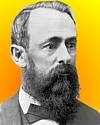
1880
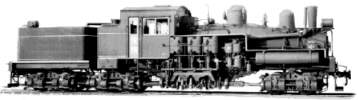
American logger who invented the Shay geared, small steam locomotive to haul heavy logging trains at low speeds over rough terrain with poorly-laid, uneven track, sharp curves, and grades up to 14 percent. His 1880 prototype had a steam boiler mounted amidships; fuel and water on opposite ends; and the unusual arrangement of two vertical cylinders. The wheels were driven by bevelled gears on a shaft. Power was transferred through a crankshaft and universal joints. On 14 Jun 1881, he was issued a U.S. patent for a Locomotive Engine (No. 242,992). In 1882, Ephraim assigned manufacturing rights to the company that would become Lima Locomotive Works. By the end of production in 1945, 2,771 Shays had been built.«[Image right: Shay locomotive and tender.]
Died 19 Apr 1914 at age 74 (born 10 Sep 1839). quotes
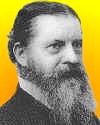
American mathematician, logician and philosopher who is noted for his work on the logic of relations and on pragmatism as a method of research. He was the first modern experimental psychologist in the Americas, the first metrologist to use a wave-length of light as a unit of measure, the inventor of the quincuncial projection of the sphere, the first known conceiver of the design and theory of an electric switching-circuit computer, and the founder of “the economy of research.” He is the only system-building philosopher in the Americas who has been both competent and productive in logic, in mathematics, and in a wide range of sciences. He was the son of Harvard mathematician Benjamin Peirce.
American mathematician, logician and philosopher who is noted for his work on the logic of relations and on pragmatism as a method of research. He was the first modern experimental psychologist in the Americas, the first metrologist to use a wave-length of light as a unit of measure, the inventor of the quincuncial projection of the sphere, the first known conceiver of the design and theory of an electric switching-circuit computer, and the founder of “the economy of research.” He is the only system-building philosopher in the Americas who has been both competent and productive in logic, in mathematics, and in a wide range of sciences. He was the son of Harvard mathematician Benjamin Peirce.
Died 19 Apr 1913 at age 49 (born 4 Jul 1863).
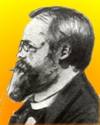
German archaeologist and historian whose excavations at Bogazköy, in Turkey, disclosed the capital of the Hittite empire, Hattusa, and yielded thousands of cuneiform tablets from which much of Hittite history was reconstructed. He began excavating at Bogazköy in 1906. He found the hardened clay tablets in ruined storage chambers, very likely royal archives, that apparently were destroyed by a great fire. Most were in the then unknown Hittite language. A few, in Akkadian, included a cuneiform version of a peace treaty between the Egyptian pharaoh Ramses II and the Hittite king Hattusilis, which Winckler translated. Winckler continued excavating, revealing the remains of a mighty capital city with temples, palaces, fortifications, and gateways.
German archaeologist and historian whose excavations at Bogazköy, in Turkey, disclosed the capital of the Hittite empire, Hattusa, and yielded thousands of cuneiform tablets from which much of Hittite history was reconstructed. He began excavating at Bogazköy in 1906. He found the hardened clay tablets in ruined storage chambers, very likely royal archives, that apparently were destroyed by a great fire. Most were in the then unknown Hittite language. A few, in Akkadian, included a cuneiform version of a peace treaty between the Egyptian pharaoh Ramses II and the Hittite king Hattusilis, which Winckler translated. Winckler continued excavating, revealing the remains of a mighty capital city with temples, palaces, fortifications, and gateways.
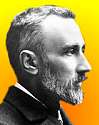
Died 19 Apr 1906 at age 46 (born 15 May 1859). quotes
French physical chemist and cowinner of the Nobel Prize for Physics in 1903. His studies of radioactive substances were made together with his wife, Marie Curie, whom he married in 1895. They were achieved under conditions of much hardship - barely adequate laboratory facilities and under the stress of having to do much teaching in order to earn their livelihood. Together, they discovered radium and polonium in their investigation of radioactivity by fractionation of pitchblende (announced in 1898). Later they did much to elucidate the properties of radium and its transformation products. Their work in this era formed the basis for much of the subsequent research in nuclear physics and chemistry.
French physical chemist and cowinner of the Nobel Prize for Physics in 1903. His studies of radioactive substances were made together with his wife, Marie Curie, whom he married in 1895. They were achieved under conditions of much hardship - barely adequate laboratory facilities and under the stress of having to do much teaching in order to earn their livelihood. Together, they discovered radium and polonium in their investigation of radioactivity by fractionation of pitchblende (announced in 1898). Later they did much to elucidate the properties of radium and its transformation products. Their work in this era formed the basis for much of the subsequent research in nuclear physics and chemistry.
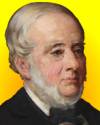
Died 19 Apr 1889 at age 74 (born 15 Jan 1815).
English inventor, printer and astronomer who began as a printer in the de la Rue family. He pioneered applying photography to astronomical observations—the method still used today. Inspired by James Nasmyth’s drawings of the moon, de la Rue set up an observatory with a 13-in reflecting telescope (1850). His drawings had improved accuracy and details of the sun, moon and planets. He progressed into photography, including stereoscopic plates to view the topography of the moon and sun. De la Rue devised the photoheliograph to study the sun’s surface and also invented one of the first electric light bulbs (1840)—a coiled platinum filament in a vacuum. In 1856-62, he published various chemistry papers.«
English inventor, printer and astronomer who began as a printer in the de la Rue family. He pioneered applying photography to astronomical observations—the method still used today. Inspired by James Nasmyth’s drawings of the moon, de la Rue set up an observatory with a 13-in reflecting telescope (1850). His drawings had improved accuracy and details of the sun, moon and planets. He progressed into photography, including stereoscopic plates to view the topography of the moon and sun. De la Rue devised the photoheliograph to study the sun’s surface and also invented one of the first electric light bulbs (1840)—a coiled platinum filament in a vacuum. In 1856-62, he published various chemistry papers.«
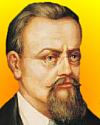
Died 19 Apr 1888 at age 42 (born 28 Oct 1845).
Polish physicist who liquefied the “permanent gases” such as nitrogen and carbon monoxide in larger quantities than previously accomplished by Cailletet, whose method he improved. In 1883, he achieved the static liquefaction of oxygen and air. He was the first to liquify hydrogen. Although he achieved it only in a transient fine mist, he published (1885) remarkably accurate data: critical temperature 33 K, critical pressure, 13.3 atm and boiling point, 23 K (modern values 33.3 K, 12.8 atm, 20.3 K). He may also have had a hint of strange electrical properties at very low temperatures, but his research was cut short upon his accidental death. Wroblewski died as a result of burns in a fire started when he overturned a kerosene lamp in his laboratory.*
Polish physicist who liquefied the “permanent gases” such as nitrogen and carbon monoxide in larger quantities than previously accomplished by Cailletet, whose method he improved. In 1883, he achieved the static liquefaction of oxygen and air. He was the first to liquify hydrogen. Although he achieved it only in a transient fine mist, he published (1885) remarkably accurate data: critical temperature 33 K, critical pressure, 13.3 atm and boiling point, 23 K (modern values 33.3 K, 12.8 atm, 20.3 K). He may also have had a hint of strange electrical properties at very low temperatures, but his research was cut short upon his accidental death. Wroblewski died as a result of burns in a fire started when he overturned a kerosene lamp in his laboratory.*
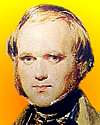
Died 19 Apr 1882 at age 73 (born 12 Feb 1809). quotes
Charles Robert Darwin was an English naturalist who presented facts to support his theory of the mode of evolution whereby favourable variations would survive which he called “Natural Selection” or “Survival of the Fittest,” and has become known as Darwinism. His two most important books were On the Origin of Species by Means of Natural Selection (1859) and The Descent of Man, and Selection in Relation to Sex.« more
Charles Robert Darwin was an English naturalist who presented facts to support his theory of the mode of evolution whereby favourable variations would survive which he called “Natural Selection” or “Survival of the Fittest,” and has become known as Darwinism. His two most important books were On the Origin of Species by Means of Natural Selection (1859) and The Descent of Man, and Selection in Relation to Sex.« more
From So Simple a Beginning: Darwin's Four Great Books, by Charles Darwin, Edward O. Wilson. - book suggestion.
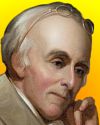
Died 19 Apr 1813 at age 67 (born 4 Jan 1746). quotes
American physician, most remembered as a signer of the Declaration of Independence, but was also prominent as a U.S. physician, the first professor of medical chemistry in America. He was active in combatting the yellow fever epidemics of the 1790s. For his pioneering investigations in the field, Rush is regarded as the father of American psychiatry, and his work, Medical Inquiries and Observations upon the Diseases of the Mind (1812) was the first book in this field published in America. Although he promoted clinical research, he still believed in bleeding, purging and other depleting remedies.«
American physician, most remembered as a signer of the Declaration of Independence, but was also prominent as a U.S. physician, the first professor of medical chemistry in America. He was active in combatting the yellow fever epidemics of the 1790s. For his pioneering investigations in the field, Rush is regarded as the father of American psychiatry, and his work, Medical Inquiries and Observations upon the Diseases of the Mind (1812) was the first book in this field published in America. Although he promoted clinical research, he still believed in bleeding, purging and other depleting remedies.«
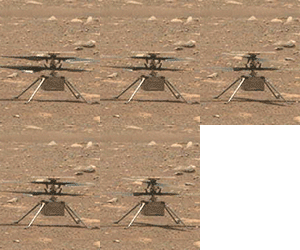
In 2021, the first powered, controlled flight on another planet was achieved by NASA’s experimental helicopter, named Ingenuity, at Jezero Crater. Although only a brief hover of 39.1 sec, it is regarded as historic as the first flight by the Wright Brother’s Flyer 1 (12 sec at Kitty Hawk, North Carolina, 17 Dec 1903). A scrap of fabric from a wing of Flyer 1 was carried aloft on Mars aboard Ingenuity. Designing the drone was challenging as the atmosphere on Mars is very thin—only 1% of the density on Earth. The autonomous drone, just 19-in (48cm) tall, is extremely light. Carbon-fiber rotor blades, over 4-ft (1.2m) across, turned at over 2,500 rpm, lifting the small craft about 10-ft (3m) high.«Image captured by Mastcam-Z of the parent craft, NASA’s Perseverance Mars Rover.
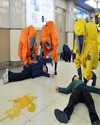
In 1995, a deliberate release of sarin nerve gas in the Tokyo underground killed 12 people, and 5,000 were injured. The criminals were members of the Aum Shinrikyo doomsday sect. Authorities had antidotes ready in stock to treat those affected, saving many lives. This advance preparation was made in reaction to the sect’s previous sarin gas attack a year before (in Matsumoto, Japan, 7 deaths, 200 injured). A tablespoonful of liquid sarin, readily vaporizes as a nerve gas so poisonous, that it could kill or disable 25,000 inhabitants, if sprayed as a fine mist from the air over a town. Liquid sarin, (C4H10FO2P), boils at 147°C, but readily vaporizes into lethal doses at lower temperatures.«
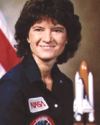
Ride
SatelliteThm.jpg "Indian satellite")
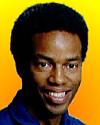
In 1975, the first satellite built in India was launched from Volgograd Launch Station, Russia, on a Soviet Intercosmos C-1 rocket. It was named Aryabhata, after a noted 5th-century Indian mathematician. The 360-kg satellite had been built during 20 months by the Indian Space Research Organization (ISRO) in Peenya, Bangalore, by a team led by Prof. U. R. Rao. Its shape was a 26-sided polygon, 1.4-m diam., with all faces covered in solar cells, except the top and bottom. It was designed to carry out experiments in X-ray astronomy, aeronomics, and solar physics, communicating with a 46-watt VHF transmitter. However, after only 4 days in orbit, a power failure ended any further experiments. It remained in orbit nearly 17 years, until it reentered the Earth’s atmosphere on 11 Feb 1992.«

In 1971, Salyut 1 (DOS 1) was launched on a Proton-K rocket by the Soviet Union. Primitive, with only a single main module, it was the first space station ever in Earth orbit. Its first crew launched in Soyuz 10 but was unable to board the space station due to a failure in the docking mechanism. The second crew arrived in Soyuz 11 and remained on board for 23 productive days. Tragically, all three died returning to Earth on 30 Jun 1971. A pressure-equalization valve in the Soyuz 11 reentry capsule opened prematurely. Salyut 1 reentered Earth's atmosphere 11 Oct 1971. Six more Salyut stations followed in the Soviet program, leading up to the launch of space station Mir on 20 Feb 1986.«
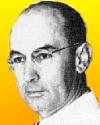
In 1943, Albert Hofmann chose to deliberately ingest 250 micrograms of the Lysergic Acid Diethylamide (LSD) he had synthesized at the Sandoz Laboratories in Basel, Switzerland. Three days earlier he had accidentally absorbed some through his skin by touching a container of the drug. From the accidental exposure he experienced restlessness, dizziness and “extreme activity of imagination.” Although he had first made it five years before, as a drug intended to relieve respiratory ailments, it was only on this day that he found the drug was a hallucinogen. The striking experience was one he chose to repeat.
LSD: My Problem Child, by Albert Hofmann. - book suggestion.
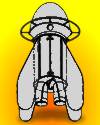
In 1904, a rocket apparatus for taking photographs was patented in the U.S. (No. 757,825) by Alfred Maul of Dresden, Germany. With a timing device, it would automatically take photographs giving bird’s-eye views of the ground, for military observation. A camera inside the nose cone was mounted obliquely to the ground during near-vertical upward flight. (Among other earlier patents for a camera rocket was German No. 64,209 to Ludwig Rohrmann granted 14 Jul 1891). Maul actually built functional camera rockets, and achieved world-wide fame. He improved his design in U.S. patent 847,198 on 12 Mar 1907. They were obsoleted by aircraft used in WW I.«
more
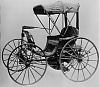
In 1892, the first Duryea automobile was operated by pioneer manufacturer Charles E. Duryea. He had been building it since August 1891 at his shop, 47 Taylor St., Springfield, Mass. This would become the model for the first automobile regularly made for sale in the U.S. The business was named the Duryea Motor Wagon Company.
more
Carriages Without Horses: J. Frank Duryea and the Birth of the American Automobile Industry, by Richard P. Scharchburg. - book suggestion.
Thm.jpg "U.S. astronomy")
c.1773
In 1739, John Winthrop (12 Dec 1714-1779) of Cambridge, Mass., the first astronomer of note in the U.S. began sunspot observations and continued over the next two days. No observations were possible on 21 Apr due to cloudy weather. His observations exist as one-page reports in the University Archives of Harvard University, though they were never published. In 1761, he went on an expedition to St. John's, Newfoundland, to observe the transit of Venus across the sun on 6 Jun 1761, which measurements could be used to compute the distance between the sun and the Earth. He also observed the transit of 1769 from Cambridge.«
The Scientific Work of John Winthrop, by Michael N. Shute and John Winthrop. - book suggestion.





