Born 4 Apr 1950.
American electrical engineer and inventor who build the first digital camera while a relatively newly-hired worker at Kodak. His supervisor asked him to explore the application of an electronic charge-coupled device (CCD) as an image sensor in a camera. The experimental prototype he built was about the size of a toaster, and weighed 8 pounds. It took the first digital picture in Dec 1975, converted the image into an electronic signal that was digitized and stored on a cassette tape. Staying mired in the traditional celluloid photographic film that long been Kodak's mammoth business, it was not until 1996 that the company began selling affordable mass-market digital cameras. Sadly for the company, it was not only eclipsed by other digital camera manufacturers, but the technology change destroyed its photographic film business, even though it did accumulate 1,000 digital image patents.«
American electrical engineer and inventor who build the first digital camera while a relatively newly-hired worker at Kodak. His supervisor asked him to explore the application of an electronic charge-coupled device (CCD) as an image sensor in a camera. The experimental prototype he built was about the size of a toaster, and weighed 8 pounds. It took the first digital picture in Dec 1975, converted the image into an electronic signal that was digitized and stored on a cassette tape. Staying mired in the traditional celluloid photographic film that long been Kodak's mammoth business, it was not until 1996 that the company began selling affordable mass-market digital cameras. Sadly for the company, it was not only eclipsed by other digital camera manufacturers, but the technology change destroyed its photographic film business, even though it did accumulate 1,000 digital image patents.«

Born 4 Apr 1949.
Chinese-born mathematician who was awarded the Fields Medal in 1982 for his work in partial differential equations and differential geometry. His work also has applications in topology, algebraic geometry, representation theory and general relativity. Working collaboratively with Richard M. Schoen, Yau solved a long-standing open problem in relativity theory, by showing the positivity of mass for space-time. As a consequence, Schoen and Yau were able to give the first rigorous demonstration of how black holes can be formed because of the condensation of matter. A black hole possesses a gravitational field so intense that no matter or radiation can escape from it. Yau was the 1997 National Medal of Science winner.
Chinese-born mathematician who was awarded the Fields Medal in 1982 for his work in partial differential equations and differential geometry. His work also has applications in topology, algebraic geometry, representation theory and general relativity. Working collaboratively with Richard M. Schoen, Yau solved a long-standing open problem in relativity theory, by showing the positivity of mass for space-time. As a consequence, Schoen and Yau were able to give the first rigorous demonstration of how black holes can be formed because of the condensation of matter. A black hole possesses a gravitational field so intense that no matter or radiation can escape from it. Yau was the 1997 National Medal of Science winner.
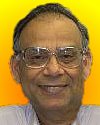
Born 4 Apr 1938; died 10 Jul 2020 at age 82.
Indian-American biochemist who patented the first genetically engineered life-form (U.S. No. 4,259,444) which he created while working on the research and development staff of General Electric (1971-79). The new single cell life form was the Pseudomonas bacterium, now called Burkholderia cepacia, which had the potential to clean up toxic spills because of its ability to break down crude oil into simpler substances that could even become food for aquatic life. This ability is possessed by no naturally occurring bacteria. His original patent application was rejected. Eventually, by appeal to the U.S. Supreme Court, on 16 Jun 1980 it was decided that new forms of life could be patented if they are the outcome of human ingenuity.«
Indian-American biochemist who patented the first genetically engineered life-form (U.S. No. 4,259,444) which he created while working on the research and development staff of General Electric (1971-79). The new single cell life form was the Pseudomonas bacterium, now called Burkholderia cepacia, which had the potential to clean up toxic spills because of its ability to break down crude oil into simpler substances that could even become food for aquatic life. This ability is possessed by no naturally occurring bacteria. His original patent application was rejected. Eventually, by appeal to the U.S. Supreme Court, on 16 Jun 1980 it was decided that new forms of life could be patented if they are the outcome of human ingenuity.«
Bugging Cancer: Daring to Dream Paperback, by Ananda M. Chakrabarty, et al. - book suggestion.
Born 4 Apr 1914; died 23 Jun 1993 at age 79.
Czech astronomer who directed an international project, financed by the U.S. Air Force, to photograph and map the entire surface of the Moon by using the refracting telescope at the Pic du Midi Observatory in southern France.
Czech astronomer who directed an international project, financed by the U.S. Air Force, to photograph and map the entire surface of the Moon by using the refracting telescope at the Pic du Midi Observatory in southern France.
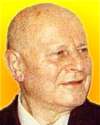
Born 4 Apr 1892; died 6 May 1979 at age 87.
Karl Wilhelm Reinmuth was a German astronomer, the world's foremost asteroid hunter before automated search techniques. His discoveries (1914-1957) of 389 such minor planets include some of the first found outside of the Solar System's asteroid belt. His Ph.D. thesis was 'Photographische Positionsbestimmung von 356 Schultzschen Nebelflecken' (Photographic Location of 356 Schultz's Nebulae, 1916). He had started a few years earlier, in 1912, volunteering his time to assist Maximillian Wolf, director at the Königstuhl Observatory, Heidelberg. He learned how to study photographic plates to find asteroids, from Wolf, the first astronomer to utilize such technique. On 15 Oct 1914, the minor planet (796) Sarita was the first Reinmuth identified. In 1937, he named Hermes, the asteroid which made the closest then known approach to Earth.«
Karl Wilhelm Reinmuth was a German astronomer, the world's foremost asteroid hunter before automated search techniques. His discoveries (1914-1957) of 389 such minor planets include some of the first found outside of the Solar System's asteroid belt. His Ph.D. thesis was 'Photographische Positionsbestimmung von 356 Schultzschen Nebelflecken' (Photographic Location of 356 Schultz's Nebulae, 1916). He had started a few years earlier, in 1912, volunteering his time to assist Maximillian Wolf, director at the Königstuhl Observatory, Heidelberg. He learned how to study photographic plates to find asteroids, from Wolf, the first astronomer to utilize such technique. On 15 Oct 1914, the minor planet (796) Sarita was the first Reinmuth identified. In 1937, he named Hermes, the asteroid which made the closest then known approach to Earth.«
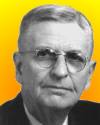
Born 4 Apr 1887; died 25 Sep 1985 at age 98.
American biochemist who researched the role of amino acids in nutrition determining which were essential, and calculated the minimum daily requirement for each of them. Having found that the milk protein, casein, was essential in a healthy rat's diet, he discovered (1936) the threonine in the casein was an essential amino acid. Over several years he manipulated the rodent diet and finally established the primary importance of nine more amino acids: lysine, tryptophan, histidine, phenylalanine, leucine, isoleucine, methionine, valine, and arginine. In 1942, Rose began a ten-year research project on human diet. By persuading students to restrict their diet in various ways Rose eventually established that 8 of the above are essential amino acids for adults.
American biochemist who researched the role of amino acids in nutrition determining which were essential, and calculated the minimum daily requirement for each of them. Having found that the milk protein, casein, was essential in a healthy rat's diet, he discovered (1936) the threonine in the casein was an essential amino acid. Over several years he manipulated the rodent diet and finally established the primary importance of nine more amino acids: lysine, tryptophan, histidine, phenylalanine, leucine, isoleucine, methionine, valine, and arginine. In 1942, Rose began a ten-year research project on human diet. By persuading students to restrict their diet in various ways Rose eventually established that 8 of the above are essential amino acids for adults.
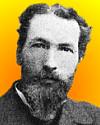
Born 4 Apr 1846; died 27 Jul 1929 at age 83.
Swiss chemist who was a pioneer of cryogenics. His original interest in the artificial production of ice (for refrigeration) led him to study the production of extremely low temperatures. He produced liquid oxygen, working independently of the French scientist, Louis Paul Cailletet, who is also credited with its discovery in 1877. However, Pictet used more elaborate equipment and was able to produce greater volumes of liquified gases. Pictet used a cascade method, in which he evaporated liquid sulfur dioxide to liquefy carbon dioxide, which in turn was allowed to evaporate and to cool oxygen to below its critical temperature. The oxygen could then be liquefied by pressure. This was also easier to apply to other gases.
Swiss chemist who was a pioneer of cryogenics. His original interest in the artificial production of ice (for refrigeration) led him to study the production of extremely low temperatures. He produced liquid oxygen, working independently of the French scientist, Louis Paul Cailletet, who is also credited with its discovery in 1877. However, Pictet used more elaborate equipment and was able to produce greater volumes of liquified gases. Pictet used a cascade method, in which he evaporated liquid sulfur dioxide to liquefy carbon dioxide, which in turn was allowed to evaporate and to cool oxygen to below its critical temperature. The oxygen could then be liquefied by pressure. This was also easier to apply to other gases.
Born 4 Apr 1840; died 13 Mar 1911 at age 70. quotes
Henry Pickering Bowditch was an American physiologist who established first teaching laboratory of physiology in U.S. (1871). He discovered the 'all-or-none' law of muscle contraction (1871), and the indefatigability of nerves (1890). He was the grandson of Nathaniel Bowditch.
Henry Pickering Bowditch was an American physiologist who established first teaching laboratory of physiology in U.S. (1871). He discovered the 'all-or-none' law of muscle contraction (1871), and the indefatigability of nerves (1890). He was the grandson of Nathaniel Bowditch.
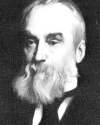
Born 4 Apr 1835; died 7 Oct 1911 at age 76. quotes
English neurologist whose studies of epilepsy, speech defects, and nervous-system disorders arising from injury to the brain and spinal cord remain among the most useful and highly documented in the field. He was one of the first to state that abnormal mental states may result from structural brain damage. Jackson's epilepsy studies initiated the development of modern methods of clinical localization of brain lesions and the investigation of localized brain functions. His definition (1873) of epilepsy as "a sudden, excessive, and rapid discharge" of brain cells has been confirmed by electroencephalography, a method of recording electric currents generated in the brain.
English neurologist whose studies of epilepsy, speech defects, and nervous-system disorders arising from injury to the brain and spinal cord remain among the most useful and highly documented in the field. He was one of the first to state that abnormal mental states may result from structural brain damage. Jackson's epilepsy studies initiated the development of modern methods of clinical localization of brain lesions and the investigation of localized brain functions. His definition (1873) of epilepsy as "a sudden, excessive, and rapid discharge" of brain cells has been confirmed by electroencephalography, a method of recording electric currents generated in the brain.
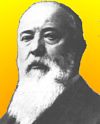
Born 4 Apr 1826; died 20 Jan 1901 at age 74.
Belgian-born French electrical engineer and inventor (1869) of the Gramme dynamo, a continuous-current electrical generator that gave principal impetus to the development of electric power. In 1870 he invented a continuous-current dynamo with a ring armature (a ring of soft iron around which were placed insulated copper coils). This produced much higher voltages than other dynamos of the time and was the first high-voltage direct-current generator practical for mass production and distribution. Driven by steam-engines, they were immediately successful and were used for a variety of purposes, including factory lighting, electroplating, and lighthouses. With these dynamos, the era of large-scale electrical engineering began.
Belgian-born French electrical engineer and inventor (1869) of the Gramme dynamo, a continuous-current electrical generator that gave principal impetus to the development of electric power. In 1870 he invented a continuous-current dynamo with a ring armature (a ring of soft iron around which were placed insulated copper coils). This produced much higher voltages than other dynamos of the time and was the first high-voltage direct-current generator practical for mass production and distribution. Driven by steam-engines, they were immediately successful and were used for a variety of purposes, including factory lighting, electroplating, and lighthouses. With these dynamos, the era of large-scale electrical engineering began.
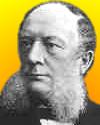
Born 4 Apr 1823; died 18 Nov 1883 at age 60. quotes
Sir (Charles) William Siemens was a German-English engineer and inventor who devised the “regenerative system” of using waste gases to preheat fuel gases, for the open-hearth furnace used in steel manufacturing. He was also important in the telegraph industry, a pioneer in undersea cable. He assisted in the engineering of the London-Calcutta telegraph line (1869), a landmark achievement in communications. His name at birth was Carl Wilhelm Siemens, the younger brother of Ernst Werner Siemens (later ennobled as Werner von Siemens, who founded what is now the multinational Siemens company). Carl first visited England as agent for his brother to introduce an electroplating device. He returned in 1844, stayed, became a naturalized British subject in 1859, and known as Charles William Siemens until knighted as Sir William Siemens a few months before his death.«[NYT obituary gives date of death 18 Nov 1883. EB gives 19 Nov 1883.]
Sir (Charles) William Siemens was a German-English engineer and inventor who devised the “regenerative system” of using waste gases to preheat fuel gases, for the open-hearth furnace used in steel manufacturing. He was also important in the telegraph industry, a pioneer in undersea cable. He assisted in the engineering of the London-Calcutta telegraph line (1869), a landmark achievement in communications. His name at birth was Carl Wilhelm Siemens, the younger brother of Ernst Werner Siemens (later ennobled as Werner von Siemens, who founded what is now the multinational Siemens company). Carl first visited England as agent for his brother to introduce an electroplating device. He returned in 1844, stayed, became a naturalized British subject in 1859, and known as Charles William Siemens until knighted as Sir William Siemens a few months before his death.«[NYT obituary gives date of death 18 Nov 1883. EB gives 19 Nov 1883.]
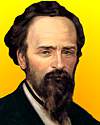

American inventor and manufacturer of locks, including the cylinder or pin-tumbler lock known by his name. His first lock business, established at Shelburne Falls, Mass. (early 1840s) began by producing bank locks such as his Yale Infallible Bank Lock (1851). He introduced the combination lock (c.1862). His expert knowledge gained him celebrity for being able to open his competitors’ “unpickable” locks. He first patented the pin tumbler cylinder door lock in 1861. His improved model of 1865 remains a secure design used in the Yale locks of today. He began mass-production of this lock, and with partners, founded Yale Lock Manufacturing Co. in the last year of his life (1868).« more
Born 4 Apr 1809; died 6 Oct 1880 at age 71. quotes
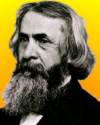
American astronomer, mathematician and educator who computed the general perturbations of the planets Uranus and Neptune. He was Harvard's Perkins Professor of Astronomy and Mathematics for nearly 40 years, and was largely responsible for introducing mathematics as a subject for research in American institutions. He is known especially for his contributions to analytic mechanics and linear associative algebra, but he is also remembered for his early work in astronomy and for playing a role in the discovery of Neptune. His son, Charles Sanders Peirce followed him as a mathematician and logician.
American astronomer, mathematician and educator who computed the general perturbations of the planets Uranus and Neptune. He was Harvard's Perkins Professor of Astronomy and Mathematics for nearly 40 years, and was largely responsible for introducing mathematics as a subject for research in American institutions. He is known especially for his contributions to analytic mechanics and linear associative algebra, but he is also remembered for his early work in astronomy and for playing a role in the discovery of Neptune. His son, Charles Sanders Peirce followed him as a mathematician and logician.
Born 4 Apr 1688; died 11 Sep 1768 at age 80.
French astronomer who proposed that the series of coloured rings sometimes observed around the Sun is caused by diffraction of sunlight through water droplets in a cloud. He also worked to find the distance of the Sun from the Earth by observing transits of Venus and Mercury across the face of the Sun.
French astronomer who proposed that the series of coloured rings sometimes observed around the Sun is caused by diffraction of sunlight through water droplets in a cloud. He also worked to find the distance of the Sun from the Earth by observing transits of Venus and Mercury across the face of the Sun.

Died 4 Apr 2010 at age 83 (born 10 Sep 1926).
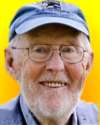
Thomas Dale Brock was an American microbiologist who found the bacteria, Thermus aquaticus, which thrives at temperatures of 70°C (158°F) or higher, because all their enzymes are stable at very high temperatures. In the 1980s, biochemist Kary B. Mullis used this species of bacteria to help create the polymerase chain reaction (PCR), which requires cycles of extreme heating and cooling. PCR technology is now widely used to rapidly multiply traces of DNA millions of times to produce enough for analytical study. In 1960, Brock joined the faculty of Indiana University, Bloomington, teaching medical microbiology. While driving near Yellowstone National Park in 1964, he visited and became fascinated by hot spring algae there.«
Thomas Dale Brock was an American microbiologist who found the bacteria, Thermus aquaticus, which thrives at temperatures of 70°C (158°F) or higher, because all their enzymes are stable at very high temperatures. In the 1980s, biochemist Kary B. Mullis used this species of bacteria to help create the polymerase chain reaction (PCR), which requires cycles of extreme heating and cooling. PCR technology is now widely used to rapidly multiply traces of DNA millions of times to produce enough for analytical study. In 1960, Brock joined the faculty of Indiana University, Bloomington, teaching medical microbiology. While driving near Yellowstone National Park in 1964, he visited and became fascinated by hot spring algae there.«
Thermophilic Microorganisms and Life at High Temperatures, by Thomas D. Brock. - book suggestion.
Died 4 Apr 1993 at age 93 (born 13 Apr 1899).
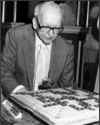
American architect, artist, photographer and inventor, who invented the board game Scrabble. He carefully analyzed how often each letter is used (that's how he decided how many of each letter to include and how many points each one would earn), then drew a board and glued letters on some balsa tiles. Originally called Criss Cross (1931), the game, which was based on the crossword puzzle and anagrams, was redesigned, renamed as Scrabble, and marketed by James Brunot in 1948.
American architect, artist, photographer and inventor, who invented the board game Scrabble. He carefully analyzed how often each letter is used (that's how he decided how many of each letter to include and how many points each one would earn), then drew a board and glued letters on some balsa tiles. Originally called Criss Cross (1931), the game, which was based on the crossword puzzle and anagrams, was redesigned, renamed as Scrabble, and marketed by James Brunot in 1948.
Died 4 Apr 1980 at age 69 (born 7 Dec 1910).
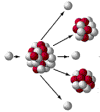
American biophysicist who contributed most to the discovery of "delayed neutrons" - that uranium fission does not release all the neutrons it produces at one time, but some come off at measurably later times. Some are emitted seconds to minutes later. This is crucial in the operation of a fission reactor. In uranium-235 fission in a thermal reactor, the proportion of delayed neutrons is about 0.65 percent. If the reactivity stays below the proportion of delayed neutrons, the reactor can be controlled. The delayed neutrons modify the rate of fission sufficiently to give time for the insertion of control rods. Without the margin of safety provided by the delayed neutrons, nuclear reactors might not be practical at all.*
American biophysicist who contributed most to the discovery of "delayed neutrons" - that uranium fission does not release all the neutrons it produces at one time, but some come off at measurably later times. Some are emitted seconds to minutes later. This is crucial in the operation of a fission reactor. In uranium-235 fission in a thermal reactor, the proportion of delayed neutrons is about 0.65 percent. If the reactivity stays below the proportion of delayed neutrons, the reactor can be controlled. The delayed neutrons modify the rate of fission sufficiently to give time for the insertion of control rods. Without the margin of safety provided by the delayed neutrons, nuclear reactors might not be practical at all.*

Died 4 Apr 1943 at age 82 (born 11 Jun 1860).
American marine zoologist known for establishing the basic taxonomic information on Crustacea. For many years she was the Smithsonian's complete department of marine invertebrates where she studied, cataloged, and preserved specimens. Through her basic studies and published works, she fixed the nomenclature of Crustacea and was the recognized, and the much sought after, authority in zoology and carcinology (thestudy of crustacea). When the department needed an assistant, she resigned as superintendent and used her salary to hire someone. She continued to work without pay as a dedicated volunteer carcinologist. She published over 160 papers on a wide variety of scientific subjects.Image: Blue crab, Callinectes sapidus, named by Rathbun.
American marine zoologist known for establishing the basic taxonomic information on Crustacea. For many years she was the Smithsonian's complete department of marine invertebrates where she studied, cataloged, and preserved specimens. Through her basic studies and published works, she fixed the nomenclature of Crustacea and was the recognized, and the much sought after, authority in zoology and carcinology (thestudy of crustacea). When the department needed an assistant, she resigned as superintendent and used her salary to hire someone. She continued to work without pay as a dedicated volunteer carcinologist. She published over 160 papers on a wide variety of scientific subjects.Image: Blue crab, Callinectes sapidus, named by Rathbun.
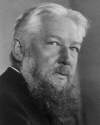
Died 4 Apr 1932 at age 78 (born 2 Sep 1853). quotes
Friedrich Wilhelm Ostwald was a Russian-German physical chemist who almost single-handedly organized physical chemistry into a nearly independent branch of chemistry. He won the Nobel Prize for Chemistry in 1909 for his work on catalysis, chemical equilibrium, and reaction velocities.
Friedrich Wilhelm Ostwald was a Russian-German physical chemist who almost single-handedly organized physical chemistry into a nearly independent branch of chemistry. He won the Nobel Prize for Chemistry in 1909 for his work on catalysis, chemical equilibrium, and reaction velocities.
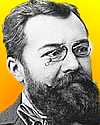
Died 4 Apr 1931 at age 78 (born 16 Jan 1853).
French industrialist who, with his younger brother Édouard, founded Michelin Tyre Co. in 1888, expanding the rubber company established (1832) by their grandfather, Aristide Barbier, and Nicolas Edouard Daubree. The Michelins made the first pneumatic tyres that could be easily removed for repair, for bicycles (1891) and for automobiles (1895). They introduced tire tread patterns, low-pressure balloon tires, and steel-cord tires. The company created a tourist guide organization which placed milestones on French roads and established a standard road map service for most of Europe. André created Michelin guides to promote tourism by car. The first Red Guide, with restaurant ratings, was published in 1900.« more
French industrialist who, with his younger brother Édouard, founded Michelin Tyre Co. in 1888, expanding the rubber company established (1832) by their grandfather, Aristide Barbier, and Nicolas Edouard Daubree. The Michelins made the first pneumatic tyres that could be easily removed for repair, for bicycles (1891) and for automobiles (1895). They introduced tire tread patterns, low-pressure balloon tires, and steel-cord tires. The company created a tourist guide organization which placed milestones on French roads and established a standard road map service for most of Europe. André created Michelin guides to promote tourism by car. The first Red Guide, with restaurant ratings, was published in 1900.« more
The Michelin Men: Driving an Empire, by Herbert Lottman. - book suggestion.
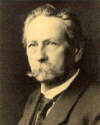
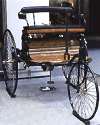
Karl Friedrich Benz was a German mechanical engineer who designed and in 1885 built the world's first practical automobile to be powered by an internal-combustion engine. The earliest engine he built was a two-stroke engine, which after two years' work first ran on 31 Dec 1879. He took out various patents on this machine, and opened a factory. After developing financial backing, Benz designed a “motor carriage”, with an engine based on the Otto four-stroke cycle. Unlike Daimler, who installed his engine in an ordinary carriage, Benz designed not only his engine, but innovated the vehicle as well. On 29 Jan 1886, he was granted a patent on it and on 3rd Jul 1886, he made the world's first automobile public test drive. Public sale began in 1888.
The Invention of the Automobile (Karl Benz and Gottlieb Daimler), by St. John C Nixon. - book suggestion.
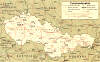
Czechoslovakia
Died 4 Apr 1919 at age 38 (born 21 Jul 1880).
Milan (Rastislav) Stefánik was a Hungarian Slovakian astronomer and general who, with Tomás Masaryk and Edvard Benes, from abroad, helped found the new nation of Czechoslovakia by winning much-needed support from the Allied powers for its creation as a post-WWI republic, (1918-19). Before the war, the famous observatory in Meudon near Paris sent a scientific expedition to the 4810m high Mont Blanc. He joined the expedition, which was paid for by the French government to go to the roof of Europe.
Milan (Rastislav) Stefánik was a Hungarian Slovakian astronomer and general who, with Tomás Masaryk and Edvard Benes, from abroad, helped found the new nation of Czechoslovakia by winning much-needed support from the Allied powers for its creation as a post-WWI republic, (1918-19). Before the war, the famous observatory in Meudon near Paris sent a scientific expedition to the 4810m high Mont Blanc. He joined the expedition, which was paid for by the French government to go to the roof of Europe.
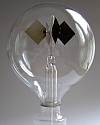
English physicist and chemist who discovered the element thallium and showed that cathode-rays were fast-moving, negatively-charged particles. The Crookes dark space is the dark region around a cathode making electrical discharges at low pressure. He invented the radiometer (1875) in which four vanes suspended on a needle in a vacuum with one side black and the other side white are observed to rotate by the effect of incident light. He also invented the spinthariscope (1903) which reveals alpha particles emitted by radium as light flashes when they impact a zinc sulphide screen viewed under magnification. His interests included spiritualism, but provided more practical guidance for improving sanitation and artifical fertilizers.«[Image right: radiometer]
William Crookes (1832-1919) and the Commercialization of Science, by William H. Brock. - book suggestion.
Died 4 Apr 1893 at age 86 (born 27 Oct 1806).
Alphonse-Louis-Pierre Pyrame de Candolle was a Swiss botanist who began new methods of investigation and analysis in phytogeography (the geographic distribution of plants). His father, Augustin Pyrame de Candolle had developed a general scheme of plant classification, for which he coined the word taxonomy (1813). This was to dominate plant classification for 50 years. Augustin used his scheme in a major series of volumes on botany. Alphonse de Candolle, completed this series, and is mainly responsible for continuing the great work Prodromus Systematis Naturalis regni vegetablis, published over a number of years, following the original lines laid down by his father. His own Origin of Cultivated Plants was published in 1882.«[Enc. Brit. gives birth date as 27/28 Oct 1806. Dict. of Sci. Biog. gives 17 Oct 1806.]
Alphonse-Louis-Pierre Pyrame de Candolle was a Swiss botanist who began new methods of investigation and analysis in phytogeography (the geographic distribution of plants). His father, Augustin Pyrame de Candolle had developed a general scheme of plant classification, for which he coined the word taxonomy (1813). This was to dominate plant classification for 50 years. Augustin used his scheme in a major series of volumes on botany. Alphonse de Candolle, completed this series, and is mainly responsible for continuing the great work Prodromus Systematis Naturalis regni vegetablis, published over a number of years, following the original lines laid down by his father. His own Origin of Cultivated Plants was published in 1882.«[Enc. Brit. gives birth date as 27/28 Oct 1806. Dict. of Sci. Biog. gives 17 Oct 1806.]
Origin Of Cultivated Plants, by Alphonse De Candolle. - book suggestion.
Thm.jpg "Peter Cooper")
c.1850
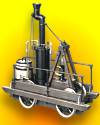
Tom Thumb
American inventor, manufacturer and philanthropist who established The Cooper Union for the Advancement of Science and Art in New York (cornerstone laid in 1854) to provide free technical education of the working class. He invented the first American-built steam locomotive for a common-carrier railway, the Tom Thumb, which made its first run on 28 Aug 1830. His iron-rolling mill produced iron structural beams, included those used to build the Cooper Union, which he wanted to be fire-proof. After founding a telegraph company (1854), he joined Cyrus Field's effort to lay the first tranatlantic cable (1857). Cooper lived to the age of 92, and for his life of philanthropy in New York, the city mourned his passing as one of its most-loved.citizens.« more
Peter Cooper, by Rossiter W. Raymond. - book suggestion.
Died 4 Apr 1875 at age 37 (born 7 May 1837).
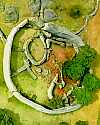
Karl Gottlieb Mauch was a German explorer and geologist who made geological and archaeological discoveries in southern Africa, notably the Tati goldfields in Hartley Hills (1867) and the Great Zimbabwe ruins of an ancient city (1871), both in modern Zimbabwe. He was the first European to investigate the massive and extensive walls of the Great Zimbabe ruins, the biggest and most significant structures erected before the modern era. He wrongly held that they could not have been constructed by black Africans. He thought it was the palace of Queen Sheeba and he called it “the city of gold.” However, he did make a detailed floor plan of monuments, describe building techniques and the religious acitivies conducted around the monument.[Image: aerial view of the Great Zimbabwe ruins.]
Karl Gottlieb Mauch was a German explorer and geologist who made geological and archaeological discoveries in southern Africa, notably the Tati goldfields in Hartley Hills (1867) and the Great Zimbabwe ruins of an ancient city (1871), both in modern Zimbabwe. He was the first European to investigate the massive and extensive walls of the Great Zimbabe ruins, the biggest and most significant structures erected before the modern era. He wrongly held that they could not have been constructed by black Africans. He thought it was the palace of Queen Sheeba and he called it “the city of gold.” However, he did make a detailed floor plan of monuments, describe building techniques and the religious acitivies conducted around the monument.[Image: aerial view of the Great Zimbabwe ruins.]
Karl Mauch: African Explorer, by Karl Mauch. - book suggestion.
Died 4 Apr 1870 at age 67 (born 2 May 1802).
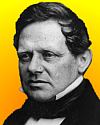
German chemist and physicist who discovered the Magnus effect (the lift force produced by a rotating cylinder, which for example, gives the curve to a curve ball). In chemical research, he discovered the first of the platino-ammonium compounds compounds. Magnus's green salt is [Pt(NH3)4][PtCl4]). With diverse interests in science, he also worked on the absorption of gases by blood, expansion of gases when heated, vapour pressures of water and various solutions, electrolysis, induced and thermoelectric currents, optics, magnetism and hydrodynamics. In 1865, he represented Prussia at a conference called to introduce a uniform metric system of weights and measures into Germany.
German chemist and physicist who discovered the Magnus effect (the lift force produced by a rotating cylinder, which for example, gives the curve to a curve ball). In chemical research, he discovered the first of the platino-ammonium compounds compounds. Magnus's green salt is [Pt(NH3)4][PtCl4]). With diverse interests in science, he also worked on the absorption of gases by blood, expansion of gases when heated, vapour pressures of water and various solutions, electrolysis, induced and thermoelectric currents, optics, magnetism and hydrodynamics. In 1865, he represented Prussia at a conference called to introduce a uniform metric system of weights and measures into Germany.
Died 4 Apr 1848 at age 34 (born 23 Oct 1813). quotes
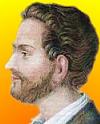
(Friedrich Wilhelm) Ludwig Leichhardt was a German explorer and naturalist who went to Australia in 1842 to study the rocks and wildlife in Queensland and the Northern Territory. In 1846 he left on an expedition with nine men to find a route from Moreton Bay (Brisbane) to Perth, rather poorly equipped. The party disappeared, leaving a mystery as to its fate which nine major expeditions in the next 90 years failed to solve. On previous travels he discovered many important rivers and reported on land suitable for grazing, but with difficulties of poor leadership and planning. His first trip (1844) ran out of supplies, and was forced to live on wildlife. In an encounter with hostile aborginals, one man was killed and two injured.«
(Friedrich Wilhelm) Ludwig Leichhardt was a German explorer and naturalist who went to Australia in 1842 to study the rocks and wildlife in Queensland and the Northern Territory. In 1846 he left on an expedition with nine men to find a route from Moreton Bay (Brisbane) to Perth, rather poorly equipped. The party disappeared, leaving a mystery as to its fate which nine major expeditions in the next 90 years failed to solve. On previous travels he discovered many important rivers and reported on land suitable for grazing, but with difficulties of poor leadership and planning. His first trip (1844) ran out of supplies, and was forced to live on wildlife. In an encounter with hostile aborginals, one man was killed and two injured.«
Died 4 Apr 1807 at age 74 (born 11 Jul 1732). quotes
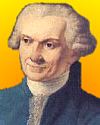
Joseph Jérôme Le Français de Lalande, was a French astronomer, born in Bourg-en-Bresse, France. He determined the Moon's parallax from Berlin for the French Academy (1751). He was appointed professor of Astronomy, Collège de France (1762), and subsequently, director of the Paris Observatory. He published his Traité d'astronomie in 1764 - tables of the planetary positions that were considered the best available for the rest of the century. In 1801 he also published a comprehensive star catalogue. He died in 1807, apparently of tuberculosis.
Joseph Jérôme Le Français de Lalande, was a French astronomer, born in Bourg-en-Bresse, France. He determined the Moon's parallax from Berlin for the French Academy (1751). He was appointed professor of Astronomy, Collège de France (1762), and subsequently, director of the Paris Observatory. He published his Traité d'astronomie in 1764 - tables of the planetary positions that were considered the best available for the rest of the century. In 1801 he also published a comprehensive star catalogue. He died in 1807, apparently of tuberculosis.
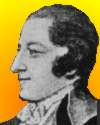
Died 4 Apr 1807 at age 45 (born 10 Mar 1762).
Jeremias Benjamin Richter was a German chemist who discovered the law of equivalent proportions. He studied chemistry in his spare time while in the Prussian army (1778-1785) and afterwards while earning a Ph.D. in mathematics (1789). Richter was much influenced by Immanuel Kant, whose lectures he may have attended, in the contention that science is applied mathematics. Richter looked for mathematical relationships in chemisty, convinced that substances reacted with each other in fixed proportions. He showed such a relationship when acids and bases neutralize to produce salts (1791). Thus he was the first to establish stoichiometry, which became the basis of quantitative chemical analysis. He died of tuberculosis at age 45 years.
Jeremias Benjamin Richter was a German chemist who discovered the law of equivalent proportions. He studied chemistry in his spare time while in the Prussian army (1778-1785) and afterwards while earning a Ph.D. in mathematics (1789). Richter was much influenced by Immanuel Kant, whose lectures he may have attended, in the contention that science is applied mathematics. Richter looked for mathematical relationships in chemisty, convinced that substances reacted with each other in fixed proportions. He showed such a relationship when acids and bases neutralize to produce salts (1791). Thus he was the first to establish stoichiometry, which became the basis of quantitative chemical analysis. He died of tuberculosis at age 45 years.
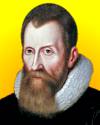
Died 4 Apr 1617 (born 1550). quotes
John Napier, 8th Laird of Merchiston was a Scottish mathematician and writer on theology. He is remembered for producing tables of logarithms as a mathematical aid for calculations. Yet, to him, mathematics was only a hobby. As a fervent Presbyterian, he wrote against Catholicism. His book, Mirifici Logarithmorum Canonis Descriptio (1614), presents his invention of logarithms. Henry Briggs modified the logarithm tables to use base 10, rather than Napier’s use of base e. In his Rabdologia (1617), Napier describes his method of mechanical calculation using Napier’s bones (engraved rods). Napier was active in politics. He drew up designs for war engines, when it seemed that Spaniards were planning to invade Scotland.«
John Napier, 8th Laird of Merchiston was a Scottish mathematician and writer on theology. He is remembered for producing tables of logarithms as a mathematical aid for calculations. Yet, to him, mathematics was only a hobby. As a fervent Presbyterian, he wrote against Catholicism. His book, Mirifici Logarithmorum Canonis Descriptio (1614), presents his invention of logarithms. Henry Briggs modified the logarithm tables to use base 10, rather than Napier’s use of base e. In his Rabdologia (1617), Napier describes his method of mechanical calculation using Napier’s bones (engraved rods). Napier was active in politics. He drew up designs for war engines, when it seemed that Spaniards were planning to invade Scotland.«
John Napier: Life, Logarithms, and Legacy, by Julian Havil. - book suggestion.
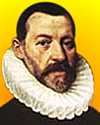
Died 4 Apr 1609 at age 83 (born 19 Feb 1526).
Charles de L'Écluse (aka Carolus Clusius) was a French botanist who introduced the tulip to Holland. He travelled and collected botanical information throughout Europe, and introduced new plants from outside Europe. Leaving France to escape religious perscution as a Protestant, he spent time in Prague and Vienna. Late in life, in 1593, he succeeded Dodoens as the chair of botany at the University of Leiden in the Netherlands. He established the botanical garden there and grew a collection of flowering bulbs, including the tulip which initiated the Dutch bulb industry. He is also attributed with cultivating the peony, hyacinth, potato and chestnut.«
Charles de L'Écluse (aka Carolus Clusius) was a French botanist who introduced the tulip to Holland. He travelled and collected botanical information throughout Europe, and introduced new plants from outside Europe. Leaving France to escape religious perscution as a Protestant, he spent time in Prague and Vienna. Late in life, in 1593, he succeeded Dodoens as the chair of botany at the University of Leiden in the Netherlands. He established the botanical garden there and grew a collection of flowering bulbs, including the tulip which initiated the Dutch bulb industry. He is also attributed with cultivating the peony, hyacinth, potato and chestnut.«
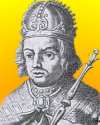
Died 4 Apr 1284 at age 62 (born 23 Nov 1221). quotes
Spanish monarch and astronomer who encouraged the preparation of revised planetary tables (1252), published on the day of his accession to the throne as king of Castile and León. These “Alfonsine Tables” a revision and improvement of the Ptolemaic tables, were the best available during the Middle Ages; they were not replaced by better ones for over three centuries. The astronomical data tabulating the positions and movements of the planets was compiled by about 50 astronomers he had assembled for this purpose. He questioned the complexity of the Ptolemaic model centuries before Copernicus. “If the Lord Almighty had consulted me before embarking on the Creation, I would have recommended something simpler.” He also wrote a commentary on alchemy.
Spanish monarch and astronomer who encouraged the preparation of revised planetary tables (1252), published on the day of his accession to the throne as king of Castile and León. These “Alfonsine Tables” a revision and improvement of the Ptolemaic tables, were the best available during the Middle Ages; they were not replaced by better ones for over three centuries. The astronomical data tabulating the positions and movements of the planets was compiled by about 50 astronomers he had assembled for this purpose. He questioned the complexity of the Ptolemaic model centuries before Copernicus. “If the Lord Almighty had consulted me before embarking on the Creation, I would have recommended something simpler.” He also wrote a commentary on alchemy.
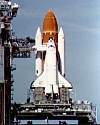
(NASA)
In 1983, the space shuttle Challenger roared into orbit on its maiden voyage. It was named after the British Naval research vessel HMS Challenger that sailed the Atlantic and Pacific oceans during the 1870s. Challenger joined the NASA fleet of reusable winged spaceships and flew nine successful Space Shuttle missions. But on 28 Jan 1986, its tenth launch, the Challenger and its crew of seven were lost 73 seconds after launch when a booster failure resulted in the breakup of the vehicle.
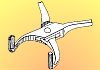
(USPTO)
In 1978, Francisco Garcia was granted patent No. 4,081,909 for "orthodontic pliers." The pliers are especially useful for bending the alignment wire end during all phases of the Begg orthodontic technique. The pliers comprise a pair of pivoted jaw members from the ends of which extend a male and female beak at right angles to the jaws. The male beak is cylindrical and mates with the semi-tubular female beak. Thus the pliers enable quick and easy bending of the arch wire ends without deforming the main arch wire. This leaves the end of the wire away from the cheek and gum of the patient, who is saved the discomfort of scraped cheeks or gums.
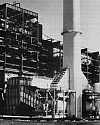
In 1972, the first electric power generated in the U.S. fueled by municipal solid waste was produced at the Meramec Plant of the Union Electric Company, St. Louis, Missouri. The venture was a cooperative effort with the city of St. Louis, with financial support from the Environmental Protection Agency. The power plant coal-fired boiler was supplemented with a small percentage of shredded refuse. In the following month, the plant generated 200,000 kW-hr of electricity, and wastes were consumed at the reate of 12.5 tons/hour or 300 tons/day. The benefits of the project included the environmentally acceptable way to dispose of solid waste, reduced fossil fuel consumption, and cost savings to both the utility and the city.«
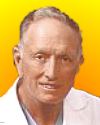
Cooley
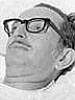
Karp
 implanted the first total artificial heart. It was used as a bridge to heart transplantation at the Texas Heart Institute, Houston, Texas. Haskell Karp had advanced terminal heart and his own heart was completely removed and replaced with a two-chambered artificial heart powered by large external air pumps with hoses to passing through the body wall and into the circulatory system. This device kept him alive for three days until a donor heart was found to give Karp a human heart transplant. However, he died 30 hours later when infection and tissue rejection set in.«
 100,000 Hearts: A Surgeon's Memoir, by Denton A. Cooley. - book suggestion.
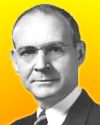
In 1932, Professor C. Glen King of the University of Pittsburgh isolated vitamin C, a medical and scientific breakthrough, after five years of effort. By painstaking research extracting components from lemon juice - requiring untold thousands of lemons - King and his colleagues isolated a crystalline substance, identified, and later synthesized vitamin C. Their discovery meant prevention of the disease of scurvy, long a source of human suffering. During WW II, King was named chairman of the Nutrition Foundation, which funded research into the nutritional problems facing a country and an army at war. He continued his innovative work with vitamin C until his retirement from Columbia University in 1964.
In 1930, the American Interplanetary Society was founded by G. Edward Pendray, David Lasser, Laurence Manning and others. Its was known as the American Rocket Society from 6 Apr 1934. Through the 1930s, the group designed an experimental test stand and tested liquid-fuelled rockets. Their pioneering work led the way to the United States space program. Their ARS-4 rocket, was the first launched in America to break the sound barrier (9 Sep 1934). It was fired from from Marine Park, Staten Island, N.Y., reached a top speed of 700 mph, travelled to a maxium height of 400-ft and a horizontal range of 1,600-ft. In early 1963, it merged with the American Institute of Aeronautics and Astronautics (AIAA).«
Blazing The Trail: The Early History Of Spacecraft And Rocketry, by Mike Gruntman. - book suggestion.
(USPTO)
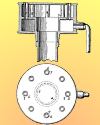
In 1899, a gas burner was patented by Benjamin F. Jackson, a black American inventor (No. 622,482). His design improved the equal distribution of air under pressure to ensure more complete combusion of the fuel gas. He assigned the patent to Robert Hoe, Theodore Mead and Charles Carpenter of New York City. The previous year, he took out patents on a "Heating Apparatus" and a "Matrix Drying Apparatus."[Image: gas burner vertical section and plan views]
The Inventive Spirit of African Americans: Patented Ingenuity, by Patricia Carter Sluby. - book suggestion.
In 1877, a pianist performed in Philadelphia, and an audience heard the performance in New York. It was an important early demonstration of Alexander Graham Bell's new invention, the telephone.
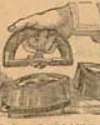
In 1871, Mary Florence Potts of Ottumwa, Iowa patented the "Mrs. Potts' sad iron (No.113,448). The invention is a detachable handle for pressing irons. Thus a person could heat a number of iron bodies on a stove, using each in turn with one handle. It was widely manufactured and licensed in the U.S. and Europe with advertising featuring her picture. The body of the iron was cast hollow and was later filled with an insulating material, such as plaster of Paris, cement or clay. Mrs. Potts claimed in her patent that this material held the heat longer so that more garments could be ironed without reheating the iron. Three irons, one handle and one stand were sold as a set. Mrs. Potts' iron is well known by antique dealers and collectors.
In 1828, Casparus van Wooden patented chocolate milk powder (Amsterdam).




