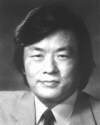
Born 5 Sep 1939.
Japanese molecular biologist and immunologist who was awarded the Nobel Prize for Medicine or Physiology in 1987 for his fundamental discovery of the genetic principle for generation of antibody diversity in the body. Antibodies are produced by a special kind of white blood cells which are called B lymphocytes. In a pioneering study (1976) Tonegawa could through a series of ingenious experiments show how parts of the genome of the cell (DNA) is redistributed under its differentiation from an embryonic cell to an antibody producing B lymphocyte. Thus, he finally answered the question how the gene material in B cells could suffice to create the structures of a seemingly endless number of different antibodies.
Japanese molecular biologist and immunologist who was awarded the Nobel Prize for Medicine or Physiology in 1987 for his fundamental discovery of the genetic principle for generation of antibody diversity in the body. Antibodies are produced by a special kind of white blood cells which are called B lymphocytes. In a pioneering study (1976) Tonegawa could through a series of ingenious experiments show how parts of the genome of the cell (DNA) is redistributed under its differentiation from an embryonic cell to an antibody producing B lymphocyte. Thus, he finally answered the question how the gene material in B cells could suffice to create the structures of a seemingly endless number of different antibodies.
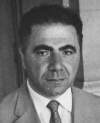
Born 5 Sep 1908; died 12 Aug 1996 at age 87.
Viktor Amazaspovich Ambartsumian was a Soviet astronomer and astrophysicist who founded the school of theoretical astrophysics in the Soviet Union. Most of his research was devoted to invariance principles applied to the theory of radiative transfer, inverse problems of astrophysics, and the empirical approach to the problems of the origin and evolution of stars and galaxies. He was first to suggest that T Tauri stars are very young and to propose that nearby stellar associations are expanding. He also showed that evolutionary processes such as mass loss are occurring in galaxies. He worked on radio galaxies and active galactic nuclei. Bruce Medal winner in 1960.
Viktor Amazaspovich Ambartsumian was a Soviet astronomer and astrophysicist who founded the school of theoretical astrophysics in the Soviet Union. Most of his research was devoted to invariance principles applied to the theory of radiative transfer, inverse problems of astrophysics, and the empirical approach to the problems of the origin and evolution of stars and galaxies. He was first to suggest that T Tauri stars are very young and to propose that nearby stellar associations are expanding. He also showed that evolutionary processes such as mass loss are occurring in galaxies. He worked on radio galaxies and active galactic nuclei. Bruce Medal winner in 1960.
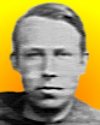
Born 5 Sep 1892; died 14 Mar 1967 at age 74.
Danish archaeologist and ethnographer laid the groundwork for the scientific study of arctic archaeology. His excavations (1921-23) of the Thule prehistoric Eskimo culture were the first scientific archaeological investigations in the Canadian Arctic. Mathiassen, as a member of the Danish Fifth Thule Expedition (1922), excavated ruins at Naujan (called Nauyat by local people), one of the most important sites of its time period. He uncovered and mapped a dozen sod house ruins, tent rings, graves, meat caches, kayak stands, and a refuse heap almost larger than the houses. His work defined the culture of the people who had lived in there. The Thule (pronounced Too-lee) people are ancestors of the modern Inuit.«[source for date of death]
Danish archaeologist and ethnographer laid the groundwork for the scientific study of arctic archaeology. His excavations (1921-23) of the Thule prehistoric Eskimo culture were the first scientific archaeological investigations in the Canadian Arctic. Mathiassen, as a member of the Danish Fifth Thule Expedition (1922), excavated ruins at Naujan (called Nauyat by local people), one of the most important sites of its time period. He uncovered and mapped a dozen sod house ruins, tent rings, graves, meat caches, kayak stands, and a refuse heap almost larger than the houses. His work defined the culture of the people who had lived in there. The Thule (pronounced Too-lee) people are ancestors of the modern Inuit.«[source for date of death]
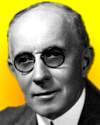
Born 5 Sep 1879; died 18 Nov 1949 at age 70.
Frank Baldwin Jewett was the U.S. electrical engineer who directed research as the first president of the Bell Telephone Laboratories, Inc., (1925-40). Jewett believed that the best science and technology result from bringing together and nurturing the best minds. Under his tenure Bell Labs laid the foundation for a new scientific discipline, radio astronomy, and transformed movies by synchronizing sound to pictures. Bell Labs was the first to transmit television over a long distance in the U.S. and designed the first electrical digital computer. Bell Labs won its first Nobel Prize in physics for fundamental work demonstrating the wave nature of matter.
Frank Baldwin Jewett was the U.S. electrical engineer who directed research as the first president of the Bell Telephone Laboratories, Inc., (1925-40). Jewett believed that the best science and technology result from bringing together and nurturing the best minds. Under his tenure Bell Labs laid the foundation for a new scientific discipline, radio astronomy, and transformed movies by synchronizing sound to pictures. Bell Labs was the first to transmit television over a long distance in the U.S. and designed the first electrical digital computer. Bell Labs won its first Nobel Prize in physics for fundamental work demonstrating the wave nature of matter.
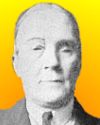
Born 5 Sep 1870; died 16 Dec 1956 at age 86.
British chemist, born in Ceylon, whose research contributed to the development of colloid chemistry. He is remembered for his investigation of the Donnan Effect (1911) which advanced the understanding of the living cell. This is the effect of a semi-permeable membrane between two electrolytes and the electrical potential thereby produced. In other work with soap solutions, he related the efficiency of hydroxyl ions in the emulsification of oils to the formation of soaps on the surface of the drops. In wartime, he worked on the industrial-scale synthesis of ammonia and nitric acid. He was blind in one eye.«
British chemist, born in Ceylon, whose research contributed to the development of colloid chemistry. He is remembered for his investigation of the Donnan Effect (1911) which advanced the understanding of the living cell. This is the effect of a semi-permeable membrane between two electrolytes and the electrical potential thereby produced. In other work with soap solutions, he related the efficiency of hydroxyl ions in the emulsification of oils to the formation of soaps on the surface of the drops. In wartime, he worked on the industrial-scale synthesis of ammonia and nitric acid. He was blind in one eye.«
Born 5 Sep 1850; died 25 Dec 1930 at age 80.
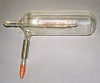
German physicist who discovered and named canal rays (1886) which emerge through holes in the anodes of low-pressure electrical discharge tubes (later shown to be positively charged particles). Earlier, he coined the term “cathode ray” (1876) emitted from a cathode. He was the first to see that they could cast a shadow, and were emitted at right angles to the surface. He also investigated the wavelengths of light emitted by metals and oxides when canal rays impinge on them. When the Berlin Urania, opened in 1889 it had five scientific departments and a “science theatre,” it was Goldstein who had recommended the “hall of physics in which the visitor could experiment on his own.” Students of his who continued his work included Wilhelm Wien and Johannes Stark.«Image: The tube with which Goldstein discovered canal rays in 1886.
German physicist who discovered and named canal rays (1886) which emerge through holes in the anodes of low-pressure electrical discharge tubes (later shown to be positively charged particles). Earlier, he coined the term “cathode ray” (1876) emitted from a cathode. He was the first to see that they could cast a shadow, and were emitted at right angles to the surface. He also investigated the wavelengths of light emitted by metals and oxides when canal rays impinge on them. When the Berlin Urania, opened in 1889 it had five scientific departments and a “science theatre,” it was Goldstein who had recommended the “hall of physics in which the visitor could experiment on his own.” Students of his who continued his work included Wilhelm Wien and Johannes Stark.«Image: The tube with which Goldstein discovered canal rays in 1886.
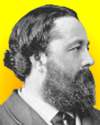
Born 5 Sep 1826; died 12 Feb 1892 at age 65. quotes
Thomas Sterry Hunt was an American geologist and chemist who in, 1957, suggested using chromium sesquioxide as the basis of a green dye to print U.S. bank notes (hence “greenbacks”), because it could not be removed by either acid or alkali without destroying the paper. Also, it could not be satisfactorily photographed. With Canadian mining engineer, James Douglas, he co-invented the Hunt-Douglas process for extracting copper from its ores. Pointing out that mineralogy is largely the chemistry of compounds of silicon, he tried to make an analogy between the structure of the inorganic silicates in minerals with that found in the carbon compounds of organic chemistry. He was the first president of the American Chemical Society to serve two terms.«
Thomas Sterry Hunt was an American geologist and chemist who in, 1957, suggested using chromium sesquioxide as the basis of a green dye to print U.S. bank notes (hence “greenbacks”), because it could not be removed by either acid or alkali without destroying the paper. Also, it could not be satisfactorily photographed. With Canadian mining engineer, James Douglas, he co-invented the Hunt-Douglas process for extracting copper from its ores. Pointing out that mineralogy is largely the chemistry of compounds of silicon, he tried to make an analogy between the structure of the inorganic silicates in minerals with that found in the carbon compounds of organic chemistry. He was the first president of the American Chemical Society to serve two terms.«
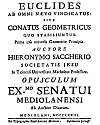

Italian mathematician who worked to prove the fifth postulate of Euclid, which can be stated as, "Through any point not on a given line, one and only one line can be drawn that is parallel to the given line." Euclid saw the proof was not self-evident, yet neither did he provide one; instead he accepted it as an assumption. Subsequently many mathematicians tried to prove this fifth postulate from the remained axioms - and failed. Saccheri took the novel approach of first assuming that the postulate was wrong, then followed the all consequences seeking any one contradiction that then leaves the only original postulate as the only possible solution. In the process, he came close to discovering non-Euclidian geometry, but gave up too early.[Image, right: Saccheri Quadrilateral, used as the starting point of his exploration of these geometries (source)]

Died 5 Sep 2010 at age 89 (born 6 Sep 1920). quotes
Panamanian nurse and educator who founded the National Association of Hispanic Nurses (1975) as its first president. Born in Panama, she moved the U.S. in 1945. When she began a nursing career in San Antonio, TX, she found the community had few Hispanic nurses, despite a large number of Hispanics in the local population. She pursued a BA degree in Psychiatric Mental Health Nursing at New York’s Columbia University, and by 1971 she earned a Ph.D. (the first awarded to a Hispanic nurse there). As a university associate dean, Murillo-Rohde found no Latina nurses in academic settings in research or in public policy, so she worked to enable Latina nurses secure an education and serve their community.«
Panamanian nurse and educator who founded the National Association of Hispanic Nurses (1975) as its first president. Born in Panama, she moved the U.S. in 1945. When she began a nursing career in San Antonio, TX, she found the community had few Hispanic nurses, despite a large number of Hispanics in the local population. She pursued a BA degree in Psychiatric Mental Health Nursing at New York’s Columbia University, and by 1971 she earned a Ph.D. (the first awarded to a Hispanic nurse there). As a university associate dean, Murillo-Rohde found no Latina nurses in academic settings in research or in public policy, so she worked to enable Latina nurses secure an education and serve their community.«
Died 5 Sep 1949 at age 65 (born 2 Apr 1884).
American plant physiologist who was an authority on plant and soil interactions. He recognized early that the complex problems of soil and plant interrelations must be studied with rigid experimental control and the isolation of individual variables. Thus, he perfected the water-culture technique for growing plants without soil, which nutrient solution is still in plant physiology research. He collected much data on the influence of oxygen, temperature, light, and other factors on ion absorption by roots. In the late 1930's, he adopted radioactive isotopes as tracers. In his fieldwork on soil chemistry he studied zinc, potassium, and phosphate deficiencies of fruit trees in California. He influenced further intensive study of aspects of micronutrients (trace elements).
American plant physiologist who was an authority on plant and soil interactions. He recognized early that the complex problems of soil and plant interrelations must be studied with rigid experimental control and the isolation of individual variables. Thus, he perfected the water-culture technique for growing plants without soil, which nutrient solution is still in plant physiology research. He collected much data on the influence of oxygen, temperature, light, and other factors on ion absorption by roots. In the late 1930's, he adopted radioactive isotopes as tracers. In his fieldwork on soil chemistry he studied zinc, potassium, and phosphate deficiencies of fruit trees in California. He influenced further intensive study of aspects of micronutrients (trace elements).
Dennis Robert Hoagland, by D. I Arnon. - book suggestion.
Died 5 Sep 1948 at age 67 (born 4 Mar 1881).
Richard Chace Tolman was an American physicist and chemist who demonstrated that electrons are the charge-carrying entities in the flow of electricity, and also made a measurement of its mass. During the Manhattan Project of WW II, he was the chief scientific adviser to Brig. General Leslie Groves, the head of military affairs overseeing the development of the atomic bomb. After the war he was adviser to the U.S. representative to the United Nations Atomic Energy Commission.
Richard Chace Tolman was an American physicist and chemist who demonstrated that electrons are the charge-carrying entities in the flow of electricity, and also made a measurement of its mass. During the Manhattan Project of WW II, he was the chief scientific adviser to Brig. General Leslie Groves, the head of military affairs overseeing the development of the atomic bomb. After the war he was adviser to the U.S. representative to the United Nations Atomic Energy Commission.
Died 5 Sep 1943 at age 74 (born 29 Mar 1869).
Czech anthropologist known for his studies of Neanderthal man and his theory of the migration of American Indians from Asia. He worked gratis as a field anthropologist (1899-1903) under Fredric Ward Putnam, in four intense anthropometric studies of the Indians of the American Southwest and northern Mexico. In 1903, Hrdlicka joined the Smithsonian Institute, where during the next forty years, he compiled the most complete collection of human bone material in the world. He was the one of the first scientists to argue the Americans originated in Asia and came across the Bering Strait, and participated in numerous archeological expeditions which contributed a great amount of information and physical evidence.
Czech anthropologist known for his studies of Neanderthal man and his theory of the migration of American Indians from Asia. He worked gratis as a field anthropologist (1899-1903) under Fredric Ward Putnam, in four intense anthropometric studies of the Indians of the American Southwest and northern Mexico. In 1903, Hrdlicka joined the Smithsonian Institute, where during the next forty years, he compiled the most complete collection of human bone material in the world. He was the one of the first scientists to argue the Americans originated in Asia and came across the Bering Strait, and participated in numerous archeological expeditions which contributed a great amount of information and physical evidence.
American bacteriologist who was lead author of Bergey's Manual of Determinative Bacteriology, which work remains a widely used international reference work for bacterial taxonomy. He was chairman of a committee to devise a classification scheme for all known bacteria suitable for identifying species. With four other bacteriologists, he first published the Bergey's Manual of Determinative Bacteriology in 1923, followed by revised editions every few years to keep pace with the discovery of new bacterial species and other changes. His research included tuberculosis, food preservatives, phagocytosis, and anaphylaxis. He distinguished the several organisms in a class called Schizomycetes.«
Bergey's Manual of Determinative Bacteriology, by Bergey, et al. - book suggestion.
Died 5 Sep 1931 (born 1862). quotes
American education reformer, public health reformer and science promoter who was president of the Rockerfeller Foundation's General Education Board (1923-28). He changed its policy to focus on funding, from a wider distribution, to support for the few best university science departments to better promote their research. His career began as a Professor of Philosophy, then turned to promoting K-12 education reform. This led to involvement in public health issues, including a campaign against hookworm, malaria, and yellow fever in the southern states. Between 1910-15, he was the Executive Secretary of the Rockefeller Sanitary Commission. During World War I, Rose became involved in relief operations in Europe. After WW I, he established the London School of Hygiene and Tropical Medicines, with the support of the Rockefeller Foundation. He helped establish World Health Organization.«
American education reformer, public health reformer and science promoter who was president of the Rockerfeller Foundation's General Education Board (1923-28). He changed its policy to focus on funding, from a wider distribution, to support for the few best university science departments to better promote their research. His career began as a Professor of Philosophy, then turned to promoting K-12 education reform. This led to involvement in public health issues, including a campaign against hookworm, malaria, and yellow fever in the southern states. Between 1910-15, he was the Executive Secretary of the Rockefeller Sanitary Commission. During World War I, Rose became involved in relief operations in Europe. After WW I, he established the London School of Hygiene and Tropical Medicines, with the support of the Rockefeller Foundation. He helped establish World Health Organization.«
Died 5 Sep 1930 at age 83 (born 6 Mar 1847).
Austrian Jesuit priest and astronomer who made a catalog of variable stars (1890-1908). Working at the Vatican Observatory he reexamined for accuracy the listing of all of the NGC (New General Catalogue of Nebulae and Star Clusters) objects north of about -30 degrees. He published lists of errata in the NGC. During his observations, he observed dark nebulae, tenuous dark clusters of interstellar matter sometimes known as Hagen's clouds. These strange clouds have not been recorded by others, and are now attributed to optical illusions associated with visual observations. Jesuits have been involved in astronomy since 1551 when Fr. Christoph Clavius, SJ, a mathematician and astronomer helped Pope Gregory XIII reform the calendar.«
Austrian Jesuit priest and astronomer who made a catalog of variable stars (1890-1908). Working at the Vatican Observatory he reexamined for accuracy the listing of all of the NGC (New General Catalogue of Nebulae and Star Clusters) objects north of about -30 degrees. He published lists of errata in the NGC. During his observations, he observed dark nebulae, tenuous dark clusters of interstellar matter sometimes known as Hagen's clouds. These strange clouds have not been recorded by others, and are now attributed to optical illusions associated with visual observations. Jesuits have been involved in astronomy since 1551 when Fr. Christoph Clavius, SJ, a mathematician and astronomer helped Pope Gregory XIII reform the calendar.«

Died 5 Sep 1906 at age 62 (born 20 Feb 1844). quotes
Austrian physicist who founded statistical mechanics. After obtaining his doctorate, he became an assistant to his teacher Josef Stefan. Boltzmann's fame is based on his invention of statistical mechanics, independently of Willard Gibbs. Their theories connected the properties and behaviour of atoms and molecules with the large scale properties and behaviour of the substances of which they were the building blocks. He also worked out a kinetic theory of gases, and the Stefan-Boltzmann law concerning a relationship between the temperature of a body and the radiation it emits. His firm belief and defense of atomism (that all matter is made of atoms) against hostile opposition to this new idea, may have contributed to his suicide in 1906.
Austrian physicist who founded statistical mechanics. After obtaining his doctorate, he became an assistant to his teacher Josef Stefan. Boltzmann's fame is based on his invention of statistical mechanics, independently of Willard Gibbs. Their theories connected the properties and behaviour of atoms and molecules with the large scale properties and behaviour of the substances of which they were the building blocks. He also worked out a kinetic theory of gases, and the Stefan-Boltzmann law concerning a relationship between the temperature of a body and the radiation it emits. His firm belief and defense of atomism (that all matter is made of atoms) against hostile opposition to this new idea, may have contributed to his suicide in 1906.
Boltzmann's Atom: The Great Debate That Launched A Revolution In Physics, by David Lindley. - book suggestion.
Died 5 Sep 1902 at age 80 (born 13 Oct 1821). quotes
German pathologist and statesman who originated the concept that disease arises in the individual cells of a tissue and, with publication of his Cellular Pathology (1858), founded the science of cellular pathology. Virchow also worked on improving sanitary conditions in Berlin, and believed that environmental factors such as poor living conditions could be as much a cause of disease as germs. He also helped develop the science of anthropology in Germany and to make Berlin a European centre of medicine. Virchow encouraged his friend Heinrich Schliemann in his determination to discover the site of Homer's Troy and actually worked on the dig at Hissarlik in 1879. more
German pathologist and statesman who originated the concept that disease arises in the individual cells of a tissue and, with publication of his Cellular Pathology (1858), founded the science of cellular pathology. Virchow also worked on improving sanitary conditions in Berlin, and believed that environmental factors such as poor living conditions could be as much a cause of disease as germs. He also helped develop the science of anthropology in Germany and to make Berlin a European centre of medicine. Virchow encouraged his friend Heinrich Schliemann in his determination to discover the site of Homer's Troy and actually worked on the dig at Hissarlik in 1879. more
Collected Essays on Public Health & Epidemiology, by Rudolf Virchow. - book suggestion.
Died 5 Sep 1866 at age 62 (born 18 May 1804).
French engineer and economist who was one of the first to analyze the cost-effectiveness of public works.
French engineer and economist who was one of the first to analyze the cost-effectiveness of public works.
Died 5 Sep 1852 at age 56 (born 25 Jan 1796).
Scottish botanist and zoologist. From 1831-41, he was Conservator at the Royal College of Surgeons Museum in Edinburgh, and thereafter Professor of Natural History at Aberdeen until his death. He is best known to botanists for his one-volume abridgment of Withering's Botanical Arrangement. He assisted Audubon in the technical part of his Birds of America. MacGillivray authored five volumes of a History of British Birds. He also wrote other manuals in botany, geology and conchology. Through extensive dissections, he made a thorough study of the internal structure of birds. His eldest son, John MacGillivray, accompanied Captain Stanley as naturalist in the voyage of the Rattlesnake.« more
Scottish botanist and zoologist. From 1831-41, he was Conservator at the Royal College of Surgeons Museum in Edinburgh, and thereafter Professor of Natural History at Aberdeen until his death. He is best known to botanists for his one-volume abridgment of Withering's Botanical Arrangement. He assisted Audubon in the technical part of his Birds of America. MacGillivray authored five volumes of a History of British Birds. He also wrote other manuals in botany, geology and conchology. Through extensive dissections, he made a thorough study of the internal structure of birds. His eldest son, John MacGillivray, accompanied Captain Stanley as naturalist in the voyage of the Rattlesnake.« more
William MacGillivray, by Robert Ralph. - book suggestion.
Died 5 Sep 1765 at age 72 (born 31 Oct 1692).
Anne-Claude-Philippe de Tubières, comte de Caylus, was a French archaeologist who is credited with being the first to conceive archaeology as a scientific discipline and in this respect Winckelmann acknowledged indebtedness to him. His own collection of antiques, which he began in 1729, formed the basis of his Recueil d'antiquités égyptiennes, étrusques, grecques, romaines et gauloises (7 vols., 1752-67), the most serious work of antiquarian research in the 18th cent. and one of the most influential in spreading knowledge and enthusiasm for the works of Classical antiquity. Caylus was also a painter and an engraver, and he is also credited with finding a new process to inlay colors in marble.
Anne-Claude-Philippe de Tubières, comte de Caylus, was a French archaeologist who is credited with being the first to conceive archaeology as a scientific discipline and in this respect Winckelmann acknowledged indebtedness to him. His own collection of antiques, which he began in 1729, formed the basis of his Recueil d'antiquités égyptiennes, étrusques, grecques, romaines et gauloises (7 vols., 1752-67), the most serious work of antiquarian research in the 18th cent. and one of the most influential in spreading knowledge and enthusiasm for the works of Classical antiquity. Caylus was also a painter and an engraver, and he is also credited with finding a new process to inlay colors in marble.

German-British Secretary of the Royal Society who came to England as a diplomat to see Oliver Cromwell, but stayed instead of returning to Germany. From 1662 he served as the Secretary of the Royal Society, London. His extensive correspondence, and the Philosophical Transactions of the Royal Society journal he founded and editted, spread information on the intellectual activity of the scientists of the Society. Among others, he encouraged Newton, Flamsteed, Malpighi, and Leeuwenhoek.
Henry Oldenburg: Shaping the Royal Society, by Marie Boas Hall. - book suggestion.
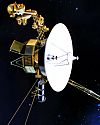
In 1977, NASA launched Voyager 1 from Cape Canaveral, Florida, aboard a Titan-Centaur rocket. Voyager 2 had been launched similarly the previous month, on 20 Aug 1977.
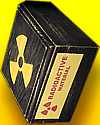
In 1947, the first U.S. shipment of radioactive isotopes to a foreign country was scheduled to leave the Clinton Laboratories, Oak Ridge, Tennessee. A package of 20 millicuries of the radioisotope, phosphorus-32, was prepared for Australia’s Commonwealth X-ray and Radium Laboratory (CXRL), Melbourne, to treat an urgent case of polycythemia, a blood disorder. Arrangements were made in the U.S. by the Australian Embassy’s scientific liason officer. The isotopes were produced using the uranium pile at Oak Ridge, and sold approximately at cost. They were transported by airplane out of necessity, since the radioisotope had a half-life of only 14.3 days.«[According to an evening announcement, made by the U.S. Atomic Energy on 4 Sep 1947 that the shipment would leave “tomorrow afternoon”, as reported in the New York Times (5 Sep 1947).]
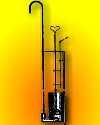
Patent 272250 (1887)
In 1885, Sylvanus Bowser, inventor of the first U.S. gas pump, made his initial sale to Jake Gumper, owner of a service station in Fort Wayne, Indiana. The pump held one barrel of gasoline, and used marble valves and a wooden plunger. It was built in Bowser’s barn, and patented in 1887.
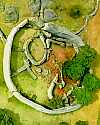
In 1871, Karl Mauch, a German geologist, arrived at the ruins of Great Zimbabwe in what is now southern Zimbabwe in sub-Saharan Africa. Local Karanga tribesmen led Mauch to the wooded savanna location where he viewed 100 acres of granite enclosures. The sinuous coursed granite walls were built without mortar and stood up to 32 feet high. Maunch was the first European to investigate the ruins, but centuries earlier João de Barros had written what he had heard about them (but not himself seen) in his Da Asia (1552) record of Portuguese conquests. Subsequent investigators were inept, racist and attributed the construction to whites, until David Randall-MacIver wrote his account in 1906 of their true native African origin.«[Image: aerial view of the Great Zimbabwe ruins.]
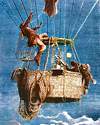
In 1862, a balloon ascent to a height of 7 miles was made by metereologist James Glaisher and his pilot Henry Tracey Coxwell. Although this was the greatest height then achieved by passengers in a balloon, its precise altitude is unknown because Glaisher lost consciousness and was unable to read the barometer. Death was narrowly avoided by the courageous efforts of the pilot. The height was estimated by extrapolating measurements already recorded on the ascent. Between 1862-66, Glaisher made balloon ascents, many of which were arranged by a committee of the British Association. Their objective was to carry out scientific observations such as the variation in temperature and humidity of the atmosphere at high elevations.« more
more
more Travels in the air, by James Glaisher. - book suggestion.
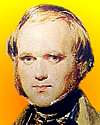
In 1857, Charles Darwin, now 48 years old, had not yet published his theory of evolution. On this day, he sent a letter to Asa Gray, a Harvard botanist, discussing his theory. The encouragement which followed from Gray and others, and new knowledge that Alfred Russell Wallace had independently developed the same theory, prompted Darwin to end 20 years of indecision and publish his ideas.
more
From So Simple a Beginning: Darwin's Four Great Books, by Charles Darwin, Edward O. Wilson. - book suggestion.
In 1831, Charles Darwin first met Captain Robert Fitzroy, commander of HMS Beagle, who would be his cabinmate on a the historic five-year expedition (1831-36). During that voyage, Darwin visited the Galapogos Islands which inspired his theory of evolution.




