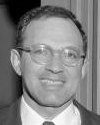
Born 14 May 1925; died 26 Apr 2006 at age 80. quotes
Israeli theoretical physicist, who worked independently of Gell-Mann but almost simultaneously (1961) devised a method of grouping baryons in such a way that they fell into logical families. Now known as the Eightfold Way (after Buddha's Eightfold Path to Enlightenment and bliss), the scheme grouped mesons and baryons (e.g., protons and neutrons) into multiplets of 1, 8, 10, or 27 members on the basis of various properties. He had served as the head of his Israel's atomic energy commission, and founded the country's space program.
Israeli theoretical physicist, who worked independently of Gell-Mann but almost simultaneously (1961) devised a method of grouping baryons in such a way that they fell into logical families. Now known as the Eightfold Way (after Buddha's Eightfold Path to Enlightenment and bliss), the scheme grouped mesons and baryons (e.g., protons and neutrons) into multiplets of 1, 8, 10, or 27 members on the basis of various properties. He had served as the head of his Israel's atomic energy commission, and founded the country's space program.
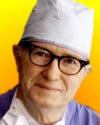
Born 14 May 1918; died 19 Feb 2003 at age 84.
James Daniel Hardy was an American surgeon who headed teams that performed the first human lung transplant in 1963; the first animal-to-human heart transplant in 1964; and a double-lung transplant that left the heart in place in 1987. Three years before Christiaan Barnard performed the first successful human-to-human heart transplant, on 23 Jan 1964, 68-year-old Boyd Rush was admitted to the hospital. No human was heart available; Hardy decided to use the heart of a chimpanzee named Bino. The newly-transplanted heart beat on its own; but it was too small to maintain independent circulation and Rush died after 90 minutes. Hardy had to endure some severe criticism. Overall, his work helped to alter perceptions about the transplantation process.
James Daniel Hardy was an American surgeon who headed teams that performed the first human lung transplant in 1963; the first animal-to-human heart transplant in 1964; and a double-lung transplant that left the heart in place in 1987. Three years before Christiaan Barnard performed the first successful human-to-human heart transplant, on 23 Jan 1964, 68-year-old Boyd Rush was admitted to the hospital. No human was heart available; Hardy decided to use the heart of a chimpanzee named Bino. The newly-transplanted heart beat on its own; but it was too small to maintain independent circulation and Rush died after 90 minutes. Hardy had to endure some severe criticism. Overall, his work helped to alter perceptions about the transplantation process.
The Academic Surgeon, by James Hardy. - book suggestion.
Born 14 May 1908; died 24 Nov 1998 at age 90. quotes
Nicholas Kurti [formerly Miklós Mór Kürti] was a Hungarian-British physicist and chef who researched in ultra-low temperature physics, and in a record-breaking nuclear cooling experiments that came within a millionth of a degree of absolute zero. As a young man, in 1933, he left the Univeristy of Berlin to flee from the Nazis. Most of his life was then spent at Oxford, England. During WWII, he investigated how to separate the isotopes of uranium (which became of interest in the Manhattan Project to build the atomic bomb). He had a side interest in food science, combining his hobby as a chef with a study of the physics and chemistry of cooking, for which he coined the term molecular gastronomy. (With his wife, he edited the first Royal Society cook book: But the Crackling Is Superb: An Anthology on Food and Drink by Fellows and Foreign Members of the Royal Society (1988).«
Nicholas Kurti [formerly Miklós Mór Kürti] was a Hungarian-British physicist and chef who researched in ultra-low temperature physics, and in a record-breaking nuclear cooling experiments that came within a millionth of a degree of absolute zero. As a young man, in 1933, he left the Univeristy of Berlin to flee from the Nazis. Most of his life was then spent at Oxford, England. During WWII, he investigated how to separate the isotopes of uranium (which became of interest in the Manhattan Project to build the atomic bomb). He had a side interest in food science, combining his hobby as a chef with a study of the physics and chemistry of cooking, for which he coined the term molecular gastronomy. (With his wife, he edited the first Royal Society cook book: But the Crackling Is Superb: An Anthology on Food and Drink by Fellows and Foreign Members of the Royal Society (1988).«
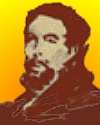
Born 14 May 1872; died 26 Jun 1919 at age 47.
Russian botanist, the “father of chromatography,” who developed and named the adsorption chromatography technique of separating plant pigments by extracting them from leaves with ether and alcohol and percolating the solution through a column of calcium carbonate. The components of the mixture moved at different rates, producing a series of bands. He is known in particular for his study of the chlorophylls and the carotenoids. However, in Tswett's own lifetime, chromatography remained virtually unrecognized as a scientific tool. In the 1930s, it was rediscovered and then spread worldwide. The chromatography technique he invented is now widely used to separate substances from mixtures. (Also spelled Tsvet.)
Russian botanist, the “father of chromatography,” who developed and named the adsorption chromatography technique of separating plant pigments by extracting them from leaves with ether and alcohol and percolating the solution through a column of calcium carbonate. The components of the mixture moved at different rates, producing a series of bands. He is known in particular for his study of the chlorophylls and the carotenoids. However, in Tswett's own lifetime, chromatography remained virtually unrecognized as a scientific tool. In the 1930s, it was rediscovered and then spread worldwide. The chromatography technique he invented is now widely used to separate substances from mixtures. (Also spelled Tsvet.)
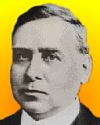
Born 14 May 1863; died 9 Aug 1932 at age 69.
American mathematician who originated the idea, postumously given his name - for the Fields Medal. It became the most prestigious award for mathematicians, often referred to as the equivalent of a Nobel Prize for mathematicians. As a professor at the University of Toronto, he had worked to bring the International Congress of Mathematicians to Toronto (1924). The Congress was so successful that afterward there was a surplus of about $2,500 which Fields, as chairman of the organizing committee, proposed be used to fund two medals to be awarded at each of future Congresses. This was approved on 24 Feb 1931. He died the following year, leaving $47,000 as additional funding for the medals, which have been awarded since 1936.« more
American mathematician who originated the idea, postumously given his name - for the Fields Medal. It became the most prestigious award for mathematicians, often referred to as the equivalent of a Nobel Prize for mathematicians. As a professor at the University of Toronto, he had worked to bring the International Congress of Mathematicians to Toronto (1924). The Congress was so successful that afterward there was a surplus of about $2,500 which Fields, as chairman of the organizing committee, proposed be used to fund two medals to be awarded at each of future Congresses. This was approved on 24 Feb 1931. He died the following year, leaving $47,000 as additional funding for the medals, which have been awarded since 1936.« more
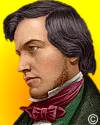
Born 14 May 1815; died 31 Jan 1849 at age 33. quotes
English chemist who prepared furfurine and benzoline (1845), the first examples of vegeto-alkali or organic salt-bases, as they were known then. He coined their names. Fownes was the first winner of the one hundred guineas (£105) Actonian Prize from the Royal Institution for his essay, Chemistry as Exemplifies the Wisdom and Beneficence of God. He published this essay, which dealt with animal and plant chemistry, in 1844. In the same year he also published a successful general text-book of chemistry, A Manual of Elementary Chemistry, Theoretical and Practical, which survived decades after him through twelve editions, the last in 1872. He died at the young age of 34.« more
English chemist who prepared furfurine and benzoline (1845), the first examples of vegeto-alkali or organic salt-bases, as they were known then. He coined their names. Fownes was the first winner of the one hundred guineas (£105) Actonian Prize from the Royal Institution for his essay, Chemistry as Exemplifies the Wisdom and Beneficence of God. He published this essay, which dealt with animal and plant chemistry, in 1844. In the same year he also published a successful general text-book of chemistry, A Manual of Elementary Chemistry, Theoretical and Practical, which survived decades after him through twelve editions, the last in 1872. He died at the young age of 34.« more

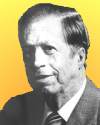
Died 14 May 2006 at age 84 (born 15 Jul 1921).
Robert Bruce Merrifield was an American biochemist who received the 1984 Nobel Prize for Chemistry for his development of the solid phase peptide synthesis method to build up large organic molecules on a solid matrix. He first attached an amino acid to small plastic polymer spheres, then added other amino acids, one after another, until a polypeptide chain was built up. The chain was then released from the polymer. Chains of amino acids can thus be built in any predetermined order to synthesize a wide variety of proteins, hormones, and other organic molecules. Merrifield's work has encompassed the development of resins, protecting groups and chemical strategies, and the engineering which brought automation to peptide chemistry.«
Robert Bruce Merrifield was an American biochemist who received the 1984 Nobel Prize for Chemistry for his development of the solid phase peptide synthesis method to build up large organic molecules on a solid matrix. He first attached an amino acid to small plastic polymer spheres, then added other amino acids, one after another, until a polypeptide chain was built up. The chain was then released from the polymer. Chains of amino acids can thus be built in any predetermined order to synthesize a wide variety of proteins, hormones, and other organic molecules. Merrifield's work has encompassed the development of resins, protecting groups and chemical strategies, and the engineering which brought automation to peptide chemistry.«
Life During a Golden Age of Peptide Chemistry, by Robert Merrifield. - book suggestion.
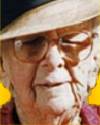
Died 14 May 1998 at age 108 (born 7 Apr 1890). quotes
Marjory Stoneman Douglas (née Marjory Stoneman) was an American conservationist, author and journalist who advocated so tirelessly to maintain natural protection for the Florida Everglades wetlands, she earned nicknames like “The Grande Dame of the Everglades.” Her most significant book was The Everglades: River of Grass (1947), which changed perceptions of the wetlands from a worthless swamp to a valuable natural resource. Douglas established Friends of the Everglades as a conservation group. She was also active giving speeches for various other causes she passionately believed in, such as social justice. From her early career as a reporter for The Miami Herald, she was influential in the community, and gained more credibility from her 50 short stories which largely focused on the Florida environs.«
Marjory Stoneman Douglas (née Marjory Stoneman) was an American conservationist, author and journalist who advocated so tirelessly to maintain natural protection for the Florida Everglades wetlands, she earned nicknames like “The Grande Dame of the Everglades.” Her most significant book was The Everglades: River of Grass (1947), which changed perceptions of the wetlands from a worthless swamp to a valuable natural resource. Douglas established Friends of the Everglades as a conservation group. She was also active giving speeches for various other causes she passionately believed in, such as social justice. From her early career as a reporter for The Miami Herald, she was influential in the community, and gained more credibility from her 50 short stories which largely focused on the Florida environs.«
The Everglades: River of Grass, by Marjory Stoneman Douglas. - book suggestion.
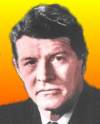
Died 14 May 1995 at age 79 (born 26 Mar 1916).
American biochemist who (with Stanford Moore and William H. Stein) received the 1972 Nobel Prize for Chemistry for research on the shape and primary structure of ribonuclease (the enzyme that hydrolyses RNA). Ribonuclease is made up of a single peptide (a molecule consisting of two or more amino acid molecules joined by a peptide bond) chain folded into a sphere bound together by four disulphide bonds. These bonds can be broken down so that the enzyme becomes denatured (collapses), losing all of its enzyme properties. Anfinsen found that its shape and consequently its enzymatic power could be restored, and concluded( that ribonuclease must retain all of the information about its configuration within its amino acids.
American biochemist who (with Stanford Moore and William H. Stein) received the 1972 Nobel Prize for Chemistry for research on the shape and primary structure of ribonuclease (the enzyme that hydrolyses RNA). Ribonuclease is made up of a single peptide (a molecule consisting of two or more amino acid molecules joined by a peptide bond) chain folded into a sphere bound together by four disulphide bonds. These bonds can be broken down so that the enzyme becomes denatured (collapses), losing all of its enzyme properties. Anfinsen found that its shape and consequently its enzymatic power could be restored, and concluded( that ribonuclease must retain all of the information about its configuration within its amino acids.
Died 14 May 1983 at age 86 (born 25 Apr 1897).
American physical chemist and metallurgist who researched the role of oxygen in iron and steelmaking. Applying the theories of physical chemistry, he examined the reactions between slag and liquid iron and advanced the techniques of pig iron and steel production. From his work in the early 1930s at the University of Michigan, he began to establish an international reputation for his research on steel. He became a professor of process metallury at M.I.T. in 1937, and was the department head from 1946 until retirement in 1962. During WW II he took a leave of absence from 1943, to work for the Manhattan Project as chief of its metallurgy section, where he found a method to convert powdered unranium into soliod castings, thus providing researchers with a reliable alternate supply of castings when solid uranium was scarce.«
American physical chemist and metallurgist who researched the role of oxygen in iron and steelmaking. Applying the theories of physical chemistry, he examined the reactions between slag and liquid iron and advanced the techniques of pig iron and steel production. From his work in the early 1930s at the University of Michigan, he began to establish an international reputation for his research on steel. He became a professor of process metallury at M.I.T. in 1937, and was the department head from 1946 until retirement in 1962. During WW II he took a leave of absence from 1943, to work for the Manhattan Project as chief of its metallurgy section, where he found a method to convert powdered unranium into soliod castings, thus providing researchers with a reliable alternate supply of castings when solid uranium was scarce.«
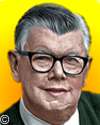
Lear in 1952
Died 14 May 1978 at age 75 (born 26 Jun 1902). quotes
American aeronautical engineer, electrical engineer and inventor who taught himself electrical engineering and is best known for the Lear Jet Corporation he founded, the world's first mass-producer of business jet aircraft. Beginning in 1930, over a 20 year period, he secured more than 100 patents for aircraft radios, communications and navigation equipment. Lear's other inventions include the miniature automatic pilot for aircraft, the first commercial automobile radio, and the eight-track stereo tape player. more
American aeronautical engineer, electrical engineer and inventor who taught himself electrical engineering and is best known for the Lear Jet Corporation he founded, the world's first mass-producer of business jet aircraft. Beginning in 1930, over a 20 year period, he secured more than 100 patents for aircraft radios, communications and navigation equipment. Lear's other inventions include the miniature automatic pilot for aircraft, the first commercial automobile radio, and the eight-track stereo tape player. more
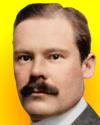
Died 14 May 1975 at age 97 (born 25 Jan 1878). quotes
Ernst Frederik Werner Alexanderson was a Swedish-American electronics engineer and inventorwhose contributions revolutionized radio communication, and enabled the first live radio broadcast. He developed a high-frequency alternator to convert direct current into alternating current, capable of producing continuous radio waves. After two years of development, his 2 kilowatt, 100,000 cycle equipment was installed (24 Dec 1906) in the Fessenden station at Brant Rock, Massachusetts. It was used to transmit a radio broadcast of both speech and a live violin solo. Later, he was also a television pioneer, which he first demonstrated to the public on 13 Jan 1928. He spent 46 years associated with General Electric. Alexanderson’s 322 patents were in diverse fields, including railway electrification, motors, power transmission, telephone relays, and electric ship propulsion.«
Ernst Frederik Werner Alexanderson was a Swedish-American electronics engineer and inventorwhose contributions revolutionized radio communication, and enabled the first live radio broadcast. He developed a high-frequency alternator to convert direct current into alternating current, capable of producing continuous radio waves. After two years of development, his 2 kilowatt, 100,000 cycle equipment was installed (24 Dec 1906) in the Fessenden station at Brant Rock, Massachusetts. It was used to transmit a radio broadcast of both speech and a live violin solo. Later, he was also a television pioneer, which he first demonstrated to the public on 13 Jan 1928. He spent 46 years associated with General Electric. Alexanderson’s 322 patents were in diverse fields, including railway electrification, motors, power transmission, telephone relays, and electric ship propulsion.«
Alexanderson: Pioneer in American Electrical Engineering, by Professor James E. Brittain. - book suggestion.
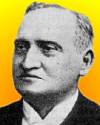
Died 14 May 1924 at age 64 (born 22 Dec 1859).
Italian mathematical economist who builton the general equilibrium theory of Léon Walras and was instrumental in convincing Walras to incorporate variable production techniques - and, by extension, marginal productivity theory - into the Walras theory. Barone's greatest contribution was in getting the "Socialist Calculation" debate started with his famous 1908 article. His position was that it was indeed possible in a collectivist state for a planning agency to calculate prices for maximum efficiency. He was the first to apply indifference curve analysis to compare the relative burdens of income taxes and excise taxes (1912). He opposed "progressive" taxation schemes as based on dubious utilitarian calculations.«
Italian mathematical economist who builton the general equilibrium theory of Léon Walras and was instrumental in convincing Walras to incorporate variable production techniques - and, by extension, marginal productivity theory - into the Walras theory. Barone's greatest contribution was in getting the "Socialist Calculation" debate started with his famous 1908 article. His position was that it was indeed possible in a collectivist state for a planning agency to calculate prices for maximum efficiency. He was the first to apply indifference curve analysis to compare the relative burdens of income taxes and excise taxes (1912). He opposed "progressive" taxation schemes as based on dubious utilitarian calculations.«
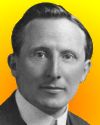
Died 14 May 1920 at age 52 (born 16 Aug 1867).
English archaeologist who in 1895-96 conducted excavations in southwestern Greece at Pylos and the adjacent island of Sphacteria, revealing remains of Spartan fortifications. These confirmed the battle of 425 BC in the Peloponnesian War recorded by the ancient Athenian historian Thucydides. Burrows was by nature a classicist, whose primary purpose in seeking tangible evidence from the past was to verify ancient texts. At Rhitsona, in Boeotia (1905, 1907), his original goal was to find the temple of Delium, but without success. Instead he found and catalogued artifacts from Boeotian graves dating from the 7th and 6th century B.C. at the necropolis of Mykalessos, near Tanagra. In 1907, he published Recent Discoveries in Crete.«
English archaeologist who in 1895-96 conducted excavations in southwestern Greece at Pylos and the adjacent island of Sphacteria, revealing remains of Spartan fortifications. These confirmed the battle of 425 BC in the Peloponnesian War recorded by the ancient Athenian historian Thucydides. Burrows was by nature a classicist, whose primary purpose in seeking tangible evidence from the past was to verify ancient texts. At Rhitsona, in Boeotia (1905, 1907), his original goal was to find the temple of Delium, but without success. Instead he found and catalogued artifacts from Boeotian graves dating from the 7th and 6th century B.C. at the necropolis of Mykalessos, near Tanagra. In 1907, he published Recent Discoveries in Crete.«
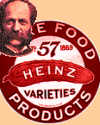
Died 14 May 1919 at age 74 (born 11 Oct 1844). quotes
American businessman who founded H.J. Heinz Co.and invented its “57 varieties” slogan was a born salesman. His entrepreneur and business genius had roots in post-Civil War Pittsburgh, where iron, steel and glass factories were forging industrial America. By age 12 he was peddling produce from the family garden. At 25, in 1869, he and a friend launched Heinz & Noble. Its first product: Henry's mother's grated horseradish, bottled in clear glass to reveal its purity. Heinz & Noble thrived until an overabundance of crops in 1875 brought bankruptcy. But Henry plunged back in, eventually building a model factory complex along the Allegheny River. By 1896, at only 52, the pickle king had become a millionaire and celebrity. more
American businessman who founded H.J. Heinz Co.and invented its “57 varieties” slogan was a born salesman. His entrepreneur and business genius had roots in post-Civil War Pittsburgh, where iron, steel and glass factories were forging industrial America. By age 12 he was peddling produce from the family garden. At 25, in 1869, he and a friend launched Heinz & Noble. Its first product: Henry's mother's grated horseradish, bottled in clear glass to reveal its purity. Heinz & Noble thrived until an overabundance of crops in 1875 brought bankruptcy. But Henry plunged back in, eventually building a model factory complex along the Allegheny River. By 1896, at only 52, the pickle king had become a millionaire and celebrity. more
H. J. Heinz: A Biography, by Quentin R. Skrabec. - book suggestion.
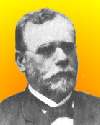
Died 14 May 1899 at age 58 (born 27 May 1840).
Swedish chemist who discovered (1879) the oxide of scandium, scandia, in the rare-earth minerals gadolinite and euxenite. The existence of the element had been predicted by Dmitry Ivanovich Mendeleyev (1871) who had tentatively called it ekaboron. Nilson, working with Otto Petterson, he investigated rare earths, established the correct atomic weight for beryllium, and prepared metallic titanium with a purity of 95% (1887). Nilson was professor of analytical chemistry at the University of Upsala and at the Agricultural Academy of Stockholm. His researches on soils and fertilizers enabled improving the barren plains of his native island, Gothland, into an agricultural region.«
Swedish chemist who discovered (1879) the oxide of scandium, scandia, in the rare-earth minerals gadolinite and euxenite. The existence of the element had been predicted by Dmitry Ivanovich Mendeleyev (1871) who had tentatively called it ekaboron. Nilson, working with Otto Petterson, he investigated rare earths, established the correct atomic weight for beryllium, and prepared metallic titanium with a purity of 95% (1887). Nilson was professor of analytical chemistry at the University of Upsala and at the Agricultural Academy of Stockholm. His researches on soils and fertilizers enabled improving the barren plains of his native island, Gothland, into an agricultural region.«
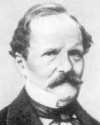
Died 14 May 1893 at age 83 (born 29 Jan 1810). quotes
German mathematician whose introduction of ideal numbers, which are defined as a special subgroup of a ring, extended the fundamental theorem of arithmetic to complex number fields. He worked on Function theory, and extended Carl Gauss's work on hypergeometric series, giving developments that are useful in the theory of differential equations. He was the first to compute the monodromy groups of these series. Later. Kummer devoted himself to the study of the ray systems, but treated these geometrical problems algebraically. He also discovered the fourth order surface based on the singular surface of the quadratic line complex. This Kummer surface has 16 isolated conical double points and 16 singular tangent planes.
German mathematician whose introduction of ideal numbers, which are defined as a special subgroup of a ring, extended the fundamental theorem of arithmetic to complex number fields. He worked on Function theory, and extended Carl Gauss's work on hypergeometric series, giving developments that are useful in the theory of differential equations. He was the first to compute the monodromy groups of these series. Later. Kummer devoted himself to the study of the ray systems, but treated these geometrical problems algebraically. He also discovered the fourth order surface based on the singular surface of the quadratic line complex. This Kummer surface has 16 isolated conical double points and 16 singular tangent planes.
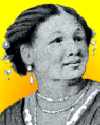
Died 14 May 1881 at age 75 (born 23 Nov 1805).
Mary Jane Grant Seacole, née Mary Jane Grant was a Jamaican nurse who inherited her mother’s nursing home for invalids in Kingston, Jamaica, where she grew up in the practice. After marriage (1836) to Edwin Horatio Seacole, she gained knowledge of local medicines and treatments on their trips to the Bahamas, Haiti, and Cuba. After his death (1844), she traveled to nurse cholera victims in Panama, returned to Jamaica to care for yellow fever patients. After more time in Panama she wanted to tend to wounded soldiers in the Crimea. She was a contemporary of Florence Nightingale, but was rejected to be an army nurse (probably due to racial prejudice). So Seacole went there in 1855 and worked independently establishing a store, the “British Hotel”, and nursed British soldiers, even at the battlefront.«
Mary Jane Grant Seacole, née Mary Jane Grant was a Jamaican nurse who inherited her mother’s nursing home for invalids in Kingston, Jamaica, where she grew up in the practice. After marriage (1836) to Edwin Horatio Seacole, she gained knowledge of local medicines and treatments on their trips to the Bahamas, Haiti, and Cuba. After his death (1844), she traveled to nurse cholera victims in Panama, returned to Jamaica to care for yellow fever patients. After more time in Panama she wanted to tend to wounded soldiers in the Crimea. She was a contemporary of Florence Nightingale, but was rejected to be an army nurse (probably due to racial prejudice). So Seacole went there in 1855 and worked independently establishing a store, the “British Hotel”, and nursed British soldiers, even at the battlefront.«
Wonderful Adventures of Mrs. Seacole in Many Lands, by Mary Seacole. - book suggestion.
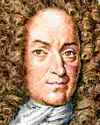
Died 14 May 1734 at age 73 (born 21 Oct 1660). quotes
German physician and chemist, who as a youth believed in alchemy and animism. He later rejected them as professor of chemistry and medicine (Halle, 1694). He developed the phlogiston theory of combustion (as did Johann Becher), embraced by chemists for almost a century. This described flammable objects as rich in phlogiston, lost when burned, leaving incombustible ash with no phlogiston. Likewise, Stahl said, metal had phlogiston, but rust did not. Air was only a carrier of phlogiston, not directly involved. If charcoal was burned with metal ore, its phlogiston was transferred to the metal produced. Stahl extended the idea to biological processes such as respiration, fermentation, and decay. He was first to prepare glacial acetic acid.«
German physician and chemist, who as a youth believed in alchemy and animism. He later rejected them as professor of chemistry and medicine (Halle, 1694). He developed the phlogiston theory of combustion (as did Johann Becher), embraced by chemists for almost a century. This described flammable objects as rich in phlogiston, lost when burned, leaving incombustible ash with no phlogiston. Likewise, Stahl said, metal had phlogiston, but rust did not. Air was only a carrier of phlogiston, not directly involved. If charcoal was burned with metal ore, its phlogiston was transferred to the metal produced. Stahl extended the idea to biological processes such as respiration, fermentation, and decay. He was first to prepare glacial acetic acid.«

In 1973, the United States launched "Skylab One," its first manned space station. During the following nine months, three successive crews of astronauts manned the orbiting laboratory. This was the largest payload launched into space. It fell back into and burned up in the Earth's atmosphere in July, 1979. The official emblem (left) depicts the U.S. Skylab space station cluster in Earth orbit with the Sun in the background. The cluster is composed of the Apollo Command/Service Module, Orbital Workshop, Apollo Telescope Mount (ATM), Multiple Docking Adapter, and Airlock Module. The arrays of solar cell panels turn sunlight into electric power for the space station.
In 1963, a laser light beam link first carried the TV signal during a network broadcast. It was demonstrated during the CBS program I've Got a Secret. The signal from a studio camera was used to modulate a laser beam that travelled two feet to a receiver that decoded the signal from the beam. That signal was relayed via the control room for the national broadcast. This communication system was the work of GTE scientists Samuel M. Stone and Louis Richard Bloom. (Laser light beams are now routinely used to transmit signals along optical fibres.)
In 1963, the first U.S. patent on a "solar airplane vehicle" was issued to Elmer G. Johnson of Fairborn, Ohio (No. 3,089,670).
In 1932, the first electrical timing device was tested at a track meet for three events between Columbia and Syracuse at Baker Field, New York City.
In 1900, the military orders establishing the U.S. Yellow Fever Commission were issued : "By direction of the Secretary of War a board of medical officers is appointed to meet at Camp Columbia, Quernados Cuba for the purpose of pursuing scientific investigations with reference to the infectious diseases prevalent on the Island of Cuba."
In 1878, the name Vaseline was registered as a trademark for the petroleum jelly developed by an English-born chemist Robert Augustus Chesebrough. He began, in 1859, with an interest in the petroleum oil boom, and travelled to Titusville, Pa., where oil strikes began, to enter that business. Once there, his chemist's curiosity was caught by a pasty residue that stuck to driller's rods and clogged their pumps. Workers had found it was practical to use on burns and cuts to promote healing. Cheseborough returned to Brooklyn and spent years experimenting to extract and purify the useful ingredient he called "petroleum jelly." Manufacturing from 1870, he received a patent on the product on 4 Jun 1872 (No. 127,568).
In 1862, Swiss watchmaker Adolphe Nicole patented the chronograph, which was able to give split-second timing of sports events.
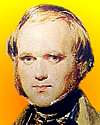
In 1856, Charles Darwin began writing his book, The Origin of Species, sitting in the study of his country home in Down, England 
From So Simple a Beginning: Darwin's Four Great Books, by Charles Darwin, Edward O. Wilson. - book suggestion.
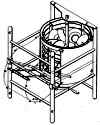
(USPTO)
In 1850, the first U.S. patent for a dishwashing machine was issued to Joel Houghton of Ogden, NY, for an “Improvement in Machines for Washing Table Furniture” (No.7,365). Its design had a cylindrical wire basket to contain the dishes in a tub of boiling water which contained beaters turned by a handle to move the water against the tableware in the basket. The cylinder could also be rotated to expose its contents evenly to the action of the churning water. The first patent on a dishwasher that became commercially successful was issued on 28 Dec1886 to Josephine Cochrane. She began a company supplying her machines to restaurants and hotels, which continued after her death, and years later led to the “KichenAid” brand of home dishwashers.«
more
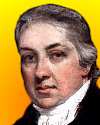
Jenner
In 1796, English physician Edward Jenner administered the first vaccination against smallpox to an eight-year-old boy. Jenner innoculated an 8-year-old boy, James Phipps, with material from the sores of dairymaid Sarah Nelmes who had a mild case of cowpox. A few weeks later, on 1 Jul 1796, he subsequently tested the boy’s resistance to smallpox, by inoculating Phipps with smallpox virus. Fortunately, the immunization had been successful. This tested a conventional wisdom he had heard that those who had survived cowpox seemed to be immune to the deadly smallpox disease. By 1798 he had 23 cases, which he recorded in An Inquiry into the Causes and Effects of the Variolae Vaccinae. Jenner's work was rapidly taken up in Europe and America.«
more
Vaccination Against Smallpox, by Edward Jenner. - book suggestion.




