
Born 25 Dec 1933; died 4 Jan 2014 at age 80.
Inna A. Dobruskina was an Israeli paleobotanist and geologist who was one of the foremost experts on Triassic paleobotany. She studied non-petroleum geology at Moscow State University (1952-57), a choice of science made to avoid a job working for the government politically and without direct military implications. As a young graduate, she joined the Amur Expedition to geologically survey the region of a joint Sino-Soviet hydroelectric dam. Then, for a Ph.D. she began an interest in Triassic flora, a passion for 25 years, travelling widely. By the mid 1980s, frustrated by Soviet authorities, she took an opportunity to emigrate to Israel, and settled in Jerusalem (1989-99). Her monograph on the Triassic floras of Eurasia remains an outstanding work.«
Inna A. Dobruskina was an Israeli paleobotanist and geologist who was one of the foremost experts on Triassic paleobotany. She studied non-petroleum geology at Moscow State University (1952-57), a choice of science made to avoid a job working for the government politically and without direct military implications. As a young graduate, she joined the Amur Expedition to geologically survey the region of a joint Sino-Soviet hydroelectric dam. Then, for a Ph.D. she began an interest in Triassic flora, a passion for 25 years, travelling widely. By the mid 1980s, frustrated by Soviet authorities, she took an opportunity to emigrate to Israel, and settled in Jerusalem (1989-99). Her monograph on the Triassic floras of Eurasia remains an outstanding work.«
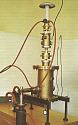
Ruska's electron microscope
Ernst August Friedrich Ruska was a German electrical engineer who invented the electron microscope. For “his fundamental work in electron optics and for the design of the first electron microscope” he was awarded a share of the Nobel Prize for Physics in 1986 (with Heinrich Rohrer and Gerd Binnig). In 1928, found that a magnetic coil could act as a lens to focus an electron beam. Adding a second lens he produced the first primitive (x17 power) electron microscope. By 1933, his refinements increased the magnification to x7000, exceeding what was possible with visible light. The first commercial model was marketed in 1939. Since then, electron microscopes rapidly found applications in biology, medicine and many other areas of science.«[Image right: Ruska's electron microscope (source)]
The early development of electron lenses and electron microscopy, by Ernst Ruska. - book suggestion.
Born 25 Dec 1904; died 3 Mar 1999 at age 94.
German-Canadian physicist who was awarded the 1971 Nobel Prize for Chemistry "for his contributions to the knowledge of electronic structure and geometry of molecules, particularly free radicals." He published his first work in molecular spectroscopy at the end of the 1920's. His measurement of how molecules absorb ultraviolet and infrared energy yield information on energy states in molecules, leading to knowledge of their size, shape and other properties. For example, he showed that radicals can drastically change their shape with increasing energy, such as methylene which is linear in its ground state but bent in higher energy states. He also applied spectroscopy in astronomy, identifying molecules in space, planetary atmospheres and comets.«
German-Canadian physicist who was awarded the 1971 Nobel Prize for Chemistry "for his contributions to the knowledge of electronic structure and geometry of molecules, particularly free radicals." He published his first work in molecular spectroscopy at the end of the 1920's. His measurement of how molecules absorb ultraviolet and infrared energy yield information on energy states in molecules, leading to knowledge of their size, shape and other properties. For example, he showed that radicals can drastically change their shape with increasing energy, such as methylene which is linear in its ground state but bent in higher energy states. He also applied spectroscopy in astronomy, identifying molecules in space, planetary atmospheres and comets.«
Gerhard Herzberg: An Illustrious Life in Science, by Boris Stoicheff. - book suggestion.
Born 25 Dec 1901; died 2 Oct 1966 at age 64.
American animal pathologist and virologist who was first to isolate an influenza virus, first to vaccinate animals against influenza, and first to identify (1928) the causative agent as a virus in the 1918-19 Spanish influenza pandemic. The laboratory and field studies he made of viruses in animals provided knowledge in protecting both animals and humans against viruses. He researched cancerous tumors in animals. In studying the role of mosquitoes as carriers of sleeping sickness disease, he caught the potentially fatal disease himself from them. Fortunately, he recovered completely (one of the few who did so without permanent brain damage). His co-worker, Dr. Delphine Clark, recovered "live virus" from his blood, the first to be taken from a live human.«
American animal pathologist and virologist who was first to isolate an influenza virus, first to vaccinate animals against influenza, and first to identify (1928) the causative agent as a virus in the 1918-19 Spanish influenza pandemic. The laboratory and field studies he made of viruses in animals provided knowledge in protecting both animals and humans against viruses. He researched cancerous tumors in animals. In studying the role of mosquitoes as carriers of sleeping sickness disease, he caught the potentially fatal disease himself from them. Fortunately, he recovered completely (one of the few who did so without permanent brain damage). His co-worker, Dr. Delphine Clark, recovered "live virus" from his blood, the first to be taken from a live human.«
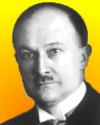
Born 25 Dec 1876; died 9 Jun 1959 at age 82.
German organic chemist, who was awarded the 1928 Nobel Prize for Chemistry for research "for the services rendered through his research into the constitution of the sterols and their connection with the vitamins", the first Nobel prize for work in human nutrition. Windaus began his studies in 1901 with the steroid cholesterol since nothing was known about its structure at the time. In 1926, he proved that ultraviolet light (from sunlight or laboratory sources) activates the compound ergosterol and gives vitamin D, which is valuable in preventing the rickets bone disease. He later synthetically prepared vitamin D3, discovered histamine, and contributed to the synthesis of vitamin B.«
German organic chemist, who was awarded the 1928 Nobel Prize for Chemistry for research "for the services rendered through his research into the constitution of the sterols and their connection with the vitamins", the first Nobel prize for work in human nutrition. Windaus began his studies in 1901 with the steroid cholesterol since nothing was known about its structure at the time. In 1926, he proved that ultraviolet light (from sunlight or laboratory sources) activates the compound ergosterol and gives vitamin D, which is valuable in preventing the rickets bone disease. He later synthetically prepared vitamin D3, discovered histamine, and contributed to the synthesis of vitamin B.«
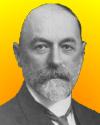
Born 25 Dec 1851; died 1 May 1914 at age 62.
German-born American petroleum scientist who invented the Frasch Process for sulphur mining. Patented in 1891, his method made it economically possible by a process of drilling, melting and pumping to extract sulphur from underground deposits as found in Louisiana and in eastern Texas. A hole is drilled into the sulphur bearing formation and cased. Then, three concentric pipes are placed within the protective casing to facilitate pumping super-heated water down the hole melting the sulphur and recovering the molten sulphur to the surface. It made possible the exploitation of extensive sulfur deposits otherwise obtainable only at prohibitive expense.«
German-born American petroleum scientist who invented the Frasch Process for sulphur mining. Patented in 1891, his method made it economically possible by a process of drilling, melting and pumping to extract sulphur from underground deposits as found in Louisiana and in eastern Texas. A hole is drilled into the sulphur bearing formation and cased. Then, three concentric pipes are placed within the protective casing to facilitate pumping super-heated water down the hole melting the sulphur and recovering the molten sulphur to the surface. It made possible the exploitation of extensive sulfur deposits otherwise obtainable only at prohibitive expense.«
Brimstone: The Stone That Burns: The Story of the Frasch Sulphur Industry, by Williams Haynes. - book suggestion.
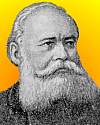
Born 25 Dec 1837; died 11 Feb 1904 at age 66. quotes
Russian organic chemist who established the Markovnikov addition rule (1869) which predicts the results when an ionic halogen halide (HX, like HCl) reacts with the carbon double bond (C=C) of an unsymmetrical alkene. The hydrogen from HX attaches to the carbon with more hydrogens already attached; the halogen X attaches to the carbon with fewer hydrogens attached. (A half century later Linus Pauling’s resonance theory gave an explanation). Markovnikov also found that carbon can form a four-carbon ring (1879), and a seven-carbon ring (1889) overcoming the prior belief that carbon rings only existed with six carbons. He also discovered that isobutyric and butyric acids are isomers.«[DSB gives date of birth as 25 Dec 1837 (or 22 Dec 1838). EB gives 22 Dec 1838. Other spellings: Vasilevich and Markownikoff]
Russian organic chemist who established the Markovnikov addition rule (1869) which predicts the results when an ionic halogen halide (HX, like HCl) reacts with the carbon double bond (C=C) of an unsymmetrical alkene. The hydrogen from HX attaches to the carbon with more hydrogens already attached; the halogen X attaches to the carbon with fewer hydrogens attached. (A half century later Linus Pauling’s resonance theory gave an explanation). Markovnikov also found that carbon can form a four-carbon ring (1879), and a seven-carbon ring (1889) overcoming the prior belief that carbon rings only existed with six carbons. He also discovered that isobutyric and butyric acids are isomers.«[DSB gives date of birth as 25 Dec 1837 (or 22 Dec 1838). EB gives 22 Dec 1838. Other spellings: Vasilevich and Markownikoff]
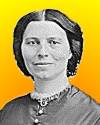
Born 25 Dec 1821; died 12 Apr 1912 at age 90.
American nurse who was a nursing pioneer during the American Civil War, and was instrumental in the founding of the American Red Cross. At the outbreak of the Civil War, Barton worked as a U.S. Patent Office clerk and collected provisions and medical supplies for the Union Army. Restless with her limited role and undeterred by War Department regulations and prevailing stereotypes, Barton distributed supplies and tended to the wounded and dying despite life-threatening conditions. She became known as “The Angel of the Battlefield.” Almost singlehandedly she founded the American Red Cross, which has provided comfort in times of crisis since 1882.
American nurse who was a nursing pioneer during the American Civil War, and was instrumental in the founding of the American Red Cross. At the outbreak of the Civil War, Barton worked as a U.S. Patent Office clerk and collected provisions and medical supplies for the Union Army. Restless with her limited role and undeterred by War Department regulations and prevailing stereotypes, Barton distributed supplies and tended to the wounded and dying despite life-threatening conditions. She became known as “The Angel of the Battlefield.” Almost singlehandedly she founded the American Red Cross, which has provided comfort in times of crisis since 1882.
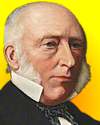
Born 25 Dec 1800; died 24 Apr 1874 at age 73. quotes
English geologist was the nephew of William Smith, the “Father of British Geology”. Phillips became the pioneer of Yorkshire geology, producing volumes describing and illustrating the area’s stratigraphy and characteristic fossils of particular formations. He coined names for three broad periods to group all past life on Earth: the Palaeozoic, Mesozoic and Cainozoic. The Mesozoic name is still used collectively for the Triassic, Jurassic and Cretaceous periods. This was part of the classification he published (1841) in the first global time scale based on the characteristic fossils in rock strata. He was prolific as an author, and active in a broad range of fields from astronomy to zoology.«
English geologist was the nephew of William Smith, the “Father of British Geology”. Phillips became the pioneer of Yorkshire geology, producing volumes describing and illustrating the area’s stratigraphy and characteristic fossils of particular formations. He coined names for three broad periods to group all past life on Earth: the Palaeozoic, Mesozoic and Cainozoic. The Mesozoic name is still used collectively for the Triassic, Jurassic and Cretaceous periods. This was part of the classification he published (1841) in the first global time scale based on the characteristic fossils in rock strata. He was prolific as an author, and active in a broad range of fields from astronomy to zoology.«
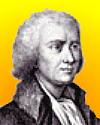

French engineer who invented the semaphore visual telegraph. He began experimenting in 1790, trying various types of telegraph. An early trial used telescopes, synchronised pendulum clocks and a large white board, painted black on the back, with which he succeeded in sending a message a few sentences long across a 16km (10mi) distance. To simplify construction, yet still easily visible to read from far away, he changed to using his semaphore telegraph in 1793. Smaller indicators were pivoted at each end of large horizontal member. The two indicators could each be rotated to stand in any of eight equally spaced positions. By setting them at different orientations, a set of corresponding codes was used to send a message.«
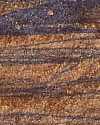
ilmenite
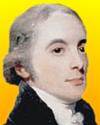
English clergyman, mineralogist and chemist who discovered the element titanium, contained in a magnetic, black sand (now known as ilmenite, FeTiO3) from Manachan Valley, Cornwall, which was in his parish. By analysis, he recognized the presence of iron and manganese in it, but not another red-brown oxide he derived from it. This unidentified material gave a yellow solution when acid was added to it. Naming it menakanite, in 1791, he published his results in Crell's Annalen.* Four years later, in 1795, Martin Klaproth extracted from another ore the same oxide which he identified as a compound of a new element. He named titanium. It wasn't until 1887 that a sample of titanium metal (95% pure) was separated by Nilson and Pettersson. Gregor also made analyses of zeolite, wavelitte, and other substances. He published papers on his results.«[* Ref.: Beobachtungen und Versuche über den Menakanite, einen in Cornwall gefundenen mangetischen Sand; vom Hrn. William Gregor (Obervations and experiments in a magnetic sand found in Cornwall) in Crell's Chemische Annalen (1971), 15, 40-54, 103-19.]
Born 25 Dec 1709; died 11 Nov 1752 at age 42.
French physician and philosopher whose Materialistic interpretation of psychic phenomena laid the groundwork for future developments of behaviourism and played an important part in the history of modern Materialism.
French physician and philosopher whose Materialistic interpretation of psychic phenomena laid the groundwork for future developments of behaviourism and played an important part in the history of modern Materialism.
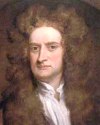
Born 25 Dec 1642; died 20 Mar 1727 at age 84. quotes
English physicist and mathematician who made seminal discoveries in several areas of science, and was the leading scientist of his era. His study of optics included using a prism to show white light could be split into a spectrum of colours. The statement of his three laws of motion are fundamental in the study of mechanics. He was the first to describe the moon as falling (in a circle around the earth) under the same influence of gravity as a falling apple, embodied in his law of universal gravitation. As a mathematician, he devised infinitesimal calculus to make the calculations needed in his studies, which he published in Philosophiae Naturalis Principia Mathematica (Mathematical Principles of Natural Philosophy, 1687).« more
English physicist and mathematician who made seminal discoveries in several areas of science, and was the leading scientist of his era. His study of optics included using a prism to show white light could be split into a spectrum of colours. The statement of his three laws of motion are fundamental in the study of mechanics. He was the first to describe the moon as falling (in a circle around the earth) under the same influence of gravity as a falling apple, embodied in his law of universal gravitation. As a mathematician, he devised infinitesimal calculus to make the calculations needed in his studies, which he published in Philosophiae Naturalis Principia Mathematica (Mathematical Principles of Natural Philosophy, 1687).« more

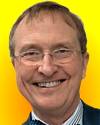
Died 25 Dec 2021 at age 80 (born 22 Aug 1941). quotes
Thomas Eugene Lovejoy was an American biologist and conservationist who played a central role in the establishment of conservation biology, and has been called the “Godfather of Biodiversity.” Lovejoy was an early advocate for the preservation of the Amazonian rain forest. He has been an administrator at the Smithsonian Institution for environmental affairs, then chief biodiversity advisor to the World Bank among other influential positions. In the Amazon, for 20 years he ran a large-scale experiment he initiated in conservation biology, known as the known as the Minimum Critical Size of Ecosystems (MCSE) Project. It was a field test to scientifically determine whether the optimal conservation strategy favored a single large piece of land or preserving a large number of smaller plots.«
Thomas Eugene Lovejoy was an American biologist and conservationist who played a central role in the establishment of conservation biology, and has been called the “Godfather of Biodiversity.” Lovejoy was an early advocate for the preservation of the Amazonian rain forest. He has been an administrator at the Smithsonian Institution for environmental affairs, then chief biodiversity advisor to the World Bank among other influential positions. In the Amazon, for 20 years he ran a large-scale experiment he initiated in conservation biology, known as the known as the Minimum Critical Size of Ecosystems (MCSE) Project. It was a field test to scientifically determine whether the optimal conservation strategy favored a single large piece of land or preserving a large number of smaller plots.«
Environmental Profiles: A Global Guide to Projects and People, by Linda S. Katz, et al., eds. - book suggestion.

Died 25 Dec 1990 at age 83 (born 17 Oct 1907). quotes
Soviet geologist and geophysicist whose theory of density differentiation (1942) held that movements of the Earth’s surface is a result of gradual internal structural changes as denser matter sinks towards the Earth’s centre. He visualized continents remaining more or less in place, affected only by vertical motion (though his description of the forces involved was poorly formed.) His position as a prominent scientist was influential in sustaining this concept. Until the late 60s, Soviet scientists delayed accepting newer ideas of plate tectonics. Belousov maintained a belief that vertical movements of continental land masses could not be correctly explained by the plate tectonics theory advanced in the West.«
Soviet geologist and geophysicist whose theory of density differentiation (1942) held that movements of the Earth’s surface is a result of gradual internal structural changes as denser matter sinks towards the Earth’s centre. He visualized continents remaining more or less in place, affected only by vertical motion (though his description of the forces involved was poorly formed.) His position as a prominent scientist was influential in sustaining this concept. Until the late 60s, Soviet scientists delayed accepting newer ideas of plate tectonics. Belousov maintained a belief that vertical movements of continental land masses could not be correctly explained by the plate tectonics theory advanced in the West.«
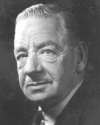
Died 25 Dec 1961 at age 88 (born 3 Jun 1873). quotes
German-born American physician and pharmacologist who shared the 1936 Nobel Prize for Physiology or Medicine (with Sir Henry Dale) “for their discoveries relating to the chemical transmission of nerve impulses.” Sadly, just two years later he was a victim of Nazi persecution, imprisoned for being Jewish. As ransom for his life, he was forced to hand over his possessions, including his Nobel Prize money, and Loewi escaped to England. From there he moved to America in 1940. His research showed that it was the release of a certain chemical (the transmitter) acetylcholine, that enabled the transmission of nerve impulses. Loewi also investigated action of drugs able to blockade or assist nerve impulse transmission.«.
German-born American physician and pharmacologist who shared the 1936 Nobel Prize for Physiology or Medicine (with Sir Henry Dale) “for their discoveries relating to the chemical transmission of nerve impulses.” Sadly, just two years later he was a victim of Nazi persecution, imprisoned for being Jewish. As ransom for his life, he was forced to hand over his possessions, including his Nobel Prize money, and Loewi escaped to England. From there he moved to America in 1940. His research showed that it was the release of a certain chemical (the transmitter) acetylcholine, that enabled the transmission of nerve impulses. Loewi also investigated action of drugs able to blockade or assist nerve impulse transmission.«.
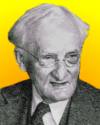
Died 25 Dec 1954 at age 96 (born 15 Mar 1858). quotes
American horticulturist who helped create the science of horticulture, made systematic studies of cultivated plants, and advanced knowledge in hybridization, plant pathology, and agriculture. He was a recognized authority on sedges, tropical palms, blackberries, grapes, cabbages, pumpkins and squashes, among others. He is particularly notable for his great encyclopedias (Cyclopedia of American Agriculture, in four volumes, 1907-9) and important manuals (Cyclopedia of Horticulture in six volumes). He was the first to experiment with continuous electric illumination (Influence of the electric arc lamp upon greenhouse plants, 1891) and coined the term cultivar (1920s) for a cultivated variety of plant, not a wild variety, produced through cultivation.«
American horticulturist who helped create the science of horticulture, made systematic studies of cultivated plants, and advanced knowledge in hybridization, plant pathology, and agriculture. He was a recognized authority on sedges, tropical palms, blackberries, grapes, cabbages, pumpkins and squashes, among others. He is particularly notable for his great encyclopedias (Cyclopedia of American Agriculture, in four volumes, 1907-9) and important manuals (Cyclopedia of Horticulture in six volumes). He was the first to experiment with continuous electric illumination (Influence of the electric arc lamp upon greenhouse plants, 1891) and coined the term cultivar (1920s) for a cultivated variety of plant, not a wild variety, produced through cultivation.«
Hortus Third: A Concise Dictionary of Plants Cultivated..., by Liberty Hyde Bailey. - book suggestion.
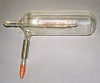
Died 25 Dec 1930 at age 80 (born 5 Sep 1850).
German physicist who discovered and named canal rays (1886) which emerge through holes in the anodes of low-pressure electrical discharge tubes (later shown to be positively charged particles). Earlier, he coined the term “cathode ray” (1876) emitted from a cathode. He was the first to see that they could cast a shadow, and were emitted at right angles to the surface. He also investigated the wavelengths of light emitted by metals and oxides when canal rays impinge on them. When the Berlin Urania, opened in 1889 it had five scientific departments and a “science theatre,” it was Goldstein who had recommended the “hall of physics in which the visitor could experiment on his own.” Students of his who continued his work included Wilhelm Wien and Johannes Stark.«Image: The tube with which Goldstein discovered canal rays in 1886.
German physicist who discovered and named canal rays (1886) which emerge through holes in the anodes of low-pressure electrical discharge tubes (later shown to be positively charged particles). Earlier, he coined the term “cathode ray” (1876) emitted from a cathode. He was the first to see that they could cast a shadow, and were emitted at right angles to the surface. He also investigated the wavelengths of light emitted by metals and oxides when canal rays impinge on them. When the Berlin Urania, opened in 1889 it had five scientific departments and a “science theatre,” it was Goldstein who had recommended the “hall of physics in which the visitor could experiment on his own.” Students of his who continued his work included Wilhelm Wien and Johannes Stark.«Image: The tube with which Goldstein discovered canal rays in 1886.
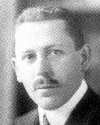
Died 25 Dec 1925 at age 48 (born 3 May 1877). quotes
German psychoanalyst who studied who studied the role of childhood sexual trauma in relation to the symptoms of mental illness. He was initiated into psychoanalysis by Carl Gustav Jung (1904). He first met Sigmund Freud in 1907, and subsequently became one of his most reliable collaborators. Covering a wide range, Abraham's papers include work on depression, mania, auto erotism, repressed hate, as well as others on applied psychoanalysis that include papers on the Day of Atonement and a major one (1909) in which he connected myths with dreams and viewed both as wish-fulfillment fantasies. Abraham founded the Berlin Psychoanalytic Society (1910). He made pioneering efforts in the psychoanalytic treatment of manic- depressive psychosis.«
German psychoanalyst who studied who studied the role of childhood sexual trauma in relation to the symptoms of mental illness. He was initiated into psychoanalysis by Carl Gustav Jung (1904). He first met Sigmund Freud in 1907, and subsequently became one of his most reliable collaborators. Covering a wide range, Abraham's papers include work on depression, mania, auto erotism, repressed hate, as well as others on applied psychoanalysis that include papers on the Day of Atonement and a major one (1909) in which he connected myths with dreams and viewed both as wish-fulfillment fantasies. Abraham founded the Berlin Psychoanalytic Society (1910). He made pioneering efforts in the psychoanalytic treatment of manic- depressive psychosis.«
Selected Papers of Karl Abraham, by Karl Abraham. - book suggestion.
Died 25 Dec 1904 at age 49 (born 31 Jul 1855).
German chemist who, with Richard Abegg, proposed an electrochemical theory of valency in a paper Die Elektronaffinität (Electron Affinity, 1899) to explain how certain atoms can combine based on the newly discovered electrons comprising the atom. It had several difficulties and was not generally accepted. Bodländer studied the electrolytical and optical properties of solutions; and the optical properties of crystals.«[Ref: Abegg and Bodländer, Zeit. Anorg. Chem. (1899), 20, 453.]
German chemist who, with Richard Abegg, proposed an electrochemical theory of valency in a paper Die Elektronaffinität (Electron Affinity, 1899) to explain how certain atoms can combine based on the newly discovered electrons comprising the atom. It had several difficulties and was not generally accepted. Bodländer studied the electrolytical and optical properties of solutions; and the optical properties of crystals.«[Ref: Abegg and Bodländer, Zeit. Anorg. Chem. (1899), 20, 453.]
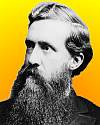
(source)
Died 25 Dec 1899 at age 57 (born 9 Sep 1842).
American army surgeon and ornithologist whose Key to North American Birds (1872) was the first work of its kind to present a taxonomic classification of birds according to an artificial key and promoted the systematic study of North American. Beginning the U.S. army as a medical cadet during the Civil War (1862), he became an assistant surgeon (1864-81). His interest in the study of birds began while a boy. He met many naturalists at the Smithsonian Institution and published his first technical paper at age 19. As his army assignments took him to various locations throughout the West, he continued studying the bird life in each new area, and found new species. He also did valuable work in mammalogy and wrote a book, Fur-Bearing Animals (1877).«
American army surgeon and ornithologist whose Key to North American Birds (1872) was the first work of its kind to present a taxonomic classification of birds according to an artificial key and promoted the systematic study of North American. Beginning the U.S. army as a medical cadet during the Civil War (1862), he became an assistant surgeon (1864-81). His interest in the study of birds began while a boy. He met many naturalists at the Smithsonian Institution and published his first technical paper at age 19. As his army assignments took him to various locations throughout the West, he continued studying the bird life in each new area, and found new species. He also did valuable work in mammalogy and wrote a book, Fur-Bearing Animals (1877).«
Elliott Coues: Naturalist and Frontier Historian, by Paul Russell Cutright, Michael J. Brodhead. - book suggestion.
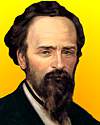

American inventor and manufacturer of locks, including the cylinder or pin-tumbler lock known by his name. His first lock business, established at Shelburne Falls, Mass. (early 1840s) began by producing bank locks such as his Yale Infallible Bank Lock (1851). He introduced the combination lock (c.1862). His expert knowledge gained him celebrity for being able to open his competitors’ “unpickable” locks. He first patented the pin tumbler cylinder door lock in 1861. His improved model of 1865 remains a secure design used in the Yale locks of today. He began mass-production of this lock, and with partners, founded Yale Lock Manufacturing Co. in the last year of his life (1868).« more

In 1999, space shuttle Discovery's astronauts finished their mainenance work on the Hubble Space Telescope, installing correcting optics to repair problems due to a design flaw in the mirror. The first images the Hubble Telescope took after its original launch were disappointingly fuzzy, but after this repair mission the instrument returned crisp images of a clarity never before possible from terrestrial observatories.«
In 1960, Dr Irving Cooper received a Christmas gift that inspired his invention of the first cryosurgery device (to freeze tissue). The gift was a wine-bottle opener which lifted the cork by injecting carbon dioxide gas into the bottle. He observed the gas was very cold when released and he could direct small squirts from it to freeze tiny areas on the palm of his hand and watch them thaw. He also observed the freezing effect was very localized and isolated from the surrounding tissue. From this inspiration, he developed a technique of brain surgery in which he used liquid nitrogen flowing in a thin tube first to deaden, and then freeze, tremor-causing brain cells or tumours. The invention created a new field of surgery with applications for other areas of the body as well.
In 1914, the thyroid hormone, thyroxine, was first crystallized by biochemist Edward C. Kendall of the Mayo Foundation in Rochester, NY. Thyroxine controls the cellular rate of carbohydrate metabolism and of protein synthesis and breakdown. On Dec 23, he began evaporating an ethanol solution of a sample of the acid-insoluble fraction of thyroid glands removed surgically from patients. It left a white crust surrounded by a ring of yellow waxy material. Adding ethanol now redissolved the waxy material, but not the white crust. On Christmas Day, he dissolved some of the white crust in ethanol and sodium hydroxide. A few drops of acetic acid precipitated crystals. This throxine was fully active in relieving the symptoms of thyroid deficiency in hypothyroid patients.
In 1809, the first U.S. ovariotomy (the surgical removal of an ovarian tumour) was performed at his Danville, Ky. practice by Dr. Ephraim McDowell (1771-1830), the “Father of Ovariotomy.” A few days before, on 13 Dec, he had travelled 60 miles to the house of Jane Todd Crawford, 45, in Motley's Glen, Kentucky. She had been previously attended by less skilled practioners who had first thought she was pregnant with twins. McDowell instead diagnosed a huge tumour. After she was transported to his surgery, McDowell operated, and removed a 22-pound ovarian tumour - in an era that had no anaesthetic. She quickly recovered, and lived to be 78. His published account (1817) of the operation created a sensation. He performed eight more ovariotomies, the last in 1826. His statue stands in the U.S. Capitol.«
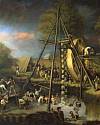
In 1801, the first complete skeleton of a mastodon found in the U.S., mounted in the "Mammoth Room" of Peale's Museum, Philadelphia, Pennsylvania, was opened for exhibition to the public. It was the museum's centrepiece and became an overnight success. The massive bones had been discovered in Hudson River Valley of New York state, in the Spring of that year, described only as Incognitum ("unknown"). They were acquired by Charles Willson Peale who travelled there to supervise their excavation. The site was depicted in a well-known painting by Peale, whose career included working as a portrait artist. Periodically, from then until now, additional complete skeletons of mammoths have been unearthed in the state of New York.«[Image: detail from Disinterment of the Mastodon painted by CW Peale in 1806.]
Mr. Peale's Museum, by Charles Coleman Sellers. - book suggestion.
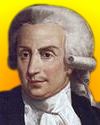
In 1780, Luigi Galvani recorded, "The electric fluid should be considered a means to the nervo-muscular force." He reached this conclusion from work in his laboratory in Bologna, Italy, after a series of experiments and his accidental discovery that muscles are operated by electrical stimulation of nerves. He worked diligently along these lines, but waited for eleven years before he published the results and an ingenious and simple theory. His theory was that of a nervous electric fluid, secreted by the brain, conducted by the nerves, and stored in the muscles. Though his ideas were abandoned by scientists on account of later discoveries, his work opened the way to new research in the physiology of muscle and nerve and pioneered the subject of electrophysiology.
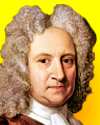
In 1758, the predicted return of Halley's comet was first sighted by German farmer and amateur astronomer, Johann Georg Palitzsch, as a faint object in Pisces. Edmond Halley had predicted in 1705 the return of the comet to the Earth's vicinity every 75.5 years. For the first time the scientific prediction had been proven. Halley himself had died 16 years before this new event. Palitzsch also observed the 6 Jun 1761 transit of Venus, when he saw a black band linking Venus and the Sun near the beginning and end of the transit ("black drop effect") and correctly interpreted this as evidence that Venus possessed an atmosphere. He also measured the period of the variation of the brightness of the star Algol.
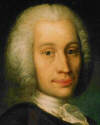
In 1741, the Centigrade temperature scale was devised by astronomer Anders Celsius (1701-44) and incorporated into a Delisle thermometer at Uppsala in Sweden. Celsius divided the fixed-point range of the Fahrenheit scale (the freezing and boiling temperatures of water) into 100 equal divisions, but curiously set the freezing point at 100 and the boiling point at 0. This reverse scaling was changed to match the sense of the other temperature scales after Celsius's death.
In 1674, Antonie van Leeuwenhoek, in his continuing series of communications to the Royal Society, wrote a letter describing many protists, including the ciliate Vorticella.
Antonie Van Leeuwenhoek and His “Little Animals”, by Antonie Van Leeuwenhoek. - book suggestion.
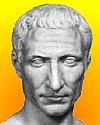
In 597, England adopted the Julian calendar. In the year 46 BC, Julius Caesar reformed the Roman calendar, changing the number of days in the months to achieve a 365-day year. To keep the seasons aligned with the Julian calendar, Caesar added a leap day in every four years to make a 366-day leap year. The present Gregorian calendar was proposed by Aloysius Lilius, a physician from Naples, to amend a remaining small error in the Julian calendar by dropping a few days. Its use was decreed by Pope Gregory XIII in 1582 and catholic countries began adopting it in Oct 1582. Other countries followed eventually but at greatly different time periods later. In Great Britain and its Dominions, 2 Sep 1752 was followed by 14 Sep 1752.[Image: Julius Caesar]




