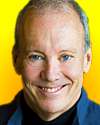
Born 21 Feb 1951. quotes
American architect and environmental engineer, who promotes product design for a sustainable future by “upcycling” - to replace mere recycling with methods to process materials in ways that improve them for reuse. With Michael Braungart, he wrote a book, Cradle to Cradle, in which they coined the word “upcycling.” For example, when paper is recycled now, the product loses quality as the fiber length gets shorter, needs more chlorination and is contaminated with toxic ink. Instead, trees can be saved for their oxygen replenishment role. Lightweight printed pages could be made of plastic resins able to be recycled indefinitely, with inks that wash off in baths at 180 degrees. His company, William McDonough + Partners, devises many other practical applications of his concept.«
American architect and environmental engineer, who promotes product design for a sustainable future by “upcycling” - to replace mere recycling with methods to process materials in ways that improve them for reuse. With Michael Braungart, he wrote a book, Cradle to Cradle, in which they coined the word “upcycling.” For example, when paper is recycled now, the product loses quality as the fiber length gets shorter, needs more chlorination and is contaminated with toxic ink. Instead, trees can be saved for their oxygen replenishment role. Lightweight printed pages could be made of plastic resins able to be recycled indefinitely, with inks that wash off in baths at 180 degrees. His company, William McDonough + Partners, devises many other practical applications of his concept.«
Cradle to Cradle: Remaking the Way We Make Things, by Michael Braungart and William McDonough. - book suggestion.
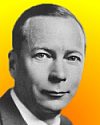
Born 21 Feb 1895; died 17 Apr 1976 at age 81.
Carl Peter Henrik Dam was a Danish biochemist who shared (with Edward A. Doisy) the 1943 Nobel Prize in Physiology or Medicine for research into antihemorrhagic substances and the discovery of vitamin K (1939).
Carl Peter Henrik Dam was a Danish biochemist who shared (with Edward A. Doisy) the 1943 Nobel Prize in Physiology or Medicine for research into antihemorrhagic substances and the discovery of vitamin K (1939).
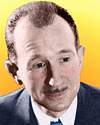
Born 21 Feb 1892; died 14 Jan 1949 at age 56. quotes
American psychiatrist who developed a theory of psychiatry based on interpersonal relationships. He believed that anxiety and psychotic behavior could be traced back to families who did not know how to relate to their children, who consequently did not feel accepted and loved. He thus focused his efforts on guiding personality development during interactions with other people. His aim was to improve a person's interpersonal skills, toward feeling whole and healthy, and to reduce fundamental conflicts between the individual and his human environment.«
American psychiatrist who developed a theory of psychiatry based on interpersonal relationships. He believed that anxiety and psychotic behavior could be traced back to families who did not know how to relate to their children, who consequently did not feel accepted and loved. He thus focused his efforts on guiding personality development during interactions with other people. His aim was to improve a person's interpersonal skills, toward feeling whole and healthy, and to reduce fundamental conflicts between the individual and his human environment.«
The Interpersonal Theory of Psychiatry, by Harry Stack Sullivan. - book suggestion.
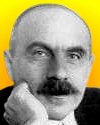
Born 21 Feb 1866; died 16 Mar 1925 at age 59.
German bacteriologist whose discovery of a universal blood-serum test (1906) for syphilis helped extend the basic tenets of immunology to diagnosis. "The Wassermann reaction," in combination with other diagnostic procedures, is still employed as a reliable indicator for the disease. A positive reaction when the blood or spinal fluid of the patient is tested indicates the presence of antibodies formed as a result of infection with syphilis (even though symptoms of the disease may not be observable at the time). A few other diseases, however (such as leprosy), also sometimes produce a positive Wassermann reaction. In addition, he developed inoculations against cholera, typhoid, and tetanus. He was a student of bacteriologist Robert Koch.
German bacteriologist whose discovery of a universal blood-serum test (1906) for syphilis helped extend the basic tenets of immunology to diagnosis. "The Wassermann reaction," in combination with other diagnostic procedures, is still employed as a reliable indicator for the disease. A positive reaction when the blood or spinal fluid of the patient is tested indicates the presence of antibodies formed as a result of infection with syphilis (even though symptoms of the disease may not be observable at the time). A few other diseases, however (such as leprosy), also sometimes produce a positive Wassermann reaction. In addition, he developed inoculations against cholera, typhoid, and tetanus. He was a student of bacteriologist Robert Koch.
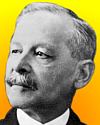
Born 21 Feb 1849; died 21 Sep 1924 at age 75.
Édouard Gaston (Daniel) Deville was a French-Canadian surveyor was a French-born Canadian surveyor of Canadian lands (1875-1924) who perfected the first practical method of photogrammetry, or the making of maps based on photography. His system used projective grids of images taken from photographs made with a camera and theodolite mounted on the same tripod. Photographs were taken from different locations, at precise predetermined angles, with measured elevations. Each photograph slightly overlapped the preceding one. With enough photographs and points of intersection, a map could be prepared, including contour lines. He also invented (1896) the first stereoscopic plotting instrument called the Stereo-Planigraph, though its complexity resulted in little use.«
Édouard Gaston (Daniel) Deville was a French-Canadian surveyor was a French-born Canadian surveyor of Canadian lands (1875-1924) who perfected the first practical method of photogrammetry, or the making of maps based on photography. His system used projective grids of images taken from photographs made with a camera and theodolite mounted on the same tripod. Photographs were taken from different locations, at precise predetermined angles, with measured elevations. Each photograph slightly overlapped the preceding one. With enough photographs and points of intersection, a map could be prepared, including contour lines. He also invented (1896) the first stereoscopic plotting instrument called the Stereo-Planigraph, though its complexity resulted in little use.«
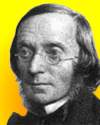
Born 21 Feb 1818; died 22 Nov 1859 at age 41. quotes
Scottish chemist and physician who, upon being appointed as the first Director of the Industrial Museum of Scotland in Edinburgh, also was made professor of technology at the university there. He gave his inaugural lecture on 7 Nov 1855. His duties included giving lectures to the general public. He wrote The Life of the Honourable Henry Cavendish: Including the Abstracts of his Important Scientific Papers (1851).
Scottish chemist and physician who, upon being appointed as the first Director of the Industrial Museum of Scotland in Edinburgh, also was made professor of technology at the university there. He gave his inaugural lecture on 7 Nov 1855. His duties included giving lectures to the general public. He wrote The Life of the Honourable Henry Cavendish: Including the Abstracts of his Important Scientific Papers (1851).
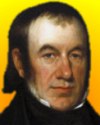
Born 21 Feb 1791; died 30 Nov 1866 at age 75.
English chemist and industrialist who invented the mercerisation process for treating cotton which is still in use today and was a pioneer in colour photography. From age 16, and throughout his life, he investigated and developed chemical textile dyes. Late in his life, in 1844, he found that when cotton is treated with caustic chemicals, it became thicker and shorter - thereby stronger and shrink-resistant. Further, the cotton was more easily dyed, needed 30% less dye, more absorbant, and could be given an attractive silk-like lustre. He called his process mercerisation and patented it in 1850. Mercerisation was applied to many other materials, such as parchment and woolen fabric, and remains an important part of the cotton finishing process today.
English chemist and industrialist who invented the mercerisation process for treating cotton which is still in use today and was a pioneer in colour photography. From age 16, and throughout his life, he investigated and developed chemical textile dyes. Late in his life, in 1844, he found that when cotton is treated with caustic chemicals, it became thicker and shorter - thereby stronger and shrink-resistant. Further, the cotton was more easily dyed, needed 30% less dye, more absorbant, and could be given an attractive silk-like lustre. He called his process mercerisation and patented it in 1850. Mercerisation was applied to many other materials, such as parchment and woolen fabric, and remains an important part of the cotton finishing process today.

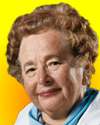
Died 21 Feb 1999 at age 81 (born 23 Jan 1918). quotes
Gertrude Belle Elion was an American pharmacologist who shared the Nobel Prize for Physiology or Medicine in 1988 (with George H. Hitchings and Sir James W. Black) for the development of drugs used to treat several major diseases. Research by Elion and Hitchings produced the first drugs specifically designed for cancer therapy, as well as drugs to combat rejection of transplanted organs, gout, malaria and bacterial and viral infections. These medications became well-proven in use over many years, and their drugs appeared on the World Health Organizations's list of so-called "Essential Drugs" as medicines which should be available worldwide to promote "Health for All." Elion held 45 patents.«
Gertrude Belle Elion was an American pharmacologist who shared the Nobel Prize for Physiology or Medicine in 1988 (with George H. Hitchings and Sir James W. Black) for the development of drugs used to treat several major diseases. Research by Elion and Hitchings produced the first drugs specifically designed for cancer therapy, as well as drugs to combat rejection of transplanted organs, gout, malaria and bacterial and viral infections. These medications became well-proven in use over many years, and their drugs appeared on the World Health Organizations's list of so-called "Essential Drugs" as medicines which should be available worldwide to promote "Health for All." Elion held 45 patents.«
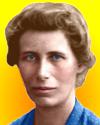
Died 21 Feb 1993 at age 104 (born 13 May 1888). quotes
Danish seismologist and geophysicist who was the first person in that field in her home country, and the first true female geophysicist in the world. In a paper published in 1936, she identified the Lehmann Discontinuity in the seismic structure of the earth which marks a previously unknown boundary at the solid inner core of the Earth. Titled simply “P” (for Prime), this paper was based on her interpretation of worldwide shock wave records from a large earthquake near New Zealand in 1929. She continued to add to the knowledge of the earth's internal structure by studying the body-wave amplitudes and travel times of seismic waves in the upper mantle. She once described herself as “the only Danish seismologist” but received awards from around the world.«
Danish seismologist and geophysicist who was the first person in that field in her home country, and the first true female geophysicist in the world. In a paper published in 1936, she identified the Lehmann Discontinuity in the seismic structure of the earth which marks a previously unknown boundary at the solid inner core of the Earth. Titled simply “P” (for Prime), this paper was based on her interpretation of worldwide shock wave records from a large earthquake near New Zealand in 1929. She continued to add to the knowledge of the earth's internal structure by studying the body-wave amplitudes and travel times of seismic waves in the upper mantle. She once described herself as “the only Danish seismologist” but received awards from around the world.«
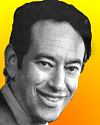
Died 21 Feb 1985 at age 69 (born 29 Aug 1915).
American scientist, inventor and nutritionist. Pritikin believed that moderate exercise combined with a diet low in fat and high in unrefined carbohydrates reversed his own heart disease discovered in the late 1950's. He opened the Pritikin Longevity Center in 1976 in Santa Barbara, Cal. to treat others with diet and exercise in a clinical setting.
American scientist, inventor and nutritionist. Pritikin believed that moderate exercise combined with a diet low in fat and high in unrefined carbohydrates reversed his own heart disease discovered in the late 1950's. He opened the Pritikin Longevity Center in 1976 in Santa Barbara, Cal. to treat others with diet and exercise in a clinical setting.
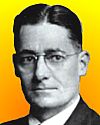
Died 21 Feb 1968 at age 69 (born 24 Sep 1898). quotes
Australian pathologist, who, with Ernst Boris Chain, researched, isolated and purified penicillin for general clinical use. From 1939, he worked with Chain on natural antibacterial agents produced by microorganisms, leading to their isolation, purification and determination of the chemical structure of penicillin. They performed the first clinical trials of the antibiotic.They shared the 1945 Nobel Prize for Physiology or Medicine with Sir Alexander Fleming, who had discovered antibiotic penicillin in 1928. Florey was knighted in 1944.
Australian pathologist, who, with Ernst Boris Chain, researched, isolated and purified penicillin for general clinical use. From 1939, he worked with Chain on natural antibacterial agents produced by microorganisms, leading to their isolation, purification and determination of the chemical structure of penicillin. They performed the first clinical trials of the antibiotic.They shared the 1945 Nobel Prize for Physiology or Medicine with Sir Alexander Fleming, who had discovered antibiotic penicillin in 1928. Florey was knighted in 1944.
The Mold in Dr. Florey's Coat: The Story of the Penicillin Miracle, by Eric Lax. - book suggestion.
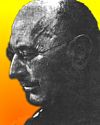
Died 21 Feb 1959 at age 75 (born 2 Apr 1883).
American anthropologist who was influential in advancing a historical model of primitive society based on a synthesis of economic and social structure, religion, philosophy, and psychology. He pioneered in such important fields of anthropology as culture- personality studies and the use of autobiographical documents. An accomplished linguist, he described a number of North American languages and advanced a classification scheme emphasizing their unity. He was particularly interested in the individuals within cultures. He secured, translated, and edited the first American Indian autobiography, Crashing Thunder: The Autobiography of an American Indian (1926), which is considered a landmark in anthropology.
American anthropologist who was influential in advancing a historical model of primitive society based on a synthesis of economic and social structure, religion, philosophy, and psychology. He pioneered in such important fields of anthropology as culture- personality studies and the use of autobiographical documents. An accomplished linguist, he described a number of North American languages and advanced a classification scheme emphasizing their unity. He was particularly interested in the individuals within cultures. He secured, translated, and edited the first American Indian autobiography, Crashing Thunder: The Autobiography of an American Indian (1926), which is considered a landmark in anthropology.
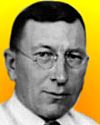
Died 21 Feb 1941 at age 49 (born 14 Nov 1891). quotes
Canadian physiologist and physician who, assisted by Charles H. Best, was the first to extract (1921) the hormone insulin from the pancreas. Injections of insulin proved to be the first effective treatment for diabetes, a disease in which glucose accumulates in abnormally high quantities in the blood. Banting was awarded a share of the 1923 Nobel Prize for Physiology or Medicine for this achievement.
Canadian physiologist and physician who, assisted by Charles H. Best, was the first to extract (1921) the hormone insulin from the pancreas. Injections of insulin proved to be the first effective treatment for diabetes, a disease in which glucose accumulates in abnormally high quantities in the blood. Banting was awarded a share of the 1923 Nobel Prize for Physiology or Medicine for this achievement.
Banting: A Biography, by Michael Bliss. - book suggestion.
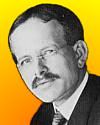
Died 21 Feb 1938 at age 69 (born 29 Jun 1868). quotes
American astronomer known for his development of important astronomical instruments. To expand solar observations and promote astrophysical studies he founded Mt. Wilson Observatory (Dec 1904). He discovered that sunspots were regions of relatively low temperatures and high magnetic fields. Hale hired Harlow Shapley and Edwin Hubble as soon as they finished their doctorates, and he encouraged research in galactic and extragalactic astronomy as well as solar and stellar astrophysics. Hale planned and tirelessly raised funds for the 200-inch reflecting telescope at the Palomar Mountain Observatory completed in 1948, after his death, and named for him—the Hale telescope.
American astronomer known for his development of important astronomical instruments. To expand solar observations and promote astrophysical studies he founded Mt. Wilson Observatory (Dec 1904). He discovered that sunspots were regions of relatively low temperatures and high magnetic fields. Hale hired Harlow Shapley and Edwin Hubble as soon as they finished their doctorates, and he encouraged research in galactic and extragalactic astronomy as well as solar and stellar astrophysics. Hale planned and tirelessly raised funds for the 200-inch reflecting telescope at the Palomar Mountain Observatory completed in 1948, after his death, and named for him—the Hale telescope.
Explorer of the Universe: A Biography of George Ellery Hale, by Helen Wright. - book suggestion.
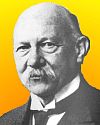
Died 21 Feb 1926 at age 72 (born 21 Sep 1853). quotes
Dutch physicist who was awarded the 1913 Nobel Prize for Physics for his work on low-temperature physics in which he liquified hydrogen and helium. On 10 Jul 1908, he obtained his first sample of liquid helium, an amount of 60 cc. After a few more days of verification, his accomplishment was published in The Times on 20 Jul 1908. From his studies of the resistance of metals at low temperatures, he discovered superconductivity (a state in which certain metals exhibit almost no electrical resistance at a temperature near absolute zero).«
Dutch physicist who was awarded the 1913 Nobel Prize for Physics for his work on low-temperature physics in which he liquified hydrogen and helium. On 10 Jul 1908, he obtained his first sample of liquid helium, an amount of 60 cc. After a few more days of verification, his accomplishment was published in The Times on 20 Jul 1908. From his studies of the resistance of metals at low temperatures, he discovered superconductivity (a state in which certain metals exhibit almost no electrical resistance at a temperature near absolute zero).«
Freezing Physics: Heike Kamerlingh Onnes and the Quest for Cold, by Dirk van Delft. - book suggestion.
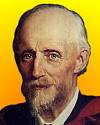
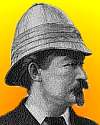
Died 21 Feb 1902 at age 54 (born 7 Oct 1847).
Czech naturalist who travelled extensively in south central Africa gathering varied and valuable natural history collections that he distributed to museums and schools throughout Europe.
Czech naturalist who travelled extensively in south central Africa gathering varied and valuable natural history collections that he distributed to museums and schools throughout Europe.
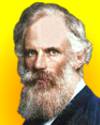
Died 21 Feb 1901 at age 49 (born 3 Aug 1851). quotes
Irish physicist whose suggestion of a way to produce waves helped lay a foundation for wireless telegraphy. He also first developed a theory, independently discovered by Hendrik Lorentz, that a material object moving through an electromagnetic field would exhibit a contraction of its length in the direction of motion. This is now known as the Lorentz-FitzGerald contraction, which Albert Einstein used in his own special theory of relativity. He also was first to propose the structure of comets as a head made of large stones, but a tail made of such smaller stones (less than 1-cm diam.) that the pressure of light radiation from the sun could deflect them. FitzGerald also studied electrolysis as well as electromagnetic radiation.«
Irish physicist whose suggestion of a way to produce waves helped lay a foundation for wireless telegraphy. He also first developed a theory, independently discovered by Hendrik Lorentz, that a material object moving through an electromagnetic field would exhibit a contraction of its length in the direction of motion. This is now known as the Lorentz-FitzGerald contraction, which Albert Einstein used in his own special theory of relativity. He also was first to propose the structure of comets as a head made of large stones, but a tail made of such smaller stones (less than 1-cm diam.) that the pressure of light radiation from the sun could deflect them. FitzGerald also studied electrolysis as well as electromagnetic radiation.«
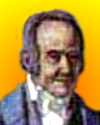
Died 21 Feb 1852 at age 51 (born 29 Dec 1800).
Tomás Joaquín Acosta y Pérez de Guzmán was a Colombian geologist, military engineer and historian who began a military career in 1819. He was sent in 1821 by the government to Choco where it was proposed to build a canal between the Atlantic and Pacific Oceans. He spent time in Europe (1825-31) where he learned about mineralogy, road building and military engineering. On his return to Colombia, in 1832, he became Chief Engineer of Roads. In 1834, he attempted a scientific survey of the Colombian region between Socorro and the Magdalena River. He served as Chargé d'Affaires in Washington, D.C. (Jul-Nov 1842). His historical research in Spain on the colonial history of Colombia was published in Compendio (1848). Acosta was active in his nation’s various scientific societies. He wrote many historical and scientific books.«[Date of birth given in EB as 29 Dec 1799 or 29 Dec 1800.]
Tomás Joaquín Acosta y Pérez de Guzmán was a Colombian geologist, military engineer and historian who began a military career in 1819. He was sent in 1821 by the government to Choco where it was proposed to build a canal between the Atlantic and Pacific Oceans. He spent time in Europe (1825-31) where he learned about mineralogy, road building and military engineering. On his return to Colombia, in 1832, he became Chief Engineer of Roads. In 1834, he attempted a scientific survey of the Colombian region between Socorro and the Magdalena River. He served as Chargé d'Affaires in Washington, D.C. (Jul-Nov 1842). His historical research in Spain on the colonial history of Colombia was published in Compendio (1848). Acosta was active in his nation’s various scientific societies. He wrote many historical and scientific books.«[Date of birth given in EB as 29 Dec 1799 or 29 Dec 1800.]
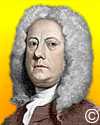
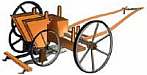
English writer and agronomist who invented a horse-drawn drill around 1701. He promoted sowing seeds in rows rather than broadcast (simply casting the seeds around), so that weeds could be controlled by hoeing regularly between the rows. For this purpose, he devised his seed drill, which could planted three rows at the same time. A blade cut a groove in the ground to receive the seed, and the soil was turned over to cover the sewn seed. A hopper distributed a regulated amount of seed. Because of the internal moving parts, it has been called the first agricultural machinery. Its rotary mechanism became part of all sowing devices that followed. Tull also invented a four-coultered plow to make vertical cuts in the soil before the plowshare.«[Image right: Tull's seed drill] more
Jethro Tull: A Berkshire Life, by George F. Tull. - book suggestion.
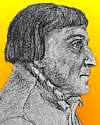
Died 21 Feb 1554 (born 1498).
Hieronymus Tragus Bock was a German priest, physician and botanist who helped lead the transition from the philological scholasticism of medieval botany to the modern science based on observation and description from nature.
Hieronymus Tragus Bock was a German priest, physician and botanist who helped lead the transition from the philological scholasticism of medieval botany to the modern science based on observation and description from nature.
In 1994, the Whirlpool Corporation began production of an energy efficient refrigerator that did not use freon. It had an efficiency 25% better than the U.S. law required. By removing freon, the destructive effect on ozone in the atmosphere by that chemical was eliminated.
In 1989, the U.S. Food and Drug Administration approved a low-calorie substitute for fat, Simplesse.

In 1958, the first U.S. submarine to circumnavigate the world returned to Pearl Harbor, Hawaii. After leaving the harbour on 8 Jul 1957, the Gudgeon (SS 567) had spent 228 days travelling about 25,000 miles while visiting ports in Asia, Africa and Europe. The 269-foot-long submarine and its crew of 83 were under the command of LCDR John O. Coppedge. It was first launched on 11 Jun 1952, and commissioned on 21 Nov 1952, at the Portsmouth Naval Shipyard.*

In 1953, Francis Crick and James Watson reached their conclusion about the double helix structure of the DNA molecule. They made their first announcement on Feb 28, and their paper, A Structure for Deoxyribose Nucleic Acid, was published in the 25 Apr 1953 issue of journal Nature.
What Mad Pursuit: A personal View of Scientific Discovery, by Francis Crick. - book suggestion.
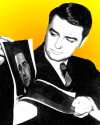
In 1947, Edwin H. Land first demonstrated his Polaroid Land camera, the first used self-developing film, at a meeting of the Optical Society of America at the Hotel Pennsylvania, New York City. It produced a black-and-white photograph in 60 seconds, using developer and fixer chemicals sandwiched in pods with the photographic paper and film. After exposure, developing was initiated by turning a knob that squeezed open the pod of chemicals.
Insisting On The Impossible: The Life Of Edwin Land, by Victor K. McElheny. - book suggestion.
In 1935, the last concrete was added to complete the main structure of Boulder Dam. An eight yard bucket made the last 22-ton pour. When the first concrete was laid for the foundation on 6 Jun 1933, the estimate was that it would need 2½ years to pour the main structure. So the main structure had been completed a year ahead of time. Adding architectural features, a parapet and a roadway on top of the dam was planned for the next few months. It was estimated that the power house would be finished by July and two generators operational in it by the following January. Since 1947, the formal name has been the Hoover Dam.«
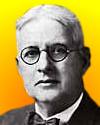
Beardsley
In 1931, Alka Seltzer was introduced in the U.S. It originated after Hub Beardsley, the president of Miles Laboratories, during a severe flu epidemic in winter 1928, had visited a local newspaper in Elkhart, Indiana. He learned from the editor, Tom Keene, that the staff seemed to be resistant to the illness. Keene explained that at the first sign of illness, he treated staff members with a combination of aspirin and baking soda. Beardsley asked his chief chemist, Maurice Treneer, to develop an effervescent tablet with aspirin (acetylsalicylic acid) and sodium bicarbonate as the main ingredients. The resulting tablet seemed sufficiently effective to begin production, although Beardsley himself died in 1929. It was introduced in 1931, with heavy radio advertising promotion.
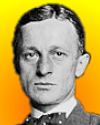
In 1902, Dr. Harvey Cushing, the first US brain surgeon, performed his first brain operation.Born in New Haven, Conn., his clinical contributions are legendary: the use of x-rays in surgical practice, physiological saline for irrigation during surgery, the discovery of the pituitary as the master hormone gland, founding the clinical specialty of endocrinology, the anesthesia record, the use of blood pressure measurement in surgical practice, and the physiological consequences of increased intracranial pressure.
Genius With a Scalpel: Harvey Cushing, by Justin F. Denzel. - book suggestion.
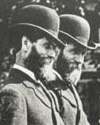
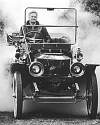
The Stanley Steamer: America's Legendary Steam Car, by Kit Foster. - book suggestion.
In 1899, black American E.P. Ray was issued a U.S. patent for a "Chair Supporting Device" (No. 620,078).
The Inventive Spirit of African Americans: Patented Ingenuity, by Patricia Carter Sluby. - book suggestion.
In 1893, Thomas A. Edison received two U.S. patents. The first was for a "Cut Out for Incandescent Electric Lamps" and another for a "Stop Device" (No. 491,992-3). Also No. 492,150 for "Process of Coating Conductors for Incandescent Lamps."
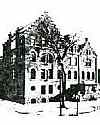
In 1887, the first U.S. institutional* bacteriology laboratory was incorporated, the Hoagland Laboratory of Brooklyn, N.Y., founded by Dr. Cornelius N. Hoagland for original medical research. He paid over $100,00 to build and equip it at 335 Henry Street (opposite Long Island College Hospital) and gave a $50,000 endowment.. His wealth came from ownership, with his brother, of the Royal Baking Powder Company. The laboratory opened in 1888, with special departments in physiology and bacteriology. Its first director was Dr George Miller Sternberg, who identified the microbe of pneumonia in saliva. It lasted 25 years before financial failure. The building was later destroyed by fire and demolished. (*Private bacteriological labs had been established earlier by individual physicians.)«
more
In 1878, the first U.S. telephone directory, listing about 50 names, was issued by the New Haven Telephone Company, in New Haven, Connecticut.
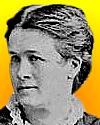
In 1866, the first woman dentist in the U.S. to obtain a D.D.S. degree from a dental college graduated. Lucy B. Hobbs (Mrs. Taylor) was required to attend only one session beginning in Nov 1865 at the Ohio College of Dental Surgery because of credits allowed for previous practice.Being a woman, Hobbs had been originally turned down by many schools, but instead she trained in the office of Dr. Samuel Wardle. When first turned down by the Ohio Dental College in Mar 1861, since a license was not compulsory at the time, she successfully practiced dentistry in Cincinnati, Ohio. After the Civil War she moved to Iowa, and in Jul 1865, became the first woman elected as a member of a dental society, the Iowa State Dental Society.*
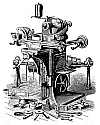
In 1865, a U.S. patent was issued for the universal milling machine invented by Joseph Rogers Brown (No. 46,521). With this four-speed, 1,800-lb machine, Brown could quickly make any size twist drill, and replace previously tedious handwork in spiral milling or gear-cutting operations. Adjustments were calibrated with an accuracy of one-thousandth of an inch. He had already invented a precision gear cutter in 1855 to produce clock gears, and later patented a universal grinding machine in 1877. As an inventor, Brown made numerous advances in the field of fine measurement and machine-tool production. He co-founded J.R. Brown and Sharpe in 1853 to manufacture his products.
In 1858, the first electrical burglar alarm installation in the U.S. was made by Edwin T. Holmes in Boston, Mass. When a door or window was opened, a spring was released that closed an electrical circuit.*
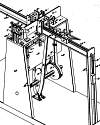
In 1842, the first U.S. patent (of which there is any record) for a sewing machine was issued to John J. Greenough of Washington, DC. (No. 2,466) as "A Machine for Sewing or Stitching all Kinds of Straight Seams." The needle was gradually tapered to a point at each end, with an eye in the middle. It used pairs of pinchers, one on each side of the work to alternately draw the thread back and forth. It did not use thread from a bobbin of thread. Instead, the lengths of thread were inserted in the needle, similar in length to those used in hand sewing.*
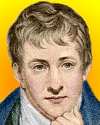
Humphry Davy
In 1811, as Humphry Davy read a paper to the Royal Society, he introduced the name “chlorine” from the Greek word for “green,” for the bright yellow green gas chemists then knew as oxymuriatic gas. In his paper, On a Combination of Oxymuriatic Gas and Oxygene Gas, Davy reported on his numerous experiments with oxymuratic gas, which appeared to have many of the reactive properties of oxygen. Hydrochloric acid was then known as muriatic acid, and when chlorine was first obtained from a reaction with the acid, the yellow green gas had been thought to be a compound containing oxygen. Later, Davy's careful work would show that the chlorine gas was in fact an element, unable to be decomposed into any simpler substances.
Trevithick
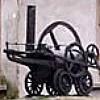
Memorial reproduction of Trevithick's locomotive.
Richard Trevithick: Giant of Steam, by Anthony Burton. - book suggestion.




