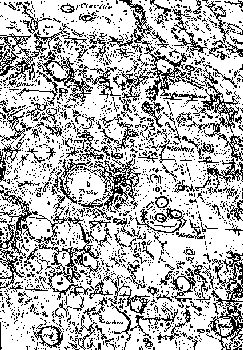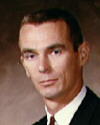
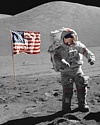
American astronaut who travelled into space three times. When he left his spacecraft for more than two hours during the Gemini 9 mission (1966), he was the second American to make a tethered extravehicular activity. As a member of the Apollo 10 flight (launched 18 May 1969), he piloted the lunar module to within 10 miles of the lunar surface. As Commander of the Apollo 17 lunar-landing mission (launched 7 Dec 1972) he was the last of 12 humans to walk on the moon. In this final part of the Apollo program, he landed with a geologist-astronaut, Harrison H. Schmitt, near the Sea of Serenity. The bluish-gray and tan rocks they collected were 4 billion years old. They also brought back orange-red soil samples.«
The Last Man on the Moon: Astronaut Eugene Cernan and America's Race in Space, by Eugene Cernan and Donald A. Davis. - book suggestion.
Born 14 Mar 1928. quotes
American astronaut, who was a member of the Apollo 8 mission (1968) as it took the first manned flight around the moon.
American astronaut, who was a member of the Apollo 8 mission (1968) as it took the first manned flight around the moon.
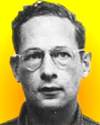
c.1943
Born 14 Mar 1909; died 1 Jun 1997 at age 88. quotes
American physicist who gave lectures (5-14 Apr 1943) at Los Alamos, on the design and construction of atomic bombs as background for the Manhattan Project. Notes were typed and mimeographed as The Los Alamos Primer, technical report LA-1, given to scientists newly arriving at the top-secret laboratory. Serber coined the code-names of the three bomb designs: “Little Boy” (uranium gun), “Thin Man” (plutonium gun), and “Fat Man” (plutonium implosion). He helped assemble atomic bombs on Tinian Island that were dropped on Japan. He was part of the first American team visiting to assess their damage at Hiroshima and Nagasaki. After WW II, he returned to academia, and by 1951 was a professor of physics at Columbia University.«
American physicist who gave lectures (5-14 Apr 1943) at Los Alamos, on the design and construction of atomic bombs as background for the Manhattan Project. Notes were typed and mimeographed as The Los Alamos Primer, technical report LA-1, given to scientists newly arriving at the top-secret laboratory. Serber coined the code-names of the three bomb designs: “Little Boy” (uranium gun), “Thin Man” (plutonium gun), and “Fat Man” (plutonium implosion). He helped assemble atomic bombs on Tinian Island that were dropped on Japan. He was part of the first American team visiting to assess their damage at Hiroshima and Nagasaki. After WW II, he returned to academia, and by 1951 was a professor of physics at Columbia University.«
The Los Alamos Primer: The First Lectures on How To Build an Atomic Bomb, by Robert Serber and Richard Rhodes (ed.). - book suggestion.
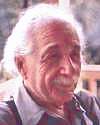
Born 14 Mar 1879; died 18 Apr 1955 at age 76. quotes
German-American physicist who developed the special and general theories of relativity and won the Nobel Prize for Physics in 1921 for his explanation of the photoelectric effect. Recognized in his own time as one of the most creative intellects in human history, in the first 15 years of the 20th century Einstein advanced a series of theories that proposed entirely new ways of thinking about space, time, and gravitation. His theories of relativity and gravitation were a profound advance over the old Newtonian physics and revolutionized scientific and philosophic inquiry. more
German-American physicist who developed the special and general theories of relativity and won the Nobel Prize for Physics in 1921 for his explanation of the photoelectric effect. Recognized in his own time as one of the most creative intellects in human history, in the first 15 years of the 20th century Einstein advanced a series of theories that proposed entirely new ways of thinking about space, time, and gravitation. His theories of relativity and gravitation were a profound advance over the old Newtonian physics and revolutionized scientific and philosophic inquiry. more
Subtle Is the Lord: The Science and the Life of Albert Einstein, by Abraham Pais. - book suggestion.
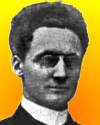
Born 14 Mar 1862; died 9 Apr 1951 at age 89.
Vilhelm F(riman) K(oren) Bjerknes was a Norwegian meteorologist and physicist, one of the founders of the modern science of weather forecasting. As a young boy, Bjerknes assisted his father, Carl Bjerknes (a professor of mathematics) in carrying out experiments to verify the theoretical predictions that resulted from his father's hydrodynamic research. After graduating from university, Bjerknes moved on to his own work applying hydrodynamic and thermodynamic theories to atmospheric and hydrospheric conditions in order to predict future weather conditions. His work in meteorology and on electric waves was important in the early development of wireless telegraphy. He evolved a theory of cyclones known as the polar front theory with his son Jakob.
Vilhelm F(riman) K(oren) Bjerknes was a Norwegian meteorologist and physicist, one of the founders of the modern science of weather forecasting. As a young boy, Bjerknes assisted his father, Carl Bjerknes (a professor of mathematics) in carrying out experiments to verify the theoretical predictions that resulted from his father's hydrodynamic research. After graduating from university, Bjerknes moved on to his own work applying hydrodynamic and thermodynamic theories to atmospheric and hydrospheric conditions in order to predict future weather conditions. His work in meteorology and on electric waves was important in the early development of wireless telegraphy. He evolved a theory of cyclones known as the polar front theory with his son Jakob.
Appropriating the Weather: Vilhelm Bjerknes and the Construction of a Modern Meteorology, by Robert Marc Friedman. - book suggestion.
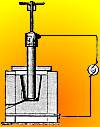
Patent diagram
Born 14 Mar 1860; died 20 Dec 1915 at age 55.
Thomas Leopold Willson was a Canadian-American chemist and inventor who discovered a commercial production method for calcium carbide using an electric arc furnace. In 1893, he started a company with John Motley Morehead III in Spray, North Carolina, to try his ideas to obtain aluminium metal from its oxide. On 2 May 1892, he was using an electric arc furnace with coal tar and burnt chalk (lime). An unexpected dark, solid mass was formed. On cooling with water, a gas was given off. This burned with a bright yellow, smoky flame. Analysis showed these were calcium carbide and acetylene. Unlike the earlier method of Wöhler that made calcium carbide in an amorphous form, Willson had a hard, aggregated crystalline form. He obtained (and defended) patents on his process. He assigned them to the Electro Gas Co. (which became Union Carbide Corp.) His other inventions included gas navigational buoys and electric arc lighting. He established calcium carbide manufacturing in Canada.«
Thomas Leopold Willson was a Canadian-American chemist and inventor who discovered a commercial production method for calcium carbide using an electric arc furnace. In 1893, he started a company with John Motley Morehead III in Spray, North Carolina, to try his ideas to obtain aluminium metal from its oxide. On 2 May 1892, he was using an electric arc furnace with coal tar and burnt chalk (lime). An unexpected dark, solid mass was formed. On cooling with water, a gas was given off. This burned with a bright yellow, smoky flame. Analysis showed these were calcium carbide and acetylene. Unlike the earlier method of Wöhler that made calcium carbide in an amorphous form, Willson had a hard, aggregated crystalline form. He obtained (and defended) patents on his process. He assigned them to the Electro Gas Co. (which became Union Carbide Corp.) His other inventions included gas navigational buoys and electric arc lighting. He established calcium carbide manufacturing in Canada.«
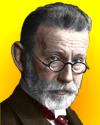
Born 14 Mar 1854; died 20 Aug 1915 at age 61. quotes
Paul Ralph Ehrlich was a German bacteriologist, hematologist and immunologist whose pioneering work in chemotherapy included the discovery of Salvarsan (arsphenamine), the first effective treatment for syphilis against the spirochete Treponema pallidum. His research in the histology of the blood established hematology as a field. Ehrlich also developed new staining methods for microscopic studies on live tissue. At a time when little was understood about the mechanism of disease caused by bacteria, he proposed the side-chain theory as a chemical explanation of immunity, the body's defenses against infection. Though broadly incorrect, the theory nevertheless stimulated further work on the problem. He shared the 1908 Nobel Prize for Physiology or Medicine with Russian bacteriologist, Élie Metchnikoff.
Paul Ralph Ehrlich was a German bacteriologist, hematologist and immunologist whose pioneering work in chemotherapy included the discovery of Salvarsan (arsphenamine), the first effective treatment for syphilis against the spirochete Treponema pallidum. His research in the histology of the blood established hematology as a field. Ehrlich also developed new staining methods for microscopic studies on live tissue. At a time when little was understood about the mechanism of disease caused by bacteria, he proposed the side-chain theory as a chemical explanation of immunity, the body's defenses against infection. Though broadly incorrect, the theory nevertheless stimulated further work on the problem. He shared the 1908 Nobel Prize for Physiology or Medicine with Russian bacteriologist, Élie Metchnikoff.
Born 14 Mar 1844; died 16 Sep 1916 at age 72.
(1st Baronet) Scottish physician who played a major role in establishing pharmacology as a rigorous science. He is best known for his discovery that amyl nitrite relieves the pain of angina pectoris.
(1st Baronet) Scottish physician who played a major role in establishing pharmacology as a rigorous science. He is best known for his discovery that amyl nitrite relieves the pain of angina pectoris.
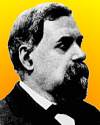
Born 14 Mar 1835; died 4 Jul 1910 at age 75.
Italian astronomer who is remembered for his observations of Mars over seven oppositions and named the "seas" and "continents". In 1877, he saw on the surface of the planet Mars the markings that he called canali (channels), later misinterpreted as "canals." He made extensive studies, both observational and theoretical, of comets, determining from the shapes of their tails that there was a repulsive force from the sun. He showed that meteor swarms travel through space in cometary orbits. He explained the regular meteor showers as the result of the dissolution of comets and proved it for the Perseids. He suggested that Mercury and Venus rotate on their axes, discovered the asteroid Hesperia (1861) and was a major observer of double stars.
Italian astronomer who is remembered for his observations of Mars over seven oppositions and named the "seas" and "continents". In 1877, he saw on the surface of the planet Mars the markings that he called canali (channels), later misinterpreted as "canals." He made extensive studies, both observational and theoretical, of comets, determining from the shapes of their tails that there was a repulsive force from the sun. He showed that meteor swarms travel through space in cometary orbits. He explained the regular meteor showers as the result of the dissolution of comets and proved it for the Perseids. He suggested that Mercury and Venus rotate on their axes, discovered the asteroid Hesperia (1861) and was a major observer of double stars.
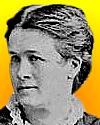
Born 14 Mar 1833; died 3 Oct 1910 at age 77.
Lucy Beaman Taylor (née Hobbs) was an American dentist who was the first woman dentist in America to graduate (1866) from a dental college as a Doctor of Dental Surgery. Earlier, being long refused admission to dental schools (1859-65), she had acquired the skills of dentistry, and practiced without a diploma, as was common at the time. Then the Iowa State Dental Society supported Lucy's ambition for a college degree, demanded her admission, and she was accepted by the Ohio College of Dentistry. After graduation, she practiced for a short time in Chicago, then married James M. Taylor and taught him dentistry. The couple moved to Lawrence, Kansas, in December, 1867, opened a joint office and soon enjoyed a prosperous practice (1867-86).
Lucy Beaman Taylor (née Hobbs) was an American dentist who was the first woman dentist in America to graduate (1866) from a dental college as a Doctor of Dental Surgery. Earlier, being long refused admission to dental schools (1859-65), she had acquired the skills of dentistry, and practiced without a diploma, as was common at the time. Then the Iowa State Dental Society supported Lucy's ambition for a college degree, demanded her admission, and she was accepted by the Ohio College of Dentistry. After graduation, she practiced for a short time in Chicago, then married James M. Taylor and taught him dentistry. The couple moved to Lawrence, Kansas, in December, 1867, opened a joint office and soon enjoyed a prosperous practice (1867-86).
Born 14 Mar 1821; died 15 Aug 1885 at age 64.
Danish archaeologist, a principal founder of prehistoric archaeology. His Danmarks Oldtid oplyst ved Oldsager og Gravhøie (1843; The Primeval Antiquities of Denmark) was one of the most influential archaeological works of the 19th century.
Danish archaeologist, a principal founder of prehistoric archaeology. His Danmarks Oldtid oplyst ved Oldsager og Gravhøie (1843; The Primeval Antiquities of Denmark) was one of the most influential archaeological works of the 19th century.
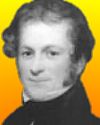
Born 14 Mar 1800; died 13 Apr 1874 at age 74.
American inventor and builder who popularized cast-iron construction, which was commonly used in American industrial and commercial building from 1850-80. He did so by shipping prefabricated sections from his factory in New York City to construction sites. His first iron-fronted building was a 5-story chemists shop (1848). His best-known building was his own 4-story factory that he built on Center Street, New York City, with an exterior consisting entirely of cast-iron piers and lintels. He had previously been a manufacturer of grinding machines, and was also known for his invention of engraving and die-sinking machinery.
American inventor and builder who popularized cast-iron construction, which was commonly used in American industrial and commercial building from 1850-80. He did so by shipping prefabricated sections from his factory in New York City to construction sites. His first iron-fronted building was a 5-story chemists shop (1848). His best-known building was his own 4-story factory that he built on Center Street, New York City, with an exterior consisting entirely of cast-iron piers and lintels. He had previously been a manufacturer of grinding machines, and was also known for his invention of engraving and die-sinking machinery.
Cast-Iron Architecture in America: The Significance of James Bogardus, by Margot Gayle and Carol Gayle. - book suggestion.
Born 14 Mar 1692; died 19 Sep 1761 at age 69. quotes
Dutch physicist and mathematician who invented the Leyden jar, the first effective device for storing static electricity. He grew up in a family that manufactured scientific instruments such as telescopes, microscopes and air pumps. Before Musschenbroek's invention, static electricity had been produced by Guericke using a sulphur ball, with minor effects. In Jan 1746, Musschenbroek placed water in a metal container suspended on silk cords, and led a brass wire through a cork into the water. He built up a charge in the water. When an unwary assistant touched the metal container and the brass wire, the discharge from this apparatus delivered a substantial shock of static electricity. The Leyden name is linked to the discovery having being made at the University of Leiden.
Dutch physicist and mathematician who invented the Leyden jar, the first effective device for storing static electricity. He grew up in a family that manufactured scientific instruments such as telescopes, microscopes and air pumps. Before Musschenbroek's invention, static electricity had been produced by Guericke using a sulphur ball, with minor effects. In Jan 1746, Musschenbroek placed water in a metal container suspended on silk cords, and led a brass wire through a cork into the water. He built up a charge in the water. When an unwary assistant touched the metal container and the brass wire, the discharge from this apparatus delivered a substantial shock of static electricity. The Leyden name is linked to the discovery having being made at the University of Leiden.

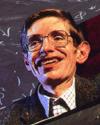
Died 14 Mar 2018 at age 76 (born 8 Jan 1942). quotes
Stephen William Hawking was an English theoretical physicist and cosmologist was one of the world’s leaders in the fields of research in theoretical cosmology and quantum gravity. For 30 years from 1979, Hawking was the 17th Lucasian Professor of Mathematics at Cambridge University (a chair formerly held by Sir Isaac Newton). From age 21, he was afflicted with Lou Gehrig’s disease (amyotrophic lateral sclerosis; ALS), progressing slowly through his life, causing increasing paralysis until Hawking was confined to a wheelchair and was unable to speak without the aid of a computer voice synthesizer. Despite these challenges, he retained his intelligence, making remarkable contributions to cosmology (the study of the universe as a whole). He wrote A Brief History of Time.«
Stephen William Hawking was an English theoretical physicist and cosmologist was one of the world’s leaders in the fields of research in theoretical cosmology and quantum gravity. For 30 years from 1979, Hawking was the 17th Lucasian Professor of Mathematics at Cambridge University (a chair formerly held by Sir Isaac Newton). From age 21, he was afflicted with Lou Gehrig’s disease (amyotrophic lateral sclerosis; ALS), progressing slowly through his life, causing increasing paralysis until Hawking was confined to a wheelchair and was unable to speak without the aid of a computer voice synthesizer. Despite these challenges, he retained his intelligence, making remarkable contributions to cosmology (the study of the universe as a whole). He wrote A Brief History of Time.«
A Brief History of Time, by Stephen Hawking. - book suggestion.
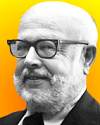
Died 14 Mar 1995 at age 83 (born 9 Aug 1911). quotes
William Alfred (Willy) Fowler was an American astrophysicist, who shared the Nobel Prize in Physics in 1983 for “his theoretical and experimental studies of the nuclear reactions of importance in the formation of the chemical elements in the universe.” He spent much of his life measuring the rates nuclear reactions of astrophysical interest, as in the interior of stars. From 1964, Fowler made theoretical calculations relating to supernovae, gravitational collapse, neutrinos, formation of light elements, and nucleocosmochronology. Fowler co-authored a paper, Synthesis of the Elements in Stars, (with Geoffrey and Margaret Burbidge and Fred Hoyle) which demonstrated how cosmic abundances of most nuclides (other than the lightest) could result from nuclear reactions in stars.«
William Alfred (Willy) Fowler was an American astrophysicist, who shared the Nobel Prize in Physics in 1983 for “his theoretical and experimental studies of the nuclear reactions of importance in the formation of the chemical elements in the universe.” He spent much of his life measuring the rates nuclear reactions of astrophysical interest, as in the interior of stars. From 1964, Fowler made theoretical calculations relating to supernovae, gravitational collapse, neutrinos, formation of light elements, and nucleocosmochronology. Fowler co-authored a paper, Synthesis of the Elements in Stars, (with Geoffrey and Margaret Burbidge and Fred Hoyle) which demonstrated how cosmic abundances of most nuclides (other than the lightest) could result from nuclear reactions in stars.«
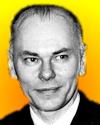
Died 14 Mar 1973 at age 73 (born 9 Mar 1900). quotes
American mathematician who invented the Harvard Mark I, forerunner of the modern electronic digital computer. While a graduate student and instructor Harvard University, Aiken's research had led to a system of differential equations which could only be solved using numerical techniques, for which he began planning large computer. His idea was to use an adaptation of Hollerith's punched card machine. When eventually built, (1943) it weighed 35 tons, had 500 miles of wire and could compute to 23 significant figures. There were 72 storage registers and central units to perform multiplication and division. It was controlled by a sequence of instructions on punched paper tapes, and used punched cards to enter data and give output from the machine.
American mathematician who invented the Harvard Mark I, forerunner of the modern electronic digital computer. While a graduate student and instructor Harvard University, Aiken's research had led to a system of differential equations which could only be solved using numerical techniques, for which he began planning large computer. His idea was to use an adaptation of Hollerith's punched card machine. When eventually built, (1943) it weighed 35 tons, had 500 miles of wire and could compute to 23 significant figures. There were 72 storage registers and central units to perform multiplication and division. It was controlled by a sequence of instructions on punched paper tapes, and used punched cards to enter data and give output from the machine.
Howard Aiken: Portrait of a Computer Pioneer, by I. Bernard Cohen. - book suggestion.
Died 14 Mar 1967 at age 74 (born 5 Sep 1892).
Danish archaeologist and ethnographer laid the groundwork for the scientific study of arctic archaeology. His excavations (1921-23) of the Thule prehistoric Eskimo culture were the first scientific archaeological investigations in the Canadian Arctic. Mathiassen, as a member of the Danish Fifth Thule Expedition (1922), excavated ruins at Naujan (called Nauyat by local people), one of the most important sites of its time period. He uncovered and mapped a dozen sod house ruins, tent rings, graves, meat caches, kayak stands, and a refuse heap almost larger than the houses. His work defined the culture of the people who had lived in there. The Thule (pronounced Too-lee) people are ancestors of the modern Inuit.«[source for date of death]
Danish archaeologist and ethnographer laid the groundwork for the scientific study of arctic archaeology. His excavations (1921-23) of the Thule prehistoric Eskimo culture were the first scientific archaeological investigations in the Canadian Arctic. Mathiassen, as a member of the Danish Fifth Thule Expedition (1922), excavated ruins at Naujan (called Nauyat by local people), one of the most important sites of its time period. He uncovered and mapped a dozen sod house ruins, tent rings, graves, meat caches, kayak stands, and a refuse heap almost larger than the houses. His work defined the culture of the people who had lived in there. The Thule (pronounced Too-lee) people are ancestors of the modern Inuit.«[source for date of death]
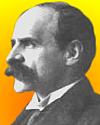
Died 14 Mar 1936 at age 75 (born 3 May 1860). quotes
Scottish physiologist and philosopher of science whose extensive work on human respiration included the effects of pulmonary diseases and the physiology of the blood. Early in his career he studied the air in sewers for microorganisms, which he found rather limited. Haldane was known for experimentation on himself to find the amount of carbon dioxide in the blood was a stimulus for the respiratory centre of the brain. He reported on investigations of the effects of carbon monoxide from mine fires and explosions (1896). For the safety of deep-sea divers, he built on Paul Bert's work on the bends and produced the first staged decompression tables (1907). He also devised a decompression apparatus. He invented a gas mask used in WW I.«
Scottish physiologist and philosopher of science whose extensive work on human respiration included the effects of pulmonary diseases and the physiology of the blood. Early in his career he studied the air in sewers for microorganisms, which he found rather limited. Haldane was known for experimentation on himself to find the amount of carbon dioxide in the blood was a stimulus for the respiratory centre of the brain. He reported on investigations of the effects of carbon monoxide from mine fires and explosions (1896). For the safety of deep-sea divers, he built on Paul Bert's work on the bends and produced the first staged decompression tables (1907). He also devised a decompression apparatus. He invented a gas mask used in WW I.«
Suffer and Survive: The Extreme Life of J.S. Haldane, by Martin Goodman. - book suggestion.
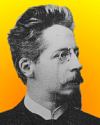
Died 14 Mar 1935 at age 78 (born 7 Mar 1857).
German chemist who won fame at the age of 25 for devising the synthesis of substituted pyridines. He studied stereochemistry of such nitrogen compounds. He synthesised pyridine (1882), cumaron (1886) and thiazol (1889) and he gave a nomenclature of heterocyclic compounds. His investigations of triphenylmethane coloring materials led to progress in the spectrographic analysis, and also the theory of chemical indicators. He was also noted for his study of acids, in which he showed their properties depended on reaction with a solvent; and the electrical conductivity of organic compounds. From 1907 he studied cryoscopy and UV-spectroscopy.
German chemist who won fame at the age of 25 for devising the synthesis of substituted pyridines. He studied stereochemistry of such nitrogen compounds. He synthesised pyridine (1882), cumaron (1886) and thiazol (1889) and he gave a nomenclature of heterocyclic compounds. His investigations of triphenylmethane coloring materials led to progress in the spectrographic analysis, and also the theory of chemical indicators. He was also noted for his study of acids, in which he showed their properties depended on reaction with a solvent; and the electrical conductivity of organic compounds. From 1907 he studied cryoscopy and UV-spectroscopy.
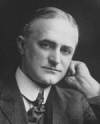
1915
Died 14 Mar 1932 at age 77 (born 12 Jul 1854). quotes
American inventor and industrialist who was a pioneering manufacturer of photographic materials, including rolled film (first patented on 14 Oct 1884) and the Kodak camera (patented 4 Sep 1888). He founded the Eastman-Kodak Company, which for years held a virtual monopoly in the camera and film industry. His introduction of the first Kodak (a coined word, 1888, that became a trademark) camera helped to promote large-scale amateur photography. more
American inventor and industrialist who was a pioneering manufacturer of photographic materials, including rolled film (first patented on 14 Oct 1884) and the Kodak camera (patented 4 Sep 1888). He founded the Eastman-Kodak Company, which for years held a virtual monopoly in the camera and film industry. His introduction of the first Kodak (a coined word, 1888, that became a trademark) camera helped to promote large-scale amateur photography. more
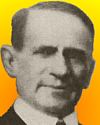
Died 14 Mar 1928 at age 71 (born 15 Apr 1856).
(Akiba Horowitz) After emigrating from Russia to the U.S., he later founded the Everready Flashlight Co. He first developed electric novelties after receiving rights to the battery-powered lighted flowerpots invented by Joshua L. Cowen, and electrically illuminated scarf pins. In Mar 1898, he founded the American Electrical Novelty and Manufacturing Company to make bicycle lights. He then introduced the first tubular Flash Light (now known as a flashlight in the U.S. and a torch in Britain) based on the patent he bought from inventor David Misell (U.S. No 617,592 issued 10 Jan 1899). From his business activities, he became a millionaire.
(Akiba Horowitz) After emigrating from Russia to the U.S., he later founded the Everready Flashlight Co. He first developed electric novelties after receiving rights to the battery-powered lighted flowerpots invented by Joshua L. Cowen, and electrically illuminated scarf pins. In Mar 1898, he founded the American Electrical Novelty and Manufacturing Company to make bicycle lights. He then introduced the first tubular Flash Light (now known as a flashlight in the U.S. and a torch in Britain) based on the patent he bought from inventor David Misell (U.S. No 617,592 issued 10 Jan 1899). From his business activities, he became a millionaire.
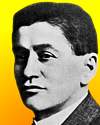
Died 14 Mar 1924 at age 59 (born 27 Oct 1864).
John M. “Jack” Mack was an American inventor and manufacturer who co-founded the Mack Brothers Company (1902), which became Mack Trucks Inc. (1922), manufacturers of tough heavy-duty trucks. In 1890, he began working for a business making carriages and wagons in New York City, which he subsequently bought (1893) and ran with his brothers. By 1900, the Mack brothers produced their first successful large vehicle, a 40-hp 20-passenger sight-seeing bus, called the Manhattan. They built more buses, and by 1905, they expanded into making trucks, with about 100 workers. In 1910, Mack produced the first motorized hook-and-ladder fire truck. John invented the Mack “Bulldog” type engine. The bulldog remains the present company's icon and part of its logo. He left the company in 1912 to start another manufacturing business. He died in a car accident.« more
John M. “Jack” Mack was an American inventor and manufacturer who co-founded the Mack Brothers Company (1902), which became Mack Trucks Inc. (1922), manufacturers of tough heavy-duty trucks. In 1890, he began working for a business making carriages and wagons in New York City, which he subsequently bought (1893) and ran with his brothers. By 1900, the Mack brothers produced their first successful large vehicle, a 40-hp 20-passenger sight-seeing bus, called the Manhattan. They built more buses, and by 1905, they expanded into making trucks, with about 100 workers. In 1910, Mack produced the first motorized hook-and-ladder fire truck. John invented the Mack “Bulldog” type engine. The bulldog remains the present company's icon and part of its logo. He left the company in 1912 to start another manufacturing business. He died in a car accident.« more
History of Mack Trucks, by Tom Brownell. - book suggestion.
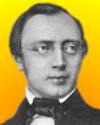
Died 14 Mar 1885 at age 65 (born 24 Mar 1819).
German founder of experimental pathology whose emphasis on the teaching of physiology and medical biochemistry helped give clinical medicine a scientific foundation. He brought medical recognition of multiple sclerosis a step closer by elaborating on the clinical description of MS provided by Cruveilhier and identifying specific symptoms and key features of the illness. Frerichs' clinical account for the first time recognised remissions as a characteristic feature of MS. In addition, he made a major contribution by providing the first medical description of mental disorders in MS, recognising the possible impact of the disease on cognitive and other higher functions of the brain.
German founder of experimental pathology whose emphasis on the teaching of physiology and medical biochemistry helped give clinical medicine a scientific foundation. He brought medical recognition of multiple sclerosis a step closer by elaborating on the clinical description of MS provided by Cruveilhier and identifying specific symptoms and key features of the illness. Frerichs' clinical account for the first time recognised remissions as a characteristic feature of MS. In addition, he made a major contribution by providing the first medical description of mental disorders in MS, recognising the possible impact of the disease on cognitive and other higher functions of the brain.
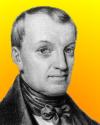
Died 14 Mar 1874 at age 79 (born 29 May 1794).
German astronomer who (with Wilhelm Beer) published the most complete map of the Moon of the time, Mappa Selenographica, 4 vol. (1834-36). It was the first lunar map to be divided into quadrants, and it remained unsurpassed in its detail until J.F. Julius Schmidt's map of 1878. Mädler and Beer also published the first systematic chart of the surface features of the planet Mars (1830).
German astronomer who (with Wilhelm Beer) published the most complete map of the Moon of the time, Mappa Selenographica, 4 vol. (1834-36). It was the first lunar map to be divided into quadrants, and it remained unsurpassed in its detail until J.F. Julius Schmidt's map of 1878. Mädler and Beer also published the first systematic chart of the surface features of the planet Mars (1830).
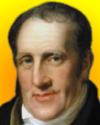
Died 14 Mar 1830 at age 62 (born 7 Apr 1767).
Scottish engineer who began Europe's first successful steamship service, with his paddle steamboat, Comet, on the River Clyde in Scotland. In 1790, at age 23, he was a carpenter at Glasgow. He became interested in steam navigation, and corresponded with Robert Fulton, who later began the world's first commercial steamboat service in New York (17 Aug 1807). In 1811, Bell commissioned a 30-ton vessel from John Wood, a Port Glasgow shipbuilder, and it was fitted with a three horsepower Boulton & Watt steam engine. It was delivered on 6 Aug 1812, to a central Glasgow quay. Commercial service began two days later, travelling 24 miles between there and Greenock in under five hours. By 1819, it offered a four-day journey to Fort William. In 1820, it wrecked in strong currents near Oban.«
Scottish engineer who began Europe's first successful steamship service, with his paddle steamboat, Comet, on the River Clyde in Scotland. In 1790, at age 23, he was a carpenter at Glasgow. He became interested in steam navigation, and corresponded with Robert Fulton, who later began the world's first commercial steamboat service in New York (17 Aug 1807). In 1811, Bell commissioned a 30-ton vessel from John Wood, a Port Glasgow shipbuilder, and it was fitted with a three horsepower Boulton & Watt steam engine. It was delivered on 6 Aug 1812, to a central Glasgow quay. Commercial service began two days later, travelling 24 miles between there and Greenock in under five hours. By 1819, it offered a four-day journey to Fort William. In 1820, it wrecked in strong currents near Oban.«
In 1994, a magnetic grappling system was used in outer space for the first time. The 50-foot robot arm was operated by several Columbia astronauts taking turns.
In 1960, the first U.S. offshore sulphur mine began extracting sulphur. The Grand Isle offshore mine was built and operated by the Freeport Sulphur company, about 7 miles off the Louisiana coast in the Gulf of Mexico. A steel structure with drilling rigs stood in 50-ft of water to reach the deposit 2,000-ft below the ocean bed. The rig also carries generators and boilers to generate the superheated water injected into the bore in the Frasch extraction process to melt the sulphur and help drive the molten material to the surface. Humble Oil & Refining Co. discovered sulphur-bearing limestone while test drilling for oil in 1949, and within five years had eight more sulphur prospect holes. Freeport Sulphur Co. acquired the mineral rights on 19 Sep 1956. More than $22 million was spent on pre-production construction.«
In 1931, the first US motion picture theatre built especially for rear projection of the movie was opened in New York City.
In 1927, the first woman in the US to be elected to the American Society of Civil Engineers was Elsie Eaves, who became an associate member.
In 1918, the first US concrete seagoing ship was launched at Redwood City, California.
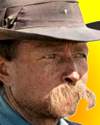
Kroegel and pelican
In 1903, the first U.S. national wild life refuge, was established with an Executive Order by President Theodore Roosevelt. This created a bird sanctuary for the nesting colony of pelicans and herons of the 5.5-acre Pelican Island, Indian River, east of Orlando, on the central Atlantic coast of Florida. In 1859, there were thousands of herons, egrets, pelican, ibises and spoonbills. But, they were so heavily slaughtered for their plumage used in women's fashion, that by 1903 only brown pelicans were left. The island was “reserved and set aside ... as a preserve and breeding ground for native birds.” Conservationist Paul Kroegel was made first Game Warden. Yet in Spring 1918, commercial fishermen killed more hundreds of pelican chicks, wrongly believing pelicans reduced the fish population. Since 1943, the island land area has halved, eroded by watercraft traffic, but the bird diversity has improved.«
more
America's National Wildlife Refuges: A Complete Guide, by Russell D. Butcher. - book suggestion.
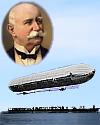
In 1899, Count Ferdinand von Zeppelin was issued a U.S. patent for his invention of his “Navigable Balloon,” the rigid airship, known as the Zeppelin (No. 621,195). The overall cylindrical shape with rounded ends was covered with a cotton shell, framed with aluminium struts, wire-braced and contained a number of independent hydrogen balloons used for lift. Two or more seperate engines were suspended below for propulsion. He had earlier patented it in Germany, 31 Aug 1895, titled, “Lenkbarer Luftfahrzug” (steerable air-cruising train), referred to a feature whereby additional cylindrical mid-segments could be connected together for a longer airship with greater carrying capacity, though none were ever made in this form. He made his first flight with the LZ-1 on 2 Jul 1900 over Lake Constance, Germany.«
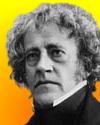
Herschel
In 1839, Sir John Herschel referred to “photography” in a lecture to the Royal Society—possibly the first use of the word. Following Henry Fox Talbot's publication of his invention of what became known as the Calotype process, a number of scientific men made their own investigations, including not only Herschel but also Berard, Robert Hunt and Draper. Herschel used the name Chrysotype (from the Greek word for gold) for his process. It used paper washed in a solution of ammonio-citrate of iron and brought out the image with a solution of soda or chloride of gold, or with nitrate of silver, and fixing it in the first case by washing it with iodide of potassium and in the second, with hyposulphite of soda. It had technical difficulties in controlling the contrast, colour and fogging of the image.«*
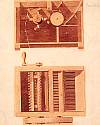
In 1794, Eli Whitney was issued a U.S. patent for his cotton gin. His invention replaced much processing by hand labour, and revolutionized the textile industry. Cotton became commercially important in the southern US, with a resulting demand for slaves to tend the fields and harvest the cotton crops.[Image: detail from copy of Whitney's patent made by the Patent Office in 1845.]