
Born 23 Mar 1937.
American scientist who co-discovered (1984) the virus responsible for AIDS - human immunodeficiency virus (HIV). The French scientist Luc Montagnier independently found the same virus in 1983, but did link it with AIDS. Gallo developed the HIV blood test. Then health care workers could for the first time screen for the AIDS virus, both to protect blood transfusion stocks, and also to permit faster diagnosis of patients. Gallo continued to research therapies for those infected with HIV. In 1996, he discovered a natural compound - chemokines - can block the HIV virus and arrest the progression of AIDS. After 30 years at the National Cancer Institute, in 1996 he became head of the new Institute of Virology.«
American scientist who co-discovered (1984) the virus responsible for AIDS - human immunodeficiency virus (HIV). The French scientist Luc Montagnier independently found the same virus in 1983, but did link it with AIDS. Gallo developed the HIV blood test. Then health care workers could for the first time screen for the AIDS virus, both to protect blood transfusion stocks, and also to permit faster diagnosis of patients. Gallo continued to research therapies for those infected with HIV. In 1996, he discovered a natural compound - chemokines - can block the HIV virus and arrest the progression of AIDS. After 30 years at the National Cancer Institute, in 1996 he became head of the new Institute of Virology.«
Born 23 Mar 1912; died 16 Jun 1977 at age 65. quotes
Wernher Magnus Maximilian von Braun was a German-American rocket engineer who was one of the most important developers of rockets and their evolution to applications in space exploration. His interest began as a teenager in Germany, and during WW II he led the development of the deadly V–2 ballistic missile for the Nazis (which role remains controversial). After war, he was taken to use his knowledge to produce rockets for the U.S. Army. In 1960, he transferred to the newly formed NASA and became director of Marshall Space Flight Center and chief architect of the Saturn V launch vehicle used to put men on the moon. His contributions include the Explorer satellites; Jupiter, Pershing, Redstone and Saturn rockets, and Skylab.«
Wernher Magnus Maximilian von Braun was a German-American rocket engineer who was one of the most important developers of rockets and their evolution to applications in space exploration. His interest began as a teenager in Germany, and during WW II he led the development of the deadly V–2 ballistic missile for the Nazis (which role remains controversial). After war, he was taken to use his knowledge to produce rockets for the U.S. Army. In 1960, he transferred to the newly formed NASA and became director of Marshall Space Flight Center and chief architect of the Saturn V launch vehicle used to put men on the moon. His contributions include the Explorer satellites; Jupiter, Pershing, Redstone and Saturn rockets, and Skylab.«
Dr. Space: The Life of Wernher von Braun, by Bob Ward. - book suggestion.
Born 23 Mar 1907; died 8 Apr 1992 at age 85. quotes
Swiss-French-Italian pharmacologist who was awarded the 1957 Nobel Prize for Physiology or Medicine “for his discoveries relating to synthetic compounds that inhibit the action of certain body substances, and especially their action on the vascular system and the skeletal muscles.” In 1944, Bovet discovered pyrilamine (mepyramine), the first clinically useful antihistamine, which is effective against allergic reactions, by blocking the neurotransmitter histamine. In 1947, a search for a synthetic substitute for curare (a muscle relaxant) led to his discovery of gallamine and other muscle relaxants.«
Swiss-French-Italian pharmacologist who was awarded the 1957 Nobel Prize for Physiology or Medicine “for his discoveries relating to synthetic compounds that inhibit the action of certain body substances, and especially their action on the vascular system and the skeletal muscles.” In 1944, Bovet discovered pyrilamine (mepyramine), the first clinically useful antihistamine, which is effective against allergic reactions, by blocking the neurotransmitter histamine. In 1947, a search for a synthetic substitute for curare (a muscle relaxant) led to his discovery of gallamine and other muscle relaxants.«
The Road to Stockholm: Nobel Prizes, Science, and Scientists, by Istvan Hargittai, James D. Watson. - book suggestion.
Born 23 Mar 1905; died 16 Jun 1984 at age 79. quotes
English physicist whose critical improvements to the cavity magnetron, the microwave-generating device used in radar, was a major contribution to winning WWII. A magnetron is now commonplace in homes inside the microwave oven. Earlier magnetrons made in the 1920s gave low power output. By Feb 1940, development by Randall with Harry Boot of the small-sized cavity magnetron which generated centimeter wavelengths at much higher power allowed radar to detect smaller objects. In turn, this more compact equipment with a smaller antenna permitted easy mobile installation of high-resolution radar in aircraft. After the war, Randall turned to biophysics, including directing experimental work on DNA structure.«
English physicist whose critical improvements to the cavity magnetron, the microwave-generating device used in radar, was a major contribution to winning WWII. A magnetron is now commonplace in homes inside the microwave oven. Earlier magnetrons made in the 1920s gave low power output. By Feb 1940, development by Randall with Harry Boot of the small-sized cavity magnetron which generated centimeter wavelengths at much higher power allowed radar to detect smaller objects. In turn, this more compact equipment with a smaller antenna permitted easy mobile installation of high-resolution radar in aircraft. After the war, Randall turned to biophysics, including directing experimental work on DNA structure.«
Born 23 Mar 1900; died 18 Mar 1980 at age 79. quotes
German-American psychologist who investigated the connections between psychology and society. He was born in Germany, but fled from the Nazis, and worked in many fields of the humanities. Although influenced by Sigmund Freud's theories, Fromm diverged in thinking that beyond the unconscious alone, conditions of the society and economy affect human behaviour. Fromm believed psychoanalytic principles could be applied to remedy cultural ills. He wished to see the creation of a sane society meeting human needs with harmony between men and nations in a nuclear age, and helped organize the National Committee for a Sane Nuclear Policy (SANE) in 1957.«
German-American psychologist who investigated the connections between psychology and society. He was born in Germany, but fled from the Nazis, and worked in many fields of the humanities. Although influenced by Sigmund Freud's theories, Fromm diverged in thinking that beyond the unconscious alone, conditions of the society and economy affect human behaviour. Fromm believed psychoanalytic principles could be applied to remedy cultural ills. He wished to see the creation of a sane society meeting human needs with harmony between men and nations in a nuclear age, and helped organize the National Committee for a Sane Nuclear Policy (SANE) in 1957.«
The Sane Society, by Erich Fromm. - book suggestion.
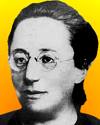
Born 23 Mar 1882; died 14 Apr 1935 at age 53. quotes
Amalie Emmy Noether was a German mathematician best known for her contributions to abstract algebra, in particular, her study of chain conditions on ideals of rings. In theoretical physics, she produced Noether's Theorem, which proves a relationship between symmetries in physics and conservation principles. This basic result in the general theory of relativity was praised by Einstein. It was her work in the theory of invariants which led to formulations for several concepts of Einstein's general theory of relativity. For her obituary in The New York Times, Albert Einstein wrote: “Fraulein Noether was the most significant mathematical genius thus far produced since the higher education of women began.”«
Amalie Emmy Noether was a German mathematician best known for her contributions to abstract algebra, in particular, her study of chain conditions on ideals of rings. In theoretical physics, she produced Noether's Theorem, which proves a relationship between symmetries in physics and conservation principles. This basic result in the general theory of relativity was praised by Einstein. It was her work in the theory of invariants which led to formulations for several concepts of Einstein's general theory of relativity. For her obituary in The New York Times, Albert Einstein wrote: “Fraulein Noether was the most significant mathematical genius thus far produced since the higher education of women began.”«
Emmy Noether, by Auguste Dick. - book suggestion.
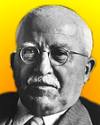
Born 23 Mar 1881; died 8 Sep 1965 at age 84. quotes
German chemist who received the 1953 Nobel Prize for Chemistry for his discovery of the structure of polymers as long-chain molecules. In 1910, he developed a new, simple synthesis for isoprene, the basic molecular unit in synthetic rubber. By the 1920s, Staudinger had formed his view that polymer molecules could be very long chain of repeating units joined by normal chemical bonds, rather than the prevailing view that polymers were merely a disorderly aggregation of smaller molecules held together by some other forces. He coined the term macromolecule (1922). Eventually X-ray crystallography confirmed his long-chain structure of polymers. His work was a major contribution to molecular biology.«
German chemist who received the 1953 Nobel Prize for Chemistry for his discovery of the structure of polymers as long-chain molecules. In 1910, he developed a new, simple synthesis for isoprene, the basic molecular unit in synthetic rubber. By the 1920s, Staudinger had formed his view that polymer molecules could be very long chain of repeating units joined by normal chemical bonds, rather than the prevailing view that polymers were merely a disorderly aggregation of smaller molecules held together by some other forces. He coined the term macromolecule (1922). Eventually X-ray crystallography confirmed his long-chain structure of polymers. His work was a major contribution to molecular biology.«
From Organic Chemistry to Macromolecules (autobiography), by Hermann Staudinger. - book suggestion.
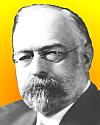
Born 23 Mar 1855; died 11 Jun 1931 at age 76.
American sociologist, one of the first in the United States to turn sociology from a branch of philosophy into a research science dependent on statistics. He was noted for his doctrine of the "consciousness of kind," which he derived from Adam Smith's conception of "sympathy," or shared moral reactions. His explanation of social phenomena was based this doctrine - his theory that each person has an innate sense of belonging to particular social groups. He encouraged statistical studies in sociology.
American sociologist, one of the first in the United States to turn sociology from a branch of philosophy into a research science dependent on statistics. He was noted for his doctrine of the "consciousness of kind," which he derived from Adam Smith's conception of "sympathy," or shared moral reactions. His explanation of social phenomena was based this doctrine - his theory that each person has an innate sense of belonging to particular social groups. He encouraged statistical studies in sociology.
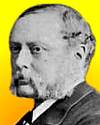
Born 23 Mar 1837; died 12 Sep 1888 at age 51.
English astronomer who first suggested (1873) that meteor impacts caused lunar craters, rather than volcanic action. He studied the motion of stars, their distribution, and their relation to the nebulae. He prepared a map (1867) of the surface of Mars on which he named continents, seas, bays and straits (in the same way that Riccioli used on his map of the moon). However, he did not perceive “canals” on the surface, as later Schiaparelli identified. Proctor participated in expeditions of 1874 and 1882 to observe the transit of Venus. He was very successful popularizing astronomy by his writings in periodicals, books, and lectures he gave as far abroad as Australia and America (where he stayed after 1881).« more
English astronomer who first suggested (1873) that meteor impacts caused lunar craters, rather than volcanic action. He studied the motion of stars, their distribution, and their relation to the nebulae. He prepared a map (1867) of the surface of Mars on which he named continents, seas, bays and straits (in the same way that Riccioli used on his map of the moon). However, he did not perceive “canals” on the surface, as later Schiaparelli identified. Proctor participated in expeditions of 1874 and 1882 to observe the transit of Venus. He was very successful popularizing astronomy by his writings in periodicals, books, and lectures he gave as far abroad as Australia and America (where he stayed after 1881).« more
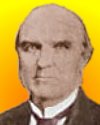
Born 23 Mar 1829; died 23 Jun 1891 at age 62.
English astronomer who devised the magnitude scale of the brightness of stars (1850) now in use. He divided the classical scale in which a first magnitude star is one hundred times brighter than a sixth magnitude star using five integer steps. Each step represents a fifth-root of 100 (about 2.512) increase in brightness. The Sun's magnitude on this scale is -26.91, whereby negative numbers denote objects brighter than first magnitude. Sirius is magnitude -1.58, Aldebaran is 1 and the faintest star detected is 30. His interest in astronomy began in his youth; by age 18 he had calculated orbits for two comets. He discovered 8 asteroids, 21 new variable stars and compiled a massive star catalogue. In 1860 he moved to India for the remainder of his life's work.«
English astronomer who devised the magnitude scale of the brightness of stars (1850) now in use. He divided the classical scale in which a first magnitude star is one hundred times brighter than a sixth magnitude star using five integer steps. Each step represents a fifth-root of 100 (about 2.512) increase in brightness. The Sun's magnitude on this scale is -26.91, whereby negative numbers denote objects brighter than first magnitude. Sirius is magnitude -1.58, Aldebaran is 1 and the faintest star detected is 30. His interest in astronomy began in his youth; by age 18 he had calculated orbits for two comets. He discovered 8 asteroids, 21 new variable stars and compiled a massive star catalogue. In 1860 he moved to India for the remainder of his life's work.«
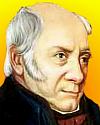
Born 23 Mar 1769; died 28 Aug 1839 at age 70. quotes
English geologist and engineer who extended the science of stratigraphy. His early work was as a miner and an engineer, for a canal-digging company. From this experience he observed the difference in rock layers. He also recognized that the same succession of fossil groups from older to younger rocks could be found in many parts of England, which he called the principle of faunal succession. He travelled the entire country to verify that relationships between the strata and their characteristics were consistent everywhere. Thus Smith created a profile of the entire country of England. His great geologic map of England and Wales (1815) set the standard for modern geologic maps. Many of the colourful names he gave to the strata are still in use today.«[Image: portrait of William Smith by Abner Lowe in the 1920s]
English geologist and engineer who extended the science of stratigraphy. His early work was as a miner and an engineer, for a canal-digging company. From this experience he observed the difference in rock layers. He also recognized that the same succession of fossil groups from older to younger rocks could be found in many parts of England, which he called the principle of faunal succession. He travelled the entire country to verify that relationships between the strata and their characteristics were consistent everywhere. Thus Smith created a profile of the entire country of England. His great geologic map of England and Wales (1815) set the standard for modern geologic maps. Many of the colourful names he gave to the strata are still in use today.«[Image: portrait of William Smith by Abner Lowe in the 1920s]
The Map That Changed the World: The Tale of William Smith..., by Simon Winchester. - book suggestion.
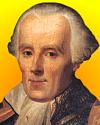
Born 23 Mar 1749; died 5 Mar 1827 at age 77. quotes
Pierre Simon, Marquis de Laplace was a French mathematician, physicist, statistician and astronomer known for his mathematical analysis of the stability of the solar system (1773), alleviating Isaac Newton's concerns about perturbations between planets. He took an exact approach to science. He developed an explanation of surface tension of a liquid in terms of inter-molecular attractions, investigated capillary action and the speed of sound. He assisted Antoine Lavoisier (1783) investigating specific heat and heats of combustion, initiating the science of thermochemistry. He believed the solar system formed from a collapsing nebula. He contributed to the mathematics of probability and calculus, in which a differential equation is known by his name, and was involved in establishing the metric system.«
Pierre Simon, Marquis de Laplace was a French mathematician, physicist, statistician and astronomer known for his mathematical analysis of the stability of the solar system (1773), alleviating Isaac Newton's concerns about perturbations between planets. He took an exact approach to science. He developed an explanation of surface tension of a liquid in terms of inter-molecular attractions, investigated capillary action and the speed of sound. He assisted Antoine Lavoisier (1783) investigating specific heat and heats of combustion, initiating the science of thermochemistry. He believed the solar system formed from a collapsing nebula. He contributed to the mathematics of probability and calculus, in which a differential equation is known by his name, and was involved in establishing the metric system.«
Pierre-Simon Laplace, 1749-1827, by Charles Coulston Gillispie. - book suggestion.
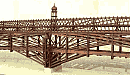
model of third Rhine bridge at Schaffhauser opened 27 Feb 1758
Swiss carpenter, who with his brother Johannes, built a bridge (1758) over the Limmat River at the town of Wettingen, near Zürich, that is believed to be the first timber bridge to employ a true arch in its design. The brothers' ingenious combination of the arch and truss principles made it possible to construct bridges longer and better than ever before. They constructed churches as well as other bridges.
Born 23 Mar 1699; died 22 Sep 1777 at age 78.
American explorer and botanist who is also regarded as the father of American botany, a subject he self-taught from the age of ten. He made a systematic study of healing plants. In 1728, Bartram bought land beside the Schuylkill River at Kingsessing, outside Philadelphia, created Bartram's Garden, and began likely the first experiments in hybridizing in America. (His Garden now forms part of Philadelphia's small park system - the oldest living botanical garden in the U.S. - where many giant trees may still be seen that he planted.) He travelled widely to gather ripe seeds, roots and bulbs in proper condition for transplanting. Shipping many species to introduce in Europe developed into a business. His son William Bartram followed him as a naturalist.«
American explorer and botanist who is also regarded as the father of American botany, a subject he self-taught from the age of ten. He made a systematic study of healing plants. In 1728, Bartram bought land beside the Schuylkill River at Kingsessing, outside Philadelphia, created Bartram's Garden, and began likely the first experiments in hybridizing in America. (His Garden now forms part of Philadelphia's small park system - the oldest living botanical garden in the U.S. - where many giant trees may still be seen that he planted.) He travelled widely to gather ripe seeds, roots and bulbs in proper condition for transplanting. Shipping many species to introduce in Europe developed into a business. His son William Bartram followed him as a naturalist.«
The Life and Travels of John Bartram, by Edmund Berkeley. - book suggestion.
Born 23 Mar 1500; died 1577.
Italian physician and botanist who translated Dioscoride's famous 1st-century herbal, Materia Medica into Italian as Di Pedacio Dioscoride Anazarbeo libri cinque (1544), adding commentary to clarify and expand it with his own research observations. He gave very detailed descriptions of each genus of plant, illustrated with many delicately detailed woodcuts by Giorgio Liberale. As a textbook for pharmacology used during the next two centuries, with translations in many languages, it influenced the development of modern botany. Mattioli collected and studied hundreds of plants for their medicinal value, many of them new to science. He also wrote on medical subjects including the origin and treatment of syphilis.«
Italian physician and botanist who translated Dioscoride's famous 1st-century herbal, Materia Medica into Italian as Di Pedacio Dioscoride Anazarbeo libri cinque (1544), adding commentary to clarify and expand it with his own research observations. He gave very detailed descriptions of each genus of plant, illustrated with many delicately detailed woodcuts by Giorgio Liberale. As a textbook for pharmacology used during the next two centuries, with translations in many languages, it influenced the development of modern botany. Mattioli collected and studied hundreds of plants for their medicinal value, many of them new to science. He also wrote on medical subjects including the origin and treatment of syphilis.«

Died 23 Mar 2002 at age 92 (born 3 Aug 1909).
Neal Elgar Miller was an American psychologist and neuroscientist who was the first to identify and promote biofeedback. He demonstrated experimentally that individuals may learn to control their heart rate and digestion in the same sense that walking is a learned activity. This work began in the 1950s when he investigated how such functions of the autonomic system could be consciously controlled by an animal or person. Proof came from his experiments with rats that he trained to control these functions using a system of rewards and punishment. At first, few scientists accepted these ideas, but gradually his theories on biofeedback gained support and are now widely accepted. In 1964, he was awarded the National Medal of Science.«
Neal Elgar Miller was an American psychologist and neuroscientist who was the first to identify and promote biofeedback. He demonstrated experimentally that individuals may learn to control their heart rate and digestion in the same sense that walking is a learned activity. This work began in the 1950s when he investigated how such functions of the autonomic system could be consciously controlled by an animal or person. Proof came from his experiments with rats that he trained to control these functions using a system of rewards and punishment. At first, few scientists accepted these ideas, but gradually his theories on biofeedback gained support and are now widely accepted. In 1964, he was awarded the National Medal of Science.«
Social Learning and Imitation, by Neal Elgar Miller and John Dollard. - book suggestion.
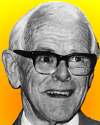
Died 23 Mar 1993 at age 82 (born 28 Feb 1911). quotes
Denis Parsons Burkitt was an Irish surgeon and medical researcher who first identified Burkitt's lymphoma. In 1957, in Uganda, Burkitt found several children suffering from fast-spreading tumours in the head and neck. When they died within weeks, Burkitt recognised this was a previously undescribed cancer disease. He showed that these and all cases were characterized by infiltration of the affected tissues by lymphocytes. With colleagues Edward Williams and Clifford Nelson, he plotted the geographical incidence of the disease, and found it in the same areas endemic with malaria. This survey is regarded as one of the pioneering studies of geographical pathology. Burkitt helped to develop chemotherapy for the disease. Later, he championed high fibre diets.«
Denis Parsons Burkitt was an Irish surgeon and medical researcher who first identified Burkitt's lymphoma. In 1957, in Uganda, Burkitt found several children suffering from fast-spreading tumours in the head and neck. When they died within weeks, Burkitt recognised this was a previously undescribed cancer disease. He showed that these and all cases were characterized by infiltration of the affected tissues by lymphocytes. With colleagues Edward Williams and Clifford Nelson, he plotted the geographical incidence of the disease, and found it in the same areas endemic with malaria. This survey is regarded as one of the pioneering studies of geographical pathology. Burkitt helped to develop chemotherapy for the disease. Later, he championed high fibre diets.«
Fiber Man: The Life Story of Dr Denis Burkitt, by Brian Kellock. - book suggestion.
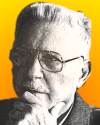
Died 23 Mar 1984 at age 82 (born 8 Apr 1901).
French engineer and builder known particularly for his contributions to the art and technology of prefabricated metal construction. Prouvé was first apprenticed to a blacksmith, and then to a metal workshop. In Nancy in 1923 he opened what would be the first in a string of his own workshops and studios. He produced wrought iron products and began designing furniture. In 1931, he opened the successful "Ateliers Jean Prouvé." He was one of the creators of the first prefabricated building in the world, the 1937 Roland Garros flight club. After WW II, his company mass-produced frame houses for refugees. His company built industrial buildings from aluminum and sent hundreds of aluminum sheds to Africa. He went on to produce other major buildings.
French engineer and builder known particularly for his contributions to the art and technology of prefabricated metal construction. Prouvé was first apprenticed to a blacksmith, and then to a metal workshop. In Nancy in 1923 he opened what would be the first in a string of his own workshops and studios. He produced wrought iron products and began designing furniture. In 1931, he opened the successful "Ateliers Jean Prouvé." He was one of the creators of the first prefabricated building in the world, the 1937 Roland Garros flight club. After WW II, his company mass-produced frame houses for refugees. His company built industrial buildings from aluminum and sent hundreds of aluminum sheds to Africa. He went on to produce other major buildings.
Jean Prouvé Highlights 1917-1944, by Peter Sulzer. - book suggestion.
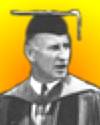
Died 23 Mar 1961 at age 83 (born 26 Oct 1877).
American mathematical physicist, educator, and science administrator. During World War I he invented several devices for submarine detection - several generations of the Navy's "M," or multiple-tube, passive submarine sensors. This apparatus focused sound to ascertain its source. To determine the direction from which the sound came, the operator needed only to seek the maximum output on his earphones by turning a dial. The final device had a range of 3 miles. Mason's special interest and contributions lay in mathematics (differential equations, calculus of variations), physics (electromagnetic theory), invention (acoustical compensators, submarine-detection devices), and the administration of universities and foundations.
American mathematical physicist, educator, and science administrator. During World War I he invented several devices for submarine detection - several generations of the Navy's "M," or multiple-tube, passive submarine sensors. This apparatus focused sound to ascertain its source. To determine the direction from which the sound came, the operator needed only to seek the maximum output on his earphones by turning a dial. The final device had a range of 3 miles. Mason's special interest and contributions lay in mathematics (differential equations, calculus of variations), physics (electromagnetic theory), invention (acoustical compensators, submarine-detection devices), and the administration of universities and foundations.
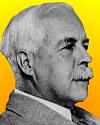
c. 1930
Died 23 Mar 1946 at age 70 (born 23 Oct 1875). quotes
American chemist who collaborated with Irving Langmuir in developing an atomic theory. He developed a theory of valency, which introduced the covalent bond (c. 1916), whereby a chemical combination is made between two atoms by the sharing of a pair of electrons, one contributed from each atom. This was part of his more general octet theory, published in Valence and the Structure of Atoms and Molecules (1923). Lewis visualized the electrons in an atom as being arranged in concentric cubes. The sharing of these electrons he illustrated in the Lewis dot diagrams familiar to chemistry students. He generalized the concept of acids and bases now known as Lewis acids and Lewis bases.«
American chemist who collaborated with Irving Langmuir in developing an atomic theory. He developed a theory of valency, which introduced the covalent bond (c. 1916), whereby a chemical combination is made between two atoms by the sharing of a pair of electrons, one contributed from each atom. This was part of his more general octet theory, published in Valence and the Structure of Atoms and Molecules (1923). Lewis visualized the electrons in an atom as being arranged in concentric cubes. The sharing of these electrons he illustrated in the Lewis dot diagrams familiar to chemistry students. He generalized the concept of acids and bases now known as Lewis acids and Lewis bases.«
A Biography of Distinguished Scientist Gilbert Newton Lewis, by Edward S. Lewis. - book suggestion.
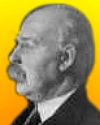
Died 23 Mar 1945 at age 91 (born 4 Mar 1854).
Sir (William) Napier Shaw was an English meteorologist who applied his training in mathematics. He studied the upper atmosphere, using instruments carried by kites and high-altitude balloons. He measured (1906) the movement of air in two anti-cyclones, finding descent rates of 350 and 450 metres per day. He calculated the reduction in pressure due to a certain depression to correspond to the removal of two million million tons of air. He introduced the millibar unit for measurement of air pressure (1000 millibar = 1 bar = 1 standard atmosphere) and the tephigram to illustrate the temperature of a vertical profile of the atmosphere. He also co-authored an early work on atmospheric polluiton, The Smoke Problem of Great Cities (1925).«
Sir (William) Napier Shaw was an English meteorologist who applied his training in mathematics. He studied the upper atmosphere, using instruments carried by kites and high-altitude balloons. He measured (1906) the movement of air in two anti-cyclones, finding descent rates of 350 and 450 metres per day. He calculated the reduction in pressure due to a certain depression to correspond to the removal of two million million tons of air. He introduced the millibar unit for measurement of air pressure (1000 millibar = 1 bar = 1 standard atmosphere) and the tephigram to illustrate the temperature of a vertical profile of the atmosphere. He also co-authored an early work on atmospheric polluiton, The Smoke Problem of Great Cities (1925).«
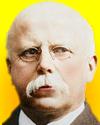
Died 23 Mar 1924 at age 82 (born 4 Oct 1841). quotes
American physicist and meteorologist who was the first to propose the use of a ring pendulum for measuring absolute gravity. From 1889 to 1894 he served both as Director of the U.S. Coast and Geodetic Survey and also Superintendent of the U.S. Standard Weights and Measures where he oversaw the shift in the fundamental standards of the U.S. from the English yard and pound to the international meter and kilogram. Mendenhall devised a quarter second’s pendulum for gravity measurements and instituted improvements in the measurement of base lines with wire tapes, in the construction of instruments for precise leveling and in the methods used in triangulation and gravity work, and developed a comprehensive plan for the study of terrestrial magnetism.
American physicist and meteorologist who was the first to propose the use of a ring pendulum for measuring absolute gravity. From 1889 to 1894 he served both as Director of the U.S. Coast and Geodetic Survey and also Superintendent of the U.S. Standard Weights and Measures where he oversaw the shift in the fundamental standards of the U.S. from the English yard and pound to the international meter and kilogram. Mendenhall devised a quarter second’s pendulum for gravity measurements and instituted improvements in the measurement of base lines with wire tapes, in the construction of instruments for precise leveling and in the methods used in triangulation and gravity work, and developed a comprehensive plan for the study of terrestrial magnetism.
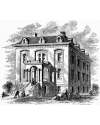
Died 23 Mar 1872 at age 58 (born 19 Apr 1813). quotes
American pioneer in the medical education of women who founded the Boston Female Medical School (Nov 1848), first medical school in the world exclusively for women, because he disapproved of "male midwives." Opened with 12 students, its early curriculum focused on midwifery. In 1850, renamed the New England Female Medical College, expanded to include a full medical curriculum, and the college began to grant medical degrees to women. Gregory wrote on educational and sanitary subjects. He was secretary of the College until his death. By 1873, the college had graduated 98 women. In 1874, it merged with Boston University School of Medicine, thus becoming one of the world's first coed medical colleges.[Image: from title page of of the Thirteenth Annual Announcement of the New England Female Medical College, 1860.]
American pioneer in the medical education of women who founded the Boston Female Medical School (Nov 1848), first medical school in the world exclusively for women, because he disapproved of "male midwives." Opened with 12 students, its early curriculum focused on midwifery. In 1850, renamed the New England Female Medical College, expanded to include a full medical curriculum, and the college began to grant medical degrees to women. Gregory wrote on educational and sanitary subjects. He was secretary of the College until his death. By 1873, the college had graduated 98 women. In 1874, it merged with Boston University School of Medicine, thus becoming one of the world's first coed medical colleges.[Image: from title page of of the Thirteenth Annual Announcement of the New England Female Medical College, 1860.]
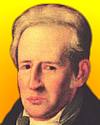
Died 23 Mar 1849 at age 84 (born 10 Nov 1764).
Spanish-American mineralogist who discovered (1801) a new element, later named vanadium. While a professor of mineralogy in Mexico, Del Rio examined a specimen of brown lead from Zimapan and found a new metal, similar to chromium and uranium, which he name erythronium, after the red colour of one of its chemical compounds (Greek erythros, "red"). He was dissuaded by other chemists, and eventually regarded it as impure chromium. Swedish chemist Nils Gabriel Sefström, rediscovered the element (1830) and named it vanadium, after Vanadis, the Scandinavian goddess of beauty, because of its beautiful multi-coloured compounds. Since the early 1900s, vanadium has been used as an alloying element for steels and iron.*
Spanish-American mineralogist who discovered (1801) a new element, later named vanadium. While a professor of mineralogy in Mexico, Del Rio examined a specimen of brown lead from Zimapan and found a new metal, similar to chromium and uranium, which he name erythronium, after the red colour of one of its chemical compounds (Greek erythros, "red"). He was dissuaded by other chemists, and eventually regarded it as impure chromium. Swedish chemist Nils Gabriel Sefström, rediscovered the element (1830) and named it vanadium, after Vanadis, the Scandinavian goddess of beauty, because of its beautiful multi-coloured compounds. Since the early 1900s, vanadium has been used as an alloying element for steels and iron.*
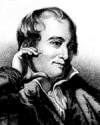
Died 23 Mar 1840 at age 76 (born 27 Oct 1763). quotes
Scottish-American, born to wealth in Ayr, Scotland, William Maclure moved to the U.S. in 1778. He was an educational reformer and a geologist who is known for his geological map - the first true geological map of any part of North America and one of the earliest such maps compiled. Before 1800, he had owned businesses in the new country, traveled extensively in Europe, and joined the American Philosophical Society. Through a number of years, Maclure traveled and resided in France, Italy, Paris, Switzerland, and Spain. When Benjamin Silliman organized the American Geological Society in 1819, Maclure was elected president.
Scottish-American, born to wealth in Ayr, Scotland, William Maclure moved to the U.S. in 1778. He was an educational reformer and a geologist who is known for his geological map - the first true geological map of any part of North America and one of the earliest such maps compiled. Before 1800, he had owned businesses in the new country, traveled extensively in Europe, and joined the American Philosophical Society. Through a number of years, Maclure traveled and resided in France, Italy, Paris, Switzerland, and Spain. When Benjamin Silliman organized the American Geological Society in 1819, Maclure was elected president.
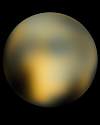
NASA 2010
In 2178, Pluto finishes its first complete circuit of the Sun since its 1930 discovery by Clyde Tombaugh—a rare celestial milestone unfolding over nearly two and a half centuries (about 248 Earth years). Pluto has a highly elliptical, inclined orbit (eccentricity ~0.25, tilt ~17°), travelling between about 30 and 49 astronomical units from the Sun. For part of its year, Pluto is closer to the Sun than Neptune, and is locked in a 3:2 resonance with Neptune, preventing close encounters. Reclassified as a dwarf planet on 24 Aug 2006, it is now known as one of many Kuiper Belt objects. Observations by New Horizons in 2015 revealed a geologically active surface with nitrogen ice plains and possible subsurface oceans.«[1 A.U. = average Sun-Earth distance, ~150 million km, 93 million miles, ~8.3 light-minutes.]
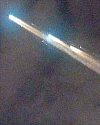
In 2001, the Russian space station, Mir, ended 15 years in orbit by burning up in Earth’s atmosphere, as planned to end its life. Launched on 20 Feb 1986, Mir had far exceeded its original expected five year lifespan. It was decided in Oct 2000 that its poor condition no longer justified its maintenance cost. Mission controllers remotely commanded a docked Progress tanker to fire rockets to lower Mir’s orbit and cause re-entry into the atmosphere. Any debris not burnt up during re-entry, fell harmlessly into the Pacific Ocean at the planned target zone between New Zealand and Chile. For safety, airlines had rerouted Pacific flights in anticipation of the event, and ships had also been warned earlier.«[Image: frame from a video showing burning fragments of Mir that were visible over Fiji.]
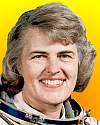
Lucid (NASA)
In 1996, the U.S. space shutttle Atlantis docked with the Russian space station Mir, for the first time dropping off a U.S. astronaut for an extended stay on the Mir. The astronaut, Shannon Lucid, was the first American woman to live aboard the Russian station (118 days). Lucid, a biochemist, was also the first woman to fly in space five times. The two craft joined up 245 miles (400-km) above Russia. This was the third in a series of dockings intended as preparation for a planned internationally operated space station. The flight was the 76th in the U.S. shuttle program and the 16th for the Atlantis orbiter, which had performed the two prior Mir dockings. Lucid made the return flight on Atlantis 16 Sep 1996.«

In 1993, the identification of the gene that causes Huntington’s disease was announced as the result of ten years’ effort by the Huntington’s Disease Collaborative Research Group, formed by six laboratories in the U.S., England and Wales. They stressed that more work remained before the mutation could be used as a precise prognostic tool. The disease causes progressive debilitating symptoms of jerky movements, dementia, personality changes, memory loss and irritability. The mutation, found on chromosome 4, affects a triplet of genetic units called bases represented by the chemical initials CAG, of which from 11 to 34 triplets are normally present in healthy people, whereas Huntington’s patients have from 35 to 100 of them.«
Mapping Fate: A Memoir of Family, Risk, and Genetic Research, by Alice Wexler. - book suggestion.
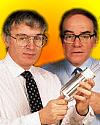
In 1989, fusion at room temperature was claimed by Martin Fleischmann and Stan Pons, two Utah electrochemists. They believed they had sustained a controlled nuclear fusion reaction in a bench-top fusion percolator made up of two electrodes with heavy water which generated up to 100 per cent more energy than they put in. There were sporadic sightings of excess heat, which Fleischmann said cannot be accounted for by chemistry alone. However, the idea of cold fusion was discredited because leading scientists were unable to replicate the work and found no hallmarks of nuclear processes, especially none of the subatomic particles called neutrons. Their tantalizing promise of a limitless supply of cheap energy were invalid.«
Cold Fusion: The Making of a Scientific Controversy, by F. David Peat. - book suggestion.
In 1983, a Strategic Defensive Initiative (SDI) was announced by President Ronald Reagan in an address to the United States from the White House broadcast on radio and television. He proposed an impenetrable defensive shield to intercept ballistic missiles and so make strategic nuclear weapons “impotent and obsolete.” The idea was to not rely solely on deterrence by threat of massive retaliation, and to make nuclear weapons obsolete. However, the plan was widely regarded as wildly impractical, and dubbed a “Star Wars”dream. The speech was prepared without prior study of the feasibility of the concept by technical experts and lacked consultation with the Pentagon.«
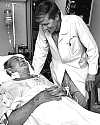
In 1983, Dr. Barney C. Clark (born 21 Jan 1921), the first recipient of a permanent artificial heart, died at the University of Utah's Medical Center after 112 days with the device. Doctors at the University of Utah Medical Center said one day later that the death resulted from a massive circulatory collapse "resulting from a multitude of causes."
True Valor: Barney Clark and the Artificial Heart, by Earl Selby and Miriam Selby. - book suggestion.
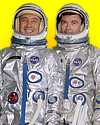
In 1965, America’s first two-person space flight began as Gemini III, nicknamed the “Molly Brown,” blasted off from Cape Kennedy with astronauts Virgil I. Grissom and John W. Young aboard.
In 1962, the first compound of any “inert gas” was made by Neil Barlett by reacting platinum hexafluorideand xenon to form XePtF6, a yellow-orange solid that was stable at room temperature. The previous autumn, he had prepared a remarkable compound of oxygen with platinum hexafluoride. In that compound, [O2]+[PtF6]–, the platinum hexafluoride, PtF6 was such an extreme oxidizer that the oxygen formed a positive cation. Interestingly, the energy to remove an electron from oxygen (12.2 eV), he realized, was extremely close to that for xenon (12.13 eV). This suggested a xenon compound could be made in a similar way. His success ended the half-century belief that xenon was an inert gas, and is since known as a “noble” gas.«
In 1950, the U.N. World Meteorological Organization was established.
In 1938, the Fairchild Tropical Garden was dedicated. An 85-acre tract, 12 miles south of Miami, used to establish the garden was given by the plant collector Col. Robert H. Montgomery, and named after his friend, David Fairchild who guided the work. Fairchild was one of the greatest plant explorers of all time. His life was devoted to introducing thousands of new plants into the U.S. He travelling the world seeking plants of potential aesthetic and economic use. The garden became one of the world's finest. Its collections include tropical and subtropical plants from around the world, especially the palms and cycads. The site has a botanical library, a palm products museum, a plant science building and an environmental research program.«
In 1936, a leukemia patient was treated using a radioactive isotope of sodium injected intravenously by Dr. Joseph G. Hamilton, a leader in atomic medicine at the University of California. He was working with Dr. Robert Stone, University of California Professor of Radiology. When he died (18 Feb 1957) the New York Times obituary stated that Hamilton was "believed to be the first ever to inject a radioisotope intravenously in a human being."«*
In 1912, the Dixie Cup was invented.
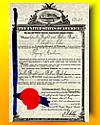
In 1903, the Wright brothers filed a U.S. patent for their method of controlling a airplane in flight. After three years experimenting with gliders, they were now building their powered Wright Flyer, which made its historic flight at the end of the year, on 17 Dec 1903. The patent was not issued until 22 May 1906 (No. 821,393). Their claim was not the invention of a flying machine, but described the important new flight control technique of wing-warping. Significantly, the patent embraced any subsequent methods used to adjust the outer edges of the wings. Adjustments made independently on the edges of the left and right wings changing the angle of incidence to the air gave critical roll control. Ailerons devised by others were judged also covered by the patent. The Wrights agressively protected their patent rights.«
In 1880, John Stevens of Neenah, Wisconsin, patented the grain crushing mill. The machine allowed flour production to increase by 70% and for flour to sell for $2 per barrel.
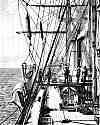
HMS Challenger, Instrument and Sampling Platform
In 1875, the first sounding of the Mariana Trench was made by the British survey ship, H.M.S. Challenger, during its first global oceanographic expedition, discovering part of the deepest known region of Earth’s oceans. Accurate measurements from the surface remain difficult, but in 2010, NOAA used sound pulses to record a 36,070-ft (10,994 m) depth in the Challenger Deep at its southern end. The Mariana Trench lies in the western Pacific Ocean, east of the Mariana Islands, near Guam. Its great depth results where two massive plates of oceanic crust collide, a subduction zone, where the edge of one plunges beneath the other into the Earth’s mantle. On 23 Jan 1960, Piccard and Walsh reached the bottom in the bathyscaphe Trieste.
The Silent Landscape: The Scientific Voyage of HMS Challenger, by Richard Corfield. - book suggestion.
In 1869, an electrical resistance heater was patented by Leigh Burton (No. 88,006).
In 1861, London's first tramcars began operating. An American, George Francis Train had obtained permission for a route about a mile in length running along Bayswater Road between Marble Arch and Notting Hill. The trams were horse-drawn carriages with steel wheels that ran on steel tracks laid in the street, thus making them easier to haul than on an uneven road surface. A pair of horses could pull them with twenty seated passengers and another twelve standing. Unfortunately, the flange of the rails which came above the road surface caused a hazard or damaged other vehicles catching their wheels in the track. Politcally influential local residents also objected to the noise. The project was terminated by the authorities within six months.«
In 1858, Eleazer A. Gardner of Philadelphia patented the first plans for a cable car system (U.S. No. 19,736) titled “improvement in tracks for city railways.” It described a traction cable running on pulleys in a slotted underground conduit between the rails. It took until the 1870s before the idea was perfected by Andrew Hallidie, and adopted in San Francisco. A decade later, cable cars were introduced in Philadelphia. For a number of years, it became the leading system of street car propulsion. By 1900, it was described as “being largely supplanted by the superior advantages of electricity.”«
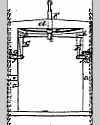
(USPTO)
In 1857, the world's first passenger safety elevator went into service in a store at 488 Broadway and Broome Street in New York City. The safety elevator invented by Elisha Otis was powered by steam through a series of shafts and belts. As the safety and efficiency of the early elevators continued to improve, space in buildings' upper floors soon became more desirable, reversing a long-standing trend in commercial and residential leasing. By 1870, Otis Brothers & Company had revenues in excess of US$1 million. A couple of years later, there were no less than 2,000 Otis elevators in use.
Otis: Giving Rise to the Modern City, by Jason Goodwin. - book suggestion.
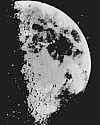
1851
In 1840, Englishman John William Draper took the first successful photo of the Moon. He made a daguerreotype, a precursor of the modern photograph.Image: another daguerreotype from 1851, the earliest surviving moon image.
In 1836, the coin press was invented by Franklin Beale, who produced first batch of coins for the U.S. Mint.
Berthier
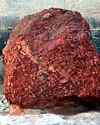
Bauxite
In 1794, Josiah G. Pierson patented a rivet machine.




