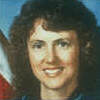
(NASA)
Born 2 Sep 1948; died 28 Jan 1986 at age 37. quotes
American teacher who was chosen to be the first private citizen in space. Aboard the space shuttle Challenger, she was one of the seven astronauts killed when the rocket exploded 73 seconds after takeoff. The death of McAuliffe and her fellow crew members in the 1986 space shuttle Challenger disaster was deeply felt by the nation and had a strong effect on the U.S. space program. Space shuttle flights were suspended until 1988. An independent U.S. commission blamed the disaster on unusually cold temperatures that morning and the failure of the O-rings, a set of gaskets in the rocket boosters.
American teacher who was chosen to be the first private citizen in space. Aboard the space shuttle Challenger, she was one of the seven astronauts killed when the rocket exploded 73 seconds after takeoff. The death of McAuliffe and her fellow crew members in the 1986 space shuttle Challenger disaster was deeply felt by the nation and had a strong effect on the U.S. space program. Space shuttle flights were suspended until 1988. An independent U.S. commission blamed the disaster on unusually cold temperatures that morning and the failure of the O-rings, a set of gaskets in the rocket boosters.
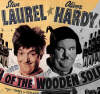
Born 2 Sep 1938.
Canadian engineer who invented the film colorization process (1983) and head of Colorization Inc., a Toronto-based subsidiary of Hal Roach Studios. His method used computers to assign predetermined colours to shades of gray in each scene. An application for the first patent on the process was made in Canada on on 11 Jul 1983 and issued 1 Dec 1987 (No. 4,710,805).
Canadian engineer who invented the film colorization process (1983) and head of Colorization Inc., a Toronto-based subsidiary of Hal Roach Studios. His method used computers to assign predetermined colours to shades of gray in each scene. An application for the first patent on the process was made in Canada on on 11 Jul 1983 and issued 1 Dec 1987 (No. 4,710,805).
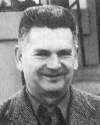
Born 2 Sep 1923. quotes
French mathematician who was awarded the Fields Medal in 1958 for his work in topology, in particular on characteristic classes, cobordism theory and the Thom transversality theorem. Thom is also known for his later work developing the catastrophe theory (1972), a mathematical treatment of continuous action producing a discontinuous result. Thom's theory is an attempt to describe, in a way that is impossible using differential calculus, those situations in which gradually changing forces lead to so-called catastrophes, or abrupt changes. The theory has widespread application in the physical and biological sciences and in the social sciences, but eventually fell from favour.
French mathematician who was awarded the Fields Medal in 1958 for his work in topology, in particular on characteristic classes, cobordism theory and the Thom transversality theorem. Thom is also known for his later work developing the catastrophe theory (1972), a mathematical treatment of continuous action producing a discontinuous result. Thom's theory is an attempt to describe, in a way that is impossible using differential calculus, those situations in which gradually changing forces lead to so-called catastrophes, or abrupt changes. The theory has widespread application in the physical and biological sciences and in the social sciences, but eventually fell from favour.
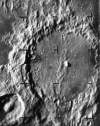
Alphonsus
Born 2 Sep 1908.
Russian astronomer who claimed to have discovered volcano-like activity on the Moon. His sightings of apparent gaseous emissions from the lunar surface challenged the long-held theory that the Moon is a dead and inert celestial body. For years, amateur astronomers have reported seeing strange colors on the moon, especially in the Alphonsus and Aristarchus regions. These types of observations gained credibility when on 13 Nov 1958, Kozyrev saw a brightening at the central peak in the crater Alphonsus. He photographed its spectrum, which showed carbon-vapor emissions.
Russian astronomer who claimed to have discovered volcano-like activity on the Moon. His sightings of apparent gaseous emissions from the lunar surface challenged the long-held theory that the Moon is a dead and inert celestial body. For years, amateur astronomers have reported seeing strange colors on the moon, especially in the Alphonsus and Aristarchus regions. These types of observations gained credibility when on 13 Nov 1958, Kozyrev saw a brightening at the central peak in the crater Alphonsus. He photographed its spectrum, which showed carbon-vapor emissions.
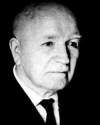
Born 2 Sep 1891; died 20 Mar 1983 at age 91.
Soviet mathematician known for his contributions to the analytical theory of numbers, including a partial solution of the Goldbach conjecture proving that every sufficiently large odd integer can be expressed as the sum of three odd primes. He described his methods in his most celebrated piece of work Some Theorems Concerning the Theory of Prime Numbers (1937).[EB Online gives born 2 Sep 1891; MacTutor gives 14 Sep 1891, died: 20 March 1983]
Soviet mathematician known for his contributions to the analytical theory of numbers, including a partial solution of the Goldbach conjecture proving that every sufficiently large odd integer can be expressed as the sum of three odd primes. He described his methods in his most celebrated piece of work Some Theorems Concerning the Theory of Prime Numbers (1937).[EB Online gives born 2 Sep 1891; MacTutor gives 14 Sep 1891, died: 20 March 1983]
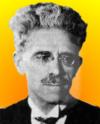
Born 2 Sep 1878; died 4 Jun 1973 at age 94.
French mathematician who is known chiefly for his contribution to real analysis. He is credited with being the founder of the theory of abstract spaces, which generalized the traditional mathematical definition of space as a locus for the comparison of figures; in Fréchet's terms, space is defined as a set of points and the set of relations. In his dissertation of 1906, he investigated functionals on a metric space and formulated the abstract notion of compactness. In 1907, he discovered an integral representation theorem for functionals on the space of quadratic Lebesgue integrable functions. He also made important contributions to statistics, probability and calculus.
French mathematician who is known chiefly for his contribution to real analysis. He is credited with being the founder of the theory of abstract spaces, which generalized the traditional mathematical definition of space as a locus for the comparison of figures; in Fréchet's terms, space is defined as a set of points and the set of relations. In his dissertation of 1906, he investigated functionals on a metric space and formulated the abstract notion of compactness. In 1907, he discovered an integral representation theorem for functionals on the space of quadratic Lebesgue integrable functions. He also made important contributions to statistics, probability and calculus.
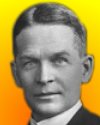
Born 2 Sep 1877; died 22 Sep 1956 at age 79. quotes
English chemist and physicist who received the Nobel Prize for Chemistry in 1921 for investigating radioactive substances. He suggested that different elements produced in different radioactive transformations were capable of occupying the same place on the Periodic Table, and on 18 Feb 1913 he named such species “isotopes” from Greek words meaning “same place.” He is credited, along with others, with the discovery of the element protactinium in 1917.
English chemist and physicist who received the Nobel Prize for Chemistry in 1921 for investigating radioactive substances. He suggested that different elements produced in different radioactive transformations were capable of occupying the same place on the Periodic Table, and on 18 Feb 1913 he named such species “isotopes” from Greek words meaning “same place.” He is credited, along with others, with the discovery of the element protactinium in 1917.
The World Made New: Frederick Soddy, Science, Politics, and Environment, by Linda Merricks. - book suggestion.
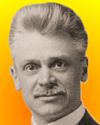
Born 2 Sep 1869; died 17 Feb 1936 at age 66.
American inventor and manufacturer whose name is remembered with the "Maxim silencer" gun attachment. (The Maxim machine gun was invented by his father, Hiram Stevens Maxim). He was also active in amateur radio, and pioneered in the automobile industry, air conditioning and space research.
American inventor and manufacturer whose name is remembered with the "Maxim silencer" gun attachment. (The Maxim machine gun was invented by his father, Hiram Stevens Maxim). He was also active in amateur radio, and pioneered in the automobile industry, air conditioning and space research.
Hiram Percy Maxim, by Alice Clink Schumacher. - book suggestion.
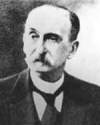
Born 2 Sep 1854; died 14 Jan 1934 at age 79.
French scientist, known for his invention of smokeless powder. Military commanders since the Napoleonic Wars had problems giving orders on a battlefield swathed in thick smoke from the gunpowder used by the guns. In 1886 Paul Vieille invented a smokeless gunpowder called Poudre B. Made from gelatinized nitrocellulose mixed with ether and alcohol, it was passed through rollers to form thin sheets, which were cut with a guillotine to flakes of the desired size. It revolutionized the effectiveness of small guns and rifles.It was much more powerful than gun powder, giving an accurate rifle range of up to 1000 yards.
French scientist, known for his invention of smokeless powder. Military commanders since the Napoleonic Wars had problems giving orders on a battlefield swathed in thick smoke from the gunpowder used by the guns. In 1886 Paul Vieille invented a smokeless gunpowder called Poudre B. Made from gelatinized nitrocellulose mixed with ether and alcohol, it was passed through rollers to form thin sheets, which were cut with a guillotine to flakes of the desired size. It revolutionized the effectiveness of small guns and rifles.It was much more powerful than gun powder, giving an accurate rifle range of up to 1000 yards.
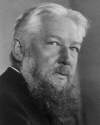
Born 2 Sep 1853; died 4 Apr 1932 at age 78. quotes
Friedrich Wilhelm Ostwald was a Russian-German physical chemist who almost single-handedly organized physical chemistry into a nearly independent branch of chemistry. He won the Nobel Prize for Chemistry in 1909 for his work on catalysis, chemical equilibrium, and reaction velocities.
Friedrich Wilhelm Ostwald was a Russian-German physical chemist who almost single-handedly organized physical chemistry into a nearly independent branch of chemistry. He won the Nobel Prize for Chemistry in 1909 for his work on catalysis, chemical equilibrium, and reaction velocities.
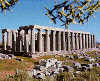
Born 2 Sep 1814; died 1896.
German archaeologist and historian who directed the excavation of Olympia from 1875-1881, the most opulent and sacred religious shrine of ancient Greece and site of the original Olympic Games (from 776 B.C. to 393 A.D.). The excavations cleared the whole of the sacred precinct and some buildings that lay outside it. The position of the stadium was located by exploratory trenches. Thus the plan of a great Greek sanctuary was revealed for the first time. The excavation also unearthed the only major surviving sculpture by Praxiteles, “Hermes Carrying the young Dionysus” found in the cella of the temple in 1877, now one of the most prized possessions of the Olympia Museum. more
German archaeologist and historian who directed the excavation of Olympia from 1875-1881, the most opulent and sacred religious shrine of ancient Greece and site of the original Olympic Games (from 776 B.C. to 393 A.D.). The excavations cleared the whole of the sacred precinct and some buildings that lay outside it. The position of the stadium was located by exploratory trenches. Thus the plan of a great Greek sanctuary was revealed for the first time. The excavation also unearthed the only major surviving sculpture by Praxiteles, “Hermes Carrying the young Dionysus” found in the cella of the temple in 1877, now one of the most prized possessions of the Olympia Museum. more

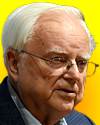
Died 2 Sep 2022 at age 92 (born 28 May 1930). quotes
Frank Donald Drake was an American astronomer and astrophysicist who formulated the Drake Equation (1961) to estimate the number of technological civilizations that may exist in the Milky Way galaxy, N = R* × fp × ne× fl × fi × fc × L. Using plausible guesses for the parameters, Drake concluded perhaps 10 planets in our galaxy may have life originating detectable signals. In 1960, Drake led the first search, the two-month Project Ozma to listen for patterns in radio waves with a complex, ordered pattern that might be assumed to represent messages from some extraterrestrial intelligence. Carl Sagan and Drake designed the plaques on Pioneer 10 and Pioneer 11 for the purpose of greeting and informing any extraterrestrial life that might find the vessels after they left the solar system.
Frank Donald Drake was an American astronomer and astrophysicist who formulated the Drake Equation (1961) to estimate the number of technological civilizations that may exist in the Milky Way galaxy, N = R* × fp × ne× fl × fi × fc × L. Using plausible guesses for the parameters, Drake concluded perhaps 10 planets in our galaxy may have life originating detectable signals. In 1960, Drake led the first search, the two-month Project Ozma to listen for patterns in radio waves with a complex, ordered pattern that might be assumed to represent messages from some extraterrestrial intelligence. Carl Sagan and Drake designed the plaques on Pioneer 10 and Pioneer 11 for the purpose of greeting and informing any extraterrestrial life that might find the vessels after they left the solar system.
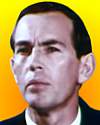
Died 2 Sep 2001 at age 78 (born 8 Nov 1922). quotes
Christiaan Neethling Barnard was a South African surgeon who performed the world’s first human heart transplant operation. In a five-hour operation on 3 Dec 1967, Barnard successfully replaced the diseased heart of Louis Washkansky (55) with a healthy heart from Denise Darvall, a woman in her mid-20s with the same blood type, who died in hospital after an automobile accident. Barnard knew it was a surgical success when he first applied electrodes and the heart resumed beating. Washkansky died 18 days later of double pneumonia as a result of his suppressed immune system. It was a milestone, however, in a new field of life-extending surgery. Rheumatoid arthritis and advancing stiffness in his hands forced his retirement from surgery in 1983.
Christiaan Neethling Barnard was a South African surgeon who performed the world’s first human heart transplant operation. In a five-hour operation on 3 Dec 1967, Barnard successfully replaced the diseased heart of Louis Washkansky (55) with a healthy heart from Denise Darvall, a woman in her mid-20s with the same blood type, who died in hospital after an automobile accident. Barnard knew it was a surgical success when he first applied electrodes and the heart resumed beating. Washkansky died 18 days later of double pneumonia as a result of his suppressed immune system. It was a milestone, however, in a new field of life-extending surgery. Rheumatoid arthritis and advancing stiffness in his hands forced his retirement from surgery in 1983.
One Life, by Christiaan Barnard and Curtis Bill Pepper. - book suggestion.
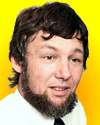
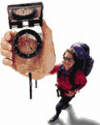
Swedish co-inventor of the Silva compass designed with a compass capsule filled with a motion-damping fluid, a rotating compass dial, and a transparent protractor baseplate. He helped develop it (1932), with his brothers Alvar and Alvid Kjellstrom, and Gunnar Tillander. Bjorn moved to the U.S., and founded Silva, Inc. in LaPorte, Indiana (1946). He also started Silva Ltd., Toronto, Canada (1948). Kjellstrom helped introduce the orienteering sport to the U.S. (1946), in part as a way to promote his product. He wrote Be Expert with Map and Compass (1955). It has been called the “bible of orienteering.” A publicity slogan used was: “Read this or get lost.” He co-founded the U.S. Orienteering Federation in 1971.«
Be Expert with Map and Compass, by Bjorn Kjellstrom. - book suggestion.
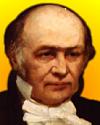
Died 2 Sep 1865 at age 60 (born 4 Aug 1805). quotes
Irish mathematician in the fields of optics, geometrics, and classical mechanics. By age 12, Hamilton had already learned fourteen languages when he met the American, Zerah Colburn, who could perform amazing mental arithmetical feats, and they joined in competitions. It appears that losing to Colburn sparked Hamilton's interest in mathematics. At 15, he began studied the works of LaPlace and Newton so by age 17 had become the greatest living mathematician. He contributed to the development of optics, dynamics, and algebra. His invention of the calculus of quaternions enabled a three-dimensional algebra or geometry which provided a basis for the later development of quantum mechanics.
Irish mathematician in the fields of optics, geometrics, and classical mechanics. By age 12, Hamilton had already learned fourteen languages when he met the American, Zerah Colburn, who could perform amazing mental arithmetical feats, and they joined in competitions. It appears that losing to Colburn sparked Hamilton's interest in mathematics. At 15, he began studied the works of LaPlace and Newton so by age 17 had become the greatest living mathematician. He contributed to the development of optics, dynamics, and algebra. His invention of the calculus of quaternions enabled a three-dimensional algebra or geometry which provided a basis for the later development of quantum mechanics.
Sir William Rowan Hamilton, by Thomas L. Hankins. - book suggestion.
Died 2 Sep 1851 (born 1768).
Scottish physicist.
Scottish physicist.
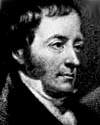
Died 2 Sep 1836 at age 60 (born 12 Dec 1775).
English physician and chemist who in 1803 proposed what is now called Henry's law, which states that the mass of a gas dissolved by a given volume of a solvent, at a constant temperature, is directly proportional to the pressure of the gas above the liquid, provided that no chemical action occurs. The law holds well only for slightly soluble gases at low pressure. Henry was a close friend of John Dalton, but despite superior skill and range as an experimenter, lacked Dalton's boldness as a theorist, and Henry never committed himself to the atomic theory. Henry was the third and most successful son of Thomas Henry, an industrial chemist. William was injured by a falling beam at age 10. Those injuries gave him ill health and pain through life; he died by suicide.Do not confuse with physicist, Sir William Henry OF Bragg = William Bragg(1862-1942).
English physician and chemist who in 1803 proposed what is now called Henry's law, which states that the mass of a gas dissolved by a given volume of a solvent, at a constant temperature, is directly proportional to the pressure of the gas above the liquid, provided that no chemical action occurs. The law holds well only for slightly soluble gases at low pressure. Henry was a close friend of John Dalton, but despite superior skill and range as an experimenter, lacked Dalton's boldness as a theorist, and Henry never committed himself to the atomic theory. Henry was the third and most successful son of Thomas Henry, an industrial chemist. William was injured by a falling beam at age 10. Those injuries gave him ill health and pain through life; he died by suicide.Do not confuse with physicist, Sir William Henry OF Bragg = William Bragg(1862-1942).
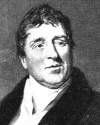
Died 2 Sep 1834 at age 77 (born 9 Aug 1757).
Scottish engineer who was a road, bridge and canal builder. He began as a stonemason apprentice at age 14, but then taught himself architecture and in 1787 became surveyor of public works for Shropshire. He planned the Ellesmere (1793-1805) and Caledonian (1803-23) canals, the road from London to Holyhead, with the Menai Suspension Bridge (1819-1826), and Katherine's Docks in London (1824-1828). In all, he built over 1000 miles of road and 1200 bridges, as well as aquaducts, harbours, docks, and other buildings. He died in London.
Scottish engineer who was a road, bridge and canal builder. He began as a stonemason apprentice at age 14, but then taught himself architecture and in 1787 became surveyor of public works for Shropshire. He planned the Ellesmere (1793-1805) and Caledonian (1803-23) canals, the road from London to Holyhead, with the Menai Suspension Bridge (1819-1826), and Katherine's Docks in London (1824-1828). In all, he built over 1000 miles of road and 1200 bridges, as well as aquaducts, harbours, docks, and other buildings. He died in London.
Thomas Telford, by L.T.C. Rolt. - book suggestion.
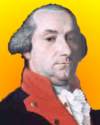
Died 2 Sep 1832 at age 78 (born 4 Jun 1754).
(baron) German-Hungarian astronomer patronized by Duke Ernst of Saxe-Gotha-Altenburg. Director of observatory near Gotha (1787-1806). There he organized in 1798 the first congress of astronomers with Josef Lalande (1732-1807) as celebrated guest. In last years of the 18th century he formed a group of 24 astronomers chosen from throughout Europe to track down a "missing" planet between the orbits of Mars and Jupiter, where they instead discovered the asteroids. His greatest contribution was in the organizational area, for he maintained an enormous correspondence with all the astronomers of his time, and edited 28 volumes of Monatliche Korrespondenz zur Beforderung der Erd- und Himmelskunde (1800-13).
(baron) German-Hungarian astronomer patronized by Duke Ernst of Saxe-Gotha-Altenburg. Director of observatory near Gotha (1787-1806). There he organized in 1798 the first congress of astronomers with Josef Lalande (1732-1807) as celebrated guest. In last years of the 18th century he formed a group of 24 astronomers chosen from throughout Europe to track down a "missing" planet between the orbits of Mars and Jupiter, where they instead discovered the asteroids. His greatest contribution was in the organizational area, for he maintained an enormous correspondence with all the astronomers of his time, and edited 28 volumes of Monatliche Korrespondenz zur Beforderung der Erd- und Himmelskunde (1800-13).
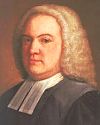
Died 2 Sep 1764 at age 63 (born 28 Nov 1700).
English mathematician and astronomer who was Britain’s fourth Astronomer Royal (A.R.), though for only two years before his death. From 1736, Bliss was rector of St Ebbe’s, Oxford, and in 1742 succeeded Edmond Halley as Savilian Professor of Geometry. Bliss sometimes assisted James Bradley, the third A.R., and in 1761 observed the transit of Venus while Bradley was ill. Succeeding him in 1762, Bliss published observations of the annular eclipse of 1 Apr 1764. He shared a strong interest in improving precision clocks, with London clockmakers George Graham and John Ellicott. Bliss collaborated on astronomical problems with the Earl of Macclesfield, including meridian observations, at Shirburn Castle and Greenwich, of a comet approaching the Sun around 1744.«
English mathematician and astronomer who was Britain’s fourth Astronomer Royal (A.R.), though for only two years before his death. From 1736, Bliss was rector of St Ebbe’s, Oxford, and in 1742 succeeded Edmond Halley as Savilian Professor of Geometry. Bliss sometimes assisted James Bradley, the third A.R., and in 1761 observed the transit of Venus while Bradley was ill. Succeeding him in 1762, Bliss published observations of the annular eclipse of 1 Apr 1764. He shared a strong interest in improving precision clocks, with London clockmakers George Graham and John Ellicott. Bliss collaborated on astronomical problems with the Earl of Macclesfield, including meridian observations, at Shirburn Castle and Greenwich, of a comet approaching the Sun around 1744.«
In 1993, the United States and Russia formally ended decades of competition in space by agreeing to a joint venture to build a space station.
In 1987, Philips introduces CD-video.
In 1985, it was announced that a U.S. and French expedition had located the wreckage of the Titanic about 560 miles off Newfoundland, 73 years after the British luxury liner sank.
In 1930, the first non-stop airplane flight from Europe to the U.S. was completed as Capt. Dieudonne Coste and Maurice Bellonte of France arrived in Valley Stream, N.Y., aboard the Question Mark; it took 37 hours.
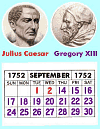
In 1752, today was the last day of the Julian calendar in Great Britain, Ireland and the British colonies, including those on the East coast of America. Eleven days were skipped to adopt the Gregorian calendar, designed to realign the calendar with equinoxes. Hence the following day was 14 Sep. For more than a century and a half before, following the decree by Pope Gregory XIII, Italy, and three other Catholic countries (Spain, Portugal and Poland) used the Julian calendar for the last time on 4 Oct 1582. France followed, ending Julian calendar use on 9 Dec 1582. Russia did not change until the early 20th century: 31 Jan 1918 was the last Julian date, followed the next day by 14 Feb 1918. Parts of China changed in 1912, but the Communist revolution, 1949, established Gregorian calendar use in all China.«




