Born 7 Nov 1928.
American biologist and molecular geneticist who studied a species of Salmonella (bacteria that cause illnesses such as typhoid fever or food poisoning in humans and other warm- blooded animals). He discovered genetic transduction, or transfer of genetic information by viruses. Genetic material is transferred from one bacterial cell to another by means of a phage, or a virus that invades the bacterial cell, assumes control over the cell's genetic material, reproduces, then eventually destroys the cell. His discovery of this genetic transfer has led to further studies into the mapping and behavior of genes found in bacteria. Daniel Nathans in collaboration with Zinder in 1962 demonstrated that RNA from a bacterial virus directed the synthesis by cell extracts of viral coat protein.
American biologist and molecular geneticist who studied a species of Salmonella (bacteria that cause illnesses such as typhoid fever or food poisoning in humans and other warm- blooded animals). He discovered genetic transduction, or transfer of genetic information by viruses. Genetic material is transferred from one bacterial cell to another by means of a phage, or a virus that invades the bacterial cell, assumes control over the cell's genetic material, reproduces, then eventually destroys the cell. His discovery of this genetic transfer has led to further studies into the mapping and behavior of genes found in bacteria. Daniel Nathans in collaboration with Zinder in 1962 demonstrated that RNA from a bacterial virus directed the synthesis by cell extracts of viral coat protein.
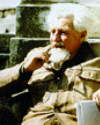
Born 7 Nov 1903; died 27 Feb 1989 at age 85. quotes
Austrian zoologist, who founded modern ethology (the study of animal behaviour by means of comparative zoological methods). He was known affectionately by his pupils as the “father of the grey geese” which he studied. His ideas revealed how behavioral patterns may be traced to an evolutionary past, and he was also known for his work on the roots of aggression. He shared the 1973 Nobel Prize for Physiology and Medicine for developing a unified, evolutionary theory of animal and human behaviour. He was also a vehement environmentalist, criticizing prodigality and believed that nature protection is necessary for the preservation of humanity. Even late in life, he participated in demonstrations even if in conflict with government and authorities.
Austrian zoologist, who founded modern ethology (the study of animal behaviour by means of comparative zoological methods). He was known affectionately by his pupils as the “father of the grey geese” which he studied. His ideas revealed how behavioral patterns may be traced to an evolutionary past, and he was also known for his work on the roots of aggression. He shared the 1973 Nobel Prize for Physiology and Medicine for developing a unified, evolutionary theory of animal and human behaviour. He was also a vehement environmentalist, criticizing prodigality and believed that nature protection is necessary for the preservation of humanity. Even late in life, he participated in demonstrations even if in conflict with government and authorities.
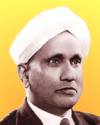
Born 7 Nov 1888; died 21 Nov 1970 at age 82.
Indian physicist whose work was influential in the growth of science in India. He was the recipient of the 1930 Nobel Prize for Physics for the 1928 discovery now called Raman scattering: a change in frequency observed when light is scattered in a transparent material. When monochromatic or laser light is passed through a transparent gas, liquid, or solid and is observed with the spectroscope, the normal spectral line has associated with it lines of longer and of shorter wavelength, called the Raman spectrum. Such lines, caused by photons losing or gaining energy in elastic collisions with the molecules of the substance, vary with the substance. Thus the Raman effect is applied in spectrographic chemical analysis and in the determination of molecular structure.
Indian physicist whose work was influential in the growth of science in India. He was the recipient of the 1930 Nobel Prize for Physics for the 1928 discovery now called Raman scattering: a change in frequency observed when light is scattered in a transparent material. When monochromatic or laser light is passed through a transparent gas, liquid, or solid and is observed with the spectroscope, the normal spectral line has associated with it lines of longer and of shorter wavelength, called the Raman spectrum. Such lines, caused by photons losing or gaining energy in elastic collisions with the molecules of the substance, vary with the substance. Thus the Raman effect is applied in spectrographic chemical analysis and in the determination of molecular structure.
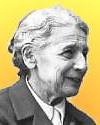
Born 7 Nov 1878; died 27 Oct 1968 at age 89. quotes
Austrian-Swedish physicist who shared the Enrico Fermi Award (1966) with the chemists Otto Hahn and Fritz Strassmann for their joint research beginning in 1934 that led to the discovery of uranium fission. She refused to work on the atom bomb. In 1917, with Hahn, she had discovered the new radioactive element protactinium. She was the first to describe the emission of Auger electrons. In 1935, she found evidence of four other radioactive elements corresponding to atomic numbers 93-96. In 1938, she was forced to leave Nazi Germany, and went to a post in Sweden. Her other work in the field of nuclear physics includes study of beta rays, and study of the three main disintegration series. Later, she used the cyclotron as a tool.
Austrian-Swedish physicist who shared the Enrico Fermi Award (1966) with the chemists Otto Hahn and Fritz Strassmann for their joint research beginning in 1934 that led to the discovery of uranium fission. She refused to work on the atom bomb. In 1917, with Hahn, she had discovered the new radioactive element protactinium. She was the first to describe the emission of Auger electrons. In 1935, she found evidence of four other radioactive elements corresponding to atomic numbers 93-96. In 1938, she was forced to leave Nazi Germany, and went to a post in Sweden. Her other work in the field of nuclear physics includes study of beta rays, and study of the three main disintegration series. Later, she used the cyclotron as a tool.
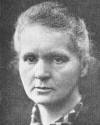
Born 7 Nov 1867; died 4 Jul 1934 at age 66. quotes
Marie Sklodowska Curie was a Polish-French chemist and physicist whose celebrated experiments (1898) on uranium minerals led to discovery of two new elements. First she separated polonium, and then radium a few months later. The quantity of radon in radioactive equilibrium with a gram of radium was named a curie (subsequently redefined as the emission of 3.7 x 10¹⁰ alpha particles per sec.) With Henri Becquerel and her husband, Pierre Curie, she was awarded the 1903 Nobel Prize for Physics. Later, she also was sole winner of a second Nobel Prize in 1911, this time in Chemistry. Her family won five Nobel awards in two generations. She died of radiation poisoning from her pioneering work before the need for protection was known. more
Marie Sklodowska Curie was a Polish-French chemist and physicist whose celebrated experiments (1898) on uranium minerals led to discovery of two new elements. First she separated polonium, and then radium a few months later. The quantity of radon in radioactive equilibrium with a gram of radium was named a curie (subsequently redefined as the emission of 3.7 x 10¹⁰ alpha particles per sec.) With Henri Becquerel and her husband, Pierre Curie, she was awarded the 1903 Nobel Prize for Physics. Later, she also was sole winner of a second Nobel Prize in 1911, this time in Chemistry. Her family won five Nobel awards in two generations. She died of radiation poisoning from her pioneering work before the need for protection was known. more
Madame Curie: A Biography, by Eve Curie. - book suggestion.
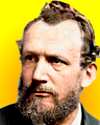
Born 7 Nov 1818; died 26 Dec 1896 at age 78. quotes
Emil Heinrich DuBois-Reymond was a German physiologist whose research on animal electricity in nerve and muscle fibers founded modern electrophysiology. In 1849, he detected minute electrical discharges created by the contraction of the muscles in his arms, using galvanometer, a primitive device for measuring voltages. He used pieces of saline-soaked blotting paper between the wires and his skin to minimize electrical resistance. But, realizing that the skin still acted as a barrier to the underlying muscle signals, he induced a blister on each arm, removed the skin and placed the paper electrodes within the wounds. Then the electrical signals he captured were about 30 times stronger. In 1850, he invented a nerve galvanometer with better sensitivity.«
Emil Heinrich DuBois-Reymond was a German physiologist whose research on animal electricity in nerve and muscle fibers founded modern electrophysiology. In 1849, he detected minute electrical discharges created by the contraction of the muscles in his arms, using galvanometer, a primitive device for measuring voltages. He used pieces of saline-soaked blotting paper between the wires and his skin to minimize electrical resistance. But, realizing that the skin still acted as a barrier to the underlying muscle signals, he induced a blister on each arm, removed the skin and placed the paper electrodes within the wounds. Then the electrical signals he captured were about 30 times stronger. In 1850, he invented a nerve galvanometer with better sensitivity.«
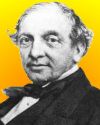
Born 7 Nov 1805; died 8 Dec 1870 at age 65.
Early English railway contractor who built railway lines worldwide. While working as a land surveyor he and George Stephenson became friends. In 1834, Stephenson helped Brassey to obtain a contract to build a railway viaduct at Bromborough. In 1835, he constructed a section of the Grand Junction railway and later helped complete the London and Southampton line. With W. Mackenzie, he built the Paris to Rouen line (1841-43) and lines in Netherlands, Italy, Prussia, Spain. With Sir S.M. Peto and E.L. Betts, Brassey built the Grand Trunk railway, Canada (1853-59), the Crimean railway (1854); and also built in India, Australia and South America. He built more than 10,000 km (6,500 miles) of railways worldwide, including one-sixth of the British network.
Early English railway contractor who built railway lines worldwide. While working as a land surveyor he and George Stephenson became friends. In 1834, Stephenson helped Brassey to obtain a contract to build a railway viaduct at Bromborough. In 1835, he constructed a section of the Grand Junction railway and later helped complete the London and Southampton line. With W. Mackenzie, he built the Paris to Rouen line (1841-43) and lines in Netherlands, Italy, Prussia, Spain. With Sir S.M. Peto and E.L. Betts, Brassey built the Grand Trunk railway, Canada (1853-59), the Crimean railway (1854); and also built in India, Australia and South America. He built more than 10,000 km (6,500 miles) of railways worldwide, including one-sixth of the British network.
Born 7 Nov 1687; died 3 Mar 1765 at age 77.
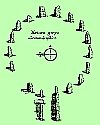
English antiquary and physician whose studies of the monumental Neolithic Period-Bronze Age stone circles at Stonehenge and Avebury, Wiltshire, led him to elaborate extravagant theories relating them to the Druids (ancient Celtic priest-magicians). These views were widely and enthusiastically accepted in the late 18th century. Despite his romantic theorizing, he was an excellent field archaeologist, and his surveys of the monuments in the 1720s remain of interest. Stukeley was the first to note the midsummer alignment at Stonehenge, and the first to describe the Stonehenge and Beckhampton "Avenues" (his name, as were "Cursus" and "trilithon").Main representative of the theory of electricity as the cause of earthquakes in Britain.Image: a sketch made by William Stukeley of the Meini Gwyr site before near total destruction in the following years.
English antiquary and physician whose studies of the monumental Neolithic Period-Bronze Age stone circles at Stonehenge and Avebury, Wiltshire, led him to elaborate extravagant theories relating them to the Druids (ancient Celtic priest-magicians). These views were widely and enthusiastically accepted in the late 18th century. Despite his romantic theorizing, he was an excellent field archaeologist, and his surveys of the monuments in the 1720s remain of interest. Stukeley was the first to note the midsummer alignment at Stonehenge, and the first to describe the Stonehenge and Beckhampton "Avenues" (his name, as were "Cursus" and "trilithon").Main representative of the theory of electricity as the cause of earthquakes in Britain.Image: a sketch made by William Stukeley of the Meini Gwyr site before near total destruction in the following years.
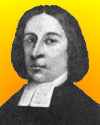
Born 7 Nov 1685; died 22 Apr 1763 at age 77.
American colonial clergyman, physician, and agronomist, who wrote Essays upon Field Husbandry, about reducing inefficiency and waste in colonial farming methods. He became concerned about soil erosion in the new colonies when he noticed that water running from a vegetated hillside was clear, but water running from a bare hillside was muddy. He believed that the mud in the water was fertile soil washed away from above. He conducted many experiments, and studied the farming methods advocated by English authors. He plowed green crops back into the soil to enrich it, and planted grasses and legumes to make better pastures for livestock. He invented a drill which would open a furrow, plant seed, and drop manure in a single operation.
American colonial clergyman, physician, and agronomist, who wrote Essays upon Field Husbandry, about reducing inefficiency and waste in colonial farming methods. He became concerned about soil erosion in the new colonies when he noticed that water running from a vegetated hillside was clear, but water running from a bare hillside was muddy. He believed that the mud in the water was fertile soil washed away from above. He conducted many experiments, and studied the farming methods advocated by English authors. He plowed green crops back into the soil to enrich it, and planted grasses and legumes to make better pastures for livestock. He invented a drill which would open a furrow, plant seed, and drop manure in a single operation.

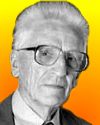
Died 7 Nov 2003 at age 88 (born 3 Aug 1915). quotes
Donald Redfield Griffin was an American biophysicist, known for his research in animal navigation, animal behaviour, and sensory biophysics. With Robert Galambos, he studied bat echolocation (1938), a term he coined (1944) for how the bat's ears replace eyes in flight guidance. Using specialized high-frequency sound equipment by G.W. Pierce, they found that bats in flight produced ultrasonic sounds used to avoid obstacles. In WW II, he used physiological principles to design such military equipment as cold-weather clothing and headphones. Griffin also worked extensively on bird navigation. In the late 1940s, he flew in a Piper Cub to observe the flight paths of gannets and gulls. In his career, he pioneered rigorous techniques to study animals in their natural environment.«
Donald Redfield Griffin was an American biophysicist, known for his research in animal navigation, animal behaviour, and sensory biophysics. With Robert Galambos, he studied bat echolocation (1938), a term he coined (1944) for how the bat's ears replace eyes in flight guidance. Using specialized high-frequency sound equipment by G.W. Pierce, they found that bats in flight produced ultrasonic sounds used to avoid obstacles. In WW II, he used physiological principles to design such military equipment as cold-weather clothing and headphones. Griffin also worked extensively on bird navigation. In the late 1940s, he flew in a Piper Cub to observe the flight paths of gannets and gulls. In his career, he pioneered rigorous techniques to study animals in their natural environment.«
Animal Minds: Beyond Cognition to Consciousness, by Donald R. Griffin. - book suggestion.
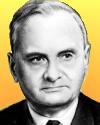
Died 7 Nov 1968 at age 62 (born 24 Oct 1906).
Russian mathematician who originated basic techniques in the study of transcendental numbers (numbers that cannot be expressed as the root or solution of an algebraic equation with rational coefficients). He profoundly advanced transcendental-number theory, and the theory of interpolation and approximation of complex-variable functions. He established the transcendental character of any number of the form ab, where a is an algebraic number different from 0 or 1 and b is any irrational algebraic number, which is now known as Gelfond's theorem. This statement solved the seventh of 23 famous problems that had been posed by the German mathematician David Hilbert in 1900.
Russian mathematician who originated basic techniques in the study of transcendental numbers (numbers that cannot be expressed as the root or solution of an algebraic equation with rational coefficients). He profoundly advanced transcendental-number theory, and the theory of interpolation and approximation of complex-variable functions. He established the transcendental character of any number of the form ab, where a is an algebraic number different from 0 or 1 and b is any irrational algebraic number, which is now known as Gelfond's theorem. This statement solved the seventh of 23 famous problems that had been posed by the German mathematician David Hilbert in 1900.
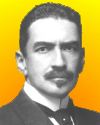
Died 7 Nov 1964 at age 91 (born 15 Feb 1873).
Hans Karl August Simon von Euler-Chelpin was a German-Swedish biochemist who shared the 1929 Nobel Prize for Chemistry with Sir Arthur Harden for work on the role of enzymes in the alcoholic fermentation of sugar. In 1904 important work by Arthur Harden had shown that enzymes contain an easily removable nonprotein part, a coenzyme. In 1923 Euler-Chelpin worked out the structure of the yeast coenzyme. He showed that the molecule is made up from a nucleotide similar to that found in nucleic acid. It was named diphosphopyridine nucleotide (now known as NAD). He also worked on vitamins. His son, Ulf von Euler, was also a Nobel prizewinner.
Hans Karl August Simon von Euler-Chelpin was a German-Swedish biochemist who shared the 1929 Nobel Prize for Chemistry with Sir Arthur Harden for work on the role of enzymes in the alcoholic fermentation of sugar. In 1904 important work by Arthur Harden had shown that enzymes contain an easily removable nonprotein part, a coenzyme. In 1923 Euler-Chelpin worked out the structure of the yeast coenzyme. He showed that the molecule is made up from a nucleotide similar to that found in nucleic acid. It was named diphosphopyridine nucleotide (now known as NAD). He also worked on vitamins. His son, Ulf von Euler, was also a Nobel prizewinner.
Died 7 Nov 1942 at age 57 (born 16 Nov 1884).
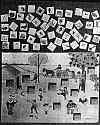
English-American psychologist who combined interests in mental measurements and education of people with disabilities. His performance assessment measures supplied half of the items of the World War I Army Beta Test. He directed many surveys in his field and wrote a number of scientific works. A Scale of Performance Tests (1917) by Rudolf Pintner and Donald G. Paterson, introduced the Pintner-Paterson Performance Test, the first test of nonverbal intelligence. It was intended as a "supplemental" test to the 1908 Binet battery (which they criticized as unwarrantably favorable to the verbal aspects of individual intelligence). They insisted that there was more than one aspect of intelligence and more than one way of measuring it.[Image: Picture Completion puzzle, part of the Pintner & Paterson's clinical style performance scale (1917)]
English-American psychologist who combined interests in mental measurements and education of people with disabilities. His performance assessment measures supplied half of the items of the World War I Army Beta Test. He directed many surveys in his field and wrote a number of scientific works. A Scale of Performance Tests (1917) by Rudolf Pintner and Donald G. Paterson, introduced the Pintner-Paterson Performance Test, the first test of nonverbal intelligence. It was intended as a "supplemental" test to the 1908 Binet battery (which they criticized as unwarrantably favorable to the verbal aspects of individual intelligence). They insisted that there was more than one aspect of intelligence and more than one way of measuring it.[Image: Picture Completion puzzle, part of the Pintner & Paterson's clinical style performance scale (1917)]
Died 7 Nov 1913 at age 90 (born 8 Jan 1823). quotes
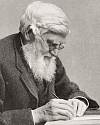
English naturalist and biogeographer who studied the distribution of organisms. He was the first westerner to describe some of the most interesting natural habitats in the tropics. He is best known for devising a theory of the origin of species through natural selection made independently of Darwin. Between 1854 and 1862, Wallace assembled evidence in the Malay Archipelago, sending his conclusions to Darwin in England. Their findings were presented to the Linnaean Society in 1858. Wallace found that Australian species were more primitive, in evolutionary terms, than those of Asia, and that this reflected the stage at which the two continents had become separated. He proposed an imaginary line (now known as Wallace's line) dividing the fauna of the two regions.
English naturalist and biogeographer who studied the distribution of organisms. He was the first westerner to describe some of the most interesting natural habitats in the tropics. He is best known for devising a theory of the origin of species through natural selection made independently of Darwin. Between 1854 and 1862, Wallace assembled evidence in the Malay Archipelago, sending his conclusions to Darwin in England. Their findings were presented to the Linnaean Society in 1858. Wallace found that Australian species were more primitive, in evolutionary terms, than those of Asia, and that this reflected the stage at which the two continents had become separated. He proposed an imaginary line (now known as Wallace's line) dividing the fauna of the two regions.
The Heretic in Darwin's Court: The Life of Alfred Russel Wallace, by Ross A. Slotten. - book suggestion.
1843
Died 7 Nov 1886 at age 83 (born 2 Jan 1803).
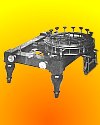
American inventor of an early form of typewriter. He formed Allen & Thurber (Worcester, Mass) with his brother in law, Ethan Allen to manufacture firearms. On “Thurber's Patent Printer,” (U.S. patent No. 3,228 on 26 Aug 1843), the type was mounted on a rotating cylindrical drum. As Scientific American described it, “the paper was secured to the drum, and was brought into the proper place under the type bar guide. The type wheel was revolved until the desired lever came over the guide. The key was then forced down with the finger, and the character was printed.” Thurber also patented a different machine which he called the Chirographer, “for writing or forming any kind of figures or characters on paper, and making copies thereof at the same operation,” but the machine was still far too slow to substitute for hand writing.« more
American inventor of an early form of typewriter. He formed Allen & Thurber (Worcester, Mass) with his brother in law, Ethan Allen to manufacture firearms. On “Thurber's Patent Printer,” (U.S. patent No. 3,228 on 26 Aug 1843), the type was mounted on a rotating cylindrical drum. As Scientific American described it, “the paper was secured to the drum, and was brought into the proper place under the type bar guide. The type wheel was revolved until the desired lever came over the guide. The key was then forced down with the finger, and the character was printed.” Thurber also patented a different machine which he called the Chirographer, “for writing or forming any kind of figures or characters on paper, and making copies thereof at the same operation,” but the machine was still far too slow to substitute for hand writing.« more
Died 7 Nov 1817 at age 90 (born 8 Feb 1727). quotes
Swiss-born British geologist and meteorologist whose theoretical work was influential on 19th-century writing about meteorology. Deluc was educated in mathematics and the natural sciences. While a businessman in Switzerland during the first half of his life, during his travels, he collected mineral and plant specimens in the Alps. A commercial failure in 1773 induced him to emigrate to England and devote himself to science, his long-time avocation. He held the doctrine of catastrophism to explain present geological formations, opposing the view that present processes have acted continuously during past ages.
Swiss-born British geologist and meteorologist whose theoretical work was influential on 19th-century writing about meteorology. Deluc was educated in mathematics and the natural sciences. While a businessman in Switzerland during the first half of his life, during his travels, he collected mineral and plant specimens in the Alps. A commercial failure in 1773 induced him to emigrate to England and devote himself to science, his long-time avocation. He held the doctrine of catastrophism to explain present geological formations, opposing the view that present processes have acted continuously during past ages.
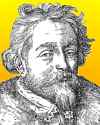
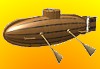
Cornelis Jacobszoon Drebbel was a Dutch inventor who built the first navigable submarine. An engraver and glassworker in Holland, Drebbel turned to applied science and in 1604 went to England, where King James I became his patron. In 1620, he made the first rudimentary submarine. Drebbel constructed his vessels while working for the British Navy. They never used it, but tested his submarine (1620-24) at depths of from 12 -15 feet beneath the surface during repeated trials in the Thames River. It had a wooden rowboat hull wrapped tightly in greased leather. Air tubes with floats went to the surface to provide the craft with oxygen, so it could stay submerged up to three hours. Oars went through the hull at leather gaskets. Twelve oarsmen and some other passengers could be carried. more
In 1997, Chinese engineers completed the blocking of the Yangtze River, the first step toward what would be the world's largest hydroelectric dam project.*
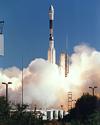
In 1996, the U.S. spacecraft Mars Global Surveyor lifted off from Cape Canaveral on a McDonnell Douglas Delta II rocket for its 435-million-mile journey to Mars. It was expected to arrive at Mars and enter orbit in Sep 1997. The orbiter operated over Mars for more than nine years, according to NASA, to study “the composition of Mars, map its topography and monitor weather patterns. The orbiter made a number of discoveries, including evidence of liquid water at or near the Martian surface. Observations from the Mars Global Surveyor, especially its identifications of water-related minerals, were used to determine drive routes for the Mars Exploration Rover Opportunity in 2010.”«*
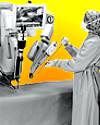
In 1992, the first robot-assisted human hip replacement was performed on a 64-year-old man with osteoarthritis. The Robodoc device was used at Sutter General Hospital, Sacramento, Cal., under an investigational device exemption (IDE) approved by FDA (9 Oct 1992). Ten more Robodoc assisted hip replacements followed. This groundbreaking orthopedic surgical device was created for hip and knee replacement surgeries. IBM’s Thomas J. Watson Research Center and researchers at the University of California, Davis, began the collaborative development of an innovative system for total hip arthroplasty in 1986 to create a more precise device for joint-replacement procedures.«
In 1946, the first U.S. coin-operated television to be publicly exhibited was displayed in New York City. It operated when a 25-cent coin was inserted. The receiver, named the Tradio-Vision, contained 20 tubes and a 5-in cathode ray tube that reflected a 500-line image on mirror on the lid of its metal cabinet (16-in high, 8-in deep, 9-in wide). The manufacturer was Tradio Inc., of Asbury Park, N.J.
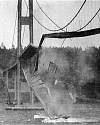
In 1940, at approximately 11:00 am, the first Tacoma Narrows suspension bridge collapsed due to wind-induced vibrations. Situated on the Tacoma Narrows in Puget Sound, near the city of Tacoma, Washington, the bridge had only been open for traffic a few months
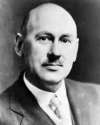
In 1918, Robert Goddard demonstrated a tube-launched solid propellant rocket, using a music stand as his launching platform,. Goddard began work for the Army in 1917 to design rockets to aid in the war effort. By Sep 1918, Goddard had presented the Army Signal Corps with several options. The simplest version could be fired from trenches; the largest could carry an 8-lb payload a distance of about one mile. Many of these rockets were successfully demonstrated at the Aberdeen Proving Ground, Maryland on 7 Nov 1918. Goddard presented solid-fueled 5, 7.5 and 50-pound rockets capable of being launched from a 5.5-foot long by 2-inch or 3-inch wide tube. Further development led to the World War II bazooka, a small, hand-held rocket launcher.
Rocket Man: Robert H. Goddard and the Birth of the Space Age, by David A. Clary. - book suggestion.
In 1908, Prof. Ernest Rutherford announced in London that he had isolated a single atom of matter.*
In 1885, the Canadian Pacific Railway, linking the Atlantic and Pacific coasts, was completed when the last nail was driven in near Farwell, British Columbia. The first train from Montreal to Vancouver averaged 24mph.
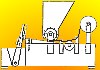
In 1876, a patent for the first U.S. cigarette manufacturing machine was issued to Albert Hook of New York City (No. 184,207). The Hook machine was invented in 1872, but did not come into practical commercial use until 1882. It produced a continuous cigarette of indefinite length, to be cut into individual cigarettes. Tobacco was fed onto a ribbon of paper. The paper passed over a gummed wheel as it was drawn off its spool. According to revenue collection figures, the number of cigarettes manufactured in 1875 was only 50 million.
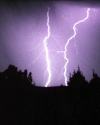
Benjamin Franklin: An American Life, by Walter Isaacson. - book suggestion.
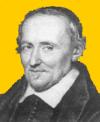
In 1631, Pierre Gassendi made the first observation of the transit of a planet. Johannes Kepler had predicted a transit of Mercury would occur in 1631. When Gassendi observed the dot of Mercury passing across the face of the Sun, he was surprised - it seemed far too small, according to ancient conceptions of the relative sizes of heavenly objects.With a Galilean telescope he observed the transit by projecting the sun's image on a screen of paper. He recorded this in Mercurius in sole visus (1632; Mercury in the Face of the Sun) as support for the new astronomy of Kepler. His instrument was not strong enough, however, to disclose the occultations and transits of Jupiter's satellites.




