
Born 26 Jan 1926; died 12 Jan 2004 at age 77.
American geologist whose studies on the origins of volcanic rocks contributed to the understanding of the formation of the Earth. In Yellowstone National Park, he discovered that the volcanic eruptions that formed Yellowstone Plateau produced rocks of an unusual type, called welded tuff. In the 1960s, he helped develop the Boyd-English device, a piston-cylinder laboratory apparatus to simulate the pressure exerted on minerals deep within the Earth. Able to create a synthetic diamond, it also helps scientists determine the nature of minerals in the various rock layers of the Earth. He was a leading authority on the mantle root of the 3.5-billion-year-old Kaapvaal craton (the kernel on which a continent grows) rock in southern Africa.
American geologist whose studies on the origins of volcanic rocks contributed to the understanding of the formation of the Earth. In Yellowstone National Park, he discovered that the volcanic eruptions that formed Yellowstone Plateau produced rocks of an unusual type, called welded tuff. In the 1960s, he helped develop the Boyd-English device, a piston-cylinder laboratory apparatus to simulate the pressure exerted on minerals deep within the Earth. Able to create a synthetic diamond, it also helps scientists determine the nature of minerals in the various rock layers of the Earth. He was a leading authority on the mantle root of the 3.5-billion-year-old Kaapvaal craton (the kernel on which a continent grows) rock in southern Africa.
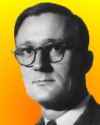
Born 26 Jan 1911; died 20 Mar 1993 at age 82. quotes
German-American physicist who shared the Nobel Prize for Physics in 1955 for his accurate determination that the magnetic moment of the electron is greater than its theoretical value. This he deduced from researching the hyperfine structure of the energy levels in certain elements, and in 1947 found a discrepancy of about 0.1% between the observed value and that predicted by theory. Although minute, this anomaly was of great significance and led to revised theories about the interactions of electrons with electromagnetic radiation, now known as quantum electrodynamics. (He shared the prize with Willis E. Lamb, Jr. who performed independent but related experiments at Columbia University on the hyperfine structure of the hydrogen atom.)
German-American physicist who shared the Nobel Prize for Physics in 1955 for his accurate determination that the magnetic moment of the electron is greater than its theoretical value. This he deduced from researching the hyperfine structure of the energy levels in certain elements, and in 1947 found a discrepancy of about 0.1% between the observed value and that predicted by theory. Although minute, this anomaly was of great significance and led to revised theories about the interactions of electrons with electromagnetic radiation, now known as quantum electrodynamics. (He shared the prize with Willis E. Lamb, Jr. who performed independent but related experiments at Columbia University on the hyperfine structure of the hydrogen atom.)
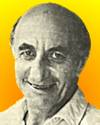
Born 26 Jan 1911; died 13 Apr 1975 at age 64. quotes
(Herman) Max Gluckman was a South African social anthropologist who pioneered the study of traditional African legal systems. His research stressed social conflict and mechanisms for conflict resolution while studying urbanization and social change in colonial Africa. He did extensive research among the tribes of Central and South Africa (1936-47) including studies of Ila, Tonga and Lamba tribes. Examining feud and conflict, he considered their relation to cultural change in Custom and Conflict in Africa (1955). He was openly anti-colonial and engaged directly with social conflicts and cultural contradictions of colonialism, with racism, urbanization and labor migration.
(Herman) Max Gluckman was a South African social anthropologist who pioneered the study of traditional African legal systems. His research stressed social conflict and mechanisms for conflict resolution while studying urbanization and social change in colonial Africa. He did extensive research among the tribes of Central and South Africa (1936-47) including studies of Ila, Tonga and Lamba tribes. Examining feud and conflict, he considered their relation to cultural change in Custom and Conflict in Africa (1955). He was openly anti-colonial and engaged directly with social conflicts and cultural contradictions of colonialism, with racism, urbanization and labor migration.
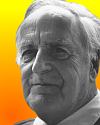
Born 26 Jan 1909; died 28 Feb 2007 at age 98.
Scottish chemist who pioneered in environmental awareness, warning of the dangers to the environment from extensive industrial development. He co-commissioned the 1972 Limits to Growth report, which initiated international attention to environmental concerns. It is still one of the world's best-selling books on the environment. After directing scientific research as part of the war effort in WW II, he turned to the application of science for the improvement of life. In particular, he was chief scientist at the department of scientific and industrial research (1950-56), working to help British factories become more productive. After the publication of Limits to Growth, he cofounded the Club of Rome, an think tank focussed on how to establish sustainable development. He was that group's president 1984-90.«
Scottish chemist who pioneered in environmental awareness, warning of the dangers to the environment from extensive industrial development. He co-commissioned the 1972 Limits to Growth report, which initiated international attention to environmental concerns. It is still one of the world's best-selling books on the environment. After directing scientific research as part of the war effort in WW II, he turned to the application of science for the improvement of life. In particular, he was chief scientist at the department of scientific and industrial research (1950-56), working to help British factories become more productive. After the publication of Limits to Growth, he cofounded the Club of Rome, an think tank focussed on how to establish sustainable development. He was that group's president 1984-90.«
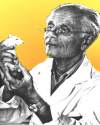
Born 26 Jan 1907; died 16 Oct 1982 at age 75. quotes
Hans Hugo Bruno Selye was an Austrian-Canadian endocrinologist was renowned for pioneering research on biological stress. In 1936, he discovered that injecting ovarian extracts into rats produced adrenal enlargement, thymus shrinkage, ulcers, and death. He later showed that similar reactions could be triggered by toxins, injury, or emotional strain—any form of stress. Selye defined this consistent physiological response as the “general adaptation syndrome.” His studies revealed how chronic stress disrupts hormonal balance, contributing to heart disease, hypertension, and other “diseases of adaptation.” His groundbreaking ideas transformed medicine, psychology, and our understanding of mind-body interaction. The American Institute of Stress is a non-profit organization established in 1978.«
Hans Hugo Bruno Selye was an Austrian-Canadian endocrinologist was renowned for pioneering research on biological stress. In 1936, he discovered that injecting ovarian extracts into rats produced adrenal enlargement, thymus shrinkage, ulcers, and death. He later showed that similar reactions could be triggered by toxins, injury, or emotional strain—any form of stress. Selye defined this consistent physiological response as the “general adaptation syndrome.” His studies revealed how chronic stress disrupts hormonal balance, contributing to heart disease, hypertension, and other “diseases of adaptation.” His groundbreaking ideas transformed medicine, psychology, and our understanding of mind-body interaction. The American Institute of Stress is a non-profit organization established in 1978.«
The Stress of my Life: A Scientist’s Memoirs, by Hans Selye. - book suggestion.
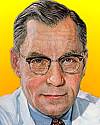
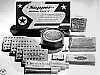
American nutritionist and epidemiologist who was the first to identify the role of saturated fats in causing heart disease. In 1935, he studied the physiological effects of altitude, which he conducted in the Andes. At the onset of WW II, he designed the lightweight yet nutritious K ration used by American paratroops. The hard biscuits, dry sausage, hard candy and chocolate it contained were items he originally selected at a Minneapolis grocery store, and the ration was named with his initial. In 1947, he began a decade of study of 283 local businessmen. From its results, he determined that saturated fat chiefly determined blood cholesterol levels, and linked smoking, high blood pressure and elevated cholesterol with heart attacks.«[Image right: K-ration Supper]
The Benevolent Bean, by Ancel Keys, Margaret Keys. - book suggestion.

Born 26 Jan 1892; died 30 Apr 1926 at age 34.
American aviator who was the first African-American to qualify for a pilot license. She went to France to learn to fly, and on 15 Jun 1921 was issued an international aviation license from the Fédération Aéronautique Internationale. She was sponsored by Robert Abbott, publisher of the Chicago Defender, the nation’s largest African-American weekly, and wealthy real estate dealer, Jessie Binga. She learned aerobatics to make a living at air shows, and became known as “Queen Bell.” In 1923, she was hospitalized her for three months after a crash. She returned to flying and had speaking engagements, and hoped to open a school for flyers. Her life ended at age 34 due to a flying accident.«
American aviator who was the first African-American to qualify for a pilot license. She went to France to learn to fly, and on 15 Jun 1921 was issued an international aviation license from the Fédération Aéronautique Internationale. She was sponsored by Robert Abbott, publisher of the Chicago Defender, the nation’s largest African-American weekly, and wealthy real estate dealer, Jessie Binga. She learned aerobatics to make a living at air shows, and became known as “Queen Bell.” In 1923, she was hospitalized her for three months after a crash. She returned to flying and had speaking engagements, and hoped to open a school for flyers. Her life ended at age 34 due to a flying accident.«
Queen Bess: Daredevil Aviator, by Doris L. Rich. - book suggestion.

Born 26 Jan 1884; died 11 Mar 1960 at age 76. quotes
American zoologist, museum administrator and explorer who spent his entire career at the American Museum of Natural History. He led many important scientific expeditions with financial support through his public lectures and books, particularly in central Asia and eastern Asia. On his 1925 central Asian expedition, the first known dinosaur eggs were discovered, also: a skull and parts of Baluchitherium, the largest known land mammal; extensive deposits of fossil mammals and reptiles previously unknown; evidence of prehistoric human life; and geological strata previously unexplored. During his career he was not known as an influential scientist, yet Andrews was the museum promoter, creating immense excitement and successfully advancing research there.
American zoologist, museum administrator and explorer who spent his entire career at the American Museum of Natural History. He led many important scientific expeditions with financial support through his public lectures and books, particularly in central Asia and eastern Asia. On his 1925 central Asian expedition, the first known dinosaur eggs were discovered, also: a skull and parts of Baluchitherium, the largest known land mammal; extensive deposits of fossil mammals and reptiles previously unknown; evidence of prehistoric human life; and geological strata previously unexplored. During his career he was not known as an influential scientist, yet Andrews was the museum promoter, creating immense excitement and successfully advancing research there.
Under a Lucky Star, by Roy Chapman Andrews. - book suggestion.
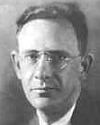
Born 26 Jan 1884; died 4 Feb 1939 at age 55. quotes
American linguist and anthropologist, one of the foremost of his time, who is most widely known for his contributions to the study of North American Indian languages. A founder of ethnolinguistics, which considers the relationship of culture to language, he was also a principal developer of the American (descriptive) school of structural linquistics. Even more than the facts of the fields he studied, Sapir was interested in the more abstract connections between personality, verbal expression and socially determined behaviour.
American linguist and anthropologist, one of the foremost of his time, who is most widely known for his contributions to the study of North American Indian languages. A founder of ethnolinguistics, which considers the relationship of culture to language, he was also a principal developer of the American (descriptive) school of structural linquistics. Even more than the facts of the fields he studied, Sapir was interested in the more abstract connections between personality, verbal expression and socially determined behaviour.
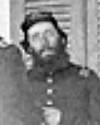
1861
Born 26 Jan 1832; died 10 Jul 1885 at age 53.
U.S. surgeon and inventor who played a major role in the development of rapid transit in New York City. After serving as a surgeon in the Federal Army in the Civil War, he became interested in rapid transit as a means of freeing people from living in the unhealthful, crowded tenements in the centres of large cities. Gilbert obtained two patents in 1870 on a pneumatic-tube system, and he incorporated the Gilbert Electric Railway Company on 17 Jun 1872, to build elevated lines in New York City. The cars were to be propelled by air pressure from pneumatic tubes mounted on the elevated structure. A financial depression delayed construction until 1876, and forced adoption of a conventional track with trains drawn by steam locomotives, which opened 6 Jun 1878.
U.S. surgeon and inventor who played a major role in the development of rapid transit in New York City. After serving as a surgeon in the Federal Army in the Civil War, he became interested in rapid transit as a means of freeing people from living in the unhealthful, crowded tenements in the centres of large cities. Gilbert obtained two patents in 1870 on a pneumatic-tube system, and he incorporated the Gilbert Electric Railway Company on 17 Jun 1872, to build elevated lines in New York City. The cars were to be propelled by air pressure from pneumatic tubes mounted on the elevated structure. A financial depression delayed construction until 1876, and forced adoption of a conventional track with trains drawn by steam locomotives, which opened 6 Jun 1878.
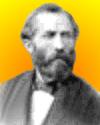
Born 26 Jan 1831; died 19 Jan 1888 at age 56. quotes
German botanist known as a founder of modern mycology and plant pathology for his research into the roles of fungi and other agents in causing plant diseases. He determined the life cycles of many fungi, for which he developed a classification that has been retained in large part by modern mycologists. Among the first to study host-parasite interactions, and ways in which fungi penetrate host tissues, in 1853, he asserted that rust and smut were fungal diseases. In 1865 he proved that the life cycle of wheat rust involves two hosts, wheat and barberry. De Bary was the first to show (1866) that lichens consist of a fungus and an alga in intimate association. He coined the term symbiosis (1879) for the mutually beneficial partnership between two organisms.
German botanist known as a founder of modern mycology and plant pathology for his research into the roles of fungi and other agents in causing plant diseases. He determined the life cycles of many fungi, for which he developed a classification that has been retained in large part by modern mycologists. Among the first to study host-parasite interactions, and ways in which fungi penetrate host tissues, in 1853, he asserted that rust and smut were fungal diseases. In 1865 he proved that the life cycle of wheat rust involves two hosts, wheat and barberry. De Bary was the first to show (1866) that lichens consist of a fungus and an alga in intimate association. He coined the term symbiosis (1879) for the mutually beneficial partnership between two organisms.
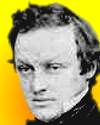
Born 26 Jan 1824; died 31 Dec 1884 at age 60. quotes
English geologist and businessman who specialized in hydraulic geology and geomorphology, studying both prehistoric and contemporary riverine systems. He wrote On Changes of Sea Level (1853), and presented 17 papers to the Royal Society, mostly on the flow of rivers as connected with the erosion of valleys and the deposit of gravel-beds. He contended there were larger rivers, more rainfall, and greater denudation of the land in former periods. His profession was as a brassfounder, following on from the family business. An obituary stated he would be remembered as a promoter of technical education, at a time when its vital importance was little recognized. He owned a colliery in South Wales.« more
English geologist and businessman who specialized in hydraulic geology and geomorphology, studying both prehistoric and contemporary riverine systems. He wrote On Changes of Sea Level (1853), and presented 17 papers to the Royal Society, mostly on the flow of rivers as connected with the erosion of valleys and the deposit of gravel-beds. He contended there were larger rivers, more rainfall, and greater denudation of the land in former periods. His profession was as a brassfounder, following on from the family business. An obituary stated he would be remembered as a promoter of technical education, at a time when its vital importance was little recognized. He owned a colliery in South Wales.« more
Born 26 Jan 1810; died 23 Jul 1876 at age 66.
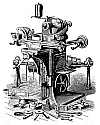
American inventor and manufacturer who made numerous advances in the field of fine measurement and machine-tool production. He perfected and produced a highly accurate linear dividing engine in 1850, and in the succeeding two years he developed a vernier caliper reading to thousandths of an inch and also applied vernier methods to the protractor. Brown's micrometer caliper, widely used in industry, appeared in 1867. He also invented a precision gear cutter in 1855 to produce clock gears, a universal milling machine in 1862, and, perhaps his finest innovation, a universal grinding machine (patented in 1877), in which articles were hardened first and then ground, thereby increasing accuracy and eliminating waste. Cofounded J.R. Brown & Sharpe in 1853.[Image: Brown's universal milling machine]
American inventor and manufacturer who made numerous advances in the field of fine measurement and machine-tool production. He perfected and produced a highly accurate linear dividing engine in 1850, and in the succeeding two years he developed a vernier caliper reading to thousandths of an inch and also applied vernier methods to the protractor. Brown's micrometer caliper, widely used in industry, appeared in 1867. He also invented a precision gear cutter in 1855 to produce clock gears, a universal milling machine in 1862, and, perhaps his finest innovation, a universal grinding machine (patented in 1877), in which articles were hardened first and then ground, thereby increasing accuracy and eliminating waste. Cofounded J.R. Brown & Sharpe in 1853.[Image: Brown's universal milling machine]

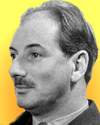
Died 26 Jan 1990 at age 94 (born 19 Oct 1895). quotes
American architectural critic, urban planner and historian who wrote about the effects of architecture and technology on human societies throughout history. He also covered topics in literary criticism, regional planning, environmentalism, history of cities, and their role in civilization. Called “the last of the great humanists” by Malcolm Cowley, Mumford gained international recognition. His publishing career began with American studies books in the 1920s and progressed through sixty years broadening with wide-ranging themes until his final work, his autobiography, Sketches From My Life (1982). For 30 years he contributed to The New Yorker magazine as architectural critic.«
American architectural critic, urban planner and historian who wrote about the effects of architecture and technology on human societies throughout history. He also covered topics in literary criticism, regional planning, environmentalism, history of cities, and their role in civilization. Called “the last of the great humanists” by Malcolm Cowley, Mumford gained international recognition. His publishing career began with American studies books in the 1920s and progressed through sixty years broadening with wide-ranging themes until his final work, his autobiography, Sketches From My Life (1982). For 30 years he contributed to The New Yorker magazine as architectural critic.«
1933
Died 26 Jan 1943 at age 55 (born 25 Nov 1887).
Russian botanist and plant geneticist who established 400 research institutes and made expeditions throughout the world (1916-33), leading Russian plant hunters on the first attempt to “cover the globe” in search of wild plants and primitive cultivators. He brought back a huge collection of plants samples for experiments in plant breeding in order to improve the productivity of cereal grains, as well as some other types of crops. Trofim Lysenko, the official Soviet biology spokesman, denounced Vavilov's Mendelevian genetics as counter to the dogmas of communism. He was arrested in 1940 and imprisoned at a concentration camp at Saratov, where he spent his final years. He died there of malnutrition.[EB gives birth date as New Style 25 Nov 1887 (Old Style 13 Nov 1887).]
Russian botanist and plant geneticist who established 400 research institutes and made expeditions throughout the world (1916-33), leading Russian plant hunters on the first attempt to “cover the globe” in search of wild plants and primitive cultivators. He brought back a huge collection of plants samples for experiments in plant breeding in order to improve the productivity of cereal grains, as well as some other types of crops. Trofim Lysenko, the official Soviet biology spokesman, denounced Vavilov's Mendelevian genetics as counter to the dogmas of communism. He was arrested in 1940 and imprisoned at a concentration camp at Saratov, where he spent his final years. He died there of malnutrition.[EB gives birth date as New Style 25 Nov 1887 (Old Style 13 Nov 1887).]
Where Our Food Comes From: Retracing Nikolay Vavilov’s Quest to End Famine, by Gary Paul Nabhan. - book suggestion.
Died 26 Jan 1939 at age 75 (born 21 Jun 1863).
Belgian-born American metallurgist whose microscopic and photomicroscopic studies of metal structures make him one of the founders of physical metallurgy. In 1891 he began working with the South Chicago works of the Illinois Steel Company where, to follow his ideas, he was provided with a microscope and a room to work in. "This small beginning," Sauveur later wrote, "marked the introduction of metallography into the iron and steel industry of the United States." He is best known for his research on the hardening of steel (1893) that "the properties of steel rails were largely dependent on the dimensions of their microscopical constituents or grain sizes, and that in turn these dimensions resulted chiefly from the finishing temperatures."
Belgian-born American metallurgist whose microscopic and photomicroscopic studies of metal structures make him one of the founders of physical metallurgy. In 1891 he began working with the South Chicago works of the Illinois Steel Company where, to follow his ideas, he was provided with a microscope and a room to work in. "This small beginning," Sauveur later wrote, "marked the introduction of metallography into the iron and steel industry of the United States." He is best known for his research on the hardening of steel (1893) that "the properties of steel rails were largely dependent on the dimensions of their microscopical constituents or grain sizes, and that in turn these dimensions resulted chiefly from the finishing temperatures."
Died 26 Jan 1932 at age 70 (born 30 Sep 1861). quotes
American manufacturer whose Wrigley's chewing gum company became the largest producer and distributor of chewing gum in the world. He left his father's soap factory in 1891 when he moved to Chicago. There his uncle supplied seed money on the condition Wrigley take a cousin as partner, and they started manufacturing soap, baking powder, and later, chewing gum. When the gum became very popular, they dropped the other products. In 1899 he introduced spearmint gum, which lagged in sales until a major advertising campaign in 1907; within a year spearmint gum sales increased tenfold. In 1911, he bought Zeno Manufacturing Company, previously contracted to make his gum, and the William Wrigley, Jr., Company was founded. more
American manufacturer whose Wrigley's chewing gum company became the largest producer and distributor of chewing gum in the world. He left his father's soap factory in 1891 when he moved to Chicago. There his uncle supplied seed money on the condition Wrigley take a cousin as partner, and they started manufacturing soap, baking powder, and later, chewing gum. When the gum became very popular, they dropped the other products. In 1899 he introduced spearmint gum, which lagged in sales until a major advertising campaign in 1907; within a year spearmint gum sales increased tenfold. In 1911, he bought Zeno Manufacturing Company, previously contracted to make his gum, and the William Wrigley, Jr., Company was founded. more
Died 26 Jan 1925 at age 71 (born 12 Apr 1853).
Scottish cardiologist, pioneer in the study of cardiac arrhythmias. He was first to make simultaneous records of the arterial and venous pulses to evaluate the condition of the heart, a procedure that laid the foundation for much future research. Mackenzie also drew attention to the question of the heart's capacity for work, paving the way for the study of the energetics of the heart muscle. His work was particularly important in distinguishing atrial fibrillation and in treating this common condition with digitalis. In 1892, he built a machine for detecting and recording physiological activity, such as pulse rate and blood pressure, since known as a polygraph, and later used as a lie detector.
Scottish cardiologist, pioneer in the study of cardiac arrhythmias. He was first to make simultaneous records of the arterial and venous pulses to evaluate the condition of the heart, a procedure that laid the foundation for much future research. Mackenzie also drew attention to the question of the heart's capacity for work, paving the way for the study of the energetics of the heart muscle. His work was particularly important in distinguishing atrial fibrillation and in treating this common condition with digitalis. In 1892, he built a machine for detecting and recording physiological activity, such as pulse rate and blood pressure, since known as a polygraph, and later used as a lie detector.
Died 26 Jan 1918 at age 83 (born 5 Aug 1834).
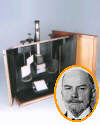
Karl Ewald Konstantin Hering was a German physiologist and psychologist whose chief work concerned the physiology of colour perception. He taught at several universities. Hering challenged the colour-vision theory of Hermann von Helmholtz. Visual sensations, according to Hering's view, were due to three colour receptors responding in an “opponent” fashion in colour-pairs (white/black, yellow/blue, and red/green) to take account of the after-images of colours. Helmholtz had advocated the three fibre, three color theory (red, green and blue). Hering also is known for a classic optical illusion.[Image: Hering (inset) with his colour-blindness apparatus]
Karl Ewald Konstantin Hering was a German physiologist and psychologist whose chief work concerned the physiology of colour perception. He taught at several universities. Hering challenged the colour-vision theory of Hermann von Helmholtz. Visual sensations, according to Hering's view, were due to three colour receptors responding in an “opponent” fashion in colour-pairs (white/black, yellow/blue, and red/green) to take account of the after-images of colours. Helmholtz had advocated the three fibre, three color theory (red, green and blue). Hering also is known for a classic optical illusion.[Image: Hering (inset) with his colour-blindness apparatus]
Died 26 Jan 1896 at age 77 (born 3 Oct 1818). quotes
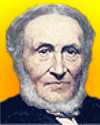
Scottish publisher who, though not himself a professional scientist did much to promote science in the Victorian times by publishing the journal Nature, enabling communication between men of science. He was prompted by Norman Lockyer, its first editor. The first issue was published on 4 Nov 1869. The journal had the support of many influential contributors, including Thomas Huxley. Yet, it remained a financial challenge for Macmillan. Other scientific quarterlies had short lives. Macmillan tolerated losses for three decades, because of his committment to the journal's mission “to place before the general public the grand results of scientific work and scientific discovery; and to urge the claims of science to move to a more general recognition in education and in daily life.” That mission continues to the present day.«
Scottish publisher who, though not himself a professional scientist did much to promote science in the Victorian times by publishing the journal Nature, enabling communication between men of science. He was prompted by Norman Lockyer, its first editor. The first issue was published on 4 Nov 1869. The journal had the support of many influential contributors, including Thomas Huxley. Yet, it remained a financial challenge for Macmillan. Other scientific quarterlies had short lives. Macmillan tolerated losses for three decades, because of his committment to the journal's mission “to place before the general public the grand results of scientific work and scientific discovery; and to urge the claims of science to move to a more general recognition in education and in daily life.” That mission continues to the present day.«
Died 26 Jan 1895 at age 73 (born 16 Aug 1821). quotes
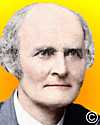
English mathematician who played a leading role in founding the modern British school of pure mathematics. He trained first as a lawyer, and from 1849, spent 14 years at the bar, during which time he maintained an interest in mathematics and published about 250 mathematical papers. In 1863, Cayley followed his passion and commenced a new career as professor of Pure Mathematics at Cambridge and during his tenure published 900 papers and notes covering nearly every aspect of modern mathematics. The legacy of his work in n-dimensional geometry was later applied in physics to the study of the space-time continuum. His work on matrices served as a foundation for quantum mechanics developed by Werner Heisenberg in 1925.«
English mathematician who played a leading role in founding the modern British school of pure mathematics. He trained first as a lawyer, and from 1849, spent 14 years at the bar, during which time he maintained an interest in mathematics and published about 250 mathematical papers. In 1863, Cayley followed his passion and commenced a new career as professor of Pure Mathematics at Cambridge and during his tenure published 900 papers and notes covering nearly every aspect of modern mathematics. The legacy of his work in n-dimensional geometry was later applied in physics to the study of the space-time continuum. His work on matrices served as a foundation for quantum mechanics developed by Werner Heisenberg in 1925.«
Died 26 Jan 1891 at age 58 (born 10 Jun 1832).
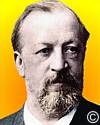
German engineer and inventor who developed the four-stroke internal-combustion engine, which offered the first practical alternative to the steam engine as a power source. A French engineer, Alphonse Beau de Rochas, formulated the basic design for the four-stroke internal combustion engine and patented it in 1862, but never built a working model. In 1876, Otto used principles from Beau de Rochas and others to construct the prototype of today's automobile engines, often called the Otto-cycle engine. He sold thousands of copies before Beau de Rochas sued him and invalidated Otto's patent. But light, efficient Otto-cycle engines largely enabled the creation of automobiles, powerboats, motorcycles and even airplanes.
German engineer and inventor who developed the four-stroke internal-combustion engine, which offered the first practical alternative to the steam engine as a power source. A French engineer, Alphonse Beau de Rochas, formulated the basic design for the four-stroke internal combustion engine and patented it in 1862, but never built a working model. In 1876, Otto used principles from Beau de Rochas and others to construct the prototype of today's automobile engines, often called the Otto-cycle engine. He sold thousands of copies before Beau de Rochas sued him and invalidated Otto's patent. But light, efficient Otto-cycle engines largely enabled the creation of automobiles, powerboats, motorcycles and even airplanes.
Died 26 Jan 1885 at age 78 (born 16 Jun 1806).
English physician, chemist and inventor of an electromagnetic repeater for relaying telegraphic signals (1836) and an electrochemical telegraph (1838). He turned his interest to telegraphy after studying medicine and beginning a career as a chemist. He emigrated to Adelaide, South Australia, where he was a farmer and physician.
English physician, chemist and inventor of an electromagnetic repeater for relaying telegraphic signals (1836) and an electrochemical telegraph (1838). He turned his interest to telegraphy after studying medicine and beginning a career as a chemist. He emigrated to Adelaide, South Australia, where he was a farmer and physician.
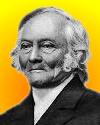
Died 26 Jan 1878 at age 82 (born 24 Jun 1795). quotes
German anatomist and physiologist whose fundamental studies of the sense of touch introduced a concept, important to psychology and sensory physiology, that of the "just-noticeable difference", the smallest difference perceivable between two similar stimuli. With his brother Eduard Friedrich Weber (1806-71) he discovered the inhibitory power of the vagus nerve (1845). With another brother, W. E. Weber, he made studies of acoustics and wave motion. He formuled Weber's law: that the increase in stimulus necessary to produce an increase in sensation is not fixed but depends on the strength of the preceding stimulus.
German anatomist and physiologist whose fundamental studies of the sense of touch introduced a concept, important to psychology and sensory physiology, that of the "just-noticeable difference", the smallest difference perceivable between two similar stimuli. With his brother Eduard Friedrich Weber (1806-71) he discovered the inhibitory power of the vagus nerve (1845). With another brother, W. E. Weber, he made studies of acoustics and wave motion. He formuled Weber's law: that the increase in stimulus necessary to produce an increase in sensation is not fixed but depends on the strength of the preceding stimulus.

American inventor and manufacturer of pins. After 20 years as a carpenter, he moved to England where he perfected and patented in London a machine to make wrought-iron nails (1835), and the same year devised and patented a machine for making pins with solid heads. Shortly thereafter, he returned to the U.S. and sought a partner. By 1840, the pin-making firm of Slocum and Jillson was manufacturing at Poughkeepsie, N. Y. Meanwhile the question of packaging pins held Slocum's attention, and on 30 Sept 1841, he obtained patent No. 2,275 for a machine for sticking pins in paper. Until he retired, Slocum continued in the pin manufacturing business and improved his pin sticking machine.[Image: original patent diagram of pin sticking machine]
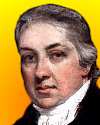
Died 26 Jan 1823 at age 73 (born 17 May 1749). quotes
English physician and surgeon who discovered vaccination for smallpox. There was a common story among farmers that if a person contracted a relatively mild and harmless disease of cattle called cowpox, immunity to smallpox would result. On 14 May 1796 he removed the fluid of a cowpox from dairymaid Sarah Nelmes, and inoculated James Phipps, an eight-year-old boy, who soon came down with cowpox. Six weeks later, he inoculated the boy with smallpox. The boy remained healthy, proving the theory. He called his method vaccination, using the Latin word vacca, meaning cow, and vaccinia, meaning cowpox. Jenner also introduced the word virus.
English physician and surgeon who discovered vaccination for smallpox. There was a common story among farmers that if a person contracted a relatively mild and harmless disease of cattle called cowpox, immunity to smallpox would result. On 14 May 1796 he removed the fluid of a cowpox from dairymaid Sarah Nelmes, and inoculated James Phipps, an eight-year-old boy, who soon came down with cowpox. Six weeks later, he inoculated the boy with smallpox. The boy remained healthy, proving the theory. He called his method vaccination, using the Latin word vacca, meaning cow, and vaccinia, meaning cowpox. Jenner also introduced the word virus.
Vaccination Against Smallpox, by Edward Jenner. - book suggestion.
Died 26 Jan 1721 at age 90 (born 8 Feb 1630).
French scholar, antiquary, scientist, and bishop whose incisive skepticism, particularly as embodied in his cogent attacks on René Descartes, greatly influenced contemporary philosophers. Huet wrote a number of philosophical works that asserted the fallibility of human reason in addition to scientific work in the fields of astronomy, anatomy, and mathematics.
French scholar, antiquary, scientist, and bishop whose incisive skepticism, particularly as embodied in his cogent attacks on René Descartes, greatly influenced contemporary philosophers. Huet wrote a number of philosophical works that asserted the fallibility of human reason in addition to scientific work in the fields of astronomy, anatomy, and mathematics.
Died 26 Jan 1630 (born Feb 1561).
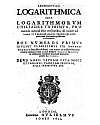
English mathematician who constructed the decimal-based common (Briggsian) logarithms that use base 10, and popularized them in Europe. John Napier had already ntroduced “natural” logarithms (1614) that use the base e (2.71...). Briggs visited Napier in 1616, and they agreed on the merit of using base 10. By 1624, Briggs had calculated logarithm tables to 14 decimal places, published in Arithmetica Logarithmica. These tables vastly simplified the task of mathematicians, astronomers and other scientists making otherwise long and tedious calculations. Briggs was professor of astronomy at Oxford from 1619. He is also credited with developing the modern method of long division. Briggs was strongly opposed to astrology, at a time when it was otherwise widely accepted by many scholars, including Napier.«[Image: Title page of Arithmetica Logarithmica, 1624]
English mathematician who constructed the decimal-based common (Briggsian) logarithms that use base 10, and popularized them in Europe. John Napier had already ntroduced “natural” logarithms (1614) that use the base e (2.71...). Briggs visited Napier in 1616, and they agreed on the merit of using base 10. By 1624, Briggs had calculated logarithm tables to 14 decimal places, published in Arithmetica Logarithmica. These tables vastly simplified the task of mathematicians, astronomers and other scientists making otherwise long and tedious calculations. Briggs was professor of astronomy at Oxford from 1619. He is also credited with developing the modern method of long division. Briggs was strongly opposed to astrology, at a time when it was otherwise widely accepted by many scholars, including Napier.«[Image: Title page of Arithmetica Logarithmica, 1624]
In 1954, to demonstrate to reporters the functionality of the atomic battery newly developed by RCA (Radio Corporation of America), chairman David Sarnoff used the electricity it generated to produce a sound message. With a telegraph key in circuit with the battery and an ordinary telephone amplifier he tapped out two sentences: “Atoms for peace. Man is still the greatest miracle and the greatest problem on this earth.” The tone was faint, but distinct. The slim battery was made from two wafers. One was of a radioactive strontium metal against another of silicon. The particles bombarding the atoms in the silicon crystal released electrons that provided a small current of electricity. A 20-year half-life was expected for the battery. The inventors at RCA were Ernest G. Linder and Paul Rappaport.«

(USPTO)
In 1932, the US Patent Office recieved a patent application for the cyclotron by Ernest Orlando Lawrence as a “Method and Apparatus for the Acceleration of Ions.” It was issued on 20 Feb 1934, assigned to the Research Corporation of New York (No. 1,948,384). By 1939, this atom-smashing instrument won the Nobel Prize for its inventor.
An American Genius: The Life of Ernest Orlando Lawrence, by Childs Herbert. - book suggestion.
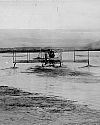
In 1911, Glenn Curtiss piloted the first hydroplane flight at North Island, San Diego, California, with a successful take-off from water and landing on water. rose six feet and flew about two or three hundred yards. The airplane Flying Fish had pontoons in place of wheels. The rear pontoon was 6-ft wide and 5-ft long. The front one was narrower. He had made his first flight on his 30th birthday, 21 May 1908, in White Wing, a design of the Aerial Experiment Association, the group led by Alexander Graham Bell. Curtiss began building his own aircraft. He pioneered the design of the floatplane and the flying boat. Curtiss established an aviation school on North Island in San Diego Bay, Dec 1910. On 17 Feb 1911, He demonstrated the first hydroplane flight to a ship, the USS Pennsylvania.«[Image: Detail from a postcard photgraph, which is dated 25 Feb 1911, although other sources give 26 Feb 1911 as the date of the first hydraplane flight.]
Glenn Curtiss, Pioneer of Flight, by Cecil R. Roseberry. - book suggestion.
In 1906, the world's steam car land speed record was set at 127.7 mph (205.5 km/h) by Fred Marriot, racing at Daytona Beach, Florida, U.S.A. in his canoe-shaped Stanley Steamer Rocket. The record stood for over a century, until 25 Aug 2009. Marriot crashed while trying for a new record, so without official result, but was clocked at over 190 mph when his vehicle flew off the ground, flipped and landed. Miraculously, he survived. The Rocket resembled an upside-down canoe on four bicycle wheels. In fact, its wood and canvas body was made by the Roberts Canoe Factory, Riverside, Mass. It was powered by a two-cylinder engine with a steam boiler about the size of a washing-machine tub. After the crash, the Stanley Steamer manufacturer withdrew from racing. It ended all production in 1924.«
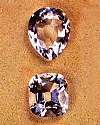
In 1905, the world's largest gem-quality diamond was discovered in the Premier mine in Transvaal (a British crown colony that later became part of South Africa). It weighed 3,106 carats, or about 1-1/3 pounds, and was named the Cullinan Diamond in honor of Sir Thomas Cullinan, owner of the mining company. The Transvall Government purchased the diamond and presented it to the British monarch, King Edward VII, on his 66th birthday. When the rough diamond was cut, it produced nine large stones and nearly 100 smaller ones. All of these stones were flawless. Now part of the British crown jewels, the largest cut gem, named the Great Star of Africa, was set in the English sceptre; the second largest was added to the gems in the imperial state crown.
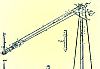
In 1875, George F. Green of Kalamazoo, Michigan, patented the electric dental drill for sawing, filing, dressing and polishing teeth, described as an "electromagnetic dental tool" on patent #159,028.Image: part of patent drawing of first electric dental drill.
In 1848, Henry David Thoreau delivered his first draft of his best-known work Civil Disobedience to his publisher. This book was one written during the famous two years (1845-7) he spent living on Walden Pond, during which time he was jailed one night for refusing to pay a poll tax meant to support America's war in Mexico. His essay on this experience was first published as Resistance to Civil Government, but later known as On the Duty of Civil Disobedience, which in its call for passive resistance to unjust laws was to inspire Gandhi and Martin Luther King, Jr. Though his writings did not sell well during his lifetime, he is now recognized for his essays on conservation. His first book of essays was Natural History of Massachusetts (1842).
In 1700, an earthquake, the most intense Canada has ever seen, hit the sea floor off the British Columbia coast. Long before Europeans first landed on Vancouver Island, native legend tells of a great disaster. The sea rose in a heaving wave, and landslides buried a sleeping village. Myth was resolved with science in 2003 by government research. Earthquakes of that intensity cause tidal waves, and Japanese written history tells of a massive tsunami striking fishing villages the next day along the coast of Honshu, killing hundreds. Coupled with geological evidence of the level 9 quake, the connection was clear. Mythology and seismology came together to validate history.
In 1697, Isaac Newton received and solved Jean Bernoulli’s brachistochrone problem. The Swiss mathematician Bernoulli had challenged his colleagues to solve it within six months. Newton not only solved the problem before going to bed that same night, but in doing so, invented a new branch of mathematics called the calculus of variations. He had resolved the issue of specifying the curve connecting two points displayed from each other laterally, along which a body, acted upon only by gravity, would fall in the shortest time. Newton, age 55, sent the solution to be published, at his request, anonymously. But the brilliant originality of the work betrayed his identity, for when Bernoulli saw the solution he commented, “We recognize the lion by his claw.”





