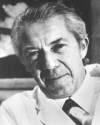
Born 2 Oct 1917. quotes
Belgian cytologist and biochemist who discovered lysosomes (the digestive organelles of the cell) and peroxisomes (organelles that are the site of metabolic processes involving hydrogen peroxide). Lysosomes have now been shown, by de Duve and others, to be engaged in a series of cellular activities during which biological material must be degraded. The lysosomes are used in defense mechanisms, against bacteria, during resorption and secretion. They can also be used for a controlled degradation of the cell in which they are contained, e.g. to remove worn out components. For this work he shared the Nobel Prize for Physiology or Medicine in 1974 with Albert Claude and George Palade.
Belgian cytologist and biochemist who discovered lysosomes (the digestive organelles of the cell) and peroxisomes (organelles that are the site of metabolic processes involving hydrogen peroxide). Lysosomes have now been shown, by de Duve and others, to be engaged in a series of cellular activities during which biological material must be degraded. The lysosomes are used in defense mechanisms, against bacteria, during resorption and secretion. They can also be used for a controlled degradation of the cell in which they are contained, e.g. to remove worn out components. For this work he shared the Nobel Prize for Physiology or Medicine in 1974 with Albert Claude and George Palade.
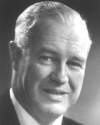
Born 2 Oct 1907; died 10 Jan 1977 at age 69. quotes
Baron Alexander R(obertus) Todd (of Trumpington) was a British biochemist whose research on the structure and synthesis of nucleotides, nucleosides, and nucleotide coenzymes gained him the 1957 Nobel Prize for Chemistry. Nucleotides - found in the chromosomes of the cell-kernels, also in cell plasma - are connected with the units of heredity. In combination with proteins they constitute the virus molecules and many coenzymes are nucleotides of low molecular weight but with a special structure. It was known that they are built up of three quite different "building stones": phosphoric acid, a sugar, and a heterocyclic base containing nitrogen, assembled in one macromolecule. Todd researched how they are connected to each other.
Baron Alexander R(obertus) Todd (of Trumpington) was a British biochemist whose research on the structure and synthesis of nucleotides, nucleosides, and nucleotide coenzymes gained him the 1957 Nobel Prize for Chemistry. Nucleotides - found in the chromosomes of the cell-kernels, also in cell plasma - are connected with the units of heredity. In combination with proteins they constitute the virus molecules and many coenzymes are nucleotides of low molecular weight but with a special structure. It was known that they are built up of three quite different "building stones": phosphoric acid, a sugar, and a heterocyclic base containing nitrogen, assembled in one macromolecule. Todd researched how they are connected to each other.
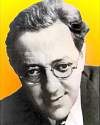
Born 2 Oct 1906; died 24 Jun 1969 at age 62. quotes
German-American engineer who was a co-founder in 1927 of the German Verein für Raumschiffahrt ( “VfR”, Society for Space Travel). This was the first group of men (with the sole exception of Robert Goddard) to experiment with rockets. Ley introduced Wernher von Braun to the society. Ley was consultant for the science fiction film Frau im Mond in which the countdown from ten to zero was introduced. Fiercely anti-Nazi, unlike Von Braun, in 1934, he emigrated to the U.S. rather than pursuing military applications of rocketry. In the U.S., he became a popularizer of space exploration and travel, writing many popular books.
German-American engineer who was a co-founder in 1927 of the German Verein für Raumschiffahrt ( “VfR”, Society for Space Travel). This was the first group of men (with the sole exception of Robert Goddard) to experiment with rockets. Ley introduced Wernher von Braun to the society. Ley was consultant for the science fiction film Frau im Mond in which the countdown from ten to zero was introduced. Fiercely anti-Nazi, unlike Von Braun, in 1934, he emigrated to the U.S. rather than pursuing military applications of rocketry. In the U.S., he became a popularizer of space exploration and travel, writing many popular books.
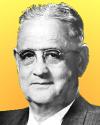
Born 2 Oct 1901; died 25 Jul 1987 at age 85.
American aeronautical engineer, educator, and science administrator who earned degrees from Stanford, Harvard, and MIT then, in 1939, became head of MIT's Instrumentation Laboratory, which was a centre for the design of navigational and guidance systems for ships, airplanes, and missiles from World War II through the Cold War. He developed gyroscope systems that stabilized and balanced gunsights and bombsights and which were later expanded to an inertial guidance system for launching long-range missiles at supersonic jet targets. He was "the father of inertial navigation." The Project Apollo contract for guiding man and spacecraft to the moon was also placed with the Instrumentation Lab.
American aeronautical engineer, educator, and science administrator who earned degrees from Stanford, Harvard, and MIT then, in 1939, became head of MIT's Instrumentation Laboratory, which was a centre for the design of navigational and guidance systems for ships, airplanes, and missiles from World War II through the Cold War. He developed gyroscope systems that stabilized and balanced gunsights and bombsights and which were later expanded to an inertial guidance system for launching long-range missiles at supersonic jet targets. He was "the father of inertial navigation." The Project Apollo contract for guiding man and spacecraft to the moon was also placed with the Instrumentation Lab.
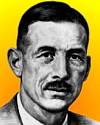
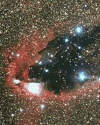
Swiss-American astronomer who moved to the US in 1915 and worked at the Lick Observatory. In 1922, by observing a solar eclipse, he was able to confirm Einstein's theory of relativity. He made extensive studies of galactic star clusters, and demonstrated (1930) the presence throughout the galactic plane of a tenuous haze of interstellar material that absorbs light generally that dims and reddens the light from of distant clusters. The presence of this obscuring haze revealed how the size of spiral galaxies had been over-estimated. Whereas Harlow Shapley, in 1918, determined the distance to the centre of the Milky Way to be 50,000 light-years away, Trumpler's work reduced this to 30,000 light-years.[Image, right (source)]
Born 2 Oct 1883.
Karl (Anton von) Terzaghi was an Austrian-American civil engineer who founded the branch of civil engineering science known as soil mechanics, a term he coined for the study of the properties of soil under stresses and under the action of flowing water. Soil dynamics, which deals with soil properties and behaviour under changing stress conditions. such as may occur due to earthquakes, bomb blasts, fast-moving traffic, wind or wave action. The effect vibrations have on soils is of vital importance to engineers studying the effects of earthquakes.
Karl (Anton von) Terzaghi was an Austrian-American civil engineer who founded the branch of civil engineering science known as soil mechanics, a term he coined for the study of the properties of soil under stresses and under the action of flowing water. Soil dynamics, which deals with soil properties and behaviour under changing stress conditions. such as may occur due to earthquakes, bomb blasts, fast-moving traffic, wind or wave action. The effect vibrations have on soils is of vital importance to engineers studying the effects of earthquakes.
Born 2 Oct 1878; died 1936.
German geophysicist and petroleum engineer noted for the invention, in 1927, of a method of continuous electric logging of boreholes. Beginning in 1912, Conrad Schlumberger conceived the idea for electrical measurements to map subsurface rock bodies. He was first joined by his brother, Marcel, in 1919 for work together in Normandy, France, opening their first office in 1921. For three years from 1923, Schlumberger teams conducted geophysical surveys in Romania, Serbia, Canada, South Africa, Belgian Congo and the U.S. Electrical prospecting was used for the first time to map a subsurface oil-bearing structure - a salt dome in Romania. In 1927, the first electrical resistivity log was recorded in a well in Pechelbronn, France.
German geophysicist and petroleum engineer noted for the invention, in 1927, of a method of continuous electric logging of boreholes. Beginning in 1912, Conrad Schlumberger conceived the idea for electrical measurements to map subsurface rock bodies. He was first joined by his brother, Marcel, in 1919 for work together in Normandy, France, opening their first office in 1921. For three years from 1923, Schlumberger teams conducted geophysical surveys in Romania, Serbia, Canada, South Africa, Belgian Congo and the U.S. Electrical prospecting was used for the first time to map a subsurface oil-bearing structure - a salt dome in Romania. In 1927, the first electrical resistivity log was recorded in a well in Pechelbronn, France.
Born 2 Oct 1865; died 1936.
Berkeley George Andrew Moynihan, 1st Baron Moynihan (of Leeds), was a British surgeon and teacher of medicine who was a noted authority on abdominal surgery. About research, he wrote in Surgery, Gynecology and Obstetrics (1920), "A discovery is rarely, if ever, a sudden achievement, nor is it the work of one man; a long series of observations, each in turn received in doubt and discussed in hostility, are familiarized by time, and lead at last to the gradual disclosure of truth." Another quote: "The stomach is so sensitive an organ that it cannot refrain from weeping when its neighbours are in trouble, and its voice is sometimes so loud as to drown that of the real sufferer."
Berkeley George Andrew Moynihan, 1st Baron Moynihan (of Leeds), was a British surgeon and teacher of medicine who was a noted authority on abdominal surgery. About research, he wrote in Surgery, Gynecology and Obstetrics (1920), "A discovery is rarely, if ever, a sudden achievement, nor is it the work of one man; a long series of observations, each in turn received in doubt and discussed in hostility, are familiarized by time, and lead at last to the gradual disclosure of truth." Another quote: "The stomach is so sensitive an organ that it cannot refrain from weeping when its neighbours are in trouble, and its voice is sometimes so loud as to drown that of the real sufferer."
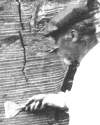
Born 2 Oct 1858; died 23 Jul 1943 at age 84.
Gerhard (Jakob), Friherre De Geer (Baron) was a Swedish geologist, originator of the varve-counting method used in geochronology. A varve is a seasonal coarse-fine layer of clay deposited in still water.The layers were produced by the annual melt-water sequence with rapid melting and discharge in summer depositing coarse sediments, versus slow settling of fine-grained material during the winter months. The method he devised of counting of layers in glaciers was good for dating back to 18,000 years. Although only accurate to that time, it was useful for studies of the Ice Age.Image: In 1920 De Geer visited the United States to study the varves of New England; he is shown sampling varves at the Essex locality.
Gerhard (Jakob), Friherre De Geer (Baron) was a Swedish geologist, originator of the varve-counting method used in geochronology. A varve is a seasonal coarse-fine layer of clay deposited in still water.The layers were produced by the annual melt-water sequence with rapid melting and discharge in summer depositing coarse sediments, versus slow settling of fine-grained material during the winter months. The method he devised of counting of layers in glaciers was good for dating back to 18,000 years. Although only accurate to that time, it was useful for studies of the Ice Age.Image: In 1920 De Geer visited the United States to study the varves of New England; he is shown sampling varves at the Essex locality.
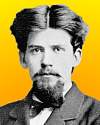
Born 2 Oct 1854; died 17 Apr 1932 at age 77.
Scottish biologist and sociologist who was one of the modern pioneers of the concept of town and regional planning. He studied under Darwin's champion, Thomas Henry Huxley. As a professor of botany, Geddes emphasized the development of sexual reproduction as a major step in organic evolution and, with the naturalist John Arthur Thomson, published The Evolution of Sex (1889). Geddes turned his attention to sociology after an attack of blindness in Mexico hampered his biological experimentation. His researches in India, Palestine, Mexico, and Scotland led to his conviction that the development of human communities was primarily biological in nature, consisting of interactions among people, their environment, and their activities.
Scottish biologist and sociologist who was one of the modern pioneers of the concept of town and regional planning. He studied under Darwin's champion, Thomas Henry Huxley. As a professor of botany, Geddes emphasized the development of sexual reproduction as a major step in organic evolution and, with the naturalist John Arthur Thomson, published The Evolution of Sex (1889). Geddes turned his attention to sociology after an attack of blindness in Mexico hampered his biological experimentation. His researches in India, Palestine, Mexico, and Scotland led to his conviction that the development of human communities was primarily biological in nature, consisting of interactions among people, their environment, and their activities.
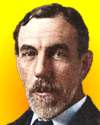
Born 2 Oct 1852; died 23 Jul 1916 at age 63. quotes
Scottish chemist who discovered who discovered neon, krypton and xenon and co-discovered argon, radon, calcium and barium. He was awarded the Nobel Prize in Chemistry in 1904, “in recognition of his services in the discovery of the inert gaseous elements in air, and his determination of their place in the periodic system.” The so-called “inert gases” are now known as “noble gases” because some examples of reactions have been discovered. more
Scottish chemist who discovered who discovered neon, krypton and xenon and co-discovered argon, radon, calcium and barium. He was awarded the Nobel Prize in Chemistry in 1904, “in recognition of his services in the discovery of the inert gaseous elements in air, and his determination of their place in the periodic system.” The so-called “inert gases” are now known as “noble gases” because some examples of reactions have been discovered. more
A Life of Sir William Ramsay, by Morris W. Travers. - book suggestion.
(EB)
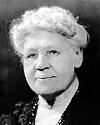
Born 2 Oct 1846; died 16 Oct 1928 at age 82.
American physician whose wide-ranging medical career included an educational focus on physical fitness and health maintenance. Upon receiving her M.D. degree (1875), she began private practice in Poughkeepsie, N.Y. In 1877 she was made resident physician at the Massachusetts State Reformatory Prison for Women at Sherborn, Mass. Subsequently, she became superintendent of the institution, though an injury to her knee forced her to return to private practice and university positions. In private research she investigated medical aspects of posture. She designed the seats in several types of rapid-transit streetcars, and invented an orthopedically sound kindergarten chair and was a founder of the American Posture League.
American physician whose wide-ranging medical career included an educational focus on physical fitness and health maintenance. Upon receiving her M.D. degree (1875), she began private practice in Poughkeepsie, N.Y. In 1877 she was made resident physician at the Massachusetts State Reformatory Prison for Women at Sherborn, Mass. Subsequently, she became superintendent of the institution, though an injury to her knee forced her to return to private practice and university positions. In private research she investigated medical aspects of posture. She designed the seats in several types of rapid-transit streetcars, and invented an orthopedically sound kindergarten chair and was a founder of the American Posture League.
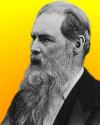
Born 2 Oct 1832; died 2 Jan 1917 at age 84. quotes
English anthropologist regarded as the founder of cultural anthropology. After travelling in the U.S. (1855-56) he proceeded to Cuba (1856), where he met Henry Christy the ethnologist. Together they visited Mexico, where Christy's influence greatly stimulated Tylor's interest in anthropology. Seeing the rich prehistoric remains in Mexico led Tylor to make a systematic study of the science. In his most important work, Primitive Culture (1871), being influenced by Darwin's theory of biological evolution, he developed the theory of an evolutionary, progressive relationship between primitive and modern cultures. By 1883, he was Keeper of the University Museum at Oxford and Professor of Anthropology there 1896-1909. He was knighted in 1912.
English anthropologist regarded as the founder of cultural anthropology. After travelling in the U.S. (1855-56) he proceeded to Cuba (1856), where he met Henry Christy the ethnologist. Together they visited Mexico, where Christy's influence greatly stimulated Tylor's interest in anthropology. Seeing the rich prehistoric remains in Mexico led Tylor to make a systematic study of the science. In his most important work, Primitive Culture (1871), being influenced by Darwin's theory of biological evolution, he developed the theory of an evolutionary, progressive relationship between primitive and modern cultures. By 1883, he was Keeper of the University Museum at Oxford and Professor of Anthropology there 1896-1909. He was knighted in 1912.
Primitive culture: Researches ..., by Edward Burnett Tylor. - book suggestion.
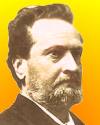
Born 2 Oct 1832; died 29 May 1897 at age 64. quotes
(Ferdinand Gustav) Julius von Sachs was a German botanist studying plant physiology, nutrition, and tropism (response to environmental stimuli). He discovered transpiration: that the absorbed water moves in tubes in the plant walls without the cooperation of living cells. In 1865, Sachs discovered chlorophyll, the green substance of plants; that it is located in special bodies within plant cells (later called chloroplasts); that glucose is made by the action of chlorophyll; and that the glucose is usually stored as starch. Sachs studied the formation of growth rings in trees, the role of tissue tension in promoting organ growth. He invented the clinostat to measure the effects of such external factors as light and gravity on the movement of growing plants. His work was a significant contribution to the knowledge of plant physiology during the second half of the 19th century.
(Ferdinand Gustav) Julius von Sachs was a German botanist studying plant physiology, nutrition, and tropism (response to environmental stimuli). He discovered transpiration: that the absorbed water moves in tubes in the plant walls without the cooperation of living cells. In 1865, Sachs discovered chlorophyll, the green substance of plants; that it is located in special bodies within plant cells (later called chloroplasts); that glucose is made by the action of chlorophyll; and that the glucose is usually stored as starch. Sachs studied the formation of growth rings in trees, the role of tissue tension in promoting organ growth. He invented the clinostat to measure the effects of such external factors as light and gravity on the movement of growing plants. His work was a significant contribution to the knowledge of plant physiology during the second half of the 19th century.
Born 2 Oct 1791; died 21 Jun 1820 at age 28.
French physicist.
French physicist.
Born 2 Oct 1746; died 7 Oct 1813 at age 67.
Swedish mineralogist.
Swedish mineralogist.

Died 2 Oct 2006 at age 87 (born 1 Jun 1919). quotes
George Adelbert "Bart" Bartholomew was an American biologist who helped establish the modern fields of comparative animal physiological ecology and behavioral physiology, and gained international renown. He strongly advocated that studies of organisms should be made both with field investigations as well as in the laboratory. Bartholomew was a pioneer in the study of desert organisms.
George Adelbert "Bart" Bartholomew was an American biologist who helped establish the modern fields of comparative animal physiological ecology and behavioral physiology, and gained international renown. He strongly advocated that studies of organisms should be made both with field investigations as well as in the laboratory. Bartholomew was a pioneer in the study of desert organisms.
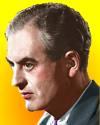
Died 2 Oct 1987 at age 72 (born 28 Feb 1915). quotes
Sir Peter Brian Medawar was an English immunologist and author who shared, with Sir Frank Burnet, the 1960 Nobel Prize in Physiology or Medicine for their discovery of acquired immunological tolerance, which enabled organ and tissue transplantation. Medawar inoculated the embryos of mice, before they had developed the ability to form antibodies, with tissue cells from another strain. Subsequently, the “foreign” proteins were accepted, even when later the capability to form antibodies existed. Skin grafts from the second strain were then accepted by the inoculated mice.
Sir Peter Brian Medawar was an English immunologist and author who shared, with Sir Frank Burnet, the 1960 Nobel Prize in Physiology or Medicine for their discovery of acquired immunological tolerance, which enabled organ and tissue transplantation. Medawar inoculated the embryos of mice, before they had developed the ability to form antibodies, with tissue cells from another strain. Subsequently, the “foreign” proteins were accepted, even when later the capability to form antibodies existed. Skin grafts from the second strain were then accepted by the inoculated mice.
Advice to a Young Scientist, by Sir Peter Brian Medawar. - book suggestion.
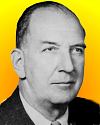
Died 2 Oct 1966 at age 64 (born 25 Dec 1901).
American animal pathologist and virologist who was first to isolate an influenza virus, first to vaccinate animals against influenza, and first to identify (1928) the causative agent as a virus in the 1918-19 Spanish influenza pandemic. The laboratory and field studies he made of viruses in animals provided knowledge in protecting both animals and humans against viruses. He researched cancerous tumors in animals. In studying the role of mosquitoes as carriers of sleeping sickness disease, he caught the potentially fatal disease himself from them. Fortunately, he recovered completely (one of the few who did so without permanent brain damage). His co-worker, Dr. Delphine Clark, recovered "live virus" from his blood, the first to be taken from a live human.«
American animal pathologist and virologist who was first to isolate an influenza virus, first to vaccinate animals against influenza, and first to identify (1928) the causative agent as a virus in the 1918-19 Spanish influenza pandemic. The laboratory and field studies he made of viruses in animals provided knowledge in protecting both animals and humans against viruses. He researched cancerous tumors in animals. In studying the role of mosquitoes as carriers of sleeping sickness disease, he caught the potentially fatal disease himself from them. Fortunately, he recovered completely (one of the few who did so without permanent brain damage). His co-worker, Dr. Delphine Clark, recovered "live virus" from his blood, the first to be taken from a live human.«
Died 2 Oct 1965 at age 79 (born 16 Feb 1886).
American chemist.
American chemist.
Died 2 Oct 1958 at age 77 (born 15 Oct 1880).
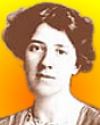
Scottish scientist, educator and birth control advocate. She was awarded a doctorate at Munich, Germany, for her work on fossilised plants (1902). As a young girl she said she would spend the first 20 years of her life in science, the second 20 in social projects, and the final 20 years writing poetry - and she did just that. She made her name through her writing and campaigning on family planning services. Her work resulted in the UK's first family planning clinic in Holloway, north London, without publicity on 17 Mar 1921, offering a free service to married women. Its aim was two-fold, first to reach the poor and give them access to birth control, secondly to gather scientific data about contraception.
Scottish scientist, educator and birth control advocate. She was awarded a doctorate at Munich, Germany, for her work on fossilised plants (1902). As a young girl she said she would spend the first 20 years of her life in science, the second 20 in social projects, and the final 20 years writing poetry - and she did just that. She made her name through her writing and campaigning on family planning services. Her work resulted in the UK's first family planning clinic in Holloway, north London, without publicity on 17 Mar 1921, offering a free service to married women. Its aim was two-fold, first to reach the poor and give them access to birth control, secondly to gather scientific data about contraception.
Married Love, by Marie Stopes. - book suggestion.
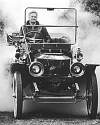
American inventor who, with his twin brother Francis, were the most famous manufacturers of steam-driven automobiles. Francis previously had invented a photographic dry-plate process (1883), and as the Stanley Dry Plate Company the brothers had engaged in the manufacturing of the plates. They sold the company to Eastman Kodak in 1905, as their interest had turned to steam-powered automobiles. They began working on steam powered cars in 1897, and built thousands of them them until the 1920's as the Stanley Motor Company. At racing events, they often competed successfully against gasoline powered cars (1902-09). They set a world record in 1906 for fastest mile in 28.2 seconds (127 mph or 205 kph).[Image right: 1910 Stanley Model 71]
The Stanley Steamer: America's Legendary Steam Car, by Kit Foster. - book suggestion.
Died 2 Oct 1933 at age 81 (born 7 Aug 1852).
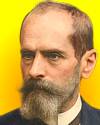
Austrian hydraulic engineer who made significant contributions in groundwater hydrology. In his early career, he studied problems of soil mechanics. Later, he turned to applying mathematical physics for hydraulic problems and groundwater movement. In particular, knowing Laplace’s equation well explained heat flow and fluid flow, Forchheimer was able to extend that preexisting mathematical theory to calculations of groundwater flow. He was also the first to both mathematically and experimentally examine the features of dambreak waves in a rectangular channel (with his PhD student Armin Schoklitsch). He made proposals for construction of a tunnel under the English Channel.«
Austrian hydraulic engineer who made significant contributions in groundwater hydrology. In his early career, he studied problems of soil mechanics. Later, he turned to applying mathematical physics for hydraulic problems and groundwater movement. In particular, knowing Laplace’s equation well explained heat flow and fluid flow, Forchheimer was able to extend that preexisting mathematical theory to calculations of groundwater flow. He was also the first to both mathematically and experimentally examine the features of dambreak waves in a rectangular channel (with his PhD student Armin Schoklitsch). He made proposals for construction of a tunnel under the English Channel.«
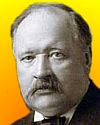
Died 2 Oct 1927 at age 68 (born 19 Feb 1859). quotes
Svante (August) Arrhenius was a Swedish physical chemist who was awarded the 1903 Nobel Prize in Chemistry "in recognition of the extraordinary services he has rendered to the advancement of chemistry by his electrolytic theory of dissociation." Electrolytes are chemical compounds which will conduct an electric current when fused or dissolved in certain solvents, usually water. He discovered that even when there is no current flowing through the solution, such compounds separate into particles carrying an electrical charge, called ions. He also investigated the viscosity of solutions and how reaction speed changes with temperature. After 1900, his interests diversified into cosmic physics, meterology and the theory of immunity.«
Svante (August) Arrhenius was a Swedish physical chemist who was awarded the 1903 Nobel Prize in Chemistry "in recognition of the extraordinary services he has rendered to the advancement of chemistry by his electrolytic theory of dissociation." Electrolytes are chemical compounds which will conduct an electric current when fused or dissolved in certain solvents, usually water. He discovered that even when there is no current flowing through the solution, such compounds separate into particles carrying an electrical charge, called ions. He also investigated the viscosity of solutions and how reaction speed changes with temperature. After 1900, his interests diversified into cosmic physics, meterology and the theory of immunity.«
Arrhenius: From Ionic Theory to the Greenhouse Effect, by Elisabeth Crawford. - book suggestion.
Died 2 Oct 1895 at age 61 (born 9 Oct 1833).
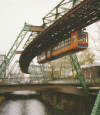
German engineer who pioneered in building internal-combustion engines. In 1866 Eugen Langen, who owned a a sugar refining company, financed Nikolaus August Otto (1832-91), developed a more efficient gas engine. The Otto & Langen company produced stationary gas engines (usually powered by coal gas). Otto went on to build, in 1876, the prototype of the so-called Otto-cycle engines used in most modern automobiles, fueled primarily with gasoline, alcohol or benzene. Langen also devised the Wuppertaler suspension railway which opened in 1901. His Schwebebahn (swinging railway) has operated successfully along the Wupper river for almost 100 years. It has survived two world wars and continues to operate profitably and safely today.
German engineer who pioneered in building internal-combustion engines. In 1866 Eugen Langen, who owned a a sugar refining company, financed Nikolaus August Otto (1832-91), developed a more efficient gas engine. The Otto & Langen company produced stationary gas engines (usually powered by coal gas). Otto went on to build, in 1876, the prototype of the so-called Otto-cycle engines used in most modern automobiles, fueled primarily with gasoline, alcohol or benzene. Langen also devised the Wuppertaler suspension railway which opened in 1901. His Schwebebahn (swinging railway) has operated successfully along the Wupper river for almost 100 years. It has survived two world wars and continues to operate profitably and safely today.
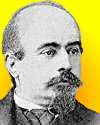
Died 2 Oct 1876 at age 54 (born 22 Jun 1822). quotes
Alfonso Giacomo Gaspare Corti was an Italian anatomist and histologist whose work on the human ear is commemorated in the name of the organ of Corti, the site of the sense of hearing in the inner ear. Pursuing his interest in the fine structure of organs, he introduced carmine staining for microscopic inspection. With this technique he described individual components of the membranous cochlea. In his studies, he sought connections between structure and function. He investigated the retina, and isolated the connection of the nerve cells with the fibers of the optic nerve. He observed the cilary epithelium in the digestive organs of larval frogs and toads. He demonstrated that cells of elephant tissues are the same relative size as corresponding tissues in other mammals.«
Alfonso Giacomo Gaspare Corti was an Italian anatomist and histologist whose work on the human ear is commemorated in the name of the organ of Corti, the site of the sense of hearing in the inner ear. Pursuing his interest in the fine structure of organs, he introduced carmine staining for microscopic inspection. With this technique he described individual components of the membranous cochlea. In his studies, he sought connections between structure and function. He investigated the retina, and isolated the connection of the nerve cells with the fibers of the optic nerve. He observed the cilary epithelium in the digestive organs of larval frogs and toads. He demonstrated that cells of elephant tissues are the same relative size as corresponding tissues in other mammals.«
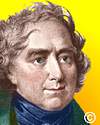
Died 2 Oct 1853 at age 67 (born 26 Feb 1786). quotes
Dominique François Jean Arago was a French physicist and astronomer who discovered the chromosphere of the sun (the lower atmosphere, primarily composed of hydrogen gas), and made accurate estimates of the diameters of the planets. Arago found that a rotating copper disk deflects a magnetic needle held above it showing the production of magnetism by rotation of a nonmagnetic conductor. He devised an experiment that proved the wave theory of light, showed that light waves move more slowly through a dense medium than through air and contributed to the discovery of the laws of light polarization. Arago entered politics in 1848 as Minister of War and Marine and was responsible for abolishing slavery in the French colonies.
Dominique François Jean Arago was a French physicist and astronomer who discovered the chromosphere of the sun (the lower atmosphere, primarily composed of hydrogen gas), and made accurate estimates of the diameters of the planets. Arago found that a rotating copper disk deflects a magnetic needle held above it showing the production of magnetism by rotation of a nonmagnetic conductor. He devised an experiment that proved the wave theory of light, showed that light waves move more slowly through a dense medium than through air and contributed to the discovery of the laws of light polarization. Arago entered politics in 1848 as Minister of War and Marine and was responsible for abolishing slavery in the French colonies.
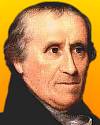
Age 79
Died 2 Oct 1846 at age 92 (born 4 Mar 1754). quotes
American physician who pioneered smallpox vaccination and fostered an aggressive campaign to inoculate Americans against smallpox. He studied the researches of English physician Edward Jenner and followed with his own experiments. On 8 Jul 1800, Waterhouse introduced Edward Jenner's method of vaccination into America by inoculating his five-year-old son, Daniel Oliver, and a household servant with vaccine obtained from England. Vaccinations of three more Waterhouse children and another servant soon followed. Whereas Dr. Zabdiel Boylston and others had previously used inoculation in the U.S., Waterhouse was the American physician who established it as a general practice.«
American physician who pioneered smallpox vaccination and fostered an aggressive campaign to inoculate Americans against smallpox. He studied the researches of English physician Edward Jenner and followed with his own experiments. On 8 Jul 1800, Waterhouse introduced Edward Jenner's method of vaccination into America by inoculating his five-year-old son, Daniel Oliver, and a household servant with vaccine obtained from England. Vaccinations of three more Waterhouse children and another servant soon followed. Whereas Dr. Zabdiel Boylston and others had previously used inoculation in the U.S., Waterhouse was the American physician who established it as a general practice.«
The Life and Scientific and Medical Career of Benjamin Waterhouse, by I. Bernard Cohen. - book suggestion.
Died 2 Oct 1812 at age 37 (born 15 Dec 1774).
(née Wilkinson) American inventor who held the first patent issued in the United States to a woman. The patent was for a new way of spinning cotton thread. This invention resulted from her working partnership with her husband, Samuel Slater, who founded the American cotton textile industry. By using spinning wheels to twist fine Surinam cotton yarn, she created a No. 20 two-ply thread that was an improvement on the linen thread previously in use for sewing cloth.
(née Wilkinson) American inventor who held the first patent issued in the United States to a woman. The patent was for a new way of spinning cotton thread. This invention resulted from her working partnership with her husband, Samuel Slater, who founded the American cotton textile industry. By using spinning wheels to twist fine Surinam cotton yarn, she created a No. 20 two-ply thread that was an improvement on the linen thread previously in use for sewing cloth.
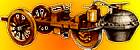
French military engineer who invented the world's first fuel-propelled vehicle, a huge, heavy, steam-powered tricycle. In 1769 he developed the first vehicle driven by a steam engine--a gun tractor commissioned by the French government. The following year he produced the first mechanically driven "horseless carriage"; his steam tricycle, driven by a steam engine, carried four passengers and was the forerunner of the modern motor car. It was the difficulty of carrying enough water to generate the steam and the cumbersome nature of a steam engine that gave Otto's internal-combustion engine the edge over steam for this purpose a century later.[Image right: Cugnot's vehicle showing the steam boiler at the front.]
In 1956, the Atomicron, the first atomic clock in the U.S., was unveiled at the Overseas Press Club in New York City. The basis of the timing was the constant frequency of the oscillations of the caesium atom - 9,192,631,830 MHz. It was priced at $50,000. The Atomicron measured 84" high, 22" wide and 18" deep.«*
In 1937, films of moving X-ray images on a fluorescopic screen showing the movement of organs of the human body were shown at the American Roentgen Ray Society convention. in New York City. The images were filmed with a home 16-mm movie camera at 16 frames per second (reduced to 12 or 8 fps for thicker bodies). Two seconds exposure could capture two or three beats of the heart, the act of breathing, movements of the diaphragm or motion of joints. Film clip loops could be projected to show repeating motion. The films were made by Drs William H. Stewart, William J. Hoffman and Francis H. Ghiselin from Manhattan's Lenox Hill Hospital. They reported their technique at the previous year's convention.«
more
In 1903, the first U.S. steam-turbine of large capacity for commercial service was placed in service at the Fiske Street station of the Commonwealth Edison Co., Chicago, Illinois. It was built by General Electric Co in Schenectady, N.Y., and had been factory-tested on 4 Mar 1903. Compared to the reciprocating engine it replaced, the turbine needed only one-third of its floor space, had only one-eight of its weight, and cost only one-third as much. The turbine developed 6,500 h.p. operating with steam at a pressure of 175 lbs/sq.in. and a temperature of 375 deg. F.«*

In 1866, the first U.S. patent for a tin can with a key opener was issued to J. Osterhoudt of New York City (No. 58,554). Under the title of “Method of Opening Tin Cans,” the patent described the existing customary tin can having a sheet-metal closure soldered over the large filling hole. The improvement was to shape a tab projecting, unsoldered, from the perimeter of the closure. This provides a grip for using nippers or pliers to roll or turn the closure back until it separates. The illustration showed a disk-shaped closure with a projecting tab. By designing the tab with a hole, various other instruments can be used if they are able to “take even a slight hold of the tag and admit of rolling the corner around it.”«
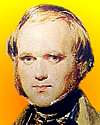
In 1836, Charles Darwin returned from his voyage on the HMS Beagle to the Pacific. It would be 23 years before he published Origin of Species.
From So Simple a Beginning: Darwin's Four Great Books, by Charles Darwin, Edward O. Wilson. - book suggestion.
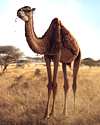
In 1721, the first printed record of the importation of an African camel into America was an advertisement in the Boston Gazette, announcing that a camel was being exhibited in Boston, Mass., and that it stood 7 feet high and 12 feet long. (No earlier printed record is currently known to exist. Any record of a camel imported into America on an earlier date, is believed to be now lost.) The first commercial importation of a number of camels into the U.S. was made in 1856 to be used for military purposes, following an appropriation of $30,000 made by Congress on 3 Mar 1855 (10 Stat. L. 639).«
The United States Camel Corps: The History of the U.S. Army’s Use of Camels in the Southwest during the 19th Century, by Charles River Editors. - book suggestion.
In 1608, Johannes Lippershey (c.1570-c.1619) demonstrated a new invention, the first optical (refracting) telescope - prototype of the modern telescopes - to the Netherlands States General. Lippershey was a lens grinder who furnished spectables. An apprentice discovered that - by separating both a long-focus lens and a short-focus lens in front of the eye - distant objects appeared closer. Lippershey mounted lenses in tubes, applied for a patent in 1608, and also offered them for sale to the Dutch government, which appreciated their military value. When Galileo heard of the device, he made a similar arrangement and used it to study the heavens. It was named a "telescope" by a guest at an outdoor banquet 14 Apr 1611 honouring Galileo, where he demonstrated it to the assembly.«




