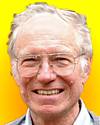
Born 10 Oct 1935; died 31 Jul 2023 at age 87.
William Jason Morgan was an American geophysicist who significantly advanced plate tectonics theory, proposing Earth’s surface is made of moving rigid plates atop the molten magma of the underlying asthenosphere. At Georgia Tech and in Navy service, he had learned navigation skills and spherical trigonometry. These gave him insight to think in terms of the “plates” as fragmented three-dimensional sections on a spherical Earth. His groundbreaking papers in the late 1960s described how Earth’s dynamic processes produced plate interactions at their boundaries, that caused earthquakes, volcanic activity, and mountain formation. By linking seafloor spreading with continental drift, Morgan reshaped modern geology and geophysics.«
William Jason Morgan was an American geophysicist who significantly advanced plate tectonics theory, proposing Earth’s surface is made of moving rigid plates atop the molten magma of the underlying asthenosphere. At Georgia Tech and in Navy service, he had learned navigation skills and spherical trigonometry. These gave him insight to think in terms of the “plates” as fragmented three-dimensional sections on a spherical Earth. His groundbreaking papers in the late 1960s described how Earth’s dynamic processes produced plate interactions at their boundaries, that caused earthquakes, volcanic activity, and mountain formation. By linking seafloor spreading with continental drift, Morgan reshaped modern geology and geophysics.«
A Memoir on Jason Morgan's Plate Tectonics and Continental Drifts, by Amanda L. McLennan. - book suggestion.
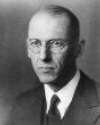
( AIP)
Born 10 Oct 1896; died 10 Mar 1971 at age 74. quotes
Lester Halbert Germer was an American physicist who, with his colleague Clinton Joseph Davisson, conducted an experiment (1927) that first demonstrated the wave properties of the electron. They showed that a beam of electrons scattered by a crystal produces a diffraction pattern characteristic of a wave. This experiment confirmed the hypothesis of Louis-Victor de Broglie, a founder of wave mechanics, that the electron should show the properties of an electromagnetic wave as well as a particle. He also studied thermionics, erosion of metals, and contact physics.
Lester Halbert Germer was an American physicist who, with his colleague Clinton Joseph Davisson, conducted an experiment (1927) that first demonstrated the wave properties of the electron. They showed that a beam of electrons scattered by a crystal produces a diffraction pattern characteristic of a wave. This experiment confirmed the hypothesis of Louis-Victor de Broglie, a founder of wave mechanics, that the electron should show the properties of an electromagnetic wave as well as a particle. He also studied thermionics, erosion of metals, and contact physics.
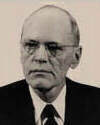
Born 10 Oct 1892; died 21 Sep 1961 at age 68.
American inventor of Band-aids. Finding his wife prone to kitchen accidents - cuts or burns - Dickson frequently was dressing her small wounds with cotton gauze and adhesive tape. After a number of these accidents, Earle devised a way she could easily apply her own dressings. He prepared ready-made bandages by placing squares of cotton gauze at intervals along an adhesive strip and covering them with crinoline. Now all his wife had to do was cut off a length of the strip and wrap it over her cut. His employment was as a cotton buyer at Johnson & Johnson, where his suggestion to make this a product became a reality leading to Band-aids.
American inventor of Band-aids. Finding his wife prone to kitchen accidents - cuts or burns - Dickson frequently was dressing her small wounds with cotton gauze and adhesive tape. After a number of these accidents, Earle devised a way she could easily apply her own dressings. He prepared ready-made bandages by placing squares of cotton gauze at intervals along an adhesive strip and covering them with crinoline. Now all his wife had to do was cut off a length of the strip and wrap it over her cut. His employment was as a cotton buyer at Johnson & Johnson, where his suggestion to make this a product became a reality leading to Band-aids.
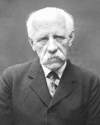
(EB)
Born 10 Oct 1861; died 13 May 1930 at age 68. quotes
Norwegian explorer, oceanographer, statesman, and humanitarian who led a number of expeditions to the Arctic (1888, 1893, 1895-96) and oceanographic expeditions in the North Atlantic (1900, 1910-14). Nansen wrote The Oceanography of the North Polar Basin (1902). For his relief work after WW I he was awarded the Nobel Prize for Peace (1922).
Norwegian explorer, oceanographer, statesman, and humanitarian who led a number of expeditions to the Arctic (1888, 1893, 1895-96) and oceanographic expeditions in the North Atlantic (1900, 1910-14). Nansen wrote The Oceanography of the North Polar Basin (1902). For his relief work after WW I he was awarded the Nobel Prize for Peace (1922).
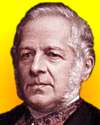
Born 10 Oct 1817; died 3 Feb 1890 at age 72. quotes
Christophorus Henricus Didericus Buys Ballot was a Dutch meteorologist who is remembered for his observation in 1857 that the wind blows at right angles to the atmospheric pressure gradient. He showed that northern hemisphere winds circulate counter-clockwise around low pressure areas and clockwise around high pressure areas. The reverse is true in the southern hemisphere. Although not the first to make this discovery, his name remains attached to it as Buys Ballot's law. He studied and taught at the University of Utrecht, and founded the Royal Netherlands Meteorological Institute in 1854. He was the inventor of the aeroklinoscope and of a system of weather signals.
Christophorus Henricus Didericus Buys Ballot was a Dutch meteorologist who is remembered for his observation in 1857 that the wind blows at right angles to the atmospheric pressure gradient. He showed that northern hemisphere winds circulate counter-clockwise around low pressure areas and clockwise around high pressure areas. The reverse is true in the southern hemisphere. Although not the first to make this discovery, his name remains attached to it as Buys Ballot's law. He studied and taught at the University of Utrecht, and founded the Royal Netherlands Meteorological Institute in 1854. He was the inventor of the aeroklinoscope and of a system of weather signals.
EB/BBC Hulton Library
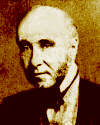
Born 10 Oct 1816; died 23 Jul 1904 at age 87.
English pathologist, whose sanitary reforms led to modern standards of public health. In 1850, Simon joined with the new Epidemiological Society, which in 1853 published a report which was submitted to Parliament, calling for compulsory smallpox vaccination of all infants. He also recognized that outside and home employment of mothers is a factor in infant mortality; in 1856 he stated that "infants perish under the neglect and mismanagement that their mothers' occupation implies." With the passing of the Public Health Act of 1848, local boards of health were set up, responsible for drainage, paving, cleansing and an ample supply of water. Simon described the improvements in English Sanitary Institutions, 1890. He was knighted in 1887.
English pathologist, whose sanitary reforms led to modern standards of public health. In 1850, Simon joined with the new Epidemiological Society, which in 1853 published a report which was submitted to Parliament, calling for compulsory smallpox vaccination of all infants. He also recognized that outside and home employment of mothers is a factor in infant mortality; in 1856 he stated that "infants perish under the neglect and mismanagement that their mothers' occupation implies." With the passing of the Public Health Act of 1848, local boards of health were set up, responsible for drainage, paving, cleansing and an ample supply of water. Simon described the improvements in English Sanitary Institutions, 1890. He was knighted in 1887.
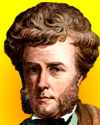
Born 10 Oct 1802; died 24 Dec 1856 at age 54. quotes
Scottish geologist, theologian and stonemason whose geological writings popularized the subject of geologic history. He was self-taught, with no college education, but gained his experience from much time spent in the field. Miller started taking an interest in the local Devonian rocks as a result of his work starting in his youth as a quarryman. He wrote of his studies of the Devonian fossil fish of Scotland in The Old Red Sandstone (1841). Miller’s death by suicide followed a prolonged time affected by bouts of “illness of the brain,” perhaps resulting from the stress while his final work, The Testimony of the Rocks. It was published posthumously, and in this book, he attempted to bring together both his religious beliefs and the truths revealed by his scientific investigations.«
Scottish geologist, theologian and stonemason whose geological writings popularized the subject of geologic history. He was self-taught, with no college education, but gained his experience from much time spent in the field. Miller started taking an interest in the local Devonian rocks as a result of his work starting in his youth as a quarryman. He wrote of his studies of the Devonian fossil fish of Scotland in The Old Red Sandstone (1841). Miller’s death by suicide followed a prolonged time affected by bouts of “illness of the brain,” perhaps resulting from the stress while his final work, The Testimony of the Rocks. It was published posthumously, and in this book, he attempted to bring together both his religious beliefs and the truths revealed by his scientific investigations.«
Hugh Miller: Stonemason, Geologist, Writer, by Michael Taylor. - book suggestion.
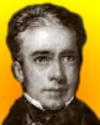
Born 10 Oct 1797; died 15 Apr 1840 at age 42.
Scottish civil engineer who invented the Drummond light (similar to limelight illumination in theatres). As a Royal Engineer he worked on the ordnance survey and attended chemistry lectures by Faraday at the Royal Institution. In the autumn of 1825, while mapping Ireland, Drummond applied limelight to enable surveying by night as well as day and designed an improved Heliostat. To produce a bright light, using an oxygenated alcohol flame, he heated a small ball of lime to incandescent in front of a reflector. From 1828, he attempted to adapt the Drummond light for use in lighthouses, but it was expensive to operate, and by 1831, he instead turned to politics, and by 1835 was Under Secretary of Ireland. His early death was caused by overwork.« more
Scottish civil engineer who invented the Drummond light (similar to limelight illumination in theatres). As a Royal Engineer he worked on the ordnance survey and attended chemistry lectures by Faraday at the Royal Institution. In the autumn of 1825, while mapping Ireland, Drummond applied limelight to enable surveying by night as well as day and designed an improved Heliostat. To produce a bright light, using an oxygenated alcohol flame, he heated a small ball of lime to incandescent in front of a reflector. From 1828, he attempted to adapt the Drummond light for use in lighthouses, but it was expensive to operate, and by 1831, he instead turned to politics, and by 1835 was Under Secretary of Ireland. His early death was caused by overwork.« more
Thomas Drummond: Under-secretary in Ireland, 1835-40; Life and Letters, by R. Barry O'Brien. - book suggestion.
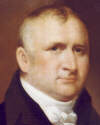
Born 10 Oct 1770; died 24 Aug 1842 at age 71.
American engineer who directed the construction of the Erie Canal. A one-time judge, he helped survey the Erie Canal route. When the Erie Canal was finally funded in 1817, Wright was selected as one of the three engineers to design and build it, then named chief engineer. Wright made the Erie Canal project a school of engineering. Until mid-century, almost every civil engineer in the U.S. had trained with, or been trained by someone who had worked under, Wright on the Erie Canal. Because he trained so many engineers on that project, Wright has been called the “father of American civil engineering.” He also engaged in the design and construction at the outset of the first railroads. He was the first Chief Engineer of the Erie Railroad.
American engineer who directed the construction of the Erie Canal. A one-time judge, he helped survey the Erie Canal route. When the Erie Canal was finally funded in 1817, Wright was selected as one of the three engineers to design and build it, then named chief engineer. Wright made the Erie Canal project a school of engineering. Until mid-century, almost every civil engineer in the U.S. had trained with, or been trained by someone who had worked under, Wright on the Erie Canal. Because he trained so many engineers on that project, Wright has been called the “father of American civil engineering.” He also engaged in the design and construction at the outset of the first railroads. He was the first Chief Engineer of the Erie Railroad.
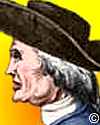
Born 10 Oct 1731; died 24 Feb 1810 at age 78. quotes
English chemist and physicist who conducted experiments with diverse interests in his private laboratory. Most notably, he determined the mass and density of the Earth. He investigated the properties of hydrogen and carbon dioxide, including comparing their density to that of air. Cavendish also showed that water was a compound and measured the specific heat of various substances. His manuscripts (published 1879) revealed discoveries he made in electrostatics before Coulomb, Ohm and Faraday - including deducing the inverse square law of electrostatic attraction and repulsion. He also found specific inductive capacity. His family name is attached to the Cavendish Laboratory (founded 1871, funded by a later family member) at Cambridge University.« more
English chemist and physicist who conducted experiments with diverse interests in his private laboratory. Most notably, he determined the mass and density of the Earth. He investigated the properties of hydrogen and carbon dioxide, including comparing their density to that of air. Cavendish also showed that water was a compound and measured the specific heat of various substances. His manuscripts (published 1879) revealed discoveries he made in electrostatics before Coulomb, Ohm and Faraday - including deducing the inverse square law of electrostatic attraction and repulsion. He also found specific inductive capacity. His family name is attached to the Cavendish Laboratory (founded 1871, funded by a later family member) at Cambridge University.« more
Cavendish: The Experimental Life, by Christa Jungnickel and Russell McCormmach. - book suggestion.

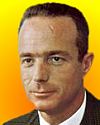
Died 10 Oct 2013 at age 88 (born 1 May 1925).
Malcolm Scott Carpenter was an American astronaut whose spaceflight was the second U.S. mission to orbit the Earth. His Mercury-Atlas 7 launched on 24 May 1962 from Cape Canaveral, circled the Earth three times, and splashed down 4-hr 56-min later. Of the original seven Mercury astronauts, he became the fourth to fly in space, and the sixth worldwide. During his orbits, because much was still unknown, he conducted experiments, some as basic as testing whether solid food could be eaten in space. It was his only space flight. After a motorcyle accident (1964) injured his left arm, he never flew in space again. Instead, he became one of the first humans to live under the ocean surface for an extended period of time (1965) as one of the aquanauts in the Navy's Sealab II, an experimental habitat off the California coast. Later in life, he wrote novels.«
Malcolm Scott Carpenter was an American astronaut whose spaceflight was the second U.S. mission to orbit the Earth. His Mercury-Atlas 7 launched on 24 May 1962 from Cape Canaveral, circled the Earth three times, and splashed down 4-hr 56-min later. Of the original seven Mercury astronauts, he became the fourth to fly in space, and the sixth worldwide. During his orbits, because much was still unknown, he conducted experiments, some as basic as testing whether solid food could be eaten in space. It was his only space flight. After a motorcyle accident (1964) injured his left arm, he never flew in space again. Instead, he became one of the first humans to live under the ocean surface for an extended period of time (1965) as one of the aquanauts in the Navy's Sealab II, an experimental habitat off the California coast. Later in life, he wrote novels.«
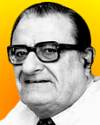
Died 10 Oct 1997 at age 79 (born 24 Sep 1918). quotes
Michael James Steuart Dewar was a Scottish organic chemist who was born in India to Scottish parents in the Civil Service there, and attended boarding school in England. His career included both industrial and academic positions in England and the United States. As a theoretician, he was an early master of molecular orbital theory and wrote The Electronic Theory of Organic Chemistry (1949), the first book applying molecular orbital theory to organic chemistry. He experimental work, he studied carbenium ions, boron chemistry, superconductors, liquid crystals. the biosynthesis of fatty acids, and phenyl radicals. He developed sophisticated semi-empirical for quantitative molecular orbital methods on large organic molecules, novel ions, conjugated systems and sigma-bonded arrays He devoted much effort to the study of chemical reactivity.«
Michael James Steuart Dewar was a Scottish organic chemist who was born in India to Scottish parents in the Civil Service there, and attended boarding school in England. His career included both industrial and academic positions in England and the United States. As a theoretician, he was an early master of molecular orbital theory and wrote The Electronic Theory of Organic Chemistry (1949), the first book applying molecular orbital theory to organic chemistry. He experimental work, he studied carbenium ions, boron chemistry, superconductors, liquid crystals. the biosynthesis of fatty acids, and phenyl radicals. He developed sophisticated semi-empirical for quantitative molecular orbital methods on large organic molecules, novel ions, conjugated systems and sigma-bonded arrays He devoted much effort to the study of chemical reactivity.«
Semiempirical Life (autobiography), by Michael J.S. Dewar. - book suggestion.
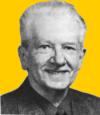
Died 10 Oct 1974 at age 81 (born 28 Dec 1892).
Alfred Irving Hallowell was an American anthropologist who was an authority on the Northern Ojibwa Indians. He used tests of perception, and particularly favoured the Rorschach ink blot test to assess individual Ojibwa personalities. Hallowell collected a series of 266 Rorschach records from various Ojibwa communities, and although he never prepared an over-all summary of the results in the form of a sketch of typical Ojibwa personality structures, he used the data in a number of papers. All of Hallowell's field work was undertaken among American Indians. He published many studies of the tribes and made important contributions to culture- and- personality theory. His book Culture and Experience appeared in 1955.«
Alfred Irving Hallowell was an American anthropologist who was an authority on the Northern Ojibwa Indians. He used tests of perception, and particularly favoured the Rorschach ink blot test to assess individual Ojibwa personalities. Hallowell collected a series of 266 Rorschach records from various Ojibwa communities, and although he never prepared an over-all summary of the results in the form of a sketch of typical Ojibwa personality structures, he used the data in a number of papers. All of Hallowell's field work was undertaken among American Indians. He published many studies of the tribes and made important contributions to culture- and- personality theory. His book Culture and Experience appeared in 1955.«
The Ojibwa of Berens River, Manitoba: Ethnography into History, by A. Irving Hallowell, et al. - book suggestion.
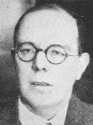
Died 10 Oct 1971 at age 88 (born 3 Mar 1883). quotes
British psychologist who was a leader in developing methods of statistical data analysis, particularly factor analysis, in psychological testing. He investigated the role of heredity in intelligence with twin studies and the role of nuture in juvenile deliquency. In 1913, he was appointed the school psychologist for the schools administered by the London County Council (LCC) This was the first appointment of this kind in the U.K. In 1926, he proposed a national testing program of intelligence tests on children at about age 11. Subsequently, the national "Eleven-Plus" exam was used to identify whether children were high scorers suitable for education at a grammar schools, or not. After Burt's death his later work on twins was questioned as flawed or fraud.«
British psychologist who was a leader in developing methods of statistical data analysis, particularly factor analysis, in psychological testing. He investigated the role of heredity in intelligence with twin studies and the role of nuture in juvenile deliquency. In 1913, he was appointed the school psychologist for the schools administered by the London County Council (LCC) This was the first appointment of this kind in the U.K. In 1926, he proposed a national testing program of intelligence tests on children at about age 11. Subsequently, the national "Eleven-Plus" exam was used to identify whether children were high scorers suitable for education at a grammar schools, or not. After Burt's death his later work on twins was questioned as flawed or fraud.«
Cyril Burt, Psychologist, by Leslie S. Hearnshaw. - book suggestion.

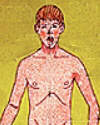
CDC Poster
George Frederick Dick was an American physician and pathologist known for his groundbreaking work on scarlet fever. Alongside his wife, Gladys Henry Dick, he isolated Streptococcus pyogenes, the bacterial cause of that disease. They co-developed the “Dick Test” (1925), a diagnostic skin test to measure host antibody response, which determined susceptibility to the scarlet fever. Subsequently, they created an antitoxin to combat it as a vaccination. This significantly reduced mortality and infection rates in the early 20th century. Beyond scarlet fever, Dick’s work spanned immunology and bacteriology, and he influenced the development of public health measures. His research advanced the understanding of infectious diseases and preventive medicine.«
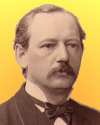
Died 10 Oct 1930 at age 86 (born 25 Mar 1844).
(Gustav Heinrich) Adolf Engler was a German botanist famous for his system of plant classification and for his expertise as a plant geographer. He emphasized the importance of geological history in the study of plant geography, and worked out an influential system of plant classification. He wrote several works on plant geography and taxonomy, and collaborated with Karl Prantl on the early volumes of Die natürlichen Pflanzenfamilien (32 vol. in 17, 1887–1909) and edited the early volumes of Das Pflanzenreich. The Engler and Prantl system of flowering plant classification was the principal one in use until the 1970s.
(Gustav Heinrich) Adolf Engler was a German botanist famous for his system of plant classification and for his expertise as a plant geographer. He emphasized the importance of geological history in the study of plant geography, and worked out an influential system of plant classification. He wrote several works on plant geography and taxonomy, and collaborated with Karl Prantl on the early volumes of Die natürlichen Pflanzenfamilien (32 vol. in 17, 1887–1909) and edited the early volumes of Das Pflanzenreich. The Engler and Prantl system of flowering plant classification was the principal one in use until the 1970s.
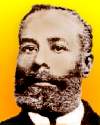
Died 10 Oct 1929 at age 86 (born 27 Mar 1843).
Black-American inventor holding many patents for the automatic lubrication of machinery. Born in Canada. While resident in Ypsilanti, Michigan, after two years of development, he received his first U.S. patent, No. 129,843 on 23 Jun 1872, for a lubricator for steam engines. By 1926 he held several dozen patents for devices that enabled a steady supply of oil to machinery, in drops flowing from a reservoir cup while the machine continued to run, thus eliminating the need to stop the machine to oil it. These were used by stationary steam engines in factories, railway locomotives, steam-powered inland waterway and ocean ships. His inventiveness yielded other patents, including an ironing table, scaffold support and rubber heel.«
Black-American inventor holding many patents for the automatic lubrication of machinery. Born in Canada. While resident in Ypsilanti, Michigan, after two years of development, he received his first U.S. patent, No. 129,843 on 23 Jun 1872, for a lubricator for steam engines. By 1926 he held several dozen patents for devices that enabled a steady supply of oil to machinery, in drops flowing from a reservoir cup while the machine continued to run, thus eliminating the need to stop the machine to oil it. These were used by stationary steam engines in factories, railway locomotives, steam-powered inland waterway and ocean ships. His inventiveness yielded other patents, including an ironing table, scaffold support and rubber heel.«
The Real McCoy, by Portia P. James. - book suggestion.
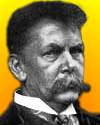
Died 10 Oct 1907 at age 54 (born 30 Jun 1853).
German archaeologist whose important publications include a volume on the bronzes found at Olympia, vast works on ancient gems and Greek vases, and the invaluable Masterpieces of Greek Sculpture in which he presented the pioneering method for prehistorical stylistic categorization of small artworks that he devised while excavating at the Olympia site in Greece (1878). His use of photography in research supplanted the use of drawings because a camera gives objective reproduction with more accuracy, which enabled fragments to be scrutinized, even when they were miles apart. Studying photographs, he reconstructed the statue of Athena, by demonstrating that a marble head in Bologna belonged to a marble body in Dresden.«
German archaeologist whose important publications include a volume on the bronzes found at Olympia, vast works on ancient gems and Greek vases, and the invaluable Masterpieces of Greek Sculpture in which he presented the pioneering method for prehistorical stylistic categorization of small artworks that he devised while excavating at the Olympia site in Greece (1878). His use of photography in research supplanted the use of drawings because a camera gives objective reproduction with more accuracy, which enabled fragments to be scrutinized, even when they were miles apart. Studying photographs, he reconstructed the statue of Athena, by demonstrating that a marble head in Bologna belonged to a marble body in Dresden.«
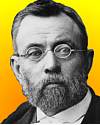
Died 10 Oct 1896 at age 71 (born 30 Jun 1825).
German-Australian botanist and explorer who migrated to Australia in 1848 for health reasons, and there became the country's greatest 19th-century scientist. Mueller gained an international reputation as a great botanical collector and writer. His contributions covered a wide field of sciences such as geography, pharmacy, horticulture, agriculture, forestry, paleontology, and zoology. His activity as a botanist is shown by hundreds of Australian plant names which are followed by 'F. Muell'. From 1853, he held the post as the first Government Botanist of Victoria until his death, 43 years later. He travelled widely throughout the colonies on botanical exploration, including as naturalist to the Gregory expedition to northern Australia (1855-57).«
German-Australian botanist and explorer who migrated to Australia in 1848 for health reasons, and there became the country's greatest 19th-century scientist. Mueller gained an international reputation as a great botanical collector and writer. His contributions covered a wide field of sciences such as geography, pharmacy, horticulture, agriculture, forestry, paleontology, and zoology. His activity as a botanist is shown by hundreds of Australian plant names which are followed by 'F. Muell'. From 1853, he held the post as the first Government Botanist of Victoria until his death, 43 years later. He travelled widely throughout the colonies on botanical exploration, including as naturalist to the Gregory expedition to northern Australia (1855-57).«
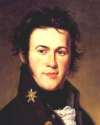
Died 10 Oct 1834 at age 47 (born 27 Jul 1787).
American naturalist who was self-taught, yet often considered to be the founder of descriptive entomology in the United States. His taxonomic work was quickly recognized by European zoologists. Say was a founding member of the Academy of Natural Sciences of Philadelphia. He was chief zoologist of Major Stephen Long's exploring expedition to the tributaries of the Missouri River in 1819 and in 1823 for the expedition to the headwaters of the Mississippi. During the 1819 expedition, Say first described the coyote, swift fox, western kingbird, band-tailed pigeon, Say's phoebe, rock wren, lesser goldfinch, lark sparrow, lazuli bunting, and orange-crowned warbler. His important work, American Entomology, remains a classic. He also wrote on paleontology and conchology.[Note: EB and DAB give birth date as 27 June 1787*.]
American naturalist who was self-taught, yet often considered to be the founder of descriptive entomology in the United States. His taxonomic work was quickly recognized by European zoologists. Say was a founding member of the Academy of Natural Sciences of Philadelphia. He was chief zoologist of Major Stephen Long's exploring expedition to the tributaries of the Missouri River in 1819 and in 1823 for the expedition to the headwaters of the Mississippi. During the 1819 expedition, Say first described the coyote, swift fox, western kingbird, band-tailed pigeon, Say's phoebe, rock wren, lesser goldfinch, lark sparrow, lazuli bunting, and orange-crowned warbler. His important work, American Entomology, remains a classic. He also wrote on paleontology and conchology.[Note: EB and DAB give birth date as 27 June 1787*.]
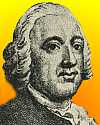
Died 10 Oct 1789 at age 81 (born 22 Jul 1708).
Dutch naturalist and engraver who skillfully dissected insects and made detailed illustrations of their anatomy. He also had a career as an official codebreaker. In 1738 he entered the service of the States General as an administrator of secret expenses and as a code-clerk. In his leisure he turned to natural history. He believed that nature was a cipher that could be interpreted by tracing every detail of its perfect design. He designed a simple microscope which had each lens suspended at the end of a series of ball and socket joints over a small mahogony dissecting table mounted on a post above a wooden base with small drawers containing his instruments. After preparing engravings for several books written by others, he produced his own treatises.«[Other sources list his birth year as 1706 and others as 1707.]
Dutch naturalist and engraver who skillfully dissected insects and made detailed illustrations of their anatomy. He also had a career as an official codebreaker. In 1738 he entered the service of the States General as an administrator of secret expenses and as a code-clerk. In his leisure he turned to natural history. He believed that nature was a cipher that could be interpreted by tracing every detail of its perfect design. He designed a simple microscope which had each lens suspended at the end of a series of ball and socket joints over a small mahogony dissecting table mounted on a post above a wooden base with small drawers containing his instruments. After preparing engravings for several books written by others, he produced his own treatises.«[Other sources list his birth year as 1706 and others as 1707.]
Thm.jpg "David Gregory")
Created by A.I. based on memorial bust
Died 10 Oct 1708 at age 49 (born 3 Jun 1659).
Scottish mathematician and astronomer. In 1702 he published a book Astronomiae physicae et geometricae elementa, an effort in the popularization of Newtonian science. However, in the matter of chromatic aberration, Gregory noted something that Newton had missed. Different kinds of glass spread the colours of the spectrum by different amounts. He suggested a suitable combination of two different kinds of glass might eliminate chromatic aberration. (A half century later, Dollond accomplished this result.) Telescopes were a special interest of his, and Gregory also experimented with making an achromatic telescope. Gregory and did important work on series.
Scottish mathematician and astronomer. In 1702 he published a book Astronomiae physicae et geometricae elementa, an effort in the popularization of Newtonian science. However, in the matter of chromatic aberration, Gregory noted something that Newton had missed. Different kinds of glass spread the colours of the spectrum by different amounts. He suggested a suitable combination of two different kinds of glass might eliminate chromatic aberration. (A half century later, Dollond accomplished this result.) Telescopes were a special interest of his, and Gregory also experimented with making an achromatic telescope. Gregory and did important work on series.
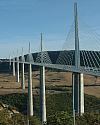
In 2001, construction on the Viaduc de Millau (Millau Viaduct) began to bridge the River Tarn in Southern France. Finished in 38 months, it was opened 14 Dec 2004. The Millau Viaduct, designed by Sir Norman Foster, is the longest cable-stayed bridge in the world. Taller than the Eiffel Tower, the tallest pylon is 340m high, making it the world's highest road bridge. It carries the A75 motorway from Clermont-Ferraud south to Beziers, crosses 2.5-km and rises 270m above the valley. It was to replace the motor route through the town of Millau with continual traffic jams, shorten the journey by 100 km and save 4 hours of driving time. It was built using a steel deck, rather than concrete roadbed.«
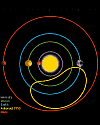
In 1986, a tiny asteroid, Asteroid 3753, was found orbitting the Earth - a body in addition to the Moon - by J. D. Waldron at Siding Spring Observatory. It was called Cruithne, (pronounced Croo-een-ya) after Celtic tribes who came to Britain between about 880 and 500 BC. It is pulled alternately by the Sun and Earth. When viewed from the Earth, its 770-year orbit appears to be horseshoe shaped, but this is an effect of viewing an orbit from a rotating planet. At its closest approach it only gets to within about 15 million km (9 million miles) of our planet. Its diameter ranges between 2.9 - 6.4 km diameter wide. Cruithne will remain in a suspended state around Earth for at least 5,000 years.
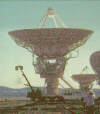
In 1980, the Very Large Array (VLA) radio telescope network in New Mexico was dedicated. Planned in the 1960s, built in the 1970s, the VLA is versatile and sensitive,. The VLA is an “aperture synthesis” interferometric instrument, which gains the resolving power of a very large antenna by utilizing 27 smaller antennas. Each is a fully-steerable 82-ft diam. parabolic dish, weighing about 230 tons. They are arranged in a “Y” pattern, with three arms, having nine antennas each. Data from all the antennas, combined mathematically, produces a resolving power equal to that of a single antenna as much as 36 km in diam. Its angular resolution is comparable to that of the best ground-based optical telescopes.
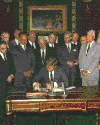
In 1963, the Limited Nuclear Test Ban Treaty (LTBT), signed by Britain, America and the Soviet Union, comes into operation. Its official title was the Treaty Banning Nuclear Weapon Tests in the Atmosphere, in Outer Space, and Under Water. On 15 July 1963, U.S., British, and Soviet negotiators had met in Moscow. Due to disagreements concerning on-site inspections, agreement on a comprehensive ban was not reached. So negotiators turned their attention to the limited ban, prohibiting tests in the atmosphere, outer space, and beneath the surface of the seas (but not yet those underground). On 4 August 1963 the LTBT was signed in Moscow by the U.S., Britain and the Soviet Union, and ratified by the US President 7 Oct 1963.
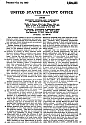
(USPTO)
In 1933, a U.S. patent was issued to Waldo L. Semon for a method of making plasticized PVC, now known simply as vinyl. The patent was titled “Synthetic Rubber-like Composition and Method of Making Same” (U.S. No. 1,929,453). As originally known, PVC— polyvinyl chloride—was a polymer that was hard and difficult to form into useful articles. Semon had invented a way to make it in a rubber-like form. In brief, it consisted of dissolving a polymerized vinyl halide, at an elevated temperature, in a substantially non-volatile organic solvent, and allowing the solution to cool, whereupon it sets to a stiff rubbery gel. The patent listed uses such as water-proof boots or shoes, insulating coatings and resilient flooring material.
more

In 1933, Dreft, the first laundry detergent with synthetic surface-active agents (surfactants) was marketed by Procter & Gamble for home use. Dreft performed better than soap in hard water, but only for lightly soiled clothes. Since the 1920s, P&G researchers had worked to create a special long-chain molecule—one end of which pulled grease and dirt out of clothes while the other clung to water, suspending dirt until agitation could wash it away. The discovery was sodium alkyl sulphate made from chlorosulphonic acid and a fatty alcohol. This cleaning technology was revolutionary. It led to further research for heavy-duty results, which produced the more effective Tide brand (1946).«
Proctor & Gamble: The House That IVORY Built, by Advertising Age. - book suggestion.
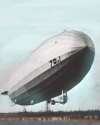
In 1923, the first American-built rigid dirigible was christened in Lakehurst, N.J. as Shenandoah (“daughter of the stars”). It was the first of the Zeppelin type (ZR-1) to use helium gas, of which a supply was was available in the U.S. The airship was was launched 20 Aug 1923, and tested in flight 3 Sep 1923. Covered with an aluminum-painted fabric, it was 680 feet long, weighed 36 tons, bear 55 tons, and carry enough fuel to cruise 5,000 miles at an average speed of 65 mph. It was commanded by Commander Zachery Lansdowne (1888-1925), an early Navy aviator, who died with 14 members of the crew when the airship was struck and destroyed in a violent thunderstorm on 3 Sep 1925 over Caldwell, Ohio, though 29 of the crew survived.
America's Forgotten Airship Disaster: The Crash of the USS Shenandoah, by Aaron J. Keirns. - book suggestion.
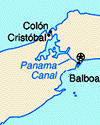
In 1913, the waters of the Atlantic and Pacific oceans commingled in the Panama Canal after U.S. engineers blew up the Gamboa Dam. By the summer of 1913, the locks and the Culebra Cut (culebra means snake) had been finished. The struggle to dig the Culebra Cut had lasted seven years. On 26 Sept. water was first turned into the locks. On 10 Oct., President Woodrow Wilson pressed a button in Washington that carried a signal by telegraph to Panama. When received a minute later, a dynamite charge was ignited that blew a hole in the Gamboa Dike and water began to fill the Culebra Cut. This act also marked the final stage in the creation of Lake Gatun, 85 ft above sea level, the largest man-made lake at that time.
Path Between The Seas: The Creation of the Panama Canal, by David McCullough. - book suggestion.
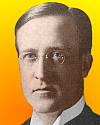
McGregor
In 1904, production of Ford cars began at Windsor, Canada at the Wagon Works of Gordon McGregor, age 31, who had signed an agreement with Henry Ford on 10 Aug 1904. Canada became the first country where Fords were built outside of the U.S. At first, automobiles were assembled from parts shipped from Detroit, with wheels and bodies built in Canada. By the end of the calendar year, 25 vehicles had been manufactured. The output of the plant in its first fiscal year was 117 vehicles. Over time, more parts were built in Canda. All components were being made in Canada after the opening of an engine plant in May 1913. McGregor had the drive and persistence to become a successful industrialist. When he died in 1922, at age 49, he left a growing business, with 51,341 automobiles made that year.«

In 1899, the black inventor Isaac R. Johnson was awarded a patent (U.S. No. 634,823) for a type of bicycle frame which could be separated or folded to store in the trunk of a car or other small places. In this way, such a bicycle can more easily taken on vacation.
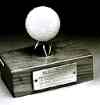
In 1865, the first U.S. patent for a billiard ball of a composition material resembling ivory was patented by John Wesley Hyatt (No. 50,359). He was the winner of a $10,000 prize offered by Phelan and Collender of New York City for the best substitute for an ivory ball. While still searching for substitute materials for making billiard balls, he invented celluloid, which he patented on 12 July 1870, (No. 105,338). He combined nitrocellulose, camphor, and alcohol, heated the mixture under pressure to make it pliable for molding, and allowed it to harden under normal atmospheric pressure. His discovery opened the way for the development of the modern plastics industry. (Hyatt also had inventions in water purification, sugarcane refining and textile manufacturing.)
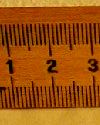
In 1796, according to an unfounded legend, the metric system was born. The Oct 10 (10/10) date seems to signify the base 10 way of using measurements. A real birth date might be 8 May 1790, when acting on a motion by a bishop, Charles Maurice de Talleyrand (1754-1838), the French National Assembly decided to create a simple, stable, decimal system of measurement units. The earliest metre unit chosen was the length of a pendulum with a half-period of a second.




