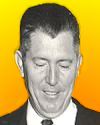
Born 12 May 1926; died 25 Mar 1995 at age 68.
James Samuel Coleman was an American sociologist who was a pioneer in mathematical sociology and whose studies strongly influenced education policy. In the early 1950s, he was as a chemical engineer with Eastman-Kodak Co. in Rochester, N.Y. He then changed direction, fascinated with sociology and social problems. In 1966, he presented a report to the U.S. Congress which concluded that poor black children did better academically in integrated, middle-class schools. His findings provided the sociological underpinnings for widespread busing of students to achieve racial balance in schools. In 1975, Coleman rescinded his support of busing, concluding that it had encouraged the deterioration of public schools by encouraging white flight to avoid integration.
James Samuel Coleman was an American sociologist who was a pioneer in mathematical sociology and whose studies strongly influenced education policy. In the early 1950s, he was as a chemical engineer with Eastman-Kodak Co. in Rochester, N.Y. He then changed direction, fascinated with sociology and social problems. In 1966, he presented a report to the U.S. Congress which concluded that poor black children did better academically in integrated, middle-class schools. His findings provided the sociological underpinnings for widespread busing of students to achieve racial balance in schools. In 1975, Coleman rescinded his support of busing, concluding that it had encouraged the deterioration of public schools by encouraging white flight to avoid integration.
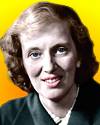
Born 12 May 1910; died 29 Jul 1994 at age 84. quotes
Dorothy Mary Crowfoot Hodgkin (née Crowfoot) was an English biochemist and X-ray crystallographer, born in Cairo, Egypt to English parents, who was awarded the Nobel Prize for Chemistry in 1964 for her discoveries, by the use of X-ray techniques, of the structure of biologically important molecules, including penicillin (1946), vitamin B-12 (1956), and later, the protein hormone insulin (1969). Her achievements included not only these structure determinations and the scientific insight they provided but also the development of methods that made such structure determinations possible. (One of her students was Margaret Roberts, later Margaret Thatcher, the only British prime minister with a degree in science.)
Dorothy Mary Crowfoot Hodgkin (née Crowfoot) was an English biochemist and X-ray crystallographer, born in Cairo, Egypt to English parents, who was awarded the Nobel Prize for Chemistry in 1964 for her discoveries, by the use of X-ray techniques, of the structure of biologically important molecules, including penicillin (1946), vitamin B-12 (1956), and later, the protein hormone insulin (1969). Her achievements included not only these structure determinations and the scientific insight they provided but also the development of methods that made such structure determinations possible. (One of her students was Margaret Roberts, later Margaret Thatcher, the only British prime minister with a degree in science.)
Dorothy Hodgkin: A Life, by Georgina Ferry. - book suggestion.
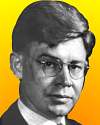
Born 12 May 1906; died 4 May 1974 at age 67.
William Maurice Ewing was an American geologist and geophysicist who made fundamental contributions to understanding of marine sediments and ocean basins. He worked in a range of subjects, making contributions to earthquake seismology, explosion seismology, marine acoustics, sedimentology, and tectonics. He adapted seismic exploration methods to use in the oceans; explicated a large segment of the earthquake seismogram, the coda; did studies of Earth's free oscillations; and described the ocean sound channel and the dispersion of sound in seawater. He also developed or greatly improved the bathythermograph, the piston corer, heat-flow probes, sonar, hydrophones, gravimeters and deep-sea cameras.
William Maurice Ewing was an American geologist and geophysicist who made fundamental contributions to understanding of marine sediments and ocean basins. He worked in a range of subjects, making contributions to earthquake seismology, explosion seismology, marine acoustics, sedimentology, and tectonics. He adapted seismic exploration methods to use in the oceans; explicated a large segment of the earthquake seismogram, the coda; did studies of Earth's free oscillations; and described the ocean sound channel and the dispersion of sound in seawater. He also developed or greatly improved the bathythermograph, the piston corer, heat-flow probes, sonar, hydrophones, gravimeters and deep-sea cameras.
The Floor of the Sea: Maurice Ewing and the Search to Understand the Earth, by William Wertenbaker. - book suggestion.
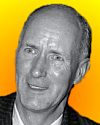
Born 12 May 1901; died 22 Jun 1983 at age 82.
(Baron of Bankside) English engineer who was a leading figure in the development of the nuclear energy industry in Britain; he supervised the construction of Calder Hall, the world's first large-scale nuclear power station (opened in 1956). He first worked for Imperial Chemical Industries (ICI) where at age 29 he was appointed chief engineer of the Alkali Groups. While at ICI he was selected to start building nuclear power plants. Britain's first four such plants were completed in six years. He played a founding role in fast breeder technology. The decision to build the Dounreay Fast Reactor was made in 1954, which ran successfully for over two decades, until its planned shutdown in 1977, thus demonstrating the safe operation of the concept.
(Baron of Bankside) English engineer who was a leading figure in the development of the nuclear energy industry in Britain; he supervised the construction of Calder Hall, the world's first large-scale nuclear power station (opened in 1956). He first worked for Imperial Chemical Industries (ICI) where at age 29 he was appointed chief engineer of the Alkali Groups. While at ICI he was selected to start building nuclear power plants. Britain's first four such plants were completed in six years. He played a founding role in fast breeder technology. The decision to build the Dounreay Fast Reactor was made in 1954, which ran successfully for over two decades, until its planned shutdown in 1977, thus demonstrating the safe operation of the concept.
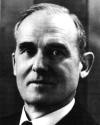
Born 12 May 1895; died 28 Mar 1982 at age 86.
Canadian-born American physical chemist and winner of the Nobel Prize for Chemistry in 1949 for his "achievements in the field of chemical thermodynamics and especially his work on the behavior of matter at very low temperatures and his closely allied studies of entropy." He is remembered particularly for his discovery of adiabatic demagnetization as a means to reach temperatures close to absolute zero as well as for his exhaustive and meticulous thermodynamic studies, over a lifetime of research, which utilized the third law of thermodynamics while also developing a large body of evidence for its validity.
Canadian-born American physical chemist and winner of the Nobel Prize for Chemistry in 1949 for his "achievements in the field of chemical thermodynamics and especially his work on the behavior of matter at very low temperatures and his closely allied studies of entropy." He is remembered particularly for his discovery of adiabatic demagnetization as a means to reach temperatures close to absolute zero as well as for his exhaustive and meticulous thermodynamic studies, over a lifetime of research, which utilized the third law of thermodynamics while also developing a large body of evidence for its validity.
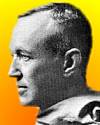
Born 12 May 1880; died 26 May 1951 at age 71.
American explorer, engineer and scientist (original name William Linn Ellsworth) who led the first trans-Arctic (1926) and trans-Antarctic (1935) air crossings.
American explorer, engineer and scientist (original name William Linn Ellsworth) who led the first trans-Arctic (1926) and trans-Antarctic (1935) air crossings.
Polar Extremes: The World of Lincoln Ellsworth, by Beekman H. Pool. - book suggestion.
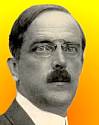
Born 12 May 1874; died 28 Feb 1929 at age 54. quotes
Austrian physician who originated a skin test for tuberculosis that bears his name, a classic diagnostic test in which tuberculin is applied to a superficial abrasion of the skin of the arm. In 1906 he noticed that patients who had received injections of horse serum or smallpox vaccine usually had quicker, more severe reactions to second injections. While studying the symptoms of cowpox vaccination, he also developed a new theory about the incubation time of infectious diseases and the formation of antibodies. In 1909 he published the results of a series of tuberculin tests of inhabitants of Vienna that showed that 70% of the children tested had been infected by tuberculosis by age 10, and over 90% at age 14. He also studied infant nutrition.
Austrian physician who originated a skin test for tuberculosis that bears his name, a classic diagnostic test in which tuberculin is applied to a superficial abrasion of the skin of the arm. In 1906 he noticed that patients who had received injections of horse serum or smallpox vaccine usually had quicker, more severe reactions to second injections. While studying the symptoms of cowpox vaccination, he also developed a new theory about the incubation time of infectious diseases and the formation of antibodies. In 1909 he published the results of a series of tuberculin tests of inhabitants of Vienna that showed that 70% of the children tested had been infected by tuberculosis by age 10, and over 90% at age 14. He also studied infant nutrition.
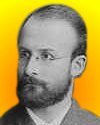
Born 12 May 1857; died 5 Jul 1942 at age 85.
German mathematician who moved to the U.S. in 1888. He published The elliptic s-functions considered as a special case of the hyperelliptic s-functions in 1900. From 1910, he worked on the calculus of variations. Bolza wrote a classic textbook on the subject, Lectures on the Calculus of Variations (1904). He returned to Germany in 1910, where he researched function theory, integral equations and the calculus of variations. In 1913, he published a paper presenting a new type of variational problem now called "the problem of Bolza." The next year, he wrote about variations for an integral problem involving inequalities, which later become important in control theory. Bolza ceased his mathematical research work at the outbreak of WW I in 1914.«
German mathematician who moved to the U.S. in 1888. He published The elliptic s-functions considered as a special case of the hyperelliptic s-functions in 1900. From 1910, he worked on the calculus of variations. Bolza wrote a classic textbook on the subject, Lectures on the Calculus of Variations (1904). He returned to Germany in 1910, where he researched function theory, integral equations and the calculus of variations. In 1913, he published a paper presenting a new type of variational problem now called "the problem of Bolza." The next year, he wrote about variations for an integral problem involving inequalities, which later become important in control theory. Bolza ceased his mathematical research work at the outbreak of WW I in 1914.«
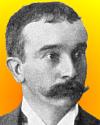
Born 12 May 1856; died 9 Sep 1901 at age 45.
German botanist whose Pflanzentogeographie (1898) was one of the first and finest mapping of the floral regions of the continents. He coined (1885) the term chloroplasts (the organelles in plant cells that conduct photosynthesis), and distinguished them from chromatophores (pigment-containing cells found in many marine animals). In 1880, he proved that starch is the source of stored energy for plants. His explorations included Florida, the West Indies, South America, and Indonesia. On the Valdivia expedition (1898) he studied the oceanic plankton of numerous oceanic islands and coastal Africa. His father, Wilhelm Philipp Schimper was an expert on mosses and whose cousin Karl Friedrich Schimper studied plant morphology.«
German botanist whose Pflanzentogeographie (1898) was one of the first and finest mapping of the floral regions of the continents. He coined (1885) the term chloroplasts (the organelles in plant cells that conduct photosynthesis), and distinguished them from chromatophores (pigment-containing cells found in many marine animals). In 1880, he proved that starch is the source of stored energy for plants. His explorations included Florida, the West Indies, South America, and Indonesia. On the Valdivia expedition (1898) he studied the oceanic plankton of numerous oceanic islands and coastal Africa. His father, Wilhelm Philipp Schimper was an expert on mosses and whose cousin Karl Friedrich Schimper studied plant morphology.«
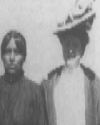
Born 12 May 1849; died 24 Jun 1915 at age 66.
(née Matilda Coxe Evans) was an American ethnologist who became one of the major contributors to her field, particularly in the study of Zuni religion. She married geologist James Stevenson (Apr 1872). In 1879, he became executive officer of the U.S. Geological Survey and she took an interest in her husband's work, accompanying him on an expedition to New Mexico to study the Zuni for the Bureau of American Ethnology. On several visits to the Zuni she studied their domestic life and in particular the roles, duties, and rituals of Zuni women. The Twenty-Third Annual Report of the Bureau in 1901-02 published her 600-page The Zuñi Indians: Their Mythology, Esoteric Fraternities, and Ceremonies, her most important written work.[Image: Matilda Coxe Stevenson with Pueblo woman, mid 1890s]
(née Matilda Coxe Evans) was an American ethnologist who became one of the major contributors to her field, particularly in the study of Zuni religion. She married geologist James Stevenson (Apr 1872). In 1879, he became executive officer of the U.S. Geological Survey and she took an interest in her husband's work, accompanying him on an expedition to New Mexico to study the Zuni for the Bureau of American Ethnology. On several visits to the Zuni she studied their domestic life and in particular the roles, duties, and rituals of Zuni women. The Twenty-Third Annual Report of the Bureau in 1901-02 published her 600-page The Zuñi Indians: Their Mythology, Esoteric Fraternities, and Ceremonies, her most important written work.[Image: Matilda Coxe Stevenson with Pueblo woman, mid 1890s]
click to enlarge
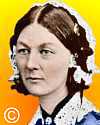
Born 12 May 1820; died 13 Aug 1910 at age 90. quotes
English nurse and statistician, “The Lady With The Lamp,” who established modern nursing practice. Her contributions to public health included developing methods of applying and displaying statistics to demonstrate the need for improvements. Her mission began from experience during the Crimean War as a nurse at British hospital in Turkey. There she witnessed appalling conditions endured by the sick: overcrowding, poor sanitation, lack of basic supplies, even malnutrition. With determination and influence, by the war's end in Jul 1856, she improved the comfort of the patients, increased efficiency and reduced the death toll. Throughout her life, she continued to advocate reform in the military medical system, supported by her compelling, novel graphical display of statistics and advice on hospital planning and organization.« more
English nurse and statistician, “The Lady With The Lamp,” who established modern nursing practice. Her contributions to public health included developing methods of applying and displaying statistics to demonstrate the need for improvements. Her mission began from experience during the Crimean War as a nurse at British hospital in Turkey. There she witnessed appalling conditions endured by the sick: overcrowding, poor sanitation, lack of basic supplies, even malnutrition. With determination and influence, by the war's end in Jul 1856, she improved the comfort of the patients, increased efficiency and reduced the death toll. Throughout her life, she continued to advocate reform in the military medical system, supported by her compelling, novel graphical display of statistics and advice on hospital planning and organization.« more
Florence Nightingale: The Making of an Icon, by Mark Bostridge. - book suggestion.
1857

Red and Yellow Maccaw
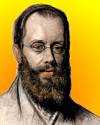
English artist of nature and landscape works who is better known as the creator of limericks and nonsense poetry. In his late teens, in 1832, he was hired as an illustrator by the London Zoological Society. These notably precise and vivid drawings of parrots were published in The Family of the Psittacidae (1832), the first large-scale volume of colored drawings of parrots to appear in England, and among the first color plates of animals ever published in Great Britain. In the same year, he was invited by the Earl of Denby to reside at his estate where he painted animals from the earl's menagerie. He stayed there until 1836. His first book of poems, published ten years later, A Book of Nonsense (1846) was composed for the grandchildren of the Denby household.«
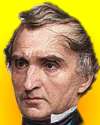
Born 12 May 1803; died 18 Apr 1873 at age 69. quotes
(baron) German chemist who made many important contributions to the early systematization of organic chemistry, to the application of chemistry to biology (biochemistry), to chemical education, and to the basic principles of agricultural chemistry. more
(baron) German chemist who made many important contributions to the early systematization of organic chemistry, to the application of chemistry to biology (biochemistry), to chemical education, and to the basic principles of agricultural chemistry. more
Justus von Liebig: The Chemical Gatekeeper, by William H. Brock. - book suggestion.
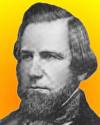
Born 12 May 1803; died 19 Sep 1852 at age 49.
American inventor who pioneered in the design of truss bridges for the developing railroads. His first bridge (1838-39) was a light, cheap and substantial structure across the Quaboag River at Warren, Mass., for the Boston and Albany Railroad. His truss patent (3 Aug 1840), was for a frame of top and bottom horizontal timber members, with diagonal wooden braces under compression, tied by vertical wrought-iron rods under tension. By 1842, he had spanned the Connecticut River with a truss bridge. In 1846, he patented a stronger truss. Although offered the job of superintendent of the structural work on a railroad in Russia between St. Petersburg and Moscow, he sent a substitute. His invention brought him fame and fortune, but he died at age 49. He was the uncle of Elias Howe who invented a sewing machine.« more
American inventor who pioneered in the design of truss bridges for the developing railroads. His first bridge (1838-39) was a light, cheap and substantial structure across the Quaboag River at Warren, Mass., for the Boston and Albany Railroad. His truss patent (3 Aug 1840), was for a frame of top and bottom horizontal timber members, with diagonal wooden braces under compression, tied by vertical wrought-iron rods under tension. By 1842, he had spanned the Connecticut River with a truss bridge. In 1846, he patented a stronger truss. Although offered the job of superintendent of the structural work on a railroad in Russia between St. Petersburg and Moscow, he sent a substitute. His invention brought him fame and fortune, but he died at age 49. He was the uncle of Elias Howe who invented a sewing machine.« more
North American Railroad Bridges, by Brian Solomon. - book suggestion.
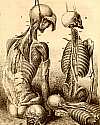
Born 12 May 1763; died 15 Apr 1820 at age 56.
Scottish surgeon, anatomist and artist whose anatomical etchings are harshly realistic because he criticized the approach of artists in his day to beautify the body and their “vitious practice of drawing from imagination.” He believed that unlike the painter “striving for elegance of form” the anatomist must focus on “accuracy of representation.” Bell began his medical training at age 17 (1779) in Edinburgh. By 1790, Bell set up his own anatomy school to present the subject more effectively for the practicing surgeon than offered at the established Royal Infirmary. Meeting opposition from other surgeons caused by his outspokenness, he ceased teaching after 13 years, and for the next 20 years limited himself to surgical practice and consulting.«
Scottish surgeon, anatomist and artist whose anatomical etchings are harshly realistic because he criticized the approach of artists in his day to beautify the body and their “vitious practice of drawing from imagination.” He believed that unlike the painter “striving for elegance of form” the anatomist must focus on “accuracy of representation.” Bell began his medical training at age 17 (1779) in Edinburgh. By 1790, Bell set up his own anatomy school to present the subject more effectively for the practicing surgeon than offered at the established Royal Infirmary. Meeting opposition from other surgeons caused by his outspokenness, he ceased teaching after 13 years, and for the next 20 years limited himself to surgical practice and consulting.«

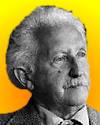
Died 12 May 1994 at age 91 (born 15 Jun 1902). quotes
Erik Homberger Erikson was a German-American psychoanalyst who trained under Anna Freud (1927–33), specializing in child psychology, then emigrated to the U.S. He taught at Harvard, engaged in a variety of clinical work, and widened the scope of psychoanalytic theory to take greater account of social, cultural, and other environmental factors. In 1950, he profoundly influenced the study of human development with the publication of Childhood and Society, in which he divided human development, from infancy to old age, into a life cycle of eight stages. His later works dealt with ethical concerns in the modern world.
Erik Homberger Erikson was a German-American psychoanalyst who trained under Anna Freud (1927–33), specializing in child psychology, then emigrated to the U.S. He taught at Harvard, engaged in a variety of clinical work, and widened the scope of psychoanalytic theory to take greater account of social, cultural, and other environmental factors. In 1950, he profoundly influenced the study of human development with the publication of Childhood and Society, in which he divided human development, from infancy to old age, into a life cycle of eight stages. His later works dealt with ethical concerns in the modern world.
The Erik Erikson Reader, by Erik Erikson, et al. - book suggestion.
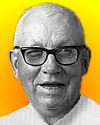
Died 12 May 1994 at age 83 (born 26 Jun 1910).
American chemist and inventor of Teflon (the DuPont trademark name for Polytetrafluoroethylene or PTFE). His discovery, while working for DuPont, was accidental. On 6 Apr 1938, Plunkett found that a tank of gaseous tetrafluoroethylene (CF2CF2) had polymerized to a white powder. It was patented on 4 Feb 1941. During WW II this new polymer was applied as a corrosion-resistant coating to protect metal equipment used in the production of radioactive material. DuPont released its trademarked Teflon coated nonstick cookware in 1960.
American chemist and inventor of Teflon (the DuPont trademark name for Polytetrafluoroethylene or PTFE). His discovery, while working for DuPont, was accidental. On 6 Apr 1938, Plunkett found that a tank of gaseous tetrafluoroethylene (CF2CF2) had polymerized to a white powder. It was patented on 4 Feb 1941. During WW II this new polymer was applied as a corrosion-resistant coating to protect metal equipment used in the production of radioactive material. DuPont released its trademarked Teflon coated nonstick cookware in 1960.

Died 12 May 1962 at age 73 (born 3 Sep 1888).
American virologist who, as chairman of the virus research committee of the National Foundation for Infantile Paralysis (now the March of Dimes Birth Defects Foundation; 1938-55), organized the long-range research program that led to development of the Salk and Sabin anti-poliomyelitis vaccines. His interest in medical research was awakened while with the Army medical corps (1918). He worked from 1922-55 at the Rockefeller Institute as a bacteriologist, and as its Director (after 1937). Rivers addressed a range of topics relating to some of the most devastating viral diseases, including smallpox, Rift Valley Fever, and epidemic encephalitis. He also discovered the parainfluenzae bacillus and cultivated vaccine virus for human use.
American virologist who, as chairman of the virus research committee of the National Foundation for Infantile Paralysis (now the March of Dimes Birth Defects Foundation; 1938-55), organized the long-range research program that led to development of the Salk and Sabin anti-poliomyelitis vaccines. His interest in medical research was awakened while with the Army medical corps (1918). He worked from 1922-55 at the Rockefeller Institute as a bacteriologist, and as its Director (after 1937). Rivers addressed a range of topics relating to some of the most devastating viral diseases, including smallpox, Rift Valley Fever, and epidemic encephalitis. He also discovered the parainfluenzae bacillus and cultivated vaccine virus for human use.
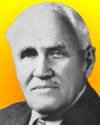
Died 12 May 1946 at age 84 (born 21 Jan 1862). quotes
Robert Almer Harper was an American botanist who studied the cell (cytology) in fungi. He trained with leaders in the fields in Germany for his Ph.D. Harper studied the multinucleate cell of the ascus, and how the fungus ascospore developed. The puzzle he addressed was the so-called “free cell formation” whereby eight nuclei could each cut out its own share of cytoplasm to form eight apparently equal, uniformly marked, sexually-produced spores in the ripe ascus of fungi in the class Ascomycetes. In experiments he carried out in the 1920s, while chief of the scientific directors of the New York Botanical Gardens, Harper sought improved methods of treating diseased plants. His limited publications represent only such material that he felt was important to contribute, yet he was regarded as among the great research botanists in his time.«
Robert Almer Harper was an American botanist who studied the cell (cytology) in fungi. He trained with leaders in the fields in Germany for his Ph.D. Harper studied the multinucleate cell of the ascus, and how the fungus ascospore developed. The puzzle he addressed was the so-called “free cell formation” whereby eight nuclei could each cut out its own share of cytoplasm to form eight apparently equal, uniformly marked, sexually-produced spores in the ripe ascus of fungi in the class Ascomycetes. In experiments he carried out in the 1920s, while chief of the scientific directors of the New York Botanical Gardens, Harper sought improved methods of treating diseased plants. His limited publications represent only such material that he felt was important to contribute, yet he was regarded as among the great research botanists in his time.«
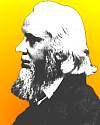
Died 12 May 1910 at age 86 (born 7 Feb 1824). quotes
English astronomer who explored the spectra of stars, nebulae and comets to interpret their chemical composition, assisted by his wife Margaret Lindsay Murray. He was the first to demonstrate (1864) that whereas some nebulae are clusters of stars (with stellar spectral characteristics, ex. Andromeda), certain other nebulae are uniformly gaseous as shown by their pure emission spectra (ex. the great nebula in Orion). He made spectral observations of a nova (1866). He also was first to attempt to measure a star's radial velocity. He was one of the wealthy 19th century private astronomers that supported their own passion while making significant contributions. At age only 30, Huggins built his own observatory at Tulse Hill, outside London.«
English astronomer who explored the spectra of stars, nebulae and comets to interpret their chemical composition, assisted by his wife Margaret Lindsay Murray. He was the first to demonstrate (1864) that whereas some nebulae are clusters of stars (with stellar spectral characteristics, ex. Andromeda), certain other nebulae are uniformly gaseous as shown by their pure emission spectra (ex. the great nebula in Orion). He made spectral observations of a nova (1866). He also was first to attempt to measure a star's radial velocity. He was one of the wealthy 19th century private astronomers that supported their own passion while making significant contributions. At age only 30, Huggins built his own observatory at Tulse Hill, outside London.«
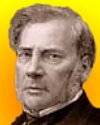
Died 12 May 1887 at age 85 (born 2 Feb 1802).
Jean-Baptiste Joseph Dieudonne Boussingault was a French agricultural chemist who identified the biological nitrogen cycle. His first career was as a mining engineer. He wrote variously on such topics as mineralogy, volcanic gases, climate of the Andean region, and earthquakes (which he theorized were a violent elevation of the hardened crust, then subsidence and formation of caves). In 1821, Boussingault discovered that iodine-rich salts could be used to treat goiter, though he did not understand its preventive role. From 1836, he pursued agricultural chemistry. He determined that plants could not assimilate nitrogen directly from the air, but instead from nitrates in the soil. He investigated plant respiration, the function of their leaves, and the value and effect of manures.«
Jean-Baptiste Joseph Dieudonne Boussingault was a French agricultural chemist who identified the biological nitrogen cycle. His first career was as a mining engineer. He wrote variously on such topics as mineralogy, volcanic gases, climate of the Andean region, and earthquakes (which he theorized were a violent elevation of the hardened crust, then subsidence and formation of caves). In 1821, Boussingault discovered that iodine-rich salts could be used to treat goiter, though he did not understand its preventive role. From 1836, he pursued agricultural chemistry. He determined that plants could not assimilate nitrogen directly from the air, but instead from nitrates in the soil. He investigated plant respiration, the function of their leaves, and the value and effect of manures.«
Boussingault, Chemist and Agriculturist, by F. W. J. McCosh. - book suggestion.
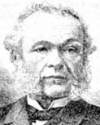
Died 12 May 1884 at age 66 (born 26 Nov 1817). quotes
French chemist and educator noted for his research on organic nitrogen compounds, hydrocarbons, and glycols. In 1848, he studied a group of compounds related to ammonia called amines and showed they belonged to a type with a nitrogen nucleus. In ammonia a nitrogen atom was bound to three hydrogens, whereas in amines, organic radicals replaced one or more of these hydrogens.
French chemist and educator noted for his research on organic nitrogen compounds, hydrocarbons, and glycols. In 1848, he studied a group of compounds related to ammonia called amines and showed they belonged to a type with a nitrogen nucleus. In ammonia a nitrogen atom was bound to three hydrogens, whereas in amines, organic radicals replaced one or more of these hydrogens.
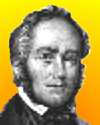
Died 12 May 1871 at age 76 (born 6 Jan 1795).
French chemist who made important contributions to industrial chemistry and discovered cellulose, a basic constituent of plant cells. His father's factories produced various chemicals, and refined sugar, so Payen studied science. In 1815, age 20, he was made manager of his father's plant for refining imported crude borax. There, he developed a synthesis for borax from soda and boric acid and in 1820 he created a new industry which could market the synthetic product at one-third the price of the refined natural borax. His father died in 1820, and Payen took over the family business. By 1822, he had found the value of animal charcoal to clarify sugar solutions. In 1833, Payen discovered the first enzyme, for which he coined the name diastase. It converts starch to sugar, and was later (1893) called amylase.
French chemist who made important contributions to industrial chemistry and discovered cellulose, a basic constituent of plant cells. His father's factories produced various chemicals, and refined sugar, so Payen studied science. In 1815, age 20, he was made manager of his father's plant for refining imported crude borax. There, he developed a synthesis for borax from soda and boric acid and in 1820 he created a new industry which could market the synthetic product at one-third the price of the refined natural borax. His father died in 1820, and Payen took over the family business. By 1822, he had found the value of animal charcoal to clarify sugar solutions. In 1833, Payen discovered the first enzyme, for which he coined the name diastase. It converts starch to sugar, and was later (1893) called amylase.
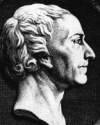
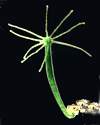
Swiss naturalist, is best known for his studies of the freshwater hydra, mainly Chlorohydra viridissima. He discovered the freshwater hydra in 1740. His extensive systematic experiments foreshadowed modern research on tissue regeneration and grafting. In 1744, Trembley published that he found that a complete hydra would be regenerated from as little as 1/8th of the parent body. He also succeeded in turning these animals inside out, a remarkably delicate operation which he performed by threading them on horse hairs. Trembley showed that the hydras would survive even this drastic operation. A thorough researcher, Trembley studied three species of hydra and published his findings in 1744.
Died 12 May 1684 (born c. 1620). quotes
French physicist and plant physiologist who, working independently, investigated (1676) the law that states that the volume of a gas varies inversely with its pressure, discovered earlier by Robert Boyle. Thus, Boyle’s law (1662), P1V1=P2V2 is called Mariotte’s law in France. Mariotte’s experiments and discoveries ranged across areas of science such as physics, mechanics, hydraulics, optics, plant physiology, meteorology, surveying, and research methodology. Mariotte is notable for identifying the blind spot in the eye, which he published in 1668 as his first research work, Nouvelle découverte touchant la vue (A New Discovery Concerning Sight). His copious correspondence has been called a pioneering form of scientific international cooperation.«[His date and place of birth are entirely unknown. The claim sometimes seen as 1620 in Dijon, is merely tentative, without definitive record. He did send a letter about his discovery of the eye’s blind spot from Dijon (1668). Although his early life is poorly documented, his scientific work described in Dictionary of Scientific Biography fills an eight-page article. There is no definitively known authentic image of Mariotte, though a web search offers various spurious ones.]
French physicist and plant physiologist who, working independently, investigated (1676) the law that states that the volume of a gas varies inversely with its pressure, discovered earlier by Robert Boyle. Thus, Boyle’s law (1662), P1V1=P2V2 is called Mariotte’s law in France. Mariotte’s experiments and discoveries ranged across areas of science such as physics, mechanics, hydraulics, optics, plant physiology, meteorology, surveying, and research methodology. Mariotte is notable for identifying the blind spot in the eye, which he published in 1668 as his first research work, Nouvelle découverte touchant la vue (A New Discovery Concerning Sight). His copious correspondence has been called a pioneering form of scientific international cooperation.«[His date and place of birth are entirely unknown. The claim sometimes seen as 1620 in Dijon, is merely tentative, without definitive record. He did send a letter about his discovery of the eye’s blind spot from Dijon (1668). Although his early life is poorly documented, his scientific work described in Dictionary of Scientific Biography fills an eight-page article. There is no definitively known authentic image of Mariotte, though a web search offers various spurious ones.]
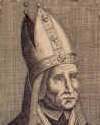
Died 12 May 1003 (born c. 945).
Pope Sylvester II also known as Gerbert d'Aurillac was a French scholar who was one of the foremost learned men in his time, with good knowledge of mathematics, astronomy and mechanics. He popularized these topics for the layman, so the public would appreciate benefits of science. Inspired by translations of Arabic texts, and his own inventive genius, he built clocks, the hydraulic organ, astronomical instruments, and renewed interest in the abacus for use in mathematical calculations. He may have introduced Arabic numerals (except zero) as used by Khwarizmi. He became Pope Sylvester II, the first French Pope, recognized as the most important of his century. He began to lead Europe out of the Dark Ages.«
Pope Sylvester II also known as Gerbert d'Aurillac was a French scholar who was one of the foremost learned men in his time, with good knowledge of mathematics, astronomy and mechanics. He popularized these topics for the layman, so the public would appreciate benefits of science. Inspired by translations of Arabic texts, and his own inventive genius, he built clocks, the hydraulic organ, astronomical instruments, and renewed interest in the abacus for use in mathematical calculations. He may have introduced Arabic numerals (except zero) as used by Khwarizmi. He became Pope Sylvester II, the first French Pope, recognized as the most important of his century. He began to lead Europe out of the Dark Ages.«
The Abacus and the Cross: The Story of the Pope Who Brought the Light of Science to the Dark Ages, by Nancy Marie Brown. - book suggestion.
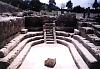
In 2004, the discovery of what was believed to be the world's oldest seat of learning, the Library of Alexandria, was announced by Zahi Hawass, president of Egypt's Supreme Council of Antiquities during a conference at the University of California. A Polish-Egyptian team had uncovered 13 lecture halls featuring an elevated podium for the lecturer. Such a complex of lecture halls had never before been found on any Mediterranean Greco-Roman site. Alexandria may be regarded as the birthplace of western science, where Euclid discovered the rules of geometry, Eratosthenes measured the diameter of the Earth and Ptolemy wrote the Almagest, the most influential scientific book about the nature of the Universe for 1,500 years.«[Image: One of the newly discovered auditoria.]
In 1941, Konrad Zuse completed the world's first fully-functional programmable computer (Turing-complete computer), his Z3 machine. It was also the first such computer to utilize the binary system rather than decimal system. It was an electromechanical digital computer built with 2,400 relays. The programs were input from punched rolls of discard movie film. Notably, the Z3 was programmable, whereas the independently developed Atanasoff binary ABC (1942) and ENIAC (1945-46) were special-purpose calculators, neither of which were freely programmable. The Z3 was used by the German aircraft industry to solve systems of simultaneous equations and mathematical aspects of the vibration of airframes under stress. It was destroyed in 1944 during WW II bombing raids.«

In 1936, the Dvorak typewriter keyboard was patented in the U.S. by Dvorak and Dealey (Patent No. 2,040,248). The efficiency experts August Dvorak (a cousin of the composer) and William Dealey studied the typewriter to determine that they could arrange the keys in a new way which would speed up the operators of the typewriter. They designed a keyboard to maximize efficiency by placing common letters on the home row, and make the stronger fingers of the hands do most of the work. By contrast, the original QWERTY layout was designed for the earlier, less efficient typewriters. Previously, speed would result in two type bars hitting each other in their travel, so the original keyboard was laid out to reduce collisions.
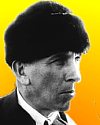
In 1931, the frozen body of Alfred Wegener was found by a search party in Greenland, where he had been on his fourth expedition since 1906 to study the ice cap and its climate. He was last seen alive by his colleagues on his 50th birthday, 1 Nov 1930, as he left the "Eismitte" research post. He set off to return to the base camp at the coast with Greenlander Rasmus Villumsen after they brought relief supplies to the outpost. Wegener was the German meteorologist and geophysicist who first gave a well-developed hypothesis of continental drift. Others saw the fit of coastlines of South America and Africa, but Wegener added more geologic and paleontologic evidence that these two continents were once joined 
Origin of Continents and Oceans, by Alfred Wegener. - book suggestion.
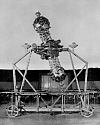
In 1930, the Adler Planetarium and Astronomical Museum was opened to the public in Chicago, Illinois. A program using the Zeiss II star projector was presented by Prof. Philip Fox, who resigned from the staff of Northwestern Observatory to take charge of the new $1 million facility. Housed in a granite building, it was donated to the city by Max Adler, retired vice president of Sears, Roebuck & Co. He had been so impressed when he previously visited the world's first planetarium at the Deutsches Museum, Munich, Germany, that he resolved to construct America's first modern planetarium open to the public in his home city. Its site was within the fairgrounds of the Century of Progress Exposition in 1933-34, and was an outstanding attraction.«[Image left: The Zeiss II star projector used from 1930 until replaced in 1971 by a Zeiss IV projector. Image right: exterior]
In 1925, a treaded pneumatic tyre was patented in the U.S. by Alden Putnam (No. 1,537,879)
1932
In 1903, Carl Linde recieved two U.S. patents for his Linde oxygen process and associated equipment (Nos. 728,173 and 727,650).
Linde: History of a Technology Corporation, 1879-2004, by Hans-Liudger Dienel. - book suggestion.
In 1896, black American inventor C.B. Brooks was issued a U.S. patent for street sweepers (No. 560,154). He was issued an earlier patent for street sweepers on 17 Mar of the same year (No. 556,711). Brooks also held a patent for a punch issued 31 Oct 1893 (No. 507,672).
The Inventive Spirit of African Americans: Patented Ingenuity, by Patricia Carter Sluby. - book suggestion.
(1889)
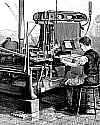
In 1885, Ottmar Mergenthaler received U.S. patent No. 317,828 for his “Machine for Producing Printing Bars” (Linotype) machine. It set entire lines of lead type as “slugs” for printing. Typesetting was transformed by the introduction of these keyboard machines. Individual character matrices were notched so that they could be automatically recirculated to their proper slot in the magazine. Justification was accomplished by inserting wedged spacebands between words to expand each line to the same chosen slug length. This gave a huge labor savings in typesetting, about 85% saving in time, and obsoleted most hand-set metal type (except headlines). A Linotype machine was first used in 1886 by New York Tribune.
more
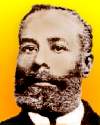
In 1874, the prolific black American inventor Elijah J. McCoy patented an ironing table (No. 150,876). He is best known for his lubricating devices for steam engines for which he held numerous patents.
The Real McCoy, by Portia P. James. - book suggestion.
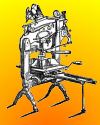
In 1816, the Columbian Press, the first printing press invented in America, was designed by George E. Clymer in Philadelphia, Pa. It was an iron horizontal platen hand-printing press using a system of compound levers that multiplied the pull of the operator to replace the iron screw previously used for downward pressure. An eagle-shaped counterweight lifted the platen back after the pressman’s “pull”. The Columbian was somewhat well-received in America, even at $400, which was twice the cost of a wooden press. In 1818, Clymer took his business to England and found much greater success. He joined forces with William Dixon in 1825. From the 1840s, the presses were manufactured by companies all over Europe.





