
Born 3 Oct 1944.
Belgian mathematician who was awarded the Fields Medal at the International Congress of Mathematicians in Helsinki, Finland, in 1978 for his work in algebraic geometry. His work originated with André Weil's ideas on polynomial equations which led to three questions on what properties of a geometric object can be determined purely algebraically. These three problems quickly became major research challenges to mathematicians. A solution of the three Weil conjectures was given by Deligne. This work brought together algebraic geometry and algebraic number theory. The solution to these problems had required the development of a new kind of algebraic topology.[Credit to palette.fm for colorization assistance on thumbnail.]
Belgian mathematician who was awarded the Fields Medal at the International Congress of Mathematicians in Helsinki, Finland, in 1978 for his work in algebraic geometry. His work originated with André Weil's ideas on polynomial equations which led to three questions on what properties of a geometric object can be determined purely algebraically. These three problems quickly became major research challenges to mathematicians. A solution of the three Weil conjectures was given by Deligne. This work brought together algebraic geometry and algebraic number theory. The solution to these problems had required the development of a new kind of algebraic topology.[Credit to palette.fm for colorization assistance on thumbnail.]
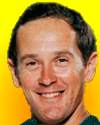
Born 3 Oct 1935. quotes
Charles Moss Duke Jr. is an American astronaut who was the youngest person (and tenth of twelve) to have walked on the Moon (21 Apr 1972) at age 36 yrs 201 days. He was the lunar module pilot for that Apollo 16 moon mission, the fifth moon landing. He spent 71 hrs on the surface, including 20 hrs exploring. Fifty years later, in 2022 (age 86) he was one of four surviving moon walkers. Before his own moon flight, Charlie Duke was the designated Communicator at Mission Control for Apollo 11’s first moon landing (20 Jul 1969). When Neil Armstrong transmitted “The Eagle has landed”, it was Duke who replied: “Roger, Tranquility. We copy you on the ground.” Thus Duke’s voice is remembered as a tangential part of the first moon landing.«
Charles Moss Duke Jr. is an American astronaut who was the youngest person (and tenth of twelve) to have walked on the Moon (21 Apr 1972) at age 36 yrs 201 days. He was the lunar module pilot for that Apollo 16 moon mission, the fifth moon landing. He spent 71 hrs on the surface, including 20 hrs exploring. Fifty years later, in 2022 (age 86) he was one of four surviving moon walkers. Before his own moon flight, Charlie Duke was the designated Communicator at Mission Control for Apollo 11’s first moon landing (20 Jul 1969). When Neil Armstrong transmitted “The Eagle has landed”, it was Duke who replied: “Roger, Tranquility. We copy you on the ground.” Thus Duke’s voice is remembered as a tangential part of the first moon landing.«
Moonwalker: The True Story of an Astronaut Who Found that the Moon Wasn’t High Enough to Satisfy His Desire for Success, by Charlie Duke and Dottie Duke. - book suggestion.
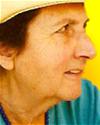
Born 3 Oct 1916; died 29 May 2005 at age 88.
María de los Ángeles Alvariño González was a Spanish-American biologist and oceanographer, who was a worldwide expert marine plankton researcher. After getting a Master’s degree in natural sciences (1941), she taught for a few years, until becoming a fishery research biologist in Spain (1948-53). She began studying zooplanton in England (1953-54), two years more in Spain, and then moved to the U.S. (1956), where she naturalized (1966). Her primary focus was three general groups of zooplankton—Chaetognatha (arrow worms), Siphonophora (such as the Portuguese Man’o’War), the medusae (jellyfish)—and the predatory behaviors of these various organisms affecting fish larvae. She discovered 22 new species of sea life, and published over 100 papers.«
María de los Ángeles Alvariño González was a Spanish-American biologist and oceanographer, who was a worldwide expert marine plankton researcher. After getting a Master’s degree in natural sciences (1941), she taught for a few years, until becoming a fishery research biologist in Spain (1948-53). She began studying zooplanton in England (1953-54), two years more in Spain, and then moved to the U.S. (1956), where she naturalized (1966). Her primary focus was three general groups of zooplankton—Chaetognatha (arrow worms), Siphonophora (such as the Portuguese Man’o’War), the medusae (jellyfish)—and the predatory behaviors of these various organisms affecting fish larvae. She discovered 22 new species of sea life, and published over 100 papers.«
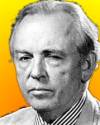

Irish cardiologist who developed the life-saving portable defibrillator. He found out that death occurred within the first hour for 60% of males (up to middle-age) that died from heart attack, and of these, 90% suffered ventricular fibrillation. To begin earliest possible treatment, in 1965, Pantridge equipped an ambulance with a portable defibrillator. It achieved a 50% long-term patient survival rate. This pre-hospital coronary care plan was adopted rapidly in America and was used in 1972 when President Lyndon Johnson suffered a heart attack during a visit to Virginia. In 1979, the first automated external defibrillators (AEDs) became available. The British government lagged, but in 1990 funded defibrillators for all front-line ambulances in England.«[Image right: Karrier, first purpose built Mobile Cardiac Ambulance (source)]
An Unquiet Life Hardcover, by Frank Pantridge. - book suggestion.
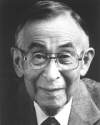
Born 3 Oct 1904; died 1989.
Korean-American chemist who, along with Jean-Marie Lehn and Donald J. Cram, was awarded the 1987 Nobel Prize for Chemistry for his synthesis of the crown ethers - a group of organic compounds with structure-specific interactions of high selectivity when reacting with other atoms and molecules much as do the molecules in living organisms, i.e. molecules that can "recognize" each other and choose with which other molecules they will form complexes. The three researchers studied chemical and physical properties of these complexes and have elucidated the factors that determine the ability of the molecules to recognize each other and fit into one another like a key fits a lock.
Korean-American chemist who, along with Jean-Marie Lehn and Donald J. Cram, was awarded the 1987 Nobel Prize for Chemistry for his synthesis of the crown ethers - a group of organic compounds with structure-specific interactions of high selectivity when reacting with other atoms and molecules much as do the molecules in living organisms, i.e. molecules that can "recognize" each other and choose with which other molecules they will form complexes. The three researchers studied chemical and physical properties of these complexes and have elucidated the factors that determine the ability of the molecules to recognize each other and fit into one another like a key fits a lock.
A.I.enhanced
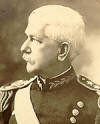
Born 3 Oct 1854; died 3 Jul 1920 at age 65.
American army surgeon who played a decisive role in the construction of the Panama Canal by introducing large-scale mosquito control to combat yellow fever and malaria. At first, he doubted the 1900 findings of Walter Reed’s Yellow Fever Commission in Cuba, which showed that mosquitoes were the sole carriers of the disease. However, once convinced, Gorgas became the leading advocate of the mosquito theory in the United States. In Cuba, he helped eliminate breeding grounds, and beginning in 1904, he directed a ten-year anti-mosquito campaign in Panama that succeeded in eradicating yellow fever from the canal zone.«
American army surgeon who played a decisive role in the construction of the Panama Canal by introducing large-scale mosquito control to combat yellow fever and malaria. At first, he doubted the 1900 findings of Walter Reed’s Yellow Fever Commission in Cuba, which showed that mosquitoes were the sole carriers of the disease. However, once convinced, Gorgas became the leading advocate of the mosquito theory in the United States. In Cuba, he helped eliminate breeding grounds, and beginning in 1904, he directed a ten-year anti-mosquito campaign in Panama that succeeded in eradicating yellow fever from the canal zone.«
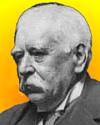
Born 3 Oct 1844; died 9 Apr 1922 at age 77.
Scottish physician and parasitologist who has been called the “father of tropical medicine.” He was the first to identify an insect for the spread of infection (1877-79). While working at Amoy, China, he found the development phase of filaria worms in the tissues of blood-sucking mosquitoes. This parasite worm causes the filariasis disease when transferred to human body tissues. In 1894, he proposed a mosquito-malaria hypothesis. Manson moved to Hong Kong (1883-89), where he set up a medical school. In 1886 he co-founded Dairy Farm to produce contamination-free cows' milk. He also researched sleeping sickness and beri-beri, and helped introduce vaccination to the Chinese. He inspired Alphonse Laveran's discovery of the malarial parasite, and Sir Ronald Ross's proof of transmission of malaria by Anopheles mosquitoes.«
Scottish physician and parasitologist who has been called the “father of tropical medicine.” He was the first to identify an insect for the spread of infection (1877-79). While working at Amoy, China, he found the development phase of filaria worms in the tissues of blood-sucking mosquitoes. This parasite worm causes the filariasis disease when transferred to human body tissues. In 1894, he proposed a mosquito-malaria hypothesis. Manson moved to Hong Kong (1883-89), where he set up a medical school. In 1886 he co-founded Dairy Farm to produce contamination-free cows' milk. He also researched sleeping sickness and beri-beri, and helped introduce vaccination to the Chinese. He inspired Alphonse Laveran's discovery of the malarial parasite, and Sir Ronald Ross's proof of transmission of malaria by Anopheles mosquitoes.«
Imperial Medicine: Patrick Manson and the Conquest of Tropical Disease, by Douglas M. Haynes. - book suggestion.
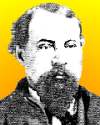
Born 3 Oct 1830; died 17 Dec 1892 at age 62.
George Bailey Brayton was an American engineer who invented the first commercial gas internal combustion engine (patented 2 Apr 1872), which he manufactured and sold in the Providence, Rhode Island, area. Its principle of continuous ignition later became the basis for the turbine engine. A pressurized air-fuel mixture from a reservoir was ignited upon entering a water-cooled cylinder. The Brayton engine was given trials powering watercraft, one of John Holland's submarines and one used for a few months installed in a carriage (1872-3). His earlier career included developing steam engines.«
George Bailey Brayton was an American engineer who invented the first commercial gas internal combustion engine (patented 2 Apr 1872), which he manufactured and sold in the Providence, Rhode Island, area. Its principle of continuous ignition later became the basis for the turbine engine. A pressurized air-fuel mixture from a reservoir was ignited upon entering a water-cooled cylinder. The Brayton engine was given trials powering watercraft, one of John Holland's submarines and one used for a few months installed in a carriage (1872-3). His earlier career included developing steam engines.«
Internal Fire: The Internal-Combustion Engine 1673-1900, by C. Lyle Cummins, Jr. - book suggestion.
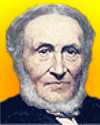
Born 3 Oct 1818; died 26 Jan 1896 at age 77. quotes
Scottish publisher who, though not himself a professional scientist did much to promote science in the Victorian times by publishing the journal Nature, enabling communication between men of science. He was prompted by Norman Lockyer, its first editor. The first issue was published on 4 Nov 1869. The journal had the support of many influential contributors, including Thomas Huxley. Yet, it remained a financial challenge for Macmillan. Other scientific quarterlies had short lives. Macmillan tolerated losses for three decades, because of his committment to the journal's mission “to place before the general public the grand results of scientific work and scientific discovery; and to urge the claims of science to move to a more general recognition in education and in daily life.” That mission continues to the present day.«
Scottish publisher who, though not himself a professional scientist did much to promote science in the Victorian times by publishing the journal Nature, enabling communication between men of science. He was prompted by Norman Lockyer, its first editor. The first issue was published on 4 Nov 1869. The journal had the support of many influential contributors, including Thomas Huxley. Yet, it remained a financial challenge for Macmillan. Other scientific quarterlies had short lives. Macmillan tolerated losses for three decades, because of his committment to the journal's mission “to place before the general public the grand results of scientific work and scientific discovery; and to urge the claims of science to move to a more general recognition in education and in daily life.” That mission continues to the present day.«
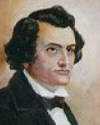
Born 3 Oct 1803; died 16 Jun 1855 at age 51. quotes
American physician who pioneered the artificial manufacture of ice, refrigeration, and air conditioning. While he was a Naval officer stationed at Apalachicola, Florida, when he needed ice to treat malaria patients with fever, for, he reasoned, people living in cold climates never got malaria. He built a small steam engine to drive a piston in a cylinder immersed in brine. The piston first compressed the air, and then on the second stroke, when the air expanded, it drew heat from the brine. The chilled brine was used to cool air or make ice. He was granted the first U.S. Patent for mechanical refrigeration on May 1851 (No. 8080). Dr. Gorrie was posthumously honored by Florida, when his statue was placed in Statuary Hall in the U.S. Capitol.[The date of death of 16 Jun is as given in the Dictionary of American Biography. However, an obituary notice in the New Orleans Medical and Surgical Journal (1855-1856) gives 29 Jun 1855.] more
American physician who pioneered the artificial manufacture of ice, refrigeration, and air conditioning. While he was a Naval officer stationed at Apalachicola, Florida, when he needed ice to treat malaria patients with fever, for, he reasoned, people living in cold climates never got malaria. He built a small steam engine to drive a piston in a cylinder immersed in brine. The piston first compressed the air, and then on the second stroke, when the air expanded, it drew heat from the brine. The chilled brine was used to cool air or make ice. He was granted the first U.S. Patent for mechanical refrigeration on May 1851 (No. 8080). Dr. Gorrie was posthumously honored by Florida, when his statue was placed in Statuary Hall in the U.S. Capitol.[The date of death of 16 Jun is as given in the Dictionary of American Biography. However, an obituary notice in the New Orleans Medical and Surgical Journal (1855-1856) gives 29 Jun 1855.] more
Fever Man: A Biography of Dr. John Gorrie, by V.M. Sherlock. - book suggestion.
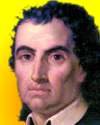
Born 3 Oct 1716; died 27 May 1781 at age 64. quotes
Giambatista Beccaria, a.k.a. Giovanni Battista Beccaria (orig. Francesco) was an Italian physicist who spread knowledge of Benjamin Franklin's discoveries with electricity, which he extended with his own research. He designed an electrical thermometer and investigated the relative powers of parallel plate condensers (capacitors). He formed explanations for meteorological and geophysical phenomena in terms of “natural electricity.” With his students, he experimentally probed the atmosphere with metal poles, kites and rockets. He published his work in five books.
Giambatista Beccaria, a.k.a. Giovanni Battista Beccaria (orig. Francesco) was an Italian physicist who spread knowledge of Benjamin Franklin's discoveries with electricity, which he extended with his own research. He designed an electrical thermometer and investigated the relative powers of parallel plate condensers (capacitors). He formed explanations for meteorological and geophysical phenomena in terms of “natural electricity.” With his students, he experimentally probed the atmosphere with metal poles, kites and rockets. He published his work in five books.


Died 3 Oct 2018 at age 96 (born 15 Jul 1922). quotes
Leon Max Lederman was an American physicist who shared (with Melvin Schwartz and Jack Steinberger) the 1988 Nobel Prize for Physics for their joint research and discovery (1960-62) of a new subatomic particle, the muon neutrino. Neutrinos are subatomic particles having no detectable mass and no electric charge, which travel at the speed of light. The discovery of the muon neutrino, was followed by discoveries by other scientists of a number of different “families” of subatomic particle. Together, they now form a standard model, a scheme that has been used to classify all known elementary particles. He was director of the Fermi National Accelerator Laboratory in Batavia, Ill. (1979-89).
Leon Max Lederman was an American physicist who shared (with Melvin Schwartz and Jack Steinberger) the 1988 Nobel Prize for Physics for their joint research and discovery (1960-62) of a new subatomic particle, the muon neutrino. Neutrinos are subatomic particles having no detectable mass and no electric charge, which travel at the speed of light. The discovery of the muon neutrino, was followed by discoveries by other scientists of a number of different “families” of subatomic particle. Together, they now form a standard model, a scheme that has been used to classify all known elementary particles. He was director of the Fermi National Accelerator Laboratory in Batavia, Ill. (1979-89).
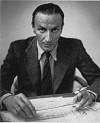
Died 3 Oct 1988 at age 81 (born 18 Nov 1906). quotes
Alexander Arnold Constantine Issigonis was a Turkish-British engineer who was the designer of the Mini car, a landmark in automotive design when the British Motor Corporation introduced the Morris Mini-Minor on 26 Aug 1959. It was only 10 ft long, yet seated four passengers, and one of the lowest priced cars on the market. To save space, the engine was mounted transversely, and it had all-independent suspension. Issigonis believed that “when you're designing a new car for production, never, never copy the opposition.” Thus the Mini looked like no other car, provided a vehicle that carried the greatest payload in the smallest practical space, and incorporated new engineering principles. It remains successful over five decades later because he built it from the start for fuel economy, fast acceleration, maneuverability and ease of parking.
Alexander Arnold Constantine Issigonis was a Turkish-British engineer who was the designer of the Mini car, a landmark in automotive design when the British Motor Corporation introduced the Morris Mini-Minor on 26 Aug 1959. It was only 10 ft long, yet seated four passengers, and one of the lowest priced cars on the market. To save space, the engine was mounted transversely, and it had all-independent suspension. Issigonis believed that “when you're designing a new car for production, never, never copy the opposition.” Thus the Mini looked like no other car, provided a vehicle that carried the greatest payload in the smallest practical space, and incorporated new engineering principles. It remains successful over five decades later because he built it from the start for fuel economy, fast acceleration, maneuverability and ease of parking.
MINI 50 Years, by Rob Golding. - book suggestion.
Died 3 Oct 1964 at age 66 (born 9 Feb 1898).
Guy Stewart Callendar was an English engineer and meteorologist who wrote a landmark paper in climate science, “The Artificial Production of Carbon Dioxide and its Influence on Temperature” (1938). He was the first, even as a hobby meteorologist, to collate decades of temperature measurements on a worldwide basis, and to carefully correlate the distinct warming trend with a continuing build-up of man-made carbon dioxide in the atmosphere. Callendar’s paper boosted the significance of earlier work begun by 19th-century scientists Svante Arrhenius, John Tyndall, and Joseph Fourier, who understood the greenhouse effect of carbon dioxide in the atmosphere, but had not so thoroughly documented the connection to increasing industrial-scale and domestic fuel combustion.«
Guy Stewart Callendar was an English engineer and meteorologist who wrote a landmark paper in climate science, “The Artificial Production of Carbon Dioxide and its Influence on Temperature” (1938). He was the first, even as a hobby meteorologist, to collate decades of temperature measurements on a worldwide basis, and to carefully correlate the distinct warming trend with a continuing build-up of man-made carbon dioxide in the atmosphere. Callendar’s paper boosted the significance of earlier work begun by 19th-century scientists Svante Arrhenius, John Tyndall, and Joseph Fourier, who understood the greenhouse effect of carbon dioxide in the atmosphere, but had not so thoroughly documented the connection to increasing industrial-scale and domestic fuel combustion.«
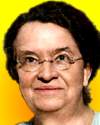
Died 3 Oct 1953 at age 81 (born 9 Nov 1871). quotes
American anatomist who was one of the first women physicians to pursue a research career. Her investigation of the lymphatic system proved that it developed from the veins in the embryo and grew out into tissues, the reverse of then prevailing understanding. In 1903, she became the first woman on the faculty at Johns Hopkins University School of Medicine. It had initially been reluctant to hire a woman, but she had shown exceptional skill in papers published during a fellowship there. She moved in 1925 to head the cellular immunology section at the Rockefeller Institute, where she researched the body's white blood cells reaction to tuberculosis infection. In 1925, she was the first woman elected to the National Academy of Sciences.«
American anatomist who was one of the first women physicians to pursue a research career. Her investigation of the lymphatic system proved that it developed from the veins in the embryo and grew out into tissues, the reverse of then prevailing understanding. In 1903, she became the first woman on the faculty at Johns Hopkins University School of Medicine. It had initially been reluctant to hire a woman, but she had shown exceptional skill in papers published during a fellowship there. She moved in 1925 to head the cellular immunology section at the Rockefeller Institute, where she researched the body's white blood cells reaction to tuberculosis infection. In 1925, she was the first woman elected to the National Academy of Sciences.«
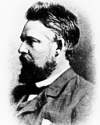
Died 3 Oct 1932 at age 69 (born 21 Jun 1863).
Maximilian Franz Joseph Cornelius Wolf was a German astronomer who founded and directed the Königstuhl Observatory. He used wide-field photography to study the Milky Way and used statistical treatment of star counts to prove the existence of clouds of dark matter. He was among the first astronomers to show that the spiral nebulae have absorption spectra typical of stars and thus differ from gaseous nebulae. His most important contribution was the introduction of photography to discover hundreds of asteroids, the first of which he named Brucia in honor of the donor of his 16-inch double telescope, Catherine Wolfe Bruce.
Maximilian Franz Joseph Cornelius Wolf was a German astronomer who founded and directed the Königstuhl Observatory. He used wide-field photography to study the Milky Way and used statistical treatment of star counts to prove the existence of clouds of dark matter. He was among the first astronomers to show that the spiral nebulae have absorption spectra typical of stars and thus differ from gaseous nebulae. His most important contribution was the introduction of photography to discover hundreds of asteroids, the first of which he named Brucia in honor of the donor of his 16-inch double telescope, Catherine Wolfe Bruce.
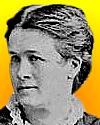
Died 3 Oct 1910 at age 77 (born 14 Mar 1833).
Lucy Beaman Taylor (née Hobbs) was an American dentist who was the first woman dentist in America to graduate (1866) from a dental college as a Doctor of Dental Surgery. Earlier, being long refused admission to dental schools (1859-65), she had acquired the skills of dentistry, and practiced without a diploma, as was common at the time. Then the Iowa State Dental Society supported Lucy's ambition for a college degree, demanded her admission, and she was accepted by the Ohio College of Dentistry. After graduation, she practiced for a short time in Chicago, then married James M. Taylor and taught him dentistry. The couple moved to Lawrence, Kansas, in December, 1867, opened a joint office and soon enjoyed a prosperous practice (1867-86).
Lucy Beaman Taylor (née Hobbs) was an American dentist who was the first woman dentist in America to graduate (1866) from a dental college as a Doctor of Dental Surgery. Earlier, being long refused admission to dental schools (1859-65), she had acquired the skills of dentistry, and practiced without a diploma, as was common at the time. Then the Iowa State Dental Society supported Lucy's ambition for a college degree, demanded her admission, and she was accepted by the Ohio College of Dentistry. After graduation, she practiced for a short time in Chicago, then married James M. Taylor and taught him dentistry. The couple moved to Lawrence, Kansas, in December, 1867, opened a joint office and soon enjoyed a prosperous practice (1867-86).

Died 3 Oct 1867 at age 48 (born 9 Jul 1819).
American inventor who invented a commercially successful sewing machine. Although it was Walter Hunt who built America's first sewing machine, in 1834, (then thought about it as a destroyer of home stitchers' jobs) but Hunt did not pursue it. Later, Howe spent years developing a functional design, and was granted a patent on his own machine on 10 Sep 1846. Commercial success came slowly, requiring the defense of his patent against Isaac Singer's better marketed machine. Eventually he gained riches, but died young at 49. By then, his sewing machine helped revolutionize garment manufacture in the factory and in the home. more
American inventor who invented a commercially successful sewing machine. Although it was Walter Hunt who built America's first sewing machine, in 1834, (then thought about it as a destroyer of home stitchers' jobs) but Hunt did not pursue it. Later, Howe spent years developing a functional design, and was granted a patent on his own machine on 10 Sep 1846. Commercial success came slowly, requiring the defense of his patent against Isaac Singer's better marketed machine. Eventually he gained riches, but died young at 49. By then, his sewing machine helped revolutionize garment manufacture in the factory and in the home. more
Elias Howe: Inventive Boy, by Jean Corcoran. - book suggestion.
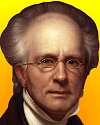
Died 3 Oct 1860 at age 82 (born 22 Feb 1778). quotes
American artist and naturalist, son of Charles Willson Peale, who followed his father as a portrait painter with an interest in natural history. Many of Rembrandt Peale's portraits are of scientists. He also took an interest in the technology of his era, including the pioneering steam navigation of John Fitch and Robert Fulton, gas lighting of Baltimore's streets, and the chemistry of pigments. In 1801, he assisted his father's excavation of mastodon bones from the peat bogs of Orange County, New York, from which they assembled two skeletons. One was mounted in his father's Philadelphia Museum. Rembrandt displayed another as a travelling exhibit around New York (1802) and London (1802, 1803). From the details of its fossil teeth, he believed the mastodon was a carnivor, though Georges Cuvier shortly established it was a herbivor.« more
American artist and naturalist, son of Charles Willson Peale, who followed his father as a portrait painter with an interest in natural history. Many of Rembrandt Peale's portraits are of scientists. He also took an interest in the technology of his era, including the pioneering steam navigation of John Fitch and Robert Fulton, gas lighting of Baltimore's streets, and the chemistry of pigments. In 1801, he assisted his father's excavation of mastodon bones from the peat bogs of Orange County, New York, from which they assembled two skeletons. One was mounted in his father's Philadelphia Museum. Rembrandt displayed another as a travelling exhibit around New York (1802) and London (1802, 1803). From the details of its fossil teeth, he believed the mastodon was a carnivor, though Georges Cuvier shortly established it was a herbivor.« more
Died 3 Oct 1704 (born 1640).
French physician and food scientist.
French physician and food scientist.
In 1994, the Food and Drug Administration approved the Left Ventricular Assist Device, which helps failing hearts continue to function.
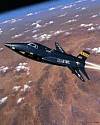
In 1967, the X-15 rocket plane achieved a world record speed of Mach 6.7, which is 4,520 mph or over a mile per second, with U.S. Air Force pilot Pete Knight. It reached an altitude of 192,100 feet (58,552 m). Its internal structure of titanium was covered with a skin of Inconel X, a chrome-nickel alloy. To save fuel, the X-15 was air launched from a B-52 aircraft at about 45,000 ft. Test flights between 8 Jun 1959 and 24 Oct 1968 provided data on hypersonic air flow, aerodynamic heating, control and stability at hypersonic speeds and piloting techniques for reentry used in the development of the Mercury, Gemini, and Apollo spaceflight programs. The X-15 reached 354,200 feet (67 miles) on 22 Aug 1963.«[Image: NASA artist's conception of the flight.]
Hypersonic! The Story of the North American X-15, by Dennis R. Jenkins, Tony Landis. - book suggestion.

In 1952, “Hurricane,” the first British atomic bomb was tested at the Monte Bello, Australia, becoming the third country in the world to test such a weapon. The bomb used an improved plutonium implosion bomb similar to the U.S. "Fat Man". The bomb used plutonium produced in Britain at Windscale (now Sellafield) with a low Pu-240 content since hurried production led to short irradiation times, plus some Canadian origin plutonium. To test the effects of a ship-smuggled bomb (a threat of great concern at the time), Hurricane was exploded inside the hull of the HMS Plym (1450 ton frigate) which was anchored in 40 feet of water 400 yards off shore. The explosion, 9-ft below the water line, left a saucer-shaped crater on the seabed 20-ft deep and 1,000-ft across.
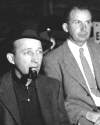
In 1952, the first U.S. video recording on magnetic tape giving credible results of off-air black and white recordings was made by John T. Mullin at the electronics division of Bing Crosby Enterprises, Inc., Los Angeles, Cal. Using a Video Tape Recorder, the images on magnetic tape were not only one-third less costly than photographic methods, but were also immediately available to reproduce on a standard TV monitor tube as soon as the tape was rewound. The 12-head VTR used one-inch tape running at 120 inches per second to record ten tracks of monochrome video information, a clock track to control synchronization and an FM audio track. The basic theory was to use frequency division multiplexing with the 10 channels covering the desired video range.
In 1947, after 11 years of grinding and polishing a 200-inch diameter telescope lens for the Mount Palomar Observatory was completed at the California Institute of Technology. This lens, the first of its size made in the U.S., began when 20 tons of molten glass at 2,700 deg. Fahrenheit were poured into a ceramic mold at Corning Glass Works, N.Y. on 2 Dec 1934. The glass lens was allowed to cool only one or two degrees per day over the next eleven months, and then brought to room temperature. The telescope in which the lens was mounted was named the Hale Telescope in recognition of the late Dr. George E. Hale who had initiated the project. The completed telescope was first used on 1 Feb 1949 by taking pictures of a Milky Way constellation.
The Perfect Machine: Building the Palomar Telescope, by Ronald Florence. - book suggestion.
In 1945, following a message from President Truman, a bill sponsored by the war department and known as the May-Johnson bill was introduced into the U.S. Congress. The purpose of this bill was to keep the atomic bomb a secret under stringent security restrictions. Because it failed to provide for the sharing of information with foreign countries, and granted a dominant role to the military, scientists throughout the country were galvanized in opposition. Due in part to lobbying by scientists such as Leo Szilard and other groups, the May-Johnson Bill was tabled in December. The McMahon Act, signed on 1 Aug 1946, mandated civilian control of atomic energy under the auspices of the Atomic Energy Commission (AEC).
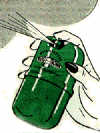
In 1941, a patent for the first aerosol can used in a commercial application was filed by chemist Lyle D. Goodhue and entomologist William N. Sullivan, researchers at the U.S. Dept. of Agriculture. It was titled a “Dispensing Apparatus” (U.S. No. 2,331,117, issued 5 Oct 1943). To apply oil-free insecticides in mushroom houses, they dissolved an insecticide in a nonflammable, liquefied gas under pressure in a strong steel container. The insecticide was allowed to escape in a fine spray through an oil burner nozzle. During WW II similar cans, dubbed “bug bombs,” were used to protect troops from malaria-carrying mosquitoes. Under the public service patent, royalty-free licenses were issued for the manufacture of insecticidal aerosols until the patent expired in 1960. Many improvements followed.Image from 1947 ad for Westinghouse household Bug Bomb.
In 1922, city telephone lines were used for the first time in the U.S. for the transmission of a facsimile photo in Washington, DC. Charles F. Jenkins sent an image from 1519 Connecticut Ave to the U.S. Navy Radio Staion NOF at Anacostia, D.C. Witnesses from the U.S.Navy and the Post Office Dept. attended the transmission. A photographic plate was used to record the signals at 5502 16th St, N.W. Washington, D.C. Earlier in the year, on 11 Jun 1922, a photograph had been sent by radio across the Atlantic from Rome to Bar Harbor, Maine. That transmission reproduced a 7 x 9.5 in. halftone picture, using light falling on a selenium cell to form the dots.
In 1899, the motor-driven vacuum cleaner was patented (U.S. No. 634,042) as a "pneumatic carpet renovator" by John S. Thurman of St. Louis, Mo. Thurman developed a gasoline powered vacuum cleaner and the General Compressed Air Company. In a newspaper advertisement from the St. Louis Dispatch Thurman offered his invention of the horse drawn (which went door to door) vacuum system there in St. Louis. He offered vacuuming services at $4 per visit - a significant amount in that era. By 1906, Thurman was offering built-in central vacuum systems. They actually used compress air, though, and featured no dust collection.
In 1805, the first U.S. pharmacopoeia prepared by a medical society in the U.S. was authorized by the members of the Massachusetts Medical Society of Boston, Mass. It became the 286-page The Pharmacopoeia of the Massachusetts Medical Society (1808), edited by Drs. James Jackson and John Collins Warren. The earliest pharmacopoeia produced in the U.S. was prepared for army use. It had 32 pages, with a type area on the page of 4.25 x 2.5 in. Published in 1778 in Philadelphia, Pa., its name - Pharmacopoeia simpliciorum et efficiorum, in usum noscomii militaris, etc. - reflected the use of Latin in the text. Dr. William Brown, Physician-General to the Hospitals of the U.S. wrote it for use in the U.S. Army Military Hospital at Lititz, Pa..




