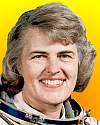
Born 14 Jan 1943.
American biochemist and astronaut who stayed aboard the Russian space station Mir in 1996 for a record-breaking 188 days. In 1976, when NASA announced that it would begin accepting women into the space program, Lucid immediately applied. Her first shuttle flight was in Jun 1985 on the Discovery, followed by the Atlantis in Oct 1989 and Aug 1991, where she conducted a variety of biomedical experiments. In Oct 1993, she became the first woman to travel into space on four separate occasions on the Columbia, setting a record for the most total flight time accumulated by a female astronaut on the shuttle (838 hours, 54 minutes). On Mir, she performed experiments, mostly on the effects of longterm space flight on the human body.
American biochemist and astronaut who stayed aboard the Russian space station Mir in 1996 for a record-breaking 188 days. In 1976, when NASA announced that it would begin accepting women into the space program, Lucid immediately applied. Her first shuttle flight was in Jun 1985 on the Discovery, followed by the Atlantis in Oct 1989 and Aug 1991, where she conducted a variety of biomedical experiments. In Oct 1993, she became the first woman to travel into space on four separate occasions on the Columbia, setting a record for the most total flight time accumulated by a female astronaut on the shuttle (838 hours, 54 minutes). On Mir, she performed experiments, mostly on the effects of longterm space flight on the human body.
Shannon Lucid/Space Ambassador, by Carmen Bredeson. - book suggestion.
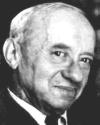
Born 14 Jan 1902; died 26 Oct 1983 at age 81. quotes
Polish-American mathematician and logician who made important studies of general algebra, measure theory, mathematical logic, set theory, and metamathematics. Formal scientific languages can be subjected to more thorough study by the semantic method that he developed. He worked on model theory, mathematical decision problems and with universal algebra. He produced axioms for “logical consequence,” worked on deductive systems, the algebra of logic and the theory of definability. Group theorists study “Tarski monsters,” infinite groups whose existence seems intuitively impossible.
Polish-American mathematician and logician who made important studies of general algebra, measure theory, mathematical logic, set theory, and metamathematics. Formal scientific languages can be subjected to more thorough study by the semantic method that he developed. He worked on model theory, mathematical decision problems and with universal algebra. He produced axioms for “logical consequence,” worked on deductive systems, the algebra of logic and the theory of definability. Group theorists study “Tarski monsters,” infinite groups whose existence seems intuitively impossible.
Alfred Tarski: Life and Logic, by Anita Burdman Feferman. - book suggestion.
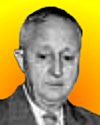
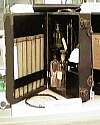
Rolla Neil Harger was an American toxicologist and biochemist who was at Indiana University when he invented the first successful machine for testing human blood alcohol content, called the Drunkometer (1931). When someone blows into a breath-test bag, any alcohol in his breath is turned into acetic acid (vinegar), changing the color of crystals in the blowing tube. The more crystals that change color, the more alcohol is in the body. The Blood Breath Partition Ratio assumes that 2100mL of breath contains the same amount of alcohol as 1 mL of blood. Harger turned over the patent to the IU Foundation, for whom it became a surprise moneymaker. After Harger persuaded the Indiana legislature to pass laws restricting alcohol use by drivers, alcohol related traffic deaths were decreased.[Image right: Drunkometer]
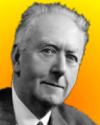
Born 14 Jan 1890; died 20 Sep 1965 at age 75.
English geologist and petrologist was one of the foremost geologists of the twentieth century, who made major contributions to the geochronology of Africa, the genesis of igneous rocks, and physical geology. He developed a method of determining the age of the earth based on measurement of uranium decay in igneous rocks (which invalidated William Thomson Kelvin's hypothesis that the earth's age can be established on the basis of the planet's cooling from a initial molten state). Holmes' method proved to be remarkably accurate and laid the foundation of isotope geology. This was the first quantitative time scale for geology based on measuring the radioactive constituents of rocks.
English geologist and petrologist was one of the foremost geologists of the twentieth century, who made major contributions to the geochronology of Africa, the genesis of igneous rocks, and physical geology. He developed a method of determining the age of the earth based on measurement of uranium decay in igneous rocks (which invalidated William Thomson Kelvin's hypothesis that the earth's age can be established on the basis of the planet's cooling from a initial molten state). Holmes' method proved to be remarkably accurate and laid the foundation of isotope geology. This was the first quantitative time scale for geology based on measuring the radioactive constituents of rocks.
The Dating Game: One Man's Search for the Age of the Earth, by Cherry Lewis. - book suggestion.


(1900s can)
American chemist who developed a breakthrough method (1900) to refine otherwise dark, unpalatable cottonseed oil into an odorless, clear, and stable edible product. Wesson devised a chemical process that improved its purity, and removed strong flavors. Marketed as Wesson Oil, it became the first vegetable cooking oil widely used in U.S. households, and prized by chefs for its ability to allow the taste of the food to come through. To help establish modern standards for edible oil refining, Wesson was one of nine chemists that founded what became the American Oil Chemists' Society (AOCS). It established cooperative research and uniform analysis, thus advancing industrial chemistry, food processing, and large-scale production of affordable vegetable oils.«
Wesson Oil Cookbook: From the Kitchens of Hunt-Wesson Inc., by Jillian Stewart (ed.). - book suggestion.
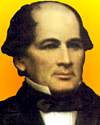
Born 14 Jan 1806; died 1 Feb 1873 at age 67. quotes
American naval officer, oceanographer and hydrographer who was a pioneer, hydrographer. He was the first person to undertake a systematic and comprehensive study of the ocean. His work on oceanography and navigation led to an international conference (Brussels, 1853) the first ever of its kind in the world. In 1855, during the Western gold rush, Maury's updated information helped sea captains cut a ship's average travel time from New York to San Francisco from 180 to 133 days. That same year, Maury prepared a report that proved the practicality - and assured the success - of the first trans-Atlantic cable between the United States and Europe. Maury was director of the U.S. Naval Observatory from 1844 to 1861.
American naval officer, oceanographer and hydrographer who was a pioneer, hydrographer. He was the first person to undertake a systematic and comprehensive study of the ocean. His work on oceanography and navigation led to an international conference (Brussels, 1853) the first ever of its kind in the world. In 1855, during the Western gold rush, Maury's updated information helped sea captains cut a ship's average travel time from New York to San Francisco from 180 to 133 days. That same year, Maury prepared a report that proved the practicality - and assured the success - of the first trans-Atlantic cable between the United States and Europe. Maury was director of the U.S. Naval Observatory from 1844 to 1861.
Matthew Fontaine Maury: Scientist of the Sea, by Frances Leigh Williams. - book suggestion.
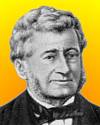
Born 14 Jan 1801; died 18 Feb 1876 at age 75.
French botanist whose classification of fossil plants, which drew surprisingly accurate relations between extinct and existing forms prior to Charles Darwin's principles of organic evolution, earned him distinction as the founder of modern paleobotany. He was an early proponent of evolutionary theory. Brongniart was a pioneer in the study of plant morphology and physiology and published the first complete account of fossil plants (1828) and of a valuable first account of pollen. His interpretations of the fossil record also contributed to our understanding of historical changes in climates and plant geography. He helped establish the Annales des sciences naturelles and founded the Société botanique de France. He was the son of Alexandre Brogniart.
French botanist whose classification of fossil plants, which drew surprisingly accurate relations between extinct and existing forms prior to Charles Darwin's principles of organic evolution, earned him distinction as the founder of modern paleobotany. He was an early proponent of evolutionary theory. Brongniart was a pioneer in the study of plant morphology and physiology and published the first complete account of fossil plants (1828) and of a valuable first account of pollen. His interpretations of the fossil record also contributed to our understanding of historical changes in climates and plant geography. He helped establish the Annales des sciences naturelles and founded the Société botanique de France. He was the son of Alexandre Brogniart.

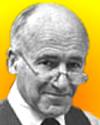
Died 14 Jan 2005 at age 85 (born 22 Jul 1919). quotes
American editor who steered the Scientific American for 37 years (1947-84) and established a new style for the magazine of inviting scientists to write its articles, with support from an editor and illustrator, aimed at the general reader. Those writers included such eminent scientists as Albert Einstein, Linus Pauling and J. Robert Oppenheimer. The first issue of Scientific American was on 28 Aug 1845, but it was the new leadership of new owners (1847), Orson Munn and Alfred Eli Beach, who made it prospect. A century later, Flanagan rescued the magazine in the post WW II years when it was failing financially. With partners and investors, and his editorial innovation, the circulation rose from 40,000 to 600,000 by the time he retired. Flanagan had lost his hearing at age 9, but learned to lip-read.«
American editor who steered the Scientific American for 37 years (1947-84) and established a new style for the magazine of inviting scientists to write its articles, with support from an editor and illustrator, aimed at the general reader. Those writers included such eminent scientists as Albert Einstein, Linus Pauling and J. Robert Oppenheimer. The first issue of Scientific American was on 28 Aug 1845, but it was the new leadership of new owners (1847), Orson Munn and Alfred Eli Beach, who made it prospect. A century later, Flanagan rescued the magazine in the post WW II years when it was failing financially. With partners and investors, and his editorial innovation, the circulation rose from 40,000 to 600,000 by the time he retired. Flanagan had lost his hearing at age 9, but learned to lip-read.«
Flanagan's Version: A Spectator's Guide to Science on the Eve of the 21st Century, by Dennis Flanagan. - book suggestion.
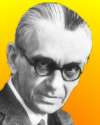
Died 14 Jan 1978 at age 71 (born 28 Apr 1906). quotes
Austrian-born U.S. mathematician, logician, and author of Gödel's proof. He is best known for his proof of Gödel's Incompleteness Theorems (1931) He proved fundamental results about axiomatic systems showing in any axiomatic mathematical system there are propositions that cannot be proved or disproved within the axioms of the system. In particular the consistency of the axioms cannot be proved. This ended a hundred years of attempts to establish axioms to put the whole of mathematics on an axiomatic basis.
Austrian-born U.S. mathematician, logician, and author of Gödel's proof. He is best known for his proof of Gödel's Incompleteness Theorems (1931) He proved fundamental results about axiomatic systems showing in any axiomatic mathematical system there are propositions that cannot be proved or disproved within the axioms of the system. In particular the consistency of the axioms cannot be proved. This ended a hundred years of attempts to establish axioms to put the whole of mathematics on an axiomatic basis.
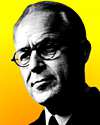
Died 14 Jan 1969 at age 88 (born 4 Jun 1880). quotes
American geologist who contributed much to the field of geomorphology, especially on the origin and evolution of desert landscapes and mountain glaciation research in the Rocky Mountains, Sierra Nevada and in China. In his early career, at the University of Wisconsin, he taught the first course in sedimentation in the U.S. (1912-13). He investigated the site and surrounding area proposed for the Hoover Dam. Blackwelder was an early proponent of the theory that it was indeed an impact origin for Meteor Crater in Arizona. After shorter times spent at other universities, he became professor of geology at Stanford University until his retirement (1922-45). Among the offices he held with various associations, he served a term as president of the Geological Society of America. He is the father of zoologist, Richard E. Blackwelder.«
American geologist who contributed much to the field of geomorphology, especially on the origin and evolution of desert landscapes and mountain glaciation research in the Rocky Mountains, Sierra Nevada and in China. In his early career, at the University of Wisconsin, he taught the first course in sedimentation in the U.S. (1912-13). He investigated the site and surrounding area proposed for the Hoover Dam. Blackwelder was an early proponent of the theory that it was indeed an impact origin for Meteor Crater in Arizona. After shorter times spent at other universities, he became professor of geology at Stanford University until his retirement (1922-45). Among the offices he held with various associations, he served a term as president of the Geological Society of America. He is the father of zoologist, Richard E. Blackwelder.«
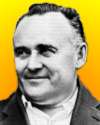
Died 14 Jan 1966 at age 59 (born 12 Jan 1907).
Soviet rocket engineer who designed guided missiles, rockets, and spacecraft. He was one of the founders of Moscow Group for the Study of Reactive Motion. In 1933, he participated in the Soviet Union's first launch of a liquid-propellant rocket. Because he was not a member of the Communist Party, he spent much of his life under house arrest. After demonstrating his expertise in the modification of captured V2 rockets, Korolev directed the design, testing, construction, and launching of the Vostok spacecraft, and most of the U.S.S.R.'s other projects. Around 1958, Korolev argued for the pursuit of manned space flight instead of military reconnaissance satellites. After much debate, the Vostok project was approved provided the launch vehicle could also be useful to the military.
Soviet rocket engineer who designed guided missiles, rockets, and spacecraft. He was one of the founders of Moscow Group for the Study of Reactive Motion. In 1933, he participated in the Soviet Union's first launch of a liquid-propellant rocket. Because he was not a member of the Communist Party, he spent much of his life under house arrest. After demonstrating his expertise in the modification of captured V2 rockets, Korolev directed the design, testing, construction, and launching of the Vostok spacecraft, and most of the U.S.S.R.'s other projects. Around 1958, Korolev argued for the pursuit of manned space flight instead of military reconnaissance satellites. After much debate, the Vostok project was approved provided the launch vehicle could also be useful to the military.
Died 14 Jan 1956 at age 52 (born 24 Apr 1903).
Siegfried Frederick Nadel was an Austrian-British anthropologist whose investigations of African ethnology led him to explore theoretical questions. From 1934-36, he worked with the Nupe and other groups in northern Nigeria. From 1941-46, he joined the Sudan Defense Force in order to have a personal involvement with the destruction of the Nazi forces. He produced outstanding ethnographic writings. Nadel was also a major theoretician who attempted to develop a new synthesis of social science, as in his books, The Foundations of Social Anthropology and A Theory of Social Structure. He wanted to link the “Study of Man with the whole universe of scientific knowledge.”
Siegfried Frederick Nadel was an Austrian-British anthropologist whose investigations of African ethnology led him to explore theoretical questions. From 1934-36, he worked with the Nupe and other groups in northern Nigeria. From 1941-46, he joined the Sudan Defense Force in order to have a personal involvement with the destruction of the Nazi forces. He produced outstanding ethnographic writings. Nadel was also a major theoretician who attempted to develop a new synthesis of social science, as in his books, The Foundations of Social Anthropology and A Theory of Social Structure. He wanted to link the “Study of Man with the whole universe of scientific knowledge.”
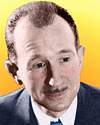
Died 14 Jan 1949 at age 56 (born 21 Feb 1892). quotes
American psychiatrist who developed a theory of psychiatry based on interpersonal relationships. He believed that anxiety and psychotic behavior could be traced back to families who did not know how to relate to their children, who consequently did not feel accepted and loved. He thus focused his efforts on guiding personality development during interactions with other people. His aim was to improve a person's interpersonal skills, toward feeling whole and healthy, and to reduce fundamental conflicts between the individual and his human environment.«
American psychiatrist who developed a theory of psychiatry based on interpersonal relationships. He believed that anxiety and psychotic behavior could be traced back to families who did not know how to relate to their children, who consequently did not feel accepted and loved. He thus focused his efforts on guiding personality development during interactions with other people. His aim was to improve a person's interpersonal skills, toward feeling whole and healthy, and to reduce fundamental conflicts between the individual and his human environment.«
The Interpersonal Theory of Psychiatry, by Harry Stack Sullivan. - book suggestion.
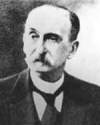
Died 14 Jan 1934 at age 79 (born 2 Sep 1854).
French scientist, known for his invention of smokeless powder. Military commanders since the Napoleonic Wars had problems giving orders on a battlefield swathed in thick smoke from the gunpowder used by the guns. In 1886 Paul Vieille invented a smokeless gunpowder called Poudre B. Made from gelatinized nitrocellulose mixed with ether and alcohol, it was passed through rollers to form thin sheets, which were cut with a guillotine to flakes of the desired size. It revolutionized the effectiveness of small guns and rifles.It was much more powerful than gun powder, giving an accurate rifle range of up to 1000 yards.
French scientist, known for his invention of smokeless powder. Military commanders since the Napoleonic Wars had problems giving orders on a battlefield swathed in thick smoke from the gunpowder used by the guns. In 1886 Paul Vieille invented a smokeless gunpowder called Poudre B. Made from gelatinized nitrocellulose mixed with ether and alcohol, it was passed through rollers to form thin sheets, which were cut with a guillotine to flakes of the desired size. It revolutionized the effectiveness of small guns and rifles.It was much more powerful than gun powder, giving an accurate rifle range of up to 1000 yards.
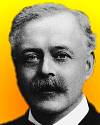
Died 14 Jan 1933 at age 75 (born 28 Jun 1857).
English orthopaedic surgeon who has been called the founder of modern orthopaedic surgery. He was a nephew of Hugh Owen Thomas and became one of his apprentices in Liverpool. On 22 Feb 1896, Jones published the first report of the clinical use of an X-ray to locate a bullet in a wrist, for which equipment was provided by Oliver Lodge. Jones co-founded medical associations, including the British Orthopaedic Society and orthopaedic hospitals. During WWI, he led the orthopaedic section of the British Forces. Jones advocated tendon transplantation, bone grafting, and other conservative, restorative procedures. "Time stood still," it has been said, when Jones operated. He wrote several important books on orthopaedics.«*
English orthopaedic surgeon who has been called the founder of modern orthopaedic surgery. He was a nephew of Hugh Owen Thomas and became one of his apprentices in Liverpool. On 22 Feb 1896, Jones published the first report of the clinical use of an X-ray to locate a bullet in a wrist, for which equipment was provided by Oliver Lodge. Jones co-founded medical associations, including the British Orthopaedic Society and orthopaedic hospitals. During WWI, he led the orthopaedic section of the British Forces. Jones advocated tendon transplantation, bone grafting, and other conservative, restorative procedures. "Time stood still," it has been said, when Jones operated. He wrote several important books on orthopaedics.«*
The Life of Sir Robert Jones, by Frederick Watson. - book suggestion.
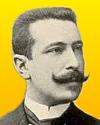
Died 14 Jan 1929 at age 66 (born 9 Mar 1862).
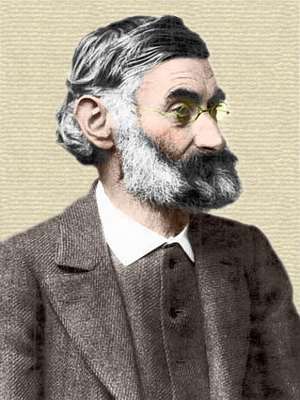
(Georges-) Fernand-Isidore Widal was a French physician and bacteriologist who made important contributions to the diagnosis, treatment, and prevention of many diseases. In 1896, he developed the Widal reaction, a procedure for diagnosing typhoid fever based on the fact that antibodies in the blood of an infected individual cause the bacteria to bind together into clumps. In 1906, he recognized that the retention of sodium chloride was a feature found in cases of nephritis and cardiac edema, and he recommended salt deprivation as part of the treatment for both diseases. During WW I, Widal prepared a vaccine that appreciably reduced typhoid contagion among the allied armies.
(Georges-) Fernand-Isidore Widal was a French physician and bacteriologist who made important contributions to the diagnosis, treatment, and prevention of many diseases. In 1896, he developed the Widal reaction, a procedure for diagnosing typhoid fever based on the fact that antibodies in the blood of an infected individual cause the bacteria to bind together into clumps. In 1906, he recognized that the retention of sodium chloride was a feature found in cases of nephritis and cardiac edema, and he recommended salt deprivation as part of the treatment for both diseases. During WW I, Widal prepared a vaccine that appreciably reduced typhoid contagion among the allied armies.
click to enlarge
Died 14 Jan 1905 at age 64 (born 23 Jan 1840).
German physicist who established a technical and theoretical foundation for the design of optical instruments. The Abbe sine condition enabled designing lenses without spherical aberation's image distortion. He invented the apochromatic lens system (1868), and added the Abbe condenser lens to improve illumination for the microscope (1870). He used homogenous immersion of specimen and microscope objective in cedar oil with matching refractive index to give higher magnification. He invented the Abbe refractometer to measure a refractive index. From 1866, he collaborated with Carl Zeiss to produce high quality optical instruments. He became sole owner of the Zeiss optical works in 1888. From 1878, he also was director of the University of Jena astronomical and meteorological observatories.«
German physicist who established a technical and theoretical foundation for the design of optical instruments. The Abbe sine condition enabled designing lenses without spherical aberation's image distortion. He invented the apochromatic lens system (1868), and added the Abbe condenser lens to improve illumination for the microscope (1870). He used homogenous immersion of specimen and microscope objective in cedar oil with matching refractive index to give higher magnification. He invented the Abbe refractometer to measure a refractive index. From 1866, he collaborated with Carl Zeiss to produce high quality optical instruments. He became sole owner of the Zeiss optical works in 1888. From 1878, he also was director of the University of Jena astronomical and meteorological observatories.«
Died 14 Jan 1902 at age 65 (born 11 Aug 1836).
Norwegian chemist who, with his brother-in-law Peter Waage, formulated the law of mass action (1864), which details the effects of concentration, mass, and temperature on chemical reaction rates. The law states that the rate of a chemical change depends on the concentrations of the reactants. Thus for a reaction: A + B -> C the rate of reaction is proportional to [A][B], where [A] and [B] are concentrations. In 1870 Guldberg investigated the way in which the freezing point and vapor pressure of a pure liquid are lowered by a dissolved component. In 1890 he formulated Guldberg's law which relates boiling point and critical temperature.
Norwegian chemist who, with his brother-in-law Peter Waage, formulated the law of mass action (1864), which details the effects of concentration, mass, and temperature on chemical reaction rates. The law states that the rate of a chemical change depends on the concentrations of the reactants. Thus for a reaction: A + B -> C the rate of reaction is proportional to [A][B], where [A] and [B] are concentrations. In 1870 Guldberg investigated the way in which the freezing point and vapor pressure of a pure liquid are lowered by a dissolved component. In 1890 he formulated Guldberg's law which relates boiling point and critical temperature.
Died 14 Jan 1901 at age 78 (born 24 Dec 1822). quotes
French mathematician whose work in the theory of functions includes the application of elliptic functions to provide the first solution to the general equation of the fifth degree, the quintic equation. In 1873 he published the first proof that e is a transcendental number. Hermite is known also for a number of mathematical entities that bear his name, Hermite polynomials, Hermite's differential equation, Hermite's formula of interpolation and Hermitian matrices. Poincaré is the best known of Hermite's students.
French mathematician whose work in the theory of functions includes the application of elliptic functions to provide the first solution to the general equation of the fifth degree, the quintic equation. In 1873 he published the first proof that e is a transcendental number. Hermite is known also for a number of mathematical entities that bear his name, Hermite polynomials, Hermite's differential equation, Hermite's formula of interpolation and Hermitian matrices. Poincaré is the best known of Hermite's students.
Died 14 Jan 1898 at age 65 (born 27 Jan 1832). quotes
Charles Lutwidge Dodgson, pen-name Lewis Carroll, was an English logician, mathematician, photographer, and novelist, remembered for Alice's Adventures in Wonderland (1865) and its sequel. After graduating from Christ Church College, Oxford in 1854, Dodgson remained there, lecturing on mathematics and writing treatises until 1881. As a mathematician, Dodgson was conservative. He was the author of a fair number of mathematics books, for instance A Syllabus of Plane Algebraical Geometry (1860). His mathematics books have not proved of enduring importance except Euclid and his Modern Rivals (1879) which is of historical interest. As a logician, he was more interested in logic as a game than as an instrument for testing reason.
Charles Lutwidge Dodgson, pen-name Lewis Carroll, was an English logician, mathematician, photographer, and novelist, remembered for Alice's Adventures in Wonderland (1865) and its sequel. After graduating from Christ Church College, Oxford in 1854, Dodgson remained there, lecturing on mathematics and writing treatises until 1881. As a mathematician, Dodgson was conservative. He was the author of a fair number of mathematics books, for instance A Syllabus of Plane Algebraical Geometry (1860). His mathematics books have not proved of enduring importance except Euclid and his Modern Rivals (1879) which is of historical interest. As a logician, he was more interested in logic as a game than as an instrument for testing reason.
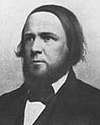
Died 14 Jan 1885 at age 68 (born 4 Dec 1816). quotes
American chemist whose report on the potential uses of crude-oil products gave impetus to plans for drilling the first producing oil well, near Titusville, Pa. Silliman separated the crude oil into its component parts, or its fractions, and observed the characteristics of each fraction. He determined by use of a photometer that distilled petroleum burned much brighter than all but the most expensive and least efficient fuels. He also noted its potential use as a lubricant; he found it capable of withstanding extremely high and low temperatures and able to keep its form after long use. Silliman concluded petroleum was “a raw material from which...they may manufacture a very valuable product.” His report marked petroleum as the answer to the illumination fuel crisis.
American chemist whose report on the potential uses of crude-oil products gave impetus to plans for drilling the first producing oil well, near Titusville, Pa. Silliman separated the crude oil into its component parts, or its fractions, and observed the characteristics of each fraction. He determined by use of a photometer that distilled petroleum burned much brighter than all but the most expensive and least efficient fuels. He also noted its potential use as a lubricant; he found it capable of withstanding extremely high and low temperatures and able to keep its form after long use. Silliman concluded petroleum was “a raw material from which...they may manufacture a very valuable product.” His report marked petroleum as the answer to the illumination fuel crisis.
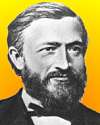

German physicist who invented an early telephone before Bell. After years of experimentation, by age 27, he made a fragile, clumsy, rudimentary transmitter with an animal ear membrane in front of an electrical contact. A galvanic inductor oscillated in the receiver in sync with the transmitted signal. Reis’ instrument could not reproduce intelligible speech. Certain sounds were conveyed, poorly. Reis coined the word “telephone.” On 26 Oct 1861, Reis showed “Telephony Using Galvanic Current” to Frankfurt's Physics Association. This was the first public demonstration of successful conversion of electrical into auditory waves. Verses of a song were transmitted from the lecture room to a hospital room over a 300-ft away, but did notdid not impress the professors. It gained no financial support, was not patented and never had public use.«
Died 14 Jan 1746 (born Feb 1698). quotes
Scottish mathematician who developed and extended Sir Isaac Newton's work in calculus, geometry, and gravitation.[DSB gives date of death 14 Jan 1746. EB gives 14 Jun 1746.]
Scottish mathematician who developed and extended Sir Isaac Newton's work in calculus, geometry, and gravitation.[DSB gives date of death 14 Jan 1746. EB gives 14 Jun 1746.]
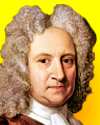

English astronomer, geophysicist and mathematician who is best known for recognizing that a bright comet (later named after him) had appeared several times, calculating its orbit (1682) and for successfully predicting its return. Halley became an influential Fellow of the Royal Society. After originating the question that prodded Isaac Newton to write the seminal Philosophiae Naturalis Principia Mathematica, Halley edited it and arranged its publication. Halley was a professor of geometry at Oxford and later appointed Astronomer Royal. Halley identified the proper motion of stars, studied the moon's motion and tides, realized that nebulae were clouds of luminous gas among the stars, and that the aurora was a phenomenon connected with the earth's magnetism. His prediction of the transit of Venus led to Captain James Cook's voyage to Tahiti.
Edmond Halley: Charting the Heavens and the Seas, by Alan Cook. - book suggestion.
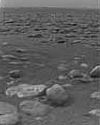
In 2005, the Huygens space probe landed on Titan, Saturn's largest moon. It had been released from the Cassini spacecraft when its orbit around Saturn converged with the path of Titan on 24 Dec 2004. In the first three photographs received from Huygens on the surface of Titan, scientists saw what resembled drainage channels, a shoreline, flooded regions surrounded by elevated terrain and a plain covered with large boulders, possibly of ice. The probe was named after Christiaan Huygens, the Dutch astronomer who first viewed Titan on 25 Mar 1655, the first of Saturn's moon to be discovered.«
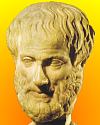
In 1997, the discovery in Athens of the lyceum where the philosopher Aristotle taught 2,500 years ago was confirmed by Greece's Minister of Culture. In 335 BC, Aristotle opened a lyceum to rival the academy. For the next 12 years he organised his lyceum as a centre for philosophical speculation and scientific research, particularly in biology and history. He died in 324 BC, but 47 of his many works remain, mostly notes used in lyceum lectures. When the discovery was made by archaeologist Ephi Ligouri, the site satisfied all known facts concerning the long-lost location of the lyceum: to the east of the city walls and on the banks of the river Iliso. The excavation was made urgently before building began for a planned museum of modern art.

In 1970, L-dopa (levo-dihydroxyphenylalanine) was reported to benefit about 5% of the patients in reversing the progress of Parkinson's disease. The results of the first widescale experimental use of the drug were announced at a symposium on L-dopa at Georgetown University School of Medicine by Dr. Robert Keen, director of clinical pharmacology for Eaton Laboratories. The work also showed partial improvement in 56% of the 601 patients in this testing, which preceded approval by the U.S. Food and Drug Agency. However, side effects were found to be widespread, ranging from nausea, vomiting or appetite loss to confusion, nervousness or hallucinations. Preliminary investigations three years earlier showed the potential for the drug, when no other effective drug existed.* L-dopa entered national distribution in Sep 1970.« [Image: L-dopa molecule.]
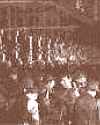
In 1914, Henry Ford announced the newest advance in assembly line production of “modern” cars he had introduced six weeks earlier, on 1 Dec 1913. The new continuous motion method reduced assembly time of a car from over 12 hours to 93 minutes.
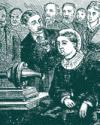
In 1878, the first demonstration of Alexander Graham Bell's telephone to Queen Victoria at her Osborne House estate on the Isle of Wight. Bell had patented the telephone in 1876, and in 1877, Bell had come to England for his honeymoon, and spent time on business. He had demonstrated his device to telegraph engineers and given lectures to scientists. When the Queen saw his telephone, she was much impressed, and ordered a private line to be laid between Osborne House, on the Isle of Wight, and Buckingham Palace.
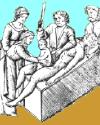
woodcut date 1506
In 1794, Elizabeth Hog Bennett became the first woman in the U.S. to successfully give birth to a child by a Cesarean section. Her husband, Dr. Jessee Bennett of Edom, Va., performed the operation, though he had no anesthetic to give her. Another local doctor who he asked for assistance declined, citing excessive risk. In his place, he enlisted the help of two field hands to hold the mother on a wooden table. Whereas this operation was the first of its kind in the U.S., the history of the Cesarean operation has been traced as far back as ancient Chinese etchings that depict the procedure on apparently living women. Roman law under Julius Caesar decreed that all women who were dead or dying must be cut open to save the child.




