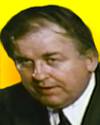
Born 11 Apr 1924; died 21 Jun 1977 at age 53.
American oceanographer and geologist whose data collection helped Marie Tharp meticulously draft ocean-floor maps that confirmed Alfred Wegener’s continental drift theory. Beginning in the late 1940s, Heezen collaborated under Maurice Ewing, using seismic and sonar data to map the seafloor, until the relationship became antagonistic. Heezen identified turbidites: huge undersea landslides, usually triggered by earthquakes. They cause millions of tons of rock and debris to race down the continental shelf at prodigious speeds, up to 400 km/hr. This work brought him professional recognition, which helped him to access to much oceanic data from many sources. He had a fatal heart attack while submerged on a submarine survey.«
American oceanographer and geologist whose data collection helped Marie Tharp meticulously draft ocean-floor maps that confirmed Alfred Wegener’s continental drift theory. Beginning in the late 1940s, Heezen collaborated under Maurice Ewing, using seismic and sonar data to map the seafloor, until the relationship became antagonistic. Heezen identified turbidites: huge undersea landslides, usually triggered by earthquakes. They cause millions of tons of rock and debris to race down the continental shelf at prodigious speeds, up to 400 km/hr. This work brought him professional recognition, which helped him to access to much oceanic data from many sources. He had a fatal heart attack while submerged on a submarine survey.«
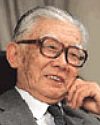
Born 11 Apr 1908; died 19 Dec 1998 at age 90. quotes
Japanese electronics pioneer who co-founded a small post-war radio-repair company that grew into the giant Sony Corporation. He changed the Japanese electronics industry from simply copying Western products to innovation with their own electronic products. He introduced transistor technology to Japan. Sony progressed from making the first Japanese transistor radio to manufacturing the world's first transistorized television set. In the 1960's Ibuka pioneered color television. He retired from management in 1976, and turned to research that developed products such as the creative Walkman and the compact disc player. His accomplishments were significant in building consumer confidence in Japanese electronic products and rebuilding Asian economies.«
Japanese electronics pioneer who co-founded a small post-war radio-repair company that grew into the giant Sony Corporation. He changed the Japanese electronics industry from simply copying Western products to innovation with their own electronic products. He introduced transistor technology to Japan. Sony progressed from making the first Japanese transistor radio to manufacturing the world's first transistorized television set. In the 1960's Ibuka pioneered color television. He retired from management in 1976, and turned to research that developed products such as the creative Walkman and the compact disc player. His accomplishments were significant in building consumer confidence in Japanese electronic products and rebuilding Asian economies.«
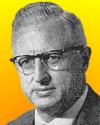
Born 11 Apr 1901; died 14 Dec 1976 at age 75. quotes
Donald Howard Menzel was an American astronomer who was best known for his arguments against the existence of extraterrestrial UFO's. Menzel was one of the first practitioners of theoretical astrophysics in the United States and pioneered the application of quantum mechanics to astronomical spectroscopy. An authority on the sun's chromosphere, he discovered with J. C. Boyce (1933) that the sun's corona contains oxygen. With W. W. Salisbury he made (1941) the first of the calculations that led to radio contact with the moon in 1946. He supervised the assignment of names to newly discovered lunar features.
Donald Howard Menzel was an American astronomer who was best known for his arguments against the existence of extraterrestrial UFO's. Menzel was one of the first practitioners of theoretical astrophysics in the United States and pioneered the application of quantum mechanics to astronomical spectroscopy. An authority on the sun's chromosphere, he discovered with J. C. Boyce (1933) that the sun's corona contains oxygen. With W. W. Salisbury he made (1941) the first of the calculations that led to radio contact with the moon in 1946. He supervised the assignment of names to newly discovered lunar features.
Mathematical Physics, by Donald H. Menzel. - book suggestion.
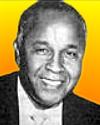
Born 11 Apr 1899; died 19 Apr 1975 at age 76.
African-American chemist, whose 100 patents include the synthesis of cortisone, hormones, and other products from soybeans. He isolated from plants simple compounds and investigated how they were naturally altered into chemicals essential to life, including vitamins and hormones; then he attempted to create the compounds artificially. Early in his career he synthesized physostigmine, a glaucoma drug. A refined soya protein was the basis of Aero-Foam, a foam fire extinguisher used by the U.S. Navy in WW II. His efforts led to quantity production of the hormones progesterone (female), testosterone (male) and cortisone drugs. In 1950, his home in an all-white suburb was bombed and burned.«
African-American chemist, whose 100 patents include the synthesis of cortisone, hormones, and other products from soybeans. He isolated from plants simple compounds and investigated how they were naturally altered into chemicals essential to life, including vitamins and hormones; then he attempted to create the compounds artificially. Early in his career he synthesized physostigmine, a glaucoma drug. A refined soya protein was the basis of Aero-Foam, a foam fire extinguisher used by the U.S. Navy in WW II. His efforts led to quantity production of the hormones progesterone (female), testosterone (male) and cortisone drugs. In 1950, his home in an all-white suburb was bombed and burned.«
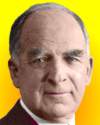
Born 11 Apr 1862; died 14 Jun 1938 at age 76. quotes
William Wallace Campbell was an American astronomer who was director at Lick Observatory (1900-1930). He had first worked there as a summer volunteer (1890), learning spectroscopy under James E. Keeler, whom he succeeded (1891) as a staff astronomer. Campbell designed the classic Mills spectrograph (1893), and determined that the Martian atmosphere was deficient in oxygen and water vapor. He discovered and cataloged numerous spectroscopic binary stars (published 1924). Campbell is remembered for the systematic observation of radial velocity of stars (their motions toward or away from the Earth), to determine the Sun’s motion relative to the surrounding stars. He led several eclipse expeditions, including one (1922) confirming Einstein’s gravitational bending of light.«
William Wallace Campbell was an American astronomer who was director at Lick Observatory (1900-1930). He had first worked there as a summer volunteer (1890), learning spectroscopy under James E. Keeler, whom he succeeded (1891) as a staff astronomer. Campbell designed the classic Mills spectrograph (1893), and determined that the Martian atmosphere was deficient in oxygen and water vapor. He discovered and cataloged numerous spectroscopic binary stars (published 1924). Campbell is remembered for the systematic observation of radial velocity of stars (their motions toward or away from the Earth), to determine the Sun’s motion relative to the surrounding stars. He led several eclipse expeditions, including one (1922) confirming Einstein’s gravitational bending of light.«
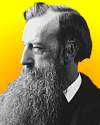
Born 11 Apr 1829; died 13 May 1907 at age 78.
Scottish meteorologist, eminent in his field, who brought the weather map to the forefront of weather forecasting, as when he traced (1868) the path of a storm that traversed North America, continued across the Atlantic Ocean and on into northern Europe. From 1907 to 1920, Buchan was Director of the Meteorological Office. Buchan helped establish an observatory (Nov 1883-Sep 1904) on top of Ben Nevis, the highest mountain in Scotland. With Sir Arthur Mitchell he wrote articles on the 'Influence of Weather on Mortality from different Diseases and at different Ages' and on 'Influenza and Weather in London.' As a hobby, he also had skills as a botanist. He published several books on meteorology.«
Scottish meteorologist, eminent in his field, who brought the weather map to the forefront of weather forecasting, as when he traced (1868) the path of a storm that traversed North America, continued across the Atlantic Ocean and on into northern Europe. From 1907 to 1920, Buchan was Director of the Meteorological Office. Buchan helped establish an observatory (Nov 1883-Sep 1904) on top of Ben Nevis, the highest mountain in Scotland. With Sir Arthur Mitchell he wrote articles on the 'Influence of Weather on Mortality from different Diseases and at different Ages' and on 'Influenza and Weather in London.' As a hobby, he also had skills as a botanist. He published several books on meteorology.«
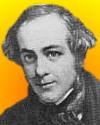
Born 11 Apr 1810; died 5 Mar 1895 at age 84.
Henry Creswicke Rawlinson was an English archaeologist who, as an army officer, became interested in antiquities after his assignment to reorganize the Persian army. He accomplished the translation of the Old Persian portion of the trilingual mutillingual cuneiform inscription of Darius I on the hillside at Bisitun, Iran. This success provided the key to the deciphering, by himself and others, of Mesopotamian cuneiform script. It was soon learned that the cuneiform system had been used by many different groups and for writing a variety of languages. Semetic speaking Babylonians and Assyrians used the cuneiform for hundreds of years. Rawlinson's work was the result of a breakthrough of many discoveries and provided great insight of human history.
Henry Creswicke Rawlinson was an English archaeologist who, as an army officer, became interested in antiquities after his assignment to reorganize the Persian army. He accomplished the translation of the Old Persian portion of the trilingual mutillingual cuneiform inscription of Darius I on the hillside at Bisitun, Iran. This success provided the key to the deciphering, by himself and others, of Mesopotamian cuneiform script. It was soon learned that the cuneiform system had been used by many different groups and for writing a variety of languages. Semetic speaking Babylonians and Assyrians used the cuneiform for hundreds of years. Rawlinson's work was the result of a breakthrough of many discoveries and provided great insight of human history.
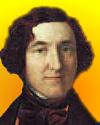
Born 11 Apr 1798; died 11 Aug 1854 at age 56.
Italian physicist who was the first to extensively research infrared radiation. Sir William Frederick Herschel discovered infrared radiation in 1800, but research stalled until the invention of a thermopile in 1830. That instrument was a series of strips of two different metals that produced electric current when one end was heated. Melloni improved the thermopile and used it to detect infrared radiation. In 1846, from an observation point high on Mount Vesuvius, he measured the slight heating effect of moonlight. He showed also that rock salt, being transparent to infrared, made suitable lenses and prisms to demonstrate the reflection, refraction, polarization and interference of infrared in the same manner as visible light. more
Italian physicist who was the first to extensively research infrared radiation. Sir William Frederick Herschel discovered infrared radiation in 1800, but research stalled until the invention of a thermopile in 1830. That instrument was a series of strips of two different metals that produced electric current when one end was heated. Melloni improved the thermopile and used it to detect infrared radiation. In 1846, from an observation point high on Mount Vesuvius, he measured the slight heating effect of moonlight. He showed also that rock salt, being transparent to infrared, made suitable lenses and prisms to demonstrate the reflection, refraction, polarization and interference of infrared in the same manner as visible light. more
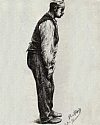
Born 11 Apr 1755; died 21 Dec 1824 at age 69.
English physician and amateur paleontologist. He took over the practice of general medicine from his father. He wrote a little known monograph Observations on the Nature and Cure of Gout (1805). He was first to recognize a burst appendix as a cause of death, and wrote the first scientific article on appendicitis (1812). In his Essay on the Shaking Palsy (1817), he was the first to describe the neuromuscular disease which is now known by his name as Parkinson's disease, The symptoms of Parkinson's Disease are a generalized slowness of movement, a tremor or slight shaking on one side of the body when at rest, some stiffness of the limbs, and problems of gait or balance.«[Image: Shaking Palsy as illustrated in Parkinson's Essay on Shaking Palsy] more
English physician and amateur paleontologist. He took over the practice of general medicine from his father. He wrote a little known monograph Observations on the Nature and Cure of Gout (1805). He was first to recognize a burst appendix as a cause of death, and wrote the first scientific article on appendicitis (1812). In his Essay on the Shaking Palsy (1817), he was the first to describe the neuromuscular disease which is now known by his name as Parkinson's disease, The symptoms of Parkinson's Disease are a generalized slowness of movement, a tremor or slight shaking on one side of the body when at rest, some stiffness of the limbs, and problems of gait or balance.«[Image: Shaking Palsy as illustrated in Parkinson's Essay on Shaking Palsy] more
James Parkinson: His Life and Times, by A.D. Morris. - book suggestion.

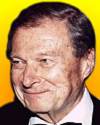
Died 11 Apr 2013 at age 96 (born 5 Dec 1916).
Polish virologist and immunologist who discovered the first vaccine against poliomyelitis which was based on oral administration of attenuated polio virus. In researching a polio vaccine, he decided to focus on the use of live viruses that were attenuated (rendered non-virulent) instead of the killed viruses that became the basis for the injections created by Jonas Salk. Koprowski viewed the live vaccine as more powerful since it entered the intestinal tract directly and could provide lifelong immunity, whereas the Salk vaccine required boosters. Also, taking a vaccine by mouth is easy, whereas an injection is more expensive and needs medical facilities. It was taken by the first child on 27 Feb 1950 and within 10 years was used for immunization on four continents.
Polish virologist and immunologist who discovered the first vaccine against poliomyelitis which was based on oral administration of attenuated polio virus. In researching a polio vaccine, he decided to focus on the use of live viruses that were attenuated (rendered non-virulent) instead of the killed viruses that became the basis for the injections created by Jonas Salk. Koprowski viewed the live vaccine as more powerful since it entered the intestinal tract directly and could provide lifelong immunity, whereas the Salk vaccine required boosters. Also, taking a vaccine by mouth is easy, whereas an injection is more expensive and needs medical facilities. It was taken by the first child on 27 Feb 1950 and within 10 years was used for immunization on four continents.
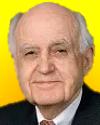
Died 11 Apr 2005 at age 85 (born 30 Aug 1919).
American microbiologist who developed vaccines against numerous once-common diseases including MMR (mumps, measles and rubella), chickenpox, hepatitis (A and B), pneumonia, meningitis, influenza, adenoviruses, and the commercial evolution of vaccines against meningococci and pneumococci. In his 40-year career, he developed over three dozen experimental and licensed animal and human vaccines. He codiscovered the adenoviruses. Although Jonas Salk, Albert Sabin and Louis Pasteur received much public recognition, Hilleman's work is probably responsible for saving more lives than those or any other scientist in the 20th century.«
American microbiologist who developed vaccines against numerous once-common diseases including MMR (mumps, measles and rubella), chickenpox, hepatitis (A and B), pneumonia, meningitis, influenza, adenoviruses, and the commercial evolution of vaccines against meningococci and pneumococci. In his 40-year career, he developed over three dozen experimental and licensed animal and human vaccines. He codiscovered the adenoviruses. Although Jonas Salk, Albert Sabin and Louis Pasteur received much public recognition, Hilleman's work is probably responsible for saving more lives than those or any other scientist in the 20th century.«
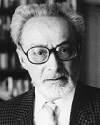
Died 11 Apr 1987 at age 67 (born 31 Jul 1919). quotes
An Italian novelist, short-story writer and poet, Primo Levi was also a chemist most of his professional life. As a memoirist, he is noted for his restrained and moving autobiographical account of and reflections on survival in the Nazi concentration camps. In his science work, The Periodic Table, he wrote: "...conquering matter is to understand it, and understanding matter is necessary to understanding the universe and ourselves." His gift of writing brought the subject to life. Chemistry, in turn, saved his life. Imprisoned as a Jew in Auschwitz, the young Italian chemist was granted a tenuous reprieve as a technician in the laboratory of an I. G. Farben rubber factory built by slave laborers on the camp's grounds. He died by suicide in 1987, after a long illness.
An Italian novelist, short-story writer and poet, Primo Levi was also a chemist most of his professional life. As a memoirist, he is noted for his restrained and moving autobiographical account of and reflections on survival in the Nazi concentration camps. In his science work, The Periodic Table, he wrote: "...conquering matter is to understand it, and understanding matter is necessary to understanding the universe and ourselves." His gift of writing brought the subject to life. Chemistry, in turn, saved his life. Imprisoned as a Jew in Auschwitz, the young Italian chemist was granted a tenuous reprieve as a technician in the laboratory of an I. G. Farben rubber factory built by slave laborers on the camp's grounds. He died by suicide in 1987, after a long illness.
The Periodic Table, by Primo Levi. - book suggestion.
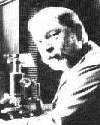
Died 11 Apr 1948 at age 92 (born 4 Nov 1855).
English botanist whose study of primitive land plants, especially the ferns, contributed greatly to a modern emphasis on the study of the origins and evolutionary development of these plants. He is best known for his interpolation theory of the evolutionary development of the vegetative, or asexual, sporophyte. From his many years studying liverworts, mosses, and ferns Bower concluded that they had evolved from algal ancestors. He authored Origin of a Land Flora (1908), Ferns (1923-28), Primitive Land Plants (1935).
English botanist whose study of primitive land plants, especially the ferns, contributed greatly to a modern emphasis on the study of the origins and evolutionary development of these plants. He is best known for his interpolation theory of the evolutionary development of the vegetative, or asexual, sporophyte. From his many years studying liverworts, mosses, and ferns Bower concluded that they had evolved from algal ancestors. He authored Origin of a Land Flora (1908), Ferns (1923-28), Primitive Land Plants (1935).
Botany of the Living Plant, by Frederick O. Bower. - book suggestion.
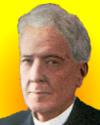
Died 11 Apr 1926 at age 77 (born 7 Mar 1849). quotes
American naturalist and horticulturist who was a pioneer of plant breeding. At age 21, he produced the the Burbank potato. Thus he began a 55 year career, prodigiously producing useful varieties of fruits, flowers, vegetables, grains, and grasses. He had an ability to detect and nurture hybrids which he made from multiple crosses of foreign and native strains under suitable growing conditions. Basing his understanding upon his own observations, he believed in the Lamarckian idea of the inheritance of acquired characteristics. It was for others to develop the modern science of plant breeding based on the genetic theory. He developed more than 800 strains and varieties of plants, including the Freestone peach, and the Burbank potato (1871). more
American naturalist and horticulturist who was a pioneer of plant breeding. At age 21, he produced the the Burbank potato. Thus he began a 55 year career, prodigiously producing useful varieties of fruits, flowers, vegetables, grains, and grasses. He had an ability to detect and nurture hybrids which he made from multiple crosses of foreign and native strains under suitable growing conditions. Basing his understanding upon his own observations, he believed in the Lamarckian idea of the inheritance of acquired characteristics. It was for others to develop the modern science of plant breeding based on the genetic theory. He developed more than 800 strains and varieties of plants, including the Freestone peach, and the Burbank potato (1871). more
New Creations in Plant Life: An Authoritative Account of the Life and Work of Luther Burbank, by W. S. Harwood. - book suggestion.
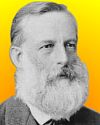
Died 11 Apr 1895 at age 64 (born 19 Aug 1830). quotes
(Julius) Lothar Meyer was a German chemist who discovered the Periodic Law, independently of Dmitry Mendeleyev, at about the same time (1869). However, he did not develop the periodic classification of the chemical elements as thoroughly as Mendeleyev. Meyer trained originally in medicine and chemistry. He examined the effect of carbon monoxide on blood. In 1879, Meyer compared atomic volume to atomic weight. Plotted on a graph, the curve showed the periodicity of the elements. He also established the concept of valency by indicating that a given element combined with a characteristic number of hydrogen atoms, and coined the terms like univalent, bivalent, and trivalent, based on that number.«
(Julius) Lothar Meyer was a German chemist who discovered the Periodic Law, independently of Dmitry Mendeleyev, at about the same time (1869). However, he did not develop the periodic classification of the chemical elements as thoroughly as Mendeleyev. Meyer trained originally in medicine and chemistry. He examined the effect of carbon monoxide on blood. In 1879, Meyer compared atomic volume to atomic weight. Plotted on a graph, the curve showed the periodicity of the elements. He also established the concept of valency by indicating that a given element combined with a characteristic number of hydrogen atoms, and coined the terms like univalent, bivalent, and trivalent, based on that number.«
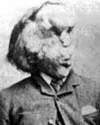
Died 11 Apr 1890 at age 27 (born 5 Aug 1862).
Joseph Carey Merrick (the Elephant Man) was an English patient (erroneously referred to as John Merrick) was a disfigured person. Born in Leicester, England, in 1862, Merrick began to develop tumours on his face before his second birthday. His condition quickly worsened as bulbous, cauliflower-like growths grew from his head and body, and his right hand and forearm became a useless club. After a brief career as a professional “freak,” dubbed the “Elephant Man” because of a tusklike growth on his face, he became the best-known resident patient of London Hospital from 1886 until his death. The modern diagnosis (1979) is the very rare disorder, Proteus Syndrome. more
Joseph Carey Merrick (the Elephant Man) was an English patient (erroneously referred to as John Merrick) was a disfigured person. Born in Leicester, England, in 1862, Merrick began to develop tumours on his face before his second birthday. His condition quickly worsened as bulbous, cauliflower-like growths grew from his head and body, and his right hand and forearm became a useless club. After a brief career as a professional “freak,” dubbed the “Elephant Man” because of a tusklike growth on his face, he became the best-known resident patient of London Hospital from 1886 until his death. The modern diagnosis (1979) is the very rare disorder, Proteus Syndrome. more
The True History of the Elephant Man, by Michael Howells. - book suggestion.
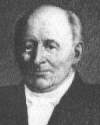
Died 11 Apr 1875 at age 85 (born 25 Oct 1789).
Amateur German astronomer who discovered the 10-year sunspot activity cycle. Schwabe had been looking for possible intramercurial planets. From 11 Oct 1825, for 42 years, he observed the Sun virtually every day that the weather allowed. In doing so he accumulated volumes of sunspot drawings, the idea being to detect his hypothetical planet as it passed across the solar disk, without confusion with small sunspots. Schwabe did not discover any new planet. Instead, he published his results in 1842 that his 17 years of nearly continuous sunspot observations revealed a 10-year periodicity in the number of sunspots visible on the solar disk. Schwabe also made (1831) the first known detailed drawing of the Great Red Spot on Jupiter.
Amateur German astronomer who discovered the 10-year sunspot activity cycle. Schwabe had been looking for possible intramercurial planets. From 11 Oct 1825, for 42 years, he observed the Sun virtually every day that the weather allowed. In doing so he accumulated volumes of sunspot drawings, the idea being to detect his hypothetical planet as it passed across the solar disk, without confusion with small sunspots. Schwabe did not discover any new planet. Instead, he published his results in 1842 that his 17 years of nearly continuous sunspot observations revealed a 10-year periodicity in the number of sunspots visible on the solar disk. Schwabe also made (1831) the first known detailed drawing of the Great Red Spot on Jupiter.
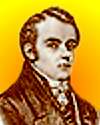
Died 11 Apr 1834 at age 66 (born 3 Sep 1767).
Australian agriculturist and promoter who helped found the Australian wool industry, now the world's largest. He was one of the first in New South Wales to obtain Spanish Merino sheep from the Cape of Good Hope (1797). He took specimens of their fleeces to England (1802), wrote a Statement of the Improvement and Progress of the Breed of Fine Woolled Sheep in New South Wales (London, 1803) and was granted 5,000 acres of the best pasture land in the colony, to be increased if tangible results were forthcoming. Each time he returned to England (first for four years and later for eight years) his wife, Elizabeth, was left to breed the sheep, produce the wool, manage workers, bushfires and Aboriginal uprisings, and run a profitable farm.
Australian agriculturist and promoter who helped found the Australian wool industry, now the world's largest. He was one of the first in New South Wales to obtain Spanish Merino sheep from the Cape of Good Hope (1797). He took specimens of their fleeces to England (1802), wrote a Statement of the Improvement and Progress of the Breed of Fine Woolled Sheep in New South Wales (London, 1803) and was granted 5,000 acres of the best pasture land in the colony, to be increased if tangible results were forthcoming. Each time he returned to England (first for four years and later for eight years) his wife, Elizabeth, was left to breed the sheep, produce the wool, manage workers, bushfires and Aboriginal uprisings, and run a profitable farm.

Died 11 Apr 1779 at age 74 (born 3 Sep 1704).
French botanist who went with French physicist Charles-Marie de la Condamine's expedition to Peru to measure an arc of meridian (1735). Therafter, he remained in South America for 35 years, supporting himself chiefly by the practice of medicine. By sending the seed to his brother Bernard, he introduced the common garden heliotrope (Heliotropium peruvianum) into Europe. His extended and arduous explorations in Peru took place mainly in the years 1747-50. The botanical results of these journeys were large, but the greater part of his manuscripts and collections was lost. He returned to Paris in 1771, in poor health. His brothers Antoine and Bernard were also notable botanists.«[Image: heliotrope flower and leaves]
French botanist who went with French physicist Charles-Marie de la Condamine's expedition to Peru to measure an arc of meridian (1735). Therafter, he remained in South America for 35 years, supporting himself chiefly by the practice of medicine. By sending the seed to his brother Bernard, he introduced the common garden heliotrope (Heliotropium peruvianum) into Europe. His extended and arduous explorations in Peru took place mainly in the years 1747-50. The botanical results of these journeys were large, but the greater part of his manuscripts and collections was lost. He returned to Paris in 1771, in poor health. His brothers Antoine and Bernard were also notable botanists.«[Image: heliotrope flower and leaves]
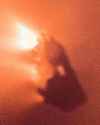
13 Mar 1986
In 1986, Halley's Comet made its closest approach to Earth this trip, 63 million kilometers (39 million mi), on its outbound journey. Many observers were disappointed because the famous comet was barely visible to the naked eye. Some years are simply better than others, as in 1066 when the comet was so bright that it terrified millions of Europeans. Comet Halley isn't officially scheduled to visit Earth again until 2061 when it returns on its 76-year orbit. This comet's closest known approach to the Earth was 3 million miles on 10 Apr 837 AD). Its perihelion (the closest point to the Sun) occurred earlier in the year, on 9 Feb 1986, when it was 88 million km (55 million mi) from the Sun, between the orbits of Mercury and Venus.[Image: photo taken from European spacecraft Giotto as it flew by the nucleus of Comet Halley on 13 Mar 1986 to analyze the material coming off the surface]
Comet, by Carl Sagan. - book suggestion.
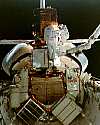
In 1984, Challenger astronauts completed the first in-space satellite repair. George Nelson and James Van Hoften retrieved the ailing Solar Max astronomy satellite. It had originally been launched in 1980, but had been malfunctioning. The rescued satellite was brought into the shuttle cargo bay to make the first-ever in-space satellite repair. Its attitude control mechanism and the main electronics system of the coronagraph instrument were serviced, and the Solar Max was released back into orbit, ready to resume normal operation. (Another mission activity was a student experiment located in a middeck locker to determine how honeybees make honeycomb cells in a microgravity environment. They did so successfully, just as on Earth.)
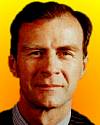
In 1982, British explorer Ranulph Fiennes with Charles Burton reached the North Pole during their circumnavigation of the Earth via the Poles circling the earth on longitude 0, the Greenwich Meridian. They had reached the South Pole sixteen months earlier during their journey across Antarctica - which took 67 days and despite the advantages of motorised skidoos, it was still an arduous and dangerous challenge. The ocean voyage was undertaken in a craft named Benjamin Bowring. Beginning in 1979, the 52,000-mile "Transglobe" expedition took three years and cost an estimated $18 million, but it became the first circumnavigation of the world's polar axis, ending on 29 Aug 1982.
Beyond the Limits: The Lessons Learned from a Lifetime's Adventures, by Ranulph Fiennes. - book suggestion.
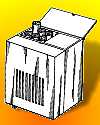
(USPTO)
In 1972, a smoking deterrent - a pseudo-cigarette package that produces simulated coughing sounds when the package is picked up - was issued a US patent to its inventor, Lewis R Toppel of Chicago, Illinois (No. 3,655,325). According to the patent abstract, "The simulated coughing noises are produced from a battery-driven disk recording played through a minature loudspeaker in the package. A unique actuating lever arrangement enables the almost instantaneous replaying of the record each time the package is moved." The patent described the production of the sound using a miniaturized record player - a disk, turntable with electric motor and tone arm to ride in the grooves of the disk and pick up vibrations from the disk. The invention was also suggested for use as an advertising novelty.«
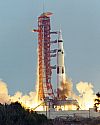
In 1970, Apollo 13, the third manned lunar landing mission, began with the successful launch of the spacecraft Odyssey from Cape Canaveral with crew James Lovell, Fred Haise, and John Swigert. Two days later, on 13 Apr disaster struck 200,000 miles from earth. A liquid oxygen tank exploded, disabling the normal supply of oxygen, electricity, light, and water. Swigert reported: “Houston, we've had a problem.” The lunar landing was aborted. After circling the moon, the crippled spacecraft began a long, cold journey back to earth with enormous logistical problems in providing enough energy to the damaged fuel cells to allow a safe return. On 17 Apr, with the world anxiously watching, tragedy turned to triumph as the Apollo 13 astronauts touched down safely in the Pacific Ocean.
Apollo 13: Anniversary Edition, by Jeffrey Kluger. - book suggestion.
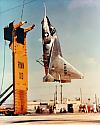
In 1957, a Ryan X-13 Vertijet became the first jet to take-off and land vertically. The airplane made history when it completed a first full-cycle flight at Edwards Air Force Base, California. It took off vertically from its mobile trailer, rose into the air, nosed over into a level attitude, and flew for several minutes. It then reversed the procedure to vertical flight and slowly descended to its trailer for a safe landing. The X-13 was designed to test the idea of vertical takeoff, transition to horizontal flight, and return to vertical flight for landing by jet aircraft. Equipped with a temporary tricycle landing gear, it was flown conventionally on 10 Dec 1955 to test its overall aerodynamic characteristics. It was then fitted with a temporary "tail sitting" rig and on 28 May 1956, flown from the ground in a vertical position to test its hovering qualities.
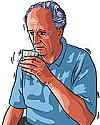
In 1952, Parkinson's disease was successfully treated with surgery for the first time. A team led by Irving Cooper in Islip, N.Y. operated on the brain of patient Raymond Walker. Before the general availability of L-dopa in 1968, the treatment of Parkinson's disease stressed surgery. An early procedure of choice was the pedunculotomy, to reduce tremour. While performing this procedure in 1952, he inadvertently interrupted the patient's anterior choroidal artery (AChA) and was forced to ligate the artery and abort the pedunculotomy. When the patient awoke from anesthesia, his tremour and rigidity had disappeared, and his motor and sensory functions were preserved. Cooper then began to ligate the AChA purposely to reduce tremor in patients.
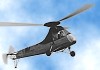
In 1943, Frank Piasecki, Philadelphia engineer and Vertol founder, flew his first (single-rotor) helicopter, his PV-2 model, the second successful American helicopter to fly. It weighed just under 500kg and was powered by a 90hp Franklin flat-four engine. It had a three-blade articulated rotor with folding blades. Frank Piasecki was the holder of the first Helicopter Pilot's License. He formed the PV Engineering Forum in 1943 to develop practical rotorcraft. With the PV-3, Piasecki turned his attention to the more ambitious field of large military helicopters of a tandem-rotor design. (Igor Sikorsky, a Russian-born engineer in Bridgeport, Conn., piloted the first successful flight in 1939).
In 1941, operation began of the first U.S. hydrogen-cooled electrical generator installed outdoors. It was mounted on an open deck. It provided 20,000 kW for the city of Glendale, California, built for $391,669 by the General Electric Co. (The first GE-built, hydrogen-cooled indoor generator started up on 12 Oct 1937). In modern hydrogen-cooled turbo-generators, the stator core is direct cooled with over 99% pure hydrogen gas, at a pressure of 3-6 bar. The advantage of hydrogen is its high thermal conductivity and lower friction than air-cooled generators. This provides greater efficiency and higher output capacity with lower fuel consumption, lower operating cost, smaller size and less noise.«*

In 1921, the first U.S. radio broadcast of a live sporting event was transmitted by KDKA, in Pittsburgh, Penns. A boxing match between lightweight boxers Johnny Ray and Johnny Dundee was described from the ringside, by Florent Gibson, sports editor for the Pittsburgh Daily Post, which had an extra on the streets a few minutes after the last gong. Later Associated Press dispatches called the achievement, “Unique in the annals of journalism and newspaper enterprise.” They also said that the contest was “heard” in Hartford, Conn., as “A wireless telephone brought the sounds of the conflict, the clang of the gong and the shouts of the fans to a group of wireless enthusiasts assembled at a private radio station,” where Hiram Percy Maxim, the wireless expert, was present.«
In 1900, the U.S. Navy acquired its first submarine, a 53-foot craft designed by Irish immigrant John P. Holland. Propelled by gasoline while on the surface and by electricity when submerged, the Holland served as a blueprint for modern submarine design. By the eve of World War I, Holland and Holland-inspired vessels were a part of large naval fleets throughout the world.
John P. Holland, 1841-1914: Inventor of the Modern Submarine, by Richard Knowles Morris. - book suggestion.
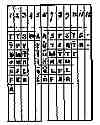
In 1876, the stenotype was patented by John C. Zachos of New York City (No. 175,892). This was the first U.S. patent for a device for printing legible text in the English alphabet at a high reporting speed, which he called a "typewriter and phonotypic notation." The type was fixed on eighteen shuttle bars, two or more of which may be simultaneously placed in position. The impression was given by a plunger common to all bars. He called his new system of shorthand "stenophonotypy."*
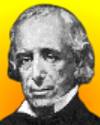
John Stevens
In 1803, a patent was issued for the engine used on a twin-screw propeller steamboat built by John Stevens of Hoboken, N.Y. in the same year. The engine was a double direct-acting noncondensing engine with a 4.5-inch cylinder and 9-inch stroke. The boat was 25-feet-long and four-feet wide, with two 5-foot screw propellers with four blades set at an angle of 35º. It successfully navigated in New York Harbor in 1804. Stevens also developed the first sea-going steamship, initiated regular ferry service from New Jersey to New York, and designed and built the first American steam locomotive. In addition, he proposed a vehicular tunnel under the Hudson River, and the use of an elevated railroad in New York City.*
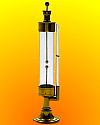
In 1751, Ebenezer Kinnersley advertised in the Pennsylvania Gazette that he was to give a lecture on "The Newly Discovered Electrical Fire." His lectures were the first of the kind in America or Europe. The announcement read: "Notice is hereby given to the Curious, that Wednesday next, Mr. Kinnersley proposes to begin a course of experiments on the newly discovered Electrical Fire, containing not only the most curious of those that have been made and published in Europe, but a considerable number of new ones lately made in this city, to be accompanied with methodical Lectures on the nature and properties of that wonderful element." Thus, Kinnersley was one of the earliest popularizers of science.«[Image: simplified version of Kinnersley's electrical air thermometer in which colored water in the airtight cylinder pushed water up the capillary tube when sparking between electrodes heated and expanded the air.]
Ebenezer Kinnersley - Franklin's Friend, by J. A. Leo Lemay. - book suggestion.




