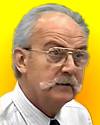
George Edward Pelham (“Pel”) Box was an English-American engineer and statistician began as a chemist. At age 19, he published his first paper, on an activated sludge process to produce clean effluent. In the army for WW II, at Porton Down Experimental Station, he taught himself statistics, to get more reliable results from his experiments on the chemistry of poison gases. Thus, he became “an accidental statistician,” (the title of his 2013 autobiography). He developed several statistical tools known with his name: the Box-Jenkins model, Box-Cox transformations, and Box-Behnken designs. Box wrote or co-authored major statistics texts: evolutionary operation, times-series, Bayesian analysis, the design of experiments, statistical control, and quality improvement.«
An Accidental Statistician: The Life and Memories of George E. P. Box, by George E.P. Box. - book suggestion.
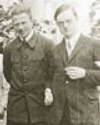
1927
Born 18 Oct 1902; died 31 Jul 1980 at age 77.
Ernst Pascual Jordan was a German physicist who in the late 1920s co-founded (with Max Born and later Werner Heisenberg) quantum mechanics using matrix methods, showing how light could be interpreted as composed of discrete quanta of energy. Later, (with Wolfgang Pauli and Eugene Wigner), while it was still in its early stages of development, he contributed to the quantum mechancs of electron-photon interactions, now called quantum electrodynamics. He also originated (concurrently with Robert Dicke) a theory of cosmology that proposed to make the universal constants of nature, (such as the universal gravitational constant G), variable over time.[Image: Heisenberg (L) with Jordan (R)]
Ernst Pascual Jordan was a German physicist who in the late 1920s co-founded (with Max Born and later Werner Heisenberg) quantum mechanics using matrix methods, showing how light could be interpreted as composed of discrete quanta of energy. Later, (with Wolfgang Pauli and Eugene Wigner), while it was still in its early stages of development, he contributed to the quantum mechancs of electron-photon interactions, now called quantum electrodynamics. He also originated (concurrently with Robert Dicke) a theory of cosmology that proposed to make the universal constants of nature, (such as the universal gravitational constant G), variable over time.[Image: Heisenberg (L) with Jordan (R)]
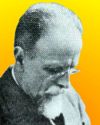
Born 18 Oct 1859; died 9 Nov 1935 at age 76.
Italian archaeologist who pioneered in the excavation and research of sites, from the prehistoric to the Byzantine, in Sicily and southern Italy. He was an expert in the pre-Greek Siculan period he named after the Siculi, or Sikels, a native group or groups which were said to have inhabited southern Italy and eastern Sicily. In 1889-93, he undertook excavations in the Pantalica valley, which has five necropoli with thousands of burial chambers hewn in the steep limestone cliffs. He discovered the Neolithic village of Stentinello. In 1911, he uncovered the doric temple at Punta Stilo, and more excavation revealed the layout of some city walls and some houses. The archaeological museum in Sicily, where he was director 1895-1934, was dedicated to him.
Italian archaeologist who pioneered in the excavation and research of sites, from the prehistoric to the Byzantine, in Sicily and southern Italy. He was an expert in the pre-Greek Siculan period he named after the Siculi, or Sikels, a native group or groups which were said to have inhabited southern Italy and eastern Sicily. In 1889-93, he undertook excavations in the Pantalica valley, which has five necropoli with thousands of burial chambers hewn in the steep limestone cliffs. He discovered the Neolithic village of Stentinello. In 1911, he uncovered the doric temple at Punta Stilo, and more excavation revealed the layout of some city walls and some houses. The archaeological museum in Sicily, where he was director 1895-1934, was dedicated to him.
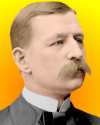
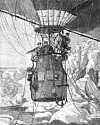
Swedish explorer, who led the ill-fated balloon expedition to North Pole expedition in 1897. He and two companions lifted off on 11 Jul 1897 from Danes Island, Spitsbergen in the balloon, Eagle, which he had built himself. In this world's first attempt to explore the Arctic by air, they hoped to drift over the North Pole. They disappeared, and nothing was known of them for 33 years, until on 6 Aug 1930, Norwegian explorers on White Island (Kvitöa) found remains of a balloonist, a diary and photos. Just two days after the launch , the aeronauts had to make an emergency landing on the ice, where they eventually died in the bitter cold, still hundreds of kilometers from the North Pole.«
Born 18 Oct 1799; died 29 Aug 1868 at age 68. quotes
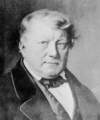
German-Swiss chemist who discovered and named ozone (1840) and was the first to describe guncotton (nitrocellulose). He noted ozone appeared during thunderstorms and named the gas ozone for its peculiar smell (ozo is Greek for smell). Later experiments showed that sending an electric current through pure, dry oxygen (O2) creates ozone (O3). His discovery of the powerful explosive called cellulose nitrate, or gun cotton, was the result of a laboratory accident. One day in 1845 he spilled sulfuric and nitric acids and soaked it with a cotton apron. After the apron dried, it burst into flame - he had created nitrated cellulose. He found that cellulose nitrate could be molded and had some elastic properties. It eventually was used for smokeless gun powder.
German-Swiss chemist who discovered and named ozone (1840) and was the first to describe guncotton (nitrocellulose). He noted ozone appeared during thunderstorms and named the gas ozone for its peculiar smell (ozo is Greek for smell). Later experiments showed that sending an electric current through pure, dry oxygen (O2) creates ozone (O3). His discovery of the powerful explosive called cellulose nitrate, or gun cotton, was the result of a laboratory accident. One day in 1845 he spilled sulfuric and nitric acids and soaked it with a cotton apron. After the apron dried, it burst into flame - he had created nitrated cellulose. He found that cellulose nitrate could be molded and had some elastic properties. It eventually was used for smokeless gun powder.
Born 18 Oct 1787; died 20 Apr 1856 at age 68.
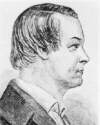
U.S. engineer and ship designer who invented the inverted-T railroad rail and the railroad spike. He tested the first steamboat to use screw propellers, invented and built by his father, John Stevens. Robert designed the first concave waterlines on a steamboat (1808), the first supporting iron rods for projecting guard beams on steamboats (1815), the first skeleton walking beams for ferries (1822), the spring pile ferry slip (1822), the placement of boilers on guards outside the paddle wheels of ferries (1822), the hog frame or truss for stiffening ferry boats longitudinally (1827), spring steel bearings of paddle wheel shafts (1828), improved packing for pistons (1840), and was first to successfully burn anthracite coal in a cupola furnace (1818). He found that rails laid on wooden ties, with crushed stone or gravel beneath, provided a roadbed superior to any known before. His rail and roadbed came into universal use in the United States. He also added the pilot, or cowcatcher, to the locomotive and increased the number of drive wheels to eight for better traction. more
U.S. engineer and ship designer who invented the inverted-T railroad rail and the railroad spike. He tested the first steamboat to use screw propellers, invented and built by his father, John Stevens. Robert designed the first concave waterlines on a steamboat (1808), the first supporting iron rods for projecting guard beams on steamboats (1815), the first skeleton walking beams for ferries (1822), the spring pile ferry slip (1822), the placement of boilers on guards outside the paddle wheels of ferries (1822), the hog frame or truss for stiffening ferry boats longitudinally (1827), spring steel bearings of paddle wheel shafts (1828), improved packing for pistons (1840), and was first to successfully burn anthracite coal in a cupola furnace (1818). He found that rails laid on wooden ties, with crushed stone or gravel beneath, provided a roadbed superior to any known before. His rail and roadbed came into universal use in the United States. He also added the pilot, or cowcatcher, to the locomotive and increased the number of drive wheels to eight for better traction. more
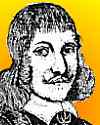
Born 18 Oct 1616; died 1654.
English pharmacist, botanist and physician who published the Complete Herbal (1653), a comprehensive listing of English medicinal herbs and their uses. It is still in print. While upper-class physicians withheld medical knowledge from the common people, Culpeper, of lower-class roots, did the opposite by spreading medical knowledge among the people and giving his time generously to charity patients. He wrote or translated a large number of medical works to give people access to a vast amount of health information. He wished that any man using his Herbal could “preserve his Body in Health, or cure himself, being sick, for three pence charge, with such things only as grow in England.” Culpeper died of tuberculosis at age 38.«
English pharmacist, botanist and physician who published the Complete Herbal (1653), a comprehensive listing of English medicinal herbs and their uses. It is still in print. While upper-class physicians withheld medical knowledge from the common people, Culpeper, of lower-class roots, did the opposite by spreading medical knowledge among the people and giving his time generously to charity patients. He wrote or translated a large number of medical works to give people access to a vast amount of health information. He wished that any man using his Herbal could “preserve his Body in Health, or cure himself, being sick, for three pence charge, with such things only as grow in England.” Culpeper died of tuberculosis at age 38.«
Heal Thyself: Nicholas Culpeper, by Benjamin Woolley. - book suggestion.

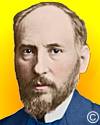
1920
Died 18 Oct 1934 at age 82 (born 1 May 1852). quotes
Spanish histologist who shared (with Camillo Golgi) the 1906 Nobel Prize for Physiology or Medicine for establishing the neuron, or nerve cell, as the basic unit of nervous structure. This finding was instrumental in the recognition of the neuron’s fundamental role in nervous function. He developed new stains and microscope techniques.
Spanish histologist who shared (with Camillo Golgi) the 1906 Nobel Prize for Physiology or Medicine for establishing the neuron, or nerve cell, as the basic unit of nervous structure. This finding was instrumental in the recognition of the neuron’s fundamental role in nervous function. He developed new stains and microscope techniques.
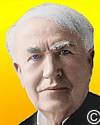
1931
Died 18 Oct 1931 at age 84 (born 11 Feb 1847). quotes
Thomas Alva Edison was an American inventor who held a world record 1,093 patents (including those held jointly) and created the world's first industrial research laboratory. He showed an early curiosity for explanations of how everything worked and was especially interested in chemistry. He began selling newspapers on the railroad at age 12, and learned how to operate a telegraph. In 1868, his first invention was an electric vote-recording machine. In 1869, he made improvements on the stock-ticker. In 1876 he moved his laboratory to Menlo Park, N.J., where he invented his phonograph (1877) and the first prototype of a commercially practical incandescent electric light bulb (1879). Other inventions included storage batteries, a dictaphone, and a mimeograph. By the late 1880s he made motion pictures, and by 1912 was experimenting with talking pictures. Edison developed electric power from central generating stations. He became known internationally as “the Wizard of Menlo Park.” In 1962 his second laboratory and home in West Orange, New Jersey, was designated a U.S. National Historic Site. more
Thomas Alva Edison was an American inventor who held a world record 1,093 patents (including those held jointly) and created the world's first industrial research laboratory. He showed an early curiosity for explanations of how everything worked and was especially interested in chemistry. He began selling newspapers on the railroad at age 12, and learned how to operate a telegraph. In 1868, his first invention was an electric vote-recording machine. In 1869, he made improvements on the stock-ticker. In 1876 he moved his laboratory to Menlo Park, N.J., where he invented his phonograph (1877) and the first prototype of a commercially practical incandescent electric light bulb (1879). Other inventions included storage batteries, a dictaphone, and a mimeograph. By the late 1880s he made motion pictures, and by 1912 was experimenting with talking pictures. Edison developed electric power from central generating stations. He became known internationally as “the Wizard of Menlo Park.” In 1962 his second laboratory and home in West Orange, New Jersey, was designated a U.S. National Historic Site. more
Edison: A Biography, by Matthew Josephson. - book suggestion.
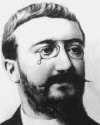
Died 18 Oct 1911 at age 54 (born 8 Jul 1857). quotes
French psychologist who was a pioneer in the field of intelligence testing of the normal mind. He took a different approach than most psychologists of his day: he was interested in the workings of the normal mind rather than the pathology of mental illness. He wanted to find a way to measure the ability to think and reason, apart from education in any particular field. In 1905 he developed a test in which he had children do tasks such as follow commands, copy patterns, name objects, and put things in order or arrange them properly. He gave the test to Paris schoolchildren and created a standard based on his data. From Binet's work, "IQ" (intelligence quotient), entered the vocabulary. The IQ is the ratio of "mental age" to chronological age, with 100 being average.[Although some sources give birthday as 11 Jul, both Enc. Brit. and Dict. of Sci. Biog. give born 8 Jul 1857.]
French psychologist who was a pioneer in the field of intelligence testing of the normal mind. He took a different approach than most psychologists of his day: he was interested in the workings of the normal mind rather than the pathology of mental illness. He wanted to find a way to measure the ability to think and reason, apart from education in any particular field. In 1905 he developed a test in which he had children do tasks such as follow commands, copy patterns, name objects, and put things in order or arrange them properly. He gave the test to Paris schoolchildren and created a standard based on his data. From Binet's work, "IQ" (intelligence quotient), entered the vocabulary. The IQ is the ratio of "mental age" to chronological age, with 100 being average.[Although some sources give birthday as 11 Jul, both Enc. Brit. and Dict. of Sci. Biog. give born 8 Jul 1857.]
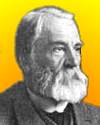
Died 18 Oct 1906 at age 68 (born 17 Feb 1838).
Russian chemist whose research in organic chemistry included studying isomeric benezene derivatives. His lasting legacy, though, was starting the systematical description of organic compoounds, which he compliled in the publication of his Handbuch der organischen Chemie, (1880-82; Handbook of Organic Chemistry). He aimed that it should be a complete catalog, and already in its first edition, the two volumes described 15,000 compounds. As organic chemistry continued to grow rapidly, he published expanded second and third editions. After Beilstein's death, because of its great value to organic chemists, work on updating the publication was taken on by the Deutsche Chemische Gesellschanft, which.has continued to publish it.«
Russian chemist whose research in organic chemistry included studying isomeric benezene derivatives. His lasting legacy, though, was starting the systematical description of organic compoounds, which he compliled in the publication of his Handbuch der organischen Chemie, (1880-82; Handbook of Organic Chemistry). He aimed that it should be a complete catalog, and already in its first edition, the two volumes described 15,000 compounds. As organic chemistry continued to grow rapidly, he published expanded second and third editions. After Beilstein's death, because of its great value to organic chemists, work on updating the publication was taken on by the Deutsche Chemische Gesellschanft, which.has continued to publish it.«
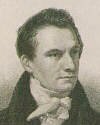
Died 18 Oct 1871 at age 79 (born 26 Dec 1791). quotes
English mathematician who was a pioneer of mechanical computation, which he pursued to eliminate inaccuracies in mathematical tables. By 1822, he had a small calculating machine able to compute squares. He produced prototypes of portions of a larger Difference Engine. (Georg and Edvard Schuetz later constructed the first working devices to the same design which were successful in limited applications.) In 1833 he began his programmable Analytical Machine, a forerunner of modern computers. His other inventions include the cowcatcher, dynamometer, standard railroad gauge, uniform postal rates, occulting lights for lighthouses, Greenwich time signals, heliograph opthalmoscope. He also had an interest in cyphers and lock-picking.«[EB gives birth date 26 Dec 1791.DSB gives birth date as 26 Dec 1792.]
English mathematician who was a pioneer of mechanical computation, which he pursued to eliminate inaccuracies in mathematical tables. By 1822, he had a small calculating machine able to compute squares. He produced prototypes of portions of a larger Difference Engine. (Georg and Edvard Schuetz later constructed the first working devices to the same design which were successful in limited applications.) In 1833 he began his programmable Analytical Machine, a forerunner of modern computers. His other inventions include the cowcatcher, dynamometer, standard railroad gauge, uniform postal rates, occulting lights for lighthouses, Greenwich time signals, heliograph opthalmoscope. He also had an interest in cyphers and lock-picking.«[EB gives birth date 26 Dec 1791.DSB gives birth date as 26 Dec 1792.]
Charles Babbage: Pioneer of the Computer, by Anthony Hyman. - book suggestion.
Died 18 Oct 1724 at age 77 (born 20 Mar 1647).
French physicist who built a primitive internal-combustion engine which was intended to operate a pump. The piston was pushed back by the explosion of a small charge of gunpowder, and then returned as the combustion gases cooled, leaving a partial vacuum. He wrote on many topics, including acoustics, optics, tidal phenomena, and watch mechanisms. He also invented the micrometer microscope to measure the size of minute objects.
French physicist who built a primitive internal-combustion engine which was intended to operate a pump. The piston was pushed back by the explosion of a small charge of gunpowder, and then returned as the combustion gases cooled, leaving a partial vacuum. He wrote on many topics, including acoustics, optics, tidal phenomena, and watch mechanisms. He also invented the micrometer microscope to measure the size of minute objects.
In 1989, the Galileo space orbiter was released from the STS 34 flight of the Atlantis orbiter. Then the orbiter's inertial upper stage rocket pushed it into a course through the inner solar system. The craft gained speed from gravity assists in encounters with Venus and Earth before heading outward to Jupiter. During its six year journey to Jupiter, Galileo's instruments made interplanetary studies, using its dust detector, magnetometer, and various plasma and particles detectors. It also made close-up studies of two asteroids, Gaspra and Ida in the asteroid belt. The Galileo orbiter's primary mission was to study Jupiter, its satellites, and its magnetosphere for two years. It released an atmospheric probe into Jupiter's atmosphere on 7 Dec 1995.«
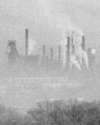
In 1971, in its first such action, the U.S. Environmental Protection Agency (EPA) shut down heavy industries in Birmingham, Alabama, when air pollution on this day was reaching dangerous levels. It was an emergency action under the Clean Air Act (1970). The EPA asked a Federal judge to issue a temporary restraining order. Among others, U.S. Steel had been belching too much smoke into an atmospheric inversion (stagnant air mass). Among idled workers, one said, “we're going to choke to death before we starve to death.” Six months before, the city had suffered a five-day crisis that spiked on 20 Apr 1971. At that time, while the state failed in enforcement, the EPA was not notified early enough to start emergency action. Days with high particulate counts in the air thereafter drew close EPA scrutiny.«

In 1969, cyclamates were banned in the U.S. Cyclamate is a non-caloric sweetener discovered in 1937. It has been widely used as a tabletop sweetener, in sugar-free beverages, in baked goods and other low-calorie foods, particularly in combination with saccharin. The ban was based on concern raised by one experiment showing bladder tumors appeared in laboratory rats fed large doses of cyclamate. Following new experiments, in June 1985, the National Academy of Sciences affirmed the FDA's Cancer Assessment Committee's latest conclusion: "the totality of the evidence from studies in animals does not indicate that cyclamate or its major metabolite cyclohexylamine is carcinogenic by itself." Cyclamate is approved for use in more than 50 countries.
Empty Pleasures: The Story of Artificial Sweeteners from Saccharin to Splenda, by Carolyn de la Pena. - book suggestion.
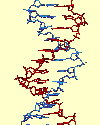
In 1962, Dr. James D. Watson of the U.S., Dr. Francis Crick and Dr. Maurice Wilkins of Britain won the Nobel Prize for Medicine and Physiology for their work in determining the double-helix molecular structure of DNA (deoxyribonucleic acid). DNA itself had first been identified and isolated almost a century before by Friedrich Miescher in 1869.
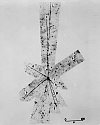
In 1955, a new atomic subparticle called a negative proton (antiproton) was discovered at U.C. Berkeley. The hunt for antimatter began in earnest in 1932, with the discovery of the positron, a particle with the mass of an electron and a positive charge. However, creating an antiproton would be far more difficult since it needs nearly 2,000 times the energy. In 1955, the most powerful "atom smasher" in the world, the Bevatron built at Berkeley could provide the required energy. Detection was accomplished with a maze of magnets and electronic counters through which only antiprotons could pass. After several hours of bombarding copper with protons accelerated to 6.2 billion electron volts of energy, the scientists counted a total of 60 antiprotons.[Image: The first annihilation star, Faustina, of an antiproton found in film exposed by the Berkeley scientists, 1955]
In 1952, the New York Times reported that a mechanical heart was used for the first time to maintain the blood circulation of a 41-year-old man during an 80-minute operation on his heart. The Dodrill-GMR Mechanical Heart was developed by Dr. Forest Dodrill and built by the GM Research Laboratories.
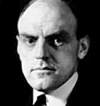
John Reith
In 1922, the British Broadcasting Company was formed, five years before it received its first Royal Charter and became the British Broadcasting Corporation. In the 1920's, John Reith, the BBC's founding father, knew of America's unregulated, commercial radio, and the fledgling Soviet Union's rigidly controlled state system. Reith's vision was of an independent British broadcaster able to educate, inform and entertain, without political or commercial pressure. More than one million ten shilling (50p) licences had been issued by 14 Nov 1922 when daily transmissions began. Listening to the wireless in the UK quickly became a social and cultural phenomenon as the BBC in London (call sign 2LO), and its regional stations, gave birth to radio mass communication.

A paddlewheel steamboat, the Idlewild, was launched in Pittsburgh, Pennsylvania, USA. It was renamed the Belle of Louisville when bought by Jefferson County, Kentucky in 1962, and is now the world's oldest operating paddlewheel steamboat. The riverboat is 192-ft long, 45-ft wide, weight about 350 tons, and is powered by three boilers. In its earliest years, it served as a packet boat on America's inland waterways, carrying cargo and livestock. It was used during WW II as a USO evening venue entertaining troops and pushed war cargo barges during the day. From 1949 it became a passenger excursion tramp steamer. The Belle of Louisville continues to offer trips on the Ohio River for up to about 800 passengers.
Legendary Lady: The Story of the Belle of Louisville, by Op Board. - book suggestion.
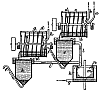
In 1898, English brothers Alexander and Francis Elmore applied for a British patent (No. 21,948) for their flotation process to separate valuable ore, such as copper, from the gangue (worthless rock) with which it is associated when mined. It was the first practical equipment to extract metals from low-content ore. Pulverized ore is mixed with water and brought into contact with thick oil. The oil entraps the metallic constituents, which are afterwards separated, and gangue passed away with the water. Today, flotation methods remain vital in the mining industry, processing millions of tons of ores each year.
more
In 1892, the first long-distance telephone line between Chicago and New York was formally opened as Chicago Mayor Hempstead Washburn greeted his New York counterpart, Hugh J. Grant.
In 1878, Edison made electricity available for household usage.
(USPTO)
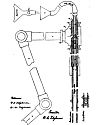
In 1870, sandblasting was patented by Benjamin Chew Tilghman (26 Oct 1821 - 1901). Compressed air forces sand as an abrasive material through the nozzle of a sandblasting gun. A popular myth holds that Tilghman, when a General in the army, had seen the effect of wind blown sand upon glass windows, in the desert. The sand has etched the glass where unprotected and revealed the contrast against parts that were covered by steel mesh. He has been called the "father of shotpeening." In 1866, he found sulphurous acid would dissolve the intercellular matter of wood, freeing the fibres for pulp, and became famous as the inventor of the sulphite process to make wood pulp for paper production.
more




