
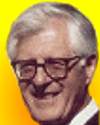
Born 26 Sep 1917; died 8 Dec 1986 at age 69.
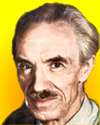
Harrison (Scott) Brown was an American geochemist known for his role in isolating plutonium for its use in the first atomic bombs and for his studies regarding meteorites and the Earth's origin. He was one of 67 concerned Manhattan Project scientists at Oak Ridge to sign a July 1945 petition to the President, which said, in part, "...Therefore we recommend that before this weapon be used without restriction in the present conflict, its powers should be adequately described and demonstrated, and the Japanese nation should be given the opportunity to consider the consequences of further refusal to surrender." His later studies included mass spectroscopy, thermal diffusion, fluorine and plutonium chemistry, geochemistry and planetary structure.
Harrison (Scott) Brown was an American geochemist known for his role in isolating plutonium for its use in the first atomic bombs and for his studies regarding meteorites and the Earth's origin. He was one of 67 concerned Manhattan Project scientists at Oak Ridge to sign a July 1945 petition to the President, which said, in part, "...Therefore we recommend that before this weapon be used without restriction in the present conflict, its powers should be adequately described and demonstrated, and the Japanese nation should be given the opportunity to consider the consequences of further refusal to surrender." His later studies included mass spectroscopy, thermal diffusion, fluorine and plutonium chemistry, geochemistry and planetary structure.
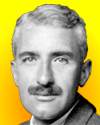
Born 26 Sep 1887; died 30 Oct 1979 at age 92. quotes
Sir Barnes Neville Wallis was an English aircraft designer and military engineer whose famous 9000-lb bouncing “dambuster” bombs of WW II destroyed the German Möhne and Eder dams on 17 May 1943. He designed the R100 airship; also the Vickers Wellesley and Wellington bombers. The specially-formed RAF 617 Squadron precisely delivered his innovative cylindrical bombs, released from low altitude, rotating backwards at high speed that caused them to skip along the surface of the water, right up to the base of the dam. (His inspiration was the pastime of skipping stones across a pond surface.) He also designed the 5-ton Tallboy and 10-ton Grand Slam earthquake bombs, used on many enemy targets in later years of the war. Postwar, he developed ideas for swing-wing aircraft.«
Sir Barnes Neville Wallis was an English aircraft designer and military engineer whose famous 9000-lb bouncing “dambuster” bombs of WW II destroyed the German Möhne and Eder dams on 17 May 1943. He designed the R100 airship; also the Vickers Wellesley and Wellington bombers. The specially-formed RAF 617 Squadron precisely delivered his innovative cylindrical bombs, released from low altitude, rotating backwards at high speed that caused them to skip along the surface of the water, right up to the base of the dam. (His inspiration was the pastime of skipping stones across a pond surface.) He also designed the 5-ton Tallboy and 10-ton Grand Slam earthquake bombs, used on many enemy targets in later years of the war. Postwar, he developed ideas for swing-wing aircraft.«
The Dam Busters, by Paul Brickhill. - book suggestion.
Born 26 Sep 1886; died 3 Jun 1977 at age 90. quotes
Archibald Vivian Hill was an English physiologist and biophysicist who, for “for his discovery relating to the production of heat in the muscle,” shared (with Otto Meyerhof) the 1922 Nobel Prize for Physiology or Medicine. Hill’s research drew together physics and biology. As he pursued biophysics as a discipline, he become known as a “giant in the field of exercise physiology.” During the 1910s, Hill traced the chemical processes which provide the energy which muscles need to work. In his career, he also investigated the effects of electrical stimulation on nerve function, the mechanical efficiency of muscle, and the interaction between oxygen and hemoglobin.«
Archibald Vivian Hill was an English physiologist and biophysicist who, for “for his discovery relating to the production of heat in the muscle,” shared (with Otto Meyerhof) the 1922 Nobel Prize for Physiology or Medicine. Hill’s research drew together physics and biology. As he pursued biophysics as a discipline, he become known as a “giant in the field of exercise physiology.” During the 1910s, Hill traced the chemical processes which provide the energy which muscles need to work. In his career, he also investigated the effects of electrical stimulation on nerve function, the mechanical efficiency of muscle, and the interaction between oxygen and hemoglobin.«
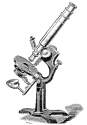
Born 26 Sep 1854; died 30 Jul 1944 at age 89.
American inventor who developed microscopes and optical instruments. In business, he became chairman Bausch & Lomb Optical Co. His father, John J. Bausch (1830-1926), was born in Germany, emigrated to America in 1849, and started a spectacle making business (the Vulcanite Optical Instrument Co.) with German immigrant Henry Lomb (1828-1908). By 1866, their company was making a simple microscope. The company name was changed to Bausch & Lomb Optical Co. in 1874, the year they produced their first compound microscope. Edward, with brothers William, and Henry all helped in the design and production of a full product line of microscopes. Edward held a number of patents related to the design of microscopes.
American inventor who developed microscopes and optical instruments. In business, he became chairman Bausch & Lomb Optical Co. His father, John J. Bausch (1830-1926), was born in Germany, emigrated to America in 1849, and started a spectacle making business (the Vulcanite Optical Instrument Co.) with German immigrant Henry Lomb (1828-1908). By 1866, their company was making a simple microscope. The company name was changed to Bausch & Lomb Optical Co. in 1874, the year they produced their first compound microscope. Edward, with brothers William, and Henry all helped in the design and production of a full product line of microscopes. Edward held a number of patents related to the design of microscopes.
Born 26 Sep 1816; died 10 Feb 1879 at age 62.
(François-Louis-) Paul Gervais, French paleontologist and zoologist, succeeded Georges Cuvier and Henri de Blainville as principal French contributor to vertebrate paleontology.
(François-Louis-) Paul Gervais, French paleontologist and zoologist, succeeded Georges Cuvier and Henri de Blainville as principal French contributor to vertebrate paleontology.

Born 26 Sep 1784; died 15 Apr 1873 at age 88.
Norwegian astronomer and physicist who is noted for his research in geomagnetism. In 1701, Edmond Halley had already published a map of magnetic declinations, and the subject was studied by Humboldt, de Borda, and Gay-Lussac, among others. Hansteen collected available data and also mounted an expedition to Siberia, where he took many measurements for an atlas of magnetic strength and declination.
Norwegian astronomer and physicist who is noted for his research in geomagnetism. In 1701, Edmond Halley had already published a map of magnetic declinations, and the subject was studied by Humboldt, de Borda, and Gay-Lussac, among others. Hansteen collected available data and also mounted an expedition to Siberia, where he took many measurements for an atlas of magnetic strength and declination.
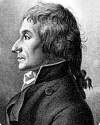
Born 26 Sep 1754; died 5 Jul 1826 at age 71.
French chemist who proved (1808) that the relative quantities of any given pure chemical compound's constituent elements remain invariant, regardless of the compound's source, and thus provided crucial evidence in support of John Dalton's “law of definite proportions,” which holds that elements in any compound are present in fixed proportion to each other.
French chemist who proved (1808) that the relative quantities of any given pure chemical compound's constituent elements remain invariant, regardless of the compound's source, and thus provided crucial evidence in support of John Dalton's “law of definite proportions,” which holds that elements in any compound are present in fixed proportion to each other.
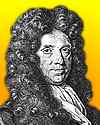
Baptized 26 Sep 1641; died 25 Mar 1712 at age 70. quotes
English botanist, physician, and microscopist, who was one of the founders of the science of plant anatomy. He began observations on the anatomy of plants in 1664, and his first essay on the subject, The Anatomy of Vegetables Begun was presented to the Royal Society of London in 1670 (published 1672). He took a particular interest in determining the physiological nature of the tissues. He observed the pourous structure of plant tissue, suggested that flowers have a sexual function, and was first to use the term "comparative anatomy" (1676, in a lecture at the Royal Society). His extensive studies of plant tissues, including roots, trunks, leaves, flowers, fruits and seeds were published in a major work The Anatomy of Plants (1682). From a chemical analysis of water from springs at Epsom, Surrey, he isolated magnesium sulphate, which remains known as "Epsom Salts."
English botanist, physician, and microscopist, who was one of the founders of the science of plant anatomy. He began observations on the anatomy of plants in 1664, and his first essay on the subject, The Anatomy of Vegetables Begun was presented to the Royal Society of London in 1670 (published 1672). He took a particular interest in determining the physiological nature of the tissues. He observed the pourous structure of plant tissue, suggested that flowers have a sexual function, and was first to use the term "comparative anatomy" (1676, in a lecture at the Royal Society). His extensive studies of plant tissues, including roots, trunks, leaves, flowers, fruits and seeds were published in a major work The Anatomy of Plants (1682). From a chemical analysis of water from springs at Epsom, Surrey, he isolated magnesium sulphate, which remains known as "Epsom Salts."
Nehemiah Grew: A Study and Bibliography of His Writings, by William Lefanu. - book suggestion.

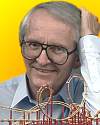
Died 26 Sep 2011 at age 81 (born 31 May 1930).
Ronald Valentine Toomer was an American engineer who was a legendary creator of steel roller coasters. His early career, was in the aerospace industry, where he helped design the heat shield for Apollo spacecraft and was also involved with NASA's first satellite launches. In 1965, he joined the Arrow Development Company to apply tubular steel technology to the design the Runaway Mine Ride, the world’s first all-steel roller coaster. It opened the following year at Six Flags over Texas. By 1975, he designed the Roaring 20s Corkscrew for Knott’s Berry Farm, introducing first 360° looping rolls, in fact two of them. Later, his design included seven inversions in the Shockwave roller coaster for Six Flags Great America. He produced over 80 roller coasters before retiring in 1998.«
Ronald Valentine Toomer was an American engineer who was a legendary creator of steel roller coasters. His early career, was in the aerospace industry, where he helped design the heat shield for Apollo spacecraft and was also involved with NASA's first satellite launches. In 1965, he joined the Arrow Development Company to apply tubular steel technology to the design the Runaway Mine Ride, the world’s first all-steel roller coaster. It opened the following year at Six Flags over Texas. By 1975, he designed the Roaring 20s Corkscrew for Knott’s Berry Farm, introducing first 360° looping rolls, in fact two of them. Later, his design included seven inversions in the Shockwave roller coaster for Six Flags Great America. He produced over 80 roller coasters before retiring in 1998.«
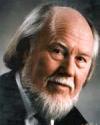
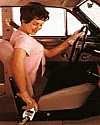
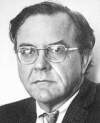
Swedish engineer who invented the familiar three-point lap and shoulder seatbelt which is considered one of the most important innovations in automobile safety. Bohlin left the aircraft industry, where he worked on jet ejector seats, including restraints, and joined AB Volvo in 1958 as safety engineer, where he invented and patented this device. In Aug 1959, Volvo was the first car manufacturer to introduce the three-point seat belt in their cars. They made this design freely available to other car manufacturers to save more lives. Bohlin holds several patents related to automotive and aviation design. After retiring form Volvo in 1985, he continued to give lectures and present papers relating to automotive restraint issues.«[Image right: (source)]
Died 26 Sep 1996 at age 75 (born 14 Jul 1921).
English chemist who shared (with Ernst Fischer) the Nobel Prize for Chemistry in 1973 for “for their pioneering work, performed independently, on the chemistry of the organometallic, so called sandwich compounds.”
English chemist who shared (with Ernst Fischer) the Nobel Prize for Chemistry in 1973 for “for their pioneering work, performed independently, on the chemistry of the organometallic, so called sandwich compounds.”
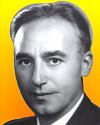
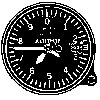
German-American engineer who invented the world's first accurate barometric altimeter (1928) that became vital to aviation safety. The original barometric altimeter was a simple instrument which displayed altitude by sensing barometric pressure, within an accuracy of 20 feet. On 24 Sep 1929, Jimmy Doolittle's historic "blind flight" proved that the Kollsman altimeter made navigation possible "flying on the gauges." The guage was widely known as the "Kollsman Window" because it included a window to dial in a manual setting to calibrate the barometric pressure at the current sea-level. The invention played a major role in establishing routine scheduled air service in the U.S. and around the world.«
Died 26 Sep 1978 at age 91 (born 3 Dec 1886).
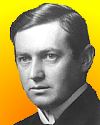
Karl Manne Georg was a Swedish physicist who was awarded the Nobel Prize for Physics in 1924 for his discoveries and investigations in X-ray spectroscopy. In 1914 he began his studies in the new science of x-ray spectroscopy which had already established from x-ray spectra that there were two distinct 'shells' of electrons within atoms, each giving rise to groups of spectral lines, labeled 'K' and 'L'. In 1916, Siegbahn discovered a third, or 'M', series. (More were to be found later in heavier elements.) Refining his x-ray equipment and technique, he was able to significantly increase the accuracy of his determinations of spectral lines. This allowed him to make corrections to Bragg's equation for x-ray diffraction to allow for the finer details of crystal diffraction.
Karl Manne Georg was a Swedish physicist who was awarded the Nobel Prize for Physics in 1924 for his discoveries and investigations in X-ray spectroscopy. In 1914 he began his studies in the new science of x-ray spectroscopy which had already established from x-ray spectra that there were two distinct 'shells' of electrons within atoms, each giving rise to groups of spectral lines, labeled 'K' and 'L'. In 1916, Siegbahn discovered a third, or 'M', series. (More were to be found later in heavier elements.) Refining his x-ray equipment and technique, he was able to significantly increase the accuracy of his determinations of spectral lines. This allowed him to make corrections to Bragg's equation for x-ray diffraction to allow for the finer details of crystal diffraction.
Died 26 Sep 1976 at age 89 (born 13 Sep 1887).
Croatian-Swiss chemist.
Croatian-Swiss chemist.
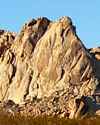
desert granite mountain
German geologist who was a pioneer in the study of granite tectonics (the deformation of crystalline rocks) and in model studies of rock deformation. He studied the structure and development of the continents and was one of the first investigators to make use of true scale models to investigate the mechanics of faulting. His publications include Der Mechanismus tiefvulkanischer Vorgänge (1921; “The Mechanism of Deep Volcanic Events”). In his autobiography, Conversation with the Earth, (1953) he wrote “geology is the music of the earth.”
Conversation with The Earth, by Hans Cloos. - book suggestion.
Died 26 Sep 1948 at age 87 (born 28 Jul 1861).
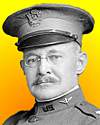
Major Henry Blanchard Hersey was an American meteorologist and balloonist who was co-pilot on the balloon United States when it won the first international balloon race (left Paris on 30 Sep 1906). His career began in the Signal Corps (29 Jun 1883) and received instruction in meteorology. After assignments in other states, he became an Inspector for the Weather Bureau and Official in Charge at Milwaukee, Wisconsin. He volunteered to be the meteorological observer for the Wellman Chicago Record-Herald Polar Expedition of 1907 on their (unsuccessful) attempt to make an airship flight from Spitzbergen to the North Pole. When he returned, Lt Frank P Lahm, the pilot of the 1906 race, was in poor health, so Hersey acted as pilot in the 1907 international balloon race for the Gordon-Bennett Cup. It began in St. Louis, Missouri, on 21 Oct 1907, but losing gas, he placed only eighth.« more
Major Henry Blanchard Hersey was an American meteorologist and balloonist who was co-pilot on the balloon United States when it won the first international balloon race (left Paris on 30 Sep 1906). His career began in the Signal Corps (29 Jun 1883) and received instruction in meteorology. After assignments in other states, he became an Inspector for the Weather Bureau and Official in Charge at Milwaukee, Wisconsin. He volunteered to be the meteorological observer for the Wellman Chicago Record-Herald Polar Expedition of 1907 on their (unsuccessful) attempt to make an airship flight from Spitzbergen to the North Pole. When he returned, Lt Frank P Lahm, the pilot of the 1906 race, was in poor health, so Hersey acted as pilot in the 1907 international balloon race for the Gordon-Bennett Cup. It began in St. Louis, Missouri, on 21 Oct 1907, but losing gas, he placed only eighth.« more
Died 26 Sep 1902 at age 73 (born 26 Feb 1829).
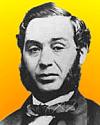
German-American inventor and manufacturer of jeans, Levi Strauss was one of the best-known beneficiaries of California's gold rush economic boom. He was born in Bavaria and trained as a tailor. One of thousands, he travelled to San Francisco in 1850, hoping to make his fortune. His original plan was to manufacture tents and wagon covers, but instead found a market using the stout canvas he had brought with him to make very durable pants for the Forty-niners. Finding that these pants sold as fast as he could make them, Strauss opened a factory, improved the design by adding copper rivets at the stress points in his pants, and adopted a heavy blue denim material called genes in France, that originated the now familiar name of "jeans".
German-American inventor and manufacturer of jeans, Levi Strauss was one of the best-known beneficiaries of California's gold rush economic boom. He was born in Bavaria and trained as a tailor. One of thousands, he travelled to San Francisco in 1850, hoping to make his fortune. His original plan was to manufacture tents and wagon covers, but instead found a market using the stout canvas he had brought with him to make very durable pants for the Forty-niners. Finding that these pants sold as fast as he could make them, Strauss opened a factory, improved the design by adding copper rivets at the stress points in his pants, and adopted a heavy blue denim material called genes in France, that originated the now familiar name of "jeans".
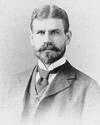
Died 26 Sep 1900 at age 34 (born 2 May 1866).
Jesse William Lazear was an American physician and bacteriologist who died of yellow fever in Quemados, Cuba, during his own research into the cause of the disease. He graduated from Columbia's medical school, worked at the Pasteur Institute in Paris, and upon an outbreak of yellow fever in Cuba he was appointed an assistant surgeon in the U.S. Army. As a member of the Yellow Fever Commission with Walter Reed, James Carroll and Aristides Agramonte, he was in Cuba early in 1900. Their investigation yielded proof that the disease was borne by mosquitoes. Unfortunately, Lazear was bitten accidentally by an infected mosquito. Five days later, he developed yellow fever and died on the seventh day of his illness.
Jesse William Lazear was an American physician and bacteriologist who died of yellow fever in Quemados, Cuba, during his own research into the cause of the disease. He graduated from Columbia's medical school, worked at the Pasteur Institute in Paris, and upon an outbreak of yellow fever in Cuba he was appointed an assistant surgeon in the U.S. Army. As a member of the Yellow Fever Commission with Walter Reed, James Carroll and Aristides Agramonte, he was in Cuba early in 1900. Their investigation yielded proof that the disease was borne by mosquitoes. Unfortunately, Lazear was bitten accidentally by an infected mosquito. Five days later, he developed yellow fever and died on the seventh day of his illness.
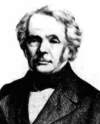
Died 26 Sep 1868 at age 77 (born 17 Nov 1790). quotes
August Ferdinand Möbius was a German astronomer, mathematician and author, died in Leipzig. He is best known for his work in analytic geometry and in topology, especially remembered as one of the discoverers of the Möbius strip, which he had discovered in 1858. A Möbius strip is a two-dimensional surface with only one side. It can be constructed in three dimensions as follows. Take a rectangular strip of paper and join the two ends of the strip together so that it has a 180 degree twist. It is now possible to start at a point A on the surface and trace out a path that passes through the point which is apparently on the other side of the surface from A. Although his most famous work is in mathematics, Möbius did publish important work on astronomy.
August Ferdinand Möbius was a German astronomer, mathematician and author, died in Leipzig. He is best known for his work in analytic geometry and in topology, especially remembered as one of the discoverers of the Möbius strip, which he had discovered in 1858. A Möbius strip is a two-dimensional surface with only one side. It can be constructed in three dimensions as follows. Take a rectangular strip of paper and join the two ends of the strip together so that it has a 180 degree twist. It is now possible to start at a point A on the surface and trace out a path that passes through the point which is apparently on the other side of the surface from A. Although his most famous work is in mathematics, Möbius did publish important work on astronomy.
/FergusonJames(1797-1867)Thm.jpg "James Ferguson")
Died 26 Sep 1867 at age 70 (born 31 Aug 1797).
Scottish-American astronomer who discovered the first previously unknown asteroid to be detected from North America. He recorded it on 1 Sep 1854 at the U.S. Naval Observatory, where he worked 1848-67. This was the thirty-first of the series and is now known as 31 Euphrosyne, named after one of the Charites in Greek mythology. It is one of the largest of the main belt asteroids, between Mars and Jupiter. He was involved in some of the earliest work in micrometry was done at the old U.S. Naval Observatory at Foggy Bottom in the midst of the Civil War using a 9.6 inch refractor. He also contributed to double star astronomy. Earlier in his life he was a civil engineer, member of the Northwest Boundary Survey, and an assistant in the U.S. Coast Survey.«(Note: Another astronomer and instrument maker by the same name of James Ferguson lived in Scotland 1710-1776.)
Scottish-American astronomer who discovered the first previously unknown asteroid to be detected from North America. He recorded it on 1 Sep 1854 at the U.S. Naval Observatory, where he worked 1848-67. This was the thirty-first of the series and is now known as 31 Euphrosyne, named after one of the Charites in Greek mythology. It is one of the largest of the main belt asteroids, between Mars and Jupiter. He was involved in some of the earliest work in micrometry was done at the old U.S. Naval Observatory at Foggy Bottom in the midst of the Civil War using a 9.6 inch refractor. He also contributed to double star astronomy. Earlier in his life he was a civil engineer, member of the Northwest Boundary Survey, and an assistant in the U.S. Coast Survey.«(Note: Another astronomer and instrument maker by the same name of James Ferguson lived in Scotland 1710-1776.)
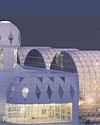
In 1991, four men and four women entered the Biosphere 2, an airtight, self-contained structure in Oracle, Ariz., where they would live for two years. The 7,200,000-cu-ft sealed glass and space-frame structure contained 5 biomes, including a 900,000-gallon ocean, a rain forest, a desert, agricultural areas and a human habitat. It was built in the late 1980s with $150 million in funding by Texas oil magnate Edward Bass. Biosphere 2 was designed as replica of Earth's environment (Biosphere 1). During their stay, the crew experienced various problems. Limited agricultural productivity restricted their diet. Micro-organisms in the soil reduced oxygen levels in the atmosphere and added nitrous oxide. The crew emerged on 26 Sep 1993. Unfortunately, the problems with the project's results brought scientific disdain.«
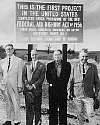
In 1956, the first new concrete road surface to be paved as part of the U.S. Interstate Highway System following the signing of the Federal-Aid Highway Act of 1956 was poured in Kansas for an 8-mile, two-lane section of U.S. 40 which became Interstate 70, a few miles west of Topeka. The 1956 Act established 90% federal funding for the U.S. System of Interstate and Defense Highways. The first State contract to begin new construction after the Act, had been issued earlier - on 2 Aug 1956, in Missouri - whereas the Kansas paving contract was awarded under the Act, but later in the month, on 31 Aug 1956. However, construction on the Kansas road had been under way prior to the Act, so Kansas had a head start, and was the first to complete a project under the Act. The road was opened on 14 Nov 1956.«[Image: Sign which reads "This is the First Project in the United States completed under provisions of the new Federal Aid Highway Act of 1956. Eight Miles Concrete Pavement on US-40, Interstate Route No. 1. State Highway Commssion of Kansas."]
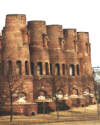
In 1871, U.S. patent No. 119,413 for the composition of portland cement was issued to David Oliver Saylor, of Allentown, Pa. In 1871, Saylor tried his hand at selecting and mixing different kinds of rock from his quarries to produce portland cement at the first US plant in Coplay, Pa. After initial difficulties, he succeeded with a mixture of magnesium clay with limestone clay. Samples shown at the 1876 Philadelphia Centennial Exhibition compared well with the best imported portland cements. In England, William Aspdin had patented "Portland cement," and coined the name (1852). The first recorded shipment of portland cement to the US was in 1868, when European manufacturers began shipping cement as ballast in tramp steamers at very low freight rates.[Image: Kilns at Coplay, Pa.]
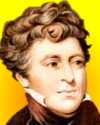
In 1818, the first transfusion in Great Britain using human blood (as opposed to animal blood) took place at Guy's Hospital, London, by Dr. James Blundell. The patient, Mr. Brazier, was beyond hope of recovery due to incurable scirrhous disease of the pyloric orifice of the stomach, but he was anxious that the procedure be tried. Using an instrument of his own design, the doctor transfused of between 12 to 14 ounces of donated human blood into a vein in the patient's arm. For 30 or 40 minutes there seemed benefit, as his pulse and body temperature increased. However, he died 56 hours after the treatment. Ten years later, Dr. Blundell saved a patient's life with a blood transfusion, but by then, Dr. Doubleday had already, in 1825, become the first to achieve a life-saving success.«
Blood: An Epic History of Medicine and Commerce, by Douglas Starr. - book suggestion.
In 1772, the soon-to-be state of New Jersey passed the first law in the US to license medical practioners, except those who do not charge for their services, or whose activity is bleeding patients or pulling teeth. There is no federal medical licensing law.




