Born 30 Aug 1935. quotes
Sylvia Alice Earle is an American oceanographer who is a devoted advocate of public education regarding the importance of the oceans as an essential environmental habitat. In 1990, Earle was named the first woman to serve as chief scientist at the National Oceanic and Atmospheric Administration (NOAA), the agency that conducts underwater research, manages fisheries, and monitors marine spills. She was among the first underwater explorers to make use of modern self-contained underwater breathing apparatus (SCUBA) gear, and identified many new species of marine life. With her former husband, Graham Hawkes, Earle designed and built a submersible craft that could dive to unprecedented depths of 3,000 feet.
Sylvia Alice Earle is an American oceanographer who is a devoted advocate of public education regarding the importance of the oceans as an essential environmental habitat. In 1990, Earle was named the first woman to serve as chief scientist at the National Oceanic and Atmospheric Administration (NOAA), the agency that conducts underwater research, manages fisheries, and monitors marine spills. She was among the first underwater explorers to make use of modern self-contained underwater breathing apparatus (SCUBA) gear, and identified many new species of marine life. With her former husband, Graham Hawkes, Earle designed and built a submersible craft that could dive to unprecedented depths of 3,000 feet.
Atlas of the Ocean: The Deep Frontier, by Sylvia Earle. - book suggestion.
Born 30 Aug 1919; died 11 Apr 2005 at age 85.
American microbiologist who developed vaccines against numerous once-common diseases including MMR (mumps, measles and rubella), chickenpox, hepatitis (A and B), pneumonia, meningitis, influenza, adenoviruses, and the commercial evolution of vaccines against meningococci and pneumococci. In his 40-year career, he developed over three dozen experimental and licensed animal and human vaccines. He codiscovered the adenoviruses. Although Jonas Salk, Albert Sabin and Louis Pasteur received much public recognition, Hilleman's work is probably responsible for saving more lives than those or any other scientist in the 20th century.«
American microbiologist who developed vaccines against numerous once-common diseases including MMR (mumps, measles and rubella), chickenpox, hepatitis (A and B), pneumonia, meningitis, influenza, adenoviruses, and the commercial evolution of vaccines against meningococci and pneumococci. In his 40-year career, he developed over three dozen experimental and licensed animal and human vaccines. He codiscovered the adenoviruses. Although Jonas Salk, Albert Sabin and Louis Pasteur received much public recognition, Hilleman's work is probably responsible for saving more lives than those or any other scientist in the 20th century.«
Born 30 Aug 1912; died 7 Mar 1997 at age 84. quotes
American physicist who shared the 1952 Nobel Prize for Physics with Felix Bloch for independently developing nuclear magnetic resonance (NMR) in liquids and in solids. NMR has become widely used and powerful tool to study the molecular structure of pure materials and the composition of mixtures. The method detects and measures the magnetic fields of atomic nuclei.
American physicist who shared the 1952 Nobel Prize for Physics with Felix Bloch for independently developing nuclear magnetic resonance (NMR) in liquids and in solids. NMR has become widely used and powerful tool to study the molecular structure of pure materials and the composition of mixtures. The method detects and measures the magnetic fields of atomic nuclei.
Born 30 Aug 1907; died 8 Jan 1980 at age 72.
American engineer and physicist, who with John P. Eckert invented (1946) the Electronic Numerical Integrator and Computer (ENIAC), the first general-purpose electronic computer. Mauchly initially conceived of the computer's architecture, and Eckert possessed the engineering skills to bring the idea to life. ENIAC was developed (1946) for the US Army Ordnance Department as what was probably the first general-purpose electronic computer. It was a vast machine, consuming 100 kW of electric power and containing 18,000 electronic valves. Their successful UNIVAC computer (1951) was the first commercial computer, and introduced magnetic tape for programming.
American engineer and physicist, who with John P. Eckert invented (1946) the Electronic Numerical Integrator and Computer (ENIAC), the first general-purpose electronic computer. Mauchly initially conceived of the computer's architecture, and Eckert possessed the engineering skills to bring the idea to life. ENIAC was developed (1946) for the US Army Ordnance Department as what was probably the first general-purpose electronic computer. It was a vast machine, consuming 100 kW of electric power and containing 18,000 electronic valves. Their successful UNIVAC computer (1951) was the first commercial computer, and introduced magnetic tape for programming.
ENIAC: The Triumphs and Tragedies of the World's First Computer, by Scott McCartney. - book suggestion.
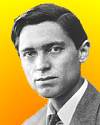
Born 30 Aug 1884; died 25 Feb 1971 at age 86.
Swedish chemist who won the 1926 Nobel Prize for Chemistry for his study of the chemistry of colloids and his invention of an ultracentrifuge (1923) as a technique for investigating the molecular weights of very large molecules. He showed that the molecular weights of proteins were much higher than originally thought (haemoglobin, for example, has a molecular weight of about 68,000). Since weight measurements repeatedly gave the same values, which implies that the particles had a definite size and composition, Svedberg thus disproved Wilhelm Ostwald's model of irregular assemblies of smaller molecules. Svedberg also contributed to development of the cyclotron and the the electrophoresis process of chemical analysis.« more
Swedish chemist who won the 1926 Nobel Prize for Chemistry for his study of the chemistry of colloids and his invention of an ultracentrifuge (1923) as a technique for investigating the molecular weights of very large molecules. He showed that the molecular weights of proteins were much higher than originally thought (haemoglobin, for example, has a molecular weight of about 68,000). Since weight measurements repeatedly gave the same values, which implies that the particles had a definite size and composition, Svedberg thus disproved Wilhelm Ostwald's model of irregular assemblies of smaller molecules. Svedberg also contributed to development of the cyclotron and the the electrophoresis process of chemical analysis.« more
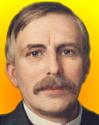
Born 30 Aug 1871; died 19 Oct 1937 at age 66. quotes
(1st Baron Rutherford of Nelson) Sir Ernest Rutherford was a New Zealand-English physicist who laid the groundwork for the development of nuclear physics. He worked under Sir J. J. Thomson at Cambridge University (1895-98). Then he collaborated with Frederick Soddy in studying radioactivity. On 1 Sep 1898 he dated a paper naming alpha particles and beta particles (Gamma radiation was discovered in 1900 by Paul Villard.) the following year. In 1905, with Soddy, he announced that radioactive decay involves a series of transformations. In 1907, with Hans Geiger and Ernest Marsden, he devised the alpha-particle scattering experiment that led in 1911 to the discovery of the atomic nucleus. In 1919 he achieved the artificial splitting of light atoms. In 1908 he was awarded the Nobel Prize for Chemistry.
(1st Baron Rutherford of Nelson) Sir Ernest Rutherford was a New Zealand-English physicist who laid the groundwork for the development of nuclear physics. He worked under Sir J. J. Thomson at Cambridge University (1895-98). Then he collaborated with Frederick Soddy in studying radioactivity. On 1 Sep 1898 he dated a paper naming alpha particles and beta particles (Gamma radiation was discovered in 1900 by Paul Villard.) the following year. In 1905, with Soddy, he announced that radioactive decay involves a series of transformations. In 1907, with Hans Geiger and Ernest Marsden, he devised the alpha-particle scattering experiment that led in 1911 to the discovery of the atomic nucleus. In 1919 he achieved the artificial splitting of light atoms. In 1908 he was awarded the Nobel Prize for Chemistry.
A Force of Nature: The Frontier Genius of Ernest Rutherford, by Richard Reeves. - book suggestion.
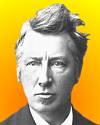
Born 30 Aug 1852; died 1 Mar 1911 at age 58. quotes
Dutch physical chemist who was the first winner of the Nobel Prize for Chemistry (1901) “in recognition of the extraordinary services he has rendered by the discovery of the laws of chemical dynamics and osmotic pressure in solutions.” In stereochemistry, in 1874, he identified the four chemical bonds of carbon as having a tetrahedral arrangement, which explained how certain moleculars can be arranged differently with the same atoms to give left- and right-handed isomers. (Achille Le Bel arrived independently at the same conclusion at about the same time.) With regard to the osmotic pressure of liquids, he derived laws (1886) for dilute solutions similar to the gas laws for gases by Robert Boyle and Joseph Gay-Lussac. These relationships enabled the experimental determination of the molecular weight of a substance in solution.«
Dutch physical chemist who was the first winner of the Nobel Prize for Chemistry (1901) “in recognition of the extraordinary services he has rendered by the discovery of the laws of chemical dynamics and osmotic pressure in solutions.” In stereochemistry, in 1874, he identified the four chemical bonds of carbon as having a tetrahedral arrangement, which explained how certain moleculars can be arranged differently with the same atoms to give left- and right-handed isomers. (Achille Le Bel arrived independently at the same conclusion at about the same time.) With regard to the osmotic pressure of liquids, he derived laws (1886) for dilute solutions similar to the gas laws for gases by Robert Boyle and Joseph Gay-Lussac. These relationships enabled the experimental determination of the molecular weight of a substance in solution.«
Imagination in Science, by J. H. van't Hoff. - book suggestion.
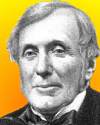
Born 30 Aug 1794; died 3 Sep 1874 at age 80.
English civil engineer, son of John Rennie,(1761-1821), continued his great engineering tradition. In his own right, he became one of Britain’s foremost civil engineers of the Industrial Age, constructing and designing major works of infrastructure. Rennie was knighted for completing London Bridge (opened 1831), a landmark in stone-arch engineering and urban transport. He also engineered land drainage works, harbors, docks, and breakwaters across Britain and projects abroad. He improved the London Docks and built key naval facilities, including the Royal William Yard, Plymouth (1835) as a naval victualling yard. The Royal Military Canal from Hythe near Folkestone to Cliff End near Hastings was conceived (1804) for defense against French invasion.« more
English civil engineer, son of John Rennie,(1761-1821), continued his great engineering tradition. In his own right, he became one of Britain’s foremost civil engineers of the Industrial Age, constructing and designing major works of infrastructure. Rennie was knighted for completing London Bridge (opened 1831), a landmark in stone-arch engineering and urban transport. He also engineered land drainage works, harbors, docks, and breakwaters across Britain and projects abroad. He improved the London Docks and built key naval facilities, including the Royal William Yard, Plymouth (1835) as a naval victualling yard. The Royal Military Canal from Hythe near Folkestone to Cliff End near Hastings was conceived (1804) for defense against French invasion.« more
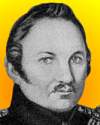
Born 30 Aug 1779; died 25 Jan 1852 at age 72.
Russian explorer may have been the first to see the Antarctic mainland. He had served in the Russian navy since joining as a ten-year-old cadet in 1789. He was directed by Tsar Alexander I to explore Antartica, and set sail on 16 Jul 1819. Although the Antarctic Circle had been crossed was by Cook in 1773, Bellinghausen may have been the first to sight the Antarctic mainland, when he saw distant mountains on 28 Jan 1820. Between 17-19 Feb, he recorded seeing ice cliffs and ice-covered mountains, though he did not realize they were in fact a continental mainland. Similar sightings were also made at about the same time British naval captain Edward Bransfield and the American sealing captain Nathaniel Palmer sailing from other directions, so who was actually the first of them to see Antartarctica remains unclear.«
Russian explorer may have been the first to see the Antarctic mainland. He had served in the Russian navy since joining as a ten-year-old cadet in 1789. He was directed by Tsar Alexander I to explore Antartica, and set sail on 16 Jul 1819. Although the Antarctic Circle had been crossed was by Cook in 1773, Bellinghausen may have been the first to sight the Antarctic mainland, when he saw distant mountains on 28 Jan 1820. Between 17-19 Feb, he recorded seeing ice cliffs and ice-covered mountains, though he did not realize they were in fact a continental mainland. Similar sightings were also made at about the same time British naval captain Edward Bransfield and the American sealing captain Nathaniel Palmer sailing from other directions, so who was actually the first of them to see Antartarctica remains unclear.«

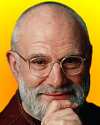
Died 30 Aug 2015 at age 82 (born 9 Jul 1933). quotes
Oliver Wolf Sacks was an English neurologist and writer. Many of his books relate case histories of neurologically damaged people. His empathy with those afflicted with strange conditions, including. Tourette's syndrome, amnesia, and autism, has been the hallmark of his writings. In his first book, Migraine: Evolution of a Common Disorder (1970, he began his approach of considering mental and emotional states while stressing links between them and physical afflictions. In the late 1960s in New York, he encountered some 80 people suffering from a “sleeping sickness” (known from its spread around the world about 1916-20). He experimented by giving some of them the drug L-DOPA and obtained seemingly amazing results, an “awakening,” but most soon regressed.
Oliver Wolf Sacks was an English neurologist and writer. Many of his books relate case histories of neurologically damaged people. His empathy with those afflicted with strange conditions, including. Tourette's syndrome, amnesia, and autism, has been the hallmark of his writings. In his first book, Migraine: Evolution of a Common Disorder (1970, he began his approach of considering mental and emotional states while stressing links between them and physical afflictions. In the late 1960s in New York, he encountered some 80 people suffering from a “sleeping sickness” (known from its spread around the world about 1916-20). He experimented by giving some of them the drug L-DOPA and obtained seemingly amazing results, an “awakening,” but most soon regressed.
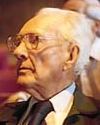
Died 30 Aug 2004 at age 97 (born 5 Nov 1906). quotes
Fred Lawrence Whipple was an American astronomer who proposed the “dirty snowball” model for comet nuclei. In the 1930s, using a new, two-station method of photography, he determined meteor trajectories and found that nearly all visible meteors are made up of fragile material from comets, and that none come from beyond the solar system. Whipple suggested (1950) that comets have icy cores inside thin insulating layers of dirt, and that jets of material ejected as a result of solar heating were the cause of orbital changes. This model was confirmed in 1986 when spacecraft flew past comet Halley. Whipple's work on tracking artificial satellites led to improved knowledge of the shape of the earth and greatly improved positions on earth.
Fred Lawrence Whipple was an American astronomer who proposed the “dirty snowball” model for comet nuclei. In the 1930s, using a new, two-station method of photography, he determined meteor trajectories and found that nearly all visible meteors are made up of fragile material from comets, and that none come from beyond the solar system. Whipple suggested (1950) that comets have icy cores inside thin insulating layers of dirt, and that jets of material ejected as a result of solar heating were the cause of orbital changes. This model was confirmed in 1986 when spacecraft flew past comet Halley. Whipple's work on tracking artificial satellites led to improved knowledge of the shape of the earth and greatly improved positions on earth.
The Mystery of Comets, by Fred L. Whipple and Daniel W.E. Green. - book suggestion.
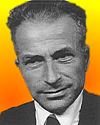
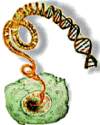
Albert F(riedrich) Frey-Wyssling was a Swiss botanist and pioneer of submicroscopic morphology who helped to initiate the study later known as molecular biology. This scientific discipline deals with the molecular basis of living processes. Molecular biology now involves both biochemistry and biophysics. Its growth since the 1930s has been made possible by the development of such techniques as chromatography, electron microscopy, and X-ray diffraction, which have revealed the structures of biologically important molecules, such as DNA, RNA, and enzymes. Heredity, and the development, organization, and function of living cells, all depend on the physical and chemical properties of the molecules involved.
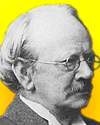
Died 30 Aug 1940 at age 83 (born 18 Dec 1856). quotes
Joseph John Thomson was an English physicist who helped revolutionize the knowledge of atomic structure by his discovery of the electron (1897). He received the Nobel Prize for Physics in 1906 and was knighted in 1908. Thomson experimented with currents of electricity inside empty glass tubes, investigating a long-standing puzzle known as “cathode rays.” His experiments prompted him to make a bold proposal: these mysterious rays are streams of particles much smaller than atoms. He called these particles “corpuscles,” and suggested that they might make up all of the matter in atoms. It was startling to imagine particles inside the atom at a time when most people thought that the atom was indivisible, the most fundamental unit of matter.
Joseph John Thomson was an English physicist who helped revolutionize the knowledge of atomic structure by his discovery of the electron (1897). He received the Nobel Prize for Physics in 1906 and was knighted in 1908. Thomson experimented with currents of electricity inside empty glass tubes, investigating a long-standing puzzle known as “cathode rays.” His experiments prompted him to make a bold proposal: these mysterious rays are streams of particles much smaller than atoms. He called these particles “corpuscles,” and suggested that they might make up all of the matter in atoms. It was startling to imagine particles inside the atom at a time when most people thought that the atom was indivisible, the most fundamental unit of matter.
J.J. Thompson And The Discovery Of The Electron, by E. A. Davis and Isabel Falconer. - book suggestion.
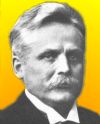
Died 30 Aug 1928 at age 64 (born 13 Jan 1864). quotes
German physicist who received the Nobel Prize for Physics in 1911 for his displacement law concerning the radiation emitted by the perfectly efficient blackbody (a surface that absorbs all radiant energy falling on it). While studying streams of ionized gas Wien, in 1898, identified a positive particle equal in mass to the hydrogen atom. Wien, with this work, laid the foundation of mass spectroscopy. J. J. Thomson refined Wien's apparatus and conducted further experiments in 1913 then, after work by Ernest Rutherford in 1919, Wien's particle was accepted and named the proton. Wien also made important contributions to the study of cathode rays, X-rays and canal rays.
German physicist who received the Nobel Prize for Physics in 1911 for his displacement law concerning the radiation emitted by the perfectly efficient blackbody (a surface that absorbs all radiant energy falling on it). While studying streams of ionized gas Wien, in 1898, identified a positive particle equal in mass to the hydrogen atom. Wien, with this work, laid the foundation of mass spectroscopy. J. J. Thomson refined Wien's apparatus and conducted further experiments in 1913 then, after work by Ernest Rutherford in 1919, Wien's particle was accepted and named the proton. Wien also made important contributions to the study of cathode rays, X-rays and canal rays.
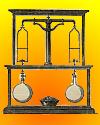
Died 30 Aug 1862 at age 91 (born 3 Jun 1771).
French chemist who collaborated with Nicolas Clément (later to become his son-in-law) in scientific investigations including the exact determination of the composition of carbon monoxide and carbon disulphide. They also experimentally determined the ratio of the specific heats of gases (1819). In independent work, following up on Volta's pile, Desormes devised dry electric piles composed of metallic disks separated by a layer of salt paste (1801-04). In the period c.1812-19, with Clement, Desormes studied heat and crudely estimated absolute zero. Later in life he turned to politics, with election losses at first, but after some years leading to becoming a member of the Constituent Assembly on 23 Apr 1848.«[Image: Apparatus used by Clement and Desormes to determine the density of air.]
French chemist who collaborated with Nicolas Clément (later to become his son-in-law) in scientific investigations including the exact determination of the composition of carbon monoxide and carbon disulphide. They also experimentally determined the ratio of the specific heats of gases (1819). In independent work, following up on Volta's pile, Desormes devised dry electric piles composed of metallic disks separated by a layer of salt paste (1801-04). In the period c.1812-19, with Clement, Desormes studied heat and crudely estimated absolute zero. Later in life he turned to politics, with election losses at first, but after some years leading to becoming a member of the Constituent Assembly on 23 Apr 1848.«[Image: Apparatus used by Clement and Desormes to determine the density of air.]
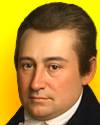
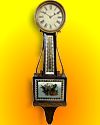
American clockmaker renowned for his precision craftsmanship and innovations in timekeeping. He was a member of a Massachusetts family of clockmakers that designed and produced brass-movement clocks from 1765 to 1850. Simon Willard designed and patented the elegant banjo clock (1802), a compact wall clock that became a hallmark of early American design. Willard also created highly accurate regulator clocks and tower clocks, prized for their mechanical reliability. His workshop’s instruments served homes, public buildings, and observatories. Blending artistry with mechanical ingenuity, Willard helped establish America’s reputation for fine horology and inspired generations of clockmakers in the developing nation.«
A History of Simon Willard: Inventor and Clockmaker, by John Ware Willard,. - book suggestion.

Modern photo of Bailey's Beads
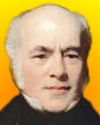
English astronomer who described the striking optical effect of “Baily's Beads” during an annular eclipse of the Sun (15 May 1836). An arc of bright spots is briefly seen during an eclipse of the Sun immediately before and after totality. It is due to the light shining through the Moon's irregular surface features. He retired in 1825 from a successful career as an eminent London stockbroker to turn his interest in astronomy from spare time to full time. Baily repeated Henry Cavendish's experiments to determine the density of the Earth, and measured its elliptical shape. Outraged by inaccuracies in the British Nautical Almanac (tables used by seamen to determine longitude for navigation), he took on the exacting and tedious work of revising them. In tandem, it was necessary to revise several star catalogs to correct errors.«
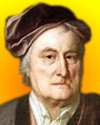
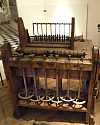
Swedish inventor who, during 1693-1709, harnessed water power to mechanize the Falun copper mine. In 1700, he erected a water-powered factory at Stjaernsund to manufacture tools, knives, locks and clocks. There, he implemented the use of hoists and conveyor belts to save manual labour, and notable introduced a division of labour among manufacturing tasks, centuries before the production line methods pioneered by Henry Ford. His cutting machine for gears for clocks has been cited as the world's first automatic machine tool. He created a number of wooden models illustrating technical design elements, known as his Mechanical Alphabet. In England, Polhem built a minting machine for King George I. In 2003, Polhem was honoured with his image on a Swedish 500 Kroner bank note.«[He was born as Christopher Polhammar, but after being ennobled, is known as Christopher Polhem. Image right: Polhem's automatic gear cutting machine displayed at the Tekniska Museet in Stockholm.]
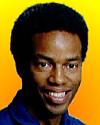
In 1983, Guion S. Bluford Jr. became the first black American astronaut to travel in space, aboard the third flight of the shuttle Challenger on the eighth Space Shuttle Mission. This was the first mission to launch and land at night. During 98 orbits of the Earth in 145 hours, the crew deployed the Indian National Satellite (INSAT-1B); operated the Canadian-built Remote Manipulator System with the Payload Flight Test Article; operated the Continuous Flow Electrophoresis System with live cell samples; conducted medical measurements to understand biophysiological effects on space flight. STS-8 landed on 5 Sep 1983. By 1992, Bluford had spent 688 hours on four space shuttle flights.«
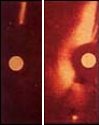
In 1979, Comet Howard-Koomen-Michels (SOLWIND I) collided with the Sun, the first recorded comet to collide with Sun and the first discovered by a spacecraft. The coronographs taken on 30 and 31 Aug 1979 from the satellite P78-1 used to monitor solar corona activity were not inspected until Sep 1981, by Russ Howard. The recording instruments were designed and operated by Martin Koomen and Don Michels. The remarkable series of images showed the comet heading around the Sun. Its perihelion distance was too small, and the head did not reappear from behind the Sun, presumably disintegrated by the heat of the sun. The decapitated comet's tail continued, becoming fan-like, brightening the corona, until dissipated and blown away from the Sun.«[Image: comet approaching sun and later the remaining tail dissipates in the corona.]
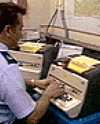
In 1963, the "Hot Line" communications link between the White House, Washington D.C. and the Kremlin, Moscow, went into operation to provide a direct two-way communications channel between the American and Soviet governments in the event of an international crisis. This was one year after the Cuban Missile Crisis. It consisted of one full-time duplex wire telegraph circuit, routed Washington- London- Copenhagen- Stockholm- Helsinki- Moscow, used for the transmission of messages and one full-time duplex radiotelegraph circuit, routed Washington- Tangier- Moscow used for service communications and for coordination of operations between the two terminal points. Note, this was not a telephone voice link.
In 1929, Colonel E. H. Green took delivery of a new combination gas and electric automobile, built by the General Electric Company.
In 1901, a dust removing suction cleaner patented was filed by Hubert Cecil Booth, a bridge engineer (U.K. No. 17,433). Prior machines using compressed air created clouds of dust, but with no means of removal, the dirt simply settled again. Once struck with the idea of using suction, Booth made a preliminary experiment by placing a pocket handkerchief over the plush back of a seat. He put his lips to it, and after sucking, a ring of black spots on the handkerchief proved his principle. He started a mobile cleaning service. Built on a horse-drawn cart, his vacuum machine had an engine driving a pump provided with a long hose to extend into a house to be cleaned. An early task was to clean the great blue coronation carpet in Westminster Abbey for Edward VII's coronation.
more
In 1890, President Benjamin Harrison signed the first U.S. law requiring inspection of meat products. The act required the U.S. Department of Agriculture, through the Bureau of Animal Industry, to inspect export shipments of salted pork and bacon, and to inspect imported imported cattle as well as foods and drinks. The President was authorized to act against countries that discriminated American against meat products. The Act was a response to several European nations that had at the time banned imports of American pork over concerns about infecttion with trichinosis. Those nations removed the restrictions the year following passage of the Act. Congress had thus established the beginning of effective national pure food legislation. In 1891, the Act was extended to include inspection of live cattle and beef exports.«
In 1885, the first motorcycle was patented by Gottlieb Daimler in Germany.*
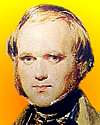
In 1831, Charles Darwin replied to the letter from Revd. Henslow telling him of the offer to sail on the H.M.S. Beagle. Darwin's had learned natural history from Henslow, who had recommended him for the unpaid position as a naturalist. Darwin told Henslow that his father would not permit him to leave on such a the voyage. Meanwhile, his father had written to his brother-in-law, Josiah Wedgwood II, about his concerns regarding the proposed two-year jaunt. This afternoon Darwin prepared to join the Wedgwoods for the next day's beginning of the shooting season by riding to Maer Hall, the Wedgwood home. The Darwin family was related to the Wedgwood family through the marriage of Darwin's father to the daughter of the first Josiah Wedgwood, the famous potter.«
From So Simple a Beginning: Darwin's Four Great Books, by Charles Darwin, Edward O. Wilson. - book suggestion.
In 1831, Michael Faraday demonstrated the first electrical transformer.*
The Electric Life Of Michael Faraday, by Alan W. Hirshfeld. - book suggestion.