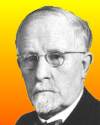
Born 17 Mar 1881; died 12 Aug 1973 at age 92. quotes
Walter Rudolf Hess was a Swiss physiologist who shared (with António Egas Moniz) the 1949 Nobel Prize for Physiology or Medicine “for his discovery of the functional organization of the interbrain as a coordinator of the activities of the internal organs.” In 1948, Hess devised suitable techniques to implant electrodes in the brains of rats, from which he could locate areas of the brain associated with certain instincts. Through his research, he identified how particular areas of the brain (and especially the hypothalamus) are involved with the functioning of the body's internal organs, and areas associated with autonomic functions such as sleep, hunger or defense mechanisms.«
Walter Rudolf Hess was a Swiss physiologist who shared (with António Egas Moniz) the 1949 Nobel Prize for Physiology or Medicine “for his discovery of the functional organization of the interbrain as a coordinator of the activities of the internal organs.” In 1948, Hess devised suitable techniques to implant electrodes in the brains of rats, from which he could locate areas of the brain associated with certain instincts. Through his research, he identified how particular areas of the brain (and especially the hypothalamus) are involved with the functioning of the body's internal organs, and areas associated with autonomic functions such as sleep, hunger or defense mechanisms.«
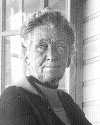
Born 17 Mar 1849; died 31 Dec 1934 at age 85.
American zoologist and educator whose influence as a teacher was great and enduring in a period when the world of science was just opening to women. She became a professor of zoology at Mt. Holyoke College, where she developed a vivid laboratory method of instruction that proved highly effective. Clapp was active in the research group at the then newly established (1888) Marine Biology Lab at Woods Hole, Mass. She carried on research there, primarily in the field of embryology. She published little during her career, her major influence being to extend scientific knowledge and opportunity to women through education.
American zoologist and educator whose influence as a teacher was great and enduring in a period when the world of science was just opening to women. She became a professor of zoology at Mt. Holyoke College, where she developed a vivid laboratory method of instruction that proved highly effective. Clapp was active in the research group at the then newly established (1888) Marine Biology Lab at Woods Hole, Mass. She carried on research there, primarily in the field of embryology. She published little during her career, her major influence being to extend scientific knowledge and opportunity to women through education.
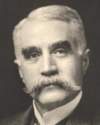
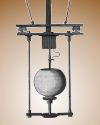
Brush arc lamp
American inventor and industrialist who devised an electric arc lamp and a generator that produced a variable voltage controlled by the load and a constant current. It was adopted throughout the United States and abroad during the 1880s. The arc light preceded Edison's incandescent light bulb in commercial use and was suited to applications where a bright light was needed, such as street lights and lighting in commercial and public buildings. He assembled his first dynamo in the summer of 1876, resulting in a patent for his Improvement in Magneto-Electric Machines, issued 24 Apr 1877 (US No. 189997). He then developed an arc light that was regulated by a combination of electrical and mechanical means limited by a “ring clutch.” His system was used by the California Electric Light Co. for the first U.S. central generating station (1879).
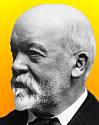
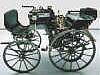
Gottlieb (Wilhelm) Daimler was a German engineer and pioneer automobile manufacturer. He invented the first high-speed internal combustion engine, operating at up to 900 rpm (1883) and a carburetor (1885) to mix petrol fuel and air. The motorbike he built in 1885 was perhaps the world's first. It was the world's first when, with Wilhelm Maybach, he constructed a four-wheeled automobile in 1886 capable of a speed of 11 mph. After developing a four-speed gearbox and a belt-drive to transfer power to the wheels, they started manufacturing. In 1890 he founded Daimler-Motoren-Gesellschaft, which produced the Mercedes (1889), later merging into Daimler-Benz & Co. in 1926. Zeppelin used Daimler engines for his airships.«
A Daimler Century: The Full History of Britain's Oldest Car Maker, by Lord Montagu. - book suggestion.
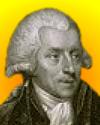
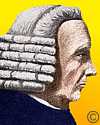
Born 17 Mar 1741; died 6 Oct 1799 at age 58.
English physician who made a classic study of the medicinal use of digitalis. From his interest in botany, he paid attention to folk remedies used by herb-gatherers, including the foxglove. The leaf extract was efficacious in use for certain cases of "dropsy" (oedema, caused by heart failure). He determined the doses safe to use, and published a careful report of his findings in An Account of the Foxglove (1785). His report gave good case histories, including failures as well as successes. Thus he added digitalis as a very useful drug for physicians to use to steady and strengthen heart action. He was also a mineralogist, and witherite (barium carbonate) is named after him. He suffered greatly for years from chest disease, probably tuberculosis.
English physician who made a classic study of the medicinal use of digitalis. From his interest in botany, he paid attention to folk remedies used by herb-gatherers, including the foxglove. The leaf extract was efficacious in use for certain cases of "dropsy" (oedema, caused by heart failure). He determined the doses safe to use, and published a careful report of his findings in An Account of the Foxglove (1785). His report gave good case histories, including failures as well as successes. Thus he added digitalis as a very useful drug for physicians to use to steady and strengthen heart action. He was also a mineralogist, and witherite (barium carbonate) is named after him. He suffered greatly for years from chest disease, probably tuberculosis.

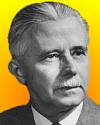
Died 17 Mar 1983 at age 79 (born 22 Dec 1903).
American physiologist who shared (with George Wald and Ragnar Granit) the 1967 Nobel Prize for Physiology or Medicine for his analysis of how the sensory cells of the retina of the eye evaluate the light stimulus. In his early career, he studied the metabolism of nerve cells and in time came to research individual cells in the retina of the eye. He used tiny electrodes to isolate individual fibres in the eyes of horseshoe crabs and frogs. He learned how impulse generation in the sensory cells transmits a code in response to illumination of different intensity and duration. He spent almost half a century advancing the understanding of the neurophysiology of vision.«
American physiologist who shared (with George Wald and Ragnar Granit) the 1967 Nobel Prize for Physiology or Medicine for his analysis of how the sensory cells of the retina of the eye evaluate the light stimulus. In his early career, he studied the metabolism of nerve cells and in time came to research individual cells in the retina of the eye. He used tiny electrodes to isolate individual fibres in the eyes of horseshoe crabs and frogs. He learned how impulse generation in the sensory cells transmits a code in response to illumination of different intensity and duration. He spent almost half a century advancing the understanding of the neurophysiology of vision.«
Died 17 Mar 1962 at age 76 (born 13 Sep 1885).
German mathematician whose major contributions to geometry concerned kinematics and differential geometry. Kinetic mapping (important later in the axiomatic foundations of various geometries) he both discovered and established it as a tool in kinematics. He also initiated topological differential geometry (the study of invariant differentiable mappings).
German mathematician whose major contributions to geometry concerned kinematics and differential geometry. Kinetic mapping (important later in the axiomatic foundations of various geometries) he both discovered and established it as a tool in kinematics. He also initiated topological differential geometry (the study of invariant differentiable mappings).
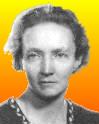
Died 17 Mar 1956 at age 58 (born 12 Sep 1897). quotes
French physicist and physical chemist, wife of Frédéric Joliot-Curie, who shared the 1935 Nobel Prize for Chemistry "in recognition of their synthesis of new radioactive elements." For example, in their joint research they discovered that aluminium atoms exposed to alpha rays transmuted to radioactive phosphorus atoms. She was the daughter of Nobel Prize winners Pierre and Marie Curie. From 1946, she was director of the Radium Institute, Paris, founded by her mother. She died of leukemia, like her mother, resulting from radiation exposure during research.
French physicist and physical chemist, wife of Frédéric Joliot-Curie, who shared the 1935 Nobel Prize for Chemistry "in recognition of their synthesis of new radioactive elements." For example, in their joint research they discovered that aluminium atoms exposed to alpha rays transmuted to radioactive phosphorus atoms. She was the daughter of Nobel Prize winners Pierre and Marie Curie. From 1946, she was director of the Radium Institute, Paris, founded by her mother. She died of leukemia, like her mother, resulting from radiation exposure during research.
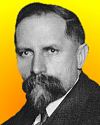
Died 17 Mar 1950 at age 83 (born 13 Sep 1866).
Swiss-American psychiatrist (1900-40), whose teaching and influential work has become a part of psychiatric theory and practice in English-speaking countries. Already trained in neuroanatomy and neurophysiology when he emigrated to the U.S. (1892), from working at mental institutions, he began to attribute the disorder in mental illness not to brain pathology, but to a personality dysfunction. He recognized social environment as an influence in mental disorders. Throughout his years at Johns Hopkins University as professor of psychiatry (1910-41), he taught that in the diagnosis and treatment of mental illness, the patient must be evaluated as a whole person.
Swiss-American psychiatrist (1900-40), whose teaching and influential work has become a part of psychiatric theory and practice in English-speaking countries. Already trained in neuroanatomy and neurophysiology when he emigrated to the U.S. (1892), from working at mental institutions, he began to attribute the disorder in mental illness not to brain pathology, but to a personality dysfunction. He recognized social environment as an influence in mental disorders. Throughout his years at Johns Hopkins University as professor of psychiatry (1910-41), he taught that in the diagnosis and treatment of mental illness, the patient must be evaluated as a whole person.
Died 17 Mar 1945 at age 63 (born 26 Dec 1881). quotes
Welsh cardiologist who has been called the “father of clinical cardiac electrophysiology.” He coined the terms “clinical science,” “pacemaker,” “premature contractions,” and “auricular fibrillation.” Thomas Lewis studied the human heart, and how it functions to maintain the flow of blood throughout the body. He performed research on blood vessels and pain. To assist his investigations, Lewis advanced the use of the electrocardiograph, originally developed by William Einthoven. They built on the knowledge of the electrical activity in muscle fibres began with the discovery by Luigi Galvani that electrical stimulation could cause movement in a dead frog's leg (1790). Lewis didn't hesitate to use himself as a test subject. Ironically, he died from a heart attack (his third one).«
Welsh cardiologist who has been called the “father of clinical cardiac electrophysiology.” He coined the terms “clinical science,” “pacemaker,” “premature contractions,” and “auricular fibrillation.” Thomas Lewis studied the human heart, and how it functions to maintain the flow of blood throughout the body. He performed research on blood vessels and pain. To assist his investigations, Lewis advanced the use of the electrocardiograph, originally developed by William Einthoven. They built on the knowledge of the electrical activity in muscle fibres began with the discovery by Luigi Galvani that electrical stimulation could cause movement in a dead frog's leg (1790). Lewis didn't hesitate to use himself as a test subject. Ironically, he died from a heart attack (his third one).«
Sir Thomas Lewis: Pioneer Cardiologist and Clinical Scientist, by A. Hollman. - book suggestion.
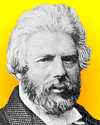
Died 17 Mar 1871 at age 68 (born 10 Jul 1802). quotes
Robert Emmet Chambers, Jr. was a Scottish naturalist and publisher who co-founded the Chambers publishing company (Edinburgh, 1832), known for Chambers's Encyclopaedia (1859-68). Chambers secretly released Vestiges of the Natural History of Creation (1844). (Posthumously, in 1884, the 12th edition named him as author.) His controversial book stitched together radical theories of the time. It spanned from a nebular origin hypothesis of the solar system to the emergence of organisms from spontaneous generation. He traced through the fossil record from simple to more advanced life forms. It was daring, much flawed, poorly reasoned, and had little of lasting scientific value, but by public sensation, it broke ground for Charles Darwin’s scholarly work.«
Robert Emmet Chambers, Jr. was a Scottish naturalist and publisher who co-founded the Chambers publishing company (Edinburgh, 1832), known for Chambers's Encyclopaedia (1859-68). Chambers secretly released Vestiges of the Natural History of Creation (1844). (Posthumously, in 1884, the 12th edition named him as author.) His controversial book stitched together radical theories of the time. It spanned from a nebular origin hypothesis of the solar system to the emergence of organisms from spontaneous generation. He traced through the fossil record from simple to more advanced life forms. It was daring, much flawed, poorly reasoned, and had little of lasting scientific value, but by public sensation, it broke ground for Charles Darwin’s scholarly work.«
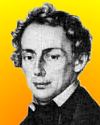
Died 17 Mar 1853 at age 49 (born 29 Nov 1803).
Christian Andreas Doppler was an Austrian physicist who first described how the observed frequency of light and sound waves is affected by the relative motion of the source and the detector, known as the Doppler effect. In 1845, to test his hypothesis, Doppler used two sets of trumpeters: one set stationary at a train station and one set moving on an open train car, all holding the same note. As the train passed the station, it was obvious that the frequency of the notes from the two groups didn't match. Sound waves would have a higher frequency if the source was moving toward the observer and a lower freqency if the source was moving away from the observer. Edwin Hubble used the Doppler effect of light from distant stars to determine that the universe is expanding.[DSB (1981) gives full name Christian Johann Doppler. However, more recent study shows the name “Johann,” which has been widely copied, to be erroneous. Existing birth and baptismal records indicate the name “Andreas.”]
Christian Andreas Doppler was an Austrian physicist who first described how the observed frequency of light and sound waves is affected by the relative motion of the source and the detector, known as the Doppler effect. In 1845, to test his hypothesis, Doppler used two sets of trumpeters: one set stationary at a train station and one set moving on an open train car, all holding the same note. As the train passed the station, it was obvious that the frequency of the notes from the two groups didn't match. Sound waves would have a higher frequency if the source was moving toward the observer and a lower freqency if the source was moving away from the observer. Edwin Hubble used the Doppler effect of light from distant stars to determine that the universe is expanding.[DSB (1981) gives full name Christian Johann Doppler. However, more recent study shows the name “Johann,” which has been widely copied, to be erroneous. Existing birth and baptismal records indicate the name “Andreas.”]
The Search for Christian Doppler, by Alec Eden. - book suggestion.
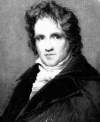
Died 17 Mar 1846 at age 61 (born 22 Jul 1784).
German astronomer who spent his entire career from age 26 (appointed 1809) as director of Frederick William III of Prussia's new Königsberg Observatory and professor of astronomy. His monumental task was determining the positions and proper motions for about 50,000 stars, which allowed the first accurate determination of interstellar distances. Bessel's work in determining the constants of precession, nutation and aberration won him further honors. Other than the sun, he was the first to measure the distance of a star, by parallax, of 61 Cygni (1838). In mathematical analysis, he is known for his Bessel function.
German astronomer who spent his entire career from age 26 (appointed 1809) as director of Frederick William III of Prussia's new Königsberg Observatory and professor of astronomy. His monumental task was determining the positions and proper motions for about 50,000 stars, which allowed the first accurate determination of interstellar distances. Bessel's work in determining the constants of precession, nutation and aberration won him further honors. Other than the sun, he was the first to measure the distance of a star, by parallax, of 61 Cygni (1838). In mathematical analysis, he is known for his Bessel function.
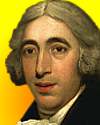
Died 17 Mar 1828 at age 68 (born 2 Dec 1759).
English botanist who, in 1788, founded the Linnean Society (as it was spelled in its Charter), and was its president until his death. He studied at Edinburgh in medicine and was taught the Linnaean system of botany by Dr John Hope, founder of the Royal Botanic Garden there. Although qualified as a physician, Smith instead followed his passion for natural history. In 1874, he purchased Linnaeus’ vast herbarium, other collections and library (with money lent by his father), which Smith continued to extend, gathering further specimens. There were 36 volumes in the set of English Botany that he published in 267 monthly parts over 23 years (1790-1814), along with various other botanical works.«
English botanist who, in 1788, founded the Linnean Society (as it was spelled in its Charter), and was its president until his death. He studied at Edinburgh in medicine and was taught the Linnaean system of botany by Dr John Hope, founder of the Royal Botanic Garden there. Although qualified as a physician, Smith instead followed his passion for natural history. In 1874, he purchased Linnaeus’ vast herbarium, other collections and library (with money lent by his father), which Smith continued to extend, gathering further specimens. There were 36 volumes in the set of English Botany that he published in 267 monthly parts over 23 years (1790-1814), along with various other botanical works.«
A Grammar of Botany, Illustrative of Artificial, as Well as Natural, Classification With an Explanation of Jussieu’s System, by Sir James Edward Smith. - book suggestion.
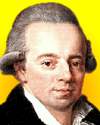
Died 17 Mar 1782 at age 82 (born 8 Feb 1700). quotes
French mathematician who was the most distinguished in the second generation of the Bernoulli family of mathematicians. His talents were broad, including medicine, biology, physiology, mechanics, physics, astronomy, and oceanography. Bernoulli’s theorem which he derived, is named after him. (Put simply, it relates the pressure and velocity of a fluid, in effect an application of the conservation of energy.) He won several prizes for papers on diverse subjects, including the tides, planetary orbits, optimal shape of hourglasses, and reducing pitch and roll of ships. With his work, Daniel Bernoulli established mathematical physics. He was the first to show the advantage of resolving compound motion into a motions of translation and of rotation.«Birth date: 8 Feb 1700 (New Style) is 29 Jan 1700 (Old Style).
French mathematician who was the most distinguished in the second generation of the Bernoulli family of mathematicians. His talents were broad, including medicine, biology, physiology, mechanics, physics, astronomy, and oceanography. Bernoulli’s theorem which he derived, is named after him. (Put simply, it relates the pressure and velocity of a fluid, in effect an application of the conservation of energy.) He won several prizes for papers on diverse subjects, including the tides, planetary orbits, optimal shape of hourglasses, and reducing pitch and roll of ships. With his work, Daniel Bernoulli established mathematical physics. He was the first to show the advantage of resolving compound motion into a motions of translation and of rotation.«Birth date: 8 Feb 1700 (New Style) is 29 Jan 1700 (Old Style).
Died 17 Mar 1771 at age 67 (born 9 Dec 1703).
English jurist and mathematician who invented the achromatic lens, which he utilized in building the first refracting telescope free from chromatic aberration (colour distortion).
English jurist and mathematician who invented the achromatic lens, which he utilized in building the first refracting telescope free from chromatic aberration (colour distortion).
Died 17 Mar 1764 (born 1697).
[2nd Earl of Macclesfield] English astronomer who was instrumental in changing the computation of current chronology, subsequently enacted as the British Calendar Act of 1751 which co-authored and co-promoted. (Shortly thereafter, he was elected President of the Royal Society, 1752-1764). Since 1582, the new calendar of Pope Gregory XIII had been used in most of Europe. In England the new calendar was rejected as popish. By 1750, the old calendar became 11 days out of sequence with the position of the Earth in its orbit due to its lack of leap years. Parker was assisted in these calculations by his friend James Bradley, the astronomer royal, and received influential support from Philip Dormer Stanhope, 4th Earl of Chesterfield.
[2nd Earl of Macclesfield] English astronomer who was instrumental in changing the computation of current chronology, subsequently enacted as the British Calendar Act of 1751 which co-authored and co-promoted. (Shortly thereafter, he was elected President of the Royal Society, 1752-1764). Since 1582, the new calendar of Pope Gregory XIII had been used in most of Europe. In England the new calendar was rejected as popish. By 1750, the old calendar became 11 days out of sequence with the position of the Earth in its orbit due to its lack of leap years. Parker was assisted in these calculations by his friend James Bradley, the astronomer royal, and received influential support from Philip Dormer Stanhope, 4th Earl of Chesterfield.
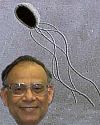
In 1980, arguments were heard by the U.S. Supreme Court concerning whether a patent could be issued for a genetically-engineered bacterium in the case of Diamond vs. Chakrabarty. On 16 Jun 1980, in a landmark decision, the judges held five to four that the Patent Office should recognize “any” new and useful “manufacture” or “composition of matter,” and that the fact that micro-organisms are alive was without legal significance in the related patent law. Microbiologist, Ananda Chakrabarty had appealed the rejection of his 1972 patent application for a human-made, genetically engineered bacterium capable of breaking down crude oil, which no naturally occurring bacteria could do. The patent was eventually issued 31 Mar 1981.«[Image: the patented Burkholderia cepacia bacterium; inset: Chakrabarty]
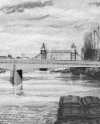
In 1973, Queen Elizabeth II opened new London Bridge.[Image: in foreground, a span of the new London Bridge, with Tower Bridge in the background]
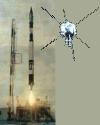
In 1958, the U.S. launched the Vanguard I satellite, from Cape Canaveral, Florida. The 3-lb satellite was the first to be solar-powered, carried a radio transmitter and orbited every 107.9 minutes. This was the U.S.A.'s late entry into the Space Race, its second successful satellite launch, following the two Soviet successes with their satellites Sputnik I (184-lb pounds) launched 4 Oct 1957 and Sputnik II (1120-lb) launched 3 Nov 1957. For Vanguard I, the U.S. in only 2 years, 6 months, and 8 days had developed from scratch a complete high-performance three-stage launching vehicle, a highly accurate worldwide satellite tracking system, an adequate launching facility and range instrumentation. Vanguard I was launched during the International Geophysical Year, and remains the oldest satellite still in orbit.«
In 1950, a new radioactive element, element 98, named “californium” was announced by scientists at the University of California at Berkeley. This is a synthetic chemical element of the actinide series in Group IIIb of the periodic table, isotope californium-245. The scientists Stanley G. Thompson, Kenneth Street, Jr., Albert Ghiorso, and Glenn T. Seaborg produced it by bombarding curium-242 (atomic number 96) with helium-ions in the 60-inch cyclotron. Since then, longer lived isotopes have been created, including californium-251 with an 800-year half-life, and microgram quantities of compounds such as the oxychloride CfOCl, the oxide Cf2O3, and the trichloride CfCl3. Also, californium-252, with a half-life of 2.65-years, has industrial and medical applications as a very intense point source of neutrons. Used as a neutron emitter and to analyze the sulfur content of petroleum and to measure the moisture content of soil..
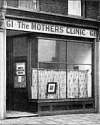
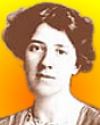
Stopes
Married Love, by Marie Stopes. - book suggestion.
In 1899, Phoebe, the ninth moon of Saturn, was observed by William Henry Pickering as a very faint object on a photographic plate taken on 13 Aug 1898. The image was captured on A 3228, a plate 14 x 17 inches exposed for two hours in the Bruce photographic telescope at the Harvard station near Arequipa, Peru.
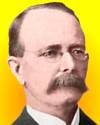
In 1898, the first practical submarine was demonstrated by John Holland off Staten Island in New York for 100 minutes. Holland's sub was not the first underwater boat, but is credited as the first practical one.
John P. Holland, 1841-1914: Inventor of the Modern Submarine, by Richard Knowles Morris. - book suggestion.
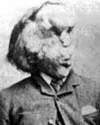
In 1885, a medical report of the deformities of Joseph Carey Merrick was presented to the Pathological Society of London by Dr. Frederick Treves. After a brief career as a professional "freak," he became the best-known resident patient of London Hospital from 1886 until his death in 1890. Merrick, known as the "Elephant Man," had a head had become enormous (3 feet in circumference), with large bags of brownish spongy skin hanging from the back of his head and across his face. His deformed jaws limited his speech to a difficult to understand splutter, and he was unable to show facial expression. Modern researchers identify this as an example of an extremely rare disease known as the Proteus syndrome.
more
The True History of the Elephant Man, by Michael Howells. - book suggestion.

In 1845, a method of manufacturing elastic (rubber) bands was patented in Britain by Stephen Perry and and Thomas Barnabas Daft of London (G.B. No. 13880/1845). In the early 19th century, sailors brought home items made by Central and South American natives from the sap of rubber trees, including footwear, garments and bottles. Around 1820, a Londoner named Thomas Hancock sliced up one of the bottles to create garters and waistbands. By 1843, he had secured patent rights from Charles Macintosh for vulcanized india rubber. Stephen Perry, owner of Messrs Perry and Co,. patented the use of india rubber for use as springs in bands, belts, etc., and also the manufacture of elastic bands by slicing suitable sizes of vulcanized india rubber tube. Vulcanization made rubber stable and retain its elasticity.«[Image: from 1882 Perry & Co. catalog. Elastic bands are known as rubber bands in the U.S.] more

Plymouth China