
Born 26 Aug 1965.
Marcus Peter Francis du Sautoy is an English mathematician and populariser of science who became the second Symoni Professor for the Understanding of Science at the University of Oxford in 2008, succeeding Richard Dawkins (1995-2008) in the chair. Du Sautoy is familiar on broadcast media, and has written many popular articles in various print media and online. His research activities are mainly in group theory, number theory and exploring the mathematics of symmetry, on which he has published numerous academic articles. The several popular books he has written includeThe Music of the Primes: Searching to Solve the Greatest Mystery in Mathematics(2012) andThe Great Unknown: Seven Journeys to the Frontiers of Science(2017).«
Marcus Peter Francis du Sautoy is an English mathematician and populariser of science who became the second Symoni Professor for the Understanding of Science at the University of Oxford in 2008, succeeding Richard Dawkins (1995-2008) in the chair. Du Sautoy is familiar on broadcast media, and has written many popular articles in various print media and online. His research activities are mainly in group theory, number theory and exploring the mathematics of symmetry, on which he has published numerous academic articles. The several popular books he has written includeThe Music of the Primes: Searching to Solve the Greatest Mystery in Mathematics(2012) andThe Great Unknown: Seven Journeys to the Frontiers of Science(2017).«
Finding Moonshine: A Mathematician's Journey Through Symmetry, by Marcus Du Sautoy. - book suggestion.
Born 26 Aug 1951.
American mathematical physicist whose work in superstring theory made him the first physicist to be recognized with the Fields Medal in 1990, when he was 39 and at the Institute for Advanced Study in Princeton, New Jersey. The Fields Medal is regarded as having the status of a Nobel Prize for mathematicians. Witten was already known for his contributions in elementary particle theory, especially quantum field theory and string theory, and their mathematical implications, when in 1998 he received the Dannie Heineman Prize for Mathematical Physics. This award from the American Physical Society was given for “advances in elucidating the dynamics of strongly coupled supersymmetric field and string theories” in which he exploited “the deep physical and mathematical consequences of the electric-magnetic duality.”«
American mathematical physicist whose work in superstring theory made him the first physicist to be recognized with the Fields Medal in 1990, when he was 39 and at the Institute for Advanced Study in Princeton, New Jersey. The Fields Medal is regarded as having the status of a Nobel Prize for mathematicians. Witten was already known for his contributions in elementary particle theory, especially quantum field theory and string theory, and their mathematical implications, when in 1998 he received the Dannie Heineman Prize for Mathematical Physics. This award from the American Physical Society was given for “advances in elucidating the dynamics of strongly coupled supersymmetric field and string theories” in which he exploited “the deep physical and mathematical consequences of the electric-magnetic duality.”«
Born 26 Aug 1906; died 3 Mar 1993 at age 86.
Polish-American physician and microbiologist best known for developing the first oral polio vaccine (1955), which was administered to millions of children in Europe, Africa, and the Americas beginning in the late 1950s. He was also known for his research in the fields of human viral diseases, toxoplasmosis, and cancer.
Polish-American physician and microbiologist best known for developing the first oral polio vaccine (1955), which was administered to millions of children in Europe, Africa, and the Americas beginning in the late 1950s. He was also known for his research in the fields of human viral diseases, toxoplasmosis, and cancer.
Born 26 Aug 1900; died 1965.
Hedley Ralph Marston was an Australian biohemist who spent three decades with his colleagues researching the role of cobalt and other trace elements in animal and plant nutrition. He is remembered for announcing at the 1935 meeting of the Australian and New Zealand Association for the Advancement of Science that a wasting malady of sheep in certain coastal regions was caused by a lack of sufficient of cobalt in their diet. This resulted from a deficiency of the trace element in those region's soils, but dramatic recovery of ailing sheep resulted when given cobalt salt supplements.
Hedley Ralph Marston was an Australian biohemist who spent three decades with his colleagues researching the role of cobalt and other trace elements in animal and plant nutrition. He is remembered for announcing at the 1935 meeting of the Australian and New Zealand Association for the Advancement of Science that a wasting malady of sheep in certain coastal regions was caused by a lack of sufficient of cobalt in their diet. This resulted from a deficiency of the trace element in those region's soils, but dramatic recovery of ailing sheep resulted when given cobalt salt supplements.
Born 26 Aug 1886; died 10 Sep 1984 at age 98.
American aeronautical engineer who made major innovations in the design of aircraft and lighter-than-air ships, seaplanes, and carrier-based aircraft. His career had spanned the entire existence of the aerospace industry, from the very beginnings of aeronautics to exploration of the solar system. He received his master's degree in naval architecture from M.I.T. in 1912. At about the same time seeing a flight by Bleriot around Boston harbour attracted him to the fledgling field of aeronautics. By 1916, he became MIT's first Ph.D. in aeronautical engineering. He designed the NC (Navy Curtiss) flying boat with the capability of crossing the Atlantic. It was the largest aircraft in the world at the time, with four engines and a crew of six.
American aeronautical engineer who made major innovations in the design of aircraft and lighter-than-air ships, seaplanes, and carrier-based aircraft. His career had spanned the entire existence of the aerospace industry, from the very beginnings of aeronautics to exploration of the solar system. He received his master's degree in naval architecture from M.I.T. in 1912. At about the same time seeing a flight by Bleriot around Boston harbour attracted him to the fledgling field of aeronautics. By 1916, he became MIT's first Ph.D. in aeronautical engineering. He designed the NC (Navy Curtiss) flying boat with the capability of crossing the Atlantic. It was the largest aircraft in the world at the time, with four engines and a crew of six.
Born 26 Aug 1882; died 21 May 1964 at age 81. quotes
German-American physicist who shared the Nobel Prize for Physics in 1925 with Gustav Hertz for research on the excitation and ionization of atoms by electron bombardment that verified the quantized nature of energy transfer.
German-American physicist who shared the Nobel Prize for Physics in 1925 with Gustav Hertz for research on the excitation and ionization of atoms by electron bombardment that verified the quantized nature of energy transfer.
Born 26 Aug 1873; died 30 Jun 1961 at age 87. quotes
American inventor of the Audion vacuum tube, which made possible live radio broadcasting and became the key component of all radio, telephone, radar, television, and computer systems before the invention of the transistor in 1947. He held 300 patents.
American inventor of the Audion vacuum tube, which made possible live radio broadcasting and became the key component of all radio, telephone, radar, television, and computer systems before the invention of the transistor in 1947. He held 300 patents.
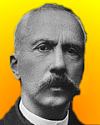
Born 26 Aug 1850; died 3 Dec 1935 at age 85. quotes
French physiologist, bacteriologist and pathologist who was awarded the 1913 Nobel Prize for Physiology or Medicine. He coined (1902) the term "anaphylaxis" meaning "against protection" to describe the subject of his research, when he found a second vaccinating dose of sea anemone toxin caused a dog's death. Instead of producing protection, as expected in the normal response to vaccination, the first dose had produced a life-threatening sensitivity. This led to an understanding a variety of allergic reactions, hay-fever and asthma. His other interests included aviation: attracted by Marey's experiments on bird flight, Richet participated in the design and construction of one of the first airplanes to leave the ground under its own power.«[DSB and obituary in NYT both give date of death as 3 Dec 1935. EB and other sources give 4 Dec 1935.]
French physiologist, bacteriologist and pathologist who was awarded the 1913 Nobel Prize for Physiology or Medicine. He coined (1902) the term "anaphylaxis" meaning "against protection" to describe the subject of his research, when he found a second vaccinating dose of sea anemone toxin caused a dog's death. Instead of producing protection, as expected in the normal response to vaccination, the first dose had produced a life-threatening sensitivity. This led to an understanding a variety of allergic reactions, hay-fever and asthma. His other interests included aviation: attracted by Marey's experiments on bird flight, Richet participated in the design and construction of one of the first airplanes to leave the ground under its own power.«[DSB and obituary in NYT both give date of death as 3 Dec 1935. EB and other sources give 4 Dec 1935.]
Born 26 Aug 1800; died 6 Dec 1872 at age 72.
French naturalist who was a leading advocate of the idea of the spontaneous generation of life from nonliving matter.
French naturalist who was a leading advocate of the idea of the spontaneous generation of life from nonliving matter.
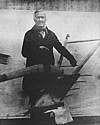
Born 26 Aug 1784; died 28 Aug 1875 at age 91.
American inventor and manufacturer of a practical cast iron plow with detachable components. His early achievement, while a youth, was to increase the productivity of a water-powered grist-mill by improving the shape of its nether millstone (the lower of the two millstones) used to grind flour. Though his father desired that he should make law his profession, he flatly refused. He was more interested by invention. By 1816, he had invented a cast-iron plough superior to Charles Newbold's earlier design. McCormick's first of several patents was issued on on 3 Feb 1819. His cast-iron mould board had an adjustable wrought-iron point mounted beneath, able to decrease the draft, while deepening the furrow, and breaking up the soil more effectively. Standardization of the replaceable parts led to the development of improved manufacturing processes.« more
American inventor and manufacturer of a practical cast iron plow with detachable components. His early achievement, while a youth, was to increase the productivity of a water-powered grist-mill by improving the shape of its nether millstone (the lower of the two millstones) used to grind flour. Though his father desired that he should make law his profession, he flatly refused. He was more interested by invention. By 1816, he had invented a cast-iron plough superior to Charles Newbold's earlier design. McCormick's first of several patents was issued on on 3 Feb 1819. His cast-iron mould board had an adjustable wrought-iron point mounted beneath, able to decrease the draft, while deepening the furrow, and breaking up the soil more effectively. Standardization of the replaceable parts led to the development of improved manufacturing processes.« more
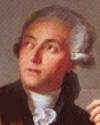
Born 26 Aug 1743; died 8 May 1794 at age 50. quotes
French chemist, the “father of modern chemistry,” was a brilliant experimenter also active in public affairs. An aristocrat, he invested in a private company hired by the government to collect taxes. With his wealth he built a large laboratory. In 1778, he found that air consists of a mixture of two gases which he called oxygen and nitrogen. By studying the role of oxygen in combustion, he replaced the phlogiston theory. Lavoisier also discovered the law of conservation of mass and devised the modern method of naming compounds, which replaced the older nonsystematic method. During the French Revolution, for his involvement with tax-collecting, he was guillotined.
French chemist, the “father of modern chemistry,” was a brilliant experimenter also active in public affairs. An aristocrat, he invested in a private company hired by the government to collect taxes. With his wealth he built a large laboratory. In 1778, he found that air consists of a mixture of two gases which he called oxygen and nitrogen. By studying the role of oxygen in combustion, he replaced the phlogiston theory. Lavoisier also discovered the law of conservation of mass and devised the modern method of naming compounds, which replaced the older nonsystematic method. During the French Revolution, for his involvement with tax-collecting, he was guillotined.
Torch and Crucible: The Life and Death of Antoine Lavoisier, by Sidney J. French. - book suggestion.
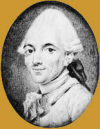
Born 26 Aug 1740; died 26 Jun 1810 at age 69. quotes
French inventor and balloonist who with his younger brother, Étienne conducted an initial experiment with a balloon of taffeta filled with hot smoke was given a public demonstration on 5 Jun 1783. This pioneering work was followed by a flight carrying three animals as passengers on 19 Sep 1783, shown in Paris and witnessed by King Louis XVI. On 21 Nov 1783, their balloon carried the first two men on an untethered flight. In the span of one year after releasing their test balloon, the Montgolfier brothers had enabled the first manned balloon flight in the world.[DSB gives that he was baptised Michel Joseph, but was generally known as Joseph Michel.] more
French inventor and balloonist who with his younger brother, Étienne conducted an initial experiment with a balloon of taffeta filled with hot smoke was given a public demonstration on 5 Jun 1783. This pioneering work was followed by a flight carrying three animals as passengers on 19 Sep 1783, shown in Paris and witnessed by King Louis XVI. On 21 Nov 1783, their balloon carried the first two men on an untethered flight. In the span of one year after releasing their test balloon, the Montgolfier brothers had enabled the first manned balloon flight in the world.[DSB gives that he was baptised Michel Joseph, but was generally known as Joseph Michel.] more
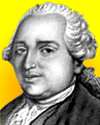
Born 26 Aug 1736; died 3 Jul 1790 at age 53. quotes
French crystallographer who, with his Essai de Cristallographie (1772), confirmed Nicolas Steno’s observation that the angles between corresponding faces of quartz crystals are always the same, although various samples of quartz crystals may differ in appearance. Further, Romé showed that different crystal substances have their own characteristic angles. For example diamond crystals appear with an octahedral form, whereas pyrite crystals are based on the cube. In his first book, he had 100+ descriptions of crystal forms, which he expanded to 450 by 1784. Romé thus formulated the Law of Constancy of Interfacial Angles suggested by Steno in 1669; used it to identify different minerals; and firmly established modern crystallography.«[Name also written as Romé Delisle.]
French crystallographer who, with his Essai de Cristallographie (1772), confirmed Nicolas Steno’s observation that the angles between corresponding faces of quartz crystals are always the same, although various samples of quartz crystals may differ in appearance. Further, Romé showed that different crystal substances have their own characteristic angles. For example diamond crystals appear with an octahedral form, whereas pyrite crystals are based on the cube. In his first book, he had 100+ descriptions of crystal forms, which he expanded to 450 by 1784. Romé thus formulated the Law of Constancy of Interfacial Angles suggested by Steno in 1669; used it to identify different minerals; and firmly established modern crystallography.«[Name also written as Romé Delisle.]
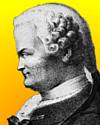
Born 26 Aug 1728; died 25 Sep 1777 at age 49. quotes
Swiss-German mathematician, astronomer, physicist, and philosopher who provided the first rigorous proof that pi is irrational (cannot be expressed as the quotient of two integers). In 1766, Lambert wrote Theorie der Parallellinien, a study of the parallel postulate. By assuming that the parallel postulate was false, he deduced many non-euclidean results. He noticed that in this new geometry the sum of the angles of a triangle increases as its area decreases. Lambert conjectured that e and p are transcendental, though this was not proved for another century. He is responsible for many innovations in the study of heat and light, devised a method of measuring light intensity, as well as working on the theory of probability.
Swiss-German mathematician, astronomer, physicist, and philosopher who provided the first rigorous proof that pi is irrational (cannot be expressed as the quotient of two integers). In 1766, Lambert wrote Theorie der Parallellinien, a study of the parallel postulate. By assuming that the parallel postulate was false, he deduced many non-euclidean results. He noticed that in this new geometry the sum of the angles of a triangle increases as its area decreases. Lambert conjectured that e and p are transcendental, though this was not proved for another century. He is responsible for many innovations in the study of heat and light, devised a method of measuring light intensity, as well as working on the theory of probability.

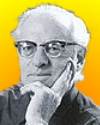
Died 26 Aug 1998 at age 80 (born 16 Mar 1918).
American physicist who was awarded the 1995 Nobel Prize for Physics for his detection in 1956 of neutrinos, working with his colleague Clyde L. Cowan, Jr. The neutrino is a subatomic particle, a tiny lepton with little or no mass and a neutral charge which had been postulated by Wolfgang Pauli in the early 1930s but had previously remained undiscovered. (Reines shared the Nobel Prize with physicist Martin Lewis Perl, who discovered the tau lepton.)
American physicist who was awarded the 1995 Nobel Prize for Physics for his detection in 1956 of neutrinos, working with his colleague Clyde L. Cowan, Jr. The neutrino is a subatomic particle, a tiny lepton with little or no mass and a neutral charge which had been postulated by Wolfgang Pauli in the early 1930s but had previously remained undiscovered. (Reines shared the Nobel Prize with physicist Martin Lewis Perl, who discovered the tau lepton.)
Died 26 Aug 1998 at age 84 (born 23 Feb 1914).
American virologist whose theory that certain genes, which he called oncogenes, are involved in cancer focused researchers' attention on finding them. His investigations paved the way for the discovery of viral causes of cancers and several other serious diseases and for the development of a number of vaccines and treatments
American virologist whose theory that certain genes, which he called oncogenes, are involved in cancer focused researchers' attention on finding them. His investigations paved the way for the discovery of viral causes of cancers and several other serious diseases and for the development of a number of vaccines and treatments
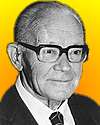
Died 26 Aug 1987 at age 90 (born 16 Jun 1897).
German chemist whose studies of organic phosphorus compounds won him a share (with Herbert C. Brown) of the Nobel Prize for Chemistry in 1979. In 1953, he discovered how a family of organic compounds called ylides could form the basis of the Wittig reaction, which easily and predictably joins two carbon atoms from different molecules to form a double bond. The Wittig reaction's reliability enabled other chemists to pursue and publish findings on thousands of applications for linking large carbon molecules. The process was used for synthesizing complex compounds such as vitamin A, vitamin D derivatives, steroids, and biological pesticides. Because of the Wittig reaction, such compounds can now routinely be synthesized.
German chemist whose studies of organic phosphorus compounds won him a share (with Herbert C. Brown) of the Nobel Prize for Chemistry in 1979. In 1953, he discovered how a family of organic compounds called ylides could form the basis of the Wittig reaction, which easily and predictably joins two carbon atoms from different molecules to form a double bond. The Wittig reaction's reliability enabled other chemists to pursue and publish findings on thousands of applications for linking large carbon molecules. The process was used for synthesizing complex compounds such as vitamin A, vitamin D derivatives, steroids, and biological pesticides. Because of the Wittig reaction, such compounds can now routinely be synthesized.
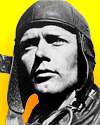
1927
Died 26 Aug 1974 at age 72 (born 4 Feb 1902). quotes
Charles Augustus Lindbergh was an American aviator who is famous for making the first nonstop solo flight across the Atlantic (1927). He first served as an apprentice to a barnstormer, performing as a wingwalker and parachute jumper. Then, he purchasing a war surplus Jenny trainer, made his first solo flight and barnstormed himself for about a year. Later, he became the first air mail pilot between Chicago, Ill., and St, Louis, Mo. On 20 May 1927, Lindbergh left New York for Paris, carrying sandwiches and water. He decided against carrying a parachute and radio in favor of more gasoline. He fought fog, icing and drowsiness, and landed in Paris on 21 May, after 33½ hours on his 3,600 mile flight.« more
Charles Augustus Lindbergh was an American aviator who is famous for making the first nonstop solo flight across the Atlantic (1927). He first served as an apprentice to a barnstormer, performing as a wingwalker and parachute jumper. Then, he purchasing a war surplus Jenny trainer, made his first solo flight and barnstormed himself for about a year. Later, he became the first air mail pilot between Chicago, Ill., and St, Louis, Mo. On 20 May 1927, Lindbergh left New York for Paris, carrying sandwiches and water. He decided against carrying a parachute and radio in favor of more gasoline. He fought fog, icing and drowsiness, and landed in Paris on 21 May, after 33½ hours on his 3,600 mile flight.« more
The Spirit of St. Louis, by Charles A. Lindbergh. - book suggestion.
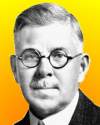
Died 26 Aug 1950 at age 86 (born 3 Jun 1864).
American inventor and automobile manufacturer, designer of the three-horsepower, curved-dash Oldsmobile, the first commercially successful American-made automobile and the first to use a progressive assembly system, which foreshadowed modern mass-production methods. When young, he worked in his father's machine and repair shop, in Lansing, Mich., where he experimented with small steam engines. In 1887, for a distance of one block, Olds drove Lansing's first automobile, an experimental steam vehicle. He continued to work with steam, gasoline and electric power. Eventually he produced a gasoline-powered vehicle that seated four persons and could do 18 miles per hour on level ground.
American inventor and automobile manufacturer, designer of the three-horsepower, curved-dash Oldsmobile, the first commercially successful American-made automobile and the first to use a progressive assembly system, which foreshadowed modern mass-production methods. When young, he worked in his father's machine and repair shop, in Lansing, Mich., where he experimented with small steam engines. In 1887, for a distance of one block, Olds drove Lansing's first automobile, an experimental steam vehicle. He continued to work with steam, gasoline and electric power. Eventually he produced a gasoline-powered vehicle that seated four persons and could do 18 miles per hour on level ground.
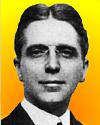
Died 26 Aug 1935 at age 61 (born 25 Oct 1873).
American industrialist who developed early automotive production. In 1912-18, Willys' output ranked second only to Ford. Willys first saw an early automobile in 1899, realized its potential, and came a car salesman. By 1907, his sales out-stripped his supplier's ability to produce, so he stepped in and reorganized the faltering Overland Company in Indianapolis. He successfully increased production, and expanded the Willys-Overland plant into a larger factory in Toledo, Ohio. During WW I, Willys-Overland became a major producer of trucks, airplanes and airplane engines. After his death, the Willys-Overland company pioneered the WW II Jeep, a rugged off-road vehicle. In 1970, the company was bought by American Motors Corporation.«
American industrialist who developed early automotive production. In 1912-18, Willys' output ranked second only to Ford. Willys first saw an early automobile in 1899, realized its potential, and came a car salesman. By 1907, his sales out-stripped his supplier's ability to produce, so he stepped in and reorganized the faltering Overland Company in Indianapolis. He successfully increased production, and expanded the Willys-Overland plant into a larger factory in Toledo, Ohio. During WW I, Willys-Overland became a major producer of trucks, airplanes and airplane engines. After his death, the Willys-Overland company pioneered the WW II Jeep, a rugged off-road vehicle. In 1970, the company was bought by American Motors Corporation.«
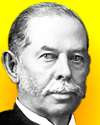
Died 26 Aug 1926 at age 80 (born 4 Feb 1846). quotes
American civil engineer who invented California’s Tehachapi Loop, an elegant 0.73-mile railroad spiral. Called one of the seven wonders of the railroad world, it is a National Historic Civil Engineering Landmark. It is part of 28 miles of railroad snaking through the Tehachapi Pass between San Francisco and Los Angeles. Hood designed a remarkable series of horseshoe and S-curves to traverse the lofty peaks and ridges along the way. The spiral ascends at a 2-percent grade for an elevation of 77 feet. A train longer than 4,000 feet (about 85 cars) passes over itself as it travels around the loop. He retired as chief engineer of the Southern Pacific Company. His career spanned 54 years (3 May 1867- 3 May 1921), in which time some 11,000 miles of track were laid.«
American civil engineer who invented California’s Tehachapi Loop, an elegant 0.73-mile railroad spiral. Called one of the seven wonders of the railroad world, it is a National Historic Civil Engineering Landmark. It is part of 28 miles of railroad snaking through the Tehachapi Pass between San Francisco and Los Angeles. Hood designed a remarkable series of horseshoe and S-curves to traverse the lofty peaks and ridges along the way. The spiral ascends at a 2-percent grade for an elevation of 77 feet. A train longer than 4,000 feet (about 85 cars) passes over itself as it travels around the loop. He retired as chief engineer of the Southern Pacific Company. His career spanned 54 years (3 May 1867- 3 May 1921), in which time some 11,000 miles of track were laid.«

Died 26 Aug 1923 at age 69 (born 28 Apr 1854). quotes
Phoebe Sarah Hertha Marks Ayrton (née Phoebe Sarah Marks) was an English electrical engineer, inventor and mathematician whose aptitude for science and mathematics began in school. She invented a sphygmograph (a device that charts pulse beats, though not the first), a line divider (a drafting instrument to divide a line into any given number of equal parts, 1884) and an anti-gas fan (flapper) used during WWI. She began working with William Ayrton, whom she subsequently married (1884). Taking up her husband’s interest in electric arc experiments, Hertha designed improvements making arc lights quieter and more reliable. She published The Electric Arc (1902). As a woman she was denied a degree from Cambridge, and at first refused membership in the Royal Society (1902).«[EB gives date of death as 26 Aug 1923; some sources state 23 Aug. It was not a birth name, but she became known as “Herta”, which was a nickname originating at age 16.]
Phoebe Sarah Hertha Marks Ayrton (née Phoebe Sarah Marks) was an English electrical engineer, inventor and mathematician whose aptitude for science and mathematics began in school. She invented a sphygmograph (a device that charts pulse beats, though not the first), a line divider (a drafting instrument to divide a line into any given number of equal parts, 1884) and an anti-gas fan (flapper) used during WWI. She began working with William Ayrton, whom she subsequently married (1884). Taking up her husband’s interest in electric arc experiments, Hertha designed improvements making arc lights quieter and more reliable. She published The Electric Arc (1902). As a woman she was denied a degree from Cambridge, and at first refused membership in the Royal Society (1902).«[EB gives date of death as 26 Aug 1923; some sources state 23 Aug. It was not a birth name, but she became known as “Herta”, which was a nickname originating at age 16.]
The Electric Arc (reprint), by Hertha Marks Ayrton. - book suggestion.
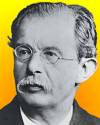
Died 26 Aug 1910 at age 76 (born 2 Dec 1833).
German pathologist, known by descriptions of two disorders, each called Recklinghausen's disease: multiple neurofibromatosis (1882), an inheritable disease characterized by café au lait spots combined with multiple peripheral nerve tumours and a variety of others dysplastic abnormalities of the skin, nervous system, bones, endocrine organs and blood vessels; and osteitis fibrosa cystica (1891), a now mostly historical term for a generalized rarefying bone disorder with skeletal deformation, seen in advanced hyperparathyroidism. He was a traditional histopathologist of his time, resistant to changes such as the use of the microtome or the results of the new science of bacteriology. He taught and remained active as a researcher until shortly before his death.
German pathologist, known by descriptions of two disorders, each called Recklinghausen's disease: multiple neurofibromatosis (1882), an inheritable disease characterized by café au lait spots combined with multiple peripheral nerve tumours and a variety of others dysplastic abnormalities of the skin, nervous system, bones, endocrine organs and blood vessels; and osteitis fibrosa cystica (1891), a now mostly historical term for a generalized rarefying bone disorder with skeletal deformation, seen in advanced hyperparathyroidism. He was a traditional histopathologist of his time, resistant to changes such as the use of the microtome or the results of the new science of bacteriology. He taught and remained active as a researcher until shortly before his death.
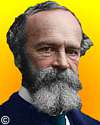
Died 26 Aug 1910 at age 68 (born 11 Jan 1842). quotes
American psychologist and philosopher who was a leader of the philosophical movement of Pragmatism and of the psychological movement of functionalism. Although he first began a career as a zoologist, and traveled to Brazil on expedition with Louis Agassiz, James moved to the medical school, and then his life’s work investigating the mind. He served terms as President of the American Psychological Association and of the International Society for Psychical Research. After retiring from active teaching, he became the foremost American advocate for “pragmatism” in philosophical thought by which “that is true which works.”«
American psychologist and philosopher who was a leader of the philosophical movement of Pragmatism and of the psychological movement of functionalism. Although he first began a career as a zoologist, and traveled to Brazil on expedition with Louis Agassiz, James moved to the medical school, and then his life’s work investigating the mind. He served terms as President of the American Psychological Association and of the International Society for Psychical Research. After retiring from active teaching, he became the foremost American advocate for “pragmatism” in philosophical thought by which “that is true which works.”«
Died 26 Aug 1895 at age 51 (born 13 Aug 1844).
Swiss biochemist and biologist who studied cell metabolism and discovered nucleic acids. In 1869, while working under Ernst Felix Hoppe-Seyler at the University of Tübingen, Miescher investigated a substance containing both phosphorus and nitrogen in the nuclei of white blood cells found in pus. The substance, was first named nuclein because it seemed to come from cell nuclei. After 1874, it became known as nucleic acid, when Miescher separated it into a protein and an acid molecule. It is now known as deoxyribonucleic acid (DNA).
Swiss biochemist and biologist who studied cell metabolism and discovered nucleic acids. In 1869, while working under Ernst Felix Hoppe-Seyler at the University of Tübingen, Miescher investigated a substance containing both phosphorus and nitrogen in the nuclei of white blood cells found in pus. The substance, was first named nuclein because it seemed to come from cell nuclei. After 1874, it became known as nucleic acid, when Miescher separated it into a protein and an acid molecule. It is now known as deoxyribonucleic acid (DNA).
Died 26 Aug 1867 at age 64 (born 12 Nov 1802).
German anthropologist who developed the concept of three stages of cultural evolution and is thought to have influenced the prominent English anthropologist Sir Edward Burnett Tylor. Klemm spent most of his life as director of the royal library at Dresden (from 1831). He distinguishing three stages of cultural evolution (which he identified as those of savagery, domestication, and freedom). Klemm divided mankind into active and inactive races and believed that peoples differed in mentality and temperament. He wrote about this 10 volume work, Allgemeine Kulturgeschichte der Menschheit.[Death date uncertain: given by Enc. Brit. as died 25/26 Aug 1867.]
German anthropologist who developed the concept of three stages of cultural evolution and is thought to have influenced the prominent English anthropologist Sir Edward Burnett Tylor. Klemm spent most of his life as director of the royal library at Dresden (from 1831). He distinguishing three stages of cultural evolution (which he identified as those of savagery, domestication, and freedom). Klemm divided mankind into active and inactive races and believed that peoples differed in mentality and temperament. He wrote about this 10 volume work, Allgemeine Kulturgeschichte der Menschheit.[Death date uncertain: given by Enc. Brit. as died 25/26 Aug 1867.]
Died 26 Aug 1865 at age 73 (born 23 Sep 1791).
German astronomer who in 1819 established the period of the comet now known by as Encke's Comet. At at 3.3 years it has the shortest period of any known.
German astronomer who in 1819 established the period of the comet now known by as Encke's Comet. At at 3.3 years it has the shortest period of any known.
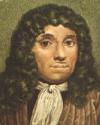
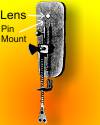
Microscope
Dutch biologist and microscopist who by skilled use of microscopy first discovered bacteria, protists, sperm cells, blood cells and various structures in animal and plant tissues. Published translations of his letters to the Royal Society were widely read. Researching microorganisms was a new frontier for science, that refuted the doctrine of spontaneous generation. Leeuwenhoek has been called the “Father of Microbiology.” Microscopes had been invented before he was born, but the lenses he ground were significantly better for detailed examination of microscopic life. He may have been inspired by illustrations in Robert Hooke’s book, Micrographia. Fewer than 10 of his 500 microscopes have survived.« more
Antonie Van Leeuwenhoek and His “Little Animals”, by Antonie Van Leeuwenhoek. - book suggestion.

In 2004, thimerosal-containing influenza vaccines were banned from use in California. The governor, Arnold Schwarzenegger, was reacting more to public advocacy groups than the weight of medical opinion. Thimerosal, containing an ethylmercury compound has been used in vaccines in microgram quantities to prevent life-threatening bacterial contamination. In 2004, a report by the Immunization Safety Review Committee of the Institute of Medicine stated that the benefits of vaccination are proven and the hypothesis of susceptible populations is presently speculative. After considering available medical studies from several countries, the report rejected any connection between thimerosal-containing vaccines and autism. Neverthless, some lay persons convince themselves otherwise.«
Immunization Safety Review: Thimerosal-Containing Vaccines and Neurodevelopmental Disorders, by Immunization Safety Review Committee. - book suggestion.
In 1959, the Morris Mini-Minor was introduced by the British Motor Corporation. The car, popularly known as the Mini, remains successful over five decades later. It became a landmark in automotive design because it was only 10 ft long, yet seated four passengers, and one of the lowest priced cars on the market. Its innovative designer, Alec Issigonis, saved space by mounting the engine transversely which elimiated the interior space taken up by a transmission tunnel. Issigonis believed that “when you're designing a new car for production, never, never copy the opposition.” and created a vehicle that carried the greatest payload in the smallest practical space. It had all-independent suspension, good fuel economy, fast acceleration, maneuverability and ease of parking.«
In 1938, a tape recorder was used for the first time in the U.S. to send a radio broadcast. The sapphire stylus engraved Millertape used was invented by James Arthur Miller of the Miller Broadcasting Company. A 1,000 foot section of this tape could carry a 15-min program, which could be editted by cutting. This first program using this sound tape was transmitted by WQXR, the Interstate Broadcasting Company, in New York City from 6:30pm to 7 pm.
In 1930, Philo Farnsworth patented a television system (U.S. 1,773,980). This was his first patent, with a description of his image dissector tube, which was his most important inventive contribution to the development of television. He had begun working on this concept at an early age, gained some financial support for his research, and worked in a small laboratory with limited assistance.
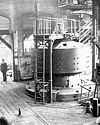
In 1895, the large-scale production of electricity using hydropower from the Niagara Falls was commercialized. The neaby Pittsburgh Reduction Company used it for electrolytic separation of aluminium metal from its ore. Shortly after, on 15 Nov 1896, Buffalo received power for commercial use. Since 24 Oct 1893, Westinghouse Electric and Manufacturing Company of Pittsburgh, Pa., had contracted to install three 5,000-hp generators producing two-phase currents at 2,200 volts, 25 hertz. The first such tuboalternator unit was completed within 18 months. Prior capacity had been limited to generators no larger than 1,000 hp. (Earlier small-scale production of electricity with three units totalling 1,800 hp, began in 1881. The local village and park had electricity from a private plant since 1879.)«Image: Interior of Niagara Falls Power House No. 1 (1895-99)
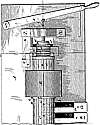
In 1884, Ottmar Mergenthaler of Baltimore, Maryland was issued U.S. Patent No. 304,272 for a “Matrix-Making Machine”. He described it as a “power-driven machine…controlled…by a series of finger-keys for the purpose of indenting or printing letters or characters in or upon a continuous strip of papier-maché.” (Newspapers at that time locked a hand-set page of type in a frame, pressed it into a papier-maché sheet, and made an impression used to cast a plate for the printing press.) Mergenthaler’s direct-to-impression idea was not practical to replace type. He pursued better ideas. A few years later, he invented the widely successful Linotype typesetting machine which revolutionized the printing industry.«[Errors removed, and text revised 29 Aug 2022]
The Biography of Ottmar Mergenthaler, Inventor of the Linotype, by Carl Schlesinger (ed.). - book suggestion.
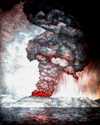
In 1883, Mount Krakatoa, an island volcano in the Dutch Indies (now Indonesia) erupted with violent explosions that destroyed two thirds of the island. It produced huge tsunami waves that swept across the immediate region, killing an estimated 36,000 people. These waves were powerful enough to cross the Indian Ocean and travel beyond Cape Horn. The most powerful blast was the most violent known in human history—it was loud enough to be heard in Australia. The shockwave was registered by barometers England. The huge amount of volcanic dust thrust high into the stratosphere eventually travelled around the world. The dust blocked sunlight causing temperature drops, highly coloured sunsets, and chaotic weather patterns for several years afterwards.«
more
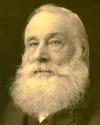
In 1856, William Henry Perkin, an English chemist, applied for a British patent titled "Dyeing Fabrics" for his invention of aniline dye "producing a new coloring matter for dyeing with a lilac or purple color stuffs of silk, cotton, wool or other materials." It was sealed on 20 Feb 1857. This was the first synthetic dye, which he obtained at first unintentionally from coal tar (a by-product of coal gas production) while seeking a method to prepare the anti-malarial drug quinine from that source. Perkin was just 18 years old. With help from his father and brother, he began manufacturing the dye, which he called Tyrian purple. Within a few years, he was wealthy and in in 1873 sold the business to turn to chemistry full-time.«
1843
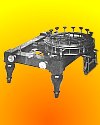
In 1843, the first U.S. design of a typewriter that successfully typed was issued a patent to Charles Thurber of Norwich, Conn. (No. 3,228) as a “machine for printing by hand by pressing upon keys which contain the type, called ‘Thurber's Patent Printer.’” He was the first to place the paper on a roller and give it longitudinal motion with provision for accurate letter and word spacing. It had a wheel carrying the keys around its circumference. A roller provided inking. However, the machine was slow to use, and only a concept model. Two years later, he patented a design for a writing (not typing) machine, which he called a Chirographer (18 Nov 1845, No. 4,271). On 27 Jun 1857, British Letters Patent were sealed (No. 1805) on Thurber's invention of “An improved caligraph.”«[Image: Thurber's Patent Printer of 1843.] more
In 1791, there were U.S. patents issued severally to James Rumsey, John Fitch, Nathan Read, John Stevens and Englehart Cruse for their various uses of steam power. Several of the patentees had previously obtained exclusive priviledges from some of the State Legislatures.« As the original applications had not satisfied the patent board with the precision of their descriptions of the inventions, a hearing was held with the inventors in Feb 1791. Fitch and Rumsey were in bitter dispute for priority using steam as a motive power to navigation. Jefferson said that they could make no distinction among all the patents, nor give one preference, and decided all patents should be issued on the same day.«*
In 1346, the cannon, firing a round ball carved from rock, was first used in battle in France. Edward III of England reportedly used 22 cannon during the defeat of Philip VI of France at Crécy. The earliest cannons, having no more power than the trebuchet, could not bring down the walls by themselves. Their chief effect, in the beginning, was psychological: the burst of fire and loud noise were effective in getting the enemy's attention, making it impossible for them to forget that their lives were in danger. Their effect is recorded in a well known manuscript - Froissart's Chroniques of the battle of Crécy: "The English fired of some cannons which they had brought to the battle to frighten the Genoese." The victory is attributed to the longbowmen.




