Born 8 Aug 1948.
Svetlana Yevgenyevna Savitskaya is a Russian cosmonaut and aerospace engineer who was the first woman to walk in space (1984), and the first woman to make two trips into space. Before her, a Russian cosmonaut, Valentina Tereshkova, had been the first woman in space (1963). Savitskaya became the second woman in space (19 Aug 1982) on the Soyuz T7 spacecraft flight to the Salyut 7 space station. Her second flight, also to the space station, was on the Soyuz T12 spacecraft. It was during this mission that she made her three-hour space walk (25 Jul 1984), making welding experiments. Earlier in her life, she had been an aviator, set 18 women's world records, and won a world aerobatics championship (1970). From 1976, she was a test pilot, and joined the Russian space program in 1980.«
Svetlana Yevgenyevna Savitskaya is a Russian cosmonaut and aerospace engineer who was the first woman to walk in space (1984), and the first woman to make two trips into space. Before her, a Russian cosmonaut, Valentina Tereshkova, had been the first woman in space (1963). Savitskaya became the second woman in space (19 Aug 1982) on the Soyuz T7 spacecraft flight to the Salyut 7 space station. Her second flight, also to the space station, was on the Soyuz T12 spacecraft. It was during this mission that she made her three-hour space walk (25 Jul 1984), making welding experiments. Earlier in her life, she had been an aviator, set 18 women's world records, and won a world aerobatics championship (1970). From 1976, she was a test pilot, and joined the Russian space program in 1980.«
Born 8 Aug 1938; died 4 Jan 2020 at age 81. quotes
Sir Jack Edward Baldwin was an English chemist who originated Baldwin’s Rules for ring closure reactions in organic chemistry. Based on empirical evidence, these rules consider the relative rates (or favorabilities) of ring closure in alicyclic compounds. During his Ph.D. studies at Imperial College, London, he worked for the Nobel laureate, Sir Derek Barton. After his training as a synthetic organic chemist, he retained an interest in the challenge of the synthesis of complex natural compounds. His early work was at M.I.T. (1969-1978), but Baldwin spent the majority of his research career in laboratories at Oxford. He was knighted in 1997 for his contributions to organic chemistry.«
Sir Jack Edward Baldwin was an English chemist who originated Baldwin’s Rules for ring closure reactions in organic chemistry. Based on empirical evidence, these rules consider the relative rates (or favorabilities) of ring closure in alicyclic compounds. During his Ph.D. studies at Imperial College, London, he worked for the Nobel laureate, Sir Derek Barton. After his training as a synthetic organic chemist, he retained an interest in the challenge of the synthesis of complex natural compounds. His early work was at M.I.T. (1969-1978), but Baldwin spent the majority of his research career in laboratories at Oxford. He was knighted in 1997 for his contributions to organic chemistry.«
Born 8 Aug 1931. quotes
British mathematician and theoretical physicist whose work transformed modern understanding of space, time, and gravitation. He made fundamental contributions to general relativity, most notably proving—independently and later jointly with Stephen Hawking—that spacetime singularities, such as those in black holes, arise inevitably from Einstein’s equations under realistic conditions. Penrose introduced influential mathematical ideas, including twistor theory and spin networks, and explored deep links between geometry and physics. He is also known for arguing that human consciousness cannot be fully explained by algorithmic computation, drawing on Gödel’s incompleteness theorems. He was awarded the 2020 Nobel Prize in Physics for his work on black holes.«
British mathematician and theoretical physicist whose work transformed modern understanding of space, time, and gravitation. He made fundamental contributions to general relativity, most notably proving—independently and later jointly with Stephen Hawking—that spacetime singularities, such as those in black holes, arise inevitably from Einstein’s equations under realistic conditions. Penrose introduced influential mathematical ideas, including twistor theory and spin networks, and explored deep links between geometry and physics. He is also known for arguing that human consciousness cannot be fully explained by algorithmic computation, drawing on Gödel’s incompleteness theorems. He was awarded the 2020 Nobel Prize in Physics for his work on black holes.«
The Road to Reality: A Complete Guide to the Laws of the Universe, by Roger Penrose. - book suggestion.
Born 8 Aug 1927; died 2 Jun 2000 at age 72.
Russian ophthalmic surgeon who, developed the radial keratotomy (RK) procedure (1974) to improve vision by surgery. Short-sightedness (myopia) could be corrected by reshaping the cornea with a series of minute, shallow incisions in a spoke-like pattern. The correction can be long-lasting, but can also be subject to complications after a time. In the U.S., there are now about 250,000 RK surgeries each year. It can be effective for patients with at least 1.50 diopters of myopia, but less than 6.00 D. A newer procedure uses a laser (LASIK).
Russian ophthalmic surgeon who, developed the radial keratotomy (RK) procedure (1974) to improve vision by surgery. Short-sightedness (myopia) could be corrected by reshaping the cornea with a series of minute, shallow incisions in a spoke-like pattern. The correction can be long-lasting, but can also be subject to complications after a time. In the U.S., there are now about 250,000 RK surgeries each year. It can be effective for patients with at least 1.50 diopters of myopia, but less than 6.00 D. A newer procedure uses a laser (LASIK).
Born 8 Aug 1903; died 12 Mar 1996 at age 92.
Danish explorer, archaeologist, sculptor and author whose extensive research in Greenland unearthed traces of previously unknown ancient North American Eskimo or Inuit cultures, dating back more than 5,000 years. He made the first of more than thirty expeditions in 1932 to take part in the Danish National Museum's excavations of 1,000-year-old Viking settlement ruins in west Greenland. The climax of Knuth's career was the discovery in three four-man summer treks from 1987 to 1989 of the ruins of 520 crude circular dwellings along the coast of the Ile de France off northeast Greenland, which cast new light on primitive Arctic civilisation. Active throughout his life, he made his only expedition only a year before his death.
Danish explorer, archaeologist, sculptor and author whose extensive research in Greenland unearthed traces of previously unknown ancient North American Eskimo or Inuit cultures, dating back more than 5,000 years. He made the first of more than thirty expeditions in 1932 to take part in the Danish National Museum's excavations of 1,000-year-old Viking settlement ruins in west Greenland. The climax of Knuth's career was the discovery in three four-man summer treks from 1987 to 1989 of the ruins of 520 crude circular dwellings along the coast of the Ile de France off northeast Greenland, which cast new light on primitive Arctic civilisation. Active throughout his life, he made his only expedition only a year before his death.
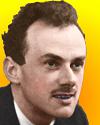
Born 8 Aug 1902; died 20 Oct 1984 at age 82. quotes
Paul Adrien Maurice Dirac was an English theoretical physicist known for his work in quantum mechanics and for his theory of the spinning electron. In 1933 he shared the Nobel Prize for Physics with the Austrian physicist Erwin Schrödinger.
Paul Adrien Maurice Dirac was an English theoretical physicist known for his work in quantum mechanics and for his theory of the spinning electron. In 1933 he shared the Nobel Prize for Physics with the Austrian physicist Erwin Schrödinger.
The Strangest Man: The Hidden Life of Paul Dirac, Mystic of the Atom, by Graham Farmelo. - book suggestion.
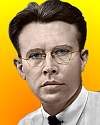
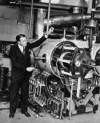
American physicist who was awarded the 1939 Nobel Prize for Physics for his invention of the cyclotron, the first device for the production of high energy particles. His first device, built in 1930 used a 10-cm magnet. He accelerated particles within a cyclinder at high vacuum between the poles of an electromagnetic to confine the beam to a spiral path, while a high A.C. voltage increased the particle energy. Larger models built later created 8 x 10⁴ eV beams. By colliding particles with atomic nuclei, he produced new elements and artificial radioactivity. By 1940, he had created plutonium and neptunium. He extended the use of atomic radiation into the fields of biology and medicine. Element 103 was named Lawrencium as a tribute to him.«Image: Ernest Lawrence standing with his back to the larger portion of his cyclotron.]
An American Genius: The Life of Ernest Orlando Lawrence, by Childs Herbert. - book suggestion.
Born 8 Aug 1881.
American anthropologist who became an authority on the peoples and cultures of the Malay Archipelago and who promoted modern archaeology. He also wrote several popular works on evolution and the growth of culture.
American anthropologist who became an authority on the peoples and cultures of the Malay Archipelago and who promoted modern archaeology. He also wrote several popular works on evolution and the growth of culture.
Born 8 Aug 1863; died 22 Sep 1948 at age 85.
Florence Augusta Merriam Bailey was an American ornithologist and author of popular field guides. She preceded Ludlow Griscom in calling for the use of binoculars instead of shotguns when birding. By 1885, she began to write articles focusing on protecting birds. She was horrified by the fashion trend which not only used feathers, but entire birds to decorate women's hats. Five million birds a year were killed to supply this fashion craze. At age 26, Bailey collected and developed the series of articles she had written for the Audubon Magazine into her first book, Birds Through an Opera Glass, (1889). Altogether she published about 100 articles, mostly for ornithological magazines, and 10 books. including the Handbook of Birds of the Western United States (1902) and Birds of New Mexico (1928).
Florence Augusta Merriam Bailey was an American ornithologist and author of popular field guides. She preceded Ludlow Griscom in calling for the use of binoculars instead of shotguns when birding. By 1885, she began to write articles focusing on protecting birds. She was horrified by the fashion trend which not only used feathers, but entire birds to decorate women's hats. Five million birds a year were killed to supply this fashion craze. At age 26, Bailey collected and developed the series of articles she had written for the Audubon Magazine into her first book, Birds Through an Opera Glass, (1889). Altogether she published about 100 articles, mostly for ornithological magazines, and 10 books. including the Handbook of Birds of the Western United States (1902) and Birds of New Mexico (1928).
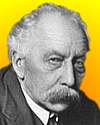
Born 8 Aug 1861; died 8 Feb 1926 at age 64.
English biologist who published the first English translation (1900) of Gregor Mendel's work on heredity which he confirmed with his own experiments, and further demonstrated that heredity was apparent in animals as well as plants. His support of Mendel was as effective in awakening modern understanding of heredity as Thomas Huxley provided for Charles Darwin on evolution. Bateson coined (1905) the term genetics for the new science. He recognized gene linkage by which some characteristics are inherited together, rather than all characteristics being inherited independently (as later explained by Thomas Morgan). Earlier, he had contributed to understanding of embryology when, in 1885, proposed that the chordates evolved from primitive echinoderms.«
English biologist who published the first English translation (1900) of Gregor Mendel's work on heredity which he confirmed with his own experiments, and further demonstrated that heredity was apparent in animals as well as plants. His support of Mendel was as effective in awakening modern understanding of heredity as Thomas Huxley provided for Charles Darwin on evolution. Bateson coined (1905) the term genetics for the new science. He recognized gene linkage by which some characteristics are inherited together, rather than all characteristics being inherited independently (as later explained by Thomas Morgan). Earlier, he had contributed to understanding of embryology when, in 1885, proposed that the chordates evolved from primitive echinoderms.«
Mendel's Principles of Heredity, by William Bateson. - book suggestion.
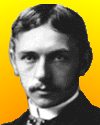
Born 8 Aug 1857; died 6 Nov 1935 at age 78. quotes
American paleontologist and museum director was a dominant figure in shaping modern paleontology and transforming the museum into a center for research, education, and public display. As founding curator of Vertebrate Paleontology at the American Museum of Natural History in 1891, he redirected the institution toward large-scale fossil collection at a time when it lagged behind European rivals. Osborn recruited and trained a generation of influential paleontologists and sponsored ambitious expeditions that rapidly expanded the Museum’s holdings of dinosaurs and fossil mammals. His own research focused especially on brontotheres, for which he produced the first thorough and authoritative scientific treatments.« more
American paleontologist and museum director was a dominant figure in shaping modern paleontology and transforming the museum into a center for research, education, and public display. As founding curator of Vertebrate Paleontology at the American Museum of Natural History in 1891, he redirected the institution toward large-scale fossil collection at a time when it lagged behind European rivals. Osborn recruited and trained a generation of influential paleontologists and sponsored ambitious expeditions that rapidly expanded the Museum’s holdings of dinosaurs and fossil mammals. His own research focused especially on brontotheres, for which he produced the first thorough and authoritative scientific treatments.« more
The Origin and Evolution of Life: On the Theory of Action, Reaction and Interaction of Energy, by Henry Fairfield Osborn. - book suggestion.
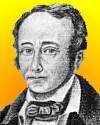
Born 8 Aug 1802; died 13 Dec 1850 at age 48.
Swiss-Russian chemist whose studies of heat in chemical reactions formed the foundation of thermochemistry. He formulated an empirical law, Hess's law of constant heat summation (1840), which states that the heat evolved or absorbed in a chemical process is the same whether the process takes place in one or in several steps. It is explained by thermodynamic theory, which holds that enthalpy is a state function. Chemists have made great use of the law of Hess in establishing the heats of formation of compounds which are not easily formed from their constituent elements. His early investigations concerned minerals and the natural gas found near Baku, and he also discovered the oxidation of sugars to yield saccharic acid.DSB gives dates as 8 Aug 1802 - 13 Dec 1850. EB gives 7 Aug 1802 - 30 Nov 1850.]
Swiss-Russian chemist whose studies of heat in chemical reactions formed the foundation of thermochemistry. He formulated an empirical law, Hess's law of constant heat summation (1840), which states that the heat evolved or absorbed in a chemical process is the same whether the process takes place in one or in several steps. It is explained by thermodynamic theory, which holds that enthalpy is a state function. Chemists have made great use of the law of Hess in establishing the heats of formation of compounds which are not easily formed from their constituent elements. His early investigations concerned minerals and the natural gas found near Baku, and he also discovered the oxidation of sugars to yield saccharic acid.DSB gives dates as 8 Aug 1802 - 13 Dec 1850. EB gives 7 Aug 1802 - 30 Nov 1850.]
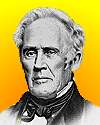
Born 8 Aug 1779; died 24 Nov 1864 at age 85. quotes
American geologist and chemist who founded the American Journal of Science and wielded a powerful influence in the development of science in the U.S. He was Yale's first professor of chemistry and natural history (1802). He is best known for researching the chemical composition of a meteorite that fell in 1807, his report being the first scientific account of any American meteor, showed that meteorites are made of materials that exist on the earth. The mineral sillimanite was named after Silliman. In 1811, while experimenting with the oxy-hydric blow-pipe, he reduced many minerals previously considered as elements. His son, also named Benjamin Silliman, became a chemist who recognized that petroleum could be distilled into separate fractions.
American geologist and chemist who founded the American Journal of Science and wielded a powerful influence in the development of science in the U.S. He was Yale's first professor of chemistry and natural history (1802). He is best known for researching the chemical composition of a meteorite that fell in 1807, his report being the first scientific account of any American meteor, showed that meteorites are made of materials that exist on the earth. The mineral sillimanite was named after Silliman. In 1811, while experimenting with the oxy-hydric blow-pipe, he reduced many minerals previously considered as elements. His son, also named Benjamin Silliman, became a chemist who recognized that petroleum could be distilled into separate fractions.
(EB)
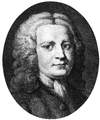
Born 8 Aug 1705; died 28 Aug 1757 at age 52. quotes
English physician and philosopher credited with the first formulation of the psychological system known as associationism. Attempting to explain how thought processes occur, Hartley's associationism, with later modifications, has endured as an integral part of modern psychological theory.Image: Detail of an engraving. eb
English physician and philosopher credited with the first formulation of the psychological system known as associationism. Attempting to explain how thought processes occur, Hartley's associationism, with later modifications, has endured as an integral part of modern psychological theory.Image: Detail of an engraving. eb

Born 8 Aug 1602; died 27 Oct 1675 at age 73.
French mathematician who developed powerful methods in the early study of integration, writing Traité des indivisibles. He computed the definite integral of sin x, worked on the cycloid and computed the arc length of a spiral. Roberval is important for his discoveries on plane curves and for his method for drawing the tangent to a curve, already suggested by Torricelli. This method of drawing tangents makes Roberval the founder of kinematic geometry. In 1669 he invented the Roberval balance with an articulated parallelogram is now almost universally used for weighing scales of the balance type. He studied the vacuum and designed apparatus which was used by Pascal in his experiments and also worked in cartography
French mathematician who developed powerful methods in the early study of integration, writing Traité des indivisibles. He computed the definite integral of sin x, worked on the cycloid and computed the arc length of a spiral. Roberval is important for his discoveries on plane curves and for his method for drawing the tangent to a curve, already suggested by Torricelli. This method of drawing tangents makes Roberval the founder of kinematic geometry. In 1669 he invented the Roberval balance with an articulated parallelogram is now almost universally used for weighing scales of the balance type. He studied the vacuum and designed apparatus which was used by Pascal in his experiments and also worked in cartography

(1953)
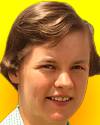
Died 8 Aug 2003 at age 75 (born 30 Nov 1927).
Martha Cowles Chase (a.k.a.Epstein after marriage) was an American geneticist best known for the 1952 Hershey–Chase experiment, a landmark study demonstrating that DNA, not protein, is the genetic material of life. Working with Alfred Hershey (1952) at Cold Spring Harbor, she used isotope-labeled bacteriophage and a high-speed blender to show that viral DNA enters bacteria and directs phage reproduction. This finding helped establish molecular genetics. Chase later studied gene–protein relationships with Seymour Benzer and contributed to early work on bacterial and viral genetics, though she left research in the 1960s.«
Martha Cowles Chase (a.k.a.Epstein after marriage) was an American geneticist best known for the 1952 Hershey–Chase experiment, a landmark study demonstrating that DNA, not protein, is the genetic material of life. Working with Alfred Hershey (1952) at Cold Spring Harbor, she used isotope-labeled bacteriophage and a high-speed blender to show that viral DNA enters bacteria and directs phage reproduction. This finding helped establish molecular genetics. Chase later studied gene–protein relationships with Seymour Benzer and contributed to early work on bacterial and viral genetics, though she left research in the 1960s.«
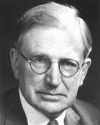
Died 8 Aug 1996 at age 90 (born 30 Sep 1905). quotes
Nevill Francis Mott was an English physicist who shared (with PhilipW. Anderson and John H. Van Vleck of the U.S.) the 1977 Nobel Prize for Physics for his independent researches on the magnetic and electrical properties of amorphous semiconductors. Whereas the electric properties of crystals are described by the Band Theory - which compares the conductivity of metals, semiconductors, and insulators - a famous exception is provided by nickel oxide. According to band theory, nickel oxide ought to be a metallic conductor but in reality is an insulator. Mott refined the theory to include electron-electron interaction and explained so-called Mott transitions, by which some metals become insulators as the electron density decreases by separating the atoms from each other in some convenient way.
Nevill Francis Mott was an English physicist who shared (with PhilipW. Anderson and John H. Van Vleck of the U.S.) the 1977 Nobel Prize for Physics for his independent researches on the magnetic and electrical properties of amorphous semiconductors. Whereas the electric properties of crystals are described by the Band Theory - which compares the conductivity of metals, semiconductors, and insulators - a famous exception is provided by nickel oxide. According to band theory, nickel oxide ought to be a metallic conductor but in reality is an insulator. Mott refined the theory to include electron-electron interaction and explained so-called Mott transitions, by which some metals become insulators as the electron density decreases by separating the atoms from each other in some convenient way.
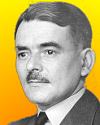
Died 8 Aug 1996 at age 89 (born 1 Jun 1907).
English aviation engineer and pilot who was a pioneer in the field of jet propulsion, which he used to develop aircraft that could fly at faster speeds and higher altitudes than piston-engine propeller airplanes of the 1920s. While he was at Cranwell, still only 21 years of age, Whittle began to consider the possibilities of jet propulsion as applied to aircraft. By 1930, he had designed and patented a jet aircraft engine. After 11 years, Whittle's engine, tested and modified, successfully powered a Gloster-Whittle E.28/39, on a historic 17-min flight on 15 May 1941. Design work continued, and by the end of WW II, the Gloster Meteor became the RAF's first jet fighter that would fly 200-mph faster than the RAF's Spitfires and Hurricanes.
English aviation engineer and pilot who was a pioneer in the field of jet propulsion, which he used to develop aircraft that could fly at faster speeds and higher altitudes than piston-engine propeller airplanes of the 1920s. While he was at Cranwell, still only 21 years of age, Whittle began to consider the possibilities of jet propulsion as applied to aircraft. By 1930, he had designed and patented a jet aircraft engine. After 11 years, Whittle's engine, tested and modified, successfully powered a Gloster-Whittle E.28/39, on a historic 17-min flight on 15 May 1941. Design work continued, and by the end of WW II, the Gloster Meteor became the RAF's first jet fighter that would fly 200-mph faster than the RAF's Spitfires and Hurricanes.
Genesis of the Jet: Frank Whittle and the Invention of the Jet Engine, by John Golley. - book suggestion.
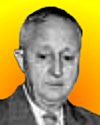
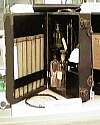
Rolla Neil Harger was an American toxicologist and biochemist who was at Indiana University when he invented the first successful machine for testing human blood alcohol content, called the Drunkometer (1931). When someone blows into a breath-test bag, any alcohol in his breath is turned into acetic acid (vinegar), changing the color of crystals in the blowing tube. The more crystals that change color, the more alcohol is in the body. The Blood Breath Partition Ratio assumes that 2100mL of breath contains the same amount of alcohol as 1 mL of blood. Harger turned over the patent to the IU Foundation, for whom it became a surprise moneymaker. After Harger persuaded the Indiana legislature to pass laws restricting alcohol use by drivers, alcohol related traffic deaths were decreased.[Image right: Drunkometer]
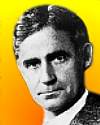
Died 8 Aug 1973 at age 89 (born 23 Nov 1883).
Canadian marine ecologist, zoologist and educator who was a pioneer oceanographer and fisheries biologist. Although he received a MD degree, he never practiced medicine. Instead, he conducted biological oceanographic research in the early years of this century at both Nanaimo and St. Andrews. While best known for his research on Atlantic salmon, his scientific interests were very broad and he made important contributions to oceanography, marine invertebrates, marine ecology, growth and fatigue in fishes, fish migration, philosophy, the economics of fishing, and fish technology. He also was a pioneer in the methods of packaging frozen fish fillets, which enabled more people abroad to sample Canada's ocean fish.
Canadian marine ecologist, zoologist and educator who was a pioneer oceanographer and fisheries biologist. Although he received a MD degree, he never practiced medicine. Instead, he conducted biological oceanographic research in the early years of this century at both Nanaimo and St. Andrews. While best known for his research on Atlantic salmon, his scientific interests were very broad and he made important contributions to oceanography, marine invertebrates, marine ecology, growth and fatigue in fishes, fish migration, philosophy, the economics of fishing, and fish technology. He also was a pioneer in the methods of packaging frozen fish fillets, which enabled more people abroad to sample Canada's ocean fish.
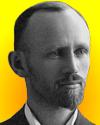
Died 8 Aug 1957 at age 92 (born 9 Dec 1864).
Frederick George Novy was an American bacteriologist who learned the fundamentals of his field of research first hand in the laboratories of Louis Pasteur and Robert Koch in Europe. On his return to the University of Michigan, Ann Arbor, he taught a course in bacteriology (1889) often regarded as the first such formal university course in the U.S. In 1900 he served on a commission to determine if bubonic plague was becoming endemic in San Fancisco’s Chinatown. He was a co-founder of the Society of American Bacteriologists (1900). In his subsequent work in microbiology, for which he invented ingenious apparatus, he is best known for his study of trypanosomes, spirochetes and microbial respiration.«
Frederick George Novy was an American bacteriologist who learned the fundamentals of his field of research first hand in the laboratories of Louis Pasteur and Robert Koch in Europe. On his return to the University of Michigan, Ann Arbor, he taught a course in bacteriology (1889) often regarded as the first such formal university course in the U.S. In 1900 he served on a commission to determine if bubonic plague was becoming endemic in San Fancisco’s Chinatown. He was a co-founder of the Society of American Bacteriologists (1900). In his subsequent work in microbiology, for which he invented ingenious apparatus, he is best known for his study of trypanosomes, spirochetes and microbial respiration.«
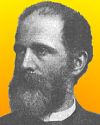
Died 8 Aug 1897 at age 48 (born 8 Sep 1848).
German organic chemist who contributed greatly to knowledge of both organic and inorganic chemistry and invented an apparatus for determining vapour densities (and hence molecular weights), now named after him. In 1871, Meyer experimentally proved Avogadro's hypothesis by measuring the vapour densities of volatile substances (molecular weight, or relative molecular mass, is twice the vapour density). He went on to determine the vapour densities of inorganic substances at high temperatures. From benzene obtained from petroleum, Meyer in 1883 isolated thiophene, a heterocyclic compound containing sulphur, which much later was to become an important component of various synthetic drugs. more
German organic chemist who contributed greatly to knowledge of both organic and inorganic chemistry and invented an apparatus for determining vapour densities (and hence molecular weights), now named after him. In 1871, Meyer experimentally proved Avogadro's hypothesis by measuring the vapour densities of volatile substances (molecular weight, or relative molecular mass, is twice the vapour density). He went on to determine the vapour densities of inorganic substances at high temperatures. From benzene obtained from petroleum, Meyer in 1883 isolated thiophene, a heterocyclic compound containing sulphur, which much later was to become an important component of various synthetic drugs. more
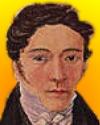
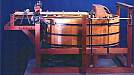
French inventor of the continuous paper-making machine, while working at Essonnes, France, papermill of the Didot family of printers and publishers. He made his first model for the process in 1797, a prototype by 1798, and secured a patent on 18 Jan 1799. Paper was formed and carried on a moving belt of wire gauze. Didot was at first sceptical, then encouraged Robert to improve the as yet imperfect invention. After Robert became dissatisfied with the financial arrangements for his efforts, he left and tried to set up his own paper mill. When this venture failed for lack of capital, he sold the patent rights to Didot. Eventually his idea was more successfully developed in England by the Fourdrinier brothers assisted by mechanic Bryan Donkin.[Image right: model of Robert's machine showing vat containing pulp, and delivery belt at top left.]
The Paper-making Machine: Its Invention, Evolution, and Development, by R. H. Clapperton. - book suggestion.

In 2007, Barbara Morgan became the first educator to safely reach space was launched on the U.S. Space Shuttle Endeavour to the International Space Station. In 1986, she was the alternate for the first teacher selected for a space mission, Christa McAuliffe (who died with six astronauts in the explosion of the Challenger space shuttle 73-sec after its launch). When the Endeavour reached orbit, Mission Control announced: “For Barbara Morgan and her crewmates, class is in session.” During the flight, Morgan spoke with students in Idaho, where she had taught elementary classes. She had astronaut training in Houston (1998) Since its previous flight in 2002, the Endeavour had a massive overhaul.«

In 2005, the U.S. Energy Policy Act of 2005 was signed by President George W. Bush. At over 1,700 pages long, the Act was intended to establish a comprehensive, long-range energy policy. Among hundreds of provisions, it gave incentives for traditional energy production; for newer, more efficient energy technologies; and for conservation. However, in "authorizing" certain programs, no actual "appropriation" of the necessary funding was made. Whereas tax breaks and concessions were given to mature energy industries, the result was to weak to reduce dependance on petroleum. The Act extended Daylight Saving Time, effective in 2007, to begin three weeks earlier on the second Sunday of March and end a week later on the first Sunday of November.«
Seize the Daylight: The Curious and Contentious Story of Daylight Savings Time, by David Prerau. - book suggestion.

In 1955, the Geneva Conference on the Peaceful Uses of Atomic Energy (ICPUAE) was opened, sponsored by the United Nations. By the time the conference ended on 20 Aug, hundreds of papers had been read and discussed. Dr. Homi Bhabha was elected to preside over the conference. In his presidential address, he said, “nuclear energy would provide a short cut to the prosperity of the developing countries that the industrialized countries were now beginning to enjoy.” Varied uses of nuclear energy were considered, but particularly in the field of generation of electricity. Invitations to participate were sent to 84 nations on 1 Feb 1955, by Dag Hammarskold, Secretary-General of the U.N., acting in accordance with the U.N. General Assembly resolution on atoms for peace (4 Dec 1954).«[Image: design from U.S. stamp issued 28 Jul 1955, a few days before the conference opened.]
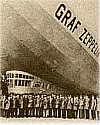
In 1929, the German airship Graf Zeppelin began a planned 21,700-mile round-the-world flight. Lifting off in the dark, at 12:40 am, it headed west leaving Lakehurst Naval Air Station in New Jersey (to where it returned 21 days, 7 hrs and 26 mins later). Its passengers, including millionaires, scientists, writers and just one woman, were sent off with the cheers of about 15,000 onlookers. It was expected, within an hour, to circle the Statue of Liberty. UP reported it to be “flying strongly” as it passed over lower New York, with “the drone of its powerful motors penetrating buildings all over town.” It had five Maybach motors to propel it. An engineer from that company was reported to declare “his firm conviction that these motors could be relied upon to work without cessation for 1,000 hours.”«
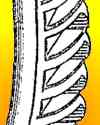
In 1911, the one millionth serially-numbered U.S. patent—No. 1,000,000—was issued to Francis H. Holton of Akron, Ohio, for a “Vehicle-Tire.” His idea was to eliminate tire punctures, yet “to provide substantially the same ...resiliency that is obtained by the pneumatic tube” by designing an outer rim of which consisted of a series of overlapping V-shaped flexible strips. Although it was No. 1,000,000, it was not the one millionth U.S. patent ever. Patents were originally issued without a number. From the first, dated 31 Jul 1790 to Samuel Hopkins, about 10,000 records accumulated over a period of 46 years, but were lost in the U.S. Patent Office fire of 15 Dec 1836. Only 2,845 of them were restored from private files. U.S. numbered patent, No. 1 (13 Jul 1836), also concerned a wheel, but for a train, to John Ruggles.«[Image shows perspective view of interior segment.]
In 1899, Albert T. Marshall of Brockton, of Brockton, Mass., received a U.S. patent for a refrigerator, titled “Automatic Refrigerating Apparatus.” It was “to provide means for automatically regulating the admission of the refrigerating medium [anhyrous ammonia] to the expansion pipes or chambers; second, to combine a thermostat and rheostat to automatically control” the pump motor. He also added an automatic motor cut-off in case it was needed, and a means for automatically regulating the water used for cooling the refrigerant. For the next quarter century, he filed more patents, assigning them to the Automatic Refrigeration Company which introduced its first household refrigerators in 1914. By 1918 they introduced their first refrigerator with automatic control. The company became Kelvinator Corp. (24 Sep 1917). «
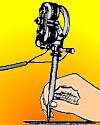
In 1876, Thomas A. Edison received a U.S. patent for a stencil duplicator, titled “Improvement in Autographic Printing” (No. 180,857). Previously, patterns for embroidery or fresco painting used paper, perforated with numerous holes in the lines to be transferred, effected by dusting over the pattern with a fine colored powder rubbed through the holes. Edison invented a portable perforating stylus for writing or drawing, whereby a vertical perforating needle with a battery-operated reciprocating mechanism could be used to draw on a pattern paper. Further, he provided the pattern transfer using a permanent semi-fluid ink pressed through the pattern with a roller. The paper could be mounted in a hinged frame closing on a bed with a sheet of paper to receive a copy. This could then make multiple copies.«
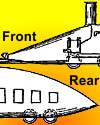

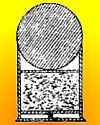
In 1854, Horace Smith & Daniel Wesson were issued a U.S. patent for their design of a self-contained metal bullet cartridge (No. 11,496). The invention related to the arrangement of the tallow within the cartridge between the ball and charge of powder. The rimfire cartridge included percussion-priming. It was improved upon with patent No. 27,933 on 17 Apr 1860. Long before the U.S. civil war, Jean Samuel Pauly was granted a French patent in 1812 for a self-contained cartridge. By 1846, Lefaucheux had invented a pin fire cartridge and in 1851, Flobert created the rimfire cartridge. However, Smith and Wesson, could not produce a revolver to fire their new bullet until several years later when the Colt patent on the mechanically rotating cylinder design expired in 1857.«
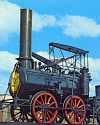
In 1829, the first steam locomotive for railroad use in the U.S., the Stourbridge Lion, made its first run in America. It travelled at 10 m.p.h. on the wooden tracks faced with wrought iron that already existed as a gravity railway, used to carry coal from mines at Carbondale to the canal terminus at Honesdale, Pennsylvania. The 7-ton engine was built by Foster, Rastrick & Co., of Stourbridge, England for the Hudson Railroad Company to specifications drawn up by John Bloomfield Jervis, chief engineer for the Delaware and Hudson Canal project. However, after the trials, it was deemed to be too heavy for continued use hauling loads of coal on those tracks.«[Image: replica of the Stourbridge Lion built at the Delaware and Hudson Railroad's Colonie Shops, NY, in 1933]
The Stourbridge Lion, by Karl Zimmermann. - book suggestion.
In 1709, first known ascent in a hot-air balloon was made in Portugal by Father Bartolomeu de Gusmão - indoors - as a demonstration before the Portuguese court.«*




