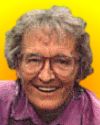
Born 8 Jul 1926; died 24 Aug 2004 at age 78.
Swiss-American psychiatrist who was a leading authority on the psychology of dying. She is best-known for twelve books, beginning with On Death and Dying (1969), in which she proposed that the terminally ill go through five stages in their attitude. These are denial, anger, bargaining, depression and, perhaps, acceptance. The book offers strategies for caregivers. The work grew from a seminar she founded at the Billings Hospital of the University of Chicago where dying patients talked about their thoughts upon the approach of death. The best-selling success of the book led her into a career of clinical practice to the treatment of dying patients of all ages. Her lectures changed institutional attitudes towards the terminally ill.«
Swiss-American psychiatrist who was a leading authority on the psychology of dying. She is best-known for twelve books, beginning with On Death and Dying (1969), in which she proposed that the terminally ill go through five stages in their attitude. These are denial, anger, bargaining, depression and, perhaps, acceptance. The book offers strategies for caregivers. The work grew from a seminar she founded at the Billings Hospital of the University of Chicago where dying patients talked about their thoughts upon the approach of death. The best-selling success of the book led her into a career of clinical practice to the treatment of dying patients of all ages. Her lectures changed institutional attitudes towards the terminally ill.«
On Death and Dying, by Elisabeth Kubler-Ross. - book suggestion.
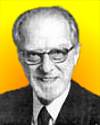
Born 8 Jul 1906; died 29 Sep 1995 at age 89.
Theron Grant Randolph was an American allergist who broke from mainstream medicine in 1950, and founded environmental medicine, despite skepticism from traditional medical organizations. He characterized environmental illnesses with such symptoms as chronic headache, fatigue, and mental depression whereby susceptible people were harmed by noxious chemical vapours from various seemingly harmless materials like plastic or foam insulation. He began unorthodox therapies at a number of environmentally controlled units in the country, including one at Aurora, Illinois. There patients were secluded from environmental contaminants. Following advice from Randolph, some patients even built homes in the wilderness to escape urban contamination, and ate or exposed themselves to nothing that was not considered environmentally benign. Randolph treated over 20,000 patients in hislifetime. He wrote four books and over 300 medical articles.«[Year of birth slightly uncertain - based on New York Timesobituary giving age at death as 89.]
Theron Grant Randolph was an American allergist who broke from mainstream medicine in 1950, and founded environmental medicine, despite skepticism from traditional medical organizations. He characterized environmental illnesses with such symptoms as chronic headache, fatigue, and mental depression whereby susceptible people were harmed by noxious chemical vapours from various seemingly harmless materials like plastic or foam insulation. He began unorthodox therapies at a number of environmentally controlled units in the country, including one at Aurora, Illinois. There patients were secluded from environmental contaminants. Following advice from Randolph, some patients even built homes in the wilderness to escape urban contamination, and ate or exposed themselves to nothing that was not considered environmentally benign. Randolph treated over 20,000 patients in hislifetime. He wrote four books and over 300 medical articles.«[Year of birth slightly uncertain - based on New York Timesobituary giving age at death as 89.]
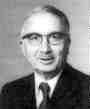
Born 8 Jul 1904.
Henri-Paul Cartan is a French mathematician whose father, Elie Cartan, was also a mathematician. Henri made fundamental advances in the theory of analytic functions, worked on the theory of sheaves, homological theory, algebraic topology and potential theory. Along with others, such as Weil and Dieudonné, Henri Cartan wrote under the name Bourbaki. Bourbaki's Eléments de mathématique contains more than 30 volumes and aims to present mathematics so as to illustrate the axiomatic structure of modern mathematics.
Henri-Paul Cartan is a French mathematician whose father, Elie Cartan, was also a mathematician. Henri made fundamental advances in the theory of analytic functions, worked on the theory of sheaves, homological theory, algebraic topology and potential theory. Along with others, such as Weil and Dieudonné, Henri Cartan wrote under the name Bourbaki. Bourbaki's Eléments de mathématique contains more than 30 volumes and aims to present mathematics so as to illustrate the axiomatic structure of modern mathematics.
Born 8 Jul 1899; died 1984.
Audrey I(sabel) Richards, English social anthropologist, educator, researcher among several E. African peoples, esp. the Bemba. She did fieldwork in Northern Rhodesia (Zambia), Uganda, and the Transvaal. Among her subjects of study were social psychology, food culture, nutrition, agriculture, land use, and economic organization. She recorded, for example, how long it took to complete a typical task, such as building a fence or making a garden, average work days in different seasons, time to prepare food.
Audrey I(sabel) Richards, English social anthropologist, educator, researcher among several E. African peoples, esp. the Bemba. She did fieldwork in Northern Rhodesia (Zambia), Uganda, and the Transvaal. Among her subjects of study were social psychology, food culture, nutrition, agriculture, land use, and economic organization. She recorded, for example, how long it took to complete a typical task, such as building a fence or making a garden, average work days in different seasons, time to prepare food.
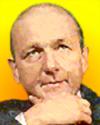
Born 8 Jul 1899; died 15 Jan 1981 at age 81. quotes
David Eli Lilienthal was an American government administrator and author who was the first Chairman of the U.S. Atomic Energy Commission. He served from 1 Nov 1946 until he resigned on 15 Feb 1950. His career began as a lawyer, with an interest in labor law, and from 1926 in public utility law, which led to being a member of Wisconsin's Public Service Commission. When the Tennessee Valley Authority was established to bring inexpensive hydroelectric power to rural areas, he became a co-director in 1931, and its Chairman (1933-1941). He was asked by U.S. Under Secretary of State, Dean Acheson, in Jan 1946 to chair a committee to advise President Truman. The panel produced the 60-page Acheson-Dean Report (Report on the International Control of Atomic Energy). Subsequently, he chaired the AEC to pioneer civilian control of American atomic energy.«
David Eli Lilienthal was an American government administrator and author who was the first Chairman of the U.S. Atomic Energy Commission. He served from 1 Nov 1946 until he resigned on 15 Feb 1950. His career began as a lawyer, with an interest in labor law, and from 1926 in public utility law, which led to being a member of Wisconsin's Public Service Commission. When the Tennessee Valley Authority was established to bring inexpensive hydroelectric power to rural areas, he became a co-director in 1931, and its Chairman (1933-1941). He was asked by U.S. Under Secretary of State, Dean Acheson, in Jan 1946 to chair a committee to advise President Truman. The panel produced the 60-page Acheson-Dean Report (Report on the International Control of Atomic Energy). Subsequently, he chaired the AEC to pioneer civilian control of American atomic energy.«
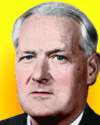
Born 8 Jul 1897; died 18 Apr 1991 at age 93. quotes
English medical statistician and epidemiologist who pioneered randomized clinical trials, and is known for creating Hill’s criteria for causation, used to substantiate a link between an observed effect and a suspected cause. The nine principles of the Bradford Hill criteria continue to be widely applied in public health research and epidemiology. In particular, with an exact and controlled field survey, he helped validate how lung cancer had a cause from cigarette smoking. He has been called “the world’s leading medical statistician.” The understanding of the link between tobacco smoking and lung cancer was also furthered by Richard Doll. Hill was honored for his indications of various aspects of causation in medicine and biology.«
English medical statistician and epidemiologist who pioneered randomized clinical trials, and is known for creating Hill’s criteria for causation, used to substantiate a link between an observed effect and a suspected cause. The nine principles of the Bradford Hill criteria continue to be widely applied in public health research and epidemiology. In particular, with an exact and controlled field survey, he helped validate how lung cancer had a cause from cigarette smoking. He has been called “the world’s leading medical statistician.” The understanding of the link between tobacco smoking and lung cancer was also furthered by Richard Doll. Hill was honored for his indications of various aspects of causation in medicine and biology.«
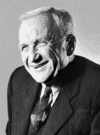
(1969)
Born 8 Jul 1895; died 12 Apr 1971 at age 75.
Soviet physicist who shared the 1958 Nobel Prize for Physics with Pavel A. Cherenkov and Ilya M. Frank for his efforts in explaining Cherenkov radiation. Tamm was an outstanding theoretical physicist, after early researches in crystallo-optics, he evolved a method for interpreting the interaction of nuclear particles. Together with I. M. Frank, he developed the theoretical interpretation of the radiation of electrons moving through matter faster than the speed of light (the Cerenkov effect), and the theory of showers in cosmic rays. He has also contributed towards methods for the control of thermonuclear reactions.
Soviet physicist who shared the 1958 Nobel Prize for Physics with Pavel A. Cherenkov and Ilya M. Frank for his efforts in explaining Cherenkov radiation. Tamm was an outstanding theoretical physicist, after early researches in crystallo-optics, he evolved a method for interpreting the interaction of nuclear particles. Together with I. M. Frank, he developed the theoretical interpretation of the radiation of electrons moving through matter faster than the speed of light (the Cerenkov effect), and the theory of showers in cosmic rays. He has also contributed towards methods for the control of thermonuclear reactions.
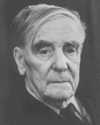
Born 8 Jul 1894; died 8 Apr 1984 at age 89. quotes
Pyotr Leonidovich Kapitsa was a Russian physicist who shared (with Arno Penzias and Robert Woodrow Wilson) the 1978 Nobel Prize for Physics for his basic strong magnetic field inventions and discoveries in the area of low-temperature physics. He discovered that helium II (the stable form of liquid helium below 2.174 K, or -270.976 C) has almost no viscosity (i.e., resistance to flow). Late in the 1940's Kapitza changed his focus, inventing high power microwave generators - planotron and nigotron (1950-1955) and discovered a new kind of continuous high pressure plasma discharge with electron temperatures over a million kelvin.Also spelled Peter Kapitza. 8 Jul 1894 (new style) is 26 Jun 1894 (old style).
Pyotr Leonidovich Kapitsa was a Russian physicist who shared (with Arno Penzias and Robert Woodrow Wilson) the 1978 Nobel Prize for Physics for his basic strong magnetic field inventions and discoveries in the area of low-temperature physics. He discovered that helium II (the stable form of liquid helium below 2.174 K, or -270.976 C) has almost no viscosity (i.e., resistance to flow). Late in the 1940's Kapitza changed his focus, inventing high power microwave generators - planotron and nigotron (1950-1955) and discovered a new kind of continuous high pressure plasma discharge with electron temperatures over a million kelvin.Also spelled Peter Kapitza. 8 Jul 1894 (new style) is 26 Jun 1894 (old style).
Born 8 Jul 1882; died 4 Jan 1958 at age 75.
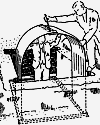
Sir John Anderson, Viscount Waverley was a Scottish politician known for the Anderson shelter during WW II, the type of civil defence air-raid shelter built in gardens of houses. At university, he first studied chemistry, but turned to government for his lifelong career. By Jun 1938, he was a newly-elected M.P. addressing air-raid precautions in his first speech. As a Cabinet minister (Oct 1938) he started production of the Anderson bomb shelter, designed at his request by Sir William Paterson. Over two million of these bomb shelters were built by the time of the Blitz. The shelter, a 6-ft (1.8m) tall inverted U-shape formed from corrugated steel panels, was half-buried in the ground and covered with earth. Four to six people could shelter in the 6½ × 4½ ft structure (2 × 1.4 m). Anderson was replaced on 8 Oct 1940, and his project was superceded by Herbert Morrison's ideas.«
Sir John Anderson, Viscount Waverley was a Scottish politician known for the Anderson shelter during WW II, the type of civil defence air-raid shelter built in gardens of houses. At university, he first studied chemistry, but turned to government for his lifelong career. By Jun 1938, he was a newly-elected M.P. addressing air-raid precautions in his first speech. As a Cabinet minister (Oct 1938) he started production of the Anderson bomb shelter, designed at his request by Sir William Paterson. Over two million of these bomb shelters were built by the time of the Blitz. The shelter, a 6-ft (1.8m) tall inverted U-shape formed from corrugated steel panels, was half-buried in the ground and covered with earth. Four to six people could shelter in the 6½ × 4½ ft structure (2 × 1.4 m). Anderson was replaced on 8 Oct 1940, and his project was superceded by Herbert Morrison's ideas.«
Born 8 Jul 1861; died 12 Feb 1933 at age 71. quotes
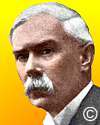
Scottish naturalist who was a professor of natural history at the University of Aberdeen (1899-1930), and became an expert in the soft corals (Alcyonacea), stinging anemones and jellyfish found in the Scottish marine habitats, as well as a general interest in chemistry and the region's animals, plants and geology. He was also active in reconciling religion with science through popular books and lectures. He travelled widely, including the United States with his public presentations. One of the books he editted, Outline of Science (1922), became a best-seller, with more than 100,000 sold in five years. He was knighted in 1930.«
Scottish naturalist who was a professor of natural history at the University of Aberdeen (1899-1930), and became an expert in the soft corals (Alcyonacea), stinging anemones and jellyfish found in the Scottish marine habitats, as well as a general interest in chemistry and the region's animals, plants and geology. He was also active in reconciling religion with science through popular books and lectures. He travelled widely, including the United States with his public presentations. One of the books he editted, Outline of Science (1922), became a best-seller, with more than 100,000 sold in five years. He was knighted in 1930.«
Born 8 Jul 1857; died 18 Oct 1911 at age 54. quotes
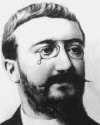
French psychologist who was a pioneer in the field of intelligence testing of the normal mind. He took a different approach than most psychologists of his day: he was interested in the workings of the normal mind rather than the pathology of mental illness. He wanted to find a way to measure the ability to think and reason, apart from education in any particular field. In 1905 he developed a test in which he had children do tasks such as follow commands, copy patterns, name objects, and put things in order or arrange them properly. He gave the test to Paris schoolchildren and created a standard based on his data. From Binet's work, "IQ" (intelligence quotient), entered the vocabulary. The IQ is the ratio of "mental age" to chronological age, with 100 being average.[Although some sources give birthday as 11 Jul, both Enc. Brit. and Dict. of Sci. Biog. give born 8 Jul 1857.]
French psychologist who was a pioneer in the field of intelligence testing of the normal mind. He took a different approach than most psychologists of his day: he was interested in the workings of the normal mind rather than the pathology of mental illness. He wanted to find a way to measure the ability to think and reason, apart from education in any particular field. In 1905 he developed a test in which he had children do tasks such as follow commands, copy patterns, name objects, and put things in order or arrange them properly. He gave the test to Paris schoolchildren and created a standard based on his data. From Binet's work, "IQ" (intelligence quotient), entered the vocabulary. The IQ is the ratio of "mental age" to chronological age, with 100 being average.[Although some sources give birthday as 11 Jul, both Enc. Brit. and Dict. of Sci. Biog. give born 8 Jul 1857.]
Born 8 Jul 1851; died 11 Jul 1941 at age 90. quotes
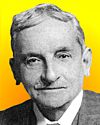
British archaeologist who first visited Crete in 1894 to study and decipher an unknown script seen on seal stones. He subsequently systematically excavated the Palace of Minos there, at Knossos (1900-31). A number of parts of the Palace were restored. Evans was convinced that most of the damage to the ancient palace was caused by earthquakes. His work brought him international fame for his intuition, imagination and scholarship. It is to him that we owe the discovery of the Minoan Civilisation.
British archaeologist who first visited Crete in 1894 to study and decipher an unknown script seen on seal stones. He subsequently systematically excavated the Palace of Minos there, at Knossos (1900-31). A number of parts of the Palace were restored. Evans was convinced that most of the damage to the ancient palace was caused by earthquakes. His work brought him international fame for his intuition, imagination and scholarship. It is to him that we owe the discovery of the Minoan Civilisation.
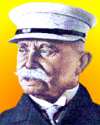
Born 8 Jul 1838; died 8 Mar 1917 at age 78. quotes
Ferdinand Adolf August Heinrich Count von Zeppelin was a German inventor, engineer and manufacturer who was the aviation pioneer that built the first rigid dirigible airships, named Zeppelins. After retiring from a military career (1890), he devoted ten years to the designing and building of his first successful light-than-air craft, the LZ-1. He patented his idea on 31 Aug 1895 and formed a company to build airships in 1898. Many thought his invention incredible, and called him “Foolish Count.” His first airship took off on 2 Jul 1900 at Lake Constance, where it had been assembled in a floating assembly shed. Its success stimulated funding from the community. Eventually, he produced more than 100 zeppelins for military uses in WW I. During the war, Zeppelins were used to bomb Britain beginning 19 Jan 1915 with attacks on Great Yarmouth and King's Lynn. After the war, he continued to improve the design and built a fleet of airships for commercial passenger service, which included transatlantic flights. Zeppelin use ended after the 6 May 1937 Hindenburg fire disaster at Lakehurst, N.J., U.S.A.« more
Ferdinand Adolf August Heinrich Count von Zeppelin was a German inventor, engineer and manufacturer who was the aviation pioneer that built the first rigid dirigible airships, named Zeppelins. After retiring from a military career (1890), he devoted ten years to the designing and building of his first successful light-than-air craft, the LZ-1. He patented his idea on 31 Aug 1895 and formed a company to build airships in 1898. Many thought his invention incredible, and called him “Foolish Count.” His first airship took off on 2 Jul 1900 at Lake Constance, where it had been assembled in a floating assembly shed. Its success stimulated funding from the community. Eventually, he produced more than 100 zeppelins for military uses in WW I. During the war, Zeppelins were used to bomb Britain beginning 19 Jan 1915 with attacks on Great Yarmouth and King's Lynn. After the war, he continued to improve the design and built a fleet of airships for commercial passenger service, which included transatlantic flights. Zeppelin use ended after the 6 May 1937 Hindenburg fire disaster at Lakehurst, N.J., U.S.A.« more
Zeppelin: The Story of a Great Achievement, by Harry Vissering. - book suggestion.
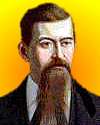
Born 8 Jul 1831; died 16 Aug 1888 at age 57.
John Styth Pemberton was an American pharmacist, who invented Coca-Cola in 1885. At first it was a tonic, French Wine Coca. Later he modified the formula by omitting the alcohol and adding other vegetable essences. The new syrup was meant to be a sure cure for headaches. On May 29, 1886 Coca-Cola was advertised for the first time in the Atlanta Daily. Pemberton later sold the recipe, equipment and machinery to manufacture the drink to Asa G. Candler for $1200.
John Styth Pemberton was an American pharmacist, who invented Coca-Cola in 1885. At first it was a tonic, French Wine Coca. Later he modified the formula by omitting the alcohol and adding other vegetable essences. The new syrup was meant to be a sure cure for headaches. On May 29, 1886 Coca-Cola was advertised for the first time in the Atlanta Daily. Pemberton later sold the recipe, equipment and machinery to manufacture the drink to Asa G. Candler for $1200.
For God, Country, and Coca-Cola: The Definitive History of the Great American Soft Drink and the Company That Makes It, by Mark Pendergrast. - book suggestion.
Born 8 Jul 1810; died 24 May 1883 at age 72.
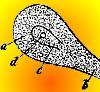
German-Swiss physiologist who was the first person to note the digestive activity of pancreatic juice (1844)*. With Purkinje, one of his medical school teachers, he discovered in 1834 that certain cells on the inner surface of the oviduct contained cilia, tiny threadlike structures that beat in coordinated fashion independently of the nervous system and thus force the ovum to move along the tube. They investigated the occurence of ciliated cells elesewhere among vertebrates)*. In 1836, he identified the neuron nucleus and nucleolus. In 1841 he was the first to observe one type of Trypanozoma (they are now know to cause sleeping sickness). The Valentin knife was named after him.* [Image: Drawing of a neuron by Valentin, showing the protoplasm (a), the nucleus (c), the nucleolus (d) and the axonal cone (b)]
German-Swiss physiologist who was the first person to note the digestive activity of pancreatic juice (1844)*. With Purkinje, one of his medical school teachers, he discovered in 1834 that certain cells on the inner surface of the oviduct contained cilia, tiny threadlike structures that beat in coordinated fashion independently of the nervous system and thus force the ovum to move along the tube. They investigated the occurence of ciliated cells elesewhere among vertebrates)*. In 1836, he identified the neuron nucleus and nucleolus. In 1841 he was the first to observe one type of Trypanozoma (they are now know to cause sleeping sickness). The Valentin knife was named after him.* [Image: Drawing of a neuron by Valentin, showing the protoplasm (a), the nucleus (c), the nucleolus (d) and the axonal cone (b)]
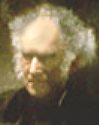
Born 8 Jul 1805; died 6 May 1884 at age 78. quotes
Samuel David Gross was an American surgeon, teacher of medicine, and author of an influential textbook on surgery and the widely read Elements of Pathological Anatomy (1839). He was a prominent Philadelphia surgeon who pioneered methods for suturing nerves and tendons. Other specialties included operations for bladder stone and intestinal wounds; he invented new techniques and instruments. Later he served as president of the American Medical Association (1847). Thomas Eakins portrayed him in a famous painting, “The Clinic of Dr. Gross” (1875).
Samuel David Gross was an American surgeon, teacher of medicine, and author of an influential textbook on surgery and the widely read Elements of Pathological Anatomy (1839). He was a prominent Philadelphia surgeon who pioneered methods for suturing nerves and tendons. Other specialties included operations for bladder stone and intestinal wounds; he invented new techniques and instruments. Later he served as president of the American Medical Association (1847). Thomas Eakins portrayed him in a famous painting, “The Clinic of Dr. Gross” (1875).
Born 8 Jul 1766; died 25 Jul 1842 at age 76.
(Baron) French military surgeon in the service of Napoleon. Larrey was the first to note the contagiousness of trachoma (1802) and published the first description of trench foot (1812). He introduced to the battlefield: field hospitals, ambulance service, first-aid practices and the triage system of treating patients. Larrey introduced properly sprung horse-drawn carts to evacuate casualties quickly into newly established mobile field hospitals. From that moment on, surgeons had a reasonable chance of operating on the worst wounds before it was too late. The success of Larrey's approach earned him the position as Chief Surgeon of the Guard in all Napoleon Bonaparte's major campaigns from 1805 onwards.
(Baron) French military surgeon in the service of Napoleon. Larrey was the first to note the contagiousness of trachoma (1802) and published the first description of trench foot (1812). He introduced to the battlefield: field hospitals, ambulance service, first-aid practices and the triage system of treating patients. Larrey introduced properly sprung horse-drawn carts to evacuate casualties quickly into newly established mobile field hospitals. From that moment on, surgeons had a reasonable chance of operating on the worst wounds before it was too late. The success of Larrey's approach earned him the position as Chief Surgeon of the Guard in all Napoleon Bonaparte's major campaigns from 1805 onwards.

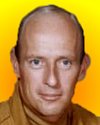
(NASA)
Died 8 Jul 1999 at age 69 (born 2 Jun 1930). quotes
Charles Peter Conrad was an American astronaut was the third man to walk on the moon during the Apollo 12 mission (14-24 Nov, 1969). He had other experience in space on Gemini 5 (launched 21 Aug 1965, logging a new space endurance record of 8 days), on Gemini 11 (launched 18 Sep 1966, first orbit rendezvous and docking), and the Skylab 2 mission (1973). After service as a U.S. Navy test pilot, Conrad had been selected in 1962 to join NASA's second group of astronauts. On 14 Feb1996, Conrad was a crew member for a record-breaking flight around the world in a Lear jet. He died at age 69 from internal injuries after he crashed on his motorcycle.«[Image: Conrad from Skylab2 crew photo.]
Charles Peter Conrad was an American astronaut was the third man to walk on the moon during the Apollo 12 mission (14-24 Nov, 1969). He had other experience in space on Gemini 5 (launched 21 Aug 1965, logging a new space endurance record of 8 days), on Gemini 11 (launched 18 Sep 1966, first orbit rendezvous and docking), and the Skylab 2 mission (1973). After service as a U.S. Navy test pilot, Conrad had been selected in 1962 to join NASA's second group of astronauts. On 14 Feb1996, Conrad was a crew member for a record-breaking flight around the world in a Lear jet. He died at age 69 from internal injuries after he crashed on his motorcycle.«[Image: Conrad from Skylab2 crew photo.]
Rocketman: Astronaut Pete Conrad's Incredible Ride to the Moon and Beyond, by Nancy Conrad, et al. - book suggestion.
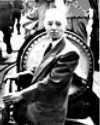
Died 8 Jul 1986 at age 86 (born 27 Jan 1900). quotes
Hyman George Rickover was a Polish-American naval officer who immigrated to the US (1906) and graduated from the Naval Academy in 1922. He eventually became an Admiral. He is known as the “Father of the Nuclear Navy” for his leadership to build the atomic-powered submarine, USS Nautilus (1954). He served on active duty with the United States Navy for more than 63 years, receiving exemptions from the mandatory retirement age due to his critical service in the building of the United States Navy's nuclear surface and submarine force.
Hyman George Rickover was a Polish-American naval officer who immigrated to the US (1906) and graduated from the Naval Academy in 1922. He eventually became an Admiral. He is known as the “Father of the Nuclear Navy” for his leadership to build the atomic-powered submarine, USS Nautilus (1954). He served on active duty with the United States Navy for more than 63 years, receiving exemptions from the mandatory retirement age due to his critical service in the building of the United States Navy's nuclear surface and submarine force.
The Rickover Effect: How One Man Made A Difference, by Theodore Rockwell. - book suggestion.
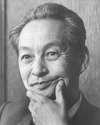
Died 8 Jul 1979 at age 73 (born 31 Mar 1906).
Japanese physicist who shared the Nobel Prize for Physics in 1965 (with Richard P. Feynman and Julian S. Schwinger of the U.S.) for independently developing basic principles of quantum electrodynamics. He was one of the first to apply quantum theory to subatomic particles with very high energies. Tomonaga began with an analysis of intermediate coupling - the idea that interactions between two particles take place through the exchange of a third (virtual particle), like one ship affecting another by firing a cannonball. He used this concept to develop a quantum field theory (1941-43) that was consistent with the theory of special relativity. WW II delayed news of his work. Meanwhile, Feynman and Schwinger published their own independent solutions.
Japanese physicist who shared the Nobel Prize for Physics in 1965 (with Richard P. Feynman and Julian S. Schwinger of the U.S.) for independently developing basic principles of quantum electrodynamics. He was one of the first to apply quantum theory to subatomic particles with very high energies. Tomonaga began with an analysis of intermediate coupling - the idea that interactions between two particles take place through the exchange of a third (virtual particle), like one ship affecting another by firing a cannonball. He used this concept to develop a quantum field theory (1941-43) that was consistent with the theory of special relativity. WW II delayed news of his work. Meanwhile, Feynman and Schwinger published their own independent solutions.
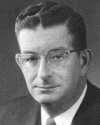
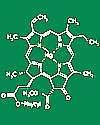
American chemist who is best known for his syntheses of complex organic substances, including quinine, the well-known antimalarial (1944), the steroids cholesterol and cortisone (1951), and vitamin B12 (1971). He also synthesized lanosterol, the famous poison strychnine and reserpine. Several other examples from the chemistry of the alkaloids are lysergic acid, ergonovine, ellipticine, colhicine. In the field of antibiotics Woodward established the structure of aureomycin and terramycin. He has also synthesized chlorophyll, the green plant pigment. He established the structure of many compounds, for instance the peculiar fish poison tetrodotoxin, causing numerous fatalities in Japan. He was awarded the Nobel Prize for Chemistry in 1965.
Robert Burns Woodward: Architect and Artist in the World of Molecules, by Otto Theodor Benfey, Peter John Turnbull Morris (eds.). - book suggestion.
Died 8 Jul 1939 at age 80 (born 2 Feb 1859). quotes
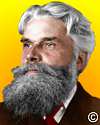
(Henry) Havelock Ellis was an English physician and writer on sex. He travelled widely in Australia and South America before studying medicine in London. In 1879 Ellis began studying medicine at St. Thomas's Hospital in London. At this time, Ellis grew intellectually, in the fields of science, philosophy, sociology, anthropology, and literature. His interest in human biology and his personal experiences led him to compile the seven-volume Studies in the Psychology of Sex (1897-1928), the first detached treatment of the subject, which was highly controversial at the time.
(Henry) Havelock Ellis was an English physician and writer on sex. He travelled widely in Australia and South America before studying medicine in London. In 1879 Ellis began studying medicine at St. Thomas's Hospital in London. At this time, Ellis grew intellectually, in the fields of science, philosophy, sociology, anthropology, and literature. His interest in human biology and his personal experiences led him to compile the seven-volume Studies in the Psychology of Sex (1897-1928), the first detached treatment of the subject, which was highly controversial at the time.
Havelock Ellis: Philosopher of Sex - A Biography, by Vincent Brome. - book suggestion.
Died 8 Jul 1895 at age 74 (born 15 May 1821). quotes
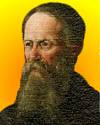
Johann Joseph Loschmidt was an Austrian chemist and physicist who was the first to propose (1861) some kind of cyclic structure for benzene and many aromatic hydrocarbons. (Four years later, Kekulé devised the correct ring structure, for which his name is remembered while Loschmidt's contribution is overlooked.) He deduced the size of air molecules to be around one nanometer, with two approaches: relating the size of gas molecules to the distance travelled between collisions, and considering the packed volume of molecules in a cold liquid. Completing Avogadro's insight that all gases have the same number of molecules in a given volume, Loschmidt measured Avogadro's constant to be 6.03 x 10²³ molecules in one mole of a gas (1865).«
Johann Joseph Loschmidt was an Austrian chemist and physicist who was the first to propose (1861) some kind of cyclic structure for benzene and many aromatic hydrocarbons. (Four years later, Kekulé devised the correct ring structure, for which his name is remembered while Loschmidt's contribution is overlooked.) He deduced the size of air molecules to be around one nanometer, with two approaches: relating the size of gas molecules to the distance travelled between collisions, and considering the packed volume of molecules in a cold liquid. Completing Avogadro's insight that all gases have the same number of molecules in a given volume, Loschmidt measured Avogadro's constant to be 6.03 x 10²³ molecules in one mole of a gas (1865).«
Died 8 Jul 1784 at age 49 (born 20 Mar 1735). quotes
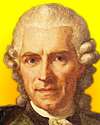
Swedish mineralogist, chemist and naturalist who experimented with carbon dioxide, which he named aerial acid, and Joseph Priestley called fixed air. His investigation led him to successfully prepare artificial mineral water. In natural mineral water, he identified hydrogen sulphide. As a pioneer in chemical analysis, he introduced many improvements, studied minerals in particular and contributed to the theory of crystal structure. In 1775, his important paper Essay on Elective Attractions marked the beginning of his extensive work preparing affinity tables for acids and bases. By 1783, he ceased this effort due to failing health, leaving it to others to further develop an understanding of chemical affinity. He wrote an account of the use of the blowpipe in analysis.«
Swedish mineralogist, chemist and naturalist who experimented with carbon dioxide, which he named aerial acid, and Joseph Priestley called fixed air. His investigation led him to successfully prepare artificial mineral water. In natural mineral water, he identified hydrogen sulphide. As a pioneer in chemical analysis, he introduced many improvements, studied minerals in particular and contributed to the theory of crystal structure. In 1775, his important paper Essay on Elective Attractions marked the beginning of his extensive work preparing affinity tables for acids and bases. By 1783, he ceased this effort due to failing health, leaving it to others to further develop an understanding of chemical affinity. He wrote an account of the use of the blowpipe in analysis.«
Torbern Bergman, a Man Before His Time, by Joseph A. Schufle. - book suggestion.
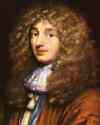
Died 8 Jul 1695 at age 66 (born 14 Apr 1629). quotes
Dutch physicist and astronomer who founded the wave theory of light, discovered the true shape of the rings of Saturn, and contributed to the science of dynamics - the study of the action of forces on bodies. Using a lens he ground for himself, on 25 Mar 1655, he discovered the first moon of Saturn, later named Titan. In 1656, he patented the first pendulum clock, which he developed to enable exact time measurement while observing the heavens. Cristiaan Huygens studied the relation of the length of a pendulum to its period of oscillation (1673) and stated theories on centrifugal force in circular motion which influenced Sir Isaac Newton in formulating his Law of Gravity. Huygens also studied and drew the first maps of Mars. On 14 Jan 2005, a NASA space probe, named after Huygens, landed on Titan.
Dutch physicist and astronomer who founded the wave theory of light, discovered the true shape of the rings of Saturn, and contributed to the science of dynamics - the study of the action of forces on bodies. Using a lens he ground for himself, on 25 Mar 1655, he discovered the first moon of Saturn, later named Titan. In 1656, he patented the first pendulum clock, which he developed to enable exact time measurement while observing the heavens. Cristiaan Huygens studied the relation of the length of a pendulum to its period of oscillation (1673) and stated theories on centrifugal force in circular motion which influenced Sir Isaac Newton in formulating his Law of Gravity. Huygens also studied and drew the first maps of Mars. On 14 Jan 2005, a NASA space probe, named after Huygens, landed on Titan.
Unrolling Time: Christian Huygens and the Mathematization of Nature, by Joella G. Yoder. - book suggestion.
In 1873, Anna Nichols of Melrose, Mass., became the first woman U.S. patent examiner.
In 1862, Theodore R. Timby patented the revolving gun turret.
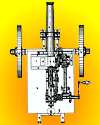
In 1856, a crank operated machine gun was patented by Charles Emerson Barnes of Lowell, Mass. (U.S. No. 15,315). It had a reciprocating plunger which both self-loaded a cartridge into the barrel and contained a hammer to explode the cap. A single crank turned gears and cams to activate the sequence of operations. What he called an “automatic cannon” was conceived ahead of its time, well before the outbreak of the Civil War (1861-65). Similar machine guns were invented after his, that were used in the conflict. No evidence exists that either side used Barnes’ weapon. (Compare Richard Gatling patent No. 36,836, issued 4 Nov 1862.) Barnes later patented cord making machines (1880, 1883).«
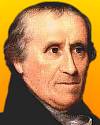
In 1800, the first successful vaccination performed in the U.S. using cowpox serum to prevent smallpox was given by Harvard’s Dr. Benjamin Waterhouse upon his five year-old son, Daniel, in Massachusetts. Waterhouse was one of the best educated American physicians of his time. Following the latest claims by Edward Jenner, he imported cowpox vaccine for his son and a servant boy. Waterhouse continued vaccinating with success, but in the rush to follow him, others administered impure vaccine and some people died; there was a backlash. Stressing the necessity of pure vaccine, he continued to promote vaccination and was instrumental in its success in America.
more




