Born 30 Dec 1954.
Rodney Allen Brooks is an Australian engineer and inventor who is a pioneer in applying artificial intelligence to built autonomous robots. He was the director (1997-2007) of the MIT Artificial Intelliigence Laboratory and then the MIT Computer Science & Artificial Intelligence Laboratory. Brooks founded the iRobot Corporation which manufactures robots, including a robot to Mars to collect samples for NASA, helping to create the Predator robot aircraft for use by the military in Iraq and Afghanistan. For the home, the company produced the first robotic floor cleaner. The machine, named Roomba, weighs under 6 lbs. and was introduced at the price of $199.«
Rodney Allen Brooks is an Australian engineer and inventor who is a pioneer in applying artificial intelligence to built autonomous robots. He was the director (1997-2007) of the MIT Artificial Intelliigence Laboratory and then the MIT Computer Science & Artificial Intelligence Laboratory. Brooks founded the iRobot Corporation which manufactures robots, including a robot to Mars to collect samples for NASA, helping to create the Predator robot aircraft for use by the military in Iraq and Afghanistan. For the home, the company produced the first robotic floor cleaner. The machine, named Roomba, weighs under 6 lbs. and was introduced at the price of $199.«
Born 30 Dec 1948.
American cell biologist who shared (with James E. Rothman and Thomas C. Südhof) the 2013 Nobel Prize in Physiology or Medicine “for their discoveries of machinery regulating vesicle traffic, a major transport system in our cells.” Vesicles are tiny, sac-like structures that serve as transportation mechanisms within cells. While this fact was long known, the precise mechanism had remained unexplained as to how they fused with organelles or the plasma membrane to ferry the cargo of substances needed by the cell to various destinations within, as well as outside the cell. The problem could be imagined like looking at a fleet of vans transporting thousands of packages around hundreds of miles of city streets and needing to explain how they efficiently find the right destination where to stop and unload which parts of the cargo.«
American cell biologist who shared (with James E. Rothman and Thomas C. Südhof) the 2013 Nobel Prize in Physiology or Medicine “for their discoveries of machinery regulating vesicle traffic, a major transport system in our cells.” Vesicles are tiny, sac-like structures that serve as transportation mechanisms within cells. While this fact was long known, the precise mechanism had remained unexplained as to how they fused with organelles or the plasma membrane to ferry the cargo of substances needed by the cell to various destinations within, as well as outside the cell. The problem could be imagined like looking at a fleet of vans transporting thousands of packages around hundreds of miles of city streets and needing to explain how they efficiently find the right destination where to stop and unload which parts of the cargo.«
Born 30 Dec 1934; died 17 Aug 2005 at age 70. quotes
American astrophysicist who pioneered the development of neutrino astrophysics in the early 1960s. He theorized that neutrinos (subatomic particles that have no charge and exceedingly weak interaction with matter) can be used to understanding how stars shine. They are emitted by the sun and stars during the fusion energy creation process, and most are able to pass through the Earth without being stopped. He calculated the expected output of neutrinos from the sun, which created an experimental challenge to explain the unexpected result. He won the National Medal of Science (1998) for both his contributions to the planning and development of the Hubble Space Telescope and his pioneering research in neutrino astrophysics.« more
American astrophysicist who pioneered the development of neutrino astrophysics in the early 1960s. He theorized that neutrinos (subatomic particles that have no charge and exceedingly weak interaction with matter) can be used to understanding how stars shine. They are emitted by the sun and stars during the fusion energy creation process, and most are able to pass through the Earth without being stopped. He calculated the expected output of neutrinos from the sun, which created an experimental challenge to explain the unexpected result. He won the National Medal of Science (1998) for both his contributions to the planning and development of the Hubble Space Telescope and his pioneering research in neutrino astrophysics.« more
Neutrino Astrophysics, by John N. Bahcall. - book suggestion.
Born 30 Dec 1931; died 15 Apr 2020 at age 88. quotes
Welsh metereologist who began in the late 1960s drawing attention to the buildup of carbon dioxide in the earth’s atmosphere and its result of global warming, now known as the greenhouse effect. As director-general (1983) of the British Meteorological Office, he began tracking changing climate patterns. In 1990, he co-chaired a team of scientists working for the United Nations that produced the first comprehensive report on the science of climate change. This led to the 1997 U.N. Conference on Climate Change, in Kyoto, Japan. The Kyoto Protocol that resulted there was a treaty among industrialized and developed nations to combat global warming by voluntarily adhering to progressively stiffening emissions-reduction standards.«
Welsh metereologist who began in the late 1960s drawing attention to the buildup of carbon dioxide in the earth’s atmosphere and its result of global warming, now known as the greenhouse effect. As director-general (1983) of the British Meteorological Office, he began tracking changing climate patterns. In 1990, he co-chaired a team of scientists working for the United Nations that produced the first comprehensive report on the science of climate change. This led to the 1997 U.N. Conference on Climate Change, in Kyoto, Japan. The Kyoto Protocol that resulted there was a treaty among industrialized and developed nations to combat global warming by voluntarily adhering to progressively stiffening emissions-reduction standards.«
Global Warming: The Complete Briefing, by John T. Houghton. - book suggestion.
Born 30 Dec 1863; died 6 Apr 1939 at age 75.
William Hallock Park was an American physician and bacteriologist who pioneered in the application of bacteriology to the diagnosis, prevention and treatment of the common infectious diseases. He was an authority on public health dealing with diphtheria, pneumonia, tuberculosis and poliomyelitis. Park began his career as a nose and throat specialist. He shortly became interested in the emerging science of bacteriology. In 1894, at the urging of Dr Hermann Biggs of the New York City Health Department, Park was given charge of a diagnostic laboratory for diphtheria. He developed a diphtheria antitoxin. At the turn of the 20th century, Park wrote a landmark paper The Great Bacterial Contamination of the Milk of Cities (1901), showing his concern to improve milk purity, with sanitary farm procedures, pasteurization and keeping the milk cool.«
William Hallock Park was an American physician and bacteriologist who pioneered in the application of bacteriology to the diagnosis, prevention and treatment of the common infectious diseases. He was an authority on public health dealing with diphtheria, pneumonia, tuberculosis and poliomyelitis. Park began his career as a nose and throat specialist. He shortly became interested in the emerging science of bacteriology. In 1894, at the urging of Dr Hermann Biggs of the New York City Health Department, Park was given charge of a diagnostic laboratory for diphtheria. He developed a diphtheria antitoxin. At the turn of the 20th century, Park wrote a landmark paper The Great Bacterial Contamination of the Milk of Cities (1901), showing his concern to improve milk purity, with sanitary farm procedures, pasteurization and keeping the milk cool.«
Born 30 Dec 1851; died 12 Mar 1929 at age 77.
American manufacturer who expanded the marketing of the Coca-Cola soft drink created (1886) by pharmacist John "Doc" Pemberton who made the syrup for use in his drugstore fountain drinks. After Pemberton died, Candler bought the formula (still a very well kept secret). Showing a marketing genius, Candler devoted $50,000 a year to advertising, an unheard-of amount at the turn of the century. His goal was to make the drink a national product. He did this partially by bottling the product and not relying totally on fountain sales. There were constant legal battles to keep copy-cat products off the market, a fight eventually won with the patenting of a uniquely-shaped bottle. Coca-Cola advertising even influenced our view of Santa Claus. He was the Coca-Cola Company president 1887-1916, then mayor of Atlanta (1917-18).«
American manufacturer who expanded the marketing of the Coca-Cola soft drink created (1886) by pharmacist John "Doc" Pemberton who made the syrup for use in his drugstore fountain drinks. After Pemberton died, Candler bought the formula (still a very well kept secret). Showing a marketing genius, Candler devoted $50,000 a year to advertising, an unheard-of amount at the turn of the century. His goal was to make the drink a national product. He did this partially by bottling the product and not relying totally on fountain sales. There were constant legal battles to keep copy-cat products off the market, a fight eventually won with the patenting of a uniquely-shaped bottle. Coca-Cola advertising even influenced our view of Santa Claus. He was the Coca-Cola Company president 1887-1916, then mayor of Atlanta (1917-18).«
For God, Country, and Coca-Cola: The Definitive History of the Great American Soft Drink and the Company That Makes It, by Mark Pendergrast. - book suggestion.
Born 30 Dec 1850; died 30 Jul 1913 at age 62.
English geologist and seismologist who invented the horizontal pendulum seismograph (1894) and was one of the European scientists that helped organize the seismic survey of Japan in the last half of the 1800's. Milne conducted experiments on the propagation of elastic waves from artificial sources, and building construction. He spent 20 years in Japan, until 1895, when a fire destroyed his property, and he returned home to the Isle of Wight. He set up a new laboratory and persuaded the Royal Society to fund initially 20 earthquake observatories around the world, equipped with his seismographs. By 1900, Milne seismographs were established on all of the inhabited continents and he was recognized as the world's leading seismologist. He died of Bright's disease.«
English geologist and seismologist who invented the horizontal pendulum seismograph (1894) and was one of the European scientists that helped organize the seismic survey of Japan in the last half of the 1800's. Milne conducted experiments on the propagation of elastic waves from artificial sources, and building construction. He spent 20 years in Japan, until 1895, when a fire destroyed his property, and he returned home to the Isle of Wight. He set up a new laboratory and persuaded the Royal Society to fund initially 20 earthquake observatories around the world, equipped with his seismographs. By 1900, Milne seismographs were established on all of the inhabited continents and he was recognized as the world's leading seismologist. He died of Bright's disease.«
Seismology, by John Milne. - book suggestion.
Born 30 Dec 1844; died 14 Jul 1926 at age 81.
Charles Albert Coffin was an American industrialist who was a leader in the electrical industry. In 1892, he merged his firm, the Thomas-Houston Company, with the Edison Electric Company to create the General Electric Company. He was first GE president, and then its board chairman (1913-1922). He had little technical knowledge about electricity himself, but he had a keen ability for organization and brought to the company the best technical men. In 1901, he supported the establishment of a research laboratory responsible for both applications to electrical development and pure science. In his years as head of the firm, GE experienced substantial growth, and became one of the most important companies to the economy of the U.S. During WW I, Coffin created the War Relief Clearing House and worked for the Red Cross.«
Charles Albert Coffin was an American industrialist who was a leader in the electrical industry. In 1892, he merged his firm, the Thomas-Houston Company, with the Edison Electric Company to create the General Electric Company. He was first GE president, and then its board chairman (1913-1922). He had little technical knowledge about electricity himself, but he had a keen ability for organization and brought to the company the best technical men. In 1901, he supported the establishment of a research laboratory responsible for both applications to electrical development and pure science. In his years as head of the firm, GE experienced substantial growth, and became one of the most important companies to the economy of the U.S. During WW I, Coffin created the War Relief Clearing House and worked for the Red Cross.«

Died 30 Dec 2024 at age 82 (born 24 May 1942).
Scottish-American organic chemist who shared the 2016 Nobel Prize in Chemistry “for the design and synthesis of molecular machines.”
Scottish-American organic chemist who shared the 2016 Nobel Prize in Chemistry “for the design and synthesis of molecular machines.”
Died 30 Dec 2011 at age 102 (born 22 Apr 1909). quotes
Italian-American neurologist who shared the Nobel Prize for Physiology or Medicine in 1986 (with Stanley Cohen) for her discovery of NGF (nerve growth factor), which stimulates and influences both the normal and abnormal the growth of nerve cells in the body. In Italy, as a Jew, during WW II she was denied an academic career by Mussolini's laws, so she set up a laboratory in her home to study the growth of nerve fibers in chicken embryos. In 1952, while at a cell culture laboratory in Rio de Janeiro, she found effective new ways to detect a chemical exuded by tumors that produced astonishing growth of nerve fibers. This was the discovery of the nerve growth factor that won her the Nobel Prize.«
Italian-American neurologist who shared the Nobel Prize for Physiology or Medicine in 1986 (with Stanley Cohen) for her discovery of NGF (nerve growth factor), which stimulates and influences both the normal and abnormal the growth of nerve cells in the body. In Italy, as a Jew, during WW II she was denied an academic career by Mussolini's laws, so she set up a laboratory in her home to study the growth of nerve fibers in chicken embryos. In 1952, while at a cell culture laboratory in Rio de Janeiro, she found effective new ways to detect a chemical exuded by tumors that produced astonishing growth of nerve fibers. This was the discovery of the nerve growth factor that won her the Nobel Prize.«
In Praise of Imperfection: My Life and Work, by Rita Levi-Montalcini. - book suggestion.
Died 30 Dec 2002 at age 92 (born 7 Dec 1910).
Eleanor Jack Gibson was an American psychologist who studied learning processes in children. She is remembered for her "visual cliff" experiment which showed how an infant's depth perception helps prevent injuries and falls. In 1960, she placed 6-14 month old infants on a table covered with a sheet of plate glass that extended beyond the table's edge. When enticed with a favorite toy or coaxed by their mothers to crawl out beyond the table's edge onto the clear glass extension, nearly all of the babies withdrew. Thus she demonstrated that babies can distinguish depth. In 1992, Gibson was awarded the National Medal of Science, becoming one of only ten psychologists among 304 recipients of the award since 1962.«
Eleanor Jack Gibson was an American psychologist who studied learning processes in children. She is remembered for her "visual cliff" experiment which showed how an infant's depth perception helps prevent injuries and falls. In 1960, she placed 6-14 month old infants on a table covered with a sheet of plate glass that extended beyond the table's edge. When enticed with a favorite toy or coaxed by their mothers to crawl out beyond the table's edge onto the clear glass extension, nearly all of the babies withdrew. Thus she demonstrated that babies can distinguish depth. In 1992, Gibson was awarded the National Medal of Science, becoming one of only ten psychologists among 304 recipients of the award since 1962.«
An Odyssey in Learning and Perception, by Eleanor Gibson. - book suggestion.
Died 30 Dec 1971 at age 52 (born 12 Aug 1919). quotes
Indian physicist who was the father of the Indian space program. His family were wealthy industrialists, to which he added the skills of a visionary scientist and innovator. Sarabhai completed his PhD at Cambridge (1947) and helped establish the Physical Research Laboratory in Ahmedabad (Nov 1947) at the MG Science Institute founded by his parents. He studied the time variations of cosmic rays with solar activity and forsaw the development of solar and interplanetary physics. Following the launch of Sputnik, he formed the Indian National Committee for Space Research, and launched its first rocket on 21 Nov 1963. He became chairman of the Atomic Energy Commission (May 1966).«
Indian physicist who was the father of the Indian space program. His family were wealthy industrialists, to which he added the skills of a visionary scientist and innovator. Sarabhai completed his PhD at Cambridge (1947) and helped establish the Physical Research Laboratory in Ahmedabad (Nov 1947) at the MG Science Institute founded by his parents. He studied the time variations of cosmic rays with solar activity and forsaw the development of solar and interplanetary physics. Following the launch of Sputnik, he formed the Indian National Committee for Space Research, and launched its first rocket on 21 Nov 1963. He became chairman of the Atomic Energy Commission (May 1966).«
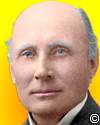
Died 30 Dec 1947 at age 86 (born 15 Feb 1861). quotes
English mathematician and philosopher, who worked in logic, physics, philosophy of science and metaphysics. He is best known for his work with Bertrand Russellon one of probably the most famous books of the century, Principia Mathematica (1910-13) to demonstrate that logic is the basis for all mathematics. In physics (1910-24) his best known work was a theory of gravity, that competed with Einstein's general relativity for many decades. In his later life from 1924 onward at Harvard, he worked on more general issues in philosophy rather than mathematics, including the development of a comprehensive metaphysical system which has come to be known as process philosophy.«
English mathematician and philosopher, who worked in logic, physics, philosophy of science and metaphysics. He is best known for his work with Bertrand Russellon one of probably the most famous books of the century, Principia Mathematica (1910-13) to demonstrate that logic is the basis for all mathematics. In physics (1910-24) his best known work was a theory of gravity, that competed with Einstein's general relativity for many decades. In his later life from 1924 onward at Harvard, he worked on more general issues in philosophy rather than mathematics, including the development of a comprehensive metaphysical system which has come to be known as process philosophy.«
Science and the Modern World, by Alfred North Whitehead. - book suggestion.
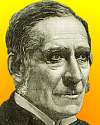
Died 30 Dec 1899 at age 85 (born 11 Jan 1814). quotes
(1st Baronet) British surgeon and physiologist, considered (with Rudolf Virchow) to be a founder of scientific medical pathology. As a new medical student, in 1834, Paget discovered the pathogen for trichinosis, a parasitic disease caused by Trichina spiralis, a minute roundworm that infests the muscles of the human body. In 1877, he described Paget's disease of bone (osteitis deformans), a chronic disease of bones, occurring in the elderly and most frequently affecting the skull, backbone, pelvis, and long bones. He also described an early indication of breast cancer known as Paget's disease of the breast (1874). Paget was one of the first to urge surgical removal of bone-marrow tumours (myeloid sarcoma) instead of limb amputation. Also named for him is Paget's abscess, one recurring about the remains of a former abscess.«
(1st Baronet) British surgeon and physiologist, considered (with Rudolf Virchow) to be a founder of scientific medical pathology. As a new medical student, in 1834, Paget discovered the pathogen for trichinosis, a parasitic disease caused by Trichina spiralis, a minute roundworm that infests the muscles of the human body. In 1877, he described Paget's disease of bone (osteitis deformans), a chronic disease of bones, occurring in the elderly and most frequently affecting the skull, backbone, pelvis, and long bones. He also described an early indication of breast cancer known as Paget's disease of the breast (1874). Paget was one of the first to urge surgical removal of bone-marrow tumours (myeloid sarcoma) instead of limb amputation. Also named for him is Paget's abscess, one recurring about the remains of a former abscess.«
Died 30 Dec 1883 at age 53 (born 6 Sep 1830).
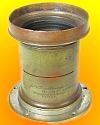
German-British inventor and manufacturer of lenses and telescopes. He introduced improvements in both photographic portrait and landscape lenses, in object glasses for the microscope, and in condensers for the optical lantern. Dallmeyer made photoheliographs (telescopes adapted for photographing the Sun) for Harvard observatory (1864), and the British government (1873). He introduced the "rapid rectilinear" (1866) which is a lens system composed of two matching doublet lenses, symmetrically placed around the focal aperture to remove many of the aberrations present in more simple constructions. He died on board a ship at sea off New Zealand.[Image: Dallmeyer 10x8 Rapid Rectilinear Brass Lens for a large format camera.]
German-British inventor and manufacturer of lenses and telescopes. He introduced improvements in both photographic portrait and landscape lenses, in object glasses for the microscope, and in condensers for the optical lantern. Dallmeyer made photoheliographs (telescopes adapted for photographing the Sun) for Harvard observatory (1864), and the British government (1873). He introduced the "rapid rectilinear" (1866) which is a lens system composed of two matching doublet lenses, symmetrically placed around the focal aperture to remove many of the aberrations present in more simple constructions. He died on board a ship at sea off New Zealand.[Image: Dallmeyer 10x8 Rapid Rectilinear Brass Lens for a large format camera.]
Died 30 Dec 1781 at age 68 (born 10 Sep 1713). quotes
John Turberville Needham was an English clergyman and naturalist who was a Roman Catholic priest. He experimented, with Buffon, on the idea of spontaneous generation of life. After boiling mutton broth and sealing it in sealed it in glass containers which were stored for a few days, then reopened, he found numerous microorganisms therein. His conclusion was that the organisms had arisen from non-living matter. (However, two decades later, Spallanzani indicated this was invalid since some spores could still survive the short period of boiling temperature Needham used.) He was the first clergyman of his faith to become a member of the Royal Society of London (1768).
John Turberville Needham was an English clergyman and naturalist who was a Roman Catholic priest. He experimented, with Buffon, on the idea of spontaneous generation of life. After boiling mutton broth and sealing it in sealed it in glass containers which were stored for a few days, then reopened, he found numerous microorganisms therein. His conclusion was that the organisms had arisen from non-living matter. (However, two decades later, Spallanzani indicated this was invalid since some spores could still survive the short period of boiling temperature Needham used.) He was the first clergyman of his faith to become a member of the Royal Society of London (1768).
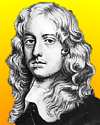
Died 30 Dec 1695 (born 1625).
English mathematician and inventor of mechanical calculators. His first machine added and subtracted English money using eight dials that were moved by a simple stylus. Another could multiply and divide using 30 discs with numbers marked around the edge - circular versions of Napier's linear bones. Five more discs handled finding square and cube roots. His third machine made trigonometric calculations. Morland built a speaking trumpet (1671) he claimed would allow a conversation to be conducted over a distance of 3/4 mile. By 1675, he had developed various pumps for domestic, marine and industrial applications, such as wells, draining ponds or mines, and fire fighting. He also designed iron stoves for marine use, and improved barometers.«
English mathematician and inventor of mechanical calculators. His first machine added and subtracted English money using eight dials that were moved by a simple stylus. Another could multiply and divide using 30 discs with numbers marked around the edge - circular versions of Napier's linear bones. Five more discs handled finding square and cube roots. His third machine made trigonometric calculations. Morland built a speaking trumpet (1671) he claimed would allow a conversation to be conducted over a distance of 3/4 mile. By 1675, he had developed various pumps for domestic, marine and industrial applications, such as wells, draining ponds or mines, and fire fighting. He also designed iron stoves for marine use, and improved barometers.«
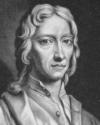
Died 30 Dec 1691 at age 64 (born 25 Jan 1627). quotes
Irish-English chemist and natural philosopher noted for his pioneering experiments on the properties of gases and his espousal of a corpuscular view of matter that was a forerunner of the modern theory of chemical elements. He was a founding member of the Royal Society of London. From 1656-68, he resided at Oxford where Robert Hooke, who helped him to construct the air pump. With this invention, Boyle demonstrated the physical characteristics of air and the necessity of air for combustion, respiration, and the transmission of sound, published in New Experiments Physio-Mechanical, Touching the Spring of the Air and its Effects (1660). In 1661, he reported to the Royal Society on the relationship of the volume of gases and pressure (Boyle's Law).[Date of death: DSB = 30 Dec 1691; EB = 31 Dec 1691.]
Irish-English chemist and natural philosopher noted for his pioneering experiments on the properties of gases and his espousal of a corpuscular view of matter that was a forerunner of the modern theory of chemical elements. He was a founding member of the Royal Society of London. From 1656-68, he resided at Oxford where Robert Hooke, who helped him to construct the air pump. With this invention, Boyle demonstrated the physical characteristics of air and the necessity of air for combustion, respiration, and the transmission of sound, published in New Experiments Physio-Mechanical, Touching the Spring of the Air and its Effects (1660). In 1661, he reported to the Royal Society on the relationship of the volume of gases and pressure (Boyle's Law).[Date of death: DSB = 30 Dec 1691; EB = 31 Dec 1691.]
Boyle: Between God and Science, by Michael Hunter. - book suggestion.
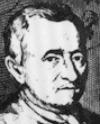
Died 30 Dec 1644 at age 65 (born 12 Jan 1579). quotes
Belgian natural philosopher, chemist, physician and physiologist who coined the word “gas” (via Greek khaos, empty space), of which he found several examples, most natably carbon dioxide. As a man of his age, he was part medievalalchemistand part scientist. Helmont was the first to recognize gases distinct from atmospheric air. He determined that the gas given off by burning charcoal is the same as that given off by fermenting grape juice. This he named spiritus silvestre("wild spirit"); we call it carbon dioxide. He also identified hydrogen sulphide from humans, and made hydrochloric acis gas. As a physician andphysiologist, Helmont was one of the first to apply chemical principles in human health and disease. Some call him the “father ofbiochemistry.” He was interrogated by the Inquisition, and spent some time under house arrest.«Birth date: DSB gives 12 Jan 1579; EB gives "12 Jan 1580,[1579, Old Style]."
Belgian natural philosopher, chemist, physician and physiologist who coined the word “gas” (via Greek khaos, empty space), of which he found several examples, most natably carbon dioxide. As a man of his age, he was part medievalalchemistand part scientist. Helmont was the first to recognize gases distinct from atmospheric air. He determined that the gas given off by burning charcoal is the same as that given off by fermenting grape juice. This he named spiritus silvestre("wild spirit"); we call it carbon dioxide. He also identified hydrogen sulphide from humans, and made hydrochloric acis gas. As a physician andphysiologist, Helmont was one of the first to apply chemical principles in human health and disease. Some call him the “father ofbiochemistry.” He was interrogated by the Inquisition, and spent some time under house arrest.«Birth date: DSB gives 12 Jan 1579; EB gives "12 Jan 1580,[1579, Old Style]."
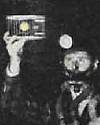
In 1986, the BBC reported that the British government planned to replace about 200 canaries used in mining pits with modern electronic gas detectors. From 1987, as new technology was gradually phased in, the birds were retired. Live canaries carried in small cages had been used in pits since 1911 to warn of the presence of carbon monoxide, a deadly but colourless, tasteless and odourless gas. John Scott Haldane researched the practice. A small animal with faster metabolism would be more quickly affected by noxious fumes than a human. Canaries were preferred over, say, mice, because they gave an early warning easier to detect. An affected bird would stop chirping, have trouble breathing, sway on its perch and (with trimmed claws) noticeably fall. (Prompt oxygen could be used revive it, for further use.) Or die.«[Image: miner holding up a canary in a cage.]

In 1982, a second full moon of the month was visible. Known as a "blue moon," the name does not refer to its colour, but it is a rare event, giving rise to the expression, "once in a blue moon" came from. This blue blue moon was more special as a total lunar eclipse also occurred (U.S.). Although there were 41 blue moons in the twentieth century, this was one of four during an eclipse of the moon, and the only total eclipse of a blue moon in the twentieth century. A blue moon happens every 2.7 years because of a disparity between our calendar and the lunar cycle. The lunar cycle is the time it takes for the moon to revolve around the earth, is 29 days, 12 hours, and 44 minutes.
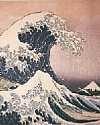
In 1972, the highest wave that was instrumentally recorded, 86-ft (26.3m) high, was logged by the British ship Weather Reporter, at Lat 59°N, Long 19°W in the North Atlantic Ocean. (That position is in the Rockall region, directly below Iceland, slightly further North than the top of Scotland.)
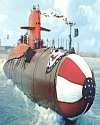
In 1959, the first U.S. ballistic missile submarine, the nuclear-powered U.S.S. George Washington, was commissioned. The 380-ft-long ship had 16 vertical missile launch tubes, able to fire Polaris missiles even while the vessel was underwater. Building it began on 7 Nov 1967 at Groton, Connecticut, at a cost of about $110 million. It was launched 9 Jun 1959. The following July, it successfully tested the launch of two Polaris missile while submerged. On its first duty patrol (15 Nov 1960 - 21 Jan 1961) the ship spent 67 days travelling underwater. Two complete crews, of 130 men each, rotated after each 60-day period (after a 30-day resupply and refit period) to get the maximum use of the submarine on extended patrols.«[Image width compressed to fit thumbnail space.]
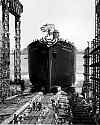
In 1941, the first Liberty ship, the S.S. Patrick Henry, was delivered at Baltimore, Maryland, to the U.S. Maritime Commission. It was built in 244 days and launched 27 Sep 1941, by the Bethlehem-Fairfield Shipbuilding Co., of that city. It was the first of 2,741 Liberty ships launched, of which 385 were built at Baltimore, in a three-year WW II emergency merchant ship construction program. The S.S. Patrick Henry could average a speed of about 11 knots, and had a general cargo capacity of 9,146 tons. The American patriot Patrick Henry had ended a speech (23 Mar 1775) with the phrase “give me Liberty, or give me death,” Hence the emergency ships became known as Liberty ships, after President Roosevelt said their mission was to bring liberty to European allies with relief supplies.«
Liberty Ships: The History of the Emergency Type Cargo Ships... , by L. A. Sawyer and W. H. Mitchell. - book suggestion.
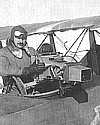
In 1930, a photograph showing the curvature of the Earth was exhibited in Cleveland, Ohio, at a joint session of the American Association for the Advancement of Science, holding its annual convention, and the Society of Sigma XI. According to the New York Times report, it was the first photograph to show the Earth's curvature. The picture, taken from an airplane flying at 21,000-ft over South America by Capt. Albert W. Stevens of the U.S. Army Air Corps, used super-sensitive panchromatic photographic film to record an image of an area larger than some States. It showed the distant horizon of the pampas over 300 miles ahead as bent slightly downward toward one end. The speaker, Dr. C.E.K. Mees, research director at Eastman Kodak Company said it was taken with a 1/50 sec. exposure.*«[Image: taking photographs from a biplane.]
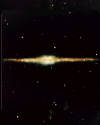
In 1924, a meeting of scientists began in Washington, D.C. On its last day, 1 Jan 1925, its main event was a paper read by H. N. Russell on behalf of the absent author, Edwin Hubble. Although titled about Cepheid Variables, Hubble's paper gave the first proof that Andromeda was a separate galactic system—an “island universe,” far beyond our own Milky Way, and equally large. Previously, scientists couldn't tell if nebulae (fuzzy clouds of light) were within the Milky Way or not. Hubble measured the distances to Cepheid stars in the Andromeda nebula and showed it was a hundred thousand times as far away as the nearest stars—proof it was a separate galaxy. He wrote a letter to Harlow Shapley on 19 Feb 1923 about his first measurement. New York Times (22 Nov 1924) told the public, before the meeting.«
Edwin Hubble, The Discoverer of the Big Bang Universe, by Aleksandr Sergeevich Sharov, Igor Dmitrievich Novikov. - book suggestion.
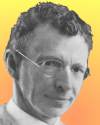
In 1913, Dr William David Coolidge patented (U.S. No. 1,082,933) a method for making ductile tunsten for the purpose of making filaments for electric lamps. When Coolidge joined the General Electric Research Laboratory (1905), he was given the task of replacing the fragile carbon filaments in electric light bulbs with tungsten filaments, although tungsten was difficult to work. He developed a way to superheat the metal tunsten in order to draw it out into the fine threads used for lamp filaments. Coolidge then improved the X-ray tube by using a heated tungsten filament cathode in vacuum producing electrons, instead of residual gas molecules in the tube. This permitted higher operating voltages, higher energy X rays and the treatment of deeper-seated tumors.
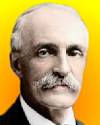
In 1890, Gifford Pinchot read a paper comparing how forest management was better developed in other countries than in the U.S. Aged 25, he addressed a joint session of the American Economic Association and the American Forestry Association, at Washington, D.C. After reporting his personal observations of techniques in Germany, France and Switzerland, he also spoke about practices in Australia, India, South Africa and other countries. He ended: “We are surrounded by the calamitous results of the course that we are now pursuing. In fact, it seems as though there were almost no civilized or semi-civilized country in either hemisphere which cannot stand to us as an example or a warning. ... The care of the forests is the duty of the nation.” He became the first chief of the U.S. Forest Service in 1905.«
Breaking New Ground (autobiography), by Gifford Pinchot. - book suggestion.
In 1887, the American Physiological Society, the first U.S. national physiology society, was organized in New York City. At the time, there were few physiological laboratories in America, and only a small number of investigators. Seventeen men met at the Physiological Laboratory, College of Physicians and Surgeons, Columbia University. Twenty-eight were named as charter members. Silas Weir Mitchell of Philadelphia presided over the meeting, but declined to be its first president, though he did become the second. The first secretary-treasurer was Henry Newell Martin, a biology professor. The society first published the American Journal of Physiology, on 3 Jan 1898. (A local, unrelated, organization of the same name was founded on 11 Feb 1837 in Boston, Mass.)«
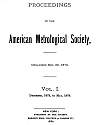
In 1873, the American Metrological Society was formed in New York City to improve systems of weights, measures and money. Its activities eventually extended with a committee considering units of force and energy, and another concerned with the adoption of Standard Time for the U.S. On 30 Dec 1884, at the meeting of the American Metrological Society at Columbia College in New York City, Charles S. Peirce read a paper on the determination of gravity. He also participated in a discussion of the adequacy of the standards of weight and measure in the United States and pointed out some of the deficiencies in the current system. As a result of his revelations, the Society passed a resolution recommending the appointment of a committee to advise Congress on the need for establishing an efficient bureau of standards.[Image: Cover of the Proceedings of the American Metrological Society, Vol. 1.]
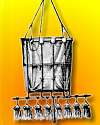
Dredge
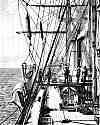
HMS Challenger, Instrument and Sampling Platform
The Silent Landscape: The Scientific Voyage of HMS Challenger, by Richard Corfield. - book suggestion.
In 1868, founding the American Museum of Natural History was urged in a letter, written with this date, and sent to Andrew H. Green, Comptroller of Central Park, New York, signed by 19 persons, including Theodore Roosevelt, A.G. Phelps Dodge and J. Piermont Morgan. They wrote: “A number of gentlemen having long desired that a great Museum of Natural History should be established in Central Park, and having now the opportunity of securing a rare and very valuable collection as a nucleus of such Museum, the undersigned wish to enquire if you are disposed to provide for its reception and development.” Their suggestion was accepted by the Park officials, and the museum was incorporation on 9 Apr 1869. Collections were purchased, and the great museum opened 27 Apr 1871.«
In 1854, the first U.S. oil company, the Pennsylvania Rock Oil Company, was incorporated by George H. Bissell, a New Yok Banker, with a capital stock of $250,000 (10,000 $25 shares) to commercially produce oil for lamp fuel. It was later renamed the Seneca Oil Co. Petroleum from oil seeps in Western Pennsylvania had long been collected by the native Americans for medicinal purposes. Settlers had used the rock oil for lamp fuel and lubrication. Water well drillers abandoned water sources they found contaminated with oil. Benjamin Silliman, Jr., had discovered the oil could be distilled into several fractions, one of which was a high quality illuminant. Bissell envisioned drilling for petroleum sources. With the Company's funding, Edwin Drake struck oil at Titusville, Pennsylvania on. 27 Aug 1859.«
Western Pennsylvania's Oil Heritage, by Charles E. Williams. - book suggestion.
In 1791, a U.S. patent for spinning cotton by water power was issued to William Pollard of Philadelphia. In his petition, Pollard had stressed usefulness and an important economic value to the U.S., rather than novelty. Actual details of any machine were vague and secondary his claims being of deserving character. Pollard was one of three British immigrants that sought exclusive rights to introduce into America cotton spinning machines based on those devised by Richard Arkwright in England. By Jun 1791, Pollard's factory was in full operation, and is said to be the first water frame built in that city. However, it was not successful, and for that reason may have in effect retarded the growth of the industry in Philadelphia.«




